分类: education

  • ‘Beyond Words’ to open doors through French language exchange

    ‘Beyond Words’ to open doors through French language exchange

    The Eden Lodge Youth Charitable Trust, a community-focused nonprofit based in Barbados, has unveiled an innovative cross-cultural language exchange program called Beyond Words, which brings international university students directly into local classrooms to boost language proficiency and connect young people across borders.

    Details of the new initiative were shared publicly at a press briefing hosted Thursday at St Paul’s Primary School on Brittons Cross Road, where the trust’s public relations lead Billie-June Langdon explained the program originated from a planned internship for Luxon Warner, a business student at EXCELIA Business School based in Orléans, France. Recognizing that Warner’s placement through the French Humacité Programme represented more than just a standard internship opportunity, the trust designed the Beyond Words initiative to advance a set of core goals: expand accessible cultural exchange opportunities, empower youth to engage globally, drive inclusive community development, build global awareness among local students, and foster authentic, long-lasting connections between young people from different cultural backgrounds.

    In its pilot first year, the program has partnered with two Barbadian schools: St Paul’s Primary School and St Leonard’s Boys’ Secondary School. Warner has led customized conversational French classes at both institutions, adapting content and activities to match the varying age groups and language proficiency levels of participating students.

    Andrew Lokey, a modern languages teacher at St Leonard’s Boys’ Secondary School, noted that the program’s impact extends far beyond basic language instruction. Over the four-week pilot, Lokey observed that the shared age proximity between the 20-year-old French visitor and the 15 and 16-year-old secondary school students created a natural, relaxed camaraderie that enhanced learning far beyond what a standard curriculum can offer.

    Lokey emphasized that access to a native French speaker gave students an immersive experience impossible to replicate in a traditional, teacher-led classroom. “Students got to hear and practice natural, authentic conversational French in real time, which is an irreplaceable learning tool,” he explained. The program also delivered tangible academic benefits for students preparing for their Caribbean Secondary Education Certificate (CSEC) exams, with Warner able to walk students through complex grammatical concepts in clear, detailed terms that reinforced their exam preparation.

    Most notably, Lokey observed a marked improvement in student engagement and confidence. Even students who had previously shown limited interest in French became more motivated to practice and improve their skills week over week, with Warner’s consistent encouragement driving measurable progress.

    For Warner himself, the exchange has been just as transformative. Calling the experience his first extended stay in a foreign country, he explained that stepping outside his comfort zone – navigating daily life independently without family nearby – helped him grow personally and professionally. While helping Barbadian students build their French skills, Warner also worked to improve his own English proficiency, noting that daily interactions with local students and staff helped him overcome initial nervousness about speaking in a new language. He expressed hope that he would return to Barbados to continue the program in the future and extended his gratitude to the Eden Lodge Youth Charitable Trust for the opportunity.

    At St Paul’s Primary School, the pilot program introduced French to young learners through dynamic, activity-based methods that made the new language fun and accessible. Eleven-year-old Class Four student Davonte Jordan shared that the interactive lessons – which included vocabulary games for weather terms, body parts, and city locations, as well as a French-language version of Simon Says that got students moving around the classroom – made learning feel engaging rather than intimidating. The positive early experience has already sparked a lasting interest: Jordan said he plans to continue studying French when he moves on to secondary school.

    St Paul’s Primary Principal Joan Collymore praised the initiative for the unique opportunities it brought to her students. “Over the course of the program, our students benefited tremendously from conversational classes led by Luxon. The lessons were engaging, well-received, and his consistent enthusiasm kept kids inspired from start to finish,” Collymore said. While the pilot program ran only a few weeks, she added that it delivered long-term value, creating meaningful learning experiences and strengthening the critical partnership between the school and local community to support the development of well-rounded, globally aware students.

    Organizers of Beyond Words noted that the initiative aligns with the Eden Lodge Youth Charitable Trust’s core mission of youth empowerment, expanded educational access, and community service. The pilot program has already demonstrated that targeted international collaboration can not only improve language learning outcomes for students but also build confidence, cross-cultural understanding, and genuine people-to-people connections between young people from different parts of the world.


  • Social Work student awarded Sinnette-Nguyen Scholarship at UWI Global Campus

    Social Work student awarded Sinnette-Nguyen Scholarship at UWI Global Campus

    A promising undergraduate student from Trinidad and Tobago has earned a prestigious institutional honor, claiming the 2025–2026 Sinnette-Nguyen Scholarship for her combination of top academic standing and deep commitment to community service at The University of the West Indies (The UWI) Global Campus.

    Per an official statement released by the UWI Global Campus, Yamine Trotman, a Bachelor of Science candidate majoring in Social Work, emerged victorious from a highly competitive selection process. The scholarship was created specifically to support Trinidad and Tobago nationals pursuing undergraduate degrees at the UWI Global Campus, with eligibility criteria centered on both strong academic results and proven, meaningful community impact.

    Trotman’s profile stood out to selection committees for her exceptional leadership and sustained service work, most notably founding Healed Me, Healing You Ministry, a philanthropic organization focused on delivering accessible mental health support to women across local communities. Beyond her community advocacy, she also holds a formal student leadership role as Vice President for Programming and Voluntarism with the UWI Student Today Alumni Tomorrow (STAT) Global Campus Corps.

    The scholarship itself was founded by Tisha Sinnette-Nguyen, a donor based in Massachusetts, United States, as a lasting tribute to her late parents Nelson Sinnette and Yvonne Sinnette. In sharing her motivation for creating the award, Sinnette-Nguyen emphasized that her parents prioritized education as a transformative force for individual and community change. “It is both an honour and a privilege to continue their legacy by awarding this scholarship to a deserving recipient who reflects their values—demonstrating grit, perseverance, and resilience in the face of challenges,” she said.

    Leadership at the UWI Global Campus has voiced deep gratitude for Sinnette-Nguyen’s continued philanthropic contribution, noting that her commitment opens new educational pathways for high-achieving, service-oriented students across Trinidad and Tobago, and works to expand equitable access to higher education for local learners.

    Dr. Francis O. Severin, Pro Vice-Chancellor and Principal of the UWI Global Campus, extended public praise to both Trotman and Sinnette-Nguyen in the statement. “Ms. Yamine Trotman needs to be celebrated, and I am grateful to Mrs. Tisha Sinnette-Nguyen, a good friend of the Global Campus, for recognising Yamine in that regard,” Dr. Severin said. He added that Trotman’s work serves as a model for other students, highlighting her grassroots public activism, strong community spirit, and initiative to launch a targeted mental health resource for women—a service that addresses an urgent, unmet need in many communities. “I wish her absolute success as she strives to be the best social worker that she can be,” he added.

    The official release confirmed that Trotman’s track record of achievement, lifelong commitment to community service, and professional aspirations align perfectly with the core mission and goals of the Sinnette-Nguyen Scholarship programme. University leadership formally congratulated Trotman on the award, extending well wishes for her continued academic success and future career in social work.

  • $95K Investment Transforms Learning at Anglican Cathedral College

    $95K Investment Transforms Learning at Anglican Cathedral College

    In a transformative development for secondary education in Belize, a $95,000 Belize dollar donation from the Waterloo Charitable Trust is set to completely revamp the outdated computer lab at Anglican Cathedral College, opening new doors of digital opportunity for hundreds of students. The gift, arranged through a cross-political collaboration between philanthropist Lord Michael Ashcroft and UDP Senator Patrick Faber – who also serves as an IT teacher at the college – marks a rare moment of bipartisan cooperation focused on advancing public education despite long-standing political disagreements.

    The milestone was celebrated on June 10, 2026, during the college’s weekly mass at St. John’s Cathedral, where Lord Ashcroft and his son Andrew joined students, faculty, and school leadership in the institution’s long-standing traditional service. The visit capped off a months-long process that began when Faber and his team rediscovered the original 32-year-old commemorative plaque from Ashcroft’s first contribution to the college’s computer lab while clearing out a campus storage room. Reaching out to Ashcroft to share the discovery, Faber presented a formal proposal for a full lab upgrade, and the philanthropist approved the funding within days.

    Speaking at the celebration, Lord Ashcroft emphasized that shared investment in youth development outweighs political divides. “On the political front in Belize, Patrick and I have never seen eye to eye but when we can come together and do something like this, we are able to overcome the political side of where we disagree,” he said, noting that digital fluency in an era of rapid artificial intelligence development is one of the most critical skills for young people to master for their future success.

    Faber echoed that sentiment, joking of the agreement: “As you told me, let’s bury the hatchet, just not in each other’s backs. So I am glad we got to team up on this one.” The warm collaboration between the two political opponents was on clear display as they toured the current lab space, which has not received a major update in more than three decades, and embraced ahead of the upcoming renovation work.

    Beyond just new computing hardware, the donation will cover full upgrades to the lab’s infrastructure, including new student workstations, improved ceilings and flooring, and the installation of modern flat-screen displays for teaching. For students, the most meaningful change will be the end of long waits to share limited working devices. College principal Paulette Augustus noted that the upgrade will guarantee every student access to their own individual device during class time, eliminating the scheduling bottlenecks that have limited hands-on practice for years.

    “ It translates to them being happy that they finally come into a lab where everything is there for them. It is not going to be now that you need to share or have time to use the computer. Now everybody is going to have a computer for themselves when they come into the lab,” Augustus explained, adding that students have already expressed widespread excitement for the new learning space. While several other private donors were recognized during the event for their ongoing support to the college and adjacent cathedral, the $95,000 lab upgrade stands as the largest single investment in student technical learning at the institution in decades. School administrators say the transformation will serve as a foundational upgrade that will sharpen students’ digital skills for college, careers, and civic life in an increasingly tech-driven global economy.

  • UWI Global Campus and Caribbean HR institute partner to strengthen workforce development

    UWI Global Campus and Caribbean HR institute partner to strengthen workforce development

    Against a backdrop of rapidly shifting regional labour markets across the Caribbean, where evolving workplace demands have exposed a growing disconnect between academic HR training and on-the-ground industry needs, two leading institutions have joined forces to reshape human resource development across the region. The University of the West Indies Global Campus’ Hugh Shearer Labour Studies Institute and the Caribbean Institute for Human Resource Management have formally signed a Memorandum of Understanding to solidify a new collaborative partnership centered on elevating HR education, advancing professional growth, and boosting workforce readiness across all Caribbean nations.

    This agreement is far more than a symbolic alliance: it is a targeted effort to close the long-standing gap between theoretical academic learning and real-world industry practice, ensuring that HR education keeps pace with the changing requirements of the regional labour force. By merging The UWI’s decades of academic excellence and research infrastructure with CaIHRM’s deep, on-the-ground industry insights and professional network, the partnership will create clear, accessible pathways for current and aspiring HR professionals to advance their careers.

    Under the terms of the MOU, the two institutions will collaborate on a range of key initiatives. First, they will co-develop structured professional pathways and industry-recognized credentials for practicing HR practitioners, giving learners clear milestones for career progression. They will also work to update existing academic curricula to integrate cutting-edge contemporary HR and organizational development topics, ensuring course content directly reflects the emerging trends and unique challenges facing Caribbean workplaces today.

    Additional areas of collaboration include expanding applied research focused on the specific HR challenges facing the Caribbean region, and embedding hands-on practical learning opportunities — including real-world case studies and immersive workplace simulations — into all educational programs. To bridge the divide between academia and industry, the partnership will also increase interaction between working HR professionals and students through guest lecture series, adjunct teaching opportunities for industry leaders, and structured feedback loops that allow practitioners to shape the direction of academic programming.

    Joint programming is also a core pillar of the agreement: the two organizations will co-develop short specialized courses and professional certificate programs, and host regular regional conferences, symposia, and thought leadership events designed to advance HR practice and organizational development across the Caribbean. A dedicated Joint Steering Committee will be established to oversee all initiative implementation, coordinate cross-institutional activities, track progress against core goals, and ensure the partnership remains aligned with its founding objectives throughout its term.

    Dr. Lauren Marsh, Head of the Hugh Shearer Labour Studies Institute, framed the collaboration as a transformative strategic milestone for regional human resource development. “This collaboration reflects a shared commitment to strengthening professional pathways and enhancing workforce readiness across the Caribbean, with a strong emphasis on practical training through case-based learning, simulations, and real-world industry engagement,” Marsh explained. “It is expected to play a significant role in shaping resilient, future-ready organisations and labour markets across the region.”

    Cavelle Joseph-St. Omer, President of CaIHRM, also welcomed the new agreement, calling it a landmark development for HR professionals at every career stage across the Caribbean. She emphasized that the partnership opens unprecedented opportunities to strengthen professional practice and expand access to continuous learning and development across the region, adding that the alliance creates a rare, valuable opportunity to meaningfully connect academia and industry. By working together, the two institutions can build local HR capacity, strengthen regional specialized expertise, and better prepare both current and future practitioners to meet the changing demands of Caribbean workplaces.

    The three-year initial agreement includes an option for renewal following a joint performance evaluation and mutual agreement from both parties. In the long term, the partnership is projected to strengthen the regional HR talent pipeline, raise uniform professional standards for HR practice across the Caribbean, and contribute to broader inclusive economic and social development across the region. For The UWI Global Campus, the initiative aligns with its long-standing institutional focus on educational innovation, intentional industry collaboration, and delivering relevant, high-quality education tailored to meet the unique needs of the Caribbean and the wider global community.

  • Creation of an ad hoc committee responsible for launching the Public University of the West, Haiti

    Creation of an ad hoc committee responsible for launching the Public University of the West, Haiti

    In a formal step to expand public higher education access across western Haiti, the country’s Ministry of National Education has officially ordered the creation of a specialized transitional committee to oversee the launch of the new Public University of the West (Université Publique de l’Ouest, UPO), scheduled for rollout in 2026.

    Announced via a ministerial decision issued on June 10, 2026, the move follows a May 15, 2026 ministerial circular that formally established the UPO by merging three existing regional educational institutions: the Training Center for the Fundamental School (CFEF), the National School of Applied Geology (ENGA), and the National Higher School of Technology (ENST). Education Minister Vijonet Déméro emphasized the urgent need for a temporary governing body to manage the administrative, academic, and logistical groundwork required to stand up the new unified university, leading to the formalization of the ad hoc committee under the oversight of the Ministry of National Education and Vocational Training (MENFP).

    The seven-member committee brings together cross-sector representation from existing institutions, regional stakeholders, and ministerial leadership to ensure balanced input during the transition. Carole Berotte Joseph, a consultant in the Minister’s Office, will serve as committee president, while Michelet Clerveau, a member of the Minister’s Cabinet, will act as committee secretary. The directors of the three merging institutions will each lead academic portfolio for their respective fields: Ronald Jacques Jean of CFEF will oversee education academic affairs, Michael Saimbertil of ENGA will lead on earth sciences academic affairs, and Dieudonné Delva of ENST will handle academic affairs for technology and technical sectors. Two regional educator representatives round out the committee: Yvener Desrosiers for the Palmes Region and Edmy Victor for the Island of Gonâve. The committee is also authorized to recruit additional technical experts as needed to fulfill its mandate.

    The committee carries a clear set of core responsibilities spanning four key workstreams to prepare the UPO for full operation. On the administrative side, members will conduct a full audit of all physical assets, equipment, and human resources from the three merging institutions, then draft a set of transitional internal bylaws to govern the new university during its early phase. Academically, the task force will harmonize overlapping curricula from the predecessor institutions and validate teaching frameworks for two new planned Higher and Technical Education Centers (CEST) located on the Island of Gonâve and in the Palmes Region. Financially, the committee will develop a detailed projected budget for the university’s first full fiscal year, covering both initial setup and ongoing operating costs. Logistically, members will assess and map existing physical infrastructure to accommodate the UPO’s new regional campuses.

    The committee’s mandate is scheduled to run for four months, from June 5, 2026, through October 5, 2026, with a one-time extension permitted if the transition requires additional time. The mandate will automatically terminate once the UPO’s permanent Board of Directors and rectorate are officially appointed and installed. To ensure transparency and accountability to the ministry, the committee is required to submit monthly progress reports to the Minister’s Office, followed by a full comprehensive final report at the conclusion of its work. The ministerial decision went into effect immediately upon its publication.

    The creation of the UPO marks a key investment in expanding accessible public higher education across western Haiti, integrating existing regional training institutions into a unified public university structure that will serve both the Palmes Region and the Island of Gonâve.

  • UG earns ACCA accreditation for Bachelor of Accountancy programme

    UG earns ACCA accreditation for Bachelor of Accountancy programme

    In a landmark step for higher education and professional training in Guyana, the University of Guyana’s (UG) School of Entrepreneurship and Business Innovation (SEBI) announced Tuesday that its Bachelor of Accountancy Degree Programme has earned formal accreditation from the Association of Chartered Certified Accountants (ACCA), one of the world’s most prominent global professional accounting bodies.

    The accreditation, which took effect on January 1, 2026, will remain valid through December 31, 2030. It provides official international validation that UG’s accounting education meets rigorous global quality benchmarks, elevating the degree’s standing for graduates seeking employment or professional advancement across international markets.

    While UG accounting graduates have previously been eligible for individual ACCA exam exemptions, this marks the first time the university has secured program-wide institutional accreditation. This milestone aligns UG’s academic curricula with global professional standards and solidifies the institution’s position as Guyana’s top provider of business-focused higher education.

    UG Vice-Chancellor Professor Paloma Mohamed Martin publicly recognized the contributions of Dr. Alfred Aaron, Head of the Department of Accountancy and Finance, SEBI Dean Professor Leyland Lucas, ACCA representatives, and leaders of local accounting firms for their guidance and collaborative work throughout the multi-stage accreditation preparation process. She framed the achievement as a key milestone in UG’s broader push to become a globally competitive world-class university.

    “We are delighted to celebrate another step towards making the University of Guyana into a world-class university,” Professor Mohamed Martin said in a statement. “Dr Aaron and SEBI are working with local partners and ACCA on several other initiatives which will add value to our students and accelerate their certifications for quicker entry into professional practice. This is a big win for our students.”

    Echoing that sentiment, Dr. Aaron described the accreditation as a transformative landmark achievement for the entire institution. “This accreditation confirms that our Bachelor of Accountancy programme meets internationally recognised standards and reflects the quality of teaching, curriculum design, and assessment within the department,” he explained. “It is a significant achievement for the University and a major advantage for our students, who will now have a more direct pathway towards global professional certification.”

    The new accreditation unlocks tangible benefits for all current and future students pursuing careers in accounting, finance, auditing, and related fields. Starting in 2026, all graduates of UG’s Bachelor of Accountancy programme who go on to pursue full ACCA qualification will be eligible to waive four foundational ACCA papers: Business and Technology, Management Accounting, Financial Accounting, and Corporate and Business Law. That leaves graduates with just nine remaining papers to complete before earning the globally respected ACCA professional credential, cutting down the time and cost required to reach full certification.

    Dr. Aaron credited the cross-institutional collaboration between UG faculty, administrators, and international professional partners for the successful outcome, thanking the vice-chancellor and SEBI’s dean for their consistent leadership and support throughout the years-long accreditation process. Dr. Aaron himself led the initiative, coordinating all documentation, submissions, and stakeholder engagement required for ACCA review.

    UG also highlighted the critical support provided by ACCA’s Trinidad-based regional team, specifically singling out Senior Business Relationship Manager Anouska Sammy and Business Relationship Manager Aisha McKenna for their consistent guidance throughout the accreditation journey.

    The new program accreditation reflects UG’s long-term commitment to delivering academically excellent, professionally relevant education that prepares graduates to compete in the global workforce and contribute to Guyana’s fast-growing economy. “As the country continues its unprecedented growth and development, UG remains committed to producing highly skilled accounting and finance professionals equipped with academic knowledge and internationally recognised professional credentials,” the university said in its official announcement.

    This milestone builds on a series of recent expansions to SEBI’s industry-aligned program offerings. Just months prior, the school launched two new specialized credentials focused on the country’s booming energy sector: an Associate Degree in Oil and Gas Accounting, Taxation and Audit, and a Graduate Executive Diploma in the same specialization.

    The ACCA accreditation also comes on the heels of another major milestone for UG: in 2025, the university earned its first-ever institutional accreditation from Guyana’s National Accreditation Council (NAC), 62 years after it was founded in 1963. That institutional accreditation confirmed UG meets consistent high standards across academics, administration, and student support services, boosting confidence in the quality of a UG degree both locally and around the world.

  • Macmillan Education Caribbean opens entries for second ‘New Branches’ Poetry Competition

    Macmillan Education Caribbean opens entries for second ‘New Branches’ Poetry Competition

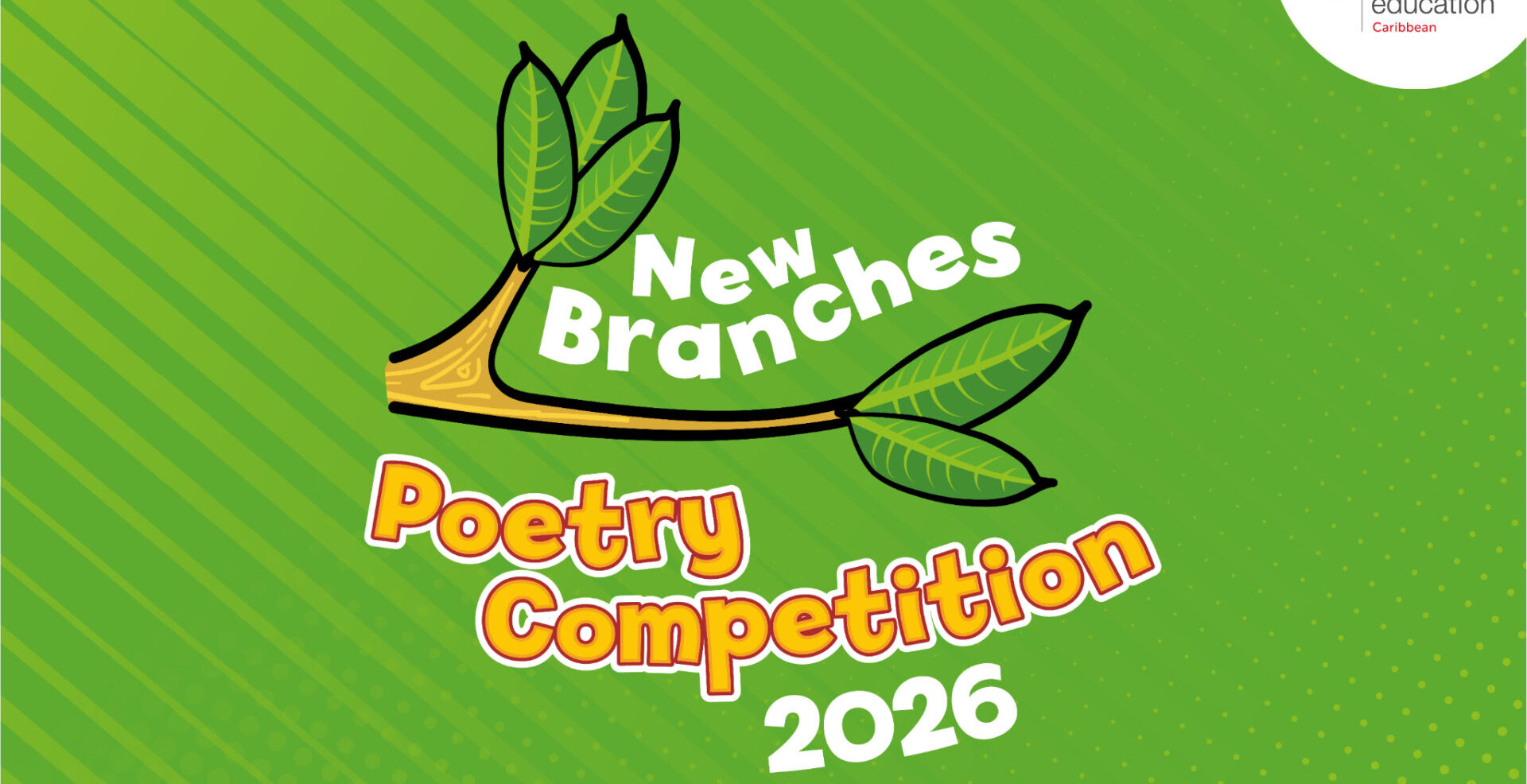
    Building on the overwhelming success of its 2025 inaugural launch, Macmillan Education Caribbean has officially opened submissions for the second edition of its beloved New Branches Poetry Competition, calling on students and educators across the Caribbean region to put their creative talents on display. Kicking off on June 8, 2026, this year’s iteration has been strategically expanded to remove barriers to broader participation, while upholding the competition’s core mission: boosting literacy, celebrating Caribbean cultural identity, and nurturing a lifelong passion for Language Arts among learners and teaching professionals across the region.

    The most notable update for the 2026 competition is the introduction of a brand-new Upper Secondary division, extending eligibility beyond the three original categories—Primary, Lower Secondary, and Teacher—offered in the first year of the event. This adjustment opens the creative platform to older secondary students who were previously unable to compete, creating space for more diverse voices from across the regional education community.

    All participants are required to submit original poetry centered on Caribbean-focused themes, with organizers curating a flexible list of prompts to spark creativity. The suggested topics include Life by the Sea in the Caribbean, Festivals in My Country, Caribbean Food and Culture, My Island or My Community, Voices of the Caribbean, and Journeys, Roots and Belonging—all designed to encourage creators to draw from their own lived experiences in the region.

    Organizers have also updated submission guidelines to align with the new category structure. Primary school entrants must submit poems between 8 and 20 lines long, while competitors in the Lower Secondary, Upper Secondary, and Teacher divisions face a 10 to 25 line limit for their entries.

    A carefully selected two-person judging panel will evaluate all submissions, bringing together decades of literary and educational experience from across the region. Returning for her second consecutive year as a judge is Julia Sander, a celebrated author and creative writing trainer, who is joined by first-time judge Mansha Hunte-Baptiste, a Saint Lucian author and educator who recently took part in Macmillan Education’s Caribbean Author Academy initiative.

    Beyond the opportunity to showcase their work on a regional stage, top entries will earn a permanent spot in the 2026 New Branches poetry anthology, with all winning creators receiving a complimentary printed copy of the collection to commemorate their achievement.

    In alignment with the competition’s focus on literacy, the submission window will close exactly three months after opening, on September 8, 2026, to coincide with the annual observance of World Literacy Day. Full competition rules, eligibility details, and submission instructions will be accessible via a downloadable blog post on Macmillan Education Caribbean’s official website, as well as through a dedicated SharePoint link distributed directly to schools and education stakeholders across the Caribbean.

    The 2025 inaugural competition saw three standout winners from across the region: Celine Rolle of St. Andrew’s Anglican Primary School in Exuma, The Bahamas, who took top honors in the Primary division; Shakeir Thomas of Antigua Grammar School in Antigua and Barbuda, the winning Lower Secondary participant; and Sasha Maynard, a teacher at Charles E. Mills Secondary School in St. Kitts and Nevis, who claimed first place in the educator category.

    Interested participants and educators can find additional information by visiting the Macmillan Education Caribbean official website, or reach out directly to Dr. Katy Anyasoro, Marketing Manager for Macmillan Caribbean and International Curriculum, via email or telephone for inquiries.

  • Training : List of Accredited Private Vocational Training Centers in Haiti

    Training : List of Accredited Private Vocational Training Centers in Haiti

    Haiti’s National Institute for Vocational Training (INFP) has published an updated official roster of accredited private vocational training centers across the country, fulfilling its core mandate to regulate, supervise and elevate the quality of Haiti’s national vocational education ecosystem.

    The release of the list aligns with all existing Haitian laws and regulatory frameworks governing vocational education provision. The full directory, available as a French-language PDF for public download via HaitiLibre, catalogs every private institution that has met the INFP’s strict quality benchmarks to operate legally.

    This public announcement is designed to bring clarity to a wide range of stakeholders, from prospective students and their families to local employers, international technical and funding partners, and the general public. By making the accreditation information easily accessible, the INFP aims to help learners distinguish between authorized, quality-assured programs and unaccredited providers that do not meet national standards.

    In a key advisory note accompanying the list, the INFP strongly encourages all individuals planning to enroll in vocational training to confirm an institution’s accredited status before committing to a program. This step ensures that the training received adheres to national vocational education standards, and that any certification awarded upon completion will carry the official institutional recognition required for employment or further education in Haiti.

    The INFP also emphasized that only the institutions included in the published list held valid accreditation as of the announcement’s date. The directory will be updated on a regular basis to reflect new accreditation approvals, status renewals, and any changes to existing institutions’ operating status going forward.

  • Wheatley: NEST programme targeting young scientists for all early childhood institutions

    Wheatley: NEST programme targeting young scientists for all early childhood institutions

    KINGSTON, Jamaica — Jamaica’s national government is advancing a transformative early childhood education initiative, with plans to bring the innovative Nurturing Early Scientific Thinking (NEST) programme to every early childhood institution (ECI) across the island by the close of 2025. The groundbreaking programme, which focuses on building scientific reasoning from toddlerhood, completed a successful pilot phase between February and June 2025, with 25 participating ECIs across the Kingston and St Andrew region. According to Dr. Andrew Wheatley, Jamaica’s Minister of Science, Technology and Special Projects, the pilot sites were intentionally selected to represent a diverse cross-section of the country’s early education ecosystem, including institutions located in zones of special operations, low-performing facilities, and fully compliant high-functioning schools. Minister Wheatley made the official announcement during his Tuesday address to the Sectoral Debate in Jamaica’s House of Representatives. The pilot programme incorporated a robust capacity-building framework for educators: 25 participating teachers completed a specialized Training of Trainers course led by officers from Jamaica’s Early Childhood Commission, with ongoing mentorship support provided by the Association of Science Teachers of Jamaica. “The evaluation is positive. The evidence base is built. The scale-up plan is ready. We are now rolling NEST out nationally,” Minister Wheatley confirmed. The phased national expansion will target 500 ECIs across all seven of Jamaica’s education regions and all 14 parishes by the end of 2026, with rollout already underway in Kingston, St Andrew, Portland, St Mary and St Thomas. The next wave of expansion will reach St Ann, Trelawny, St James, Hanover, and Westmoreland, before the final phase brings the programme to St Catherine — home to 107 ECIs — and Clarendon, completing full national coverage by the end of 2025. Minister Wheatley emphasized that universal access to the programme is a core policy priority, arguing that the curiosity and questioning nurtured in early childhood lays the groundwork for the entrepreneurs, innovators, and problem-solvers that Jamaica’s future depends on. “That journey begins not at university, but at age three,” he noted. NEST represents Jamaica’s first structured, systemic effort to embed foundational skills of inquiry, problem-solving, and evidence-based reasoning into the earliest stages of formal education. The programme is centered on upskilling ECI educators to deliver developmentally appropriate, play-focused science learning, paired with custom-created children’s books and hands-on STEM activity kits designed specifically for young learners. Minister Wheatley explained that the focus on early childhood addresses a longstanding gap in Jamaica’s approach to STEM education. For decades, efforts to grow scientific thinking have been concentrated at the secondary and tertiary levels, a strategy he described as fundamentally misaligned with how children develop cognitive skills. “We must start cultivating scientific minds at the basic and primary level,” he stated. Reporting by Lynford Simpson

  • Japan : Call for Applications, MEXT Scholarship Program

    Japan : Call for Applications, MEXT Scholarship Program

    The Embassy of Japan in Haiti has officially announced the opening of applications for the highly anticipated 2027-2028 cohort of the Japanese Ministry of Education, Culture, Sports, Science and Technology (MEXT) Research Scholarship program, offering life-changing academic opportunities for Haitian scholars seeking advanced study in Japan.

    Designed for Haitian students aiming to complete Master’s or Doctoral degrees, or conduct specialized research at accredited Japanese higher education institutions, the scholarship initiative serves as a cornerstone for bilateral academic cooperation. Its core mission is to deepen intellectual and scientific ties between Japan and Haiti, nurture a new generation of highly skilled global professionals, and drive sustainable progress for both nations and the broader international community.

    To qualify for the award, candidates must meet a clear set of eligibility criteria. All applicants must hold Haitian nationality, be under 35 years of age (meaning they must have been born on or after April 2, 1992), and hold an undergraduate degree, master’s qualification, or equivalent credential formally recognized by their intended host university in Japan. A strong working proficiency in English is also required, and candidates without prior Japanese language skills are welcome to apply: their coursework and research can be completed entirely in English, with optional opportunities to study Japanese during their time in Japan.

    Prospective applicants can access full program details, including the official Application Guidelines and all required submission forms, through the Embassy of Japan in Haiti’s official website. The application deadline for the 2027-2028 intake is June 12, 2026, and completed submissions may be sent via email to culture@ht.mofa.go.jp or delivered in person to the embassy’s offices located on the 2nd floor of the Hexagone Building, at the intersection of Clerveaux and Darguin Streets in Pétion-ville.

    The selection process follows a structured, multi-stage timeline. Following the application deadline, a shortlist of qualifying candidates will be compiled and notified in mid-June. Written language assessments in English and Japanese will be administered to shortlisted candidates at the end of June, with in-person interviews held at the Japanese Embassy in early July. Recommended candidates will then begin the process of applying to their selected Japanese universities immediately after interviews, with an August deadline for securing official acceptance letters. Successful scholars are scheduled to begin their academic stays in Japan in either April or September 2027, depending on their program of study.

    The embassy has also issued a key administrative note for all applicants: any application document written in French, with the exception of curriculum vitae, passport copies, and official language proficiency certificates, must be accompanied by a certified, accurate translation into either English or Japanese. The embassy does not provide translation services for applicants, so candidates are advised to arrange for this requirement well in advance of the submission deadline.