分类: education

  • CPEA under scrutiny: Parents and teachers voice concerns

    CPEA under scrutiny: Parents and teachers voice concerns

    Each year, as primary school students prepare to transition to secondary education, all eyes turn to the Caribbean Primary Exit Assessment (CPEA), a standardized testing framework rolled out by the Caribbean Examination Council (CXC) that has reshaped end-of-primary evaluation across the region. First introduced in several Caribbean nations as early as 2012, the CPEA was created to replace the decades-old Common Entrance exam, with a core mission of delivering a more holistic, accurate measure of student readiness before they enter secondary schooling. For Saint Lucia, the full transition to the new assessment system was completed in May 2022, closing a chapter on the traditional Common Entrance model and cementing CPEA as the official exit evaluation for the island’s primary students.

    Unlike the outgoing Common Entrance system, which centered entirely on a single high-stakes final exam that determined secondary placement, the CPEA model incorporates continuous ongoing coursework and formative assessments throughout a student’s final primary year. The original design of the framework was intended to cut down on the acute stress caused by a one-off make-or-break test, while also encouraging greater active engagement from both students and their families in the learning process. But more than a decade after its initial launch, the assessment has failed to live up to its promises, according to hundreds of educators, parents, and students across the region, who have raised consistent alarms about its unintended negative consequences.

    Annual public discourse and social media conversations across participating nations have repeatedly highlighted that the CPEA’s structure has created unexpected new burdens that outweigh its intended benefits. Many observers note that by the time students complete the assessment and enter their first year of secondary school (known locally as Form One), they are already experiencing severe academic burnout.

    Worse, many secondary school educators report that current cohorts of students are less prepared for the demands of secondary-level coursework than those who took the old Common Entrance exam, with a worrying share of new Form One students lacking foundational proficiency in core skills including reading, writing, and mathematics.

    To dig deeper into these growing concerns, local St. Lucia Times news outlet conducted interviews with a range of stakeholders with direct experience of the new assessment system. One anonymous serving primary school teacher compared the heavy workload required for the CPEA’s internal assessment component to the course load of a graduate-level master’s degree. “Five essays, a book report, one major project, eight teacher-created exams, four student-developed tests—all of this has to be completed in a single Grade 6 academic year. It’s simply too much for 11 and 12 year old students,” the teacher explained.

    Claudine Louison, a Saint Lucian parent whose child is currently enrolled in Form Two, echoed that frustration. She noted that even with the CPEA’s rigorous evaluation requirements, the framework has not delivered on its core goal of creating a smooth transition between primary and secondary education. Even top-performing students, who often rely on intensive last-minute drilling to pass the CPEA’s requirements, struggle to adapt once they enter secondary school, Louison said.

    “It is incredibly stressful for everyone involved, and honestly, I do not think it is fair to either students or teachers,” Louison said. “Grading is based on a work sample from other students combined with multiple-choice tests, which doesn’t give an accurate picture of what a student actually understands. When students earn strong grades and move on to secondary school, it quickly becomes clear that they never mastered core basic concepts. That just creates more work for secondary teachers who are left to fill gaps that should have been addressed in primary school.”

    These concerns are not unique to Saint Lucia. Educators in other Caribbean nations that have adopted the CPEA have raised identical criticisms. One teacher from Grenada argued that the CPEA’s overreliance on multiple-choice questions actively holds back student development. “I believe the CPEA is crippling our students and robbing them of the chance to develop critical thinking skills,” the Grenadian educator said. “It also holds back their literacy skills by giving them almost no space to write and express their own ideas. The internal assessment component exists on paper, but even with that, the old Common Entrance exam truly tested students’ actual ability to apply knowledge.”

    The Grenadian teacher also pointed to two other systemic issues: widespread learning loss that occurs once the CPEA is completed, and a growing culture of teaching-to-the-test that prioritizes exam performance over actual long-term learning. “After the exam wraps up, both teachers and students should stay engaged in learning, just with a lighter load to keep skills sharp. Right now, too much of primary school is just focused on passing the assessment, that’s not what education is for. Secondary school also requires maturity and discipline, skills that the CPEA doesn’t foster.”

    During a pre-cabinet press briefing held on Monday, May 18, Saint Lucia’s Minister for Education Kenson Casimir acknowledged the growing calls for reform, but defended the core premise of moving away from a single high-stakes exam. Casimir noted that the shift to a continuous assessment model is progressive, aligned with modern workforce demands, and that all education assessment frameworks require ongoing review and adjustment to best serve student needs.

    “I am not someone who believes that single exams are the best way to measure student ability,” Casimir said. “I believe that from this young age, we need to treat children as developing professionals. Education should always be life-forming, helping students build sustainable life skills that will serve them through their careers, help them become productive progressive members of our society, and contribute to economic growth across our nation.”

  • Antigua and Barbuda Building Craft Programme Participants Honoured at Marlborough House

    Antigua and Barbuda Building Craft Programme Participants Honoured at Marlborough House

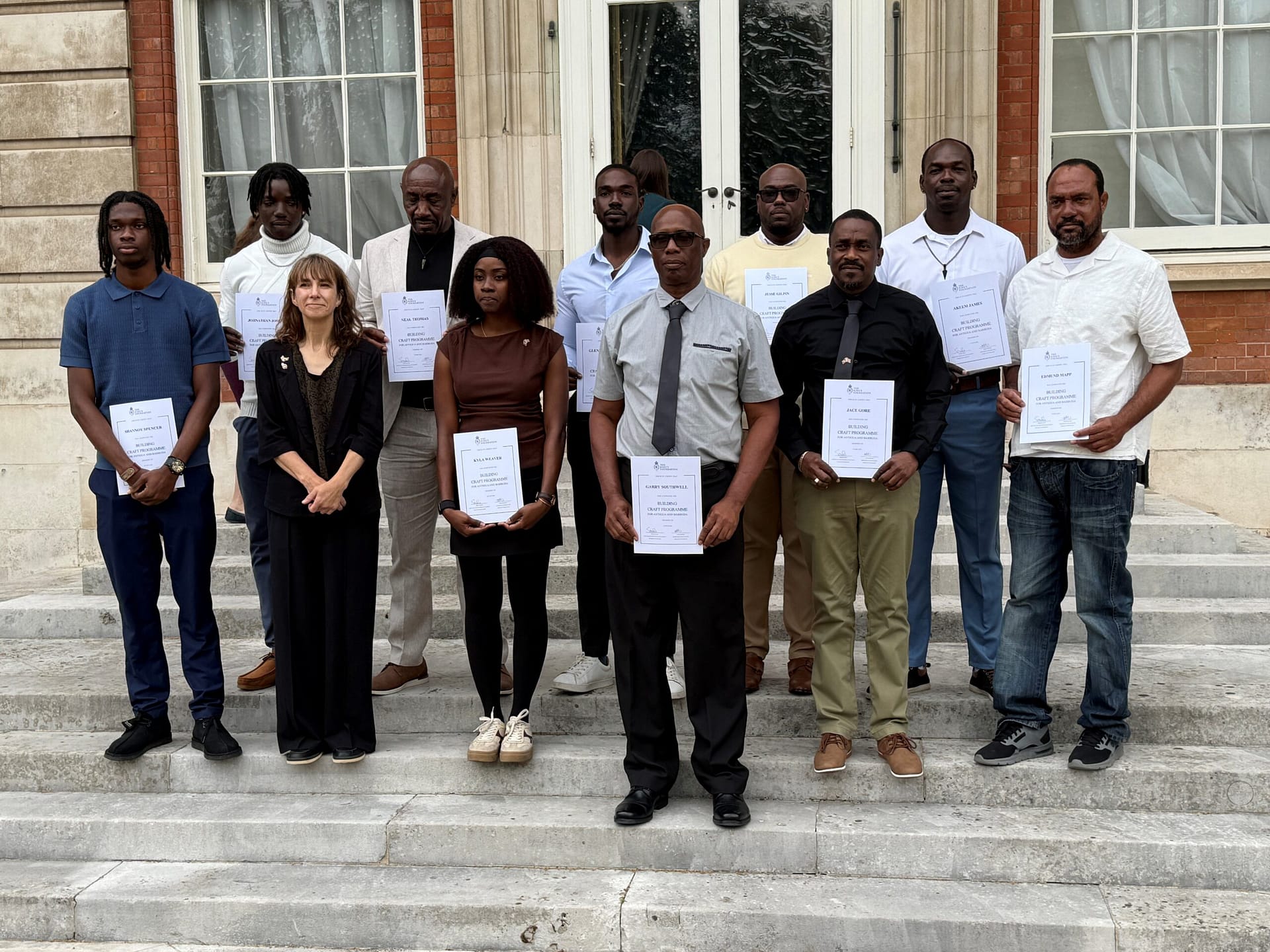
    On May 8, 2026, a meaningful certificate presentation ceremony was held at Marlborough House, the London headquarters of the Commonwealth Secretariat, to formally recognize participants who completed the landmark Building Craft Programme for Antigua and Barbuda. The event celebrated the successful conclusion of a specialized heritage building skills training initiative delivered in the United Kingdom, organized by The King’s Foundation in strategic partnership with three key stakeholders: the Antigua and Barbuda College of Advanced Studies, the country’s Ministry of Foreign Affairs, and the Commonwealth Heritage Forum.

    The day’s agenda began with a warm welcome for attendees, followed by a guided tour of Marlborough House itself—a centuries-old historic building that served as a living example of the heritage craft work the programme promotes. After the tour, official remarks were delivered by senior leaders from all partner organizations, before the formal certificate presentation got underway. Her Excellency Karen-Mae Hill, Antigua and Barbuda’s High Commissioner to the United Kingdom, took on the honor of presenting certificates to each graduating trainee, offering personal congratulations to every participant for their commitment and successful completion of the rigorous training course.

    Joining Hill in addressing the gathering were Jeremy Cross, Associate Director of Championing and Networks at The King’s Foundation; Kasia Howard, Senior Education Manager at the same institution; and Philip Davies OBE, Founder and Consultant Chief Executive of the Commonwealth Heritage Forum. Across all addresses, speakers centered two core themes: praise for the trainees’ consistent dedication throughout the programme, and emphasis on the long-term value of the skills the participants gained. The craft training, they noted, directly supports three critical national priorities for Antigua and Barbuda: preservation of the nation’s unique built heritage, advancement of more sustainable construction practices, and expansion of local professional capacity that drives inclusive economic growth.

    During their immersive training period in the UK, participants gained hands-on practical experience across a full suite of traditional heritage building techniques. The curriculum covered foundational and specialized skills alike, including traditional geometric measurement, technical drawing and design for historic structures, timber framing, plastering, traditional blacksmithing, lime mortar mixing and application, stone masonry, and conservation of historic brickwork. This in-depth training exposed participants to niche professional knowledge and evidence-based conservation practices that they can directly apply to the protection and restoration of at-risk historic buildings across Antigua and Barbuda once they return home.

    Reflecting on the transformative impact of the programme, graduating trainee Jace Gore shared his perspective on the experience. “This opportunity and guidance from expert tutors has given us the skills to help preserve our historic buildings and heritage at home in Antigua and Barbuda,” Gore said, capturing the collective sentiment of the participating cohort. All trainees have now returned to their home country, where they are expected to deploy their newly acquired skills across three key areas: heritage restoration projects, sustainable local construction initiatives, and broader national development efforts that protect the country’s cultural identity for future generations.

    Antigua and Barbuda’s Ministry of Foreign Affairs has reaffirmed its commitment to the programme’s mission, expressing enthusiasm for having supported the development of the initiative alongside the Antigua and Barbuda College of Advanced Studies and The King’s Foundation. The partnership has created a scalable model for skills development that ties cultural heritage preservation to sustainable construction and long-term economic resilience, creating a blueprint that could be replicated for other small island nations seeking to protect their historic built environments.

  • Third honorary doctorate for Coosal

    Third honorary doctorate for Coosal

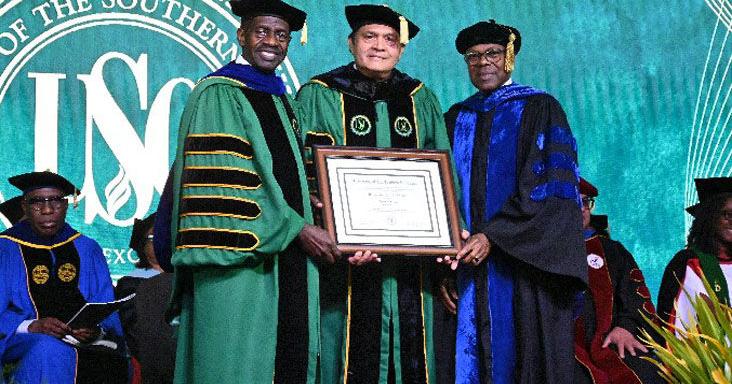
    The University of the Southern Caribbean (USC) hosted its 93rd annual graduation ceremony yesterday at its St. Joseph campus, marking a day of dual celebration: the conferral of honorary doctorates on three distinguished regional trailblazers and major institutional milestones for the growing Caribbean higher education institution.

    Three standout leaders from across the private sector, industry and legal public health circles were recognized with honorary degrees for their decades of impact across the Caribbean region. Leading the group is veteran entrepreneur Sieunarine Coosal, group executive chairman and managing director of the Coosal’s Group of Companies, who accepted an honorary Doctor of Science, Honoris Causa. This marks Coosal’s third honorary doctorate, following previous recognitions from the University of the West Indies and the University of Trinidad and Tobago. USC officials praised Coosal as a “distinguished entrepreneur, industry leader and philanthropist,” highlighting his transformative leadership after taking the reins of the family-owned firm in 1991. Under his direction, Coosal’s Group grew from its origins into one of the Caribbean’s most diversified large conglomerates, leaving an indelible mark on civil engineering, construction, manufacturing and cross-regional infrastructure development across Trinidad and Tobago and beyond. Beyond his business achievements, the university highlighted Coosal’s long-standing commitment to humanitarian action, including his ongoing support for affordable housing, educational access and community development projects through partnerships with organizations such as Habitat for Humanity Trinidad and Tobago.

    Joining Coosal in receiving honors was Fitzroy Harewood, president of Point Lisas Nitrogen Limited and a graduate of USC, who was awarded an honorary Doctor of Business, Honoris Causa. The third recipient, Claire Chunlan Aleong-Hosten, a former USC valedictorian and accomplished attorney, accepted an honorary Doctor of Laws, Honoris Causa. Aleong-Hosten previously held senior roles with the Pan American Health Organization/World Health Organization based in Washington D.C. The honorary degree presentation was led by USC President Dr. Colwick Wilson and Provost Len Archer, with official photos captured by photojournalist Ishmael Salandy.

    Beyond the honorary recognitions, the 2026 commencement brought key updates on USC’s student body and academic programming. Dr. Wilson announced that a total of 503 students from 17 countries across the Americas and Caribbean crossed the stage this year, including graduates from Trinidad and Tobago, Guyana, Jamaica, Suriname, Grenada, Barbados and the United States. In a notable shift that reflects growing gender parity in higher education across the region, women accounted for 84% of the graduating class, totaling 423 of the 503 graduates.

    The School of Science, Technology and Allied Health produced the largest graduating cohort, with 232 students receiving degrees. Of that group, 176 graduates came from the university’s Bachelor of Science in Nursing program, accounting for 35% of the entire 2026 graduating class. It was this program that brought the ceremony’s biggest institutional announcement: USC has secured full accreditation from the Accreditation Commission for Education in Nursing (ACEN), one of only two nationally recognized nursing accrediting bodies in the United States. Dr. Wilson confirmed that the program received the maximum possible initial accreditation period of five years, a milestone he described as transformative for the institution and its students.

    “This achievement represents a defining moment for USC, one that advances our commitment to excellence in nursing education within the Caribbean region,” Wilson said. He added that the ACEN accreditation will open new doors for graduates, expanding access to advanced graduate study globally, qualifying graduates to sit international professional licensing examinations, and strengthening the global recognition of USC nursing credentials.

    Delivering the official valedictorian address, Shafiya Castello, a graduate of the School of Business and Entrepreneurship, reflected on the unique journey of the 2026 graduating class, centering her remarks on themes of resilience and personal growth amid challenge. “Success is not simply about reaching a destination; it is about the growth, the challenges and the perseverance that shape us along the way,” Castello told the crowd of graduates, family, faculty and staff.

    She extended gratitude to instructors, university staff, family members and peers for their unwavering support throughout the academic journey, while acknowledging the unseen struggles many students navigated to reach graduation. “There was a time when the goal was not excellence, but simply to keep going. Behind every assignment submitted, every exam written and every late night spent studying, there is a story of resilience, determination and growth,” she said. Castello closed her remarks with an emotional tribute to her late mother, a dedicated teacher and woman of faith whose legacy continues to shape her commitment to education. “Though she is no longer here physically, her lessons continue to guide me, and her belief in the power of education lives on through me,” she shared.

  • Surinaamse studenten behalen 3e plek op internationale PetroBowl-competitie in Argentinië

    Surinaamse studenten behalen 3e plek op internationale PetroBowl-competitie in Argentinië

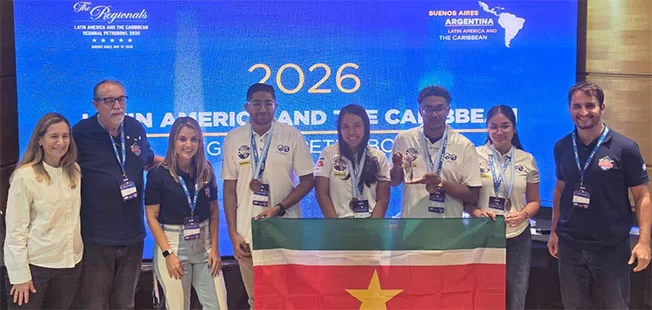
    A team of petroleum engineering students from Suriname has earned international recognition by claiming an impressive third-place finish at the 2026 SPE Latin America and Caribbean Regional PetroBowl Championship, held in Buenos Aires, Argentina. The competition, which took place on May 15 as a flagship feature of the regional Latin America and Caribbean Student Symposium, brought together 21 top university teams from across the region to test their expertise in the oil and gas sector.

    Organized by the Society of Petroleum Engineers (SPE), the PetroBowl is a globally recognized academic quiz competition that centers on petroleum technology, emerging industry trends, and modern developments across the oil and gas space. This year’s event drew talented student competitors from eight regional nations, including Argentina, Brazil, Ecuador, Colombia, Guyana, Venezuela, and Suriname, all vying for the top podium spot in a fast-paced, intense series of knowledge challenges.

    The Surinamese delegation, representing the SPE Student Chapter Suriname at Anton de Kom University of Suriname (AdeKUS), was made up of team captain Rishano Hapdoel and members Altaaf Sultan, Latusca Reboe, and Ariantxa Djojodikromo. The team was coached and mentored by academic advisors Manisha Ori and Shaïza Simons, with participation made possible through financial and logistical support from SPE Suriname and multiple industry partners.

    Against a stacked field of elite regional competitors, the young Surinamese team outperformed most expectations to secure a spot in the top three, finishing behind first-place winners Universidad de Buenos Aires and second-place holders Instituto Tecnológica de Buenos Aires. This result marks another major milestone for the AdeKUS student chapter, building on its historic 2024 regional championship win that first put Surinamese energy talent on the international map.

    Beyond the podium finish, the result underscores Suriname’s rapidly growing standing in the regional oil and gas sector, as the nation continues to expand its domestic energy industry and develop a new generation of skilled petroleum professionals. For the students, the competition delivered far more than an award: it provided a valuable opportunity to test their academic knowledge in a global arena, gain hands-on international experience, and build professional connections with peers and industry leaders across the region. As a long-standing initiative of SPE, the PetroBowl remains dedicated to nurturing academic growth and preparing the next generation of experts to lead the evolving global energy sector.

  • OPINION: A response to CXC’s AI Policy clarification

    OPINION: A response to CXC’s AI Policy clarification

    A recent clarification from the Caribbean Examinations Council (CXC) on the role of artificial intelligence in school-based assessments (SBAs) has brought a measure of relief to regional students, teachers, and parents who have grown increasingly anxious about the impact of AI detection tools on academic outcomes. CXC representative Dr Nicole Manning’s timely statement, which emphasized that AI-generated originality reports are not meant to serve as the sole proof of academic misconduct, addresses growing concerns over inconsistent similarity scores, unfair penalties, and overreliance on flawed detection technology.

    It is a widely accepted conclusion in educational technology research that AI detection tools cannot definitively confirm authorship. These systems operate solely on the basis of probability, statistical pattern matching, and predictive language modeling, meaning even fully original student work can be incorrectly flagged as AI-generated. This fundamental limitation is why education policy experts consistently argue that human oversight must remain the core of any credible assessment framework — a principle CXC has now formally acknowledged.

    Despite this clarification, critical questions remain unanswered about the exact operational role of AI originality reports within the CXC SBA structure, especially as anecdotal reports from students and educators across the region mount of unfair penalties stemming from false AI flags. Any tool that shapes assessment outcomes, even indirectly, demands a clear, consistently applied, and transparently communicated role within the system.

    Long before generative AI entered mainstream education, the CXC SBA model was built on a foundation of robust human supervision. Teachers guide students through project development, monitor progress step-by-step, evaluate submissions, and participate in cross-institutional moderation processes designed to protect assessment fairness. The integration of AI detection tools has only added an extra layer of procedural responsibility to this existing framework.

    If AI originality reports are intended to act primarily as a deterrent to misuse, a documentation tool, a transparency measure, or an early warning system for potential academic misconduct, their inclusion in the framework is reasonable. No regional examining body can afford to ignore the rise of generative AI or assume it will never be used improperly, as protecting academic integrity is non-negotiable for upholding the value of CXC qualifications. The challenge emerges when widely acknowledged imperfect tools are embedded into high-stakes assessment processes that shape student outcomes.

    The core contradiction remains: if AI detection results are not definitive, why are numerical similarity scores still being used in high-stakes assessment contexts at all? When human interpretation becomes the final safeguard against false flags, the bulk of new responsibility shifts directly onto overstretched regional teaching workforces. Teachers are now expected to analyze AI originality reports, cross-reference submissions with students’ past work, compare drafts, evaluate contextual evidence of original work, and distinguish between statistical false flags and intentional misconduct — all on top of their already heavy existing workloads that include classroom instruction, administrative duties, and core SBA supervision.

    In practice, CXC’s new AI policy has significantly expanded the interpretive labor required from teachers, fitting into a broader pattern in regional education where new procedural expectations are rolled out without corresponding increases in resourcing, adjusted workload allocations, or additional compensation. Teachers are not direct employees of CXC; they support the regional assessment system while fulfilling their core roles in individual schools. If the entire integrity of the assessment framework now depends on this extra layer of interpretive work, issues of workload sustainability and fair remuneration can no longer be treated as afterthoughts — they are core to successful implementation.

    Beyond teacher workload, a pressing question remains: can consistent fairness be maintained across regional schools and territories that operate with wildly different levels of infrastructure and resourcing? Some well-resourced institutions boast strong technological infrastructure and dedicated time for teachers to conduct detailed reviews of flagged submissions, while many under-resourced schools operate under severe capacity constraints that leave little time for extra procedural work. Variations in available time and institutional support for teachers directly impact how thoroughly they can investigate AI flags, creating uneven application of the policy across the region. Fairness cannot be achieved when the rigor of review depends entirely on a school’s resource level, and any policy that relies heavily on human judgment must account for the uneven distribution of time, resources, and support across Caribbean education systems.

    Another unaddressed gap is the lack of standardization for AI detection tools across the CXC system. Currently, different schools are permitted to use different AI originality checkers, and it is well-documented that these tools produce wildly different similarity scores for the exact same student submission. If one tool flags a submission with a 12% similarity score and another flags the same work at 28%, there is no clear rule for which result takes precedence. Without system-wide standardization, consistent assessment outcomes are impossible to guarantee. If AI detection is to remain part of the SBA framework, systemic coordination rather than fragmented, school-by-school tool selection is essential. Standardization would also require coordinated support from regional ministries of education and CXC to ensure access to approved tools does not depend on a school’s independent budget, preventing uneven implementation across institutions.

    This lack of standardized resourcing also raises concerns that AI integration could widen existing educational inequalities across the region. Access to reliable technology, stable high-speed internet, digital literacy training, and institutional resources is far from uniform across Caribbean schools. Better-resourced institutions are naturally positioned to navigate new AI-related requirements far more easily than under-resourced schools, and technology never operates neutrally within unequal systems. Without targeted safeguards, AI integration risks reinforcing pre-existing achievement gaps between more and less advantaged institutions.

    There is also the risk of unintended harm to student writing development. If students internalize the message that polished, sophisticated academic work increases the risk of being flagged as AI-generated, they may begin to alter their writing unnecessarily: simplifying their language, avoiding complex syntactical structures, and abandoning formal academic tone to avoid suspicion. This would turn a policy designed to protect academic integrity into one that pushes students to prioritize avoiding false flags over demonstrating their actual understanding of course material.

    At its core, this debate over AI detection in SBAs raises a much deeper question: are regional assessment systems structured appropriately for the age of generative AI? For decades, written assignments have served as the primary evidence of independent student thinking, but generative AI has blurred the once-clear lines between individual authorship, external assistance, and collaborative work.

    Educational researchers have long advocated for alternative assessment models that prioritize authentic demonstration of understanding, including oral defenses, supervised in-person drafting, practical skill demonstrations, and real-time evaluation of mastery. These approaches existed long before the rise of generative AI, but they have gained new urgency as AI complicates traditional written assessment. The open question now is whether Caribbean assessment systems can adapt quickly enough to meet this new context.

    If CXC continues to center AI detection despite its well-documented limitations, the assessment system will rely on fundamentally unreliable tools. If it shifts fully to human interpretation as the primary safeguard, fairness becomes dependent on inconsistent institutional capacity and teacher workload. Neither path is simple, and balancing competing priorities remains the central challenge for the council. Academic integrity must be protected, and misuse of AI must be addressed — but honest, original student work should not be penalized by systems that policymakers themselves admit are fallible. Ultimately, the question that remains unanswered is whether Caribbean education systems are prepared to meet the new demands of authentic assessment, authentic learning, and authentic authorship at a moment when the very nature of student writing is being redefined.

    This commentary is contributed by Dr Zhane Bridgeman-Maxwell, a Barbados-based science educator, researcher, and education reform advocate focused on redesigning outdated learning systems through policy change and pedagogical innovation. Her work centers amplifying the voices of students, teachers, and parents as she reimagines the purpose and structure of regional schooling.

  • Students gain investing experience through stock market AI programme

    Students gain investing experience through stock market AI programme

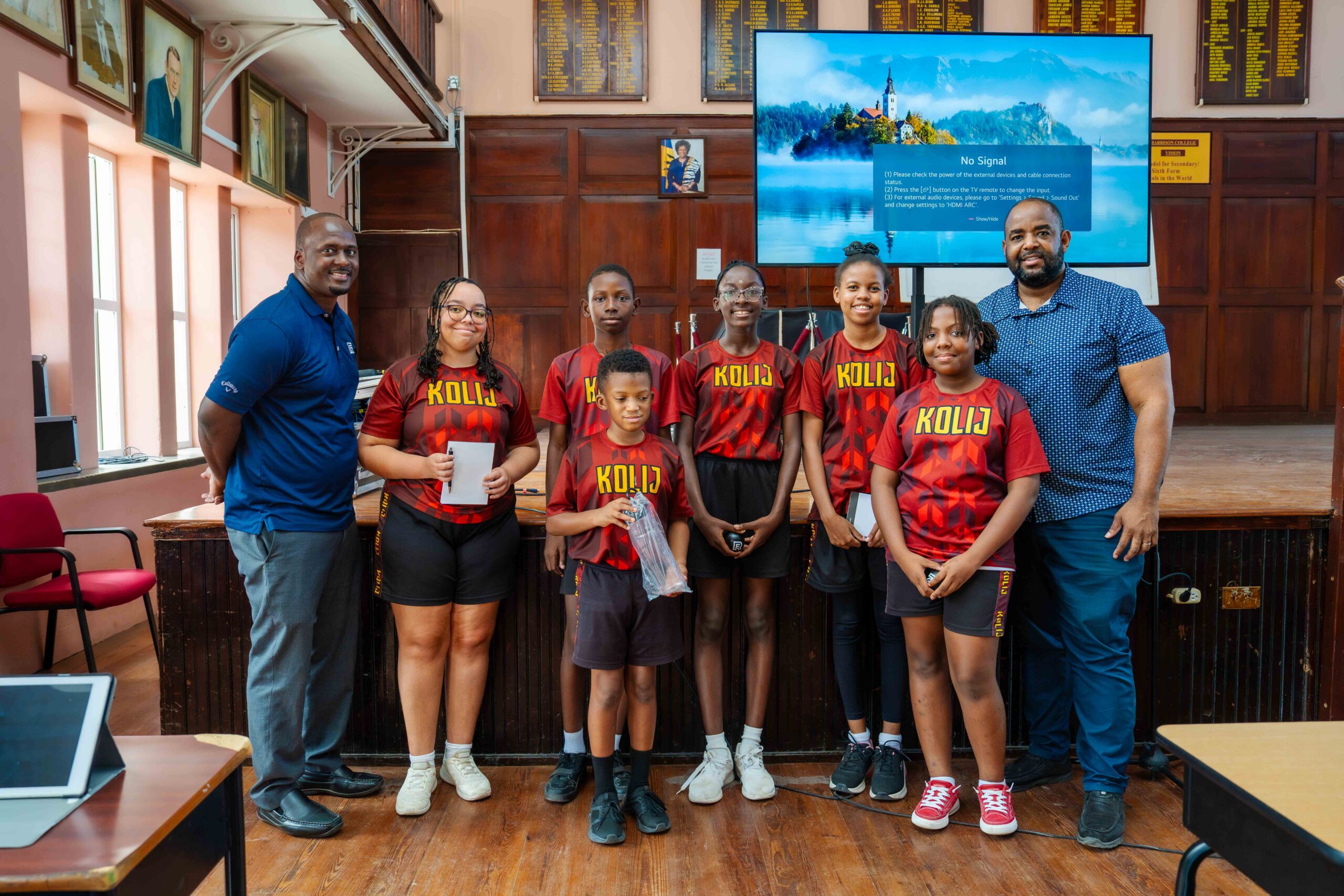
    Against a growing regional push to integrate digital learning and financial capability building for young people, RF Merchant Bank & Trust (Barbados) Limited has expanded its sponsorship of a groundbreaking AI-driven stock market simulation initiative, bringing hands-on investing education to more than 300 new students at Barbados’ Harrison College. This expansion pushes the total number of program beneficiaries under RF’s sponsorship to nearly 800 across three leading Barbadian secondary schools: Harrison College, The Lodge School, and Combermere School.

    The initiative, branded the Sustainable Stock Market Artificial Intelligence Game, is a collaborative effort between RF Merchant Bank, regional Caribbean tech firm WizdomCRM, and Barbados’ Ministry of Education Transformation, designed to close gaps in youth financial literacy across the island. To mark the launch of this latest expansion phase, the partner organizations held an interactive financial literacy school tour last Friday. Lamar Goring, senior brokerage manager at RF, joined representatives from WizdomCRM and the education ministry to lead engagement sessions with participating students, answering questions and connecting classroom learning to real-world financial contexts.

    Goring emphasized that for the bank, this program is far more than a corporate social responsibility activity—it is a long-term investment in Barbados’ next generation. “We are pleased to be supporting young Barbadians on their educational and financial journeys,” he noted. Echoing this alignment with WizdomCRM’s core mission, Goring added that RF remains committed to backing community-focused, transformative programs that empower local young people: “We share WizdomCRM’s commitment to empowering Caribbean students through tools that celebrate their unique standpoints, and we will continue to stand behind transformative initiatives like the stock market game, which uplift the communities we serve.”

    Unlike traditional textbook financial education, the AI-powered game gives students the chance to build and manage fully virtual investment portfolios tied to real local, regional, and international stock market performance. This hands-on simulation introduces core finance concepts including sustainable investing, market trend analysis, and long-term financial planning through adaptive AI learning tools that meet students at their skill level.

    Across the entire Caribbean region, the program has already reached more than 16,500 students, as education leaders and private sector partners increasingly prioritize innovative, tech-integrated approaches to closing financial literacy gaps. For WizdomCRM, the expanded partnership with RF highlights the impact of cross-sector collaboration on preparing young people for an evolving global economy. “This partnership demonstrates what becomes possible when financial institutions, education systems, and technology platforms work together with intentionality,” the company stated. “Through artificial intelligence, financial literacy, and real-world market concepts, we are not only strengthening student engagement but helping to shape a generation that is more confident, analytical, and prepared for the future of work, economic participation, and long-term national development.”

    RF’s partnership with WizdomCRM first launched in October 2023, during global World Investor Month, with an initial sponsorship covering participating students at The Lodge School and Combermere across consecutive program cycles. The addition of Harrison College extends the initiative’s reach to one of Barbados’ most prominent secondary institutions, at a time when both financial literacy and digital education are rising on regional policy and development agendas. The launch tour also aligned with the conclusion of global Financial Literacy Month, observed each April, and forms a core component of RF’s broader organizational strategy focused on youth empowerment and measurable community impact.

  • Saint Lucia students try out new flexible CXC exam system

    Saint Lucia students try out new flexible CXC exam system

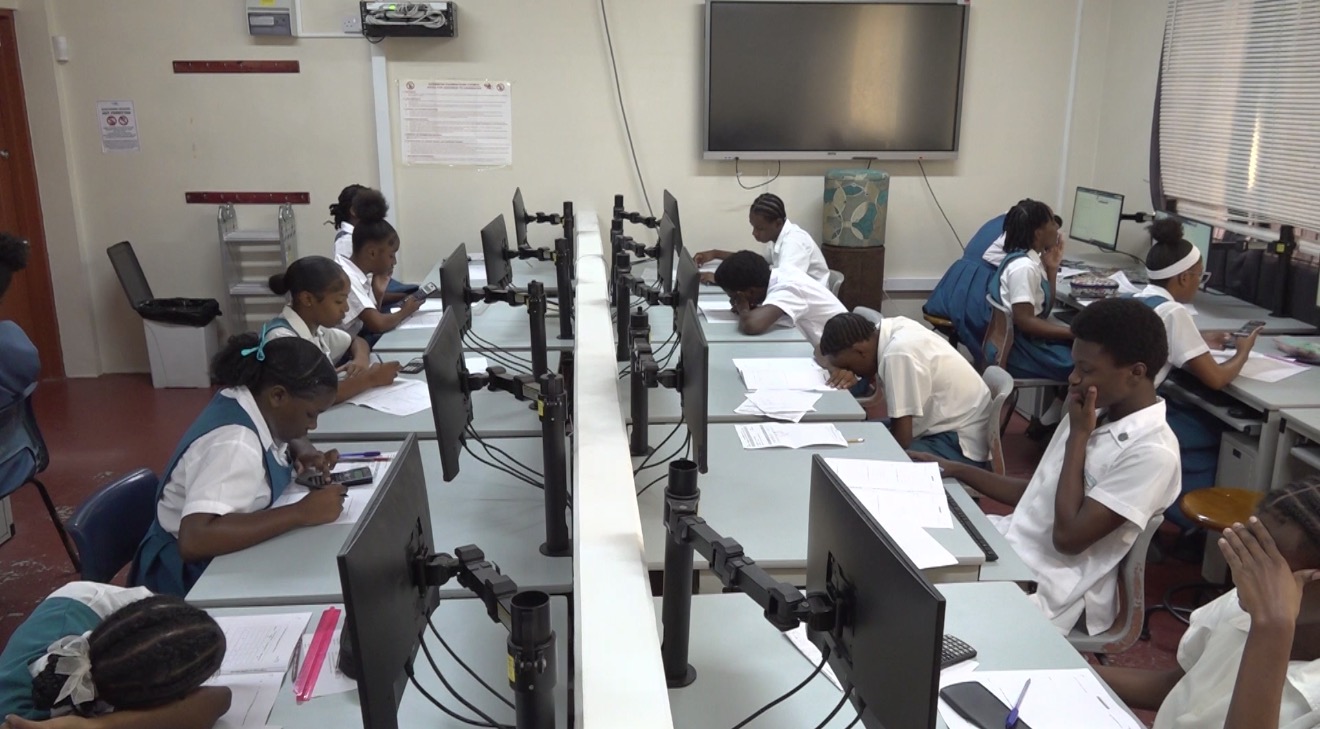
    A landmark shift in secondary education assessment across the Caribbean is underway, as Saint Lucia hosted the inaugural sitting of the Caribbean Targeted Education Certificate (C-Tech) exams this week. The new modular assessment framework, which launched Tuesday, is designed to upend the traditional one-and-done testing model that has long defined the region’s Caribbean Secondary Education Certificate (CSEC) system.

    Unlike the standard CSEC structure, which requires students to sit exams for all required subjects in a single sitting to earn full certification, C-Tech enables learners to complete their syllabus in incremental, self-paced stages. Students work toward their full credential one module at a time, gradually building up to a full CSEC pass after successfully completing three separate modules.

    Patterson Abraham, Registrar of Examinations at the Caribbean Examinations Council (CXC), the body governing regional education assessments, explained that CXC selected mathematics as the subject for the very first C-Tech module. Mathematics has historically been one of the most challenging subjects for students across all Caribbean nations, with consistent low pass rates dragging down overall academic outcomes for thousands of learners annually.

    Drawing on decades of regional performance data, Abraham noted that the staggered modular model gives students far greater opportunity to earn incremental micro-credentials along their journey, even before they complete the full certification requirement. By breaking the large, comprehensive mathematics syllabus into smaller, more focused sections, the framework reduces the academic burden placed on learners. “The number of areas that they have to cover is less than the CSEC programme,” Abraham explained. “Students can focus on a few topics at a time, and to be able to do as well as they can on just one module, and then to build onto the next module.” This segmented approach makes the subject far more manageable, lowering the barrier to success for struggling learners.

    After completing site visits to multiple participating examination centers on the first day of testing, Abraham reported that the launch went far smoother than many observers expected. The first C-Tech exam used a modern hybrid format: paper one of the module was administered prior to Tuesday, and Tuesday’s sitting was for paper two, where students accessed test questions via digital devices and recorded their responses in traditional printed answer booklets. This blended digital-write-in structure marks a small but meaningful step toward modernizing assessment practices across the region.

    Abraham confirmed that no major logistical issues or security incidents were reported across any testing sites, with all operations running according to plan. “From my visits and from my communication with the centres that are doing C-Tech, everything seemed to be under control,” he said. Regional education officials are now optimistic that the full 2024 C-Tech exam sitting will conclude successfully, paving the way for a broader rollout across other Caribbean nations in coming years.

    Framing the new initiative as a transformative milestone for Caribbean secondary education, Abraham expressed confidence that the flexible modular framework will deliver tangible long-term benefits, boosting overall academic performance and opening up more education and career pathways for regional students.

  • AdeKUS Student Chapter vertegenwoordigt Suriname tijdens PetroBowl 2026 in Argentinië

    AdeKUS Student Chapter vertegenwoordigt Suriname tijdens PetroBowl 2026 in Argentinië

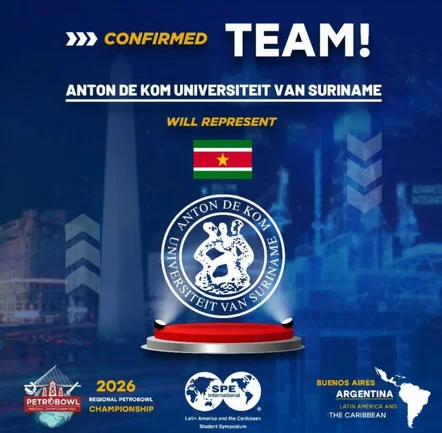
    A student team from the Society of Petroleum Engineers (SPE) Student Chapter at Anton de Kom University of Suriname (AdeKUS) is set to carry Suriname’s flag at the 2026 Latin America and the Caribbean Regional PetroBowl, scheduled for May 15 in Buenos Aires, Argentina. The quiz-style competition is held as a core event of the annual regional SPE Student Symposium, gathering top university student teams from across the region to compete in expertise, collaboration and professional growth.

    Organized globally by SPE International, the PetroBowl is a leading international academic competition centered on technical and industry knowledge specific to the oil and gas sector. Unlike standard academic quizzes, the contest is designed to test deep domain expertise, fast problem-solving, and cohesive teamwork, with a core mission of nurturing the next generation of energy sector professionals.

    The 2026 Surinamese delegation consists of five members: team captain Rishano Hapdoel, competitors Altaaf Sultan, Latusca Reboe, and Ariantxa Djojodikromo, with academic mentors Manisha Ori and Shaïza Simons guiding the team ahead of the competition. This year’s participation builds on a historic milestone for the program: in 2024, AdeKUS’s student team claimed the regional PetroBowl championship title, a win that put Suriname’s emerging energy talent on the international map and highlighted the high caliber of the university’s petroleum-related programs.

    Beyond competition, the PetroBowl serves as a globally recognized platform for talent development. For participating students, the event offers far more than an opportunity to test their knowledge against international peers. It opens doors to structured professional development opportunities, including specialized technical training, cross-border networking events with industry leaders, and pathways to global competitions such as the international PetroBowl and SPE’s Student Paper Competition. These experiences directly prepare young professionals to tackle the complex technical and social challenges facing the modern energy sector.

    The Suriname team’s trip and participation are made possible through collaborative support from local industry and regional SPE bodies, including SPE Suriname (SPESUR), national energy firm Staatsolie, and local enterprise Self-Reliance. For these backers, supporting the student delegation is more than sponsorship—it is an investment in developing local talent and building domestic expertise in Suriname’s growing energy sector. The partnership also underscores the critical value of bridging academic education and industrial practice to advance the sustainable development of Suriname’s energy industry, as the country continues to expand its presence in the global oil and gas market.

  • Caught in the Machine: How AI Is Upending the Classroom and What It Means for the Caribbean

    Caught in the Machine: How AI Is Upending the Classroom and What It Means for the Caribbean

    In 2024, a Maryland high school student named Ailsa Ostovitz learned firsthand the unforeseen costs of the global rush to police AI use in education. When she turned in a deeply personal essay about her love of music, her teacher ran the submission through a commercial AI detection tool, which incorrectly flagged the work as machine-generated and downgraded her grade. Ostovitz, who never used AI to draft the assignment, told NPR her frustration was overwhelming: “I write about music. I love music. Why would I use AI to write something that I like talking about?”

    Ostovitz’s experience is far from an isolated incident. It has become an increasingly common reality as generative AI tools like ChatGPT have upended academic norms across North America, Europe, and now the Caribbean. While mainstream headlines have centered chaos in U.S. and U.K. campuses, students across Caribbean nations—including Belize, where learners are currently preparing for CSEC and CAPE School-Based Assessments (SBAs)—are now navigating a web of new AI rules, detection tools, and punitive consequences that did not exist just two years ago.

    There is no denying that AI-facilitated academic misconduct is a growing challenge. A 2024 investigation by The Guardian, drawing on official data from 131 U.K. universities, recorded nearly 7,000 confirmed AI-related cheating cases that academic year—equivalent to 5.1 cases per 1,000 students, up sharply from just 1.6 cases per 1,000 the year prior. A separate survey from the Higher Education Policy Institute found that 88% of all students now use generative AI for their assessments, a jump from 53% just 12 months earlier. Researchers at the University of Reading tested popular AI detection systems and found that 94% of fully AI-generated work slipped past the tools undetected. Traditional plagiarism, by contrast, has plummeted: what once made up nearly two-thirds of all academic misconduct has now been displaced by a harder-to-detect, harder-to-define form of academic dishonesty. Cheating has not disappeared—it has fundamentally transformed.

    Casey Cuny, a 23-year veteran California high school English teacher, summed up the scale of the shift in a 2025 Associated Press interview: “The cheating is off the charts. It’s the worst I’ve seen in my entire career.” At St. Peter’s University in New Jersey, professor Stephen Cicirelli went viral on social media after highlighting a particularly absurd example: one of his students turned in a fully AI-written paper, then followed up with an apology email that was also written by ChatGPT.

    The widespread institutional response to this shift has been to fight AI with AI. Turnitin, the plagiarism detection platform used by more than 16,000 academic institutions globally, launched an AI detection feature in 2023, and competitors like GPTZero and Copyleaks quickly followed suit. School districts have poured hundreds of thousands of dollars into these tools: Florida’s Broward County Public Schools signed a three-year $550,000 Turnitin contract, while an Ohio school district pays GPTZero roughly $5,600 annually to serve 27 of its teachers.

    But leading academic integrity researchers universally agree these tools are too unreliable to shape high-stakes decisions about students’ academic futures. “It’s now fairly well established in the academic integrity field that these tools are not fit for purpose,” says Mike Perkins, a leading AI and academic integrity researcher whose work is cited by the Caribbean Examinations Council (CXC) in its own AI policy framework. Perkins’ research found that top detectors regularly mislabel genuine student work as AI-generated, and their accuracy drops even further when students lightly edit AI text to read more like human writing.

    Even the companies that sell these tools acknowledge their flaws. Turnitin states openly on its website that its AI detection “may not always be accurate… so it should not be used as the sole basis for adverse actions against a student.” GPTZero CEO Edward Tian has echoed that caution, saying “We definitely don’t believe this is a punishment tool.” Despite these warnings, a 2025 nationally representative poll from the Center for Democracy and Technology found that more than 40% of U.S. 6th to 12th grade teachers used AI detection tools in the 2024–2025 school year, even as most admitted the tools are flawed. A small number of leading institutions, including UCLA and UC San Diego, have taken a bolder step, deactivating all AI detectors entirely over unacceptable rates of false positives.

    One of the most alarming, and most underreported, flaws of AI detection tools is their systematic bias against students who speak English as a second language—a dynamic that carries outsized risk for Caribbean learners. A 2024 study from Stanford computer scientists found that seven leading AI detectors incorrectly flagged non-native English speakers’ writing as AI-generated 61% of the time. For roughly 20% of those papers, every detector tested unanimously agreed the authentic human work was machine-produced. By contrast, detectors almost never made that mistake when evaluating writing from native English speakers.

    This bias is baked into the design of the tools: AI detectors flag text as machine-generated when it uses predictable word choice and simple syntactic structure, patterns that are common in writing by non-native English speakers. “The design of many GPT detectors inherently discriminates against non-native authors, particularly those exhibiting restricted linguistic diversity and word choice,” explained study co-author Weixin Liang. For Caribbean students, this is not an abstract academic concern: across CSEC and CAPE cohorts, English is the medium of instruction, but many students go home to households where Kriol, Garifuna, Spanish, or other regional languages are the primary language. A student writing in straightforward sentence structure because they are translating their thoughts from a first language faces the same risk of false flagging as non-native speakers at U.S. and European universities.

    Taylor Hahn, a Johns Hopkins University instructor who noticed this pattern in Turnitin’s flagging of international students’ work, recalled one meeting where a student immediately produced clear proof of original work—full draft notes, annotated drafts, and handwritten outlines—proving the tool had simply been wrong. Incidents like this have pushed students to take extreme measures to avoid false accusations, sparking a new technological arms race in classrooms. As detection tools proliferated, a multi-million dollar counter-industry of “AI humanizer” tools emerged almost overnight. More than 150 of these tools now exist, designed to rewrite AI-generated text to evade detection algorithms. While some are free, others charge a $20 monthly subscription, and the industry drew 33.9 million website visits in a single month at the end of 2025.

    While many users rely on humanizers to cover up intentional cheating, a growing number of students who never use AI run their own original work through these tools just to avoid false accusations—a heartbreaking compromise that erodes the quality of their writing. Brittany Carr, a Liberty University student, was falsely flagged after turning in a personal essay about her own experience with a cancer diagnosis. “How could AI make any of that up?” she wrote to her professor. “I spoke about my cancer diagnosis and being depressed and my journey and you believe that is AI?” Fearing that a false finding would cost her VA educational financial aid, Carr began running every assignment through detection tools and rewriting any section the tools flagged. “But it does feel like my writing isn’t giving insight into anything. I’m writing just so that I don’t flag those AI detectors.” After the semester ended, she dropped out of the university entirely.

    Back in Maryland, Ailsa Ostovitz now spends an extra half hour running every assignment she writes through multiple detection tools before submitting, just to avoid the grade penalty she received once. Turnitin has responded to the rise of humanizers by launching new “bypasser detection” features, while humanizer tools have updated their technology to mimic human keystroke patterns to defeat browser-based tracking. As one student put it: “So it’s like, how far do you want to go down the rabbit hole? I’m making myself crazy.”

    While the detection arms race spirals out of control in North America and Europe, the Caribbean has taken a fundamentally different approach, centered on human judgment rather than algorithmic verdicts, and framing AI as a pedagogical resource rather than an existential threat. In a May 2026 video address titled “Who You Choose to Be,” CXC Director of Operations Dr. Nicole Manning spoke directly to regional students and teachers, delivering an unambiguous message on AI detection: “AI checkers are one input. They are not the verdict. There will be human interventions right through the process to ensure fairness.”

    That policy comes in response to a gap the CXC identified across the region: a December 2024 CXC study found that roughly 70% of Caribbean nations still lack official national AI policies for education, even as AI tools have become ubiquitous in regional classrooms. That gap prompted the CXC to develop a comprehensive Standards and Guidelines framework that went into effect for the 2026 May-June examination cycle—the same sitting that thousands of students across Belize and the Caribbean are currently preparing for.

    Under the CXC framework, AI is permitted for use in SBAs with clear, transparent boundaries. Students can use AI to brainstorm ideas, clarify difficult concepts, explain unfamiliar terms, or draft structural outlines for their work. They may not submit work that is generated wholly or mostly by AI, and any student who uses AI in any capacity must submit a formal disclosure form and originality report. The acceptable AI similarity threshold is set at 20%, and teachers are required to provide detailed rationale for any findings of academic misconduct for submissions that exceed the threshold.

    The framework draws directly on the AI Assessment Scale developed by Mike Perkins, the same researcher who has repeatedly warned that commercial AI detectors are “not fit for purpose.” Instead of outsourcing academic judgment to unproven software, the CXC built its system around the longstanding teacher-student relationship that sits at the core of effective education. “The teacher-student relationship built over months of observation, drafts, conversations, and guidance remains central to how SBAs are moderated and assessed,” Dr. Manning explained.

    CXC Registrar and CEO Wayne Wesley added that the framework requires a rethinking of longstanding assessment practices: “You have to engage students in more one-on-one conversations to appreciate whether the work they are presenting is truly their own. It also requires us to re-think how assessment is done from a summative and formative standpoint.”

    At the tertiary level, the University of the West Indies (UWI), whose Open Campus serves students across Belize and the entire Caribbean, is also moving toward systemic, region-specific change. In late April 2026, UWI announced a partnership with the University of the West of Scotland to join the IntegraGuard Project, an initiative designed to build fair, transparent academic integrity systems that combine AI-assisted detection with human investigation—rather than replacing human judgment with algorithmic decisions. UWI has also finalized its own institutional Artificial Intelligence Policy Framework and launched a dedicated AI Institute at its St. Augustine Campus, designed to address the Caribbean’s unique development challenges through AI. The institute recognizes that the region cannot simply import policy frameworks designed for wealthy nations with different linguistic, historical, and educational contexts.

    As CXC Director of Technological Innovation Rodney Payne put it, reflecting on the region’s coordinated approach: “For us to benefit as a region, we need harmonious development, utilising the technologies across the board. It’s not going to help us if one state moves ahead quickly and the others are struggling to follow.”

    Most education experts agree that punishing students based on unreliable algorithmic findings is not a sustainable solution. Carrie Cofer, a Cleveland high school English teacher, tested GPTZero by uploading a chapter of her own PhD dissertation, and the tool labeled it 89 to 91% AI-written. “I don’t think it’s an efficacious use of their money,” she said of institutional spending on AI detection. “The kids are going to get around it one way or the other.”

    Erin Ramirez, an associate professor at California State University Monterey Bay, summed up the unfair burden placed on innocent students, a reality that hits Caribbean learners particularly hard: “Students now are trying to prove that they’re human, even though they might have never touched AI ever.” For students already navigating linguistic and economic barriers that many Caribbean learners face, the extra burden of proving their authenticity to a machine is an unnecessary injustice that should concern everyone in education.

    A small but growing number of institutions have already rejected detection tools entirely: the University of Pittsburgh scrapped all AI detection in 2025, concluding that false positives “carry the risk of loss of student trust, confidence and motivation, bad publicity, and potential legal sanctions.” Most global institutions have not yet followed that lead. But the CXC’s alternative framework offers a clear path forward, centered on core academic values rather than technological panic. As Dr. Manning put it: “Integrity is not about whether a machine can detect what you did. It is about who you choose to be.”

  • CXC® reaffirms pro-student-teacher stance on responsible use of AI in SBAs

    CXC® reaffirms pro-student-teacher stance on responsible use of AI in SBAs

    As generative artificial intelligence continues to reshape learning environments across the globe, regional examination bodies are navigating uncharted territory to balance technological innovation with academic integrity. The Caribbean Examinations Council (CXC®) has stepped forward to address growing uncertainty among students, teachers, and families across the Caribbean region, releasing a clear, compassionate policy framework for AI integration in School-Based Assessments (SBAs) that prioritizes fairness, human oversight, and educational integrity.

    In a public video address shared across CXC®’s official website and social media platforms, Dr. Nicole Manning, the council’s Director of Operations, openly addressed both the transformative opportunities and pressing challenges that AI tools bring to academic work and SBA development. She offered targeted reassurance to stakeholders adjusting to the rapidly evolving digital education landscape, acknowledging widespread anxiety around how AI would be policed in regional assessments.

    A core point of public concern has centered on the reliability of commercial AI detection tools, which researchers have repeatedly shown to produce high rates of false accusations against student work. In response to these worries, Dr. Manning emphasized that AI detection software will never serve as the sole evidence for penalizing a student’s submission. “The teacher-student relationship built over months of observation, drafts, conversations, and guidance remains central to how SBAs are moderated and assessed,” Dr. Manning stated in her address. “AI checkers are one input. They are not the verdict. There will be human interventions right through the process to ensure fairness,” she added.

    CXC®’s updated guidelines draw a clear line between acceptable and unacceptable AI use for students completing SBAs. The council permits learners to leverage AI as a supportive study tool: students may use AI to clarify complex concepts, brainstorm project ideas, explain challenging terminology, or draft structural outlines for their work. However, any use of AI, no matter how minor, requires full transparency: students must disclose their AI utilization via a mandatory Disclosure Form and Originality Report, citing the tool as a source in their final submission. For students who complete their work without any AI assistance, no additional documentation is required.

    The council classifies the submission of work generated entirely or predominantly by AI without disclosure as a case of academic dishonesty. Any such cases will be processed through the organization’s established irregularity protocols, with collaborative input from the candidate, their classroom teacher, and school leadership to reach a fair outcome.

    Recognizing the extra burden that adapting to AI-integrated assessment places on Caribbean educators, Dr. Manning reaffirmed CXC®’s commitment to supporting teachers through the transition. The council will provide targeted resources and specialized training to help educators implement the new guidelines consistently and confidently. “You are not alone in this,” she told the teaching community. “Engage your students in honest conversations about how they use these AI tools. Guide them on what they can do, what they cannot, and why academic integrity matters beyond the examination room.”

    For Caribbean students, Dr. Manning offered a reflective call to prioritize personal integrity over shortcutting assessment requirements. “Integrity is not about whether a machine can detect what you did. It is about who you choose to be,” she said.

    Dr. Manning’s full address, titled “Who You Choose to Be,” is available for public viewing on CXC®’s official YouTube channel. The complete Standards and Guidelines on Generative AI Use in School-Based Assessments can be downloaded at the council’s official website, www.cxc.org.