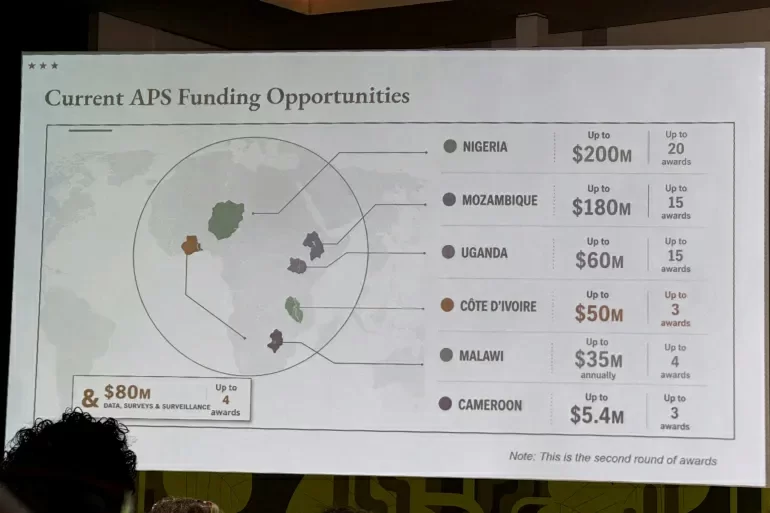
In late July 2026, during the high-profile AIDS 2026 international health conference hosted in Rio de Janeiro, Brazil, a glaring geographic error by U.S. officials drew widespread attention and reflection across global communities—including the small South American nation of Suriname.
The mistake unfolded mid-presentation from the U.S. Department of State, which was discussing newly negotiated, controversial health agreements with African nations. These talks came on the heels of the Trump administration’s deeply controversial, unprecedented cuts to global health aid that have left millions of vulnerable communities at heightened risk. On a presentation slide, an AI-generated map of Africa was displayed, with mislabeled and drastically misplaced countries that left many attendees stunned. Nigeria, the most populous nation in West Africa, was incorrectly placed within the boundaries of the Sahara Desert. Mozambique, a southern African coastal nation, was shifted all the way to the Horn of Africa on the continent’s eastern edge. Even Côte d’Ivoire, another West African state, was relocated across the entire continent to a wrong position.
After the error circulated publicly, it was confirmed that the incorrectly labeled map had been produced entirely by artificial intelligence. The blunder quickly became a talking point around the world, illustrating that even leading global powers can face unforeseen pitfalls when relying on unvetted new AI technologies. For many, it raised important questions about the growing dependence on automated tools and the erosion of foundational human geographic knowledge.
In Suriname, the map error struck a particular chord, stirring nostalgic reflection among older generations who received a far different foundational education than today’s youth. Surinamese people now in their 60s and 70s recalled rigid, thorough geography requirements during their school years: they were expected to memorize every country and its capital, identify nations on blank (or “blind”) maps with no labels, and draw accurate national and continental borders across Europe, Asia and other world regions. Students were also required to master global ocean and sea geography, including which bodies of water separated continents and which nations bordered major waterways. These requirements held even as the global map shifted over decades, with dozens of new nations emerging from the breakup of the Soviet Union and other geopolitical reorganizations.
The blunder became a lively topic of discussion among a group of retired education workers who gather for water aerobics in Suriname, and the conversation quickly expanded beyond geography to broader shifts in modern education. The group noted that today’s young Surinamese students are no longer required to memorize proverbs from their native cultures—once a core part of primary school curricula that required learning both the saying and its cultural meaning. They laughed as they recalled old primary school readers that featured content disconnected from Suriname’s tropical climate: lessons about snow, winter and Northern European seasons that local teachers often skipped, since most Surinamese people had never seen snow, and the content felt alien to their lived experience.
Beyond these nostalgic anecdotes, the conversation revealed a growing concern: just as the U.S. AI blunder exposed gaps in geographic knowledge among senior officials, many Surinamese educators and observers note that today’s younger generations often lack basic familiarity with global countries and capitals. Cultural proverbs are seen as outdated and irrelevant to modern life, and many young people prefer to use English borrowed from global popular music over their own native mother tongues.
For many Surinamese commentators, this high-profile U.S. mistake serves as a critical wake-up call. It reminds communities that education must do more than teach technical digital skills: it must also ground young people in foundational global knowledge, their own history, and their cultural roots. This need is particularly acute in Suriname, a nation defined by its rich multicultural history and diverse population.
As the reflection from Suriname makes clear, knowledge of the broader world begins with knowledge of oneself and one’s origins. Even amid rapid technological change, the next generation benefits immensely from staying connected to their cultural roots while building a robust understanding of the world around them. A correctly placed, well-understood map does more than show where nations sit on the globe—it reveals who we are, and where we come from.