标签: Trinidad and Tobago

特立尼达和多巴哥

  • Joshua’s father held

    Joshua’s father held

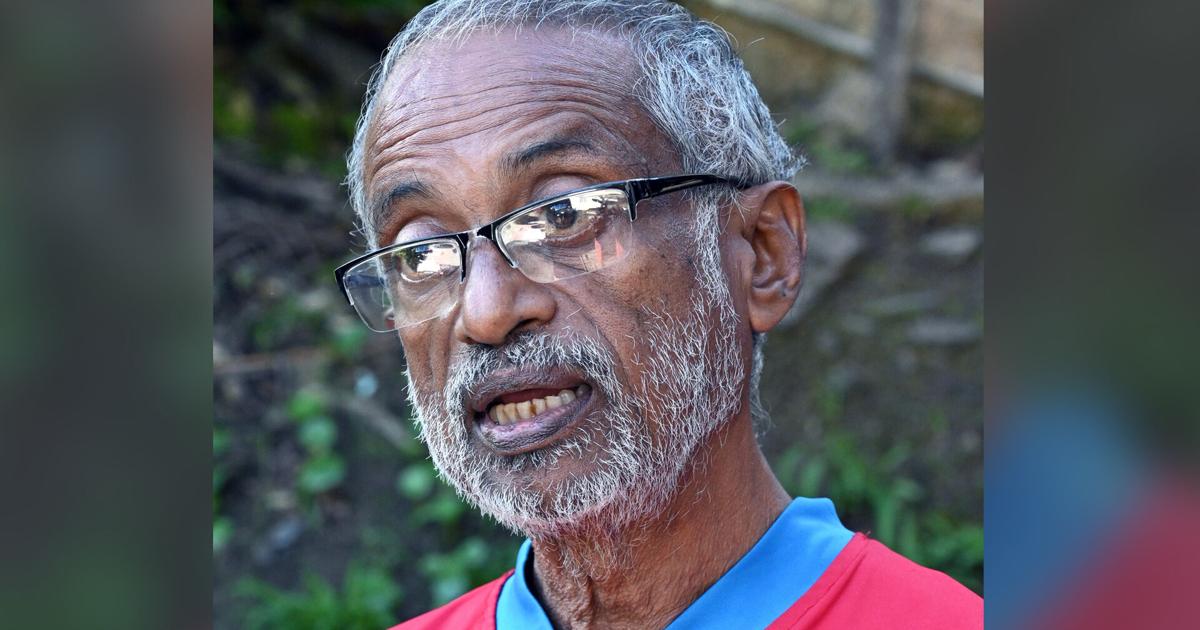
    A grieving Trinidadian father, Christopher Samaroo, whose son Joshua was killed in a police-involved shooting earlier this year, has been taken into custody under national emergency regulations after voluntarily contacting police to clear up misrepresented comments he made in a public radio interview.

    Joshua Samaroo died on January 20 following a confrontation with law enforcement officers in St Augustine. Following his death, Joshua’s common-law wife Kaia Sealy has been hit with multiple criminal charges, including manslaughter, three counts of shooting with intent to cause grievous bodily harm, and additional related offenses. On Father’s Day, Christopher Samaroo joined an i95.5FM radio program to talk about his months-long experience of grief after losing his son. The discussion also included Ronald “Crab” Cabrera, who was still mourning the murder of his 12-year-old daughter Mercedez Layne.

    During the emotional interview, Samaroo opened up about his frustration with the circumstances of his son’s shooting and shared that he had little confidence that the ongoing legal process would deliver a fair outcome. Some of his critical remarks directed at law enforcement were clipped and shared widely across social media, cutting out key surrounding context from the full conversation. The radio program’s host intervened shortly after Samaroo made the comments in question, and only the truncated segment was circulated online.

    Sensing growing concern over the misrepresented clips, Samaroo chose to voluntarily meet with police to clarify what he actually said, accompanied by his defense attorney Aaron Lewis. According to Lewis, the pair first arrived at Port of Spain’s Central Police Station around 5:30 p.m. on the day of the arrest, where Samaroo spent 40 minutes answering officers’ questions about the circulating statements. Lewis said Central Police Station officers told the pair they had no reports filed against Samaroo connected to the comments and no existing investigation into his remarks.

    After leaving Central Police Station, Samaroo and Lewis received word from family members that a specialized police unit had visited the family’s Maraval home to look for Samaroo. The pair then traveled to Maraval Police Station to follow up, but officers there claimed to have no information about any warrant for Samaroo or any visit to his residence. They then moved on to St Clair Police Station, where officers from the Criminal Investigations Department approached Samaroo and informed him he was officially the target of an investigation.

    Samaroo was formally cautioned and detained under Regulation 11 of the country’s Emergency Powers Regulations, the legal provision outlined in Legal Notice No 40. This regulation bans any action intended to sway public opinion in a way that could harm public safety, as well as any possession of materials or actions that support such an effort.

    Lewis decried the arrest as a deeply unfair and unfortunate outcome, emphasizing that his client’s full remarks had been deliberately twisted and stripped of context online. “His words were twisted in the manner in which they were presented. He made a report concerning what he actually said, and what was circulated was cut short and does not reflect the entirety of his statement,” Lewis told local outlet the Express just minutes after Samaroo was taken into custody.

    The attorney added that the arrest has worsened the severe emotional distress Samaroo has already endured since his son’s death. “To be cautioned and arrested for something like that, taking into consideration what he is going through with the loss of his son, is traumatic,” Lewis said. He noted that while Samaroo had braced for the possibility of police action, the actual experience of being taken into custody was far more overwhelming, particularly amid the ongoing state of emergency that grants authorities expanded power. “It is a serious matter,” Lewis added.

    As of the night of the arrest, law enforcement officials had not released any public details about the specific allegations against Samaroo or the full scope of the investigation. Before he was detained, Samaroo himself had pushed back against the misrepresented clips, confirming that the online version cut off key portions of his full remarks. “That is not totally what I said. They caught me halfway through. The whole thing was missing parts,” he said, adding that the circulating snippets failed to capture the full context of his comments about his son’s death and his grief.


  • THA wants $4.12 billion for 2026-2027 budget

    THA wants $4.12 billion for 2026-2027 budget

    In a formal presentation delivered to the Assembly Chamber in Scarborough on Tuesday, Tobago House of Assembly (THA) Finance Secretary Petal-Ann Roberts unveiled the body’s requested $4.12 billion expenditure budget for the 2027 fiscal year, which runs from October 1, 2026 to September 30, 2027. Framed under the guiding theme “Results Based Governance, A Pathway to Prosperity”, the budget proposal breaks down total requested spending into two core buckets: $3.03 billion allocated to ongoing recurrent operations, and $1.09 billion earmarked for targeted development programming, including a $43.35 million line item for the Community-Based Environmental Protection and Enhancement Programme (CEPEP).

    Roberts noted that the total request is calculated as a 6.6% share of Trinidad and Tobago’s projected $62.16 billion national budget for the period — a proportional allocation equal to just $6.60 of every $100 in national planned spending, matching the THA’s share in the current 2026 fiscal cycle. A line-by-line breakdown of the recurrent expenditure budget reveals that the Division of Health and Wellness has secured the largest single allocation, requesting $1.03 billion to support public health services across the island. Other major allocations include $519.60 million for the Division of Education, Skills and Innovation, $343.99 million for the Division of Public Infrastructure and Transportation, $193.28 million for the Division of Tourism, Antiquities and Creative Industries, and $181.94 million for the Office of the Chief Secretary, with all recurrent expenditure line items summing exactly to the $3.03 billion total.

    Breaking down the components of recurrent spending, Roberts reported that $805.52 million is allocated to personnel costs, $935.57 million covers goods and services, $67.95 million supports minor equipment purchases, and $1.22 billion goes toward current transfers and subsidies for public services.

    In a key policy shift, the budget restructures two long-running public employment and community development programs. The existing Unemployment Relief Programme (URP) will be rebranded and relocated as a new initiative under the Division of Public Infrastructure and Transportation, renamed the Programme for Infrastructure Upgrade in Urban and Rural Communities (IUURC), with an allocated $91.9 million in 2027 funding. Meanwhile, CEPEP has been realigned to the Division of Food Security, where its workforce will be leveraged to support growth and transformation of the island’s food production sector, retaining its $43.35 million approved budget.

    Beyond spending allocations, Roberts used the budget presentation to call attention to a long-standing fiscal dispute between the THA and the central national government. She pointed out that the THA’s officially recorded total annual tax revenue of $220.5 million, collected via existing national revenue and tax administration systems, significantly undercounts the actual tax revenue generated by economic activity within Tobago. A large share of revenue generated locally in Tobago is currently collected by tax authorities based in Trinidad, a practice that Roberts says violates Section 49 of the THA Act 40 of 1996, the legislation governing the autonomous body’s authority.

    Roberts emphasized that the only permanent solution to this decades-long fiscal inequity is the full completion of the Tobago internal self-government project, which would strengthen the THA’s legislative and enforcement authority to manage its own revenue streams in line with existing legal mandates.

  • US Navy SEALs to help fight crime

    US Navy SEALs to help fight crime

    During a phone interview with local outlet the Express while visiting the United States, Trinidad and Tobago Prime Minister Kamla Persad-Bissessar has outlined a sweeping expansion of bilateral security cooperation with Washington, aimed at tightening border control, curbing drug trafficking, and dismantling organized crime across the twin-island nation.

    Persad-Bissessar, who is in the U.S. to attend the funeral of her brother-in-law Michael L Ahamad and will return to Trinidad and Tobago tomorrow, with Works and Infrastructure Minister Jearlean John serving as acting Prime Minister in her absence, emphasized that the current government has reversed the security failures of the previous People’s National Movement (PNM) administration. She claimed that under her leadership, national borders are now more tightly controlled, additional Coast Guard vessels patrol territorial waters daily, and the national coastal radar system is fully operational – a stark contrast to conditions under the former government, which she accuses of having left borders porous for criminal networks.

    The Prime Minister confirmed that in the coming months, Trinidad and Tobago will receive additional maritime patrol vessels from the United States to boost coastal security. Beyond equipment support, U.S. military and intelligence agencies are ramping up their on-the-ground presence to support local anti-crime operations. Currently, advance elements of U.S. Navy SEAL teams are already in the country coordinating logistics for a larger upcoming deployment. As the U.S. military’s elite special operations force, named for their capability to operate across sea, air and land domains, these SEAL personnel will provide specialized training and operational support to the Trinidad and Tobago Coast Guard and Defence Force, focusing on border protection, drug interdiction, and internal security operations.

    While official data received regularly by the National Security Council, which Persad-Bissessar chairs, shows a measurable drop in serious violent crime across the country, and the Trinidad and Tobago Police Service (TTPS) has successfully disrupted multiple gang operations, the Prime Minister acknowledged that persistent security challenges remain. Drug shipments originating in South America continue to flow into the country through unpatrolled coastal areas of southern, southwestern, and central Trinidad. The coastline stretching from Caroni to Marabella, particularly its dense mangrove regions and informal squatter settlements, remains a high-risk smuggling corridor. Persad-Bissessar noted that these squatter communities are deeply infiltrated by criminal gangs, creating safe havens for illicit activity. Beyond transnational drug trafficking, the nation is also grappling with rising petty crime committed by non-gang-affiliated ordinary citizens, alongside ongoing issues of financial fraud and domestic violence. She explained that decades of unpunished lawbreaking have eroded social norms, leading some normally law-abiding residents to commit minor offenses, creating a gradual slide toward broader lawlessness.

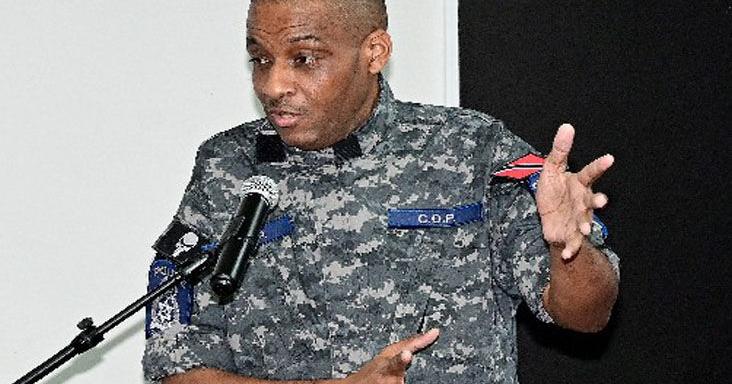
    In a surprising endorsement, Persad-Bissessar awarded Police Commissioner Allister Guevarro an “A” grade for his performance over his first year leading the TTPS, noting his progress in targeting entrenched criminal groups while acknowledging that fully dismantling long-established community gangs will require years of sustained effort.

    On countering transnational financial crime, Persad-Bissessar highlighted critical intelligence support from U.S. agencies, which have identified individuals, business owners, and banking employees linked to cartel drug trafficking and money laundering operations who have moved billions of U.S. dollars out of the country illicitly for years. U.S. authorities have already begun punitive action against these networks, restricting their access to U.S. territory and the American financial system. The U.S. is also supporting upgrades to both physical and digital security infrastructure at Trinidad and Tobago’s major airports and seaports to strengthen border screening.

    Persad-Bissessar criticized the former PNM administration for rejecting the full package of U.S. security assistance that was already available to them, accusing the previous government of intentionally leaving borders and ports open to allow traffickers to flood the country with illegal narcotics and weapons.

    Looking ahead, the government plans to expand its holistic anti-crime strategy with new legislative measures and increased human resources. To crack down on white-collar crime and the financial networks backing drug trafficking and gang activity, the government is actively recruiting new staff for the understaffed Inland Revenue division, which previously operated at only 25% of its authorized workforce. The division is also receiving upgrades to its tax administration technology, boosting the state’s ability to monitor and investigate illicit financial activity.

  • Family pleads for help after fire

    Family pleads for help after fire

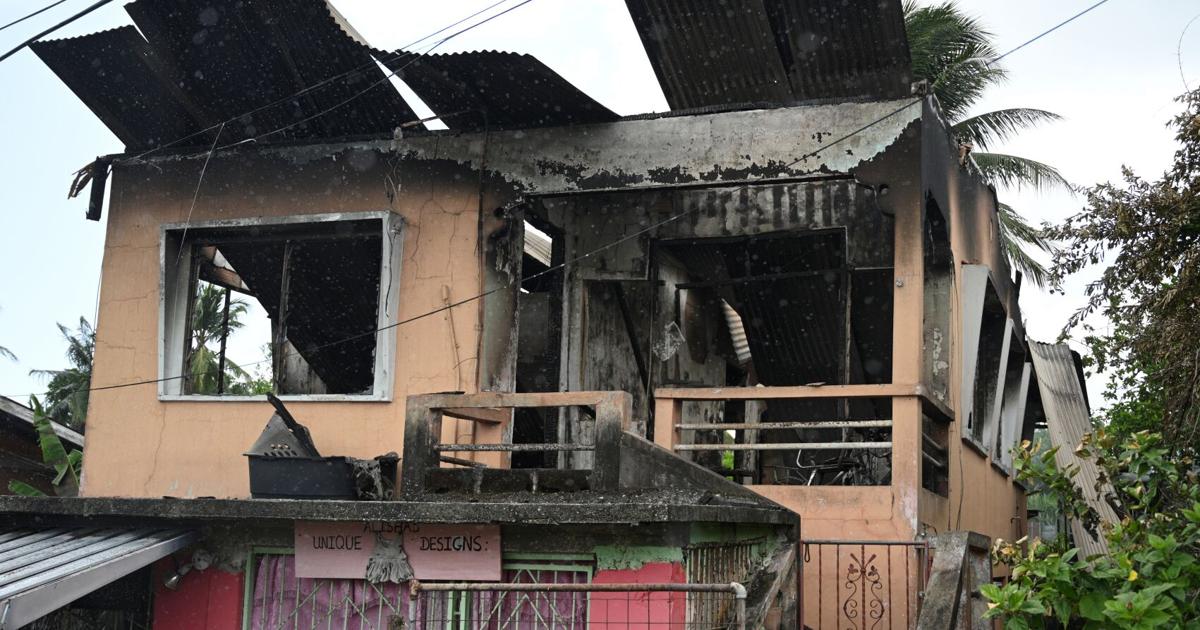
    A devastating fast-moving blaze has left a family of six displaced and with no personal possessions after destroying their two-storey residence in La Romaine, Trinidad and Tobago, this Sunday, prompting a public call for urgent assistance to help the group rebuild their lives. The inferno quickly tore through the mixed wood-and-concrete home located on Lucky Street Extension, overwhelming desperate, immediate efforts by nearby neighbors to contain the fire and save the property before emergency crews arrived.

    The home housed two family groups across its floors: Aaliyah Small, 25, shared the ground floor with her mother Alisha Mohammed, while Mohammed’s 35-year-old sister Derecia Christopher, Christopher’s three young children, and Christopher’s fiancé lived in the upper-level apartment. According to the family’s timeline, Christopher and her household locked their upper floor and left the property around 7:30 a.m. on the day of the fire. Roughly two hours later, Mohammed and Small, who were on the ground floor, noticed unusual noise coming from the empty upper apartment. Upon investigation, they discovered the space was already engulfed in flames.

    Neighbors spotted thick smoke and bright flames billowing from the structure almost immediately, and rushed across to help the family evacuate and battle the blaze, but the fire spread too quickly through the building’s wooden framing. Small recalled the chaotic scene when local media visited the fire-ravaged site the following day, saying “I ran outside when I saw smoke at the top of the house, the roof was engulfed in flames. Everything started to collapse inside the house. The neighbours came across and tried to help us. They even wet the dogs to protect them from the heat. We tried to move the car out of harm’s way, but we couldn’t get it out in time.”

    Preliminary investigations into the cause of the fire point to an electrical fault as the most likely source, though official probes are still ongoing to confirm the origin. Remarkably, the entire family escaped the disaster without injury: all residents who had been on the property got out safely before the structure collapsed, and the upper-floor household was already out when the fire broke out, a fact local officials have highlighted as a small blessing amid the tragedy.

    Local Government Councillor Raven Ramsawak was among the first officials to respond to the family after the fire, visiting the site to deliver immediate emergency aid including non-perishable food, bottled water, and other basic necessities, while also arranging temporary shelter for the displaced family. Speaking to reporters, Ramsawak emphasized that while the material loss was total, the outcome could have been far worse, noting “Thankfully, no one was hurt nor did anyone lose a loved one. Those who were home escaped without injury. Those in the upper floor were not at home, and we’re grateful for that as the fire started near the electrical wires, which quickly spread onto the roof that became engulfed in the flames.”

    To expand support beyond emergency aid, Ramsawak has shared a formal appeal for public donations via his official Facebook page, outlining exactly what the family needs to get through the coming weeks. The requested items include both cooked and uncooked food, general groceries, clothing for adults and children (two five-year-olds and one ten-year-old), basic over-the-counter medication, and sanitary products. Members of the public who wish to donate or offer any other form of assistance can contact Ramsawak’s office at 320-0325, or reach family members directly at 731-7259 (Small) and 334-5582 (Christopher).

    Photographs from the scene show Small pulling a single damaged bicycle from the charred rubble of the home — the only personal item the family has managed to recover from the blaze, underscoring the total loss the group has suffered.

  • REGION FACES CHALLENGES

    REGION FACES CHALLENGES

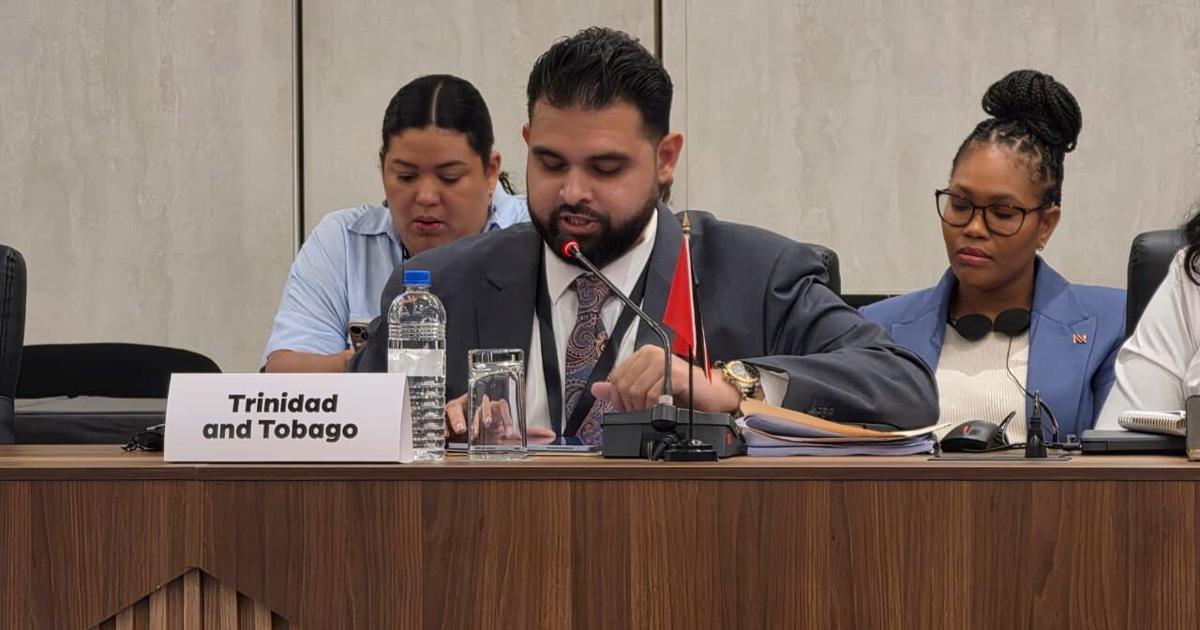
    Speaking at a high-level private sector dialogue hosted alongside the 56th Organisation of American States General Assembly in Panama on Sunday, Trinidad and Tobago Government Minister Nicholas Morris has issued a urgent call for systemic reforms to how Caribbean nations access development financing, warning the region’s most pressing challenges cannot be resolved by individual nations alone and demand coordinated regional collaboration backed by consistent, reliable funding.

    Against a backdrop of rising global geopolitical and economic fragmentation, Morris, who serves in the Office of the Prime Minister, emphasized that multilateral cooperation remains the most effective pathway for small island states to advance their long-term development objectives. His remarks were delivered during a dedicated strategic session focused on multilateralism as a collective response to global crises, and the strategic role of regional bodies in turning discussion into tangible action for the Greater Caribbean.

    Morris outlined that the ongoing dialogue reinforced just how critical multilateral institutions and collective action are, particularly as Caribbean countries navigate mounting economic and social strain. He stressed that policy conversations can no longer stop at reflection — tangible, actionable progress is needed immediately, especially when it comes to development resourcing.

    The minister painted a clear picture of overlapping, interconnected challenges facing the Caribbean region: extreme climate vulnerability, persistent food and energy insecurity, rapidly rising sovereign debt levels, and growing threats from transnational organized crime. He also drew attention to the ongoing risk of de-risking by large international financial institutions, a practice that cuts off smaller Caribbean economies from critical global banking and financial services, further stifling growth.

    According to Morris, the combination of these overlapping challenges has rendered traditional development financing frameworks obsolete, leaving outdated mechanisms unable to meet the region’s current needs. “The central challenge is not only the availability of financing, but its accessibility, predictability, and alignment with regional priorities,” he explained.

    He added that Caribbean nations already operate with severely constrained fiscal space, leaving them disproportionately exposed to external economic shocks and destructive natural disasters that can erase years of development progress in days. As a result, entirely new, innovative approaches to resourcing are required to build regional resilience and advance inclusive sustainable development across the Caribbean.

    Morris called for far greater mobilization of blended and innovative financing instruments to tackle the region’s development gaps. He argued that deeper, more effective partnerships with global development finance institutions are essential, alongside expanded access to concessional financing for the region’s most vulnerable economies. The minister stressed that development financing frameworks must be adapted to reflect the unique realities small island developing states face, noting that many Caribbean nations are classified as middle-income countries despite facing extreme climate and economic vulnerabilities that outpace those of many lower-income nations.

    His remarks echo longstanding grievances from Caribbean governments, who have repeatedly argued that traditional eligibility criteria for concessional funding lock nations out of critical support even as their development challenges grow more severe.

    Morris also turned attention to the need for institutional evolution within the Association of Caribbean States (ACS), arguing the organization must transition from its current role as a primarily consultative forum to a functional mechanism that can coordinate tangible cross-border action.

    “It is precisely in this context that the ACS must be positioned not merely as a consultative body but as a genuine instrument of coordinated regional action,” he said. Morris argued the ACS is uniquely positioned to take a leading role in coordinating and attracting financing for high-impact regional projects, identifying priority areas including cross-border infrastructure development, climate adaptation initiatives, digital transformation programs, and expanded investment in the blue economy. He suggested the organization could serve as a practical convening platform that brings together national governments, multilateral development institutions, and international investors around shared, actionable regional development objectives.

    The minister also highlighted the critical importance of deepening strategic relationships with non-traditional international partners that can bring new investment capital and innovative development financing models to the region. He welcomed the participation of senior delegates from the United Arab Emirates, the Gulf Cooperation Council, and the OECD Development Centre at the dialogue, noting their presence signals growing interest in strategic partnerships beyond the region’s traditional development collaborators. Morris noted that these new partnerships can unlock unprecedented financing and investment opportunities across the Greater Caribbean, pointing to Trinidad and Tobago’s existing bilateral engagement with the United Arab Emirates as a working example of the benefits these relationships can deliver.

    While underscoring the foundational value of regional cooperation and strategic planning, Morris emphasized that accessible, adequate financing remains the make-or-break factor for delivering on regional development goals. “Without adequate and accessible financing, even the most well-designed regional strategies risk remaining aspirational,” he warned.

    Closing his remarks, Morris expressed Trinidad and Tobago’s gratitude for the longstanding support the country and region have received from international development partners, and reaffirmed the country’s commitment to expanding and deepening these strategic relationships. He said the Trinidad and Tobago government remains focused on strengthening and diversifying regional and global partnerships as part of broader efforts to accelerate inclusive, sustainable development across the entire Greater Caribbean.

  • AI cloud over writing prize

    AI cloud over writing prize

    A major controversy over allegations of artificial intelligence-assisted writing has pushed one of the world’s most respected literary magazines to walk away from a long-running partnership with one of the most prominent short fiction awards in the Commonwealth. London-based literary publication Granta has formally announced it will cease publishing winning entries of the annual Commonwealth Short Story Prize, after 2026 Caribbean regional winner Jamir Nazir, a writer from Trinidad and Tobago, faced widespread public accusations that his winning submission relied on AI generation.

    In an official statement shared with *The Guardian* of the UK, Granta clarified that its decision centers on preserving its own editorial integrity by stepping back from external publishing partnerships where it holds no final editorial control. “The 2026 selection of the regional winners of the Commonwealth prize caused a great deal of controversy, based on the speculation that one or more of the stories may have been at least partially AI-generated, accusations that were strongly rejected by the authors,” the magazine said. “For the sake of our own editorial integrity, the Granta Trust board has now taken the decision that we will no longer engage in external publishing partnerships. We will keep the Commonwealth prize shortlisted stories on our website in the public interest, and wish our former partner, the Commonwealth Foundation, all the best in its work.” As of the latest reporting, the Commonwealth Foundation has not issued a formal response to Granta’s decision or requests for comment from *The Guardian*.

    The controversy ignited immediately after Nazir’s winning entry *The Serpent in the Grove* was published on Granta’s platform, drawing allegations of AI assistance from literary circles both in the Caribbean and across the globe. Kevin Jared Hosein, a Trinidadian author and former overall winner of the Commonwealth Short Story Prize, was one of the most vocal critics, declaring the prize “dead” in a May social media post, framing Nazir’s AI-linked win as the “first blow” to the award’s credibility, with the Commonwealth Foundation’s subsequent support for the writer and the judging panel as the second.

    Hosein argued that the story’s craft is fundamentally weak, claiming none of its metaphors or similes serve its core characters or narrative arc. While he acknowledged that proving AI use legally is nearly impossible, he contended that AI-assisted writing lacks the intentionality that defines meaningful, original literature. He also pointed to what he calls a “disappointing linguistic homogeneity” that repeats consistently across AI-generated fiction, a pattern he says is visible in Nazir’s work. After Granta announced its exit from the partnership, Hosein doubled down on his stance in a new Facebook post, writing: “I said it here first. For any serious writer: The Prize is Dead. This is such a terrible loss for emerging writers in so many regions. People who tried to defend the Serpent and criticise my stance on it ought to read the room. There is no appropriate response to this other than ferocious rejection. Granta is correct to do this.” He also criticized the Commonwealth Foundation’s inaction, calling the controversy “a very important lesson for any literary institution or competition going forward” that demonstrates “what inaction and negligence leads to.”

    Criticism of Nazir’s work spread to international academic circles shortly after publication. Ethan Mollick, a professor at the University of Pennsylvania, posted on social platform Bluesky that a “100% AI generated story just won the Commonwealth prize for the Caribbean region.” Discussion of the story picked up steam on X and Bluesky in mid-May, with critics pointing to what they call “obvious markers” of AI generation, including the story’s repeated use of three-part structural arrangements and “not x, but y” sentence constructions. Specific lines, such as “Sun on galvanise is a cruel instrument” and “She had the kind of walking that made benches become men,” were singled out as evidence of AI-generated prose.

    Nazir has repeatedly and forcefully rejected all claims of AI use, defending the full originality of his work and tying its style to his personal background and unique writing process. In a May statement posted to LinkedIn, he wrote: “I am directly addressing the baseless claims regarding my Commonwealth story. To be pellucidly clear: this work was entirely written by me, drawn from childhood memories of growing up in rural Trinidad.” He has also pushed back against the reliability of AI detection tools, noting that they frequently produce false positives when assessing carefully polished writing. In an email interview with *The Observer* UK in late May, Nazir explained that his unorthodox writing process – conducted entirely on an Android phone via speech-to-text, followed by minimal keyboard editing – is a necessity driven by chronic health conditions that make long periods of desk-bound typing physically impossible. “I have used this in my professional life and also to produce my story for the Commonwealth competition,” he added.

    The Caribbean regional judging panel praised Nazir’s work, with judge Sharma Taylor describing *The Serpent in the Grove* – a story following a struggling farmer, his silenced young wife, and a rural grove that holds forgotten secrets – as “polished and confident, with a melodic voice that lingers long after the final line. Jamir Nazir’s prose pulses with a voice of restraint and quiet authority.”

    The Commonwealth Foundation has stood by the 2026 winners from the start of the controversy. In an earlier official release, the organization said it takes AI allegations seriously, but after reviewing all available evidence, it continues to support all shortlisted and winning writers. It also acknowledged the “rapidly evolving challenges” generative AI poses for literature and creative fields, and announced it would conduct a full review of its judging processes to address future concerns. On May 19, Commonwealth Foundation Director-General Razmi Farook confirmed that all shortlisted writers had formally confirmed no AI was used in their submissions. “We place our confidence in the integrity of our contributors and the calibre and experience of the judges and Chair of the Judging panel, and stand by the assurances given by our authors as part of our process,” Farook said, adding that AI detection tools are widely known to be “not unfailing or infallible.”

    Founded to recognize outstanding unpublished short fiction from writers across Commonwealth nations, the Commonwealth Short Story Prize awards £2,500 to each regional winner and £5,000 to the overall winner. The 2026 competition drew 7,806 entries, the second-highest total in the award’s history. Alongside Nazir, the 2026 regional winners are Lisa-Anne Julien (Africa region, born in Trinidad and Tobago, based in South Africa), Sharon Aruparayil (Asia region, India), John Edward DeMicoli (Canada and Europe region, Malta), and Holly Ann Miller (Pacific region, New Zealand). The overall winner is scheduled to be announced on June 30.

  • PUT DOWN THE GUN

    PUT DOWN THE GUN

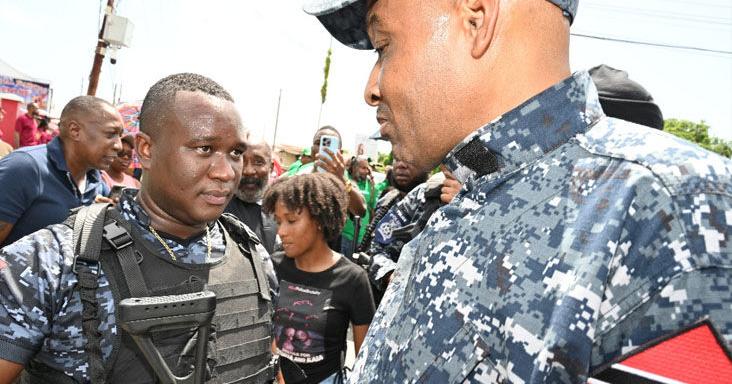
    A controversial annual report from the Police Complaints Authority (PCA) has sent ripples through Trinidad and Tobago’s law enforcement community, revealing that police were involved in 60 fatal shootings between October 1, 2024, and September 30, 2025 — the highest one-year death toll from police encounters in over a decade. The data, included in the PCA’s 15th annual report, was recently presented to Parliament, and it shows that independent oversight body launched full investigations into every one of these fatal incidents.

  • Tourism gloom ahead of today’s THA budget

    Tourism gloom ahead of today’s THA budget

    As the Tobago House of Assembly (THA) prepares to unveil its 2027 budget, key industry leaders across Tobago’s business and tourism sectors are sounding urgent calls for targeted intervention, warning that the island’s core tourism industry has spent decades in stagnation and now teeters on the edge of collapse. Reginald MacLean, head of the Tobago Hotel and Tourism Association, has painted a bleak picture of the current state of the island’s tourism economy, saying he holds little expectation for meaningful change from the upcoming budget address.

    MacLean argues that Tobago’s tourism sector, which has failed to grow for more than 30 years, is “extremely dead” in its current state, and would be faring even worse without consistent visitor traffic from neighboring Trinidad. To reverse decades of decline, he outlined three non-negotiable priorities the THA must advance immediately: restarting operations at shuttered major hotel properties, approving a long-pending loan guarantee requested by tourism industry stakeholders, and restoring pre-pandemic air connectivity between Trinidad and Tobago. Pointing to stark long-term trend data, MacLean noted that international visitor arrivals plummeted from more than 90,000 in 2005 to just over 11,000 today, a drop that underscores the sector’s chronic stagnation. He also called for the reinstatement of 24 daily round-trip flights between the two islands, a service level that existed before the COVID-19 pandemic, and pushed for administrative reforms to cut red tape in land approval processes, which he says have repeatedly delayed and discouraged new investment in tourism infrastructure.

    MacLean’s warning is echoed by Curtis Williams, chairman of the Tobago division of the Trinidad and Tobago Chamber of Industry and Commerce, who confirms that widespread financial strain is already pushing local businesses to the brink. Williams notes that multiple businesses across the island are struggling to meet payroll obligations amid weak economic activity, including one major resort that has gone four months without paying its staff. West Mount Irvine Bay Resort has confirmed the wage arrears but declined to offer further comment on the situation. Williams explains that the resort’s crisis is not an isolated case, saying many businesses are shifting funds between accounts just to keep their doors open.

    While tourism remains the island’s long-term economic backbone, Williams says the construction sector offers a viable short-term avenue to stimulate economic activity while tourism recovery takes root. During pre-budget consultations with the THA’s Finance Secretary, Williams’ group called for targeted public funding to launch a new island-wide development program that would inject momentum into the sluggish construction sector, which is currently operating far below capacity.

    The 2027 THA budget is structured around the administration’s newly launched “Pathway for Prosperity: Blueprint for Tobago 2026–2030,” a long-term strategic framework that lists sustainable tourism, food security, digital transformation, public sector strengthening, climate resilience, infrastructure development, and social inclusion for vulnerable groups as core policy priorities. The budget process launched in February 2026 with a planning circular sent to all THA divisions, followed by stakeholder consultations that ran from April 20 to June 2, 2026. The consultation process included input from eight distinct stakeholder groups, a final session with faith-based organizations, and more than 110 online public submissions. The 2027 budget will also incorporate four new administrative divisions into its framework: Legal Affairs; Strategic Planning and Development; Youth Empowerment and Sport; and Environment, Climate Resilience and Energy.

    As of the third quarter of 2026, the THA has received 70% of its allocated parliamentary funding from central government, and 67% of its earmarked development budget. The original 2026 fiscal allocation set aside $2.742 billion for recurrent expenditure and $201.5 million for development programs, with $9.2 billion allocated to the Community-Based Environmental Protection and Enhancement Programme (CEPEP) and $18 million allocated to the Unemployment Relief Programme (URP). To address an underfunding gap in the development program, the THA reallocated $164.473 million from its recurrent budget, bringing total available 2026 funding to $2.577 billion for recurrent spending and $365.973 million for development projects. As of May 2026, approximately $1.51 billion in recurrent spending has been disbursed, with an estimated $130 million in development spending already allocated (final figures are still being compiled). Roughly $186.5 million in development funding has been released to THA divisions, while unspent balances totaling approximately $101 million were used to settle outstanding contractor payments dating back to 2021, as well as funding for CEPEP, URP, and the Island-Wide Road Improvement Programme. Despite ongoing fiscal pressures, the Finance Secretary has confirmed that the THA has no plans to implement layoffs, salary cuts, or reductions in contract employment for the coming fiscal year.

  • Natuc stands with Alyssa

    Natuc stands with Alyssa

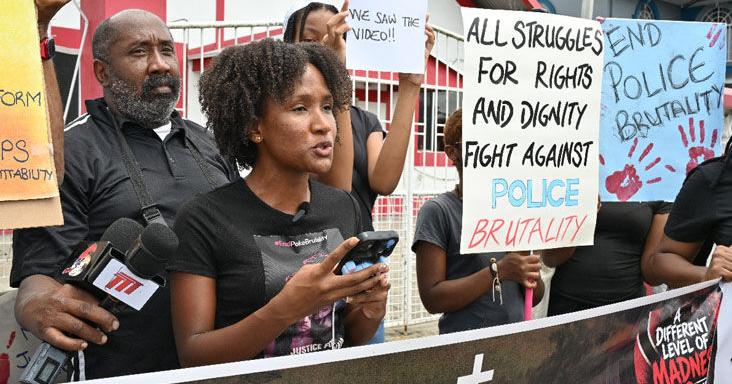
    Trinidad’s largest trade union bodies are pushing back against heavy-handed police action during this year’s annual Labour Day commemorations in Fyzabad, after the arrest of a prominent social justice activist and her mother drew widespread condemnation from labor leaders.

    National Trade Union Centre (NATUC) General Secretary Michael Annisette announced this week that the organization has retained a top senior legal advisor to conduct a full review of last Friday’s arrest of activist Alyssa Phillip, a case that leaders say raises serious questions about potential violations of constitutional rights. Annisette shared the details during a public press conference held at the Seaman and Waterfront Workers Trade Union (SWWTU) Hall in downtown Port of Spain, noting that the arrest was far from a routine law enforcement action.

    “We are not rushing to judgment, which is why we have brought in senior counsel to assess the matter. They will advise us on the clear constitutional breaches we believe the police committed in this incident,” Annisette told reporters.

    In a joint statement released alongside the Joint Trade Union Movement (JTUM), NATUC amplified its criticism, calling out what it labels an “excessive armed police presence” that marred the 2024 Labour Day events. For the global labor movement, Fyzabad holds deep historic significance as a hub for worker organizing in Trinidad, and Labour Day is universally recognized as a protected space for working people to gather, honor past struggles, and voice their concerns freely and democratically.

    “Labour Day is a sacred occasion for workers and their families. It was created to commemorate the struggles, sacrifices, and hard-won achievements of the working class, and it has always served as a platform for the free and democratic expression of workers’ views and concerns,” the statement read. “If any place and any day should allow workers and citizens to feel free and safe to peacefully and democratically express their views, that place is Fyzabad and that day is Labour Day.”

    The joint statement emphasized that the intimidating show of overwhelming police force had no place at the annual celebration, saying the aggressive tactics of some officers only distracted from the core purpose of the commemorations. Even with the controversy over the arrests, the unions reaffirmed that the day remained focused on celebrating the gains workers won through generations of collective action.

    The statement also confirmed that Annisette personally witnessed the detention of Phillip and her mother, Camille Caresquero. Leaders called the officers’ conduct alarming, saying that during the arrest, law enforcement personnel physically roughed up the two women and shoved aside Annisette’s teenage daughter to reach Phillip.

    “These three women did not deserve to be treated like common criminals. The excessive actions of the police were totally uncalled for, wholly unacceptable and cannot be justified under any circumstances, because the peaceful actions of these three women posed no security threat or threat to the safety of the public,” the unions argued.

    Following their arrest, both Phillip and Caresquero have been charged with three criminal offenses each. Phillip faces accusations of leading an unauthorized march, refusing an order to disperse, engaging in disorderly behavior, and resisting arrest. Her mother faces similar charges: failing to disperse when ordered, obstructing a police officer, and resisting arrest.

    The pair have been active participants in recent public demonstrations calling for accountability and transparency in the high-profile case of Kaia Sealy, who is charged with manslaughter and firearms offenses connected to the January 20 shooting death of her husband Joshua Samaroo during a police intervention in St Augustine.

  • Alyssa, mom on 3 charges each

    Alyssa, mom on 3 charges each

    Trinidad and Tobago’s acting Police Commissioner Allister Guevarro has defended the recent arrest and charging of well-known local social activist Alyssa Phillip and her mother Camille Caresquero, after the pair joined the country’s annual permitted Labour Day procession in Fyzabad on Friday without formal authorisation for their separate group.

    Both women now face three criminal offenses each in connection with the incident. For Phillip, the charges include leading an unauthorised public procession, refusing an official order to disperse the group, disorderly conduct, and resisting arrest by law enforcement officers. Caresquero is charged with participating in an unlawful procession, obstructing a police officer in the course of their duties, and resisting arrest.

    This arrest marks the second time the mother-daughter activist pair has been taken into custody for protest-related activity in recent weeks. They are currently out on bail pending trial for separate charges stemming from an unsanctioned demonstration outside the Office of the Director of Public Prosecutions in Port of Spain last month. Earlier in May, both women pleaded not guilty to all charges connected to that earlier protest before Magistrate Indira Rmarine Misir-Gosine.

    Phillip and Caresquero have become prominent figures in Trinidad and Tobago’s local activist space, leading a series of public demonstrations and community vigils calling for greater accountability and transparency in the criminal justice system. Their protests stem from the controversial charging of Kaia Sealy with manslaughter and firearms-related offenses in connection with the January 20 police-involved shooting death of her husband Joshua Samaroo in St Augustine.

    In a formal public statement released on Sunday, titled *TTPS Reaffirms the Rule of Law During Labour Day Procession*, the Trinidad and Tobago Police Service (TTPS) addressed widespread public discussion and debate surrounding the arrests, emphasizing that all enforcement action was carried out in full compliance with existing national legislation.

    Commissioner Guevarro noted that the TTPS fully recognizes and upholds all constitutionally protected rights of citizens to peaceful assembly and freedom of expression. However, he stressed that these fundamental rights are not absolute and must be exercised within the boundaries set out by national law.

    Guevarro added that law enforcement officers acted with full professionalism and clear adherence to procedural guidelines throughout the incident. “It is regrettable that enforcement became necessary, but the sanctity of the Labour Day procession should never be compromised by persons seeking to attach unrelated agendas to a permitted national event,” Guevarro said in the statement.

    Under Trinidad and Tobago’s Summary Offences Act, all public marches require a formal permit issued directly by the Commissioner of Police, with written applications submitted within a statutorily defined timeframe. The commissioner has the authority to approve or deny permit applications based on assessments of public safety and public order risk. The national trade union movement, which organizes the annual Labour Day procession, completed all required legal steps and received full official approval for this year’s event, the TTPS confirmed.

    According to the TTPS’s account of Friday’s incident, Phillip and a small group of her supporters, none of whom were affiliated with the organizing trade union movement, attempted to join the back of the authorised procession. Officers confirmed with event organizers that the activist group was not a formal part of the permitted event, then notified Phillip that her group’s participation would constitute a separate, unauthorised public march that required its own permit. Police also warned the group that their unauthorised presence risked jeopardizing the entire permitted Labour Day event.

    Despite multiple formal warnings, the activist group moved forward and joined the procession as an unauthorised tail contingent. In line with Section 116 of the Summary Offences Act, a senior police officer of the required rank formally ordered Phillip, as the group’s leader, to direct the assembly to disperse. When Phillip refused to comply with the lawful order, officers moved in to arrest both her and Caresquero.

    The TTPS further grounded its enforcement action in a recent High Court ruling delivered by Justice Ricky Rahim in the case *Walker v Attorney General (CV2023-00302)*. That ruling explicitly clarified the legal distinction between static public meetings and moving public marches, and reaffirmed that all public marches require prior written permission from the Commissioner of Police, regardless of whether they intend to attach themselves to an already permitted event.

    “The judgment confirms that any group wishing to participate in a public march must have a permit, and that attaching an unauthorised procession to a lawful one is a breach of the act,” the TTPS statement noted. “The activist group in question did not give notice of a meeting, nor did they apply for or receive a permit for a march. Their actions, therefore, fell squarely within the statutory definition of an unlawful public march.”

    Police officials added that enforcement action was necessary to prevent potential escalation of unrest, protect all attendees of the authorised Labour Day event, uphold the rule of law, and preserve the integrity of the national legislative framework governing public assemblies. “Allowing an unpermitted procession to merge with a lawful one would have undermined the event, created security risks, and violated the legal framework governing public marches,” the statement said.

    The TTPS concluded by reaffirming its ongoing commitment to upholding all constitutional rights of Trinidad and Tobago citizens, enforcing the law equally and without bias, ensuring that national public events proceed safely and without disruption, and engaging with the public in a transparent and respectful manner. The service also issued a reminder to all activist and community groups seeking to hold public marches that completion of the formal permit process is required to avoid similar enforcement action in the future.