A public firestorm has broken out in Trinidad and Tobago after the University of Trinidad and Tobago (UTT) included East Indian music and dance performances in its official Emancipation Day commemoration, with opposition politicians and community leaders accusing the institution of deliberately disrespecting the historical significance of the occasion honoring African emancipation from chattel slavery.
The event, branded “Uhuru: Celebrating Freedom”, was held last Wednesday at Port of Spain’s National Academy for the Performing Arts (NAPA). Alongside scheduled performances from African heritage artists including Patrice Inglesbirth, the Onilu Brothers, Dr Edward Cumberbatch and Nkosi Waldron, UTT added segments from the Shiv Sangeet School of Music and dancer Susan Mohip, the programming choice that triggered widespread criticism.
In a viral video circulated to social media this Friday, Opposition Member of Parliament Dr Nyan Gadsby-Dolly condemned UTT’s decision as outright disrespectful and deeply disappointing. She argued that culturally specific commemorative days are meant to center distinct histories, rather than blending community experiences. “African Emancipation Day is literally and simply about African emancipation. Indian Arrival Day is literally and simply about the arrival of the East Indians in Trinidad and Tobago. And you know what, we are big enough as people to celebrate them both separately,” Gadsby-Dolly stated.
She further pushed back against growing narratives that equate the history of African chattel slavery with the system of East Indian indentureship, drawing a clear line between the two experiences. “African slavery was a totally different thing; totally different experience, and we noticing more and more that it’s being equated, like on some level it’s similar. No, no, and we’re drawing a line in the sand today. Stop doing that. UTT you should have known better,” she said.
Speaking to local outlet TV6 on Sunday following a street renaming ceremony honoring activist Kwame Ture, Gadsby-Dolly doubled down on her criticism. She reiterated that Emancipation Day is not the appropriate venue to frame a shared cross-community struggle, emphasizing the fundamental difference between the two historical systems: “The enslaved Africans—their experience can never be compared to indentureship. The East Indians came here, they chose to come and those conditions were not ideal. It was still a choice. It was not a choice for the Africans who are here and their ancestors. They didn’t choose to come, and the conditions they endured coming here and being here should not ever be compared to indentureship. And the attempt to do that is disrespecting the struggle of our ancestors and we will not stand for it.”
Pennelope Beckles, political leader of the opposition People’s National Movement (PNM), also weighed in, noting the outsized contribution of Afro-Trinidadian communities to every sector of the nation’s development. “Whether it’s the energy sector, whether it’s in the housing sector, any particular sector that you mention, African people have played a very critical role in making what Trinidad and Tobago is today. And I want to remind us there’s every reason to be proud about your heritage, about the work that you have done, what you have contributed to make Trinidad and Tobago what it is today,” she said.
Another PNM opposition MP, Kareem Marcelle, argued that the incident is part of a growing pattern of eroding respect for Emancipation Day commemorations. He said that well-meaning pushes for cultural unity often come at the expense of downplaying the unique trauma and significance of African history in the country. “Can we just be allowed to celebrate our ancestors? Can we just be allowed to remember our painful history? Can we just be allowed to teach our children about our rich history pre- and post-slavery?” Marcelle asked, questioning repeated efforts to dilute the focus of the annual observance.
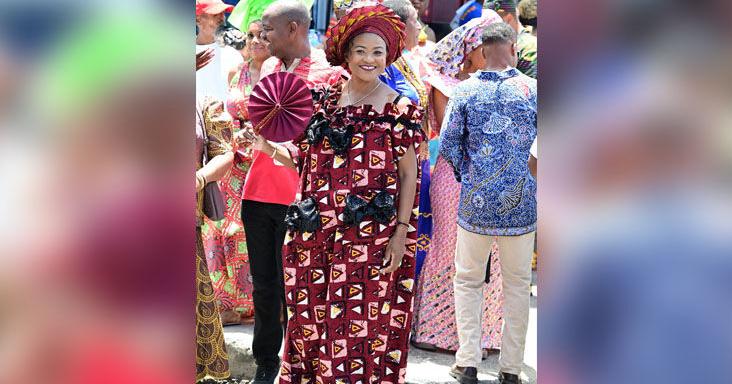
Prime Minister Kamla Persad-Bissessar, the leader of the ruling government, hit back at PNM critics, accusing the party of irrational and inconsistent hostility toward her participation in African cultural events. “If the PNM MPs and their supporters don’t want East Indians to participate in Emancipation events, that’s their democratic choice. Maybe next year the PNM could lobby UTT to invite Star Sabga and Jenna Hadeed for a spoken word performance instead,” Persad-Bissessar said. She went on to complain that she faces criticism no matter how she engages with Emancipation events: “When I wear African clothing, they curse me; if I don’t wear it, they curse me. When I participate in African cultural activities, they curse me; when I don’t participate, they curse me. When I speak to praise the contributions of Afro-Trinidadians, they curse me; if I don’t speak to praise, they curse me. I don’t know what the PNM MPs and their supporters want. They appear consumed with irrational hatred that is sending them deranged.”
Commentator Paolo Kernahan also criticized UTT’s decision in a viral social media post, arguing that the misstep reveals a disconnect between formal education and cultural awareness. “The fact that people at a university couldn’t appreciate how wildly inappropriate it was to shoehorn an East Indian cultural presentation into what was meant to be an Emancipation Day event shows the massive difference between education and intelligence,” Kernahan wrote.
UTT has defended the programming choice in an official media statement, saying the event was designed to honor Emancipation while reflecting the country’s diverse cultural heritage. “UHURU: Celebrating Freedom reflects UTT’s ongoing commitment to preserving and promoting the history, culture and the diverse heritage of Trinidad and Tobago. Through initiatives such as this, the university continues to foster cultural awareness, strengthen national pride and inspire a deeper appreciation of the values, traditions and shared experiences which shape our nation,” the statement read.
The university added that the event, held in partnership with the Ministry of Tertiary Education and Skills Training, the Ministry of Culture and Community Development and NAPA, was intended to honor the enduring legacy of emancipation and celebrate the fundamental role of African heritage in the nation’s social, cultural and artistic development. Named for the Kiswahili word for freedom, the event featured theatrical readings, dance and music that paid tribute to the courage of freedom fighters and reflected on how emancipation shaped Trinidad and Tobago’s national identity, the release said. At the event, UTT executive chairman Prof Selwyn Cudjoe noted that one of the university core responsibilities is to help build national identity and foster national pride by integrating arts and culture into education. When contacted for comment on the controversy Sunday, Cudjoe declined to speak immediately, saying he would issue a response at a later date.