标签: Suriname

苏里南

  • Bondsvoorzitter BBS Biswan ontslagen na manipulatie examencijfers rekruten

    Bondsvoorzitter BBS Biswan ontslagen na manipulatie examencijfers rekruten

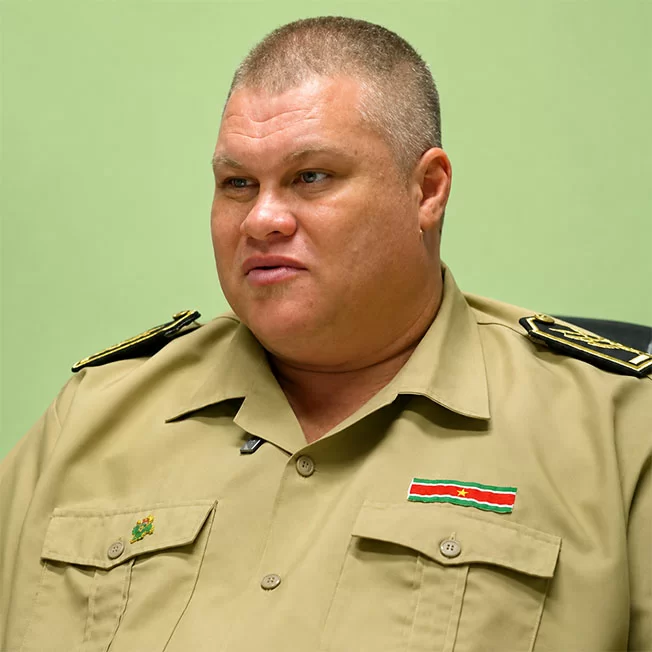
    In a disciplinary action announced this Tuesday, Suriname’s Minister of Justice and Police Harish Monorath has immediately removed Elio N. Biswan, chair of the Security and Assistance Service Suriname (BBS) union, from his post. The termination, categorized as a severe disciplinary penalty, was issued in full compliance with Suriname’s current civil service legislation.

    An internal probe conducted by the BBS Interim Management Team (IMT) uncovered serious professional misconduct on Biswan’s part during his 2024 tenure as secretary of the examination committee for the BBS 2023 basic training program. Investigations confirm that Biswan independently and intentionally altered failing grades of multiple trainee recruits to passing marks. This manipulation allowed the candidates to bypass required requirements for exemptions or retests, and incorrectly marked their training as successfully completed.

    Beyond altering existing scores, the investigation found Biswan had pre-promised recruits he would adjust their results, and even went so far as to fabricate official grade transcripts that did not match the original assessments submitted by training instructors. IMT investigators have classified these actions as a grave breach of institutional integrity and a clear case of abuse of public office.

    In response to the uncovered irregularities, the IMT has moved to correct the process, granting all affected recruits the opportunity to take official re-examinations so they can properly and legitimately complete their mandatory training.

    Minister Monorath determined the proven violations were severe enough to warrant the harshest possible disciplinary outcome, with the termination executed under Article 61 Paragraph 1 Subsection j and Article 69 Paragraph 2 Subsection e of Suriname’s Personnel Act.

    As of Wednesday morning, it remains unclear whether additional criminal proceedings will be launched against Biswan following the conclusion of internal disciplinary handling.

    Shortly after receiving his termination notice at approximately 11:00 PM Tuesday, Biswan called an urgent emergency general membership meeting for Wednesday morning. In his announcement, Biswan claimed the dismissal was an attempt to silence him, arguing the action was retaliation for his public criticism of current BBS leadership.

  • Bodemprocedure 8 decembermoorden gestart; vijf families dienen geen vordering in

    Bodemprocedure 8 decembermoorden gestart; vijf families dienen geen vordering in

    A landmark full civil procedure case against the state of Suriname, filed by 10 family groups of victims of the infamous December 8 murders, officially got underway in court this Tuesday. After a brief opening presentation of the case before the judge, legal representatives for both sides exited the courtroom, with lead counsel for the victims’ surviving relatives Hugo Essed stopping to speak with reporters to outline the details of the historic proceeding.

    Essed emphasized that this is not a fast-track summary proceeding, but a full substantive civil trial that will examine the core merits of the families’ claims. Against expectations for a years-long delay, he noted that the case launched with far greater speed than anticipated, and projects that a final court ruling could be delivered within roughly 12 months.

    In total, 60 family members of the 10 slain victims – including prominent public figures John Baboeram, Cyril Daal, Edmund Hoost, Rudie Kamperveen, Harrie Oemrawsingh, Leslie Rahman, Cornelis Riedewald, Jiwansing Sheombar, Jozef Slagveer and Somradj Sohansingh – have joined the collective lawsuit against the Suriname state. The claimants are demanding three core outcomes: official public rehabilitation of the victims’ reputations, a formal public apology from the Suriname government, and financial compensation for the harm they have suffered. Per participating family, the claims total 500,000 euros for material damages and an additional 750,000 euros for non-material harm stemming from the killings.

    Beyond compensatory damages, the families are also seeking 250,000 Surinamese dollars per family to cover court and legal representation fees. To enforce any potential ruling in their favor, they have additionally requested a daily penalty payment of 500,000 Surinamese dollars per family for every day the state fails to comply with the court’s final judgment.

    A notable detail emerging from the opening day is that five additional families of victims connected to the 1982 massacre have opted not to join the legal action. Essed told reporters that he has no insight into what led these families to decline participation, noting that all surviving heirs were extended a formal invitation to join the claim. “All heirs were given the opportunity to participate in this action. I cannot say why some chose not to take part; as counsel for the participating families, I have had no contact with the unrepresented families,” Essed explained.

    He added that outreach to all surviving relatives was coordinated through the Organization for Justice and Peace (OGV), which first shared detailed information about the planned legal proceeding with families more than a year ago. Collecting the required legal documentation, including proof of inheritance and formal power of attorney from all claimants, took longer than initially projected to complete, contributing to the gap between initial planning and the launch of the trial.

    Essed also laid out the legal foundation for holding the Suriname state directly liable for the killings. “The murders were carried out by individuals acting in their capacity as state officials and government functionaries, using state-owned resources and infrastructure, including weapons and military facilities belonging to the National Army of Suriname. That direct connection makes the state co-liable for the killings,” he argued.

    Under Suriname’s legal framework, if the court finds the state liable for damages, the government would then have the right to pursue separate claims to recover those funds from the perpetrators of the massacre or their heirs. Essed, however, cautioned that this path would be largely unworkable in practice, as most of the individuals directly involved in the killings are not believed to hold significant personal assets that could be seized to cover the damage awards.

  • EZOTI en districtscommissarissen bundelen krachten voor strengere marktcontroles

    EZOTI en districtscommissarissen bundelen krachten voor strengere marktcontroles

    In a strategic move to strengthen nationwide economic regulation and market governance, Suriname’s Ministry of Economic Affairs, Entrepreneurship and Technological Innovation (EZOTI) has announced plans to sharpen economic activity oversight by forging deeper formalized partnerships with district commissioners across the country. The initiative, aimed at building a more coordinated, holistic approach to regulatory monitoring and enforcement, was finalized during a recent working meeting attended by senior ministry officials and district representatives.

  • Deadline nadert: publieke functionarissen riskeren straf bij niet indienen VIV

    Deadline nadert: publieke functionarissen riskeren straf bij niet indienen VIV

    On April 14, the Dutch Anti-Corruption Commission (ACC) launched an urgent reminder to a wide range of public sector officials, urging them to complete their mandatory Income and Assets Declaration (VIV) before the final August 16, 2026 submission deadline. The mandatory filing requirement applies to a broad cohort of public servants, including cabinet ministers, members of parliament, senior civil servants, and other leading officials across all levels of the public sector. As the commission confirmed, a significant share of covered officials have not yet completed and submitted their required declarations.

    ACC chair Ilse Krenten emphasized that the VIV mandate is a core pillar of the Netherlands’ national anti-corruption legislation, designed to entrench transparency and uphold ethical integrity across all branches of public governance. Despite the clear legal requirement for all eligible officials to file, a notable share of those covered have yet to fulfill this obligation. Krenten has issued a stark warning that non-compliance carries far-reaching legal and professional consequences. Criminal prosecution is one of the potential outcomes for officials who fail to submit their declarations on time, carrying a maximum penalty of four years’ imprisonment and a substantial monetary fine. A conviction for non-compliance would also result in a permanent criminal record.

    Beyond criminal penalties, non-compliant public officials can also face severe administrative and professional repercussions, including formal disciplinary action, blocked future appointments or promotions, and lasting reputational harm for both the individual involved and the public agency they represent. The commission clarified that it does not function as a prosecuting body; instead, its core mandate centers on preventive oversight and monitoring of compliance with anti-corruption rules. Acting from this oversight role, the ACC is urging all required officials to avoid last-minute rushes and complete their submissions well in advance of the deadline.

    For officials who have not yet initiated the filing process, the commission has outlined clear next steps: they are advised to contact a civil-law notary as soon as possible to deposit their completed declaration, then complete the formal registration process with the ACC. With several months remaining before the deadline expires, the commission has reaffirmed that early, timely submission is the only way for public officials to avoid avoidable legal and administrative complications down the line.

  • Hormuz-blokkade: risico’s en kansen voor Iran

    Hormuz-blokkade: risico’s en kansen voor Iran

    A new U.S. naval blockade targeting Iran has entered into force, as the Trump administration ramps up pressure on Tehran to force the Iranian government to accept Washington’s terms to end the ongoing conflict by squeezing the country’s already strained economy. The blockade launched at 11 a.m. Suriname time on Monday, drawing immediate condemnation from Iran’s military, which has labeled the move an “illegal act of piracy.”

    While Iran has acclimated to decades of U.S. sanctions and has sustained its position through the war to date, analysts warn this full-scale maritime blockade could inflict severe, unprecedented damage on the Iranian national economy.

    ### How the Blockade Hits Iran’s Core Oil Revenue
    Iran’s oil and gas exports rely almost exclusively on its coastal ports. Shortly after the U.S.-Israel coalition launched its offensive against Iran on February 28, Tehran responded by closing the Strait of Hormuz—the only maritime outlet from the Persian Gulf through which roughly 20% of the world’s daily oil and gas supplies normally flow. The near-total closure of this critical global chokepoint triggered an immediate spike in global energy prices, while Iran retained full operational control of the strait, only granting passage to vessels from a small number of countries that had negotiated bilateral transit agreements with Tehran.

    Notably, Iran continued to export its own energy through the Strait of Hormuz even after the closure announcement. Roughly 80% of Iran’s total crude oil exports move through the waterway, and trade analytics firm Kpler data shows exports actually rose in the early months of the conflict: Iran averaged 1.84 million barrels per day (bpd) of crude exports in March, and 1.71 million bpd through the first half of April, up from a 2025 full-year average of 1.68 million bpd.

    Between March 15 and April 14 alone, Iran exported 55.22 million barrels of crude. Prices for Iran’s three primary export crude grades — Iranian Light, Iranian Heavy, and Forozan Blend — have held above $90 per barrel for the past month, and frequently topped $100. Even at the conservative $90 per barrel benchmark, Iran earned nearly $5 billion from oil exports in that 30-day window. For comparison, in early February before the war began, Iran earned roughly $115 million per day, or $3.45 billion per month — meaning Iranian oil revenues jumped 40% in the month before the blockade took effect.

    Experts agree that this streak of elevated revenue will come to an abrupt end now that the U.S. has blocked access to Iran’s ports and the Strait of Hormuz, hitting export capacity directly and dramatically.

    “Iran will almost certainly not be able to maintain oil exports at their current level,” said Mohamad Elmasry, a senior analyst at the Doha Institute for Graduate Studies. Elmasry added that Iran will also lose critical revenue from transit tolls charged to non-Iranian vessels passing through the strait, which will now disappear.

    Frederic Schneider, a regional expert with the Middle East Council on Global Affairs, echoed that assessment, noting the past six weeks of strong oil revenues have been an unexpected windfall for Iran — a trend the blockade will immediately reverse. He pointed out that Iran has built up a buffer of stored oil, holding an estimated 127 million barrels in floating storage on “parked” tankers as of February. Maritime intelligence firm Windward data puts total Iranian oil held at sea at roughly 157.7 million barrels as of Monday, 97.6% of which is bound for China. But Schneider warned that even this large stockpile will not insulate Iran from long-term harm, and all of this cargo is now at risk of being impacted by the U.S. blockade.

    ### Broader Disruption to Non-Oil Trade
    Beyond energy exports, the U.S. blockade of Iranian ports will also disrupt the country’s trade in other key goods. Iran’s top non-oil exports include petrochemicals, plastics, and agricultural products, most of which are shipped to China and India. Major imports include industrial machinery, electronics, and food, primarily sourced from China, the United Arab Emirates, and Turkey.

    Data from a February Tehran Times report shows Iran’s total non-oil trade between March 21, 2025, and January 20, 2026, hit $94 billion, with the country running a trade deficit as imports outpace exports. Analysts confirm the blockade will drag down total trade volume and cause broad economic damage across sectors.

    Schneider warned that disruptions to non-energy trade will not only cut off additional government revenue, but also exacerbate product shortages inside Iran, which has already been grappling with supply strains from pre-war U.S. sanctions. “The open question is whether this additional hardship will force Iran to concede to defeat, or if it will harden public and government resolve and lead to further escalation,” he said. “I doubt, however, that this blockade will be fully enforced or sustained over the long term.”

    ### Can Alternative Transit Routes Offset Maritime Disruptions?
    To reduce its reliance on critical maritime chokepoints like the Strait of Hormuz and the Strait of Malacca, Iran has developed a cross-border rail link in partnership with China. The route uses existing Central Asian rail networks through Kazakhstan, Uzbekistan, and Turkmenistan, and the first commercial freight train from China arrived in Iran in 2016. Just this past May, according to Iranian state news agency Tasnim, the first freight train from China’s Xi’an arrived at Iran’s Aprin dry port, formally opening the dedicated direct rail connection.

    Geopolitical consulting firm SpecialEurasia notes that this rail link helps reduce the risk of Western maritime blockades, particularly for oil that has historically been moved via Iran’s “ghost ships” — tankers that disable their automatic identification systems to avoid detection and evade sanctions. Multiple such vessels have been spotted operating in the region during the ongoing conflict.

    Even so, analysts stress that moving large volumes of crude oil via rail presents massive logistical hurdles that cannot be easily overcome. To date, there is no credible evidence that Iran has actually moved large-scale oil shipments to China via this rail corridor.

    ### Uncertain Future for the Blockade
    Schneider confirmed that if the blockade is maintained, it will undoubtedly cause significant harm to Iran’s economy. At the same time, major questions remain about how committed the U.S. is to enforcing the measure, how long it will stay in place, how it will end, and what comes next.

    “It is difficult to predict whether the U.S. will actually follow through on full implementation of the blockade, how long it will remain in place, and what scenario will unfold next,” Schneider said.

    One major wild card is China, the top destination for Iranian crude. “Most Iranian tankers are headed to China, and I do not see China complying with this blockade,” Schneider said. “I also do not expect the U.S. Navy to intercept or sink these Chinese-bound vessels.”

    That leaves the current situation highly unstable, with two very different possible outcomes: “The situation could quickly move in one of two directions: either a ceasefire and de-escalation, or a major escalation that sees a resumption of bombardment and missile attacks,” he added.

  • IEA: Wereldwijde olievraag daalt scherp door oorlog met Iran

    IEA: Wereldwijde olievraag daalt scherp door oorlog met Iran

    Geopolitical turbulence triggered by conflict between the United States, Israel, and Iran has sent shockwaves through global energy markets, pushing the International Energy Agency (IEA) to make dramatic downward revisions to its 2026 outlook for global oil supply and demand. In its monthly market report published Tuesday, the agency now projects that global oil demand will contract by 80,000 barrels per day (bpd) this year, a stark reversal from its prior forecast of 640,000 bpd annual growth issued just one month prior.

    The sweeping downward revision comes amid widespread disruptions to crude shipments through the Strait of Hormuz, one of the world’s most critical energy chokepoints, and mounting fears that escalating tensions will tip the already fragile global economy into further slowdown. Both overall oil production and consumption are now set to decline year-over-year in 2026, the IEA confirmed.

    The latest assessment aligns with repeated warnings from global economic bodies including the International Monetary Fund, the World Bank, and the IEA itself, which have urged nations against hoarding energy stockpiles or imposing unilateral export restrictions that would exacerbate existing market shocks. Ahead of the report’s release, IEA executive director Fatih Birol issued a public call on Monday for free-market energy distribution, warning that many countries have already begun stockpiling reserves and enforcing export curbs that tighten global supplies further.

    According to the IEA’s analysis, ongoing supply scarcity and sky-high energy prices will continue to drive what the agency terms “demand destruction” across global markets. To date, the steepest demand declines have been recorded in the Middle East and Asia-Pacific regions, concentrated in naphtha, liquefied petroleum gas (LPG), and jet fuel segments. The agency forecasts that the second quarter of 2026 will see the sharpest single-quarter contraction in global oil demand since the height of the COVID-19 pandemic, with consumption dropping by 1.2 million bpd during the period.

    OPEC, the producer bloc of major oil-exporting nations, also cut its second-quarter 2026 oil demand forecast on Monday, though it chose to leave its full-year demand projection unchanged.

    The most severe market disruption stems from escalating tensions in the Strait of Hormuz, where attacks on regional energy infrastructure and Iran’s near-total shutdown of shipping through the waterway have created the largest single interruption to global oil supplies in recorded history. The IA reports that 10.1 million bpd of production and shipment capacity was taken offline in March alone. In response to U.S. and Israeli military strikes that began on February 28, Iran has effectively halted all commercial transit through the strait, which facilitates roughly 20% of global daily oil trade.

    Iran’s de facto control over the strategic chokepoint has already sent global gasoline and natural gas prices soaring to multi-year highs. For its part, the U.S. is moving to seize control of the waterway by barring Iranian tankers from making any transit through the strait. Following the collapse of peace talks hosted by Pakistan, former President Donald Trump announced a full blockade of Iranian ports on Sunday. The IEA warns that this new U.S. blockade will further cloud the outlook for global energy security and disrupt supply chains for a wide range of petroleum-dependent goods worldwide.

    If the Strait of Hormuz remains closed for an extended period, the IEA projects global oil demand could fall even more sharply than current forecasts. “In that scenario, energy markets and economies across the world must prepare for major disruptions in the coming months,” the report notes. “Resuming unimpeded commercial shipping through the Strait of Hormuz remains the single most critical factor to ease pressure on energy supplies, bring down prices, and reduce strain on the global economy.”

    Amid the widespread market chaos, one major beneficiary has emerged: Russia. The IEA notes that higher global crude prices have pushed Moscow’s revenue from crude oil and refined product exports back up in March, after the country’s oil income fell to its lowest level in February since the full-scale invasion of Ukraine began in 2022. These export earnings are a critical lifeline for Russia’s federal budget and its ongoing military spending.

    Russia’s total crude exports rose by 270,000 bpd last month to hit 4.6 million bpd, according to IEA data. The increase was driven largely by higher seaborne shipments, as the Druzhba pipeline — which carries crude through Ukraine to Hungary and Slovakia — has remained offline since attacks at the end of January.

  • Een ambassadeur met oog voor het kleine: Walter Oostelbos en zijn stille ode aan Suriname

    Een ambassadeur met oog voor het kleine: Walter Oostelbos en zijn stille ode aan Suriname

    For years, Dutch ambassador to Suriname Walter Oostelbos has turned his personal Instagram account into a living, visual diary of the South American nation – one that prioritizes quiet, overlooked details over formal diplomatic announcements. What began as a spontaneous idea during a weekend trip to Knini Paati has grown into a decades-long personal project, with the ambassador now sharing nearly 3,000 original photographs paired with short contextual stories, all published in a personal capacity.

    Oostelbos, a trained historian and former journalist, describes the daily posting habit as a deep-seated passion rather than an obligation, a characterization his family frames simply as a beloved hobby. His trained eye looks beyond the surface of Suriname’s daily life, zeroing in on landscapes, architecture, traditions, and cultural fragments that are at risk of fading into obscurity or flying under the radar of most observers.

    This year marks a major milestone for the country: Suriname’s 50th anniversary of independence, locally called Srefidensi. The national celebration included formal addresses at a special National Assembly sitting, a military parade on Independence Square, and a large public reception at the presidential palace. Guests at the reception were greeted by a striking, fully edible centerpiece: a giant cake shaped like Suriname, decorated with portraits of influential Surinamese women from past and present, surrounded by smaller cakes representing each of the nation’s distinct ethnic communities. The design highlighted the country’s defining cultural and ethnic richness, turning a celebratory dessert into a symbolic nod to national identity.

    For Oostelbos, the most valuable lesson Suriname offers the world lies in this interwoven diversity. Unlike many global regions where ethnic and religious difference has sparked deep tension and even violence, Suriname has built a successful model of peaceful coexistence that is rarely highlighted internationally, he argues. Integration runs deep, even within multi-ethnic families, creating an example the ambassador says the world at large can learn from. He has pushed for Suriname to center this unique strength more prominently in its global profile, not as an empty marketing slogan, but as a tangible, working example of pluralism done right.

    Many of Oostelbos’ posts focus on the small, fading cultural practices that make Suriname unique. One recent feature, for example, highlighted the Londa ke náach, a traditional dance practiced by Suriname’s Hindustani community originally imported from India. Performed by boys and young men, the dance uses distinct hand and hip movements, and it is traditionally featured at weddings, birthdays, neighborhood prayer gatherings, Navratri celebrations, and major national events. Sadly, the tradition is declining among younger generations, as many young boys report feeling ashamed to dress in the traditional feminine-coded attire required for the performance.

    Another recurring focus of the project is the country’s endangered built heritage, particularly the characterful historic wooden architecture that dots Paramaribo and beyond. Oostelbos has repeatedly documented at-risk buildings, sounding the alarm over rapid demolition that replaces historic structures with generic new development. He points to the neighborhood of Frimangron, where two of four adjacent historic wooden homes were demolished in a short span of time, as just one example of this steady loss of cultural and historical identity. Even so, he emphasizes that these old buildings carry the full complexity of Suriname’s history: while some communities associate colonial-era structures with a painful legacy of oppression, erasing the structures does not erase that history, he argues. Paramaribo’s inner city, a UNESCO World Heritage Site since 2002, is one of the most unique historic urban landscapes in the world, where centuries of history remain visible in streetscapes like the iconic Waterkant – the capital’s oldest street, built in the first half of the 17th century along the Suriname River quay. For centuries, it was the first view of Paramaribo that arriving visitors saw when their ships docked, and nearly all of its existing buildings date to after the 1821 Great City Fire, with the exception of the 1730-built presidential palace that stands at the end of the street on Independence Square.

    Beyond the capital, Oostelbos has also traveled to document the country’s remote interior landscapes and indigenous communities. He has featured landmarks like the Tapanahony River, a major waterway in southeastern Suriname that rises in the Eilerts de Haan Mountains along the Brazilian border, flows north through rugged highlands reaching 700 meters in elevation, and joins the Marowijne border river near Stoelmanseiland. Its banks are home to distinct indigenous and Maroon communities, including the Tiriyó people in upstream villages, and the Wayana and Ndyuka Aukan peoples further downstream. Even local Surinamese followers often tell Oostelbos his posts have made them see their own home in a new light, reacting with surprise to the layers of history he uncovers in familiar places.

    For Oostelbos, this current posting to Suriname will be his last as a career diplomat. He is set to retire from diplomatic service in a matter of months, closing out his career with the visual diary project that has become his defining legacy during his time in the country. What remains after his departure is a sprawling, intimate portrait of Suriname – one built not from grand political announcements or headline-making events, but from small, daily observations that add up to reveal the nation’s true character. The ambassador’s core message, woven through every post, is that Suriname’s greatest strength does not come from its most visible, large-scale achievements. It lives in the uncelebrated details, in the functional pluralism of its diverse communities, in the living history that still surrounds those who choose to look for it, and in the power of telling those forgotten stories.

  • Wetenschappelijk personeel AdeKUS in actie ondanks eerder overleg met vicepresident

    Wetenschappelijk personeel AdeKUS in actie ondanks eerder overleg met vicepresident

    A long-running labor dispute at Suriname’s leading higher education institution has escalated, after academic staff voted overwhelmingly to reject a revised employment proposal from university management and continue their industrial action indefinitely. The decision was announced Monday following a general assembly meeting of the Vakvereniging Wetenschappelijk Personeel Universiteit (VWPU), the trade union representing scientific and academic employees at Anton de Kom Universiteit van Suriname (AdeKUS).

    The rejection marks a breakdown in the tentative progress made just last week, when union representatives held mediated talks with Suriname’s Vice President Gregory Rusland. Both sides described that meeting as constructive, and the union agreed to a temporary pause of work stoppages to allow space for negotiations on long-standing grievances. The core issues at the center of the dispute center on inadequate working conditions and subpar institutional facilities for academic staff, which both parties committed to addressing during the April talks.

    Despite weeks of back-and-forth negotiation, the revised proposal submitted in writing by the AdeKUS university board on April 11 failed to win the union’s approval. Union members have reaffirmed their commitment to the original set of demands the organization first submitted on January 30, 2026, stating that the revised plan did not go far enough to resolve their core concerns.

    VWPU representatives acknowledge that widespread dissatisfaction persists among their membership even amid ongoing dialogue, though the union has confirmed it remains open to further negotiation. The organization has stated its intent to hold a new round of talks with university leadership this week in an effort to reach a mutually acceptable resolution.

    Until an agreement is reached, all formal academic activities at AdeKUS will remain suspended. Under the current work stoppage, no in-person or virtual lectures are being held, and academic staff are not providing supervision for student research projects, thesis work or graduation requirements, leaving thousands of undergraduate and graduate students in academic limbo.

  • Magyar’s overwinning markeert mogelijk einde van EU-Hongarije spanningen

    Magyar’s overwinning markeert mogelijk einde van EU-Hongarije spanningen

    After more than 16 years of populist rule marked by constant confrontation with Brussels, Hungary’s political landscape has shifted dramatically following a landslide parliamentary election win for opposition leader Peter Magyar and his Tisza Party. The April vote ousted long-serving prime minister Viktor Orbán, whose tenure was defined by repeated clashes with the European Union over rule of law, democratic norms, and policy toward Russia and Ukraine, opening a new chapter of potential rapprochement between Budapest and the bloc.

    For years, Orbán’s adversarial relationship with Brussels brought Hungary repeated threats, EU sanctions, and frozen development funds. His open support for Moscow, repeated vetoes of EU sanctions on Russia, and steadfast opposition to financial aid for Kyiv left the country diplomatically isolated, with billions in critical EU funding held up over Budapest’s failure to meet anti-corruption and judicial independence benchmarks. Voters, frustrated by three years of stagnant economic growth, the highest inflation rate in the EU through 2023, and soaring living costs, delivered a decisive mandate for change, backing Magyar’s campaign pledge to unlock frozen EU funds and reboot Hungary’s struggling economy.

    Political analysts across Europe now see a new cooperative partner for EU institutions in Budapest. “Magyar does not want Hungary to become a pariah state; he views the country as an integral part of the EU and aims to have a meaningful seat at the table in Brussels policy debates,” explained Orsolya Raczova, a senior analyst at Eurasia Group. She added that unlocking the more than €16 billion in post-pandemic EU recovery funds held by Brussels is Magyar’s top policy priority – a goal that will push the new government to meet Brussels’ conditions by the August deadline for judicial reform, anti-corruption overhauls, and rule of law improvements.

    The pressure to unlock these funds is also expected to push Magyar into a less confrontational stance on Ukraine policy, despite the new prime minister’s existing positions. A conservative former ally of Orbán who broke with the ex-prime minister in 2024, Magyar still opposes accelerated EU accession for Ukraine and outright military support for Kyiv. But experts widely predict he will drop Orbán’s veto on a multi-billion euro EU loan for Ukraine, paving the way for a grand bargain between Budapest and Brussels.

    “There will be a straightforward trade: progress on aid to Ukraine in exchange for unlocking funding for Hungary,” said Pawel Zerka, a policy fellow at the European Council on Foreign Relations.

    On Russia policy, Magyar has signaled he will draw Hungary closer to the Western alliance while maintaining limited energy ties to Moscow, a pragmatic compromise that aligns with domestic voter priorities. Hungary remains heavily dependent on Russian energy, with few viable alternatives amid global supply disruptions tied to ongoing regional conflicts. “Magyar will continue purchasing Russian oil to guarantee domestic energy security while gradually shifting political alignment away from Moscow,” Zerka noted, echoing Magyar’s own comment that reducing dependence does not require an immediate full cut-off of trade.

    The departure of Orbán, who was the EU’s most vocal and consistent blocker of collective policy on Russia and Ukraine, does not mean full consensus within the bloc on these issues, however. For years, other member states skeptical of Ukrainian accession or harsh sanctions on Moscow were able to hide behind Orbán’s high-profile opposition. Now, Zerka said, “Those governments will be forced to state their own positions openly.”

    On migration policy, analysts expect a softening of Orbán’s harsh, culture war-driven rhetoric, though the Tisza Party will maintain a relatively hardline approach to border control. Orbán’s government was fined €200 million by the EU for violating asylum seeker rights, and Magyar is expected to open negotiations to resolve that penalty. However, Tisza will retain the controversial border fence along Hungary’s southern border and continue to oppose EU-mandated refugee relocation quotas.

    “We won’t see Orbán-style aggressive anti-immigration campaigns and civilizational rhetoric, but we also won’t see a rush to tear down the border fence,” said Gabor Scheiring, a former Hungarian parliament member and political scientist. “While Magyar governs from the right, he will have to balance a range of competing interests. Symbolic issues like culture and migration will take a backseat to economic priorities, but major liberal overhauls are extremely unlikely.”

  • Column: De laatste ontmoeting die misschien niet komt; kille visumprocedure

    Column: De laatste ontmoeting die misschien niet komt; kille visumprocedure

    Seated in her favorite rocking chair, an 85-year-old Surinamese woman waits, her gaze fixed on a door that will not open this month. She celebrates her milestone birthday this week, and her son, who lives across the Atlantic in Suriname, has longed to hold her, speak to her without a crackling phone line between them, and see her one last time before it is too late. He will not make it — not for lack of desire, not for lack of money to pay for the trip, but because the rigid Dutch Schengen visa system has shut him out.

    For Surinamese citizens hoping to travel to the Netherlands, entering the country is not a simple matter of planning a trip. It is an exhaustive, dehumanizing gauntlet of bureaucratic requirements that reduces a deeply personal family reunion to a mountain of paperwork and invasive checks. Applicants must surrender full access to their private financial lives, turning over three months of bank statements, employment verification letters, pre-booked flight tickets and travel insurance. Every document is meant to prove one thing: that they are not a “risk” that will overstay their visa, and that they will definitely return to Suriname after their visit — even when their only goal is to spend time with an aging parent.

    Even having a sibling already residing in the Netherlands who agrees to sponsor the trip is not enough to cut through the red tape. The sponsor must also disclose all of their personal financial details, submit pay stubs, share private identifying information and take on full financial guarantee for the traveler’s entire trip, covering all food and travel costs. What should be a heartfelt family gathering is reduced to nothing more than spreadsheets, numbers and constant government scrutiny.

    After applicants complete the extensive online paperwork, the real waiting begins. Securing an in-person appointment through the visa processing system is already an ordeal, with waiting times stretching more than a month for an available slot. Once a traveler finally makes it to a VFS Global processing center, they walk out €90 poorer and no less uncertain about the outcome of their application. The response is coldly corporate: applicants can expect to wait a minimum of one month just to get a decision. As of mid-April 2026, applications submitted all the way back in January are still being processed, making travel in the same month impossible, and forcing applicants to reschedule their appointments from scratch.

    The crushing nature of the system becomes even clearer when checking for new appointment slots. On April 13, 2026, the earliest available appointment date was May 29, 2026. Even after that appointment, the processor requires a minimum of another month to review the application — despite all documents already being submitted electronically more than a month prior. By that time, the financial guarantee submitted by the family and the purchased travel insurance will both expire. What this all means is simple: the son will not get his chance to celebrate his mother’s birthday with her in person.

    A comparison to U.S. visa processing highlights how deeply dysfunctional the Dutch system is. Even under the often unpredictable U.S. immigration system, the process is clear and fast. Applicants know what to expect, receive an immediate decision after their in-person interview, and get their passports back within a week — often with a multi-year five-year visa that allows future travel. The rules may be strict, but the process is organized, efficient, and treats applicants with basic dignity.

    That human element has been completely erased from the Dutch visa system. Dutch officials routinely deflect blame, pointing to Brussels, Schengen Area rules, and shared European policy as justification for the strict process. But for applicants, who bears responsibility does not change their lived experience: the system is slow, cold, demeaning, and inhumane.

    This disconnect is all the more striking given the centuries-long deep historical and social ties between the Netherlands and Suriname. Lofty diplomatic rhetoric and official state visits do nothing to change the reality on the ground for ordinary Surinamese families. The contrast becomes even more glaring when the situation is reversed: Dutch citizens traveling to Suriname can apply for an e-visa online and receive their approval via email within a matter of days, with no stacks of paperwork, no months-long waiting, no constant uncertainty. They get straightforward, simple access.

    For Surinamese people, a visa to the Netherlands is never just a travel document — it is an almost insurmountable barrier. It is a weeks-long journey marked by constant stress, crippling uncertainty, and total dependence on a bureaucratic system that does not care about individual circumstances. The system makes no exceptions for advanced age, for running out of time, for the need to say goodbye to a dying loved one.

    Today, families are trapped on opposite sides of the Atlantic, a distance that modern air travel could easily bridge in a single day on KLM or Surinam Airways flights. Surinamese people who hold Dutch passports often note that a purple EU passport is just a travel document, but the reality is that it grants them the freedom to travel between the two countries whenever they want, to enjoy life in both nations, and pack a suitcase at a moment’s notice. This painful family separation exposes that the fight is about far more than just a piece of paper: it is about equal access, basic human dignity, and freedom of movement. One group can travel whenever they choose; the other must jump through endless hoops just to prove they deserve the right to see their own family.

    As the 85-year-old mother waits for a son who will not come, the system’s failure is laid bare. It has forgotten the human core of what it is meant to facilitate: people who want to see each other one last time, before it is too late. There will be no visa for a birthday visit. If the worst comes to pass, the family may only qualify for an emergency visa for a funeral.