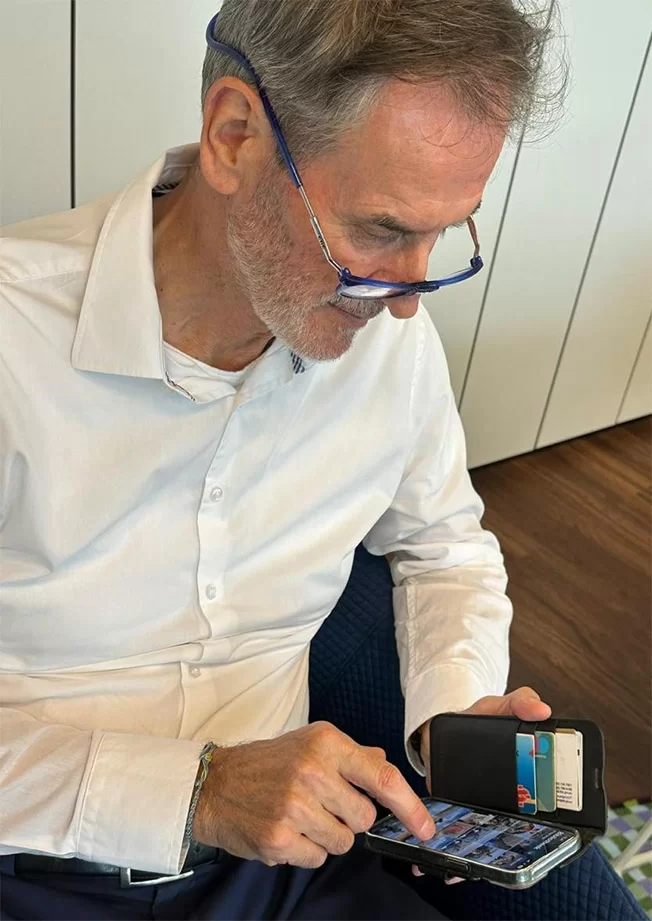
For years, Dutch ambassador to Suriname Walter Oostelbos has turned his personal Instagram account into a living, visual diary of the South American nation – one that prioritizes quiet, overlooked details over formal diplomatic announcements. What began as a spontaneous idea during a weekend trip to Knini Paati has grown into a decades-long personal project, with the ambassador now sharing nearly 3,000 original photographs paired with short contextual stories, all published in a personal capacity.
Oostelbos, a trained historian and former journalist, describes the daily posting habit as a deep-seated passion rather than an obligation, a characterization his family frames simply as a beloved hobby. His trained eye looks beyond the surface of Suriname’s daily life, zeroing in on landscapes, architecture, traditions, and cultural fragments that are at risk of fading into obscurity or flying under the radar of most observers.
This year marks a major milestone for the country: Suriname’s 50th anniversary of independence, locally called Srefidensi. The national celebration included formal addresses at a special National Assembly sitting, a military parade on Independence Square, and a large public reception at the presidential palace. Guests at the reception were greeted by a striking, fully edible centerpiece: a giant cake shaped like Suriname, decorated with portraits of influential Surinamese women from past and present, surrounded by smaller cakes representing each of the nation’s distinct ethnic communities. The design highlighted the country’s defining cultural and ethnic richness, turning a celebratory dessert into a symbolic nod to national identity.
For Oostelbos, the most valuable lesson Suriname offers the world lies in this interwoven diversity. Unlike many global regions where ethnic and religious difference has sparked deep tension and even violence, Suriname has built a successful model of peaceful coexistence that is rarely highlighted internationally, he argues. Integration runs deep, even within multi-ethnic families, creating an example the ambassador says the world at large can learn from. He has pushed for Suriname to center this unique strength more prominently in its global profile, not as an empty marketing slogan, but as a tangible, working example of pluralism done right.
Many of Oostelbos’ posts focus on the small, fading cultural practices that make Suriname unique. One recent feature, for example, highlighted the Londa ke náach, a traditional dance practiced by Suriname’s Hindustani community originally imported from India. Performed by boys and young men, the dance uses distinct hand and hip movements, and it is traditionally featured at weddings, birthdays, neighborhood prayer gatherings, Navratri celebrations, and major national events. Sadly, the tradition is declining among younger generations, as many young boys report feeling ashamed to dress in the traditional feminine-coded attire required for the performance.
Another recurring focus of the project is the country’s endangered built heritage, particularly the characterful historic wooden architecture that dots Paramaribo and beyond. Oostelbos has repeatedly documented at-risk buildings, sounding the alarm over rapid demolition that replaces historic structures with generic new development. He points to the neighborhood of Frimangron, where two of four adjacent historic wooden homes were demolished in a short span of time, as just one example of this steady loss of cultural and historical identity. Even so, he emphasizes that these old buildings carry the full complexity of Suriname’s history: while some communities associate colonial-era structures with a painful legacy of oppression, erasing the structures does not erase that history, he argues. Paramaribo’s inner city, a UNESCO World Heritage Site since 2002, is one of the most unique historic urban landscapes in the world, where centuries of history remain visible in streetscapes like the iconic Waterkant – the capital’s oldest street, built in the first half of the 17th century along the Suriname River quay. For centuries, it was the first view of Paramaribo that arriving visitors saw when their ships docked, and nearly all of its existing buildings date to after the 1821 Great City Fire, with the exception of the 1730-built presidential palace that stands at the end of the street on Independence Square.
Beyond the capital, Oostelbos has also traveled to document the country’s remote interior landscapes and indigenous communities. He has featured landmarks like the Tapanahony River, a major waterway in southeastern Suriname that rises in the Eilerts de Haan Mountains along the Brazilian border, flows north through rugged highlands reaching 700 meters in elevation, and joins the Marowijne border river near Stoelmanseiland. Its banks are home to distinct indigenous and Maroon communities, including the Tiriyó people in upstream villages, and the Wayana and Ndyuka Aukan peoples further downstream. Even local Surinamese followers often tell Oostelbos his posts have made them see their own home in a new light, reacting with surprise to the layers of history he uncovers in familiar places.
For Oostelbos, this current posting to Suriname will be his last as a career diplomat. He is set to retire from diplomatic service in a matter of months, closing out his career with the visual diary project that has become his defining legacy during his time in the country. What remains after his departure is a sprawling, intimate portrait of Suriname – one built not from grand political announcements or headline-making events, but from small, daily observations that add up to reveal the nation’s true character. The ambassador’s core message, woven through every post, is that Suriname’s greatest strength does not come from its most visible, large-scale achievements. It lives in the uncelebrated details, in the functional pluralism of its diverse communities, in the living history that still surrounds those who choose to look for it, and in the power of telling those forgotten stories.