标签: Suriname

苏里南

  • Column: De laatste ontmoeting die misschien niet komt; kille visumprocedure

    Column: De laatste ontmoeting die misschien niet komt; kille visumprocedure

    Seated in her favorite rocking chair, an 85-year-old Surinamese woman waits, her gaze fixed on a door that will not open this month. She celebrates her milestone birthday this week, and her son, who lives across the Atlantic in Suriname, has longed to hold her, speak to her without a crackling phone line between them, and see her one last time before it is too late. He will not make it — not for lack of desire, not for lack of money to pay for the trip, but because the rigid Dutch Schengen visa system has shut him out.

    For Surinamese citizens hoping to travel to the Netherlands, entering the country is not a simple matter of planning a trip. It is an exhaustive, dehumanizing gauntlet of bureaucratic requirements that reduces a deeply personal family reunion to a mountain of paperwork and invasive checks. Applicants must surrender full access to their private financial lives, turning over three months of bank statements, employment verification letters, pre-booked flight tickets and travel insurance. Every document is meant to prove one thing: that they are not a “risk” that will overstay their visa, and that they will definitely return to Suriname after their visit — even when their only goal is to spend time with an aging parent.

    Even having a sibling already residing in the Netherlands who agrees to sponsor the trip is not enough to cut through the red tape. The sponsor must also disclose all of their personal financial details, submit pay stubs, share private identifying information and take on full financial guarantee for the traveler’s entire trip, covering all food and travel costs. What should be a heartfelt family gathering is reduced to nothing more than spreadsheets, numbers and constant government scrutiny.

    After applicants complete the extensive online paperwork, the real waiting begins. Securing an in-person appointment through the visa processing system is already an ordeal, with waiting times stretching more than a month for an available slot. Once a traveler finally makes it to a VFS Global processing center, they walk out €90 poorer and no less uncertain about the outcome of their application. The response is coldly corporate: applicants can expect to wait a minimum of one month just to get a decision. As of mid-April 2026, applications submitted all the way back in January are still being processed, making travel in the same month impossible, and forcing applicants to reschedule their appointments from scratch.

    The crushing nature of the system becomes even clearer when checking for new appointment slots. On April 13, 2026, the earliest available appointment date was May 29, 2026. Even after that appointment, the processor requires a minimum of another month to review the application — despite all documents already being submitted electronically more than a month prior. By that time, the financial guarantee submitted by the family and the purchased travel insurance will both expire. What this all means is simple: the son will not get his chance to celebrate his mother’s birthday with her in person.

    A comparison to U.S. visa processing highlights how deeply dysfunctional the Dutch system is. Even under the often unpredictable U.S. immigration system, the process is clear and fast. Applicants know what to expect, receive an immediate decision after their in-person interview, and get their passports back within a week — often with a multi-year five-year visa that allows future travel. The rules may be strict, but the process is organized, efficient, and treats applicants with basic dignity.

    That human element has been completely erased from the Dutch visa system. Dutch officials routinely deflect blame, pointing to Brussels, Schengen Area rules, and shared European policy as justification for the strict process. But for applicants, who bears responsibility does not change their lived experience: the system is slow, cold, demeaning, and inhumane.

    This disconnect is all the more striking given the centuries-long deep historical and social ties between the Netherlands and Suriname. Lofty diplomatic rhetoric and official state visits do nothing to change the reality on the ground for ordinary Surinamese families. The contrast becomes even more glaring when the situation is reversed: Dutch citizens traveling to Suriname can apply for an e-visa online and receive their approval via email within a matter of days, with no stacks of paperwork, no months-long waiting, no constant uncertainty. They get straightforward, simple access.

    For Surinamese people, a visa to the Netherlands is never just a travel document — it is an almost insurmountable barrier. It is a weeks-long journey marked by constant stress, crippling uncertainty, and total dependence on a bureaucratic system that does not care about individual circumstances. The system makes no exceptions for advanced age, for running out of time, for the need to say goodbye to a dying loved one.

    Today, families are trapped on opposite sides of the Atlantic, a distance that modern air travel could easily bridge in a single day on KLM or Surinam Airways flights. Surinamese people who hold Dutch passports often note that a purple EU passport is just a travel document, but the reality is that it grants them the freedom to travel between the two countries whenever they want, to enjoy life in both nations, and pack a suitcase at a moment’s notice. This painful family separation exposes that the fight is about far more than just a piece of paper: it is about equal access, basic human dignity, and freedom of movement. One group can travel whenever they choose; the other must jump through endless hoops just to prove they deserve the right to see their own family.

    As the 85-year-old mother waits for a son who will not come, the system’s failure is laid bare. It has forgotten the human core of what it is meant to facilitate: people who want to see each other one last time, before it is too late. There will be no visa for a birthday visit. If the worst comes to pass, the family may only qualify for an emergency visa for a funeral.

  • AdeKUS richt blik op kloof tussen beleid en uitvoering tijdens Bestuurskundeweek

    AdeKUS richt blik op kloof tussen beleid en uitvoering tijdens Bestuurskundeweek

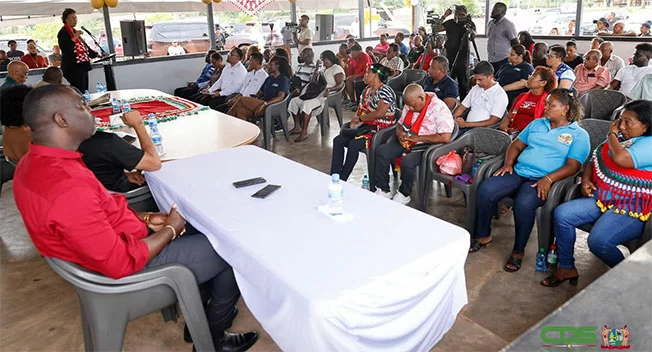
    On a recent Monday, the Anton de Kom University of Suriname (AdeKUS) officially launched the fourth iteration of its annual Public Administration Week, an event tailored to connect academic learning with real-world governance challenges. This year’s programming centers on a timely and critical theme: moving beyond Suriname’s traditional reliance on natural resource extraction to build inclusive, long-lasting sustainable development, with a specific focus on bridging the gap between policy design and on-the-ground execution. The opening ceremony was led by Suriname’s President Jennifer Simons, who used her opening address to emphasize that closing this implementation gap remains one of the most pressing ongoing challenges for the South American nation.

    Public Administration Week is structured to give undergraduate and graduate students in the public administration degree program hands-on learning opportunities that go far beyond traditional classroom instruction. Over the course of the five-day event, students will take part in interactive workshops led by practicing policymakers, site visits to regional government agencies, and panel discussions with leading governance experts from across Suriname and the Caribbean region. Every activity ties back to the event’s core theme: “From Natural Resources to Sustainable Development: Policy Choices for the Next Generation”.

    President Simons noted that the chosen theme cuts straight to the heart of Suriname’s most critical development questions. In her remarks, she outlined that effective governance relies on three non-negotiable pillars: full transparency, public accountability, and a consistent commitment to centering community input in policy design. She also pushed back on common framing of sustainable development, noting that it extends far beyond narrow metrics of economic growth or natural resource sector diversification. “Sustainable development is not just about drafting innovative policy ideas,” Simons said during her address. “It is about turning those ideas into tangible, effective action that improves lives for current and future generations.”

    Despite Suriname’s abundance of development ideas and access to skilled technical expertise, Simons acknowledged that turning plans into action frequently hits roadblocks. A range of systemic and institutional barriers often slow or fully block policy implementation across sectors, she explained. In response to this persistent gap, the president called on participating public administration students to bring fresh perspectives and innovative thinking to solve this challenge, as highlighted in an official release from the Communication Service of Suriname.

    Simons also stressed that building broad public buy-in is a non-negotiable component of successful policy execution. Even the most well-intentioned policy initiatives will face uncrossable barriers without widespread support from local communities and broader society, she noted. She further called for deeper, more structured collaboration between Suriname’s academic institutions and national government, including a proposal to integrate student graduation research more directly into government policy development processes.

    Loraine Arsomedjo, program coordinator for AdeKUS’s Public Administration degree, echoed the president’s remarks, underscoring that this year’s theme could not be more relevant to Suriname’s current context. Arsomedjo pointed out that while Suriname holds vast reserves of valuable natural resources, these assets alone are not enough to deliver equitable, sustained national development. “Without strong public institutions and thoughtful, intentional policy design, natural resource wealth can easily become a source of systemic vulnerability rather than national prosperity,” she explained.

    Arsomedjo added that the public administration program at AdeKUS is designed to培养 students who do not just understand how existing policy processes work, but who are also willing and able to think critically about how to improve governance systems. “You are not here to be passive observers of public affairs,” Arsomedjo told participating students. “You are the thinkers, the designers, and the leaders who will shape Suriname’s future.”

    Through the full week of programming, Public Administration Week aims to prioritize cross-sector knowledge sharing, critical reflection on Suriname’s governance challenges, and targeted preparation for students who will go on to fill key roles in Suriname’s public administration sector after graduation.

  • Republic Bank introduceert online rekening openen via RepublicOnboard

    Republic Bank introduceert online rekening openen via RepublicOnboard

    In a major push to modernize retail banking services and enhance customer accessibility, Republic Bank has announced the launch of a groundbreaking end-to-end digital account opening platform named RepublicOnboard, announced in a recent public statement dated April 13.

    Unlike traditional account opening processes that require mandatory in-person visits to a bank branch, the new solution empowers customers to complete their entire application from any location, at any time. Every step of the journey, from initial application submission to identity verification, is conducted completely online, cutting out lengthy wait times and paperwork that have long frustrated banking customers.

    To complete their application, users simply upload digital copies of required documentation, including government-issued proof of identity, confirmation of residential address, and income information if available. Identity verification is finalized through a secure, encrypted selfie-check process that matches the user’s photo to their official identity document. Republic Bank confirmed that the new platform is directly integrated with its core banking infrastructure, a design choice that guarantees both high-level security for user data and a smooth, efficient onboarding experience. As an added convenience, customers are automatically enrolled in the bank’s existing digital banking services, including online banking and mobile banking apps, immediately after their account is approved.

    The platform offers customers a range of account options to suit different needs, including the no-monthly-fee e-free checking account, a standard giro account, and a personal savings account. The e-free option, which charges no recurring monthly maintenance costs, is expected to be particularly popular among consumers who rely almost exclusively on digital banking services and have little need for in-branch support.
    Republic Bank also emphasized that its existing ATM services will remain fully operational for customers following the launch. Account holders can still withdraw funds in both Surinamese dollars (SRD) and United States dollars (USD), with a daily withdrawal limit of SRD 20,000 that carries no extra transaction fees.

    Industry observers note that the launch of RepublicOnboard marks a key milestone in Republic Bank’s broader strategy to expand digital transformation and customer-centric service delivery across the regional banking sector. The move aligns with a global industry trend toward fully digital banking experiences, as financial institutions compete to meet rising consumer expectations for flexible, accessible financial services.

  • SVB onderzoekt nationaliteitskwestie spelers en kiest voor lokale selectie tegen Belize

    SVB onderzoekt nationaliteitskwestie spelers en kiest voor lokale selectie tegen Belize

    Suriname’s national governing body for football, De Surinaamse Voetbal Bond (SVB), has launched a formal review into the nationality eligibility of multiple players across its men’s and women’s national senior teams, the organization confirmed in an official press statement on April 13. The review was triggered by recent media reports that raised questions over potential legal complications related to the nationality status of several of Suriname’s active international footballers. According to the SVB, relevant stakeholders including the players in question and their club employers have already been in contact regarding the issue, and a thorough, detailed assessment of the situation is currently underway. The association stressed that protecting the core interests of the affected players is the top priority throughout the entire review process, with the organization actively monitoring developments as the assessment moves forward. At the same time, the SVB reaffirmed that it remains committed to advancing the competitive sporting goals of its national teams, consistent with the public brand identity of the squads, known as “Natio – The Green Guardians”. In response to the ongoing review, the SVB has made the decision to field a squad drawn entirely from the country’s domestic local league for the upcoming women’s World Cup qualifying match against Belize. The association noted that this unexpected adjustment actually opens a unique door for emerging homegrown talent to gain high-level competitive experience on the international stage. The SVB added that it is working toward a structural, long-term solution that resolves the eligibility question permanently, and will release additional public updates once more concrete information becomes available.

  • Nalatenschap van Claudetta Toney: klein van gestalte, groot in daden

    Nalatenschap van Claudetta Toney: klein van gestalte, groot in daden

    Suriname’s beloved public advocate Claudetta Nita Toney, who passed away at 88, was cremated on Sunday, with hundreds of mourners filling the service to celebrate her decades of tireless work advancing cultural preservation, community development, and institutional reform across the South American nation.

    Described by loved ones and colleagues as small in stature but giant in impact, Toney leaves behind a legacy defined by fearlessness, relentless drive, and a rare balance of sharp business acumen and deep social commitment. Attendees gave a standing ovation to honor the late leader, remembered as a dignified figure who commanded respect through the consistent respect she extended to every person she met.

    Speakers at the funeral highlighted Toney’s far-reaching, often underreported influence across multiple sectors of Surinamese society. When proposed government cost hikes threatened to put mining rights holders out of business, Toney stepped forward immediately to advocate on the association’s behalf, rallying support and pushing back against harmful policy changes. She also dedicated years of work to mending strained relationships between natural resource concession holders and local Indigenous and community populations, working to build mutually beneficial partnerships that protected both economic opportunity and local livelihoods.

    A core pillar of Toney’s life’s work centered on lifting up marginalized community members. She firmly rejected the idea that success was reserved for a small privileged elite, arguing instead that every person deserved access to opportunity – and often only needed a small helping hand to reach their potential. To turn that belief into action, she created skills training programs for local residents, and helped countless people secure critical official documentation that opened doors to education, employment, and formal participation in public life.

    Another central focus of Toney’s advocacy was preserving, elevating, and formalizing Afro-Surinamese culture and traditional knowledge. She did not only push for cultural conservation – she argued for rigorous academic study and intentional development of these traditions to ensure they would thrive for future generations. Most notably, Toney organized traditional healers across Suriname into a unified collective, and her decades-long campaign for formal legal recognition and protection of traditional medicine resulted in the drafting of three landmark pieces of draft legislation.

    Toney often emphasized that Suriname’s own indigenous natural resources contained all the raw materials needed to build a robust, innovative traditional medicine sector. She frequently reminded her community: “Don’t discard your traditional knowledge – the Western world uses those same natural ingredients to make the pills you buy at the pharmacy.”

    To further embed traditional medicine in scientific practice, Toney championed the upcoming launch of the Claudetta Toney University of Suriname for Chemistry, Engineering & Research, set to open its doors in September. The institution will combine rigorous scientific research with the study of traditional healing practices to give evidence-based backing to traditional medicine, while also dedicating specialized research capacity to Suriname’s mining, oil, and gas sectors.

    Kortencia Sumter-Griffith, Toney’s close associate and long-time right hand, summarized her lifelong impact in a tribute at the service. “She was an incredibly important catalyst for both the economic advancement and cultural consciousness of people of African descent in Suriname,” Sumter-Griffith said. “Socially committed, culturally aware, business-minded, extraordinarily wise and loving, her presence radiated both warmth and authority. Her legacy is one of strength, compassion, perseverance, and courage.”

    Toney would have celebrated her 89th birthday in May.

  • OWOS schort beraad op na constructief overleg met EBS-directie

    OWOS schort beraad op na constructief overleg met EBS-directie

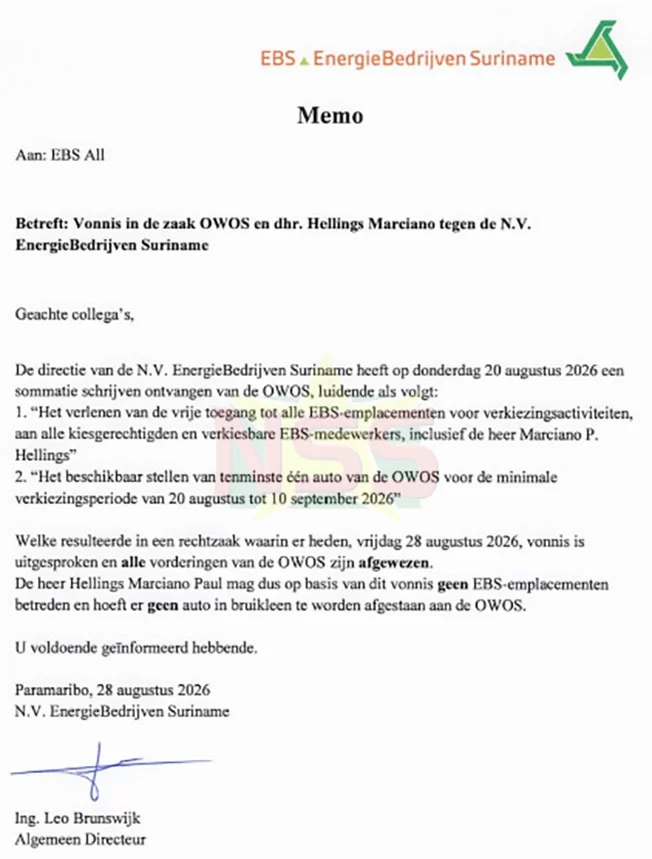
    A major breakthrough has been reached in labor tensions at Suriname’s primary energy provider, De Energie Bedrijven Suriname (EBS), after the company’s recognized employee union, OWOS, announced it would suspend previously announced industrial action. The decision came following a productive round of talks between union leadership and EBS senior management, OWOS chair Marciano Hellings confirmed in an interview with local outlet Starnieuws.

    The negotiation session was led by EBS Chief Operating Officer Robert Pancham, with Technical Director Rishidath Mathoera and Chief Financial Officer Felicia Zerp also in attendance. This meeting marked the first constructive dialogue between the two sides after a lengthy period of deadlock, according to Hellings, who emphasized that the tone of the talks marked a positive shift in labor relations at the firm.

    Both sides signed off on a clear set of binding agreements during the discussion. A key deadline has been set: by the end of this week (Thursday), the parties are expected to finalize negotiations on the 2025 collective labor agreement, and will immediately launch talks on the 2026 agreement once that milestone is completed.

    Another critical commitment reached during the talks requires EBS management to publish an official position on the controversial 40K allowance by April 30, with the principle of pay equity mandated as the core starting point for the stance. The agreement also specifies that all other outstanding personnel issues must either be fully resolved or officially placed on the formal processing track by the same end-of-April deadline.

    Following the negotiation, the full set of outcomes was presented to OWOS’s general membership assembly, which voted to approve a temporary suspension of the planned industrial action. Hellings explained that the membership body chose to grant both the union leadership and EBS management sufficient time and space to implement all agreed-upon measures within the set deadlines.

    A follow-up general assembly has already been scheduled to convene after April 30 to review progress on all commitments. At that meeting, members will vote on whether to end the industrial action threat permanently or resume the planned work stoppage if the agreed terms are not met.

  • Olieprijs stijgt bijna 8% boven $102 voorafgaand aan Amerikaanse blokkade van Iran

    Olieprijs stijgt bijna 8% boven $102 voorafgaand aan Amerikaanse blokkade van Iran

    Global crude oil markets swung sharply upward on Monday, with both benchmark contracts jumping more than 7% to push prices above $102 per barrel, after the United States announced it would launch a full naval blockade of commercial shipping to and from Iranian ports via the Strait of Hormuz, a critical global energy chokepoint. The escalation comes after weeks of high-stakes negotiations between Washington and Tehran failed to produce a lasting ceasefire agreement, collapsing a fragile two-week truce and raising fears of wider regional conflict.

    Following a minor pullback in the previous trading session, Brent crude futures climbed $7.32, or 7.7%, to settle at $102.52 per barrel on Monday. U.S. West Texas Intermediate (WTI) crude futures followed a similar trajectory, rising $7.65, or 7.9%, to hit $104.22 per barrel.

    In a Sunday statement, former U.S. President Donald Trump confirmed the U.S. Navy would move forward with the blockade, marking a major escalation of tensions after marathon talks with Iran broke down. He acknowledged that elevated oil and gasoline prices would likely persist through November’s U.S. midterm elections, a rare admission of the political ramifications of his administration’s decision to launch airstrikes against Iran six weeks prior.

    Erik Meyersson, a senior analyst at Swedish bank SEB, noted that the announced blockade confirms that the core ceasefire condition, as interpreted by the U.S. — the full reopening of the Strait of Hormuz — is unachievable for the foreseeable future.

    U.S. Central Command (Centcom) later clarified the scope of the operation in a post on X, stating that starting Monday, U.S. forces will intercept all commercial vessels traveling to or from Iranian ports, including all Iranian facilities along the Arabian Gulf and the Gulf of Oman. The operation will apply equally to vessels of all nationalities, Centcom added, while emphasizing that freedom of navigation for ships traveling to and from non-Iranian ports through the strait will remain unimpeded.

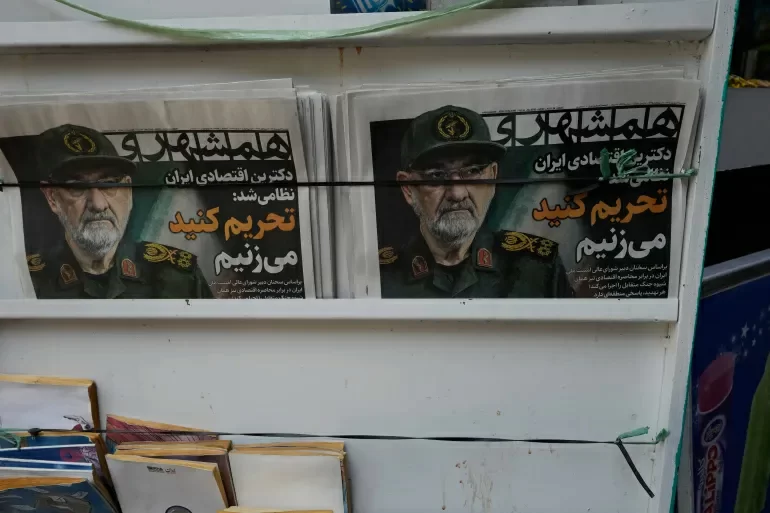
    Iran has responded with sharp condemnation and threats of retaliation. The Islamic Revolutionary Guard Corps warned Sunday that any military vessel approaching the Strait of Hormuz will be treated as a ceasefire violation and met with forceful action. Iranian military officials have called the planned U.S. blockade, which is set to take place in international waters, an illegal act of piracy, and warned that no Gulf region ports will remain safe if Iranian shipping and facilities are targeted.

    The escalating geopolitical turmoil has already rattled global energy markets, even as OPEC has downgraded its 2024 second-quarter global oil demand forecast by 500,000 barrels per day, citing the economic fallout from the ongoing Middle East conflict. In a monthly report published Monday on its official website, OPEC also reported that combined oil production from OPEC+ member nations averaged 35.06 million barrels per day in March, a 7.7 million barrel per day drop from the previous month. Physical crude oil prices are already trading at a steep premium to futures contracts, with some grades reaching record highs near $150 per barrel amid acute supply fears.

    Helima Croft, head of commodity strategy at RBC Capital Markets, warned that if Trump follows through on his threat with a full naval deployment, the gap between paper futures markets and tight physical supply could close rapidly, driving prices even higher. Shipping data from LSEG shows that most commercial carriers are already diverting away from the Strait of Hormuz to avoid potential disruption, though three fully loaded supertankers successfully transited the waterway on Saturday, marking the first large crude carriers to exit the Gulf since the partial ceasefire took effect the previous week.

    Separately, Saudi Arabia announced Sunday that it has fully restored oil pumping capacity along its critical East-West Pipeline to 7 million barrels per day, after the country’s energy infrastructure suffered damage in attacks amid the conflict with Iran.

    The U.S. blockade announcement has injected a new wave of uncertainty into already jittery global oil markets, directly driving the sharp price rally seen on Monday. As the Strait of Hormuz handles roughly 20% of all global oil trade, any sustained disruption to shipping through the waterway translates immediately to higher energy costs for consumers and businesses worldwide.

    Elevated oil prices add intense pressure to household budgets and corporate bottom lines, fueling already sticky global inflation and threatening to slow projected economic growth. Net oil-importing nations are particularly vulnerable to this shock, and the price spike could exacerbate existing political tensions in vulnerable economies.

    OPEC’s downward revision to global demand forecasts underscores the deep fragility of current market conditions, driven by conflict-related uncertainty. At the same time, the sharp premium on physical crude points to an already tight market and widespread fear of imminent supply shortages.

    The standoff has also significantly ramped up geopolitical tensions across the Middle East, with the risk of open military conflict rising sharply. Iran’s retaliatory threats paired with the U.S.’s planned blockade have put global energy security at heightened risk. Over the longer term, sustained high oil prices may shift government policy priorities, accelerating investments in alternative energy sources while also increasing domestic political pressure on leaders to rein in energy costs for consumers.

  • OWOS legt werk neer bij EBS: Directie weigert structureel overleg

    OWOS legt werk neer bij EBS: Directie weigert structureel overleg

    On April 13, employees of Dutch public transport provider EBS took industrial action, halting all work amid escalating tensions with company leadership that have been building for months. The decision to down tools came from an urgent general members’ meeting held on the morning of the strike, organized by the EBS Employees’ Organization (OWOS), the union representing EBS workers. Marciano Hellings, chair of OWOS, told local outlet Starnieuws that the work stoppage is a direct response to long-running frustration over management’s refusal to enter into structured, substantive negotiations with the union.

    Hellings explained that the conflict has unfolded over multiple core issues, ranging from stalled 2025 collective bargaining agreement (CAO) talks to a range of unresolved personnel concerns. Despite repeated formal requests from the union for discussions, EBS leadership has consistently declined to engage in meaningful dialogue, the union claims. Beyond the bargaining impasse, OWOS has also raised formal allegations of a pervasive “culture of intimidation” among frontline staff, and has publicly criticized the opaque process the company has used to appoint new management leadership. All of these concerns were previously submitted to EBS leadership in written correspondence, according to the union.

    Additional worker discontent centers on unequal financial arrangements across the company: a targeted pay bonus granted to a small group of senior managers was implemented without any prior consultation with the union, a decision that runs counter to OWOS’s demand for equal treatment for all EBS employees. In the lead-up to the strike, the union issued a formal ultimatum to management, demanding that it come to the negotiating table within a set timeframe. When no substantive response was forthcoming from EBS leadership, union representatives moved forward with planning for industrial action.

    A recent internal memo from EBS management proved to be the final straw, Hellings said. The memo reminded all employees of their mandatory attendance requirements and outlined potential disciplinary measures for unapproved absences, prompting the union to escalate pressure by calling the general members’ meeting that approved the strike.

    In an official response to the industrial action, EBS management stated that it supports the principle of “open, constructive and sustained dialogue” with employee representatives, and confirmed that it will extend a new invitation to OWOS for formal talks. At the same time, the company pushed back against the union, criticizing the tone and framing of OWOS’s previous communications. EBS emphasized that both sides should prioritize the shared goal of maintaining stable, productive labor relations at the company.

    The union, however, has maintained its hard line, noting that months of stonewalling have severely damaged trust between worker representatives and EBS leadership. OWOS argues that the work stoppage is a necessary step to defend the legal rights and core interests of rank-and-file employees, and has called on all members to remain unified in their action and refuse to be intimidated by management pressure.

    As of the initial announcement, there is no clear timeline for how long the work stoppage will continue. OWOS has reiterated that it remains willing to end the strike and return to negotiations, on the condition that EBS management enters into talks with a commitment to serious, substantive discussion of all the union’s outstanding concerns.

  • Systeemonderhoud Finabank uitgelopen; diensten pas dinsdag volledig hersteld

    Systeemonderhoud Finabank uitgelopen; diensten pas dinsdag volledig hersteld

    A planned system upgrade at Suriname-based Finabank has hit an unexpected delay, pushing the full restoration of most banking services much later than initially projected, the financial institution announced on Monday, 13 April. What was originally scheduled as a three-day maintenance window running from 10 April to 12 April, part of a broader initiative to improve the bank’s digital and core service infrastructure, will now keep most key services offline until 8:00 a.m. local time on Tuesday 14 April. The extended downtime has left large swathes of the bank’s core offerings limited or completely unavailable for account holders through the end of Monday.

    In a public statement, Finabank confirmed that customers will be unable to access a wide range of routine banking services until service restoration is complete. This includes all withdrawals and deposits via ATMs, point-of-sale (POS) debit payments using local-issued Finabank bank cards, and all online and mobile banking transactions for both domestic and international transfers. The outage has already created tangible disruptions for retail shoppers as well: at local merchants that rely exclusively on Finabank’s POS terminals, standard pin-based debit payments are currently impossible, forcing customers to seek alternative payment methods.

    Not all of the bank’s card services are affected by the outage, however. Credit card transactions using Finabank-issued Visa and Mastercard products remain fully operational, both for in-person POS purchases and online payments.

    For customers needing in-person assistance, Finabank’s physical branch locations will remain open on Monday 13 April for limited, priority services. Account holders can still visit branches to submit product and service applications, make cash deposits, address urgent banking matters, access general customer support, and retrieve or add items to safe deposit boxes held at the branch.

    Finabank has publicly acknowledged the inconvenience that the extended maintenance window creates for its customer base, and has urged account holders to adjust their upcoming financial plans to account for the current service disruptions. The bank has not shared additional details on what caused the maintenance work to run longer than initially forecast, but reaffirmed that the work is intended to deliver long-term improvements to its overall service reliability for customers once completed.

  • Peneux: Overheidsapparaat ontregeld door politiek ingrijpen en scheve beloningen

    Peneux: Overheidsapparaat ontregeld door politiek ingrijpen en scheve beloningen

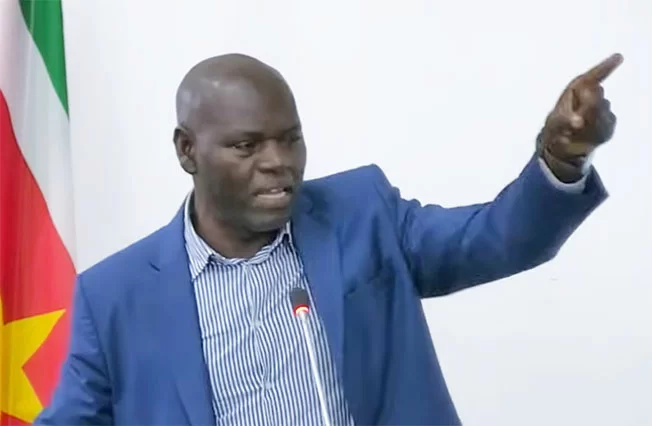
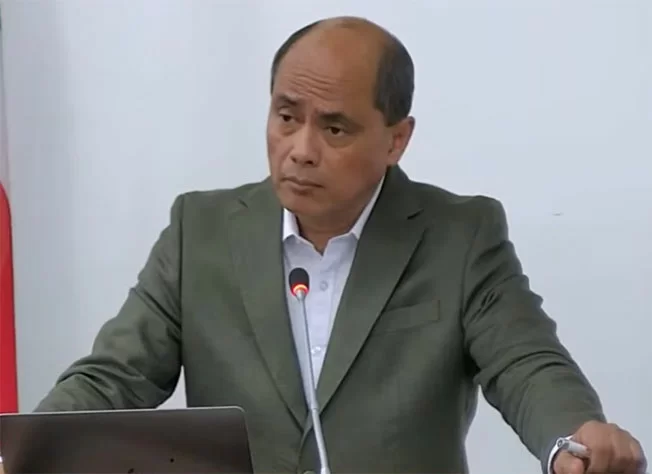
    On April 13, former Surinamese Minister of Education, Science and Culture Robert Peneux outlined deep-rooted systemic failures plaguing the country’s public sector in an exclusive interview with local outlet Starnieuws, tracing most of the current dysfunction to the elimination of the decades-old Functie Informatie Systeem Overheid (FISO) civil service framework.

    Implemented during the administration of former president Ronald Venetiaan, FISO was designed to bring structure and transparency to the sprawling government bureaucracy. Under the system, every public sector role came with clearly defined qualification requirements, creating a clear career progression path that incentivized civil servants to pursue continuous professional development to qualify for senior positions.

    According to Peneux, years of political decision-making and pressure from labor unions gradually eroded the FISO framework until it lost its core function. The dismantling of the system has fully decoupled job roles and civil service ranks from required professional qualifications, creating skewed, unfair dynamics across all levels of government. Unqualified candidates with political connections now hold many senior leadership roles, a reality that has bred deep resentment among career civil servants with the right credentials and directly undermined the quality of national policy development, Peneux explained.

    Beyond the qualification mismatch, Peneux added, the government suffers from a fundamental lack of clear policy domain boundaries between individual ministries. No department has formally documented the exact scope of policy areas it manages, leading to overlapping roles, redundant teams of policy advisors and widespread systemic inefficiency that slows public service delivery.

    Peneux also called out the broken pay structure across both government agencies and state-owned parastatal companies, noting that chief executives at state-owned firms earn drastically higher salaries than the cabinet ministers who oversee their work. At the same time, stagnant low base salaries for rank-and-file civil servants have triggered a mass exodus of skilled, qualified workers from the public sector.

    This brain drain is particularly visible in the education sector, Peneux said. Teacher training instructors at the Instituut voor de Opleiding van Leraren (IOL) are leaving in droves for higher-paying positions at Anton de Kom University of Suriname or for roles abroad, creating a shortage of full-time teaching faculty that is damaging the country’s pipeline of new educators. Peneux emphasized that the scale of the pay gap has made retaining qualified full-time instructors nearly impossible for IOL.

    The former minister stressed that the public sector’s troubles extend far beyond uneven compensation. Ministries now face a chronic shortage of implementation capacity, in large part because political loyalty is routinely prioritized over professional expertise when hiring and promoting public servants.

    “Effective policy can only succeed when the civil service has the right people with the right qualifications in place,” Peneux said. He called for a full, comprehensive audit of the entire public administration apparatus, including a full review of the national pay scale and job evaluation system. Without urgent, large-scale intervention, Peneux warned, the public sector will face further systemic erosion that will undermine its ability to serve Surinamese citizens.

    In closing, Peneux criticized the national policy debate for lacking meaningful depth, noting that while political actors engage in extensive discussion, concrete action plans and long-term structural solutions remain out of reach. “We talk a great deal, but real, tangible results still fail to materialize,” he said.