标签: Suriname

苏里南

  • Column: Leren van de vredesboodschap van Avurudu

    Column: Leren van de vredesboodschap van Avurudu

    Suriname is widely celebrated as a stunning cultural mosaic, where distinct religious traditions, ethnic identities, and ancestral customs intersect and coexist. Day by day, residents of the South American nation absorb influences from one another, adopt shared practices, and collectively shape a dynamic, interconnected society. Yet even in this context of inherent diversity, communities often overlook a critical truth: choosing peace and mutual understanding intentionally is more important now than ever.

    The world has much to gain from the core philosophy of the Sinhala and Hindu New Year, known as Avurudu, which is celebrated across Sri Lanka every April during the month of Bak. Far more than just a cultural holiday marking the turn of the calendar, Avurudu is an intentional invitation to pause, reflect on past divides, and pursue reconciliation – starting within the home, extending to local communities, and scaling all the way to national and global relationships.

    Peace, as the tradition of Avurudu reminds us, always begins at home, in the smallest sphere of everyday life. Avurudu is a moment for family reunion, for letting go of long-held grudges, resolving lingering misunderstandings, and embracing the power of forgiveness. The family unit, where we often carry our deepest emotional wounds, must be the first place we practice peace. If harmony cannot be cultivated around the family kitchen table, it becomes far harder to build it anywhere else in the wider world.

    From that small, intimate starting point, the spirit of Avurudu flows outward into neighborhoods, villages, and cities. Shared holiday rituals, traditional games, and open invitations to connect across divides lower existing tensions and create space for mutual understanding and collective collaboration. The holiday serves as a lasting reminder that all people are bound together by shared values, shared humanity, and common experiences, regardless of the cultural or religious differences that set us apart on the surface.

    This message of peace also holds powerful inspiration for national and international politics. The ancient story of Buddha, who prevented a violent conflict in Sri Lanka through wisdom and radical compassion, reinforces a critical lesson: the only path to lasting, sustainable peace requires the courage to listen to others and actively pursue understanding. Peace can never be imposed by powerful actors through force; it only emerges when all parties practice mutual respect and recognize the shared humanity of every person, no matter their background.

    In Suriname, where dozens of unique cultural communities live side by side, this message feels more urgent and relevant than ever. Surinamese people regularly adopt each other’s customs, vocabulary, and traditions, creating a vibrant blended culture that is a point of national pride. But this beautiful diversity also requires intentional focus on the values that bind communities together, creating space to embrace differences without fear or prejudice.

    As Avurudu, Bak Poya, and Easter all demonstrate, peace is not a final destination to reach one day. It is a deliberate path that every person must choose to walk anew each day. Cultivating peace requires courage, patience, and an open heart. It demands that we look beyond our own personal interests and make space to connect with the experiences and stories of people who come from different backgrounds.

    In an era marked by rising division and widespread global uncertainty, Suriname has the opportunity to build its own version of the Avurudu spirit: a widespread culture of reconciliation, where communities work together to build a future where every person feels seen, heard, and respected, regardless of their identity.

    May this new year philosophy inspire people across Suriname to practice peace every day – starting at home, extending to the street, through local communities, and across the entire nation. Only through this intentional work can we build a society that is not only rich in diversity, but also deeply connected by shared commitment to mutual respect.

    A special holiday greeting to Sumudu and Sachitra: Suba Aluth Avuruddak Wewa!

  • President ziet groeipotentie AVD als toeristische trekpleister

    President ziet groeipotentie AVD als toeristische trekpleister

    One of the Caribbean region’s most beloved community walking events is gaining high-level attention for its untapped potential as a major international tourism draw, as the nation’s top leader joined participants for the closing stage of its 61st edition. On Saturday, President Jennifer Simons carved time out of her packed official schedule to walk several kilometers during the final day of the annual Avondvierdaagse (AVD), a four-day evening walking tradition that draws thousands of participants each year.

    After completing her walk, Simons shared her positive assessment of the event, emphasizing that with consistent organizational growth and investment, the AVD could evolve into a signature tourism event for Suriname. She praised the vibrant, inclusive atmosphere of the gathering and the enthusiastic commitment of every participant, calling the AVD a standout community-focused occasion. “This is such a wonderful event, and I truly believe it has the capacity to attract far more visitors to our country in the coming years,” Simons told reporters on site.

    The president offered clear guidance to the event’s organizer, the Business Association for Sport and Play (BVSS), urging the group to continue investing in improvements to event quality and operational infrastructure to support future expansion. Simons was not the only high-ranking official to take part in this year’s walking march. Lalinie Gopal, the Minister of Sport and Youth Development, and Enrique Ralim, Director of Sports Affairs, also joined the route, walking alongside a group of elite national athletes to show their support for the community-focused tradition.

  • Assembleedelegatie naar Turkije voor internationale assemblee

    Assembleedelegatie naar Turkije voor internationale assemblee

    A cross-party parliamentary delegation from Suriname, led by National Democratic Party (NDP) parliamentary group leader Rabin Parmessar, has embarked on a trip to Turkiye to participate in the 152nd General Assembly of the Inter-Parliamentary Union (IPU), a major global forum for national parliamentary representatives. The delegation includes representatives from Suriname’s major political parties, with Progressive People’s Party (VHP) parliamentary group leader Asis Gajadien and Progressive Aboriginal People’s Party (ABOP) parliamentarian Ines Pané also joining the mission.

    The five-day IPU General Assembly is scheduled to run from April 14 to 19, 2026, in Istanbul, bringing together hundreds of lawmakers from nearly every sovereign state around the globe to deliberate on pressing transnational challenges that require collective political action. As part of their participation, the Suriname delegation will first contribute to the gathering of the Group of Latin America and the Caribbean (GRULAC), a regional caucus that coordinates unified policy positions for member states ahead of broader IPU debates.

    The GRULAC pre-assembly meeting has a packed policy agenda that covers multiple high-stakes topics. Delegates will discuss evolving international economic dynamics, deepen frameworks for cross-parliamentary cooperation, review and nominate candidates for the IPU Secretary-General position, and align on a joint regional geopolitical stance ahead of plenary discussions.

    In an interview with local Surinamese outlet Starnieuws ahead of the departure, Parmessar noted that the delegation will work through an extensive, tightly scheduled program throughout the event. He emphasized that the trip carries significant meaning for Suriname as a small Caribbean nation, stressing that it is critical for the country’s voice to be heard on the global inter-parliamentary stage. The delegation is set to take part in a range of official activities beyond the GRULAC meeting, including specialized committee meetings and the IPU’s plenary sessions.

    Key themes on the 2026 IPU General Assembly agenda span core global priorities: peace and international security, inclusive sustainable economic development, and the critical role national parliaments play in advancing justice and stability across all regions. This year’s assembly is framed around the central theme of “strengthening hope, securing peace, and building justice for future generations”, positioning the gathering as a leading global platform for advancing parliamentary diplomacy and building multilateral cooperation between nations.

  • Tuberoos opnieuw winnaar culturele klasse bij Avondvierdaagse

    Tuberoos opnieuw winnaar culturele klasse bij Avondvierdaagse

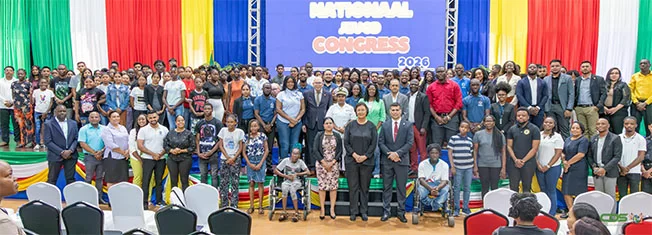
    The 61st edition of the beloved annual community walking and cultural event Avondvierdaagse (AVD) has drawn to a successful close, with a diverse set of groups claiming top honors across the competition’s multiple categories after four days of activities.

    Winners were officially announced around 2:00 a.m. on the event’s final day, following the arrival of the largest participating group, NDP, at the BVSS venue. This year’s edition drew more than 5,000 total participants, comprising 9 junior teams, 38 senior groups, and roughly 2,000 individual walkers. The occasion earned additional public attention for the attendance of Suriname’s President Jennifer Simons on the final day, who came out to show her support for all participating competitors.

    This year’s AVD centered on a health and nature-focused theme: “Be healthy, stay balanced, every step counts,” paired with the guiding slogan “Nature is our pharmacy.” This thematic focus was reflected in the event’s new special award, a dedicated environmental prize launched in partnership with the National Environmental Authority.

    Across the competitive categories, results brought a mix of repeat victories and first-time champions. In the cultural division, Tuberoos claimed the first-place title, finishing ahead of Krin Konsensi in second, Fiamba in third, and Sanseveria in fourth. For the corporate category, SWM took home the top prize, with Medische Zending securing second place. The open general division was led by Legacy Brassband, which finished in first position, followed by the Surinaamse Politiebond in second and Raggaspoiti in third.

    Among junior competitors, Libi Trobi Krioro claimed the overall first place, with Strong People finishing second and Biker Politie/RBT/AT taking third. The event’s Motivation Award was awarded to Jong Beko Krioro, which also brought the event’s youngest participant: four-year-old J. Junior, who joined the group for the full duration of the walk.

    Fiamba, the third-place finisher in the cultural division, earned a standout honor by winning the Purcy Olivieira Wisseltrofee, also known as the People’s Choice Award, for the second consecutive time. Named for a former BVSS chair, this award is decided entirely by public voting conducted through the event organizers’ official Facebook page. Fiamba secured the win with 28 percent of the total public vote, once again impressing the watching public with their performance.

    Cultural group Kujake earned dual special honors in this year’s event. The group took home both the Theme Prize for the best interpretation of AVD’s 2026 core message, as well as the inaugural Environment Prize from the National Environmental Authority, recognizing outstanding commitment to sustainable practices and environmental alignment during the event.

  • Guyana zoekt naar gecrashte piloot nabij Braziliaanse grens

    Guyana zoekt naar gecrashte piloot nabij Braziliaanse grens

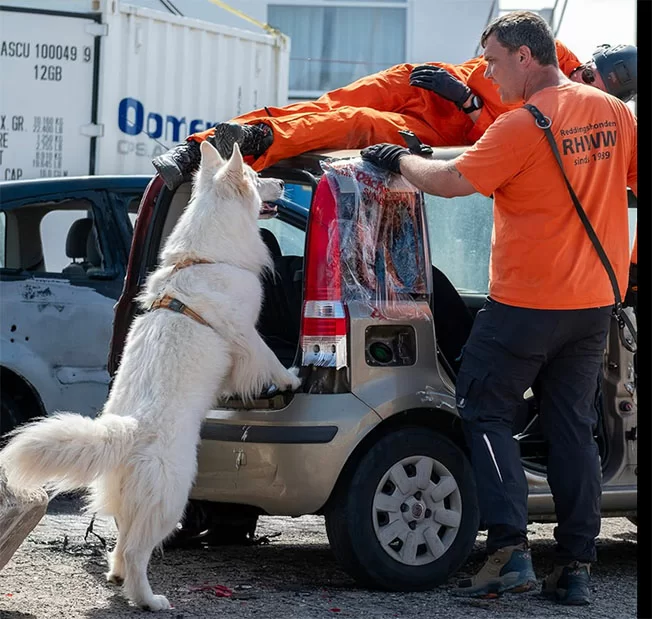
    Nearly 24 hours after a small single-engine cargo and transport plane crashed near Guyana’s western border with Brazil, specialized search and rescue units continued to comb the dense, mountainous jungle terrain on Saturday for the plane’s only occupant, its pilot.

    The 13-seat Cessna Caravan, operated by local aviation firm Air Services, was declared missing late Friday after it failed to touch down at its scheduled destination, Imbaimadai, a remote gold-mining region in southwestern Guyana. According to Guyana’s Civil Aviation Authority, the pilot was the sole person on board when the aircraft encountered severe torrential rainfall that preceded its crash into a mountainside.

    The wreckage of the downed plane was first spotted on Friday by other aircraft operating in the sparsely populated region, marking the end of the initial search phase to locate the crash site. The site sits deep within thick jungle in Guyana’s Region Eight, close to the Brazilian border, and military teams tasked with reaching the wreck had to navigate arduous terrain, cutting a path through dense 30-meter-tall forest canopy and descending steep slopes to reach the area. That detail was confirmed in an official statement released by the Guyana Defence Force.

    Small aircraft like this Cessna Caravan are a critical backbone of transportation across Guyana, a South American country with large swathes of undeveloped, roadless interior rainforest. Dozens of small planes connect remote mining, logging and indigenous communities scattered across the country’s interior, and also operate regular regional routes to neighboring countries including Brazil, Suriname and Caribbean island nations. As of Saturday afternoon, there was no update on whether the pilot has been found or what their condition is, and search efforts are ongoing.

  • De politieke barometer, oftewel de kunst van het regeren!

    De politieke barometer, oftewel de kunst van het regeren!

    Published: 12 April, 12:46

    Following the passing of former Suriname President Chandrikapersad Santokhi, I have been reflecting on his legacy ahead of his state funeral, where I contributed personally to the proceedings. Looking through the commemorative book released in his honor, the first and final images in Santokhi’s photo collage strike me as deeply curious, yet perfectly fitting for the man known to many as Chan.

    Even the foreword of the memorial book was crafted in a manner that feels distinctly aligned with who he was. It reads: “He served his country guided by a philosophical conviction that nature unites three worlds in harmony: the world of physical embodiment, the world of the thinking mind, and the world of the heart and intellect.” It is a tragedy that nature did not grant him the time to fully reach his potential across all three of these realms, but even so, we cannot deny the contributions he made to Suriname during his lifetime.

    It is true that throughout his final term in office, I often spoke out critically against his self-centered policy and personal decisions – criticism that was never unfounded. Despite this political friction, Santokhi and I maintained a cordial working relationship during his lifetime, a dynamic I believe was rooted in pragmatic political calculation on his end, a fact that those close to him can confirm.

    As fellow politician Gajadien once noted of Santokhi: he never arrived unprepared. I can personally attest to this observation. In 2019, I joined Santokhi for a meeting with then-incumbent President Dési Bouterse to discuss a potential pre-election alliance between Santokhi’s Progressive People’s Party (VHP) and Bouterse’s National Democratic Party (NDP). That encounter gave me the opportunity to see first-hand that Santokhi was a politician of both great courage and deep policy knowledge.

    Even amid widespread controversy over Bouterse’s political standing, Santokhi chose to move forward with talks about a potential partnership – a decision I witnessed directly, along with the President of the Suriname Court of Justice. This move must be recognized as a demonstration of remarkable political strength.

    So what drove this decision? Looking back at pre-election polling ahead of the May 2020 general election, projections put the NDP on track to win 18 parliamentary seats, with the VHP projected to take a maximum of 17. Even with those predictions stacked against his party, Santokhi took the initiative to open negotiations. What is more, despite having no way of knowing the final result, he remained fully convinced the VHP would outperform polls and win more than 17 seats.

    Santokhi pushed for a written agreement to formalize the pre-election collaboration. Unfortunately, politics and opportunism have always walked hand in hand. Throughout the talks, I repeatedly warned him that if the VHP ended up winning more seats than the NDP, the agreement would never move forward. Now, in 2026, Santokhi’s passing has brought the work he started to an unexpected close. It is through this lens that I read the caption accompanying his memorial photo collage.

    Today, many critics argue that Santokhi left many Suriname’s initiatives broken and uncompleted. That may hold some truth. But it is also undeniable that he personally pushed forward a great number of key projects that have benefited the nation. Those who can see beyond the political blackmail tactics employed by some current actors in Suriname’s political landscape recognize that the country is positioned for a strong future – a future Santokhi already saw on the horizon.

    Santokhi understood well that politics is no child’s game. He often noted that with 34 members of parliament holding seats in a governing coalition, it should be unthinkable to fail to reach a quorum to conduct legislative business. On the topic of judicial reform legislation more broadly, Santokhi frequently argued that the failure to reach a orderly, functional solution to the branch’s structural challenges is nothing short of scandalous.

    In particular, the current Law on the Legal Position of the Judiciary is unworkable. It is a complete failure of governance; even for legislators acting in good faith, closer examination makes clear why the legislation cannot function as written. This is just one more example of elected assembly members wasting public tax dollars, a travesty for the Surinamese people.

    As it stands today, 21 sitting assembly members are present for regular votes, enough to form a new functional coalition led by the VHP. This is the kind of decisive action politics demands. It is long past time to revise the current ineffective, gridlocked coalition. These observations have been brought into sharp relief by the petulant, uncooperative behavior of supposed adult political leaders in recent months.

    Every elected official claims to possess reason and good judgment. That is without question. So why do they so often refuse to use it? What more can we ask for than to let reason guide the work of governing? By settling for mediocre, unprincipled politics, we remain stuck in stagnation, unable to move forward as a nation.

    By Eugène van der San

  • Bollywood-zangeres Asha Bhosle is niet meer

    Bollywood-zangeres Asha Bhosle is niet meer

    Legendary Bollywood playback singer and global cultural icon Asha Bhosle has passed away at the age of 92 in Mumbai, her son has confirmed. Bhosle, widely hailed as the undisputed queen of Indian playback singing, was hospitalized following a heart attack before her death, marking the close of one of the most influential careers in modern South Asian music.

    Spanning more than 80 years and encompassing over 12,000 recorded songs, Bhosle’s career redefined the sound of Bollywood for multiple generations of fans. Her instantly recognizable vocal range brought life to hundreds of hit film tracks, which actors lip-synced on screen and turned into anthems that got audiences across the world dancing and singing along for decades.

    Bhosle’s global fame extended far beyond Indian cinema: in 1997, British alternative band Cornershop paid homage to her legacy with the chart-topping hit “Brimful of Asha,” and she later collaborated with high-profile international artists including British pop icon Boy George and virtual alternative band Gorillaz on a 2026 release, one of her final recorded projects.

    In the hours after news of her death broke, tributes poured in from across the globe on social media from political leaders, fellow artists, and millions of fans. Indian Prime Minister Narendra Modi called Bhosle “one of the most iconic and versatile voices India has ever known,” praising her “extraordinary musical journey” that enriched India’s cultural heritage and touched “countless hearts across the world.”

    Veteran Indian actress and politician Hema Malini shared her grief, noting that Bhosle’s death hit “extra hard for me, because I shared an emotional bond with Ashaji – she made so many of my songs popular with her one-of-a-kind voice and style.” Acclaimed Indian composer and singer Shankar Mahadevan added that “every Indian is heartbroken today,” emphasizing that “her music will never die as long as humanity exists. She will live on forever, with her incredible voice resounding across the globe.”

    A unique musical legacy carved out from a legendary family

    Born into the iconic Mangeshkar musical family in Maharashtra in September 1933, Bhosle carved out a distinct artistic identity separate from her older sister, Lata Mangeshkar, another Bollywood legend who passed away in 2022. Where Mangeshkar became known for her signature classical elegance, Bhosle brought a bold, dynamic energy and genre-bending creativity to her performances.

    Her decades-long creative partnership – and later marriage – to legendary Bollywood composer RD Burman remains one of the most iconic collaborations in Indian film history. The pair produced dozens of chart-topping hits, experimenting with an eclectic sound that ranged from soulful, heartfelt ballads to high-energy dance tracks that revolutionized Bollywood’s musical identity.

    Bhosle’s versatility knew no bounds, spanning everything from the upbeat psychedelic classic “Dum Maro Dum” and the sultry “Piya Tu Ab To Aaja” to the devotional wedding staple “Mehndi Hai Rachnewali.” Her most memorable work anchored iconic films including *Teesri Manzil*, *Caravan*, *Yaadon Ki Baaraat*, *Ijaazat*, and *Saagar*, with her work on the 1981 film *Umrao Jaan*, scored by composer Khayyam, widely considered the creative peak of her career. Bhosle once noted that only Burman was able to unlock the full range of her vocal abilities and help her discover her own artistic potential.

    From humble early beginnings to global stardom

    Growing up in a household steeped in performance – her father was a classically trained singer and stage actor – Bhosle began singing at a young age. Her career took off in the 1950s and 1960s, as she quickly built a reputation for versatility across genres, recording not just film tracks but also ghazals, bhajans, qawwalis, and pop music. Early hits including “Aaiye Meherbaan”, “Parde Mein Rehne Do”, and “Dum Maro Dum” remain classics to this day, and her duets with legendary singers Mohammed Rafi, Kishore Kumar, and Manna Dey are considered timeless treasures of Indian music.

    Bhosle’s personal life was marked by significant challenges: she endured a difficult first marriage and raised three children as a single parent before marrying RD Burman, who passed away in 1994. Despite constant comparisons to her more widely celebrated sister early in her career, Bhosle never abandoned her distinct artistic vision, continuing to expand her creative horizons and win new fans across generations.

    A lasting cross-cultural legacy

    Long after she became a household name in India, Bhosle continued to break new ground. In 2020, she launched an online talent competition and a YouTube channel to share stories from her decades-long career with hundreds of thousands of young followers. In a 2023 interview, she reflected on her life and work, saying: “For me, music is my breath. I have lived my whole life with that thought. I have given so much to music, and I am glad I got through hard times. I often thought I would not survive, but I did.”

    One of Bhosle’s final recording projects was a collaboration with Gorillaz on the band’s 2026 album *The Mountain*, which explores themes of grief, mortality, and spiritual transition. The track “The Shadowy Light” paired Bhosle’s instantly recognizable voice with a multicultural ensemble, pairing her signature sound with modern production to create a haunting meditation on death and the afterlife. The collaboration served as a powerful final chapter to her career, reaffirming her timeless ability to transcend boundaries of genre, geography, and generation.

    Today, Asha Bhosle leaves an indelible mark on the global music industry, a legacy built on a voice that connected generations and crossed cultural divides. Her work continues to shape the sound of Bollywood and inspire artists across the world, and her music will live on for decades to come.

  • Caribisch gebied groeit uit elkaar, regio met twee gezichten

    Caribisch gebied groeit uit elkaar, regio met twee gezichten

    The Caribbean region is undergoing a rapid economic transformation that is splitting it into two increasingly distinct blocs, new analysis shows. While energy-rich nations such as Guyana and Suriname are poised for strong expansion driven by global investment in oil and gas, the majority of small island economies that rely heavily on tourism continue to lag far behind. This growing gap is now at risk of becoming a permanent, structural divide that reshapes the region’s economic future.

    Recent economic assessments confirm that the Caribbean can no longer be treated as a single, uniform economic entity. One subset of countries is reaping massive rewards from surging foreign investment in upstream oil and gas production, while the other is stuck with vulnerable, narrow economic models overwhelmingly dependent on international tourism and imported goods. This divergent trajectory has created a stark new economic dividing line across the region.

    Guyana stands as the most prominent example of this new economic reality. Buoyed by large-scale offshore oil discoveries and rapidly expanding production, the South American Caribbean nation has become one of the fastest-growing economies on the planet. Neighboring Suriname is at an earlier stage of the same energy-driven development trajectory, with high expectations for significant future oil revenue that could lift its economic output.

    On the opposite side of the divide sit dozens of small Caribbean island nations that count tourism as their primary source of foreign exchange and employment. Although international tourism has recovered to some degree after the collapse caused by the COVID-19 pandemic, growth remains fragile and vulnerable to external headwinds. Factors including elevated global airfare prices, persistent worldwide inflation, and heightened geopolitical uncertainty have put a firm cap on the pace of recovery.

    The outcome of these divergent trends is a clear split: a small handful of resource-rich states enjoying accelerating economic expansion, and a larger group of small island states struggling to build and sustain consistent economic momentum.

    Tourism-dependent economies face a stacked set of long-term structural challenges that make breakout growth difficult to achieve. Their narrow economic bases leave them extremely sensitive to external shocks, ranging from spiking global energy prices and rising import costs to sudden shifts in international tourist demand. Compounding these challenges, climate-related risks are becoming an increasingly heavy burden. Intense hurricanes and extreme weather events not only cause catastrophic damage to critical tourism infrastructure but also erode traveler confidence in visiting vulnerable islands, creating repeated setbacks for local economies. This toxic combination of challenges makes it extremely difficult for most of these island nations to build the foundation for long-term, sustainable growth.

    Today, overall regional economic growth is increasingly driven by the energy and natural resources sector. Without the outsized contribution of Guyana’s oil-fueled expansion, aggregate regional growth figures would be far lower, highlighting just how unbalanced the Caribbean’s current economic momentum has become, concentrated in just a handful of countries.

    For Suriname, the emerging energy boom offers major transformative opportunities, but it also carries significant downside risks. While projected oil revenues will likely strengthen the country’s overall economic position, they also leave it heavily exposed to volatile swings in global crude prices, creating long-term fiscal and growth uncertainty.

    The widening economic gap has forced Caribbean governments to confront a fundamental policy choice. Will nations continue to rely on traditional, low-resilience sectors such as mass tourism, or will they pursue aggressive economic diversification to cultivate new industries and sources of growth? Without targeted structural reforms, analysts warn, the existing divide will deepen further. This is not just an economic issue: a growing gap could also fuel rising social and political tensions across the region.

    What is unfolding across the Caribbean today is nothing less than a structural shift in the region’s economic dynamics. The region is moving toward a new model where natural resource extraction and energy production set the pace of growth, while traditional tourism-led sectors continue to face mounting pressure. The core question facing the region today is no longer whether this two-speed divide exists, but how deep the split will ultimately become — and which economies will successfully adapt to this new Caribbean economic reality.

  • VS-Iran onderhandelingen voorlopig gepauzeerd: grote meningsverschillen blijven bestaan

    VS-Iran onderhandelingen voorlopig gepauzeerd: grote meningsverschillen blijven bestaan

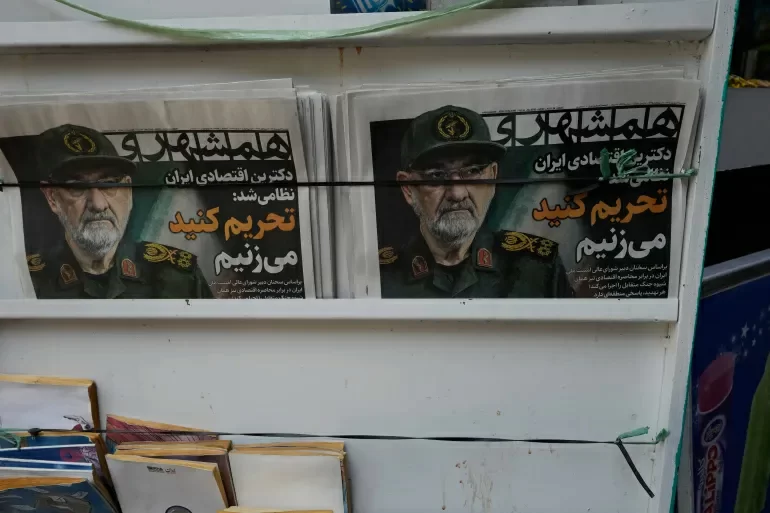
    After 14 hours of landmark direct negotiations hosted by Pakistan in Islamabad, the first round of high-level peace talks between the United States and Iran has wrapped up, with both sides agreeing to resume discussions at a later date to resolve outstanding sticking points. The talks, the first direct high-level encounter between the two nations in more than a decade and the highest-level meeting since Iran’s 1979 Islamic Revolution, aimed to end a six-week open conflict that has killed thousands and roiled global energy markets.

    As the region remains under a fragile two-week-old ceasefire, the outcome of these negotiations carries profound implications for the stability of global energy supplies, particularly through the Strait of Hormuz — the strategic chokepoint that carries roughly 20% of the world’s daily oil shipments, which Iran has effectively blocked since the start of the conflict. The six-week war has already sent global crude prices spiking and left thousands dead on both sides.

    In an early Sunday statement posted to the social platform X, Iran’s government confirmed the conclusion of the first round of talks, noting that technical teams from both delegations will now exchange drafted documentation. “Negotiations will continue despite a number of remaining differences,” the statement read, without providing a specific timeline for the resumption of talks. This account contradicts an earlier report from Iranian state television, which claimed talks would continue on Sunday.

    According to a source from Pakistan, which served as the neutral mediator for the talks, the US delegation was led by Vice President JD Vance, special envoy Steve Witkoff, and Jared Kushner — President Donald Trump’s son-in-law. They held a two-hour opening session with Iran’s top negotiators, including Parliament Speaker Mohammad Baqer Qalibaf and Foreign Minister Abbas Araqchi, before entering a recess. The Trump administration has not yet issued any official public comment on the outcome of the talks or the details of outstanding disagreements.

    In a symbolic demonstration of mourning, the Iranian delegation arrived in Islamabad on Friday dressed entirely in black. The gesture honored the recent passing of Iran’s Supreme Leader Ayatollah Ali Khamenei, as well as all Iranians killed during the conflict. Delegates also brought the shoes and bags of student victims killed in a US airstrike that hit a school adjacent to an Iranian military compound. The Pentagon has launched an investigation into the strike, which Reuters reports was almost certainly carried out by American forces. The Pakistani source added that the first day of talks saw shifting moods, with negotiations marked by fluctuating emotions amid deep-rooted mutual distrust.

    To secure the unprecedented diplomatic gathering, Pakistani authorities locked down large swathes of Islamabad, deploying thousands of paramilitary forces and regular troops across the capital. The hosting role marks a notable shift for Pakistan, which was widely sidelined in international diplomacy just one year ago.

    The status of the Strait of Hormuz has emerged as the central sticking point in negotiations. The US military announced it has been laying the groundwork to clear the strait of blockades, saying two US warships have already transited the waterway and mine clearance operations are underway. Iran has outright denied that any American military vessels have passed through the strait.

    Ahead of the talks, a senior Iranian official told Reuters that Washington had agreed to unfreeze billions of dollars in Iranian assets held in Qatar and other foreign banks, a claim that a senior US official immediately denied. Per Iranian state media and senior officials, Tehran’s core demands also include full Iranian sovereign control over the Strait of Hormuz, war reparations from the US, a region-wide ceasefire that includes clashes in Lebanon, and the right to collect transit tolls from commercial ships passing through the waterway.

    For the Trump administration, core negotiating goals have shifted over the course of the conflict, but the non-negotiable priorities remain guaranteed unimpeded transit for global commercial shipping through the strait, and the permanent disabling of Iran’s uranium enrichment program to prevent it from developing a nuclear weapon. Israel, the US’s closest regional ally which has participated in strikes on Iran and continues to bombard Hezbollah positions in Lebanon, has stated that its military campaign is not covered by the current US-Iran ceasefire.

    Despite the opening of diplomatic dialogue, decades of deep mutual suspicion between Washington and Tehran remain largely unaddressed, casting uncertainty over whether the current ceasefire will hold and whether a lasting peace deal can be reached.

  • Suriname pleit voor eerlijke klimaatfinanciering tijdens Amazone overleg

    Suriname pleit voor eerlijke klimaatfinanciering tijdens Amazone overleg

    On April 9, a critical regional consultation focused on Amazon rainforest protection brought together a diverse array of stakeholders in Brazil’s capital city of Brasília, where Suriname emerged as a leading voice demanding systemic reform to global climate finance frameworks that recognizes the contributions of nations preserving extensive, intact forest ecosystems.

    Organized to advance implementation of prior regional commitments to Amazon conservation, the gathering convened representatives from member states of the Amazon Cooperation Treaty Organization (ACTO), ACTO’s administrative secretariat, Brazilian federal authorities, civil society groups, Indigenous communities, and academic research institutions. Discussion centered on strengthening cross-border collaboration, updating scientific data infrastructure, and addressing longstanding inequities in global climate action support.

    Speaking on behalf of the Surinamese government, Ambassador Ike Antonius drew attention to a gaping oversight in current international climate funding structures: the failure to adequately compensate High Forest, Low Deforestation (HFLD) nations. These are countries that maintain vast tracts of intact forest cover with minimal deforestation rates, delivering substantial global public benefits by sequestering carbon and slowing the progression of anthropogenic climate change. Yet they have historically been locked out of the majority of climate finance allocated to forest protection, which is often directed only to nations tackling high existing deforestation rates.

    Suriname, which falls squarely into the HFLD category, has repeatedly raised this demand across global climate policy forums. The country’s position reflects a longstanding government push to overhaul the global financial architecture underpinning international climate policy, to ensure nations that have already prioritized forest conservation receive tangible recognition and support for their ongoing efforts.

    Beyond the debate over climate finance, the consultation reinforced the shared commitment of Amazon basin nations to deepening cross-border collaboration. Participants emphasized that coordinated action on knowledge sharing, aligned policy development, and improved access to up-to-date scientific data is essential to scaling up effective conservation across the region. Stakeholders from Indigenous groups and civil society also contributed perspectives on integrating traditional knowledge and community-led stewardship into regional conservation strategies, underscoring the multi-sectoral approach needed to protect the world’s largest tropical rainforest.