Geopolitical turbulence triggered by conflict between the United States, Israel, and Iran has sent shockwaves through global energy markets, pushing the International Energy Agency (IEA) to make dramatic downward revisions to its 2026 outlook for global oil supply and demand. In its monthly market report published Tuesday, the agency now projects that global oil demand will contract by 80,000 barrels per day (bpd) this year, a stark reversal from its prior forecast of 640,000 bpd annual growth issued just one month prior.
The sweeping downward revision comes amid widespread disruptions to crude shipments through the Strait of Hormuz, one of the world’s most critical energy chokepoints, and mounting fears that escalating tensions will tip the already fragile global economy into further slowdown. Both overall oil production and consumption are now set to decline year-over-year in 2026, the IEA confirmed.
The latest assessment aligns with repeated warnings from global economic bodies including the International Monetary Fund, the World Bank, and the IEA itself, which have urged nations against hoarding energy stockpiles or imposing unilateral export restrictions that would exacerbate existing market shocks. Ahead of the report’s release, IEA executive director Fatih Birol issued a public call on Monday for free-market energy distribution, warning that many countries have already begun stockpiling reserves and enforcing export curbs that tighten global supplies further.
According to the IEA’s analysis, ongoing supply scarcity and sky-high energy prices will continue to drive what the agency terms “demand destruction” across global markets. To date, the steepest demand declines have been recorded in the Middle East and Asia-Pacific regions, concentrated in naphtha, liquefied petroleum gas (LPG), and jet fuel segments. The agency forecasts that the second quarter of 2026 will see the sharpest single-quarter contraction in global oil demand since the height of the COVID-19 pandemic, with consumption dropping by 1.2 million bpd during the period.
OPEC, the producer bloc of major oil-exporting nations, also cut its second-quarter 2026 oil demand forecast on Monday, though it chose to leave its full-year demand projection unchanged.
The most severe market disruption stems from escalating tensions in the Strait of Hormuz, where attacks on regional energy infrastructure and Iran’s near-total shutdown of shipping through the waterway have created the largest single interruption to global oil supplies in recorded history. The IA reports that 10.1 million bpd of production and shipment capacity was taken offline in March alone. In response to U.S. and Israeli military strikes that began on February 28, Iran has effectively halted all commercial transit through the strait, which facilitates roughly 20% of global daily oil trade.
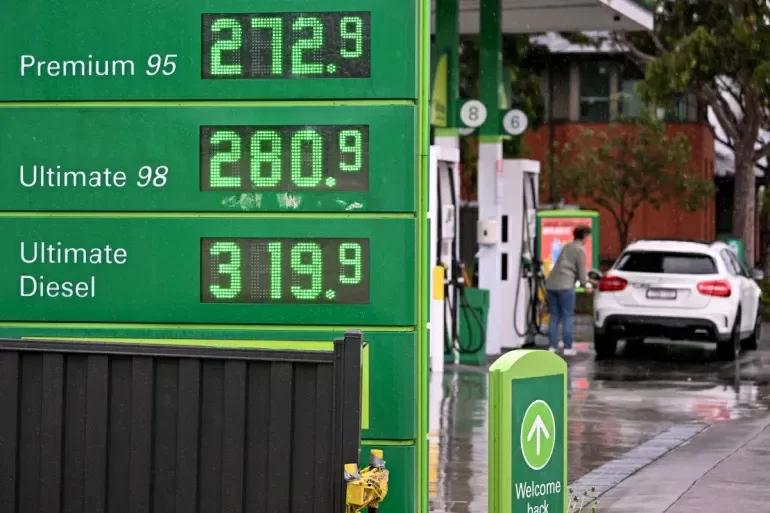
Iran’s de facto control over the strategic chokepoint has already sent global gasoline and natural gas prices soaring to multi-year highs. For its part, the U.S. is moving to seize control of the waterway by barring Iranian tankers from making any transit through the strait. Following the collapse of peace talks hosted by Pakistan, former President Donald Trump announced a full blockade of Iranian ports on Sunday. The IEA warns that this new U.S. blockade will further cloud the outlook for global energy security and disrupt supply chains for a wide range of petroleum-dependent goods worldwide.
If the Strait of Hormuz remains closed for an extended period, the IEA projects global oil demand could fall even more sharply than current forecasts. “In that scenario, energy markets and economies across the world must prepare for major disruptions in the coming months,” the report notes. “Resuming unimpeded commercial shipping through the Strait of Hormuz remains the single most critical factor to ease pressure on energy supplies, bring down prices, and reduce strain on the global economy.”
Amid the widespread market chaos, one major beneficiary has emerged: Russia. The IEA notes that higher global crude prices have pushed Moscow’s revenue from crude oil and refined product exports back up in March, after the country’s oil income fell to its lowest level in February since the full-scale invasion of Ukraine began in 2022. These export earnings are a critical lifeline for Russia’s federal budget and its ongoing military spending.
Russia’s total crude exports rose by 270,000 bpd last month to hit 4.6 million bpd, according to IEA data. The increase was driven largely by higher seaborne shipments, as the Druzhba pipeline — which carries crude through Ukraine to Hungary and Slovakia — has remained offline since attacks at the end of January.