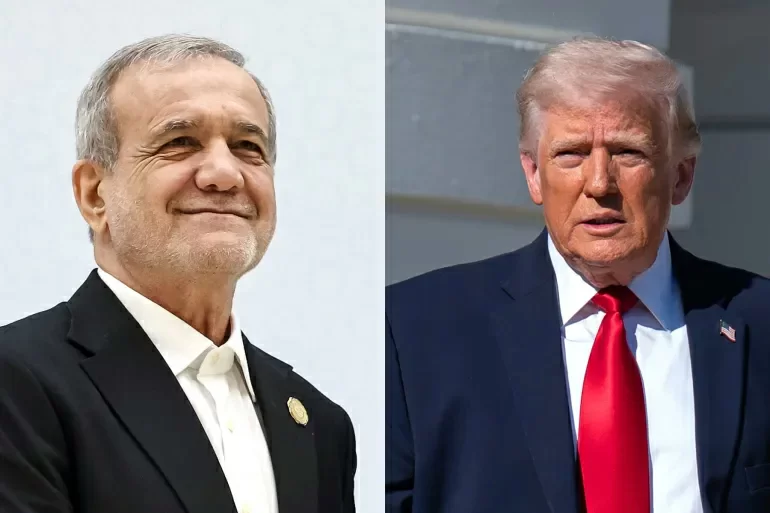
In the aftermath of a fragile ceasefire that paused a deadly regional conflict between long-time adversaries Iran and the US-backed Israeli bloc, Tehran has put forward a new peace proposal that is already facing deep skepticism from the Trump White House. The plan, which seeks incremental de-escalation before tackling the most divisive issue in bilateral relations – Iran’s nuclear program – currently appears unlikely to win Washington’s approval, threatening to delay any path to a permanent end to hostilities that have killed thousands and roiled global energy markets.
Breaking down the details of Iran’s new initiative, the proposal frames the reopening of the strategic Strait of Hormuz as its core confidence-building measure – a step that would reverse Tehran’s recent closure of the vital waterway that has sent energy prices soaring and disrupted global supply chains. In exchange for reopening the strait, Iran is demanding that the Trump administration lift its recent naval blockade of Iranian ports, which cut off the country’s key oil export revenue and a major source of state income, and agree to end the ongoing conflict outright. Crucially, however, Iran has demanded that any negotiations over its nuclear program be delayed until after a ceasefire and blockade withdrawal are fully implemented – a condition that runs directly counter to longstanding US demands that nuclear constraints be part of any immediate de-escalation deal.
The proposal was transmitted to Washington through Pakistan, which has been serving as a neutral intermediary between the two hostile governments. Iranian state media outlet Fars News Agency has confirmed that the initiative aligns with Tehran’s long-stated red lines on both the Strait of Hormuz and its nuclear program, noting that Foreign Minister Abbas Araghchi has operated fully within the framework of Iran’s diplomatic mandates. The outlet emphasized that the plan should be understood as a de-escalatory initiative to clarify regional positioning, not a formal negotiating package at this stage.
Iranian analysts frame the proposal as a strategic shift away from the country’s previous negotiating model, which centered on offering nuclear concessions in exchange for relief from economic sanctions. Abas Aslani, a senior researcher at the Centre for Middle East Strategic Studies, told Al Jazeera that Tehran has concluded that older approach is no longer a viable path to a mutually acceptable agreement. “Iran sees this also as a measure to build confidence and bridge the existing trust deficit,” Aslani added. In comments to the UN earlier this week, Iran’s ambassador to the global body Amir Saeid Iravani reinforced Tehran’s position, noting that lasting stability and security in the Gulf region can only be achieved through a permanent end to all hostile aggression against Iran.
The White House has confirmed that President Donald Trump reviewed the Iranian proposal alongside his top national security advisors on Monday, but early signals from the administration point to a firm rejection of the plan in its current form. An anonymous US official told Reuters that Trump is dissatisfied with the proposal, specifically because it fails to include binding provisions to address Iran’s nuclear program immediately. “He does not really value the proposal as it stands,” the official said. Two anonymous sources familiar with internal deliberations told CNN that Trump is almost certain to reject the plan, arguing that lifting the port blockade before resolving the nuclear issue would remove one of Washington’s most powerful negotiating leverage points.
Not all administration comments have been uniformly negative, however. Secretary of State Marco Rubio told Fox News Monday that the proposal was “better than we had expected,” but added that he retains deep doubts about Tehran’s underlying intentions. “They are very good negotiators,” Rubio said. “We have to make sure that any agreement is one that permanently prevents them from ever developing a nuclear weapon.” Al Jazeera’s Washington correspondent Mike Hanna noted that extraordinary secrecy has surrounded the White House deliberations, with no readouts or details released about who even attended Monday’s meeting, an unusual departure from standard protocols for high-level national security discussions.
Beyond the US and Iran, international allies are growing increasingly impatient with the prolonged standoff, according to regional analysts. Mohamed Elmasry, an analyst at the Doha Institute of Graduate Studies, told Al Jazeera that while both Washington and Tehran appear to believe time is on their side, prolonged delay only makes a deal harder to reach. “I really don’t think time works for anyone. The Europeans are clearly losing their patience,” Elmasry said. He noted that recent comments from German Chancellor Merz – who publicly remarked this week that “the Iranians are very skilled negotiators” – reflects growing allied pressure on Trump, who allies hold responsible for creating the current regional crisis and failing to resolve it. “Trump will not be happy about that, and the chancellor hit him where it hurts,” Elmasry added.
The Strait of Hormuz remains one of the world’s most critical energy chokepoints even in peacetime: roughly one-fifth of all global oil and liquefied natural gas trade passes through the narrow waterway, connecting major Gulf oil producers to global markets. Tehran’s closure of the strait after the outbreak of conflict created immediate inflationary pressure on energy markets worldwide, making a resolution to the standoff a pressing priority for global economies already grappling with post-conflict volatility.