标签: Suriname

苏里南

  • Grote brand bij olieverwerkingsbedrijf aan Naaldvarenweg

    Grote brand bij olieverwerkingsbedrijf aan Naaldvarenweg

    A severe fire incident has engulfed an oil processing company located on Naaldvarenweg, with two massive storage tanks completely consumed by flames. Emergency response teams from multiple fire stations have been deployed in a large-scale operation to contain the dangerous blaze.

    According to preliminary reports, the fire originated around 8:00 PM at the terminus of Naaldvarenweg, adjacent to the industrial estate where the facility operates. Dramatic footage shows flames shooting meters high into the night sky, creating a visible inferno across extensive areas of Para district. Local residents have reported intense burning odors and substantial smoke proliferation throughout the region.

    Firefighting authorities have initiated a comprehensive containment strategy utilizing numerous tanker trucks and specialized response units. As a safety precaution, Naaldvarenweg has been temporarily closed to all vehicular traffic. Officials are advising nearby residents to keep windows and doors securely closed due to potentially hazardous air quality conditions resulting from the substantial smoke emissions. The cause of the explosion and subsequent fire remains under investigation by relevant authorities.

  • Soeng Ngie luidt Chinees Nieuwjaar feestelijk in

    Soeng Ngie luidt Chinees Nieuwjaar feestelijk in

    Suriname’s Soeng Ngie Oriental Market transformed into a vibrant hub of cultural celebration on Sunday as it welcomed the Lunar New Year with a series of community-focused events. The weekly street market adjacent to the establishment became the stage for an immersive Chinese New Year experience, blending culinary traditions, family values, and cross-cultural exchange.

    Entrepreneur and chef Micle Fung You Kee, the driving force behind Soeng Ngie & Co, orchestrated the festivities as what he describes as “our way of giving back.” Attendees were treated to an array of traditional Chinese delicacies, complimentary candied fruit samples, and the opportunity to participate in a lighthearted ‘horse race’ game within the store premises. “I do this with all my love,” Fung You Kee told Starnieuws, emphasizing the personal significance of the event.

    The celebration notably incorporated Korean culinary elements through a market vendor who distributed containers of kimchi made with Chinese vegetables. Visitor Françoise Redout expressed enthusiastic appreciation for the intercultural experience: “It was delicious and different. I’m not accustomed to it, but it was quite spicy. I sampled both the chicken and pork dishes – perfect for a quick snack.”

    Beyond its culinary dimensions, the event served as a poignant tribute to Fung You Kee’s late brother, Robby Fung-You-Kee, the former general director who passed away in December. “If I may say so, this is a double ode to him,” the emotional chef shared. “He was truly the engine behind many things, and we are grateful to him.” Despite recently concluding the mourning period, the family consciously chose to proceed with the celebration, knowing Robby’s affection for such community gatherings.

    The symbolic ‘horse race’ activity allowed customers to compete against Fung You Kee himself, though the entrepreneur clarified that the focus remained on camaraderie and public interaction rather than competition. Meanwhile, products like spicy amalan and new year sauces were introduced to customers, with Henny Madan and his daughters among those sampling the offerings. “The products here are better, especially the sauces are delicious,” noted Madan, whose family regularly travels from Wanica District to shop at the market.

    The celebration extended beyond single-day activities, with many attendees planning to continue their Lunar New Year observance at Tuesday’s Temple Fair in the Anthony Nesty Sports Hall. Organized by the Suriname Chinese United Association and the Chinese Embassy in Suriname, the event promises a full day of bazaar activities, musical performances, and cultural shows starting from 10:00 AM.

    Redout, who plans to attend with friends, highlighted the broader significance of such cultural exchanges: “The atmosphere and culture are simply different and very pleasant to experience. You also meet other people,” reflecting the event’s success in fostering community connections across cultural boundaries.

  • Van Dijk en Punwasi herkozen in Advocaten Tuchtcollege

    Van Dijk en Punwasi herkozen in Advocaten Tuchtcollege

    In a significant development for Suriname’s legal community, the Surinamese Bar Association (SOVA) conducted elections on Saturday for positions within the Advocaten Tuchtcollege (ATC), the nation’s Attorney Disciplinary Council. The special general membership assembly, convened at the Lalla Rookh building, witnessed the participation of 160 legal professionals exercising their voting rights.

    The election results confirmed the re-appointment of Nailah van Dijk and Sandra Punwasi-Raghoebier as attorney members of the disciplinary body. Both incumbents secured renewed four-year mandates following a competitive selection process that featured five candidates vying for these principal positions.

    Additionally, the assembly elected Benito Pick and Sardha Sitaram as deputy members to the council. This contingent was selected from a pool of eight candidates competing for substitute roles within the disciplinary framework.

    The proceedings underscore the legal community’s commitment to maintaining professional standards through democratic processes. The re-election of experienced members suggests continuity in the disciplinary council’s approach to overseeing attorney conduct and ethics within Suriname’s judicial system.

  • 40 kampen ontmanteld in Royal Hill–Redi Bergi; spanningen bij aanvang

    40 kampen ontmanteld in Royal Hill–Redi Bergi; spanningen bij aanvang

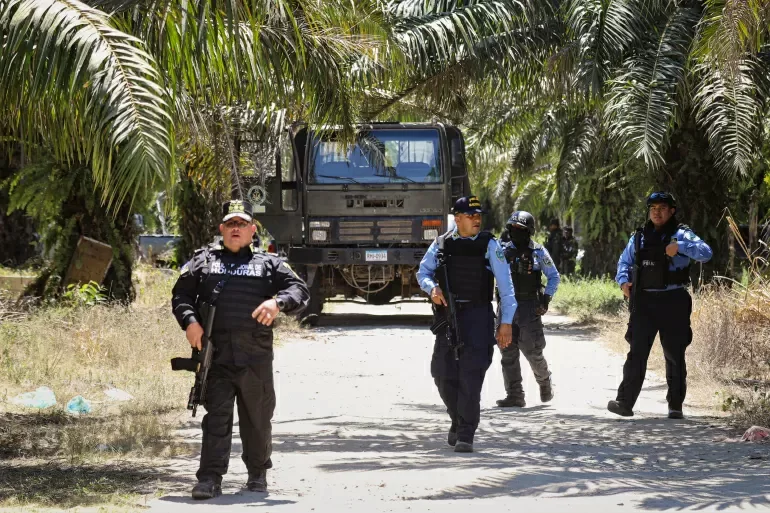
    Surinamese authorities have initiated a major security operation targeting illegal mining activities in the sensitive region between New Koffiekamp and the Rosebel Gold Mine. On Saturday, a joint task force comprising elements from the Suriname Police Corps and the National Army launched ‘Operation Clean Sweap’ to dismantle unauthorized mining camps in the Redi Bergi area.

    The multi-agency operation involved specialized units including RBT-Central, base police, Central Surveillance, the Mobile Unit, the National Army’s Riot Team, and a dedicated Task Force. During the initial phase of the operation, security forces encountered resistance from local community members and traditional authorities.

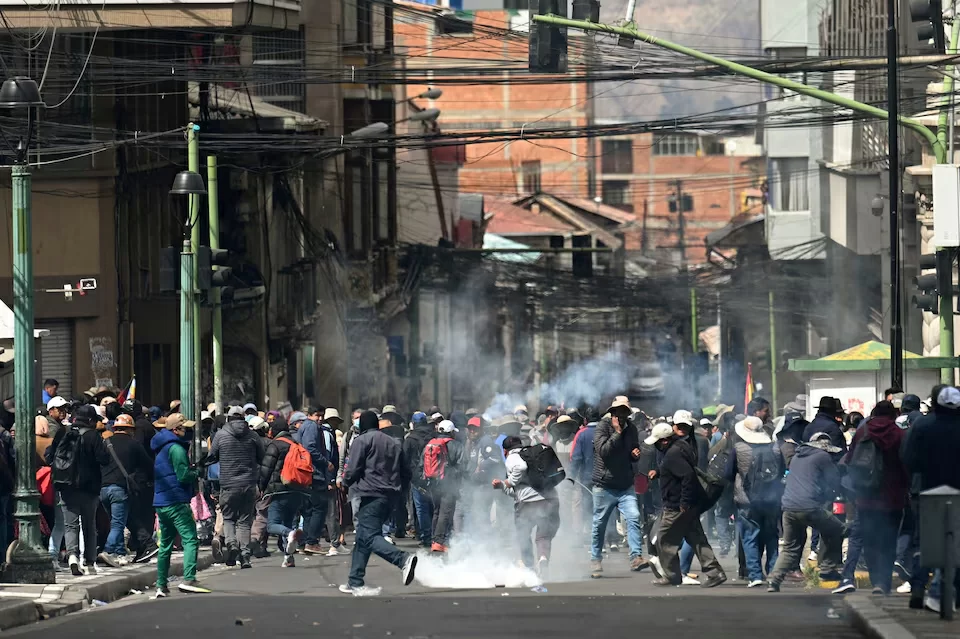
    Approximately 20-25 villagers, supported by some traditional leaders, erected a barricade using heavy equipment near the so-called lever past New Koffiekamp. The barrier remained in place for approximately twenty minutes before security personnel employed tactical de-escalation measures to dismantle it without major incident.

    Police Public Relations confirmed that despite continued temporary resistance from other villagers, the situation was contained without serious confrontations between the mixed security unit and local residents. Some protesters eventually dispersed from the location voluntarily.

    The operation resulted in the dismantling of forty illegal mining camps thus far. Authorities have declared their intention to continue the clearance operation until the entire concession area of Zijin Mining, the Chinese company operating the Rosebel Gold Mine, is completely cleared of unauthorized mining activities.

  • Wereld Kinderkankerdag: Samen bouwen aan hoop, zorg en betere overleving

    Wereld Kinderkankerdag: Samen bouwen aan hoop, zorg en betere overleving

    February 15th marks the annual observance of International Childhood Cancer Day, a global initiative dedicated to raising awareness and demonstrating solidarity with children and adolescents battling cancer alongside their families. The 2026 campaign carries the poignant theme “Together We Build Hope,” highlighting the critical importance of collaborative efforts in enhancing survival rates, improving care quality, and ultimately transforming patient outcomes worldwide.

    Childhood cancer remains one of the leading causes of mortality among children globally, with approximately 400,000 new cases diagnosed annually. Suriname faces its own share of this challenge, reporting between 15 to 20 new pediatric cancer cases each year. Statistical data reveals that about 60% of these cases involve blood cancers (leukemia) and lymphatic system cancers (lymphomas).

    The most prevalent childhood cancer manifestations include:
    – Leukemia (blood cancer)
    – Brain tumors
    – Lymphomas (cancer of the lymphatic system)
    – Solid tumors such as neuroblastoma and nephroblastoma (Wilms tumor)

    Unlike adult cancers, pediatric malignancies frequently lack identifiable causes, with environmental factors and lifestyle choices typically playing minimal roles in disease development. These conditions primarily stem from uncontrolled cellular growth within developing biological systems.

    Treatment methodologies encompass chemotherapy, radiation therapy, and surgical interventions, tailored according to cancer type and detection stage. Medical professionals emphasize that early recognition and rapid diagnosis significantly improve treatment success probabilities and survival outcomes.

    Beyond medical interventions, comprehensive psychosocial support proves indispensable throughout the treatment journey. Family, friendship networks, and community engagement collectively create crucial support systems that help children endure treatments more effectively while strengthening families during profoundly challenging periods.

    In Suriname, International Childhood Cancer Day serves as a platform for amplifying awareness, fostering collaborative partnerships, and encouraging societal engagement. The central message remains unequivocal: only through unified global action can we genuinely expand hope for children confronting cancer diagnoses.

    The collective commitment resonates across nations: united we stand stronger—for our children, for their future.

  • Monorath: Vreemdelingenbeleid moet integraal worden aangepakt, boetegelden ‘levensader’

    Monorath: Vreemdelingenbeleid moet integraal worden aangepakt, boetegelden ‘levensader’

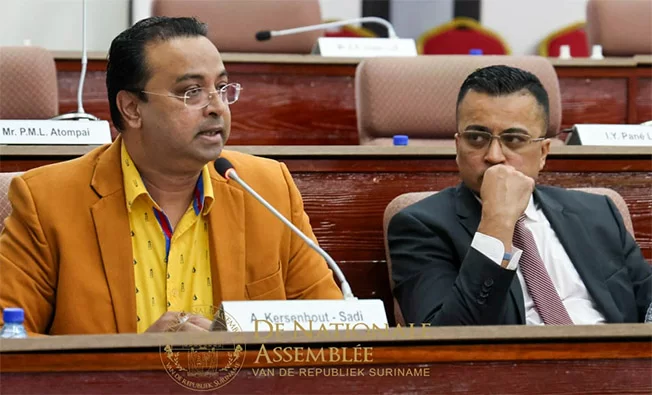
    Suriname’s Minister of Justice and Police, Harish Monorath, has delivered a stark assessment of the nation’s immigration system during a parliamentary session in De Nationale Assemblee (DNA), acknowledging fundamental structural deficiencies that demand comprehensive reform.

    Minister Monorath identified critical flaws in the 2017 legalization project, initially designed as a general pardon program to register undocumented migrants and grant legal residency status. The initiative, however, stalled at the registration phase, with many foreigners failing to complete subsequent renewal procedures, consequently reverting to illegal status. The minister specifically highlighted challenges with Guyanese citizens who frequently cross borders through informal ‘backtrack routes,’ effectively bypassing official immigration controls.

    The minister emphasized that immigration policy cannot be addressed in isolation from border district realities, particularly in regions like Nickerie and areas bordering French Guiana. “For many residents in these regions, borders barely exist in practical terms,” Monorath stated, noting the intensive daily cross-border movement. He revealed that specialized border arrangements are under development alongside strengthened formal border checkpoints, with conceptual proposals to be presented to parliament subsequently.

    In a separate but equally significant appeal, Minister Monorath advocated for redirecting 100% of fine revenues to his ministry, challenging the current distribution framework that allocates:
    • 40% to Justice and Police
    • 20% to the Ministry of Finance
    • 20% to the Suriname Police Corps
    • 20% to the Public Prosecutor’s Office

    The minister characterized the fine revenue as an essential emergency fund for urgent operational needs when regular funding channels through Finance Ministry allocations prove insufficient. Critical expenses covered by these funds include accommodation costs for judicial staff attending court sessions in Nickerie, logistical expenses for process servers delivering summonses in remote districts, and immediate repairs for police and fire department equipment including malfunctioning pumps and water tanks.

    “When these resources must first transit through Finance’s central treasury before we can reclaim them, we encounter significant operational challenges,” Monorath warned parliamentarians. He suggested enhancing penalty effectiveness through additional measures such as linking traffic violations to insurance premium increases, where accidents would trigger substantial insurance cost hikes.

  • Tarique Rahman wil Bangladesh democratischer maken na verkiezingsoverwinning

    Tarique Rahman wil Bangladesh democratischer maken na verkiezingsoverwinning

    In a historic political transition, Bangladesh’s newly elected leader Tarique Rahman has committed to building a more democratic nation despite confronting significant institutional weaknesses. The Bangladesh Nationalist Party (BNP) chairman made this declaration during his first press conference in Dhaka on Saturday, following his party’s decisive victory in Thursday’s parliamentary elections.

    The BNP secured a majority in the 350-seat parliament, marking a dramatic shift in the South Asian nation’s political landscape. The opposition will be formed by an eleven-party alliance led by Jamaat-e-Islami, the country’s largest Islamist party. These elections represent the first democratic exercise since the massive 2024 uprising that ousted former Prime Minister Sheikh Hasina, with an interim government headed by Nobel laureate Muhammad Yunus overseeing the largely peaceful electoral process.

    Rahman, son of late former Prime Minister Khaleda Zia, identified public order restoration and economic stabilization as immediate priorities. “We are embarking on our journey amid circumstances characterized by a fragile economy inherited from the authoritarian regime, weakened constitutional and legal institutions, and deteriorating law and security situation,” Rahman stated.

    The incoming leader emphasized national unity, pledging not to harm the country while warning against forces seeking to restore authoritarian rule. “To prevent malignant powers from reestablishing authoritarianism and to ensure our nation doesn’t become a subordinate state, we must remain united and respect the people’s will,” he asserted.

    The BNP, one of Bangladesh’s longest-standing political parties alongside Hasina’s now-banned Awami League, had refused to participate in elections under her administration. Hasina, living in exile in India since her ouster, was convicted of crimes against humanity including responsibility for hundreds of deaths during the prolonged uprising.

    The international community is closely monitoring developments, expecting the new government to pursue political reform and strengthen democratic institutions while addressing substantial economic and security challenges. The new administration is scheduled to be sworn in within days, facing the formidable task of governing this nation of over 170 million people.

  • Institutionele zelfverrijking onder het mom van ‘synchronisatie’

    Institutionele zelfverrijking onder het mom van ‘synchronisatie’

    A legislative package hailed in November 2024 as a historic correction of constitutional omissions since 1975 has been revealed as a fundamental restructuring of state income distribution that systematically benefits top officials. Under the misleading label of ‘synchronization,’ four laws governing remuneration for judiciary, presidential, vice-presidential, ministerial, and parliamentary positions created a system that disproportionately favors elite ranks while increasing state fiscal burdens and undermining public trust.

    The legislation, promoted by initiators Asis Gajadien (VHP) and Geneviévre Jordan (ABOP) with coalition support, was morally justified as eliminating double salaries, reducing privileges, raising retirement ages, promoting transparency, and improving state finances. However, instead of harmonization or savings, the laws engineered a dynamic income explosion at the top while leaving the rest of the state apparatus behind.

    Critical flaws emerged during parliamentary scrutiny. Opposition parties (NDP, BEP, NPS) repeatedly requested comprehensive financial impact assessments, multi-year projections, and scenario analyses incorporating periodic increments, service years, pension accruals, and tax exemptions. No independent financial evaluation or objective HRM valuation study comparing international benchmarks was presented before the vote, which passed with support from VHP, ABOP, PL, and BEP.

    The judicial compensation structure reveals the systemic bias: judges receive annual 5% increments, full credit for prior service years, pension structures reaching 100% of baseline salary, and tax exemptions on high allowances—benefits entirely absent from presidential compensation. This creates an asymmetrical growth mechanism where senior judicial officials with decades of service rapidly outpace their theoretical reference point (presidential salary), with some exceeding 500,000 SRD—multiple times the head of state’s remuneration.

    When public administrator Eugène van der San published calculations revealing these disparities, his analysis was initially dismissed as exaggerated. Subsequent official publications of salary scales and pay stubs confirmed net incomes far exceeded amounts suggested during parliamentary debates. Rather than acknowledging underestimation, initiators denied the discrepancies, exacerbating the credibility crisis.

    The laws were adopted while civil servants received minimal raises, teachers faced shortages and backlogs, healthcare workers operated under extreme pressure, and parliamentary support staff earned fractions of top-tier compensation. The state income structure has transformed from balanced hierarchy to disproportionate tower, with completely skewed ratios between national leadership and public workers.

    Unanswered questions demand immediate resolution: total budgetary impact over ten years including increments and pension obligations; cumulative salary increases across government branches; ratio between top incomes and average civil service wages; and why no independent financial simulation was presented before voting. Without transparent answers, suspicion remains that legislation was manipulated to structurally benefit elites.

    Presented as historic ordering before Suriname’s fiftieth independence anniversary, these laws risk becoming a historic error without correction. While judiciary deserves dignified legal status, the current consequences are morally unacceptable and socially unsustainable. If parliament fails to address this, society will correct parliament—typically through less friendly means. Trust in politics has drastically declined through this ‘synchronization’ process, awaiting concrete steps to rectify what many perceive as institutionalized self-enrichment.

  • NCD-afdeling krijgt groen licht voor uitvoering jaarplan 2026

    NCD-afdeling krijgt groen licht voor uitvoering jaarplan 2026

    Suriname’s Ministry of Health has formally approved an ambitious national strategy to address the growing burden of non-communicable diseases (NCDs) through a structured five-pillar approach for 2026. Health Minister André Misiekaba officially endorsed the comprehensive plan presented by the NCD Department focal point Cheshta Sewtahal and her team, signaling strong governmental commitment to tackling cardiovascular diseases, diabetes, cancer, and chronic respiratory conditions.

    The strategic framework centers on five critical domains: development of public policy and advocacy initiatives; health promotion and preventive measures; integrated care for both NCDs and mental health; enhanced surveillance, monitoring and evaluation systems; and strengthened cross-sectoral collaboration. Each priority area has been developed into specific core activities with measurable implementation targets for the coming year.

    Despite the comprehensive planning, officials acknowledged significant structural challenges including the absence of a national NCD policy coordination mechanism, constrained financial and human resources, and inadequate regulatory frameworks. The department emphasized that effective NCD management requires an integrated approach combining prevention, early detection, and quality care delivery.

    Key expected outcomes for 2026 include quality improvement in NCD care through HEARTS initiative implementation, accelerated execution of national prevention plans, establishment of a functional NCD and mental health surveillance system, integration of mental health services into primary care, and reinforcement of legal frameworks and intersectoral cooperation.

    With ministerial authorization now secured, the NCD department is positioned to execute a coordinated, evidence-based approach aimed at reducing disease prevalence and improving national health outcomes across Suriname.

  • Honden paraderen tijdens carnaval in Rio; protest tegen dierenmishandeling

    Honden paraderen tijdens carnaval in Rio; protest tegen dierenmishandeling

    In a vibrant display of solidarity against animal abuse, hundreds of costumed dogs and their owners gathered Saturday for Rio de Janeiro’s annual Blocao carnival celebration. The event, now in its third decade, transformed Barra da Tijuca district into a colorful spectacle where canines dressed as alligators, fairies, and superheroes enjoyed a specially adapted street festival.

    The gathering served dual purposes: celebrating the joy of human-animal bonds while raising awareness about pet protection. Organizers implemented special measures to ensure canine comfort in Rio’s 30°C heat, including shaded rest areas, water stations, and paw protection from hot asphalt. The two-hour celebration featured samba music, breakfast buffets for four-legged participants, and opportunities for socializing.

    Marco Antonio Marinho, 72, the event’s chief organizer, emphasized the familial bond: ‘Dogs are part of our families. When we’re sad at home, they stay with us and share our sadness. Now that we’re happy, they should be happy too.’

    The event took on poignant significance as attendees paid tribute to Orelha, a dog whose brutal killing in southern Brazil in January sparked national outrage. Participants waved white ribbons and sang memorial songs while calling for justice in the ongoing case, where a 15-year-old suspect faces juvenile court proceedings despite police recommendations for prosecution.

    First-time attendee Natalia Reis, 28, arrived with her 11-year-old dog Theo, visibly emotional during speeches about animal protection. ‘This tragedy could have happened to any of us,’ she stated, echoing widespread calls for increased awareness and stricter penalties for animal cruelty.