标签: Suriname

苏里南

  • Nieuw Koffiekamp dringt bij krutu aan op eigen werkgebied binnen ZiJin-concessie

    Nieuw Koffiekamp dringt bij krutu aan op eigen werkgebied binnen ZiJin-concessie

    The Surinamese Ministry of Regional Development has engaged in crucial talks with the New Koffiekamp community regarding ongoing tensions with Chinese mining corporation ZiJin. During a traditional krutu meeting held Tuesday at the Obed Van der Kamp Krutu Hoso, Minister Miquilla Huur listened to residents’ concerns about the persistent conflict over gold mining activities in the region.

    Community representatives articulated their proposal for a clearly demarcated work area where local miners could operate legally and under regulated conditions. This formalized zone would require participant registration and identification badges, creating a system that would prevent unauthorized individuals from entering ZiJin’s concession area through the village—a solution residents believe would benefit both the government and the mining company.

    The discussions revealed severe unemployment within the village, compelling unemployed residents, including so-called ‘oekemmangs’ (informal miners), to enter the mining area to collect and process gold-bearing stones for survival.

    Beyond economic concerns, residents expressed serious environmental apprehensions. With the gold mine located less than three hundred meters from the village, dynamite explosions from mining operations have reportedly caused structural damage to homes, creating visible cracks in residential buildings.

    Fabian Afoemang, Chairman of the Gold Sector Organization Committee of New Koffiekamp, highlighted the severely limited communication between the community and ZiJin, exacerbating tensions as villagers feel constant pressure due to their location within the company’s concession boundaries.

    The Ministry of Regional Development has committed to discussing the raised concerns with relevant authorities and stakeholders, aiming to develop a sustainable and balanced solution. The meeting was attended by Minister Huur, RO Director Mavrick Boejoekoe, Brokopondo District Commissioner Gregory van der Kamp, and traditional authorities of New Koffiekamp.

  • Bestuurder overleden na ongeval op Weg naar Atjoni

    Bestuurder overleden na ongeval op Weg naar Atjoni

    A tragic traffic accident on the Weg naar Atjoni near Poeiri Bergi has resulted in the death of a 47-year-old driver identified as M.T. The fatal incident occurred during the early hours of Tuesday morning, according to authorities from the Brownsweg police department.

    Police responders arriving at the scene discovered four surviving passengers from the vehicle on the left side of the roadway. Following directions from these individuals, officers located the driver’s body in the immediate vicinity. The victim displayed no signs of life and had sustained a severe skull injury in the crash.

    Preliminary investigation indicates that the vehicle was traveling along Gaama Agbagoweg toward Atjoni when the driver lost control at a critical section of the road. The accident occurred at a gentle right-hand curve combined with a slight upward gradient near Poeiri Bergi. The vehicle subsequently veered off the roadway and descended into a ravine parallel to the left side of the road.

    The Forensic Investigation Department and Central Region Traffic Unit conducted on-site examinations to determine the exact circumstances surrounding the incident. Following authorization from the Public Prosecutor’s Office, the victim’s remains have been released to family members for funeral arrangements.

  • RO  wil via liba krutu vaart brengen in grenswet Suriname–Frans-Guyana

    RO wil via liba krutu vaart brengen in grenswet Suriname–Frans-Guyana

    The Ministry of Regional Development has committed to facilitating the resolution of the long-standing border demarcation issue between Suriname and French Guiana. This initiative aims to reinvigorate the stalled border legislation process that was temporarily suspended following protests in November 2025.

    During high-level consultations between the National Border Commission and Minister Miquella Huur alongside her executive team, Commission Chairman Harold Kolader emphasized the critical urgency of finalizing border determinations to enable eventual adoption of the border law. The previous suspension occurred after the Aucaan community submitted a formal petition raising specific concerns about the legislative proposal.

    The resolution strategy centers on implementing liba krutu – traditional community assemblies where the Ministry can directly engage with indigenous and tribal authorities along the Marowijne and Lawa rivers. These dialogues will be supplemented with informational videos to enhance outreach to remote villages. The Ministry assumes responsibility for organizing these consultations and managing all community communications.

    Kolader further stressed the necessity of a targeted public awareness campaign to clarify both the content and significance of the border legislation. He noted that French Guiana has expressed willingness to collaboratively establish the definitive border alignment in accordance with mutual agreements. Through these renewed consultation efforts and educational initiatives, Suriname anticipates revitalizing progress toward finalizing this crucial international boundary legislation.

  • Jaar van het Vuurpaard: Kan het Chinese Nieuwjaarsfestival de economie stimuleren?

    Jaar van het Vuurpaard: Kan het Chinese Nieuwjaarsfestival de economie stimuleren?

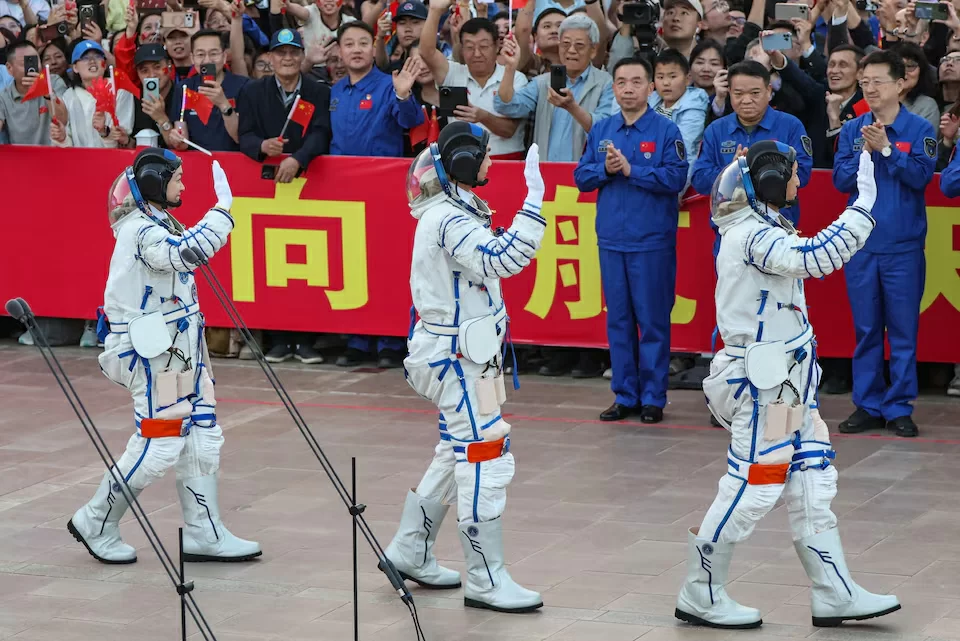
    China commenced its most significant cultural celebration on Tuesday as approximately 1.4 billion people welcomed the Lunar New Year, marking the beginning of the Year of the Fire Horse. This rare astrological combination—occurring only once every six decades—signals a period brimming with optimism, dynamic energy, and unexpected opportunities, according to traditional Chinese zodiac interpretations.

    The Spring Festival, renowned for triggering the planet’s largest annual human migration known as Chunyun, witnesses hundreds of millions traversing the nation for family reunions. This mass movement coincides with a substantial economic stimulus for the world’s second-largest economy, traditionally export-dependent but now increasingly focused on domestic consumption.

    Extended festivities spanning nine days—one day longer than typical—feature elaborate traditions including thorough home cleaning, decorative displays of red lanterns and prosperity symbols, elaborate family banquets, and the customary exchange of red envelopes containing monetary gifts symbolizing luck and blessings. The celebrations will culminate in the Lantern Festival, characterized by spectacular fireworks, vibrant dragon and lion dances, and bustling markets across urban and rural landscapes.

    Economically, the festival generates unprecedented consumption spikes across retail sectors including food, festive commodities, entertainment, and tourism. Government projections indicate a record-breaking 9.5 billion passenger journeys during the 40-day festive period, supplemented by state-issued consumer vouchers exceeding 360 million yuan (approximately $52 million) to further stimulate domestic spending. This aligns with China’s broader five-year plan to boost household expenditure, currently constrained by high savings rates approaching one-third of income.

    Technological advancements took center stage during the annual Lunar New Year’s Eve gala, where humanoid robots delivered a groundbreaking collaborative martial arts demonstration, showcasing Beijing’s rapid progress in robotics and artificial intelligence.

    The celebrations transcend national borders, with distinct cultural observances throughout East and Southeast Asia. Vietnam celebrates Tết Nguyên Đán with family gatherings and traditional foods like bánh chưng, while South Korea observes Seollal with ancestral rites and tteokguk soup. Multicultural societies including Singapore and Malaysia recognize the festival with official holidays, while diaspora communities in major global cities like San Francisco, London, and Sydney host large-scale parades, dragon boat races, and pyrotechnic displays.

    Adding contemporary cultural resonance, the Year of the Horse acquired an unexpected mascotte through linguistic coincidence: Draco Malfoy, the notorious antagonist from the Harry Potter franchise. The Mandarin transliteration of his name—”马耳福” (Mǎ ěr fú)—incorporates the character for “horse” (马) and concludes with “blessing” (福), creating an auspicious connection embraced by popular culture.

  • President: Laat het Jaar van het Vuurpaard ons inspireren tot krachtig leiderschap

    President: Laat het Jaar van het Vuurpaard ons inspireren tot krachtig leiderschap

    Surinamese President Jennifer Simons delivered an inspirational address during the Chinese New Year celebrations, emphasizing how the symbolic attributes of the Fire Horse should guide national development efforts. Speaking at the Chung Fa Foei Kon socio-cultural center, where she was accompanied by Vice President Gregory Rusland, President Simons articulated how the Fire Horse’s characteristics of strength, courage, perseverance, and progressiveness could inspire Suriname’s continued nation-building.

    The presidential attendance marked a significant honor for the Chinese community, as noted by association chairman Liu Jianming, who interpreted their presence as demonstrating the high value placed on Chinese-Surinamese relations and underscoring the profound friendship between both peoples.

    Chinese Ambassador Lin Ji highlighted the historical contributions of Chinese Surinamese, noting their 170-year legacy of fundamental contributions to socioeconomic progress and nation-building. Ambassador Ji emphasized that Chinese Surinamese have become ‘integral and indispensable’ to society while looking forward to the 50th anniversary of diplomatic relations between Suriname and China on May 28th this year.

    Rudie Chin Jen Sem, vice-chairman of Chung Fa Foei Kon, expressed the community’s high expectations for the Fire Horse year and their commitment to realizing these aspirations. He simultaneously called for governmental vigor in addressing security and economic challenges.

    President Simons drew powerful parallels between the Fire Horse’s symbolism and Suriname’s national journey: ‘A horse doesn’t stand still—it moves, pulls, and carries. Even in difficult circumstances. So too is Suriname: a country that despite challenges continues striving for development, justice, and prosperity.’

    The president concluded with a rallying cry for collective effort: ‘Let the Year of the Fire Horse inspire us to face the future with courage, to work harder, share more fairly, and coexist with greater confidence. Let us harness the fire’s energy and the horse’s strength to fortify our economy, provide perspective for youth, and create a more just society.’

  • Negen arrestaties in zaak illegale landingsbaan en semi-onderzeeër bij Witagron

    Negen arrestaties in zaak illegale landingsbaan en semi-onderzeeër bij Witagron

    Authorities in Suriname have dismantled a sophisticated narcotics trafficking operation, resulting in nine arrests following the discovery of an illegal airstrip and a semi-submersible vessel under construction near Witagron. The investigation has uncovered significant evidence, including weapons, ammunition, and specialized construction materials.

    The breakthrough occurred when law enforcement located the covert facilities, prompting several suspects to flee into the surrounding wilderness. On February 15th, officials seized eight 200-liter barrels of aviation gasoline (avgas) and multiple weapons at the site. That same day, a Venezuelan national was apprehended after hiding in the forest for several days; investigators believe he was directly involved in the semi-submarine’s construction.

    Operations expanded to Paramaribo on Monday with the arrest of two Surinamese brothers. One brother held the concession rights to the property where the illegal infrastructure was built. During his arrest, authorities confiscated an illegal handgun. A subsequent search of his residence revealed even more evidence: fourteen additional avgas barrels, an illegal AR-15 rifle, substantial ammunition, rolls of fiberglass (believed destined for the semi-submarine’s construction), and positive alerts from the Police Corps K-9 unit.

    The Public Prosecutor’s Office confirms the investigation remains active, with manhunts underway for additional suspects. Further arrests have not been ruled out as authorities continue to unravel the international drug trafficking network.

  • Jesse Jackson, iconisch burgerrechtenleider en presidentskandidaat, overleden

    Jesse Jackson, iconisch burgerrechtenleider en presidentskandidaat, overleden

    Reverend Jesse Jackson, the charismatic civil rights leader, Baptist minister, and two-time U.S. presidential candidate, has died at age 84. His family announced the passing on Tuesday, marking the end of an era for America’s racial justice movement. Jackson, who grew up in the segregated South and worked closely with Dr. Martin Luther King Jr., remained an inspirational voice in the fight for equality throughout his life.

    Born on October 8, 1941, in Greenville, South Carolina, Jackson experienced firsthand the brutal reality of Jim Crow laws that enforced racial segregation and discrimination against African Americans. He began his activism as a student at a historically Black university, quickly becoming a trusted associate of Dr. King. Jackson was present at the Lorraine Motel in Memphis when King was assassinated in 1968.

    In the 1970s, Jackson founded Operation PUSH (People United to Save Humanity) and later established the National Rainbow Coalition, organizations dedicated to advancing civil rights, women’s rights, and LGBTQ rights. These merged in 1996 to form the Rainbow-PUSH Coalition, which Jackson led until 2023.

    Jackson’s political campaigns in 1984 and 1988 Democratic primaries broke significant barriers for people of color in American politics. Though he never won the presidency, his powerful oratory and broad support among African American and liberal voters brought national attention to issues of poverty and inequality. His 1988 Democratic Convention speech, calling for unity and hope, remains one of the most memorable moments in modern political history.

    Beyond domestic activism, Jackson served as an international diplomat and mediator, helping secure the release of American prisoners in Syria, Cuba, Iraq, and Serbia. He acted as a special envoy for President Bill Clinton in Africa and was a regular commentator on CNN. In 2000, he received the Presidential Medal of Freedom, the nation’s highest civilian honor.

    Even in his later years, Jackson continued advocating for social justice, notably supporting the Black Lives Matter movement in 2020. Diagnosed with Parkinson’s disease in 2017, he remained active in civil rights work until his health declined.

    Jackson is survived by his wife of 62 years, Jacqueline Brown, and their five children, including former U.S. Representative Jesse Jackson Jr. His legacy endures as a testament to relentless pursuit of equality and justice for all marginalized communities.

  • Afval hoopt zich op in Havana door Amerikaanse olieblokkade

    Afval hoopt zich op in Havana door Amerikaanse olieblokkade

    The streets of Havana have transformed into landscapes of accumulating waste, creating a visible humanitarian crisis directly linked to tightened U.S. sanctions targeting Cuba’s fuel supplies. With only 44 of Havana’s 106 garbage trucks operational due to severe fuel shortages, municipal waste collection has slowed to a critical level, leaving cardboard boxes, plastic bottles, and assorted debris piled at street corners throughout the capital.

    Residents now navigate around growing waste mountains while some scour through discarded materials for reusable items. Jose Ramon Cruz, a Havana local, reported: ‘The garbage is everywhere in the city. It’s been over ten days since a garbage truck last came through.’ Similar scenes are emerging across other Cuban cities, with the island’s 11 million inhabitants using social media to warn about impending public health risks.

    The Cuban government has implemented rationing measures to protect essential services in a nation already grappling with severe shortages of food, fuel, and medicine. The country’s oil supply has dramatically declined over the past two months after Venezuela—once Cuba’s primary supplier—halted deliveries in mid-December. Mexico similarly ceased fuel shipments following U.S. threats of import tariffs for nations supplying Cuba.

    Amid the crisis, Russian media reports indicate preparations to ship crude oil and fuel to Cuba, though no concrete timeline has been established. The current situation represents an escalation of the U.S. embargo maintained since 1960, with the Trump administration intensifying pressure through sanctions against vessels transporting oil to Cuba and tariff threats against suppliers.

    The United Nations has expressed deep concern, with Secretary-General António Guterres urging renewed dialogue and respect for international law. UN teams are currently collaborating with Cuban authorities to support humanitarian assistance efforts. Meanwhile, leaders from Mexico and Venezuela continue warning about the severe humanitarian consequences of the blockade.

    This developing garbage crisis in Havana serves as a stark demonstration of how geopolitical tensions directly impact civilian populations, creating urgent needs for solutions that alleviate human suffering and safeguard public health.

  • Hof corrigeert vervolging Adhin met opvallend hoge schadevergoeding

    Hof corrigeert vervolging Adhin met opvallend hoge schadevergoeding

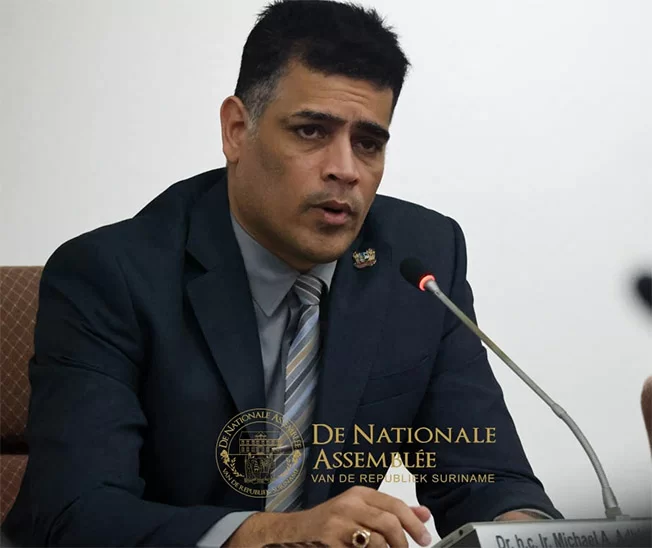
    In a significant judicial ruling, Suriname’s Court of Justice has rendered its verdict in the case involving former Vice President Ashwin Adhin, who currently serves as Parliamentary Assembly Chairman. The court granted substantial compensation for Adhin’s wrongful detention period while referring claims for immaterial damages to civil court proceedings.

    Legal representative Irvin Kanhai, who jointly defended Adhin alongside colleague Chandra Algoe, revealed to Starnieuws that the court awarded approximately SRD 400,000 (Surinamese dollars). This compensation package comprises three distinct components: reimbursement for the nine days of unlawful custody, coverage of legal expenses, and compensation for material damages incurred during the proceedings.

    According to Kanhai’s breakdown, roughly SRD 100,000 was allocated specifically for the unjust detention period, while the remaining SRD 300,000 covers legal assistance provided by both attorneys. The defense had additionally sought substantial compensation for immaterial damages, including reputational harm and psychological distress resulting from the detention.

    The court did not dismiss these immaterial damage claims but determined that Article 77 of the Criminal Code provides no legal basis for such awards within criminal proceedings. Instead, the judiciary clarified that pursuing compensation for non-material injuries requires initiating separate civil litigation.

    “The court isn’t denying his entitlement to such compensation,” Kanhai emphasized. “However, within the criminal law framework, the court cannot substantively rule on these matters.” The attorney noted this represents one of the highest compensation amounts ever awarded under Article 77 for wrongful detention cases, potentially setting a precedent for future acquittals or dismissed prosecutions.

    Kanhai further clarified that the court’s decision doesn’t guarantee immediate payment, despite creating an enforceable title. Actual fund recovery might necessitate additional legal procedures, potentially involving asset seizure—a process the attorney described as potentially protracted.

    Whether Adhin will pursue civil proceedings for immaterial damages remains unconfirmed, though Kanhai indicated he would recommend such action to comprehensively address all damages suffered.

  • Column: Synchronisatie werd een salaristijdbom

    Column: Synchronisatie werd een salaristijdbom

    A legislative initiative initially promoted as a fiscal synchronization measure has evolved into a substantial financial crisis for Suriname, raising serious questions about political accountability and institutional integrity. The controversial legislation, championed by politician Asis Gajadien (VHP) and Geneviére Jordan (ABOP) in November 2024, has resulted in unprecedented salary increases for judicial officials that now threaten broader economic stability.

    What was originally presented as a harmonization effort has been revealed as a structural time bomb with built-in inflationary mechanisms. The legislation guaranteed full recognition of service years in base compensation, automatic 5% annual increases, substantial structural allowances, and critically—the absence of any ceiling mechanism or evaluation framework. These provisions have produced compensation packages that stand in stark contrast to the economic realities faced by teachers, nurses, police officers, and civil servants earning between 10,000-15,000 SRD monthly.

    The judicial salary scales, retroactive to January 2024 and formally established by the President of the High Court, have already been disbursed. This development has triggered widespread social indignation and prompted difficult questions about legislative foresight. Michael Miskin, Chairman of the Trade Union Federation (CLO), has correctly noted that these salary structures will inevitably influence broader wage negotiations throughout the public sector.

    Legal observers note that while the compensation packages remain within technical legal boundaries, they violate principles of moral justification and proportional responsibility. The growing disparity between top judicial officials and base-level public servants has created institutional erosion that extends beyond financial concerns into fundamental questions of legitimacy.

    In response to mounting criticism, Gajadien has suggested potential adjustments including implementation of salary caps or progressive reduction of the 5% annual increase. However, these retrospective proposals have failed to address why such safeguards weren’t incorporated during the legislative process, when critical voices were dismissed as misleading rather than welcomed as necessary scrutiny.

    The crisis now presents a fundamental test for Suriname’s judicial institutions. The High Court faces growing pressure to initiate proportional recalibration—not from political coercion but based on ethical principles and social responsibility. As the salary gap widens, so does public distrust, creating a corrosive environment that threatens the very foundations of judicial independence and social cohesion.