标签: Suriname

苏里南

  • Guyana: een economie die explodeert, terwijl dagelijks leven onbetaalbaar wordt

    Guyana: een economie die explodeert, terwijl dagelijks leven onbetaalbaar wordt

    Guyana presents a study in economic contrasts as it undergoes one of the world’s most rapid transformations. While massive infrastructure projects reshape the coastal landscape around Georgetown and Demerara, the population grapples with living costs disproportionately high compared to local incomes. This divergence between macroeconomic indicators and daily reality defines South America’s fastest-growing economy.

    Since commencing oil production in late 2019, Guyana has achieved extraordinary economic expansion. GDP surged over 60% in 2022, followed by 20-30% annual growth in 2023 and 2024, with projections of 12-15% growth for 2025. The offshore Stabroek Block operations, led by ExxonMobil with Chevron and CNOOC, now exceed 600,000 barrels daily, driving unprecedented government revenues and foreign reserves.

    Despite these indicators, daily life reveals a different story. Senior journalist Denis Chabrol of Demerara Waves describes Guyana as effectively dollarized, with prices for imported goods mirroring US levels while average monthly incomes range between $500-600. Georgetown residents require approximately $750 monthly for basic survival excluding transportation, creating significant financial pressure.

    The monetary system exacerbates these challenges. The Bank of Guyana maintains an artificial exchange rate stability around GYD 208-215 per USD, masking a structural dollar shortage. Strict currency controls force businesses and citizens through lengthy dollar acquisition processes, fostering a parallel market where dollars trade 10-20% above official rates. These additional costs ultimately transfer to consumers.

    Wage growth remains constrained, particularly in non-oil sectors including education, healthcare, retail, and government services. This deliberate policy to avoid inflation acceleration has diminished purchasing power as fixed costs for housing, food, and transportation escalate dramatically. Street interviews near Stabroek Market reveal food prices increasing 60-100% over five years, with rents approaching Caribbean and US levels.

    Additional complications arise from migration patterns. The oil boom has attracted workers from Venezuela and Cuba, primarily filling construction, hospitality, and domestic service roles. While some positions remain unfilled by locals, the increased demand for housing and services further drives inflation in urban centers.

    Environmental challenges accompany economic growth, with waste accumulation along waterways and streets indicating inadequate waste management systems struggling to match urbanization pace.

    Guyana now stands at a historical crossroads. Without reforms in currency policy, wage development, and social investment, the nation risks falling prey to the ‘resource curse’ – where impressive economic growth coincides with decreasing affordability of daily life. For neighboring Suriname, anticipating its own oil industry emergence by 2028, Guyana’s experience serves as both mirror and warning about managing natural resource wealth for sustainable, inclusive development.

  • Tweede Huisartsen Spoedpost geopend aan Nieuwweergevondenweg

    Tweede Huisartsen Spoedpost geopend aan Nieuwweergevondenweg

    Suriname’s healthcare system has taken a significant step forward with the inauguration of its second General Practitioner Urgent Care Center at Nieuwweergevondenweg 6. Health Minister André Misiekaba officially opened the facility on Saturday, describing it as a crucial component in the government’s broader strategy to enhance healthcare accessibility and gradually strengthen medical services nationwide.

    The new center addresses the overwhelming pressure on existing emergency services, particularly the Emergency Department at Paramaribo Academic Hospital (AZP), which handles the most critical and complex cases around the clock. Minister Misiekaba highlighted international models, specifically noting how neighborhood-based facilities in the United States operate their own emergency units to stabilize patients before potential transfers.

    Through the Regional Health Service (RGD), Suriname aims to develop a comparable system where urgent care centers manage less acute cases within communities. This approach allows hospital emergency departments to focus on life-threatening situations while patients with non-critical conditions receive treatment closer to home, resulting in more efficient allocation of healthcare resources.

    Minister Misiekaba also addressed ongoing staffing challenges, acknowledging that despite recruiting specialized nurses from countries including the Philippines, operating rooms and ICU beds remain limited. To fully restore AZP’s capacity, the government has allocated funds in the 2026 budget to attract additional specialized nursing staff.

    A third GP Urgent Care Center in Meerzorg is already in planning stages to accommodate growing demand in the area and improve healthcare access for much of Commewijne district. The minister urged citizens to first utilize their nearest urgent care facility, allowing nurses to determine if hospital referral is necessary—a practice that brings healthcare closer to communities while reducing strain on emergency departments.

    The first urgent care center operates at the State Health Fund on Fred Derbystraat. With this second opening, Suriname moves closer to establishing a better distributed, accessible, and community-focused healthcare structure.

  • Chili staat voor scherpe ruk naar rechts bij presidentsverkiezingen

    Chili staat voor scherpe ruk naar rechts bij presidentsverkiezingen

    Chile stands at a pivotal political juncture as citizens head to the polls today for a decisive presidential runoff election that could mark the most significant rightward shift since the end of military dictatorship in 1990. The contest pits radical right Republican Party leader José Antonio Kast against left-wing governing coalition candidate Jeannette Jara of the Communist Party.

    Approximately 15.6 million eligible voters are participating in Chile’s first mandatory-vote presidential election, introducing additional uncertainty about the final outcome. Polling stations will close at 6:00 PM local time, with preliminary results expected shortly thereafter.

    Despite finishing second in the first round, Kast has gained momentum through consolidated support from eliminated right-wing candidates. Analysts project he may surpass the 50 percent threshold required for victory. Jara, who won the initial round, faces diminishing prospects due to fragmentation among left-wing factions and growing voter dissatisfaction.

    The election campaign has been dominated by crime and security concerns, transforming public discourse despite Chile remaining one of Latin America’s safer nations. Increased organized criminal activity and illegal immigration have propelled these issues to the forefront. Kast has capitalized on these anxieties with a hardline security agenda promising to restore “order and trust.

    These themes have burdened incumbent leftist President Gabriel Boric, who struggles with low approval ratings. His administration’s measures—including additional police resources and military deployment along the northern border—have failed to satisfy many constituents.

    Financial markets have responded favorably to Kast’s potential victory, with investors anticipating market-oriented reforms, deregulation, and pension system adjustments. Following the first round, both the Chilean peso and stock market recorded gains.

    However, critics warn of societal consequences should the radical right candidate prevail. Political analysts interpret his rise as reflecting profound distrust in traditional politics and escalating demands for security. With a substantial portion of voters still undecided or considering blank ballots, the outcome remains uncertain until the final moments. What remains clear is that Chile faces a political crossroads that could determine the nation’s trajectory for years to come.

  • Jonge ondernemers krijgen structurele steun

    Jonge ondernemers krijgen structurele steun

    The Surinamese government is developing a comprehensive structural program to train and mentor young entrepreneurs, with President Jennifer Simons announcing collaborative efforts with the Inter-American Development Bank (IDB) during Saturday’s Entrepreneurship Fair & Bazaar at the Congreshall. Existing institutions have already initiated training programs as part of this national initiative.

    President Simons emphasized the critical importance of providing youth with economic development opportunities to prevent cycles of poverty. She stated that sustainable entrepreneurship requires robust support through training, skill development, and continuous guidance. “Young people must be given the space to excel in their chosen fields,” Simons declared during her address.

    The event, organized by the RUMAS Foundation under Emmy Hart’s leadership and themed ‘Dream to Goal,’ focused on promoting self-employment among young Surinamese. The president commended the organization’s efforts, describing the participation of young trainers and attendees as “encouraging and hopeful.”

    Multiple government agencies are already implementing support measures. The Foundation for Labor Mobilization & Development (SAO) has commenced training sessions, while the Foundation for Productive Work Units (SPWE) requires further strengthening. The Ministry of Youth Development and Sports has also scheduled educational activities. Additionally, the government plans to establish a specialized institute next year to guide aspiring entrepreneurs through partnerships with private sector entities and existing community organizations.

    President Simons highlighted that well-prepared entrepreneurs will be positioned to capitalize on emerging opportunities as Suriname’s oil and gas sector develops further. She urged young entrepreneurs to persevere and continue their education despite business challenges.

    The fair featured presentations from four entrepreneurial groups representing hairstylists, textile workers, landscapers, and pastry chefs. The Volkscredietbank (VCB) provided information about affordable loan options, while RUMAS director Hart announced new training programs for canteen management, car wash businesses, and construction sectors.

    Participant Kelvin Paiman, a hairstylist, described the event as a significant motivational boost. “My hobby has become my profession,” he stated, noting that such initiatives help eliminate doubts among youth considering business ventures.

  • DNA: Maandag benoeming commissies van rapporteurs 8 wetten

    DNA: Maandag benoeming commissies van rapporteurs 8 wetten

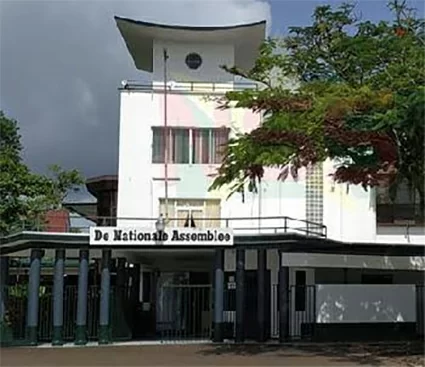
    Suriname’s National Assembly (DNA) has initiated a substantial legislative overhaul this week, marking a significant shift in parliamentary dynamics. During Monday’s procedural session, eight specialized committees were appointed to prepare a comprehensive package of initiative laws for public deliberation.

    The legislative agenda features groundbreaking proposals including constitutional amendments, judicial branch restructuring, elimination of gag laws from the criminal code, and virtually全新的 nature conservation legislation. These measures address fundamental aspects of governance, touching upon rule of law, environmental management, anti-corruption efforts, transparency, and criminal justice reform.

    Notably absent from the agenda is a proposed ban on online gambling, despite its previous submission. Sources indicate divergent views within the coalition have temporarily stalled this socially sensitive matter from entering formal parliamentary discussion.

    The majority of legislative proposals originate from parliamentarians representing the six coalition partners, signaling a strategic move to actively exercise parliamentary initiative rather than relying exclusively on government-sponsored legislation. This approach repositiones the parliament as a proactive legislative center rather than merely a approval body for executive policies.

    Key legislation moving forward includes the Asset Forfeiture of Illegally Obtained Gains Act, Sustainable Nature Management Act, and measures directly impacting judicial structure. Additional proposals concern transparency of administrative information, adjustments to the Labor Advisory Council Act, and amendments to the Criminal Code.

    Thursday’s scheduled public meetings will launch the substantive debate phase, while all initiative proposals have been simultaneously forwarded to the Council of State for advisory review. This extensive legislative package is poised to dominate parliamentary proceedings in the coming period, reflecting the coalition’s concerted effort to drive institutional reforms through parliamentary channels.

  • Contract met Lazard opgezegd; nog US$ 3 miljoen schuld

    Contract met Lazard opgezegd; nog US$ 3 miljoen schuld

    The Surinamese government has addressed its outstanding financial obligations to international financial advisory firm Lazard, revealing a debt exceeding $4 million accumulated under previous administration contracts. Finance and Planning Minister Adelien Wijnerman disclosed these details during a Friday press conference, confirming partial payment of $1 million with the remaining $3 million balance scheduled for settlement in the coming period.

    The debt originated from contracts initially renewed in 2023, covering advisory services related to Suriname’s debt restructuring program, particularly the resolution of the so-called final bond round. According to Minister Wijnerman, Lazard submitted invoices for services rendered between 2021 through October 2025 that remained unpaid by the former government.

    In a significant policy shift, the current administration has terminated Lazard’s contract for any new transactions associated with ongoing negotiations with bondholders. “We have formally canceled the contract and notified Lazard via official correspondence. This matter has been conclusively resolved,” Wijnerman stated, emphasizing the government’s commitment to fiscal responsibility.

    The settlement process demonstrates the new government’s approach to handling inherited financial commitments while restructuring its international financial advisory relationships. The minister’s transparency regarding the outstanding debt and its partial settlement reflects the administration’s efforts to maintain Suriname’s financial credibility despite challenges inherited from previous governance arrangements.

  • Soroptimistclub doneert kookvoorzieningen aan vrouwenafdeling Santo Boma

    Soroptimistclub doneert kookvoorzieningen aan vrouwenafdeling Santo Boma

    The Soroptimist International Club Paramaribo (SICP) has significantly improved living conditions for incarcerated women at Santo Boma Central Penitentiary Institution’s female wing through a substantial donation of kitchen equipment. The humanitarian contribution included two gas stoves, two large cooking pots, and a gas cylinder, directly addressing practical needs expressed by the detained population.

    During an official handover ceremony, Prison Corps Chief Joyce Alfaisi expressed profound gratitude for the initiative, noting that female detainees frequently face societal neglect despite their legitimate right to dignified treatment and rehabilitation support. Alfaisi emphasized the alignment between Soroptimist values and the correctional system’s fundamental mission: guiding inmates toward meaningful societal reintegration.

    SICP President Trees Cirino revealed that the donation resulted from a July 2025 visit to the facility where detainees specifically requested improved cooking facilities. This marks the organization’s continued engagement with the institution, following previous book donations facilitated through collaboration with Soroptimist Club Hilversum from the Netherlands.

    Cirino reinforced that Soroptimist advocacy for women’s empowerment explicitly includes incarcerated women, who deserve particular support during rehabilitation and personal development processes. The donation provides both practical benefits and psychological encouragement, enabling detainees to actively shape their daily routines while maintaining dignity and self-worth.

    The recipient women conveyed deep appreciation for the equipment, pledging responsible usage. The proceedings unfolded in an atmosphere characterized by mutual respect, positivity, and gratitude. This successful humanitarian endeavor was made possible through collaborative efforts among multiple partners and donors committed to penal system improvement.

  • SOVA vraagt zorgvuldige afweging bij inrichting derde rechterlijke instantie

    SOVA vraagt zorgvuldige afweging bij inrichting derde rechterlijke instantie

    The Suriname Bar Association (SOVA) has issued a comprehensive response to legislative proposals currently before the National Assembly regarding the establishment of a third judicial instance in the country’s legal system. SOVA Dean Alleson Freank emphasized that while the organization recognizes Suriname’s clear need for enhanced judicial oversight, any structural changes require meticulous examination before implementation.

    The proposed legislation includes a constitutional amendment to create a Surinamese High Council as the nation’s third judicial body. This initiative aligns with SOVA’s ongoing exploration of the same matter through a dedicated committee established earlier this year. The Bar Association acknowledges the fundamental importance of strengthening legal protections for Surinamese citizens through judicial reform.

    Critical to the debate is determining the most effective framework for this third instance. SOVA highlights that a domestic High Council represents only one potential solution, noting that several regional neighbors have instead chosen to integrate with the Appellate Jurisdiction of the Caribbean Court of Justice (CCJ). Both models present distinct advantages and considerations that warrant careful analysis.

    The Association’s committee has been tasked with evaluating both options objectively, examining which approach best suits Suriname’s legal system and societal context. This assessment requires comprehensive multidisciplinary research encompassing constitutional, legal, and practical implementation factors to ensure the chosen model functions effectively in daily practice.

    Following a recent general members’ meeting where preliminary findings were presented, SOVA plans to organize a discussion evening to foster broad-based consensus. The Association stresses that regardless of the selected model, professional and societal support remains essential, with timely involvement of relevant stakeholders including judiciary members, legal practitioners, and the Public Prosecutor’s Office.

    Regarding separate proposals to lower the retirement age for the Prosecutor General, SOVA notes that while no principled objections exist against age limits, such changes must consider available human resources and should generally apply only to future officeholders. The Association also questions how this initiative aligns with existing legislative proposals for Public Prosecutor’s Office reforms.

    SOVA expressed disappointment at not being consulted prior to the submission of these legislative initiatives but remains encouraged by the President’s commitment to stakeholder consultation during further deliberations. The organization reaffirms its dedication to constructively strengthening Suriname’s rule of law and anticipates continued productive dialogue on these crucial judicial matters.

  • Hofpresident Rasoelbaks geïnformeerd over opname derde instantie in Grondwet

    Hofpresident Rasoelbaks geïnformeerd over opname derde instantie in Grondwet

    Suriname’s judicial landscape may undergo significant transformation as six parliamentarians have submitted initiative proposals to establish a third-tier cassation court within the country’s legal system. The proposed constitutional amendments, introduced on Thursday, aim to create a Supreme Court or similar high judicial authority, though the current Court of Justice President Iwan Rasoelbaks confirms his institution hasn’t been formally consulted in the legislative drafting process.

    President Rasoelbaks clarified that while National Assembly President Jennifer Simons informed him about plans to constitutionally anchor the third instance, substantial consultations regarding implementation details would occur later through secondary regulations. The Court of Justice will thoroughly examine the proposed legislation once formally submitted for judicial review, after which lawmakers will receive comprehensive advisory input.

    The judicial leader emphasized the court’s longstanding support for cassation jurisdiction, noting that such reform would enhance legal development and broaden societal legal protection. For several years, the Court of Justice has independently researched possibilities through a specialized task force comprising local and international experts. This think tank produced two comprehensive options presented earlier this month to both the National Assembly and the President, with reports publicly available on the court’s website for transparent public access.

    The proposed models include conditional accession to the Caribbean Court of Justice’s appellate jurisdiction with a civil law chamber, or alternatively, establishing a domestic Supreme Court grounded in civil law tradition. Rasoelbaks stressed that any future cassation court wouldn’t function as a factual instance but would focus exclusively on reviewing proper legal application, while the Court of Justice would maintain its position as Suriname’s highest factual jurisdiction.

    Three of the four submitted initiatives concern constitutional modifications to judicial organization, with the fourth addressing the judicial branch’s legal status. This separation of competencies between factual and cassation jurisdictions aims to foster credible, thorough jurisprudence and legal evolution, according to the Court President.

  • Nieuwe wet moet Surinaams natuurbeheer moderniseren

    Nieuwe wet moet Surinaams natuurbeheer moderniseren

    Suriname’s parliamentary coalition has introduced groundbreaking legislation aimed at fundamentally transforming the nation’s approach to environmental protection and resource management. The ‘Sustainable Nature Management’ initiative law represents a comprehensive overhaul of the country’s outdated 1954 Nature Protection Act, addressing contemporary ecological challenges while acknowledging economic realities.

    With approximately 93% forest coverage and ranking among the world’s most biodiverse nations, Suriname faces critical decisions regarding conservation amidst growing economic pressures. While internationally recognized as a High Forest Low Deforestation country, recent data reveals deforestation rates are climbing to approximately 0.06% annually. Mining operations account for the majority (73%) of forest loss, followed by infrastructure development and urbanization—trends that not only cause ecological damage but directly impact indigenous and tribal communities through habitat disruption and land use conflicts.

    The proposed legislation shifts from strict conservation toward sustainable management principles, recognizing nature as both ecological treasure and economic resource under stringent conditions. The core philosophy establishes that those who benefit from nature must contribute to its preservation. Innovative mechanisms include nature tourism concessions, payments for ecosystem services, and provisions for designating private lands as protected areas—all aimed at stimulating green growth while reducing economic dependence on oil and gold.

    A cornerstone of the new framework is the enhanced role of the National Environmental Authority (NMA), which will coordinate nature management, oversee protected areas, supervise concessions, and enforce regulations. The Environmental Fund will be expanded to finance nature management projects accessible to government agencies, local communities, and private managers alike.

    Perhaps the most transformative aspect is the formal incorporation of the Free, Prior and Informed Consent (FPIC) principle, requiring explicit approval from indigenous and tribal communities for protected areas, buffer zones, or concessions within their territories. The law further recognizes traditional knowledge and enables communities to submit proposals for independently managed protected areas, elevating their role from stakeholders to full partners in environmental stewardship.

    Aligned with IUCN guidelines and international biodiversity treaties, the legislation introduces modern enforcement mechanisms including administrative coercion, fines, and criminal sanctions for serious violations. It explicitly grants citizens and organizations access to objection and appeal procedures against NMA decisions, strengthening legal protection and transparency.

    This legislative initiative represents Suriname’s attempt to solidify its international reputation as a forest-rich biodiversity haven while promising greater participation, enhanced protection, and the integration of conservation with economic development. Its ultimate success will depend on implementation factors including adequate capacity, political will, and genuine community engagement—determining whether it becomes a paper reform or a foundational pillar of Suriname’s future environmental policy.