It has been 12 months since Suriname’s general elections held on May 25, 2025, and frustration is building across segments of the public. What is growing faster than impatience over the lack of tangible results, however, is the rising question of whether the country’s governing system is truly undergoing the transformative change candidates promised.
While the Simons administration has launched multiple recovery programs, public consultation rounds and policy proposals since taking office, a clear, foundational path for systemic reform has yet to emerge.
The 2025 election cycle was dominated by a single core narrative: national recovery. Candidates ran on platforms centered on transparent governance, strengthened state institutions, improved oversight mechanisms, proactive preparation for the coming oil era, and a break from long-entrenched old political cultures. Key priority areas highlighted during the campaign included education, healthcare, agriculture, government transparency and national identity-building.
Public expectations were particularly high because the country is on the cusp of a historic economic transformation driven by future offshore oil revenues. The widespread consensus going into the new government was that Suriname had learned hard lessons from past economic crises, and that new institutional frameworks and legislation would prevent the country’s coming resource wealth from being squandered again through mismanagement, corruption and political patronage.
The ongoing debate over Suriname’s 2024 Accounting Law has become a symbolic case study of deeper structural flaws within the country’s state system. The 2026 national budget cannot be processed by parliament, because it was not drafted in alignment with the new law that entered into force on January 1, 2025. The Simons government has proposed delaying full implementation of the reform law until 2029, arguing that critical administrative systems, oversight structures and enforcement frameworks are not yet ready to meet the new requirements. As a temporary solution, the outdated 2019 Accounting Law will remain in effect.
In practical terms, this delay means that as Suriname enters the final stretch of preparation for incoming oil revenues, it still lacks the fully modernized financial oversight and accountability framework that the new law was designed to deliver. What raises more questions is that the government is seeking a three-year delay, while international advisory bodies have previously cited a two-year timeline as sufficient for full implementation. To date, the administration has not clarified why a three-year extension is necessary, nor has it laid out concrete, trackable milestones to be achieved over that period.
This dispute cuts to a fundamental question: Why is the modernization of financial oversight being delayed precisely as Suriname prepares for the largest influx of capital in its national history?
Political and economic attention across the country is increasingly shifting to 2028, the year when the first large-scale offshore oil production is projected to begin. This timeline makes pre-2028 institutional reform a high-stakes priority: pressure is mounting to have robust, fully operational oversight institutions in place before oil revenues begin flowing. Resource wealth brings unprecedented economic opportunity, but it also carries well-documented severe risks, including increased political interference, cronyism, opaque public procurement, concentration of economic power, and weakened independent oversight.
International organizations, global financial institutions and foreign investors are therefore increasingly scrutinizing Suriname’s governance standards, procurement rules, financial transparency and independent oversight mechanisms. Viewed through this lens, the delay to the Accounting Law is far more than a minor technical bureaucratic issue: it directly impacts confidence in the government’s ability to prepare the country for responsible management of the oil era.
A central campaign promise of the current administration was a dramatic overhaul of Suriname’s governing system, 50 years after the country gained independence. For many Surinamese, oil revenue represents the last best chance to build a durable, inclusive economic foundation for current and future generations. To date, however, the systemic change promised by candidates has failed to materialize.
There are new faces in government, new cabinet ministers and shifted political power dynamics, but the day-to-day functioning of the state still retains all the hallmarks of the old model: slow implementation of policy, limited government transparency, politically motivated public sector appointments, weak institutional oversight, and overreliance on informal decision-making processes.
Debates over procedural irregularities, insufficient oversight and political influence continue to emerge regularly around public procurement processes and state-led infrastructure projects. While the government repeatedly references its commitments to reform and professionalization, much of the public has yet to experience fundamental cultural change within the civil service and governing establishment. This has opened a growing gap between the government’s rhetorical commitments to reform and the public’s on-the-ground experience.
A further challenge for the administration is that a clear, integrated national reform plan remains largely out of public view. While the government has announced scattered policy initiatives and sector-specific projects, a cohesive national reform framework with clear priorities, binding deadlines and measurable outcomes has yet to be articulated in public discourse.
This lack of clarity creates a risk that the government will be seen as purely reactive, shifting from one crisis to the next without a visible long-term strategy that the public can assess and hold officials accountable to.
At this pivotal moment, as the country prepares for sweeping economic change, public demand for predictability, institutional clarity and confidence in state functions is growing rapidly.
For Suriname, the coming years will not only be defined by efforts to drive economic growth. The real core question of this era is whether the country can build strong, capable state institutions in time for the start of the oil era. Oil itself does not transform nations: strong, accountable institutions do. It is only on that basis that the public will ultimately be able to judge whether true systemic change has arrived – or if nothing has changed beyond a rotation of political leaders within the same broken system.
标签: Suriname
苏里南
-
Analyse: Één jaar later groeit de vraag waar de systeemverandering blijft
-
Straatverlichting langs weg naar Matta officieel in gebruik genomen
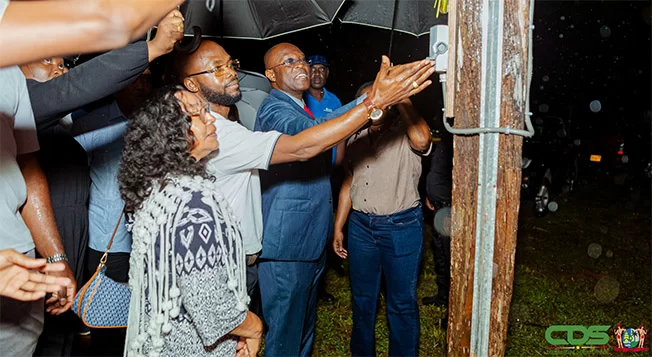
In a major milestone for infrastructure and community development in Suriname, the critical road connecting Zanderij to the village of Matta officially received permanent street lighting starting Saturday, marking the completion of a project aimed at addressing longstanding public safety concerns and unlocking growth in the inland region.
The initiative, delivered in partnership between the Surinamese government and Energiebedrijven Suriname (EBS), the country’s national energy utility, was designed to respond directly to requests raised by local communities in the Para district years ago. Speaking at the official activation ceremony on behalf of President Jennifer Simons, Minister of Health, Welfare and Labor André Misiekaba emphasized that the project delivers on a core campaign commitment of the administration to expand critical basic services across Suriname’s inland territories. “This project demonstrates our government’s consistent pledge to invest in infrastructure that improves daily life and creates opportunities for communities outside the capital,” Misiekaba stated during the event.
EBS Director Leo Brunswijk outlined that road safety was the central driver behind the street lighting installation. For decades, the high-traffic route between Zanderij and Matta has been notoriously dangerous for motorists, pedestrians, and commercial drivers after dark, with frequent collisions and security incidents reported after sunset. Brunswijk added that the project is far more than a standalone safety upgrade: it forms a core part of a broader national strategy to expand reliable, accessible electricity access to underserved communities across Suriname. Work is already underway to extend the national power grid further to reach additional rural settlements in the Para district, bringing basic energy services to households that have long operated off-grid or relied on unstable, expensive private power generation.
Para District Commissioner Patrick Kensenhuis hailed the street lighting activation as a transformative step forward for the entire region. Kensenhuis noted that safer travel along the route will not only improve quality of life for local residents but also support growing tourism and small business activity in the area, which has long been held back by the lack of after-dark infrastructure. For local residents who have campaigned for this upgrade for years, the official switch-on has been met with widespread enthusiasm. Community members report that they have long avoided travel along the route after dark, and now expect the new lighting to cut down on road accidents and reduce crime along the highway, creating a safer environment for everyone who uses the road.
-
Overeenkomst tussen Cevihas en Sail moet continuïteit bedrijven versterken
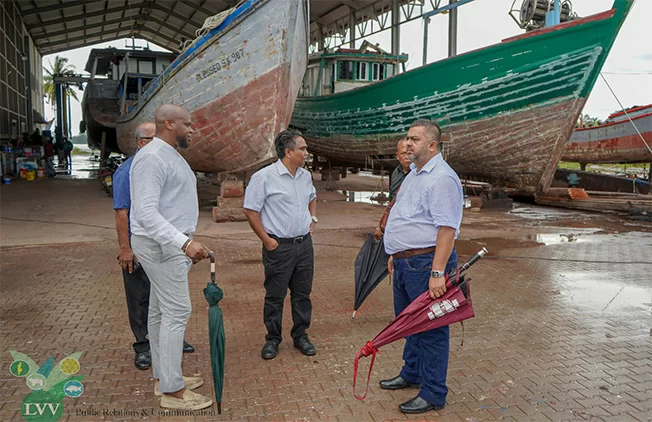
Two major Surinamese enterprises operating in the country’s fishing industry, De Suriname American Industries Ltd. (Sail) and Centrale voor Vissershavens in Suriname N.V. (Cevihas), have formalized a new strategic collaboration agreement, a deal that industry and government leaders frame as a foundational step to strengthen operational resilience and secure the long-term future of both organizations.
The agreement was signed late last week in a ceremony attended by Suriname’s Minister of Agriculture, Livestock and Fisheries Mike Noersalim, alongside the chief executives of both companies. The partnership covers a broad range of joint initiatives, including the decommissioning of outdated fishing vessels, the implementation of integrated vessel control and monitoring systems, and structured financial arrangements designed to underpin ongoing operational continuity for both firms. Representatives from both organizations emphasized that the agreement is built on clear shared terms and full transparency, commitments put in place to protect the interests of all stakeholders involved in the partnership.
Ifuel Alberg, Chief Executive of Sail, expressed clear enthusiasm about the new collaboration. He noted that aligning operations and resources with Cevihas opens new opportunities to streamline existing activities, boost efficiency, and reinforce the long-term stability of Sail’s core business.
Joël Dominie, the head of Cevihas, echoed this positive assessment, describing the partnership as a critical milestone for both companies. He added that the agreement is the outcome of months of intensive discussions and alignment on shared strategic goals. “Working together, we are building a strong, sustainable future not just for our two companies, but for the entire Suriname fishing sector,” Dominie stated.
-

Hadj 2026: Pelgrims ondanks oorlog en hitte naar Mekka
Against the backdrop of ongoing armed conflict across the Middle East and sweltering desert temperatures, the annual Islamic Hajj pilgrimage to Mecca, Saudi Arabia, has drawn a larger number of international pilgrims than in 2025, defying security and logistical challenges that many feared would disrupt the sacred ritual.
Hajj, one of the five fundamental pillars of Islam, requires every physically and financially able Muslim to complete the journey at least once in their lifetime. This year, the ritual has unfolded against unprecedented regional turmoil: a conflict that erupted in late February following U.S. and Israeli strikes on Iran sparked retaliatory attacks from Tehran targeting sites across Saudi Arabia and the broader Gulf region. The escalation triggered widespread airspace closures and massive flight cancellations across the Middle East, throwing early travel plans for thousands of pilgrims into disarray.
Yet major Gulf air carriers from the United Arab Emirates, Qatar and Bahrain moved rapidly to restore full flight operations, prioritizing pilgrim travel to ensure the religious gathering could proceed as scheduled. As of the latest update from Saudi security authorities, the total number of international pilgrims who have arrived in the kingdom stands at 1,518,153 – already surpassing last year’s total international count of 1,506,576. Saleh Al-Murabba, commander of the Hajj Passport Forces, confirmed the figure during a press briefing, noting that final numbers are expected to rise further in the coming days as last-minute arrivals complete entry procedures. Last year’s overall Hajj attendance totalled 1,673,320 pilgrims, including both domestic and international worshippers.
Beyond regional security tensions, pilgrims are facing a second major test: extreme summer heat that has pushed temperatures in Mecca above 45 degrees Celsius throughout the pilgrimage period. These soaring temperatures carry significant health risks, including dehydration and life-threatening heatstroke for pilgrims trekking between sacred sites across the arid region. To address the threat, Saudi authorities have rolled out expanded public safety measures, including additional shaded rest areas across ritual routes, more than 10,000 free water distribution points, and mobilized hundreds of mobile medical teams positioned at key sites to respond to heat-related emergencies.
Images captured from the Grand Mosque in Mecca show thousands of worshippers circling the Kaaba, Islam’s holiest site, dressed in the traditional white ihram garments worn by pilgrims. Despite the difficult conditions, pilgrims across the camp have expressed unwavering resolve to complete their sacred obligations. For the global Muslim community, the 2026 Hajj stands as a powerful demonstration of spiritual commitment, with the annual gathering long revered as a core symbol of unity among Muslims from across the world.
-

Oeganda bevestigt drie nieuwe ebolagevallen; verhoogd risico voor tien andere Afrikaanse landen
A new wave of Ebola infections has been confirmed in Uganda, amplifying regional public health concerns over the spreading Bundibugyo variant outbreak that originated in the neighboring Democratic Republic of the Congo (DRC). Ugandan health authorities announced three additional confirmed cases on May 24, bringing the country’s total case count in this current outbreak to five. Among the newly infected individuals are a driver who transported the country’s first confirmed Ebola patient and a healthcare worker exposed while providing care to infected patients. Public health teams are currently monitoring all known close contacts of the confirmed cases and ramping up contact tracing efforts to halt further transmission of the virus.
These new detections come just days after the Africa Centres for Disease Control and Prevention (Africa CDC) issued an urgent warning, naming 10 regional nations at heightened risk of cross-border spread of the highly contagious Bundibugyo Ebola strain from the DRC. The World Health Organization (WHO) has already upgraded its national risk assessment for the DRC outbreak to “very high” and labeled the regional risk level as “high”, while assessing the global risk as low at this stage.
As of the latest update, the DRC has recorded nearly 750 suspected cases and 177 suspected deaths linked to the current outbreak, which is centered in the country’s northeastern Ituri Province. Aid organizations operating in the region report critical shortages of basic medical supplies, a shortfall partially driven by recent cuts to international foreign aid, most notably from the United States. The Bundibugyo variant of Ebola carries an estimated mortality rate of up to 50 percent, and no specifically approved vaccine or targeted treatment currently exists for this strain.
WHO officials emphasize that multiple overlapping factors have left the DRC uniquely vulnerable to a large-scale outbreak: delayed detection of initial cases, the lack of approved medical countermeasures for this specific variant, ongoing armed conflict in Ituri Province that disrupts response efforts, and high population mobility across the country’s porous borders. In response to the growing cross-border threat, Uganda has already suspended all public transport services between its territory and the DRC in an attempt to slow transmission.
Tensions and instability have also plagued response efforts at the epicenter of the outbreak in the DRC. For the second time in one week, an Ebola treatment tent in the town of Mongbwalu was set on fire by local residents, forcing 18 suspected Ebola patients to flee the facility. Earlier unrest also led to the destruction of a separate treatment center in Rwampara, sparked by community tensions surrounding the retrieval of a deceased Ebola patient.
Africa CDC director Jean Kaseya identified the 10 at-risk nations as Angola, Burundi, the Central African Republic, the Republic of Congo, Ethiopia, Kenya, Rwanda, South Sudan, Tanzania and Zambia. The regional public health body is currently working to develop a coordinated, cross-border response strategy to contain the outbreak, with a key focus on addressing longstanding weaknesses in the region’s chronically underfunded public health systems that leave countries vulnerable to epidemic spread.
-
VS voert militaire oefening uit boven Caracas
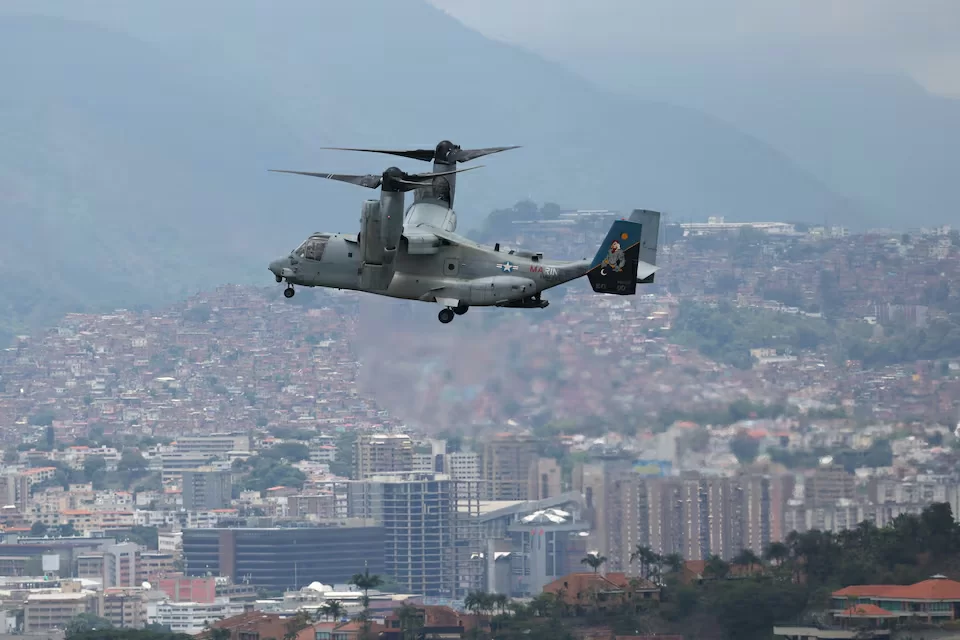
On a Saturday marked by growing geopolitical tension in Latin America, the United States carried out a large-scale military exercise over Venezuela’s capital city of Caracas. This operation marks the first overt U.S. military activity in Venezuelan airspace since a deadly January 3 raid that Venezuelan authorities claim targeted President Nicolás Maduro and his wife Cilia Flores, resulting in at least 100 fatalities according to official Venezuelan counts.
Two U.S. Marine Corps MV-22B Osprey tiltrotor aircraft took part in the exercise, conducting operations and landing in close proximity to the U.S. Embassy compound in central Caracas. Complementing the air activity, multiple U.S. naval vessels entered Venezuelan territorial waters in the Caribbean Sea as part of the coordinated operation. The Venezuelan government initially characterized the exercise as an evacuation drill designed for medical emergencies and natural disaster response, though the scale of deployment has prompted widespread speculation about its true purpose.
As of this report, Venezuela’s Information Ministry has not issued an official statement responding to the exercise. In a public statement, the U.S. Embassy in Caracas reaffirmed Washington’s commitment to advancing former U.S. President Donald Trump’s three-part policy agenda focused on what it describes as stabilizing Venezuela. General Francis Donovan, commander of U.S. Southern Command, the U.S. military body responsible for all operational activity across the Latin America and Caribbean region, was present on the ground in Caracas during the drill to oversee operations.
For ordinary Venezuelan residents, the sudden overt display of U.S. military power in the heart of their capital has fueled widespread anxiety and uncertainty. Evelyn Rebolledo, a 57-year-old office manager based in Caracas, spoke for many when she shared her perspective on the activity. “Having a foreign country flying military aircraft over our capital is something completely new for all of us, especially when it’s the United States, given the current tense situation and all the instability our country has faced for years,” she explained. “It just leaves all of us feeling uncertain about what comes next.”
This latest military move comes amid a dramatic shift in U.S.-Venezuela relations, following recent legislation passed by the government of Delcy Rodríguez, who served as vice president under Maduro before shifting to align with U.S.-backed political factions. Rodríguez’s administration has opened Venezuela’s vast oil and mineral reserves to full American investment, marking a new chapter in the fraught bilateral relationship between Washington and Caracas. For years, relations between the two nations have been defined by escalating political tensions, crippling economic sanctions, and open proxy conflicts, making this combination of increased military presence and expanded economic access a deeply unexpected development for both regional observers and Venezuelan citizens.
-
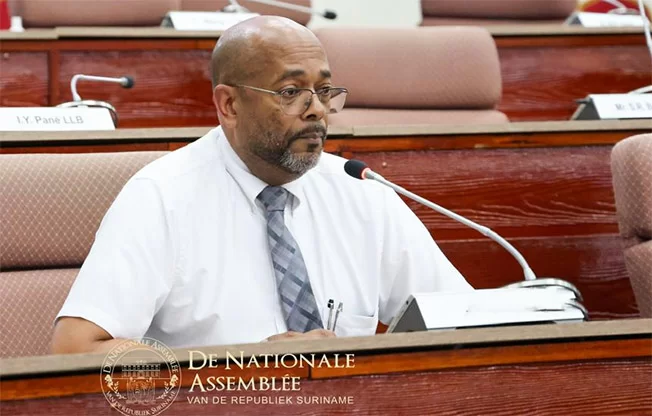
Hoefdraad verdedigt handelen rond SPSB en gebruik staatsmiddelen
A high-stakes parliamentary hearing in Suriname has brought fresh attention to long-running allegations of misappropriation of state funds involving former finance minister Gillmore Hoefdraad, with the ex-official delivering a sweeping written defense of his actions amid claims of political targeting. The case centers on accusations that Hoefdraad oversaw the diversion of public funds outside of official budget and oversight frameworks through arrangements at the Surinaamse Postspaarbank (SPSB), with prosecutors alleging fraud, abuse of power and intentional circumvention of regulatory checks. The Suriname Public Prosecution Service says it has compiled substantial evidence supporting these claims, and the attorney general has formally petitioned the National Assembly to allow Hoefdraad to stand trial on the charges. As a fugitive, Hoefdraad did not appear in person at the closed-door hearing, and was represented by defense attorneys Murwin Dubois and Milton Castelen. In his extensive written statement submitted to the National Assembly’s investigative committee, Hoefdraad forcefully rejects all accusations brought by the prosecution, framing the charges as an unjust criminalization of policy decisions made during an unprecedented national financial crisis. Hoefdraad argues that the emergency financial measures he approved were adopted at a time when the Surinamese government faced severe economic and liquidity collapse, when extraordinary circumstances required urgent action to let the state meet its core obligations to citizens. He emphasizes that none of the decisions were made for personal gain or outside of existing government and institutional frameworks, noting that multiple state agencies, financial regulators and policy bodies were fully aware of the operational approach used at the time. A core pillar of Hoefdraad’s defense is that policy choices made during a national emergency should not automatically be reclassified as criminal offenses after the fact. He notes that during severe economic downturns, cabinet ministers are often forced to adopt difficult and unorthodox measures to preserve financial stability and guarantee the continuity of core government functions. He also pushes back against what he calls a deliberate failure to distinguish between political accountability for policy outcomes and criminal liability, arguing that financial policy decisions made collectively as part of the sitting government are now being selectively and improperly blamed on him alone. Going further, Hoefdraad claims the prosecution against him forms part of a broader political and legal campaign targeting him, saying prosecutors have failed to properly account for both the severe domestic economic conditions and the international context Suriname was operating in at the time of the decisions. The ball now lies with the National Assembly committee, which will ultimately deliberate and vote on whether to grant the attorney general’s request to move forward with criminal prosecution. This is not the first legal blow for Hoefdraad: he was previously convicted in a separate case connected to the Central Bank of Suriname, where an appeals court reduced his original 12-year prison sentence to 10 years behind bars.
-
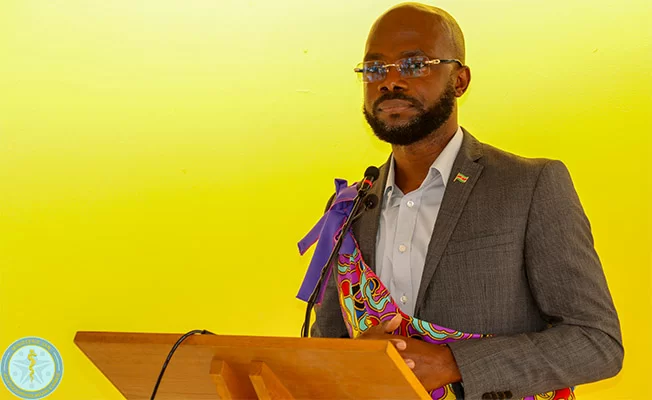
Misiekaba: medicatievoorziening moet weer stabiel en betaalbaar worden
Suriname’s Minister of Public Health, Welfare and Labor (VWA), André Misiekaba, has announced the government’s ongoing push for systemic, long-term improvements to the country’s medication supply network, with the goal of making essential drugs more accessible and affordable for all citizens in the near term. In a recent statement outlining the government’s policy priorities, Misiekaba framed essential medication as a core strategic public good that requires active state stewardship, rather than being left to unregulated market forces. He drew a direct parallel between reliable medication access and other fundamental public infrastructure such as potable water and electrical power, noting that the state bears a central responsibility for maintaining all three critical services. “For me, medication is a strategic asset, just like drinking water and electricity,” Misiekaba stated. “Just as we never cede control over these basic provisions, essential medicines must remain within the state’s sphere of responsibility.”
At the heart of the country’s medication supply system is the Suriname Pharmaceutical Supply Company (BGVS), a state-owned entity established in 1983 tasked with the centralized procurement and distribution of essential generic medications, commonly referred to as “klappermedicamenten” in Suriname. Misiekaba explained that when the current administration took office, a review found that the BGVS had been significantly weakened over preceding years, eroding its role as the nation’s key drug price regulator and primary supplier. This institutional decline, he noted, directly translated into widespread shortages and inflated prices for life-saving medications across Suriname, leaving many residents unable to access the treatments they need.
To reverse these declines, the government has implemented a series of targeted recovery measures over the past several months. These changes include the appointment of a new executive leadership team at BGVS, the partial clearance of the organization’s outstanding debt, and ongoing government investment to strengthen both the financial position and operational capacity of the state drug agency. Additional public funds have also been allocated to allow BGVS to negotiate directly with international pharmaceutical suppliers and secure bulk purchases of essential medications at lower cost.
Looking ahead, Misiekaba expressed confidence that Suriname’s population will begin to see tangible improvements in essential medication availability over the coming months. He reaffirmed the government’s long-term commitment to building a sustainable, inclusive public health system that guarantees all Surinamese citizens equal access to necessary life-saving medications.
-
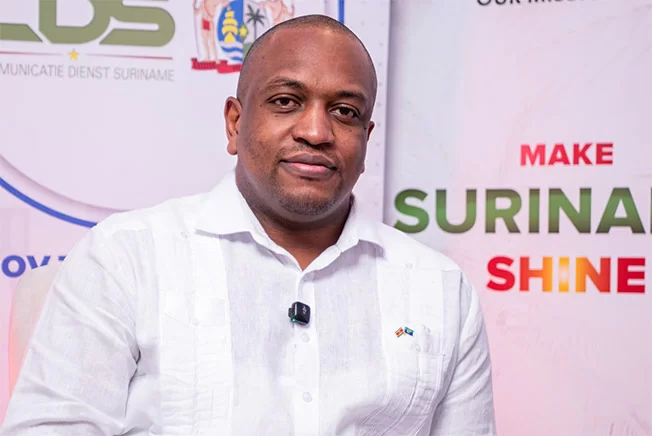
Bouva pleit voor sterkere regionale samenwerking en economische weerbaarheid
At the 57th Community Council Meeting of the Caribbean Community (CARICOM), Suriname’s Minister of Foreign Affairs, International Trade and Cooperation Melvin Bouva has delivered a clarion call for accelerated regional collaboration, strengthened economic resilience, and improved cross-border connectivity across the Caribbean basin. The gathering, held Friday at Yogh Hospitality, comes at a time of growing global geopolitical turbulence, and Bouva used his address to push Caribbean nations to move beyond decades of rhetorical discussion about regional integration toward tangible, actionable progress.
Bouva emphasized that small Caribbean economies are disproportionately exposed to global shocks beyond their direct control, a vulnerability laid bare by ongoing international conflicts and mounting cross-border economic tensions. “When a war breaks out on the other side of the world, a conflict we have no influence over, we will continue to suffer its impacts unless we prepare properly in advance,” he told attendees.
Against this backdrop, the minister argued that the Caribbean region holds untapped potential across key sectors including energy, agriculture, and natural resource management that can only be unlocked through coordinated strategic action. He highlighted the Caribbean’s abundant renewable energy resources as a critical pathway to collective energy independence, noting that the region has extensive wind and solar capacity that can reduce reliance on imported fossil fuels, even beyond the oil and gas reserves of Suriname and Guyana.
Bouva outlined Suriname’s strong commitment to advancing regional integration across priority areas, including trade, food security, energy infrastructure, and transportation links between CARICOM member states. He pointed to ongoing proposals to establish new ferry connections linking Suriname, Guyana, Jamaica, and Barbados, alongside plans to expand air connectivity and deepen intra-regional trade ties.
The meeting also addressed pressing cross-cutting issues of regional security and border management. Bouva shared that Suriname is already cooperating with neighboring partners including Brazil and French Guiana to counter transnational organized crime and address maritime security challenges. He closed by reaffirming that coordinated regional cooperation remains the only viable strategy for Caribbean nations to withstand the economic and geopolitical challenges of the 21st century. “The goal is to build our collective resilience to face every global challenge that comes our way,” Bouva said.
-
VES Inzicht waarschuwt voor gevolgen van politieke benoemingen zonder juiste deskundigheid
A new analysis published by the Suriname Association of Economists (VES) in its quarterly journal *VES Inzicht* has raised urgent alarms about the growing systemic risks posed by political appointments to public sector leadership positions, where candidates’ professional expertise and alignment with formal role requirements are consistently sidelined in favor of political affiliation. The report makes clear that in 2026, public sector board members and supervisors can no longer hide behind the longstanding excuse of “political reality” to justify unqualified appointments, as updated legislation, strengthened oversight mechanisms, and rising public expectations have imposed far stricter requirements for transparent and accountable governance across all state institutions.
The analysis outlines the shifting regulatory landscape that has raised the stakes for improper appointments in recent years. It notes that the legal responsibilities and personal liabilities of public sector leaders have been firmly codified in updated national legislation, most notably the New Civil Code enacted in May 2025. Beyond legal changes, independent auditors now apply far more rigorous scrutiny to leadership decision-making, while commercial banks, grant providers, and regulatory oversight bodies have tightened their requirements to mandate demonstrated good governance and accurate financial accountability for any public entity seeking funding or regulatory approval.
According to the VES analysis, public governance failures have accumulated at an accelerating rate in recent years, creating a clear pattern that points to a deep, structural problem rather than isolated missteps. Contrary to common critique, the association emphasizes that political appointments themselves are not the core issue. The critical flaw lies in the persistent mismatch between the qualifications of appointed individuals and the formal role requirements explicitly outlined for the position. These role profiles are already legally mandated, written into institutional statutes, national good governance guidelines, and internal organizational regulations. Deviating from these established requirements does not just undermine the day-to-day functioning of state-owned enterprises and government agencies, the report argues. It also erodes morale among career civil servants and institutional employees who possess the required expertise but are passed over for political connections.
The report further highlights that national governments have a core strategic interest in converting political power into sustained public legitimacy. This legitimacy can only be maintained, the analysis stresses, if members of the public retain trust in the professional quality and institutional independence of public sector leaders and supervisors. To uphold this trust, the VES calls for oversight bodies to be constructed based on a deliberate, balanced balance of criteria: professional expertise, relevant practical experience, core competencies, institutional independence, gender representation, age diversity, and varied societal backgrounds. It also reinforces the critical need for clear, public role profiles for all commissioners and supervisory board members, with expertise, institutional size, and operational independence as central guiding criteria for candidate selection.
In closing, the journal article issues an urgent call to Suriname’s policymakers and ruling officials to conduct a critical, retroactive evaluation of recent public sector appointments and nominations, and implement corrective changes where misalignments are found. *VES Inzicht* stresses that urgent action is needed to prevent past, isolated appointment errors from hardening into a permanent, damaging structural pattern across Suriname’s entire public administration.