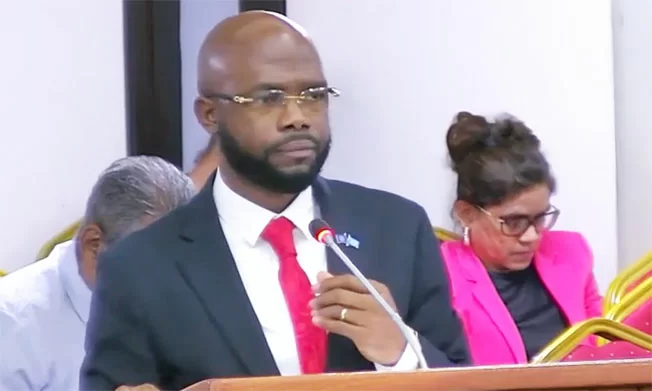
A heated debate over Suriname’s public health response to a spreading chikungunya outbreak has unfolded in the country’s National Assembly, where Health Minister André Misiekaba has pushed back against claims of government mishandling of the crisis. Leading the Ministry of Public Health, Welfare and Labor, Misiekaba defended the administration’s actions, confirming that targeted interventions were launched immediately after the first confirmed case of the mosquito-borne viral infection was detected.
The minister outlined that the entire response strategy has been built around five core pillars: cross-agency coordination, continuous case surveillance, standardized clinical patient management, vector control to reduce mosquito populations, and public risk communication to inform communities of prevention measures. Contradicting assertions that authorities delayed action while waiting for international chemical donations, Misiekaba explained that the government pursued multiple parallel pathways to secure necessary supplies. Alongside requesting direct support from partner nations, Suriname placed an official order for specialized control products through the Pan American Health Organization’s strategic emergency stock fund.
International partners have already stepped in to assist the outbreak response. Barbados contributed eight barrels of larvicide, which targets mosquito larvae before they mature into biting adults, while Brazil has delivered insecticides for adult mosquito control and deployed a team of public health experts to provide on-site guidance and training for local Surinamese response teams.
As part of the ongoing vector control campaign, authorities have completed insecticide spraying at major healthcare facilities across the country, including the St. Vincentius Hospital, Academic Hospital Paramaribo, Mungra Medical Center, and Diakonessen Hospital. Remaining smaller care institutions will be treated in the coming days as the campaign rolls out across all regions.
As of April 29, public health authorities had registered 7,371 suspected samples for testing, with 6,504 samples processed. Of those tested, 3,321 returned positive results, representing a positivity rate of approximately 51 percent. Encouragingly, Minister Misiekaba noted that available infection data suggests the epidemic curve is beginning to trend downward, though he emphasized that officials will continue monitoring case numbers over the coming weeks before drawing any definitive conclusions about the outbreak’s trajectory. The minister did acknowledge two areas where response efforts can be strengthened, conceding that public education outreach and municipal bulk waste collection initiatives—key to eliminating mosquito breeding sites—require improvement.