标签: Suriname

苏里南

  • GVO tegen daders na strafklacht tegen ex-minister Ramadhin om verdwenen goederen

    GVO tegen daders na strafklacht tegen ex-minister Ramadhin om verdwenen goederen

    A new judicial probe has been opened into allegations of financial and administrative misconduct surrounding the former administration of Suriname’s Ministry of Public Health, centering on millions of dollars in missing equipment and rule-breaking procurement practices ahead of this year’s general elections.

    The Public Prosecution Service confirmed in an official letter to current Health Minister André Misiekaba that a Gerechtelijk Vooronderzoek (GVO, or judicial preliminary investigation) has been launched, following a criminal complaint submitted by the ministry itself. The investigation initially names “unknown perpetrators” but targets Amar Ramadhin, who led the health portfolio from 2020 through 2025 before the recent election cycle. Misiekaba has publicly verified the launch of the probe to local outlet Starnieuws.

    At the core of the investigation are two key issues: hundreds of pieces of medical and office equipment purchased with grant funding from the Inter-American Development Bank (IDB) that cannot be located, and 900,000 Surinamese dollars worth of late-term procurement that violated all mandatory public financial regulations.

    Ministry officials say internal reviews and a third-party audit uncovered massive gaps in record-keeping for the IDB-funded equipment, which was earmarked for public health system upgrades. Complete distribution logs do not exist: key records were lost when ministry computers crashed, and only a small fraction of the equipment can be traced through installation records held by the department’s IT division. The IDB, which provided the grant to support the country’s public health modernization, has formally requested clarification from the Surinamese government following its own audit queries into the whereabouts of the donated assets.

    The second set of irregularities centers on SRD 900,000 in procurement completed in late April 2025, just weeks before Suriname’s national elections. According to Minister Misiekaba, these purchases bypassed all required public procurement protocols: mandatory steps including soliciting multiple competitive bids and sign-off from the ministry’s internal audit division were entirely skipped.

    Even more concerning, ministry leadership says the supplier has sent a formal demand for payment of the outstanding invoice for these goods, but a large share of the purchased items cannot be found anywhere within the ministry’s inventory. Shockingly, the ministry’s own director has stated he had no advance knowledge of these transactions, raising questions about unauthorized off-the-books spending.

    Misiekaba defended the ministry’s decision to file the criminal complaint that triggered the GVO, saying there was no other viable path forward to address the irregularities. “There was no other choice than to file a criminal complaint,” he told Starnieuws. The ministry has already taken internal disciplinary action in response to the findings: the acting director of administrative services has been replaced and placed on paid administrative leave pending the outcome of the investigation, while multiple other officials connected to the procurement have been reassigned to other roles. The ministry’s internal audit division has formally stated it was never consulted on the questionable purchases, as would be required under national public finance rules.

  • Monorath: kwestie rond Mixon volgens mij afgehandeld

    Monorath: kwestie rond Mixon volgens mij afgehandeld

    Public and parliamentary criticism has mounted sharply in Suriname over the role of Jean “Saya” Mixon, who served as an advisor to Harish Monorath, the country’s Minister of Justice and Police. The backlash has grown so intense that some lawmakers have even called for Monorath’s resignation from his cabinet post.

    In a blunt response to the demands, Monorath pushed back against critics, noting that the only authority that can remove him from office is the country’s president. “People can say whatever they want,” Monorath stated. “The day the president has had enough, I will leave office. It is that simple.”

    The minister addressed the ongoing controversy shortly after presiding over a promotion ceremony for 205 new police recruits at the national Police Training Center, where he was pressed by reporters to clarify whether Mixon still retains any formal or informal connection to his ministry. When pressed for a concrete answer on Mixon’s current status, Monorath declined to provide explicit details, instead claiming the entire matter is already closed.

    “Parliament requested me to confirm that the individual in question no longer holds an advisor position as defined by law,” Monorath explained. “I have done that. That’s it.”

    When reporters asked whether Monorath had formally thanked Mixon for his past service, the minister denied any formal recognition took place. “Nothing was ever formalized, there was never an official appointment, so there was nothing to thank him for,” he added.

    Monorath further pushed back against widespread claims that Mixon had been performing official work at the ministry, or accessing resources and facilities belonging to the Suriname Police Corps (KPS). “None of those claims are true,” he said. “He never came to the ministry office, and he never received security protection from the KPS.”

    He also refuted allegations that Mixon has been receiving security detail from special reserve police officers. Monorath did acknowledge that it is common practice for regular police officers to take on private security work during their personal time off, including traveling into the country’s interior regions for private assignments when they have multiple consecutive days of leave.

  • SUMUN 2026 zet jongeren centraal in debat over AI en mensenrechten

    SUMUN 2026 zet jongeren centraal in debat over AI en mensenrechten

    In a gathering that places youth voices front and center in global policy conversations, the 2026 Suriname Model United Nations (SUMUN) conference wrapped up its sessions focused on human rights in the age of artificial intelligence, held at the iconic National Assembly building in Paramaribo. More than 45 young delegates between the ages of 17 and 22 gathered to debate pressing international issues, putting months of preparation and specialized training on display for diplomatic leaders and foreign guests in attendance.

    SUMUN is designed specifically to give emerging young leaders hands-on exposure to the fields of diplomacy, policy development, and cross-border cooperation. This year’s opening ceremony drew a lineup of high-profile guests, including Suriname’s Minister of Foreign Affairs Melvin Bouva, Minister of Oil, Gas and the Environment Patrick Brunnings, as well as senior foreign diplomats: French Ambassador Nicolas de Lacoste and Argentinian Ambassador Emiliano Gabriel Waiselfisz.

    In his keynote address to delegates, Minister Bouva centered his remarks on the critical need to include youth perspectives in global conversations that will shape their futures. Drawing on the conference’s 2026 core theme of human rights in the artificial intelligence era, he emphasized that ethical guardrails for emerging technologies can only be effective when rooted in coordinated global collaboration that includes the input of the generation that will live with AI’s long-term impacts.

    Anand Gajapersad, president of the Rotary Club of Paramaribo, one of the initiative’s supporting organizations, also addressed delegates, highlighting how inclusive diversity and cross-community collaboration are foundational to solving modern global challenges. Ravi Patandin, chair of the SUMUN organizing committee, expanded on this, outlining how meaningful youth engagement in public decision-making strengthens long-term social and economic development across all nations.

    Weeks before the official conference got underway, all participating students completed a rigorous six-week training program focused on building core leadership, structured debate, and public communication skills. During the simulation sessions, which mirrored the working procedures of the United Nations Security Council and General Assembly, delegates presented formal position papers and negotiated resolutions on AI and human rights before an independent panel of judges. A series of awards were granted to recognize outstanding participation, including honors for the best position paper, best delegate, and best speaker.

    Following the conclusion of the conference, the Rotary Club of Paramaribo reaffirmed its admiration for the dedication and critical thinking demonstrated by all participating delegates. The organization also emphasized its ongoing commitment to supporting youth development initiatives that empower young people to contribute meaningfully to public life and global problem-solving.

  • Suriname, diaspora en de toekomst: drie lijnen voor duurzame ontwikkeling

    Suriname, diaspora en de toekomst: drie lijnen voor duurzame ontwikkeling

    At the PSA Diaspora and Investor Dialogue held in Amsterdam on Sunday, Ashwin Adhin, Speaker of the National Assembly of Suriname, laid out a comprehensive, long-term vision for strengthening ties between the South American nation and its global diaspora community, outlining three interconnected pillars to guide Suriname’s development through 2050.

    Decades of institutional disconnection have shaped the relationship between Suriname and its diaspora: since the country gained independence from the Netherlands in 1975, hundreds of thousands of Surinamese people living abroad have fallen outside Suriname’s formal legal framework, losing their official citizenship status despite retaining deep cultural and emotional connections to their homeland. Adhin argues this long-standing gap requires a fundamental shift in policy framing.

    For generations, Adhin noted, Suriname has approached its diaspora primarily through the lens of potential investment, rather than recognizing community members as full members of the Surinamese nation. To reverse this dynamic, Adhin proposed four legislative priorities he will bring back to the capital Paramaribo for formal consideration. These include practical adjustments such as extending existing PSA resident status and expanding residency rights, as well as more sweeping reform: a new Law of National Connection that would allow Surinamese people living abroad to restore their formal legal ties to Suriname without being forced to renounce their current citizenship. Additional proposals include a new “PSA-plus” status that grants broad rights to diaspora members without full citizenship, and a constitutional amendment to permanently enshrine the relationship between Suriname and its diaspora, preventing future governments from weakening these protections.

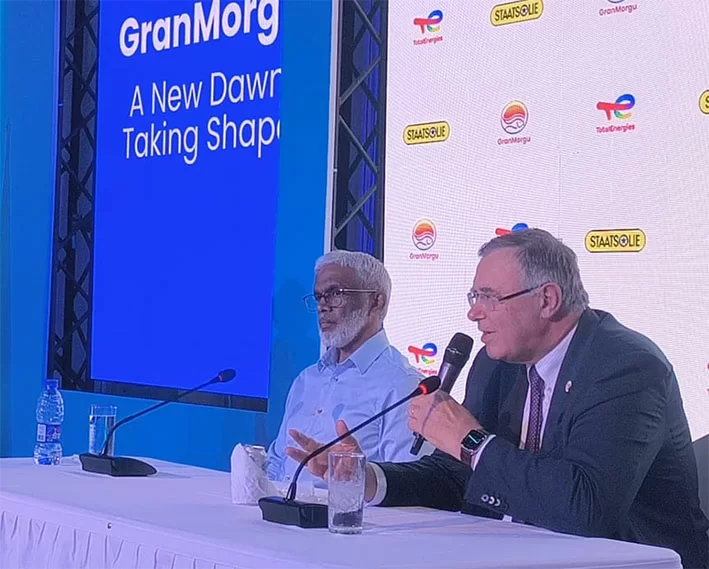
    The second pillar of Adhin’s vision centers on economic development, with a specific focus on the country’s emerging oil and gas sector. Suriname is preparing to enter a transformative new phase, with commercial oil production from the country’s large GranMorgu field slated to begin in 2028. Projected revenues from the sector are expected to reach billions of dollars, representing an unprecedented opportunity for national growth.

    Despite this potential, Adhin issued a clear warning against overreliance on fossil fuel extraction. Oil is not an end goal, he emphasized, but rather a tool to finance broad-based economic transformation. Overdependence on the sector would leave Suriname dangerously vulnerable to global oil price volatility and growing international pressure to transition away from fossil fuels.

    To avoid this trap, Adhin introduced the “Oil & Gas Plus” strategy, which would channel oil revenues into developing six key non-extractive sectors to build a diversified economy: agriculture and food production, water economy, gold value chain expansion, carbon credit development and forest management, medical tourism, and ecotourism. Adhin added that the diaspora is uniquely positioned to drive growth in these new sectors, as many Surinamese people living abroad hold specialized expertise in high-demand fields including healthcare, information technology, finance, and education.

    The third and final pillar lays out Adhin’s 2050 long-term vision, which aims to reposition Suriname from a commodity-dependent economy to a strategic regional hub. This shift would move Suriname from a “resource-based” national identity to a “network-based” identity, with four core focus areas: a regional financial hub with modern banking regulation and a regional stock exchange, a logistics hub with upgraded ports, aviation infrastructure and cross-border connections, a digital hub with investments in data centers, cybersecurity and digital infrastructure, and an educational hub that serves as a regional center for advanced training and higher education. Under this plan, the services sector would become the largest contributor to Suriname’s GDP by 2050, creating thousands of new jobs in technology, consulting, and financial services.

    A core throughline of Adhin’s address was the recognition that the Surinamese diaspora is already a major economic force, not just a potential source of future investment. Diaspora members currently send hundreds of millions of dollars in remittances back to Suriname each year, making them current financial partners in the country’s development rather than distant future investors. Adhin called for expanded structural support to grow this role, highlighting existing opportunities including tax incentives and access to international financing through institutions such as Afreximbank for diaspora entrepreneurs looking to launch businesses in Suriname.

    As Speaker of the National Assembly, Adhin emphasized that his role is not to implement policy directly, but to advance these priorities through legislative action, pushing for long-stalled dossiers to finally receive parliamentary consideration and enshrine the diaspora relationship in permanent law. He also stressed the critical importance of bilateral cooperation with the Netherlands, including updates to existing bilateral treaties, noting that mutually agreed bilateral arrangements are the only way to reach a sustainable, widely accepted solution to nationality and rights issues for diaspora members.

    Closing his address, Adhin framed Suriname’s future as a collective choice for all Surinamese, whether they live within the country’s borders or abroad. The country must decide whether to remain dependent on finite natural resources, or build a resilient, diverse economy rooted in knowledge, strong institutions, and cross-community collaboration. The diaspora, he emphasized, is not just a source of capital – it is a core partner in building Suriname’s future for generations to come.

  • Guyana vraagt ICJ om bevestiging van grens met Venezuela

    Guyana vraagt ICJ om bevestiging van grens met Venezuela

    One of Latin America’s longest-running border disputes, centered on the resource-rich Esequibo region, has moved into open oral hearings at the International Court of Justice (ICJ) in The Hague, with Guyana calling on the United Nations’ highest court to formally invalidate Venezuela’s territorial claims to the contested area.

    The 160,000-square-kilometer Esequibo region, a largely jungle-covered territory straddling the Esequibo River, plus its adjacent offshore waters, has been a source of tension between the two neighboring South American nations since the colonial era. The discovery of massive new oil and natural gas reserves in the offshore area in recent decades has turned the long-simmering conflict into a critical threat to regional stability, Guyana argues.

    Addressing the panel of ICJ judges at the opening of the week-long proceedings, Guyana’s Minister of Foreign Affairs Hugh Hilton Todd framed Venezuela’s claim as an existential threat to his country. “The territorial ambitions of a larger, more powerful neighbor have not only undermined our peace and security, they have held back our national development for generations,” Todd told the court. He added that Venezuela’s claim encompasses more than two-thirds of Guyana’s entire current sovereign territory, making the dispute a matter of survival for the small Caribbean nation.

    The roots of the conflict stretch back to an 1899 arbitration ruling that established the modern border between Venezuela and what was then British Guiana, a British colony. That ruling awarded the Esequibo region to British Guiana, a decision that Venezuela has repeatedly rejected as invalid since the early 20th century. In 2018, amid rising tensions over newly discovered offshore oil reserves, Guyana formally brought the case to the ICJ, asking the court to uphold the 1899 border settlement and confirm its full sovereignty over the entire Esequibo area.

    Tensions escalated dramatically in late 2023, when Venezuela held a national referendum on the dispute in which Venezuelan voters overwhelmingly rejected the ICJ’s jurisdiction over the case and backed the government’s plan to establish a new Venezuelan state covering all of Esequibo. In early 2024, Venezuela formally proclaimed the new state, a move that Guyana and much of the international community condemned as a violation of international law.

    A major shift in Venezuela’s political landscape occurred in January 2025, when former Venezuelan president Nicolás Maduro and his wife were detained by U.S. forces, leading to the installation of a new interim government that currently administers Venezuelan state affairs. This interim government will have the opportunity to present its formal position on the dispute to the ICJ later this week, court schedules confirm.

    Legal observers expect a final binding ruling from the ICJ within the next several months. While ICJ decisions are legally binding and irreversible under international law, the court itself does not hold independent enforcement power. Any implementation of the court’s final ruling will depend on intervention and support from the United Nations Security Council, leaving open questions about how the decision will be put into practice regardless of which side prevails.

  • Barbadiaanse minister ziet grote exportkansen na bezoek Agrarische Beurs

    Barbadiaanse minister ziet grote exportkansen na bezoek Agrarische Beurs

    On May 4, during a working visit to Suriname’s agricultural trade fair, Barbados’ Minister of Agriculture, Food and Food Security Shantal Munro-Knight has expressed high praise for the event and highlighted promising opportunities for bilateral collaboration and Surinamese agro-product exports to the Caribbean nation.

    Leading a government delegation that held working discussions with Suriname’s Minister of Agriculture, Livestock and Fisheries Mike Noersalim, Munro-Knight said she was deeply impressed by the scale of processing development that Suriname has achieved for its local agricultural products. She specifically called out the country’s broad, sustained investment in agro-processing as a standout strength, with one locally developed innovation drawing particular attention: a homegrown hydroponic indoor farming system. Unlike most similar systems that are currently operated exclusively by large corporate entities, Munro-Knight noted that this model has clear potential for community-level adoption across Barbados, calling the innovation “very impressive”.

    Beyond the hydroponic system, the minister highlighted two other Surinamese agricultural sectors that stood out during her tour: cassava processing and specialty product development. While Barbados also grows cassava, Munro-Knight emphasized that Suriname has reached a far more advanced level of processing that turns the root crop into a wide range of finished consumer products, a development that Barbados can learn from. She also pointed to noni, a tropical medicinal fruit, as a product with strong untapped export potential for Suriname in the Barbadian market. She even sampled a locally produced yoghurt during the fair, describing the artisanal product as “wonderfully produced”.

    Overall, Munro-Knight concluded that Suriname’s approach to agricultural manufacturing is innovative and uniquely positioned to meet Barbados’ market demand, creating clear pathways for increased exports of Surinamese agro-goods to the Caribbean island.

    Looking ahead to the rest of her visit, the Barbadian minister said her delegation will prioritize forging concrete, output-focused partnerships between the two countries, with knowledge-sharing positioned as a core priority for collaboration. She noted that both nations stand to gain from mutual learning, and ongoing discussions will work to identify additional areas of aligned interest, with regional food security flagged as a top cross-border priority.

    For his part, Suriname’s Mike Noersalim echoed the optimistic outlook, reflecting on the successful conclusion of the three-day agricultural fair that wrapped up on Sunday evening. Noersalim said the event achieved its core goal of strengthening connections across Suriname’s domestic agricultural sector while drawing meaningful international attention to the quality and diversity of Surinamese agricultural products. The fair also laid critical groundwork for future private-sector collaboration between Surinamese and international agribusinesses. “The goal of facilitating connections between all actors across the agricultural sector has without a doubt been achieved,” Noersalim said.

  • President roept jongeren op kansen te benutten na komst stroom Langu-gebied

    President roept jongeren op kansen te benutten na komst stroom Langu-gebied

    A landmark renewable energy development in Suriname has brought permanent, round-the-clock electricity to 1,300 households in the rural Boven-Suriname region, following the official inauguration of a new solar power facility in the Langu area by President Jennifer Simons.

    During the opening ceremony held on Sunday, President Simons emphasized that reliable access to energy is a foundational requirement for driving inclusive development across Suriname’s inland territories. She used the occasion to call on local young people to seize the new opportunities unlocked by consistent electricity access. “Take this chance to study harder and build meaningful futures for yourselves in our society,” the president told attendees. For other community members, she highlighted that the new power infrastructure can also be leveraged to grow local economic activity, encouraging residents to develop community-led initiatives such as eco-tourism camps to foster self-sufficient local growth.

    The president noted that expanding electricity access across Suriname’s inland regions has been a years-long priority for the government. Planning for the broader electrification initiative first launched in 2019, with the core goal of delivering continuous power across the entire Boven-Suriname area. This newly completed solar facility forms part of the second phase of the national Suriname Villages Micro-grid Solar Project. According to the Suriname Communication Service, the construction and implementation of the project is being carried out by two experienced Chinese state-owned energy infrastructure firms, PowerChina and Sinohydro.

    David Abiamofo, Suriname’s Minister of Natural Resources, outlined that the administration’s policy focuses on delivering long-term, structural solutions to improve living standards in inland communities. “The development we are pursuing for the interior is not just occasional access to power – it is 24-hour electricity every single day,” Abiamofo stated. He also expressed praise for the progress the government has delivered on this agenda, noting that “they say self-praise is unseemly, but I want to compliment the government of Suriname. Since we began work from Atjoni, almost all villages now have access to 24/7 power, and today it is Langu’s turn to benefit.”

    Moving forward, Minister Abiamofo confirmed that the government is actively pursuing additional funding from regional and international development organizations to support further infrastructure projects across inland areas, acknowledging that public funding alone is not sufficient to deliver all planned improvements. Following the completion of the electrification project, the government’s next priority for the Langu area and surrounding communities is upgrading access to clean drinking water. In total, 26 villages across the region will gain access to safe, reliable drinking water through the upcoming initiative, and work on the water project is already underway, with the minister asking local communities for a small amount of additional patience as construction progresses.

  • Hormuz-conflict houdt olieprijzen stevig boven $100

    Hormuz-conflict houdt olieprijzen stevig boven $100

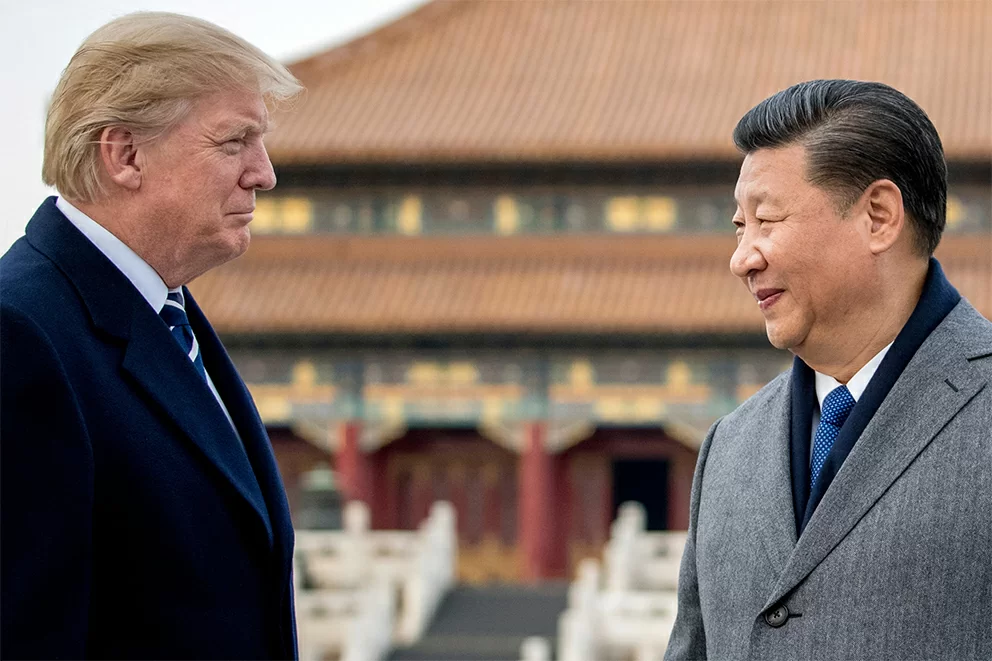
    Global oil prices edged lower in early trading on Monday, driven by a new announcement from former U.S. President Donald Trump outlining planned American military action to free commercial vessels detained in the strategic Strait of Hormuz. Even with this pledge of intervention, persistent uncertainty around stalled U.S.-Iran peace talks has kept upward pressure on prices, leaving benchmarks holding firmly above the $100 per barrel threshold.

    Brent crude futures fell 64 cents, a 0.59% drop, to settle at $107.53 per barrel, while U.S. West Texas Intermediate (WTI) crude declined 84 cents, or 0.82%, to hit $101.10 per barrel. Both benchmarks already recorded significant losses in trading on the prior Friday, extending a period of volatile price swings tied to Middle East geopolitics.

    In a post to his Truth Social platform on Sunday, Trump stated that the U.S. has committed to escorting vessels from other nations safely through the narrow waterway, allowing commercial shipping traffic to resume unimpeded. “For the good of Iran, the Middle East, and the United States, we will provide this escort protection,” Trump wrote in the post.

    Despite Trump’s public statement, regional geopolitical tensions remain elevated. Negotiations between Washington and Tehran have hit repeated snags, with both sides refusing to back away from their core non-negotiable positions. While Trump has prioritized reaching a new nuclear deal with the Iranian government as a top policy goal, Tehran has proposed setting nuclear discussions aside temporarily until the ongoing regional conflict ends and blockades in the Persian Gulf are lifted.

    In a separate development over the weekend, OPEC+ announced it would raise collective oil production targets for June, with seven member nations set to add a combined 188,000 barrels per day to global output. This marks the third consecutive month of production increases from the alliance, though the planned hike was scaled back slightly following the United Arab Emirates’ withdrawal from OPEC earlier this year. Even with the announced target increase, actual growth in global oil supply remains constrained by the ongoing conflict in the region and persistent shipping disruptions in the Strait of Hormuz, a chokepoint through which roughly 20% of global oil supplies pass each day.

  • Column: Integriteit, meer dan een modewoord

    Column: Integriteit, meer dan een modewoord

    In modern public discourse, the term “integrity” is everywhere—dropped in workplace meetings, political speeches, and casual conversations, universally celebrated as a critical value. But how often do people actually live up to the standard it sets? Far from being just a trendy buzzword or an abstract ideal to be cited on special occasions, integrity is the bedrock of ethical action, the foundation of mutual trust, and the cornerstone of a fair, functional society.

    Contrary to common framing that holds only leaders and politicians accountable to standards of integrity, the concept is just as often missing from the everyday choices of ordinary people. It starts with small, seemingly inconsequential decisions: a white lie to avoid conflict, a partially truthful answer to dodge criticism, shifting blame to another person for a mistake one made. What looks harmless at first can quickly snowball, eroding public trust and sowing deep-seated division and suspicion across communities. That makes integrity an ongoing personal responsibility that requires intentional attention every single day, especially in the small, unobserved choices that add up to shape collective culture.

    So what exactly is integrity, at its core? It means remaining steadfast to your own core values and principles, even when staying true comes at a cost. It stands for unwavering honesty, consistent reliability, and radical transparency. It requires taking full ownership of your actions and aligning your words with your deeds at all times. Put simply, integrity is the bridge that connects what we claim to stand for and what we actually do, and the social glue that holds together personal relationships, institutions, and entire societies.

    This standard must apply across every sphere of life: the workplace, personal friendships, public governance, and even online interactions. Whether it is a high-stakes business decision, a private conversation with a loved one, or the public bond between voters and elected officials, that foundational bond collapses without integrity. Even so, it is common to see people weaponize the language of integrity to advance their own self-serving interests, rather than actually practicing what they preach. When power, wealth, or social status is on the line, most people take the easy way out, lacking the courage to be honest or own up to their mistakes.

    Nowhere is this gap more visible than during election campaigns. Candidates make sweeping, ambitious promises to win over voters. Even though most voters know only a tiny fraction of those pledges will ever be fulfilled, we still hold out hope that this election cycle will be different. Time and time again, that hope gives way to disappointment, trapping communities in a vicious cycle of broken trust and unmet expectations.

    The chasm between public rhetoric and private action is staggering. Politicians who preach honesty while engaging in corrupt backroom deals; corporate CEOs who promise transparency while hiding critical information from stakeholders and the public. This persistent gap systematically erodes public trust, fuels widespread cynicism, and deepens social division—at a moment when collective unity is more important than ever, draining the energy needed to tackle shared challenges.

    Even with these widespread failures, integrity remains irreplaceable to a healthy society. It is the foundation of mutual trust and the cement that holds communities together. Without it, people lose sight of our shared humanity and conflict becomes inevitable. Beyond its social benefits, integrity also brings deep personal fulfillment: it lets people look at themselves in the mirror with a clear, unburdened conscience.

    The encouraging takeaway? Change starts with individual action. Integrity does not require grand, headline-grabbing gestures. It only requires a deliberate, daily choice: to be honest, take responsibility, and act consistently with your values, even when no one is watching to hold you accountable. Of course, we also need leaders who model these values publicly, and institutions and workplaces that reward and prioritize integrity rather than punishing it or turning a blind eye to compromise. Only then can we build an environment where public trust can take root and grow.

    It is long past time to stop only talking about integrity and start actually living it. Because without integrity, all words are empty, and without mutual trust, our communities are lost.

  • Karg: Chinese vissersschepen via Guyana vormen gevaar voor Suriname

    Karg: Chinese vissersschepen via Guyana vormen gevaar voor Suriname

    A looming permit application from a Sino-Guyanese seafood enterprise is sparking urgent warnings across the South American fishing industry, with top Surinamese fisheries officials calling for immediate coordinated action to protect dwindling regional fish stocks. Udo Karg, who leads both the Suriname Seafood Association as chairman and SUVVEB N.V. as chief executive officer, has sounded the alarm that approving Grandeast Seafood Inc.’s request to operate six additional commercial fishing vessels in Guyana’s waters would deliver severe, lasting harm to fishing communities in both Guyana and neighboring Suriname.

    Grandeast Seafood, a joint venture subsidiary of China’s Hong Dong Fisheries Co. Ltd., has been active in Guyana since 2018, when it poured roughly $20 million into constructing a modern seafood processing facility in the country. According to local Guyanese outlet Kaieteur News, the company argues that inconsistent supplies of finfish and shrimp have capped its processing facility’s output, so adding six company-owned fishing vessels is necessary to stabilize raw material inputs for its operations. The permit application is currently under review by Guyana’s relevant regulatory authorities.

    But Karg pushes back against this justification, pointing to long-standing overexploitation of fish populations across Guyana’s exclusive economic zone that already puts regional stocks at risk of collapse. He cites the Spawning Potential Ratio (SPR), an internationally recognized scientific metric that measures a fish population’s ability to replenish itself under current fishing pressure. A 40% SPR is widely accepted as the minimum threshold for a sustainable, healthy fishery, Karg explains.

    Per Karg’s analysis, the cumulative pressure of overfishing and unregulated cross-border illegal fishing has already pushed regional stocks to dangerous levels. Suriname’s current SPR sits only 15 percentage points above the 40% minimum threshold, while Guyana’s own SPR has languished between 20 and 30 percentage points below that critical sustainability mark for years. That gap, Karg argues, makes clear that Guyana’s waters cannot even support its existing domestic fishing fleet at a commercially and environmentally responsible level. Granting six new commercial fishing permits would only compound the crisis.

    “This means simply that there is not enough fish to let their additional vessels operate in a commercially responsible way,” Karg told local Surinamese outlet Starnieuws. He added that approving the application would deal a heavy blow to Guyana’s local fishing community, while also generating immediate negative spillover effects for Suriname. Unregulated fishing from overcapacity fleets in Guyana routinely pushes across the shared maritime border into Surinamese waters, he noted, so additional vessels in Guyana would only worsen illegal poaching of Suriname’s already strained fish stocks.

    Karg draws a parallel to a previous episode during the administration of former Surinamese President Desi Bouterse, when the Surinamese fishing sector successfully blocked a similar proposal to allow foreign-owned fishing vessels to operate in its waters. “Now they are trying again, but this time through Guyana,” he said. As a member state of the Caribbean Regional Fisheries Mechanism, Karg says Suriname has a formal responsibility to lodge an official objection to any proposal that would further deplete already overstressed regional fish stocks, and should take that step immediately as the permit application moves forward.