In a significant escalation of Washington’s campaign against Havana, former U.S. President Donald Trump signed an executive order on Friday dramatically expanding existing sanctions targeting the Cuban government and its international allies, the White House confirmed to news agency Reuters. The move comes hot on the heels of Trump’s removal of Venezuelan leader Nicolás Maduro, marking a sharp acceleration of pressure on left-aligned governments across the Latin American region.
The newly expanded sanctions regime targets individuals, entities, and associates linked to Cuban security services, those involved in alleged corruption or severe human rights violations, as well as sitting Cuban government officials and their supporters. While the full list of sanctioned actors has not yet been released, the executive order explicitly states that any foreign individual operating in key sectors of Cuba’s economy — including energy, defense, mining, financial services and security — can now be placed under sanctions.
Notably, the new framework also allows for secondary sanctions to be imposed on third-party companies and individuals that facilitate transactions with sanctioned Cuban entities. Jeremy Page, a former sanctions researcher at the U.S. Department of the Treasury, described the provision as the harshest measure targeting non-U.S. businesses since the decades-long U.S. trade embargo on Cuba was first imposed. “Oil and gas firms, mining companies and global banks that previously managed to separate their Cuban operations from their U.S. activities now face major vulnerability to American enforcement,” Page explained.
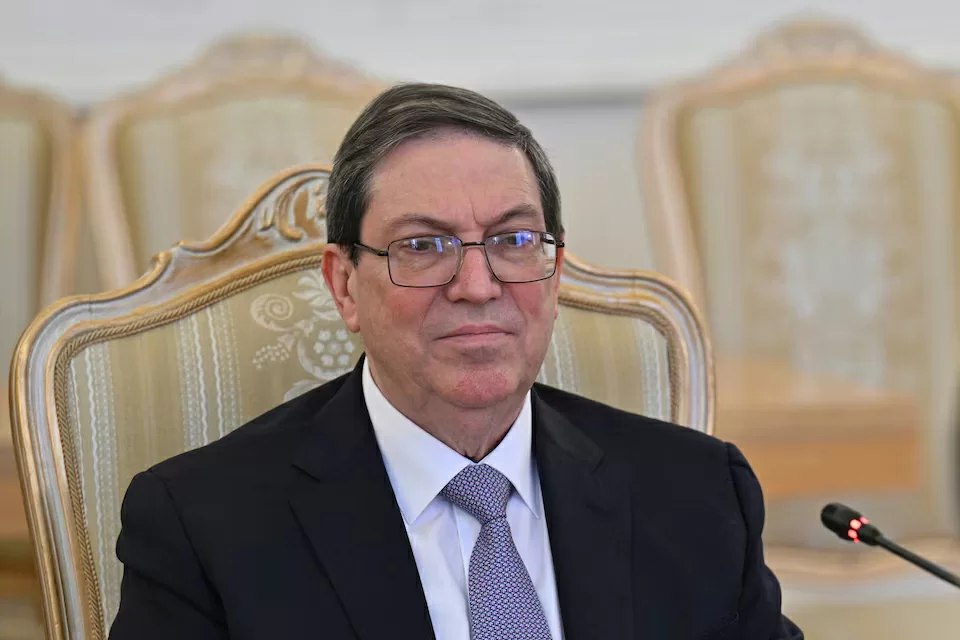
Cuba has issued a fierce condemnation of the new measures. Cuban Foreign Minister Bruno Rodríguez, who recently met with his Russian counterpart Sergei Lavrov in Moscow, denounced the sanctions as illegal unilateral coercive measures that violate the United Nations Charter. Rodríguez stressed the measures amount to collective punishment targeting the entire Cuban people, emphasized that Washington has no legal authority to impose such restrictions on the island nation, and made clear that Cuba would not be intimidated into abandoning its sovereign policies.
The expanded sanctions fit into a broader, increasingly aggressive U.S. campaign against Cuba, which Trump has repeatedly claimed is on the brink of collapse. The move also aligns with recent shifts in U.S. engagement across the region: just days before the order was signed, the first commercial flight from Miami to Venezuela in seven years was completed, a visible signal of growing American intervention in Latin American and Caribbean affairs.
During Trump’s term, U.S. forces have also carried out military operations targeting suspected drug trafficking originating from Venezuela, leading to the detention of Maduro. At the time, Trump openly warned that “Cuba is next,” accusing Havana of maintaining close ties to Iran and militant groups including Hezbollah. A senior U.S. official further framed the Trump administration’s position, arguing that Cuba provides “an accessible hub for hostile foreign intelligence, military and terrorist activities less than 100 miles from the U.S. coast.”
Washington has long maintained three core demands of Havana: opening Cuba’s state-led economy to foreign and private investment, providing compensation for properties seized by Fidel Castro’s revolutionary government, and holding what the U.S. describes as free and fair elections. Cuba has consistently rejected external interference, reiterating that its socialist political and economic system is non-negotiable for the Cuban people.
Friday’s executive order builds on a series of escalating U.S. measures against Cuba implemented earlier this year. After Maduro was removed from power, the U.S. halted Venezuelan oil exports to Cuba, one of the island’s primary energy sources. Trump subsequently threatened steep tariffs on any country that continued shipping oil to Cuba, prompting major suppliers including Mexico to suspend their oil deliveries to Havana. Those earlier restrictions have already triggered severe fuel shortages across the island, leading to nationwide power outages and the cancellation of most international commercial flights.