标签: Suriname

苏里南

  • Jaarlijks overlijden 45 tot 50 vrouwen aan baarmoederhalskanker in Suriname

    Jaarlijks overlijden 45 tot 50 vrouwen aan baarmoederhalskanker in Suriname

    Suriname faces a persistent healthcare crisis as cervical cancer continues to claim between 45 to 50 women’s lives each year, despite being largely preventable through timely screening and vaccination. January, recognized internationally as Cervical Cancer Awareness Month, highlights the urgent need for enhanced preventive measures in the South American nation.

    Medical statistics from 2020-2023 reveal cervical cancer remains among the leading causes of female mortality in Suriname. According to Marvin Dipokromo, gynecologist-obstetrician at Diakonessen Hospital, early detection proves crucial in combating this disease. “A significant portion of these fatalities could be prevented through timely screening and improved public education,” he emphasizes.

    The malignancy develops in the cervix and is predominantly caused (over 99% of cases) by high-risk strains of human papillomavirus (HPV), particularly types 16 and 18. The disease progression typically occurs slowly, often taking years of precancerous cellular changes before developing into invasive cancer. These preliminary abnormalities can be readily detected through Pap smears and HPV testing during early stages.

    “Cervical cancer generally presents no symptoms during initial development,” explains Dipokromo, drawing on his fourteen years of medical experience. “When warning signs eventually emerge—including contact bleeding, abnormal vaginal discharge, or pain during intercourse—the disease has frequently advanced to more serious stages.”

    Concerningly, medical professionals have observed increasing cases of cervical abnormalities and cancer among younger women in recent years. This trend is potentially linked to earlier sexual activity initiation combined with insufficient structured education and preventive healthcare. While the immune system typically clears HPV infections naturally, this does not occur universally.

    Regular screening provides a low-barrier, highly effective prevention method. Pap smears are non-painful procedures requiring approximately five minutes that can ultimately save lives. Medical authorities recommend regular examinations for women who have been sexually active for at least two years. HPV vaccination is strongly recommended for both girls and boys as additional protection.

    Despite Diakonessen Hospital’s gynecology department offering Pap smear and HPV testing services, significant barriers persist. Widespread ignorance, misinformation, and lack of health insurance coverage prevent many women from seeking essential screenings.

    “Suriname currently lacks a comprehensive, structured awareness program such as those previously implemented,” Dipokromo stresses. “Enhanced public education is urgently needed to emphasize prevention’s critical importance.”

    The medical community’s message remains clear: cervical cancer is largely preventable through timely screening, HPV vaccination, and accessible education. These measures form the cornerstone of reducing preventable deaths across Suriname.

  • EU bereidt tegenmaatregelen voor tegen VS na Trump-heffingen over Groenland

    EU bereidt tegenmaatregelen voor tegen VS na Trump-heffingen over Groenland

    The European Union is mobilizing a comprehensive package of countermeasures in response to President Donald Trump’s announced import tariffs targeting several European nations. The dispute centers on European resistance to American attempts to bring Greenland—a Danish autonomous territory—under increased U.S. economic and geopolitical influence.

    Last week, Trump revealed plans to impose additional 10% import duties effective February 1st on goods originating from Denmark, Norway, Sweden, France, Germany, Netherlands, Finland, and the United Kingdom. The administration warned these tariffs could escalate to 25% if no agreement is reached regarding Greenland’s status.

    European leaders have issued strong condemnations of Trump’s threats, characterizing the measures as unacceptable and counterproductive in a joint statement. They emphasized that such actions strain transatlantic relations and jeopardize the crucial trade partnership between the EU and United States.

    In retaliation, EU member states are considering activating previously drafted counter-tariffs targeting American products worth approximately €93 billion. These measures, initially suspended during trade negotiations with Washington, now serve as potential political leverage. Additionally, European diplomats are evaluating deployment of the Anti-Coercion Instrument—a legal framework enabling economic responses to excessive pressure from third countries, including restrictions on U.S. corporations and market access limitations.

    Brussels has expressed concern that escalating trade measures could damage both transatlantic cooperation and the multilateral trading system. However, the EU remains prepared to defend its economic interests should the U.S. proceed with its tariff implementation.

    The Greenland controversy has triggered unprecedented diplomatic tensions between Europe and the United States. European officials consistently emphasize that Greenland’s future must be determined by its inhabitants, asserting that unilateral pressure through tariffs or other means violates contemporary international norms.

  • Indiaseschenking maakt renovatie sportaccommodaties in Nickerie mogelijk

    Indiaseschenking maakt renovatie sportaccommodaties in Nickerie mogelijk

    The Nickerie district in Suriname is set to receive significant upgrades to its sports infrastructure through a generous $750,000 donation from the Indian government. The funding will facilitate comprehensive renovations at both the Algemeen Zwembad Nickerie (Nickerie Public Swimming Pool) and the Nickerie Indoor Stadium, two facilities that have suffered from prolonged deferred maintenance.

    Minister Lalinie Gopal of Youth Development and Sports conducted an extensive site visit last Friday to assess the current condition of both sports venues. The ministerial delegation engaged in crucial discussions with local stakeholders to coordinate renovation planning. Key participants included District Commissioners Nisha Kurban and Mohamed Bakas, alongside Sports Director Enrique Ralim, Deputy Director of Sports Facilities & Spaces Xavierio Slagveer, and Assembly Member Mohamed Aziez Salarbaks, who also serves on a standing committee of The National Assembly.

    Project coordination measures have been established, including finalized agreements with architects to complete the project documentation. An oversight committee comprising all relevant stakeholders will be formed to supervise the renovation process. Additionally, authorities are developing a future-oriented management structure designed to ensure sustainable operation and maximum self-sufficiency of the facilities post-renovation.

    The infrastructure improvements are expected to significantly enhance sports and recreational offerings in the Nickerie region while contributing to the sustainable development of athletic facilities in the district. This international cooperation initiative represents a substantial investment in Suriname’s sports infrastructure and community wellness.

  • Rechtsstatelijke toetsing onder internationale aandacht

    Rechtsstatelijke toetsing onder internationale aandacht

    Suriname’s judicial system has become the focal point of intense international observation as the nation handles sensitive legal cases with significant political implications. According to National Assembly member Jennifer Vreedzaam, the global community is closely monitoring how Suriname’s legal institutions navigate the complex intersection of law, policy, and power in high-profile proceedings.

    In today’s interconnected legal landscape, cases with clear administrative and political dimensions rarely remain purely domestic matters. Foreign governments, multilateral institutions, human rights organizations, and international media are tracking Suriname’s judicial processes not to interfere with national jurisprudence, but to assess how a constitutional state functions when legal principles intersect with political power.

    International observers primarily evaluate procedural quality rather than case outcomes, focusing on fundamental rule-of-law principles: judicial independence, strict separation between policy and criminal law, individualization of liability, and proportionality in prosecution. The Court of Justice serves as the central institutional reference point for foreign observers, expected to maintain legal purity and demonstrate clear distance from political interpretations.

    Global law enforcement collaborations, including Interpol, explicitly distinguish between regular criminal prosecution and cases with potential political characteristics. This approach serves a preventive function—protecting the integrity of criminal justice instruments rather than passing judgment on guilt or innocence.

    Suriname’s international reputation as a rule-of-law state depends not on official statements or public positions, but on judicially consistent, transparent, and independently reasoned court decisions. A ruling that clearly distinguishes administrative responsibility from criminal liability, and visibly bases its reasoning on legal principles rather than contextual pressure, strengthens confidence in Suriname’s judicial system regardless of case outcomes.

    This scrutiny represents an institutional test rather than a personal one, with foreign observers seeking to understand how justice functions when stakes are high. When the legal system distinguishes itself from political framing and speaks exclusively through legal precision, it communicates in a language recognized and respected beyond Suriname’s borders.

  • Mogelijke vervalsing documenten Grassalco-dochter in Guyana

    Mogelijke vervalsing documenten Grassalco-dochter in Guyana

    Serious concerns have emerged regarding the establishment and registration of GuySure Aggregate and Sand Inc, a foreign subsidiary of Suriname’s state-owned mining company Grassalco. Official documents from Guyana reveal that five private individuals were registered as shareholders during the incorporation process, raising fundamental questions about the ownership structure and the legitimacy of this overseas venture.

    Internal investigations within Grassalco have uncovered irregularities in the documentation process surrounding GuySure’s formation. The audit revealed that certain critical documents were scanned and added to the internal system at a later date, without appearing in the regular document flow initially. Administrative deviations from standard procedures were also identified.

    The subsidiary’s launch in May 2025 was publicly promoted by the Surinamese government as Grassalco’s strategic international expansion. Former President Chan Santokhi traveled to Georgetown to inaugurate the company alongside now-suspended CEO Wesley Rozenhout. At the time, no mention was made of individual shareholders in the corporate structure.

    The Guyanese registration records now identify five individuals as shareholders: Wesley Rozenhout, Patrick Bel, Wendy Aminta, Ajay Surjbalising, and Negesty Winter. The relationship between these private shareholders and Grassalco’s status as a state-owned enterprise remains unclear, with no transparency regarding underlying agreements.

    These developments occur amidst broader turmoil at Grassalco. Earlier this month, Rozenhout was suspended by the Board of Commissioners pending an investigation into the disappearance of over four kilograms of gold from the state company. The board cited potential violations of corporate statutes as justification for the suspension.

    In response to the growing crisis, Natascha Kalo has been appointed as delegated commissioner with expanded oversight responsibilities until new leadership is established. The company is currently undergoing a comprehensive ‘quickscan’ assessment while daily operations continue under heightened supervision.

  • Senegal verovert Afrika Cup na zinderende finale tegen Marokko

    Senegal verovert Afrika Cup na zinderende finale tegen Marokko

    Senegal has successfully defended its African Cup of Nations championship in a thrilling final against Morocco that required extra time to determine the winner. The match concluded with a 1-0 victory for Senegal, marking their second consecutive title following their 2022 triumph.

    The highly anticipated final, played in Rabat before a passionate home crowd, was characterized by intense moments and controversial decisions that heightened the drama. The match reached its peak of tension during the final minutes of regulation time when Moroccan players were awarded a penalty kick following a contested challenge.

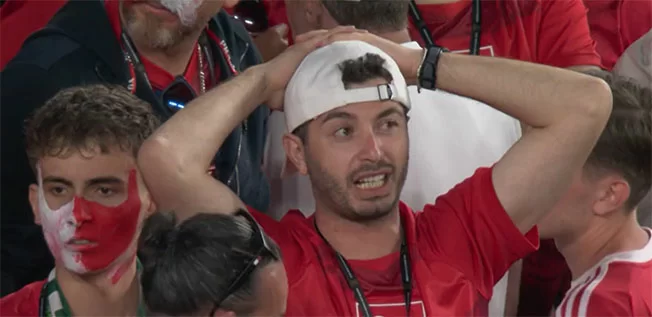
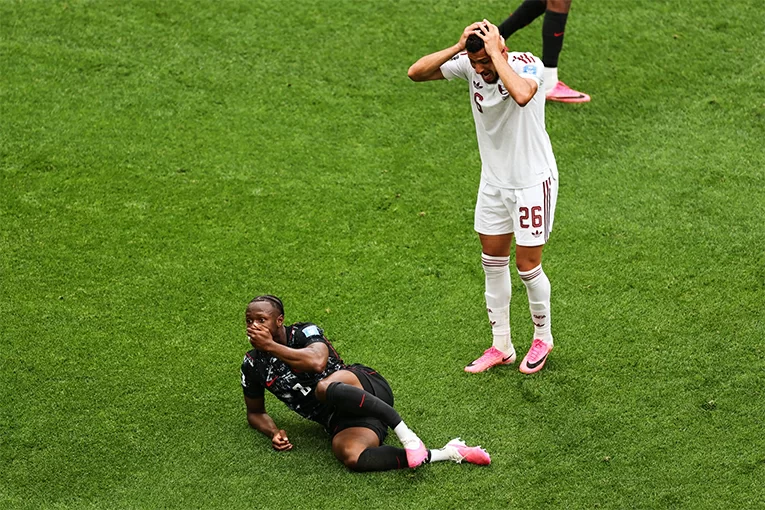
    Brahim Diaz, the tournament’s leading scorer with five goals, stepped up to take the potentially championship-winning penalty but failed to convert, sending the shot wide of the mark. The penalty decision sparked significant controversy as Senegalese players temporarily left the field in protest, partly due to a disallowed goal for Senegal moments earlier.

    The disruption created chaotic scenes with extended delays and growing frustration among both teams and spectators. When play resumed and regulation time ended without a score, the match proceeded to extra time.

    Early in the additional period, Pape Gueye broke the deadlock with a powerful strike that ultimately decided the championship. Despite Morocco’s persistent efforts to equalize in the remaining time, Senegal’s defense held firm against all attacks.

    This victory solidifies Senegal’s dominant position in African football while Morocco, despite the heartbreaking loss in front of their home supporters, can reflect on an otherwise impressive tournament performance. The North African team’s fifty-year wait for another continental championship continues following this narrow defeat.

  • EU waarschuwt voor economische schade door Trumps heffingenplan

    EU waarschuwt voor economische schade door Trumps heffingenplan

    The European Union has delivered a forceful response to former U.S. President Donald Trump’s announced plan to reinstitute sweeping import tariffs, warning that such protectionist measures could severely damage both European and American economies while undermining transatlantic relations.

    In an official statement released Monday, European officials emphasized that protectionist trade policies typically result in increased business costs, disruption of global supply chains, and elevated consumer prices. The EU specifically highlighted that export-dependent sectors including manufacturing, agriculture, and logistics would likely bear the brunt of the economic impact.

    Brussels pointed to previous trade conflicts as evidence that reciprocal tariffs tend to suppress economic growth and generate financial market volatility. The European Commission stressed that stable trade relationships remain crucial for investment security, job preservation, and economic recovery, particularly during a period when the global economy already faces pressure from geopolitical tensions and persistent inflation.

    The warning extended beyond transatlantic concerns, noting that trade disruptions between the United States and Europe could create ripple effects across developing nations that depend on predictable market access and stable trade flows.

    The EU reaffirmed its commitment to diplomatic dialogue and multilateral cooperation through World Trade Organization frameworks. Simultaneously, European authorities made clear their readiness to implement protective measures to safeguard the bloc’s economic interests should the tariff proposal materialize.

  • Gedenkboek 75e geboortedag Bram Behr (1951-1982)

    Gedenkboek 75e geboortedag Bram Behr (1951-1982)

    A poignant tribute unfolded as Henry Does presented the first copies of the memorial publication “BRAM BEHR – A Working Class Hero Is Something to Be” to the children of the late Surinamese activist on what would have been his 75th birthday. The commemorative work emerged from a deeply personal request by Vladi, Behr’s youngest son, who sought photographs of his father who was tragically executed at age 31 during Suriname’s December Murders of 1982.

    The publication’s title draws inspiration from contributor Wim Bakker’s recollection of their 1970s collaboration producing the progressive publication Rode Surinamer. Bakker reveals how John Lennon’s “Working Class Hero” became their anthem, with its resonant chorus line ultimately providing the volume’s thematic foundation. “We had no idea then that this song was about him,” Bakker reflects.

    Ronald Snijders contributes musical memories of Behr’s dedication as first violinist in the Volksmuziekschool Youth Orchestra, where his exceptional talent rapidly elevated him to concertmaster position. Snijders expresses profound shock at Behr’s eventual fate, noting that while the activist fiercely opposed injustice, he never employed physical violence.

    The work contains particularly moving historical documentation, including Rita Rahman’s account of the journalistic solidarity between Behr and Leslie Rahman (another December Murders victim). She reproduces Behr’s heartbreaking April 25, 1982 letter to his nine-year-old son Raoul, written during imprisonment: “Those naughty soldiers put me in a dark cell for eight days, just like a thief. It wasn’t pleasant, but every day I thought of you. And of all the children outside who are hungry and poor.”

    Personal testimonies continue with Marjan Markelo’s remembrance of Behr as her mathematics teacher in Moengo, describing his transformative pedagogical approach that encouraged critical inquiry and looking beyond surface appearances. Former AMS director and teacher Ronald Venetiaan contributes a powerful closing message urging Behr’s descendants to preserve his positive militant spirit while contextualizing his communist ideals within Suriname’s complex political landscape.

    The memorial volume features extensive photographic documentation alongside contributions from numerous intellectuals and activists, concluding with a solemn memorial page honoring all fifteen victims of the December 8, 1982 executions.

  • VSB bespreekt toenemende criminaliteit met minister Monorath

    VSB bespreekt toenemende criminaliteit met minister Monorath

    Business representatives from the Suriname Trade and Industry Association (VSB) have held urgent consultations with Justice and Police Minister Harish Monorath to address the country’s worsening security crisis. The meeting was prompted by alarming reports from VSB members indicating a sharp increase in violent robberies targeting retailers, distribution companies, and other high-risk enterprises.

    During the high-level discussions, VSB officials emphasized that armed robberies and violent incidents are causing substantial financial losses while simultaneously undermining Suriname’s investment climate and threatening employment stability. According to the association’s bulletin Nieuwslijn, both business owners and employees increasingly feel unsafe while conducting their professional activities.

    The business association advocated for immediate, tangible security measures within a clear legal framework to enable better protection of personnel and commercial operations. VSB leadership stressed the critical importance of establishing structured collaboration between the Justice Ministry, security services, and private sector entities. Proposed solutions included developing joint action plans for specific districts and enhancing information sharing mechanisms.

    Minister Monorath acknowledged the necessity of business community participation in combating criminal activities. Both parties expressed commitment to intensifying their dialogue and developing a coordinated strategy to reduce crime rates and enhance security measures for businesses and society overall. They agreed to continue discussions in the immediate future to formalize this collaborative approach.

  • Trumps grillige handelspolitiek drijft Amerikaanse bondgenoten naar China

    Trumps grillige handelspolitiek drijft Amerikaanse bondgenoten naar China

    In a significant departure from US trade policy, Canada has strategically reduced import tariffs on Chinese electric vehicles in exchange for improved market access for its agricultural exports, particularly canola. This move represents Canada’s latest effort to diversify economic partnerships amid growing concerns over the unpredictable and confrontational trade approach of the Trump administration.

    Prime Minister Mark Carney’s government announced the tariff reduction, which lowers the previous 100% duty on Chinese EVs, as part of a broader bilateral agreement with China. The arrangement includes quota limitations, capping Chinese EV imports under the reduced tariff at approximately 49,000 vehicles initially, with gradual increases to around 70,000 over a five-year period.

    The decision reflects Canada’s calculated response to what trade experts identify as increasingly volatile US trade relations under President Trump. Since taking office, Trump has overturned seven decades of US trade policy favoring freer commerce, imposing substantial tariffs on imports from virtually every trading nation while specifically targeting sectors including steel and automobiles.

    Canada has frequently been subject to Trump’s trade threats, including an October announcement of planned tariff increases on Canadian imports—retaliation for a critical advertisement from Ontario province—though these were ultimately not implemented. Existing tariffs on Canadian steel and aluminum remain in effect.

    This strategic shift carries considerable political risk for Carney, potentially creating friction with the Trump administration ahead of crucial negotiations to renew the USMCA trade agreement with the United States and Mexico. The trilateral pact remains vital to Canadian economic interests, with 75% of Canadian exports destined for US markets.

    Carney has defended the arrangement by emphasizing China’s technological advantages in electric vehicle production and the necessity of international cooperation to develop a competitive Canadian EV sector. However, critics including Ontario’s premier have raised concerns about potential impacts on Canadian auto workers and warned that the agreement could provide China with excessive market influence.

    The development occurs alongside similar diversification efforts by other US trading partners. The European Union has pursued new trade agreements with Mercosur nations, while China has successfully expanded export markets across Europe and Southeast Asia—achieving a record $1.2 trillion trade surplus in 2025 despite US tariffs.

    Trump maintains that his tariff policies strengthen US treasury reserves, protect domestic industries, and attract investment. However, his application of tariffs has frequently appeared arbitrary and unpredictable, including recent threats against Brazil over its treatment of political ally Jair Bolsonaro and new tariffs targeting countries that declined to support US interests regarding Greenland.

    Canada’s economic repositioning demonstrates how Trump’s trade policies are reshaping traditional alliance dynamics, driving US partners toward strengthened economic ties with China—America’s primary economic competitor—while complicating future negotiations on critical agreements like USMCA.