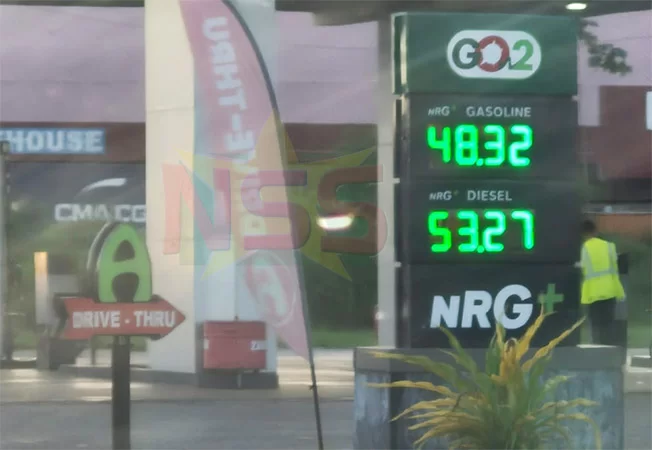
Suriname’s government is set to imminent deliberations on the future of the nation’s temporary fuel subsidy scheme, with Finance and Planning Minister Adelien Wijnerman publicly advocating for a gradual phase-out of the emergency fuel price cap instead of an abrupt elimination, a change framed as critical to preserving the country’s long-term fiscal health.
Minister Wijnerman laid out the administration’s position during ongoing budget discussions Friday, responding to multiple questions from members of the national assembly regarding the policy’s status. She reminded lawmakers that the temporary price cap was first approved by the cabinet on March 18 this year, implemented as a buffer to shield Surinamese households and businesses from skyrocketing global crude oil prices.
Under the current policy, retail fuel prices are capped at 53.27 Surinamese dollars (SRD) per liter for diesel and 48.32 SRD per liter for unleaded gasoline. Without the government intervention, Wijnerman confirmed, retail prices would jump to roughly 64 SRD per liter for diesel and 62 SRD per liter for unleaded. The gap between the capped market price and the actual cost of fuel is covered by the government through reduced state energy revenue, a mechanism that has created growing pressure on public finances.
This foregone state income, Wijnerman explained, creates a persistent drag on government budgets, a situation that could worsen if global oil prices remain elevated for an extended period. When making a final decision on the subsidy’s future, the minister emphasized, four core factors must be weighed: ongoing trends in international crude markets, fluctuations in the Surinamese dollar exchange rate, the available fiscal space in the national budget, and the broad socioeconomic impact that any change would have on local households and business operations.
A phased wind-down of the price cap, Wijnerman argued, delivers dual benefits: it eases the growing strain on government finances, while also creating policy space to redirect support toward the communities and economic actors that need it most. The current blanket subsidy structure, she noted, disproportionately benefits higher-income households and more profitable businesses that do not require public support to absorb fuel price increases. This is why the minister suggested that targeted social assistance programs represent a more efficient and equitable alternative to the broad, untargeted fuel subsidy currently in place.
In addition to addressing the future of the policy, Wijnerman clarified that the Finance and Planning Ministry currently holds no outstanding overdue payments to oil companies operating in the country. Any arrears connected to the scheme that may be held by other sector-specific ministries, she added, have yet to be formally reported to the finance department for reconciliation.