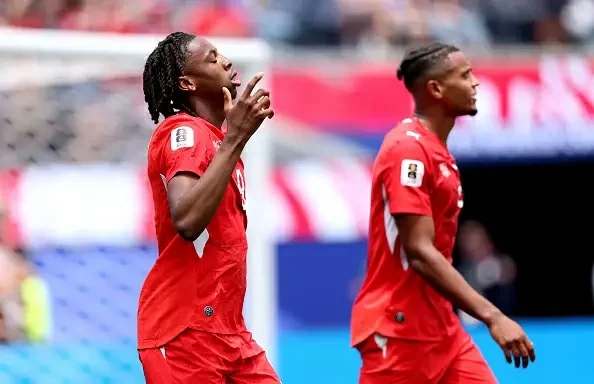
A dramatic late game breakdown gave Switzerland a convincing 4-1 win over Bosnia-Herzegovina in a hotly contested Group B match played in Los Angeles, with all decisive goals coming in the final 15 minutes of play. What looked set to be a tight, low-scoring draw for most of 90 minutes shifted dramatically after a series of impactful substitutions from the Swiss side unlocked a stubborn Bosnia-Herzegovina defense that had held firm for more than an hour.
标签: Suriname
苏里南
-

Exportverbod op Surinaamse drijfnetvis naar VS opgeheven
After months of targeted collaborative reforms to meet international marine conservation standards, Suriname’s coastal driftnet fishing industry has formally regained access to the lucrative United States market. The U.S. National Marine Fisheries Service (NMFS) has issued a positive Comparability Finding for Suriname’s driftnet fishery, officially lifting the export ban that had been placed on Surinamese fish and fish products from this sector.
Local fishing industry groups including the Visserscollectief (Fishermen’s Collective) and the Suriname Fisherfolk Organization have welcomed the decision, noting that it preserves access to a critically important export market for the South American nation’s fishing sector. Representatives of the groups emphasize that this positive outcome was not achieved without significant coordinated effort. Over the past year, industry stakeholders worked closely with Suriname’s Deputy Directorate of Fisheries to bring operations into full alignment with requirements set by the U.S. Marine Mammal Protection Act.
The path to reinstatement began after Suriname received a negative compliance finding in 2025, which triggered the imposition of the export ban. In response, government and industry partners developed and rolled out a joint action plan aimed at strengthening marine mammal protection and advancing sustainable development across the fishing sector.
As core components of this reform plan, multiple evidence-based measures were implemented in partnership with Suriname’s Fisheries Service. One key intervention was the installation of acoustic pingers on all commercial fishing vessels operating in the driftnet fleet. These devices emit warning signals that deter marine mammals from approaching fishing nets, drastically reducing the risk of entanglement, a key concern cited in the original negative finding. Additionally, stakeholders pushed forward the adoption of mandatory Vessel Monitoring Systems, which enable real-time tracking and regulatory oversight of fishing activities to ensure compliance with sustainable fishing rules.
Mark Lall, spokesperson for the Visserscollectief, underscored that the positive ruling is the direct product of joint commitment across fishermen, fisheries regulators, statistics and research teams, and all other involved stakeholders. “This outcome proves that collaboration between government and the private sector delivers tangible results,” Lall explained. “By taking shared responsibility and implementing concrete, effective measures, we have demonstrated that Suriname’s fishing industry meets all required international standards. This is a victory not just for our sector, but for the entire country of Suriname.”
Industry groups project that the restoration of U.S. market access will deliver far-reaching benefits for Suriname’s national economy and fishing community. The decision is expected to safeguard thousands of existing jobs in the sector, protect critical export revenue streams, and create a more stable foundation for the long-term sustainable growth of Suriname’s coastal fishing industry.
-
Derde helft WK 2026: Tsjechië komt niet langs Zuid-Afrika
In a critical Group A clash at the 2026 Men’s FIFA World Cup held at Atlanta Stadium, Czechia and South Africa battled to a 1-1 draw, leaving both nations still in contention for a spot in the knockout stage of the tournament.
The match made history off the pitch as well, with American referee Tori Penso taking charge of the fixture. Penso is only the second woman ever to officiate a men’s World Cup match, marking a landmark milestone for gender inclusivity in elite international football.
Both sides entered the contest under intense pressure, having dropped all three points in their opening group matches. A defeat on the day would have eliminated either nation from advancing to the knockout round, creating a high-stakes atmosphere from kickoff.
Czechia burst out of the gates with a dominant attacking display, carving out a clear goalscoring chance within the opening 60 seconds. Star striker Patrik Schick failed to convert the early opportunity, a miss that would prove costly for his side later in the match. South Africa struggled to contain Czechia’s relentless early pressure and survived multiple dangerous attacking surges from their European opponents without conceding an immediate second goal.
Czechia made their early dominance count just five minutes into the match, when Michal Sadílek coolly finished off a well-crafted team attacking move to put his side 1-0 up. The Czechs looked set to extend their lead in the minutes following the opening goal, but South Africa’s defense held firm to prevent further damage. At the other end of the pitch, South Africa created their own promising chances, but attacker Thapelo Maseko was unable to find the net when presented with critical opportunities. No further goals were scored before halftime, sending Czechia into the break holding a narrow one-goal advantage.
After the interval, Czechia returned looking to kill off the contest with an early second-half goal. They came close multiple times: Vladimír Darida saw his goal-bound shot deflected away by a South African defensive block, and South African goalkeeper Ronwen Williams pulled off a spectacular save to turn away a 64km/h thunderbolt from Lukáš Červ, tipping the effort around the post for a corner. Williams was kept busy through much of the second half as Czechia continued to push for a second.
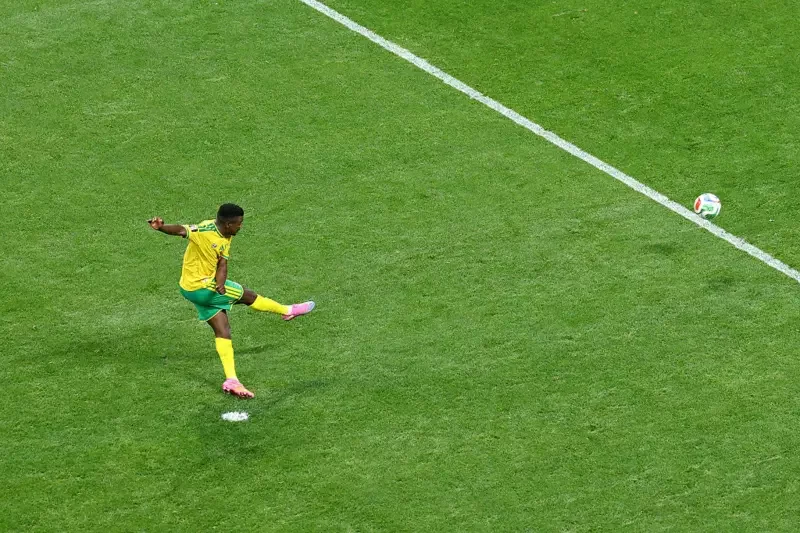
The breakthrough for South Africa finally came in the 81st minute. Teboho Mokoena stepped up to take a penalty, firing his spot-kick into the corner as the Czech goalkeeper dived the wrong way to level the score at 1-1. Both sides pushed for a late winning goal in the remaining regulation time, with further chances carved out at both ends of the pitch, but neither could find a decisive finish.
The final 1-1 scoreline means both Czechia and South Africa still retain a mathematical chance to qualify for the knockout stage of the tournament, heading into their third and final group stage fixtures with everything still to play for.
-
Derde helft WK 2026: Dag 8 – Mexico favoriet, Afrika viert historisch succes
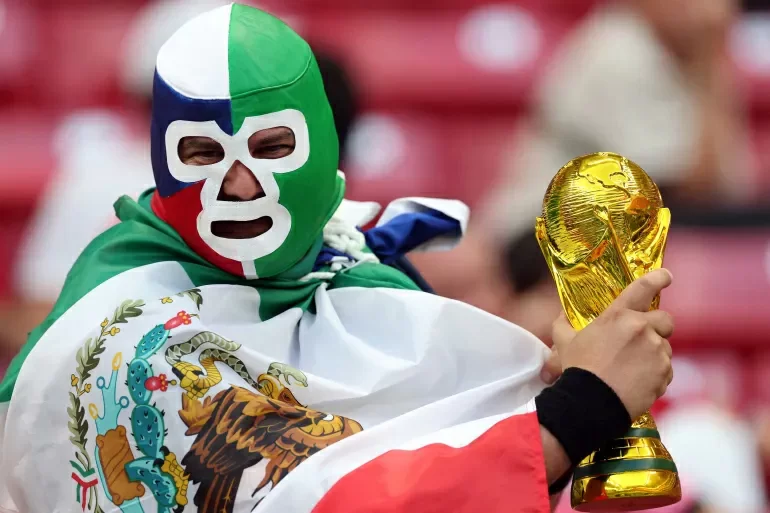
As the 2026 FIFA World Cup co-hosted across North America enters its eighth day, four high-stakes group stage fixtures are scheduled to take place on June 18, with teams fighting to secure their spots in the knockout round of the tournament. The day’s action kicks off at Atlanta Stadium in Atlanta, Georgia, where Czechia will square off against South Africa at 13:00 local time. Next, Switzerland will face Bosnia and Herzegovina at Los Angeles Stadium in California at 16:00, followed by a clash between co-host Canada and Qatar at Vancouver’s BC Place Stadium at 19:00. The headline matchup of the day will close out the schedule, as Mexico takes on South Korea at Guadalajara Stadium in front of a raucous home crowd at 22:00 local time. Ahead of kickoff, one Mexican supporter already captured global attention, posing in the stands with a replica of the FIFA World Cup trophy while wearing a traditional lucha libre wrestling mask.
Looking ahead to the day’s marquee fixture, Mexico enters its Group A matchup against South Korea with historical momentum on its side. The two sides have met twice previously at World Cup tournaments, with Mexico claiming victory on both occasions — most recently a 2-1 win during the 2018 World Cup in Russia. Both nations got their 2026 campaigns off to a strong start with opening match wins, boosting their early knockout stage hopes, but oddsmakers and analysts still peg Mexico as the clear favorite to pick up three points on home soil.
In the day’s opening fixture, Czechia and South Africa will meet for just the second time in senior international history. South Africa has a surprisingly strong track record against European opposition at the World Cup, including a famous 2-1 group stage win over eventual champions France during the 2010 tournament it hosted. The Bafana Bafana have dropped only one of their last four World Cup matches against European sides. For Czechia, this will only be its second World Cup match against an African opponent, and its first ended in a disappointing 2-0 loss to Ghana in 2006.
Switzerland and Bosnia and Herzegovina will lock horns for the first time ever at a World Cup, with the only prior meeting between the two nations coming in a 2016 friendly match hosted in Zurich. On that occasion, Bosnia and Herzegovina claimed a 2-0 win behind goals from legendary duo Edin Dzeko and Miralem Pjanic. Despite that past result, Switzerland is favored to claim all three points in their 2026 group stage encounter.
Closing out the day’s action before the Mexico-South Korea kickoff, co-host Canada will face Qatar, and historical trends heavily favor the North American side. In the three previous instances a World Cup host nation has faced an AFC (Asian Football Confederation) member at the tournament, the host has walked away with a win every time: Mexico beat Iraq in 1986, France defeated Saudi Arabia in 1998, and Russia also downed Saudi Arabia in the 2018 tournament opener.
Beyond Matchday 8’s scheduled fixtures, the tournament has already delivered no shortage of historic moments, breakout performances and talking points through its first week of action. The race for the Golden Boot, awarded to the tournament’s top goalscorer, already has a clear early leader: Lionel Messi netted a hat-trick in his opening match, putting him three goals clear of seven chasing players who have each scored one goal so far, including global superstars Kylian Mbappe of France, Erling Haaland of Norway and England’s Harry Kane.
One of the biggest historic milestones of the tournament so far came from the Democratic Republic of the Congo (DRC), which notched its first ever World Cup goal through Brentford forward Yoane Wissa in a stunning 1-1 draw with Portugal. The result marked DRC’s first World Cup appearance in 52 years, sparking jubilant celebrations among Congolese fans across the globe. Another standout early performance came from Colombia, which opened its Group K campaign with a confident 3-1 win over World Cup debutant Uzbekistan. Liverpool winger Luis Diaz was the star of the match, notching an assist for Daniel Munoz’s opening goal and scoring Colombia’s second after halftime. Uzbekistan briefly pulled level through winger Abbosbek Fayzullaev, but the South American side regained control to lock in three full points. The win gives Colombia a major early boost as it looks to reach the knockout stage after missing out on qualification for the 2022 World Cup in Qatar.
The first week of the tournament has already delivered several stunning upsets that have shaken up group standings. Beyond DRC’s draw with Portugal, Cape Verde earned a historic point against defending champions Spain in a surprise draw, while Iran and New Zealand also played out an unexpected stalemate in their opening fixture.
A widely noted positive theme of the 2026 tournament has been the growing diversity on display across competing squads. Top European sides including England, France, Spain and Sweden have fielded rosters made up of players from a wide range of religious, cultural and ethnic backgrounds, a trend that football experts have praised as a powerful positive example amid ongoing global societal debates around immigration and integration.
One of the more surprising storylines of the tournament’s opening week has been the slow start for Cristiano Ronaldo, who is making his record sixth World Cup appearance but has yet to find the back of the net, while his fellow global superstars Messi, Mbappe, Haaland and Kane all opened their goal accounts in their first matches.
Off the pitch, FIFA’s new heat protection policy, which adds formal drink breaks during matches to help players cope with high summer temperatures across North America, has sparked ongoing controversy. Critics argue that the breaks disrupt the natural flow of matches and give teams extra opportunities to make unplanned tactical adjustments, disrupting competitive balance. FIFA has defended the policy, emphasizing that player health and safety is its top priority.
This year’s tournament has also made history for African football, with a record six African nations qualifying for the final group stage. Despite facing pre-tournament challenges including logistical hurdles and visa processing issues for teams and fans, African sides have enjoyed overwhelming support from their large diaspora communities across North America. While the vuvuzela horns that became a global icon during the 2010 South Africa World Cup are not a common sight this year, the passionate energy and atmosphere brought by African fans remains as vibrant as ever.
-
Brede steun in De Nationale Assemblee voor verhoging AOV-uitkering
During ongoing parliamentary deliberations over the 2026 draft national budget in Suriname, lawmakers from multiple political factions have united behind a urgent call to raise the country’s universal old-age pension, the Algemene Oudedagsvoorziening (AOV), arguing that the current benefit level leaves thousands of elderly residents unable to cover basic living costs. The debate has also brought renewed scrutiny of ongoing irregularities linked to the country’s purchasing power support grant (KKV), with parliament demanding official clarity from the government on an active investigation into mismanagement of the program.
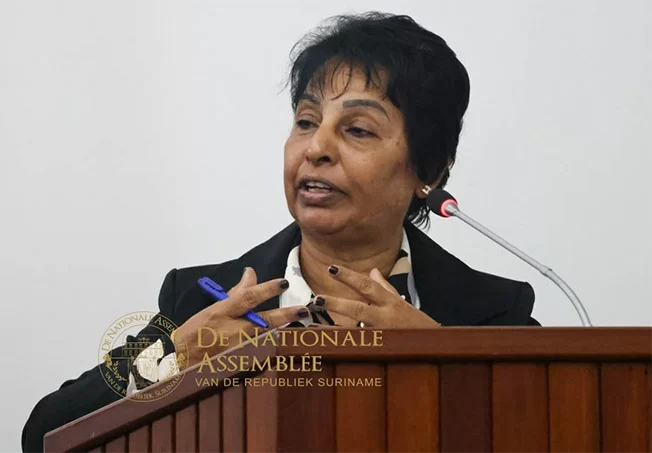
Harriët Ramdien, a member of parliament from the ruling VHP party, laid out the stark economic reality facing pensioners during the session. Ramdien noted that Suriname’s official poverty threshold already surpassed 7,000 Surinamese dollars (SRD) in 2025, yet elderly residents who rely solely on state support receive a combined total of just 5,000 SRD per month from the AOV and KKV grants combined. She urged the government to immediately raise the base AOV benefit to a minimum of 7,000 SRD, with additional incremental increases planned once public finances allow for further expansion of social spending.
Jerrel Pawiroredjo, leader of the opposition NPS faction, threw his full weight behind the proposal, emphasizing that elderly Surinamese rank among the most vulnerable groups in the country. Many can no longer work to generate supplementary income due to age, he explained, leaving them completely dependent on government support. To illustrate the severity of the crisis, Pawiroredjo shared a firsthand anecdote of an elderly woman who waited hours at an ATM for her AOV deposit, only to be unable to afford bus fare home after the transaction went through.
Raymond Sapoen, a lawmaker from the NDP party, acknowledged that no member of the National Assembly opposes raising social benefit rates, but called for responsible fiscal planning to avoid destabilizing national public finances. Sapoen stressed that the government must outline a clear, achievable timeline for increases not just for AOV, but also for the universal child benefit (AKB) and general social assistance, tying any expansion of spending to verifiable available fiscal space.
VHP parliamentarian Hakiem Lalmohamed added another layer of concern to the debate, highlighting unannounced cuts to KKV benefits for dozens of residents in the Commewijne district that were implemented without any official explanation. He called on the administration to publicly share the reasoning behind these cuts and immediately restore support to eligible recipients who lost their benefits improperly. Lalmohamed also joined the call for an AOV increase, noting that pre-election pledges had led many elderly Surinamese to expect a monthly benefit of at least 8,000 SRD.
By the close of the latest budget deliberation, multiple assembly members had formally called on the national government to release a transparent update on the feasibility of increasing AOV and other core social assistance programs, setting the stage for further negotiations as the draft budget moves through the legislative process.
-
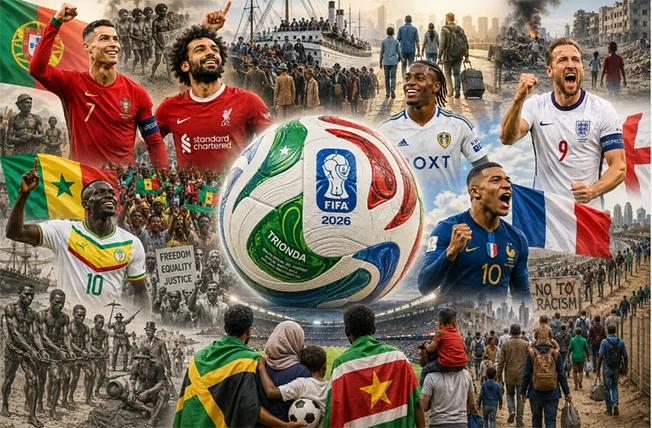
Derde helft WK 2026: Waarom voetbal veel meer zegt over mensen dan over doelpunten
The FIFA World Cup is far more than a 90-minute contest of athletic skill and tactical maneuvering. For billions of fans across the globe, this global quadrennial tournament is never experienced through just the lens of on-pitch action. Every individual watches the game filtered through their own personal background: ancestral history, cultural origin, family ties, core beliefs, and even deep-seated political or economic views. One fan may dissect every tactical shift and defensive formation, while another sees a decades-spanning historical confrontation. Some align their support with a national team based on their familial roots, others cheer for the side boasting their favorite star, and many simply tune in for the pure joy of beautiful, fluid soccer. In this way, the World Cup always reveals more about the people watching it than it does about the goals scored on the pitch.
Professional soccer analysts and coaches approach matches very differently than casual supporters. Where industry insiders focus on high pressing metrics, possession rates, off-ball running lanes, counterattack transitions, and tactical discipline, average fans often fixate on raw tension, emotional highs, and goals. A head coach may leave a 0-0 draw praising a perfectly executed game plan, while a supporter sitting on their couch at home will dismiss the same match as unbearably boring for its lack of scoring. But beyond the narrow framework of professional sports analysis, countless other perspectives shape how fans experience the tournament, and history plays a far larger role than most observers initially recognize.
Matches between nations with intertwined shared histories almost always carry extra emotional weight, not because current players bear responsibility for past events, but because fans bring their own family memories, intergenerational experiences, and historical traumas or connections to the game. Take for example a group stage matchup between Senegal and France: while some fans see only an exciting clash of talented teams, others cannot separate the contest from the historical relationship between a former colonial power and its one-time colony. The same dynamic plays out for any match between nations whose histories are deeply intertwined, turning the soccer pitch into a temporary meeting ground where the past and present collide.
Migration and diaspora communities also reshape how fans engage with the World Cup. Today, hundreds of millions of people live in a country different from the one where their parents or grandparents were born, creating often complex dual loyalties. A person may feel fully at home in their country of residence, while still retaining a deep emotional bond with the nation of their ancestry. This reality is visible across every World Cup: Moroccan fans based in the Netherlands, Turkish communities in Germany, Senegalese diaspora members in France, Mexican supporters in the United States, and countless other displaced and migrant communities all experience the tournament through a unique, personal lens shaped by their dual identity.
This dynamic is particularly visible in Suriname, where attitudes toward the Dutch national team split sharply along lines of history and connection. For many Surinamese fans, supporting the Netherlands feels natural, shaped by close family ties, shared cultural bonds, and the long legacy of Suriname-born players who have defined Dutch soccer for decades. For others, however, attitudes toward the Dutch side are shaped by the shared colonial history between the two nations, and current social and political debates ranging from migration policy to visa restrictions. For these fans, a simple group stage match becomes far more than a sporting contest — it becomes a mirror that reflects broader societal tensions and long-held grievances.
Beyond identity and history, some fans completely ignore national borders to center their support around individual star players. It matters little to these fans whether their favorite athlete plays for Argentina, Portugal, France or Brazil; what draws their support is the player’s individual skill, style of play, and charisma. For these supporters, the national team jersey becomes secondary to the unique talent of the soccer star they follow.
Still other fans care most about the entertainment value of the game, prioritizing the aesthetic beauty of skilled soccer over final results. They delight in technical masterclasses, unexpected attacking runs, spectacular goalkeeping saves, and the electric atmosphere of packed stadiums. For them, soccer is first and foremost a global form of entertainment, and how a match is played often matters more than who wins it.
A growing segment of fans and observers also engage with the World Cup through an economic lens. For this group, the multi-billion dollar industry behind modern soccer — from sponsor deals and broadcast rights to advertising revenue and the global transfer market — is just as much a part of the spectacle as 90 minutes of play on the pitch. For other fans, sports betting and match predictions add an extra layer of personal investment to every contest.
The World Cup’s unique magic lies in its ability to bring all these wildly different perspectives together. Billions of people tune in to watch the same match footage, but every individual walks away with a completely different story. No other global sport can stir up such a diverse range of emotions, memories and expectations across the entire planet.
Perhaps the most profound takeaway from every World Cup is this: the ball is round for everyone, the pitch is the same size for every team, the rules of the game never change — but the lens through which each person watches and experiences the tournament varies completely from one individual to the next. It is this diversity of perspective that makes soccer far more than just a game. It tells a story of who we are, where we come from, and the personal and collective histories we carry with us.
-
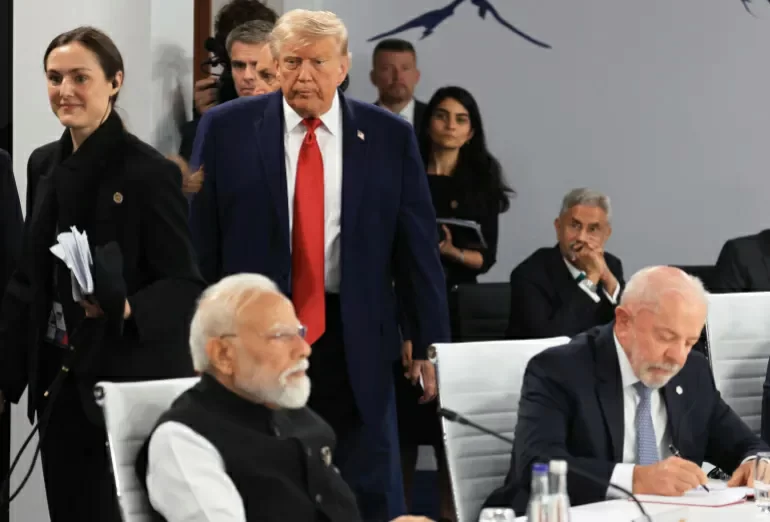
Lula waarschuwt Trump: ‘Bemoei je niet met Braziliaanse verkiezingen’
On the sidelines of the G7 summit held in Evian, France, Brazilian President Luiz Inacio Lula da Silva issued a clear public warning to the United States, demanding Washington stay out of Brazil’s upcoming presidential election scheduled for October. The rebuke came just hours after Lula held a face-to-face meeting with U.S. President Donald Trump on the summit’s sidelines, bringing long-simmering tensions over foreign influence in Brazil’s democratic process into the global spotlight.
Lula openly acknowledged the long-standing personal ties between Trump and the Bolsonaro political dynasty, which has emerged as the main opposition to his candidacy this cycle. Jair Bolsonaro, Brazil’s far-right former president, and his family have built close ties with Trump over the years, and his eldest son Flavio Bolsonaro is currently the leading opposition challenger for the presidency in the October vote.
“He can keep supporting Bolsonaro, the father, the son and the grandson. That is his preference, and I will not interfere in that,” Lula told reporters on the summit sidelines. But the Brazilian president drew an unambiguous line when it comes to U.S. involvement in the election itself: “Do not interfere in Brazil’s elections. This is a Brazilian issue, just as American elections are an American issue.” Lula emphasized that he only asks for basic mutual respect between the two sovereign nations.
Lula, who is running for a fourth presidential term, currently holds a steady lead in pre-election opinion polling. Flavio Bolsonaro, running on the ticket of the right-wing Liberal Party, is seeking to unseat the incumbent. Trump has already publicly thrown his support behind the Bolsonaro family, and has leveled sharp criticism at Brazil’s judicial system, even going so far as to impose sanctions on sitting justices of Brazil’s Supreme Court.
In recent months, the Bolsonaro dynasty has faced major legal setbacks. Jair Bolsonaro was convicted last month and sentenced to 27 years in prison for his role in organizing an attempted coup following the 2022 Brazilian presidential election. Another of Jair Bolsonaro’s sons, Eduardo Bolsonaro, was also convicted on charges of improperly influencing the U.S. government to advance his family’s political interests, a charge Eduardo has repeatedly denied.
During his remarks at the G7 summit, Trump dismissed Brazil as a “rough” and “politically dangerous” country, echoing his previous attacks on the nation’s democratic institutions. Lula pushed back forcefully against these claims, defending the integrity of Brazil’s electronic voting systems, which Trump has repeatedly questioned. In a surprising open challenge, Lula even offered to give Trump a personal demonstration of how the voting systems operate to prove their reliability.
Lula’s call for non-interference and mutual respect has set the narrative for the upcoming election, which is already under intense international scrutiny due to the well-documented close alignment between Trump and the Bolsonaro clan. The standoff underscores growing global concerns about foreign interference in democratic processes ahead of a series of high-stakes national elections across the world this year.
-
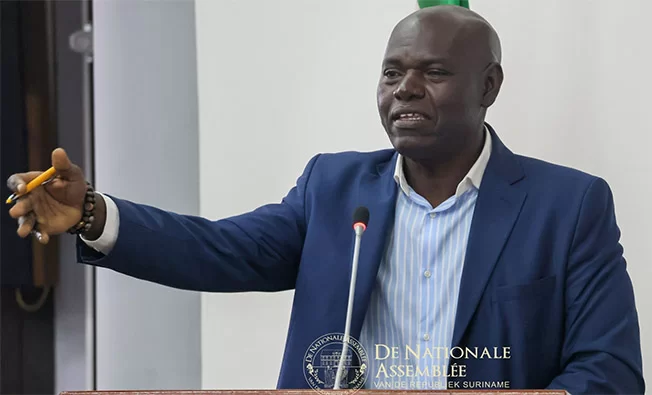
Asabina vraagt regering om opheldering over aangekondigde ontruimingsactie in 21 Bergi
A political leader in Suriname has formally called on the national government to share full details with parliament about a planned large-scale eviction operation in a high-risk gold mining region that has already seen deadly accidents in recent years. Ronny Asabina, who leads the BEP political faction, made the demand during ongoing parliamentary budget deliberations on June 18, according to local parliamentary sources. For several days, widespread rumors have circulated that the 21 Bergi mining zone in Suriname’s Matawai region will be completely cleared in a so-called “clean sweep” operation scheduled for Friday. Asabina drew lawmakers’ attention to the grim history of this same site: two years ago, a major gold mining disaster claimed the lives of 15 young Surinamese workers here. Just recently, two more miners were trapped in a landslide at the site, and Asabina confirmed the pair are still alive and currently receiving medical treatment at a local hospital. The BEP leader emphasized that any large, impactful operation of this nature requires public accountability, and the public has a right to know full details through their elected parliamentary representatives. Through the speaker of the National Assembly of Suriname, Asabina formally requested the administration clarify whether the planned eviction is officially approved by the government, and confirm whether the government fully backs the operation. Asabina told lawmakers he has received information that traditional local authorities in the Matawai region support the planned police-led clearing operation. After formal consultations with the Matawai community, the concession area was officially zoned for permitted gold extraction activities. Even so, Asabina stressed the current, unregulated operating conditions at the site pose an immediate life-threatening risk to anyone working there. He also issued a stark warning that rushing a large-scale eviction without proper preparation and public consultation could escalate into violent confrontations between authorities and miners. Repeating his core demand, Asabina called on the government to provide timely, comprehensive updates to parliament before the operation moves forward. Parliamentary budget discussions, during which the request was raised, are scheduled to continue the same day. No immediate response to the demand was reported from government representatives as of the early morning of June 18.
-
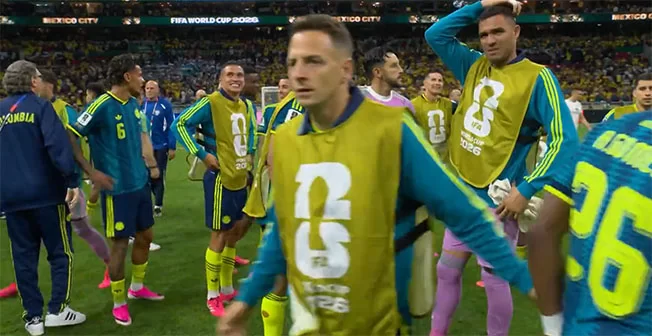
Derde helft WK 2026: Colombia verslaat WK-debutant Oezbekistan met 3-1
The 2026 FIFA World Cup opened its Group K action with a thrilling opening fixture at Mexico City’s iconic Estadio Azteca, where returning contender Colombia claimed a hard-fought 3-1 victory over World Cup first-timers Uzbekistan on 18 June. The South American side, which missed out on qualification for the 2022 Qatar World Cup, was forced to dig deep to overcome a resilient, well-organized display from the Central Asian underdogs, with the result only secured in the final minutes of the match by substitute Jaminton Campaz’s decisive header.
For Uzbekistan, Friday’s fixture marked a historic milestone: it was the nation’s first ever appearance at a men’s World Cup finals. Managed by former World Cup-winning Italy captain Fabio Cannavaro, the side refused to play the role of tournament pushovers against their more experienced opposition, putting in a performance that defied pre-match expectations of a one-sided contest.
From the opening kickoff, Colombia dictated the tempo of play and controlled the majority of possession, with attacking creators Luis Díaz, James Rodríguez and Daniel Muñoz constantly probing for gaps in Uzbekistan’s compact defensive block. The debutants held firm for most of the opening half, but finally conceded just before the interval, when Muñoz finished a well-worked Colombian attacking move to open the scoring and put his side 1-0 up going into halftime.
After the break, however, Uzbekistan showed impressive fighting spirit, pushing further up the pitch to press Colombia higher and create more attacking opportunities of their own. The pressure paid off when they found an equalizer, which injected new confidence into the debutant side and forced Colombia to completely reset their game plan to regain control. But Uzbekistan’s joy at leveling the scores did not last long: Colombia upped the intensity of their attacks, and Liverpool winger Luis Díaz – who had been a constant threat down the left flank throughout the 90 minutes – restored his side’s lead to make it 2-1.
From that point, Colombia began to manage the game far more comfortably, though Uzbekistan never dropped their intensity and continued searching for a second equalizer until the final whistle. The Central Asian side’s energy began to fade as the match wore on, however, and the experienced Colombian defense increasingly limited their space to create dangerous chances.
The final decisive goal came in the closing stages of the match. When a cross floated into the Uzbek penalty area, substitute Campaz rose above his marker to power a confident header past the goalkeeper, extending Colombia’s lead to 3-1 and putting the result beyond any doubt to seal three points for the South Americans on their opening day.
Despite falling to defeat, Uzbekistan can take significant pride from their competitive World Cup debut. The side put up strong resistance for large stretches of the match and proved they have the quality, organization and tactical discipline to compete at the highest level, giving them reason to be optimistic ahead of their remaining Group K fixtures.
For Colombia, the three points deliver an ideal opening to their 2026 World Cup campaign in Group K, which also features European heavyweight Portugal and African side DR Congo. After Portugal and DR Congo played out a 1-1 draw in their earlier opening fixture, Néstor Lorenzo’s Colombian side sit top of the group after the first round of matches, putting them in a strong early position to qualify for the knockout round of 16.
While the opening victory will boost confidence within the Colombian camp, the match also highlighted that Lorenzo’s side will need to maintain patience against compact, well-drilled opponents to turn their undoubted quality gap into positive results. For their part, Uzbekistan proved that their historic first World Cup qualification is far more than just a participation prize, and they are ready to compete against the world’s best teams for a place in the knockout stage.
-
Column: Voetbalbeleving vs hebzucht
The FIFA World Cup, football’s biggest global quadrennial tournament, has already been underway for several days as of this report. Whether you identify as a die-hard football fan or a casual observer, it is impossible to avoid the widespread coverage and cultural hype surrounding the event. Promotional campaigns launched months before the opening kickoff, and organizers have left no detail to chance in drawing mass audiences, either as active participants in surrounding events or watching spectators from home or stadium stands.
Today, however, the core appeal of the World Cup is no longer centered on the sport itself. Instead, it has been completely overshadowed by a massive, multi-billion-dollar commercial machine that has grown up around the tournament. The exorbitant price tag for global broadcast rights is just one visible example of how the world’s most-watched sporting event has transformed into a profit-driven enterprise.
Faced with sky-high costs to secure broadcasting rights, media companies have been forced to pack their coverage with more commercial sponsorship slots than ever before to recoup their massive investments. In multiple regions, this shift has brought direct changes for viewers: for example, audiences in the United Kingdom, who previously enjoyed free over-the-air access to the World Cup, now must pay a subscription fee to access match coverage. Even in smaller nations such as Suriname, the newly introduced in-match water break has become a dedicated slot for repeated advertising breaks, putting audiences face-to-face with nonstop commercial messaging.
While many viewers find the constant ad interruptions disruptive, broadcasters can hardly be blamed for leveraging every available opportunity to cover their soaring rights costs. This policy shift is a direct response to the exorbitant fees FIFA charges to air the tournament, leaving media outlets with few other options to turn a profit.
Another clear example of FIFA’s relentless focus on maximizing revenue can be seen in the staggering prices for match tickets. Reports confirm that through third-party intermediaries, the organization has offered tickets at jaw-dropping price points that are effectively out of reach for most local residents. This strategy has pushed the World Cup toward elitism, reserving access to in-person experiences only for wealthy fans. These sky-high ticket costs stand in stark contrast to the low average incomes that the majority of the host region’s population lives on, particularly for working-class communities in Mexico, where many households struggle to cover basic monthly expenses on modest salaries. While local parents struggle to make ends meet on meager wages, wealthy international fans flood into the country with premium tickets to experience top-tier football in person.
It is not just fans that bear the cost of this commercial transformation: the players themselves are directly disadvantaged by FIFA’s profit-focused changes. When a team finds its rhythm and builds momentum after a cautious opening to a match, play is abruptly halted to make room for the scheduled commercial water break. While players use the pause to rehydrate and receive tactical instructions from coaching staff, this break creates an uneven playing field. Wealthier national federations with larger, more sophisticated coaching teams can use the break to adjust tactics in real time, gaining a competitive edge that lower-budget teams cannot match. Even more critically, an unexpected mid-match break can completely derail a team’s on-field momentum, leaving the side that was gaining advantage at a significant disadvantage for the remainder of play.