标签: Suriname

苏里南

  • Minister Abiamofo: Local content bij Zijin groeit, aandeel Surinaamse bedrijven neemt toe

    Minister Abiamofo: Local content bij Zijin groeit, aandeel Surinaamse bedrijven neemt toe

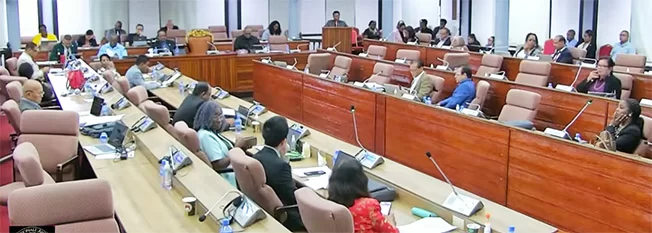
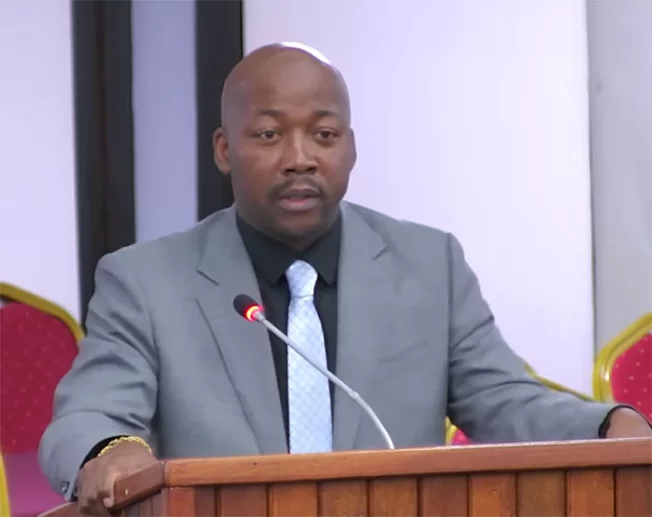
    Suriname’s growing local engagement in its gold mining sector has taken a positive step forward, with new data showing increasing local employment, rising local leadership representation, and growing contract values for domestic businesses at Chinese mining firm Zijin. Minister David Abiamofo of the Ministry of Natural Resources shared these updated figures during budget debates in the National Assembly of Suriname Friday, outlining steady progress in the company’s local content initiative.

    According to Minister Abiamofo, Zijin currently provides direct employment to roughly 1,690 Surinamese workers across its operations. An additional 1,400 Surinamese earn indirect income through the company’s network of local suppliers and contractors, meaning the firm supports a total of more than 3,000 local jobs across the country.

    The most notable gains have come in leadership and technical roles, which have historically been dominated by foreign personnel at large international mining projects in the country. Abiamofo confirmed that 25% of all senior management positions at Zijin’s Suriname operations are now held by local Surinamese professionals. That share jumps to 49% for mid-level management roles, while 95% of frontline supervisors and 83% of technical staff are recruited from the local workforce. All entry-level operational roles and internal support positions are currently filled exclusively by Surinamese workers.

    Minister Abiamofo acknowledged that a small number of highly specialized positions still rely on foreign experts, due to the specific experience and industry certifications required for these niche roles that are not yet widely available among the local workforce. However, he emphasized that this is a temporary gap that will continue to narrow as local workers gain more on-the-job experience and specialized training through the company’s capacity building programs.

    Beyond direct employment, the value of contracts awarded to Surinamese domestic businesses has also increased considerably, climbing from $163 million U.S. dollars to $192 million U.S. dollars in recent years. Correspondingly, the share of contracts going to foreign-based companies has declined as local suppliers have expanded their capabilities to meet the mining firm’s needs.

    Despite the positive progress, Minister Abiamofo stressed that local businesses must maintain competitive standards to retain these opportunities. “Quality, reliability, and competitiveness remain the deciding factors for contract awards,” he said. “Local companies cannot rely solely on long-standing working relationships to secure ongoing work; they must continue to deliver value that matches or exceeds what international firms can offer.”

    The updates come as Suriname continues to push for greater local benefits from its natural resource sector, a core driver of the country’s national economy. Local content requirements have become a key policy priority for the government, aimed at ensuring resource extraction delivers long-term inclusive economic growth rather than just short-term revenue.
  • Derde helft WK 2026: Curaçao sleept punt uit het vuur tegen Ecuador: 0-0

    Derde helft WK 2026: Curaçao sleept punt uit het vuur tegen Ecuador: 0-0

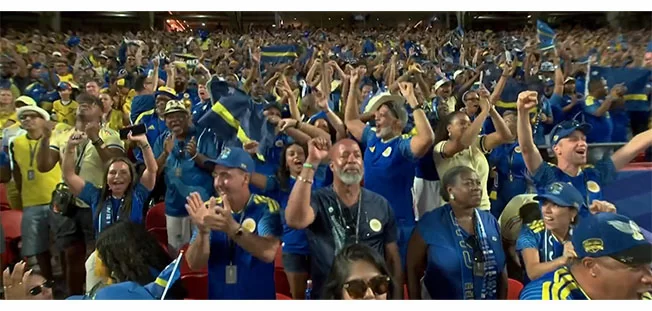
    A dramatic Group E CONCACAF Gold Cup clash in Kansas City ended goalless on June 20, as Curaçao put on a defensive masterclass to hold Ecuador and leave both nations still in contention for a spot in the tournament’s next round. Coming into the fixture, both sides had dropped points in their opening group matches, making a result critical to retain any hope of advancing. Officiated by Chinese referee Ning Ma, the matchup was always poised to be an open, attacking contest from the opening whistle, and it delivered on that promise.

    Ecuador got off to a blistering start, nearly grabbing an early lead within the first three minutes. Star forward Enner Valencia got a clean shot off toward goal, only for his effort to deflect off Curaçao goalkeeper Eloy Room, bounce off the crossbar, and clear the bar. That early chance set the tone for the entire 90 minutes: Ecuador dominated possession, launched 16 shots on goal, but failed to find the back of the net, with every attempt either blocked by Curaçao’s defense, saved by Room, or sent narrowly off target.

    Curaçao’s first dangerous threat came in the 8th minute, when Sherel Floranus broke past Ecuador’s backline on a counterattack, but his finish drifted just wide of the post. In the 14th minute, Pedro Vite had one of Ecuador’s best chances of the first half to break the deadlock, but his low shot curled just inches past the far post. Six minutes later, Valencia had a golden opportunity from point-blank range, but Room reacted quickly to stop the close-range effort, securing the clean sheet through the first half. Before halftime, Curaçao had its own best opening of the half, as Junior Bacuna found space in the box, but his shot went wide of Ecuador’s goal. When the halftime whistle blew, the score remained locked 0-0, with Room putting in a man-of-the-match first-half performance to keep his side level.

    The second half followed the exact same pattern as the first: Ecuador continued to throw men forward, piled on the pressure, and generated multiple chances, but still could not beat Room. In the 50th minute, Moises Caicedo tested Curaçao’s goalkeeper with a stinging long-range shot, but Room read the effort well and gathered it comfortably. After the hour mark, Curaçao began to push forward more aggressively, creating a handful of chances of its own against an Ecuador side committed to all-out attack, but neither side could find the breakthrough. In the final 15 minutes, Ecuador launched a relentless full-scale offensive to find a late winner, but Curaçao’s defense held firm, blocking every attempt and clearing every dangerous cross. When the final whistle blew, the scoreline remained unchanged, finishing 0-0.

  • Gopal wil sportaccommodaties weer onder beheer van overheid; forse investeringen

    Gopal wil sportaccommodaties weer onder beheer van overheid; forse investeringen

    Suriname’s Minister of Youth Development and Sports, Lalinie Gopal, has announced a sweeping policy shift that will return most sports venue management to government oversight, alongside a multi-million dollar infrastructure upgrade program aimed at revitalizing the country’s sports sector.

    Speaking during parliamentary debate on the ministry’s budget in the National Assembly, Gopal argued that the current model, which has handed control of most public sports facilities to private foundations over recent decades, is no longer sustainable and is holding back the sector’s growth. She told lawmakers that real-world implementation of the private foundation model has repeatedly shown that public interest is not always prioritized by independent managers, creating systemic barriers to equitable access and long-term development.

    Under the proposed new management framework, Gopal said the government will reassert a central coordinating role to unlock new investment, while structuring revenue sharing to benefit both state authorities and facility operators. The preliminary plan outlines a 60/40 revenue split, with 60 percent of all generated income going to on-site managers and the remaining 40 percent allocated to the national government. Gopal emphasized that clear government ownership and governance is a critical prerequisite for attracting international donor funding, noting that many global funders have been unwilling to commit resources to projects where management and ownership structures remain ambiguous.

    The policy overhaul is designed to address longstanding gaps in maintenance, improve management transparency, and lay the groundwork for sustainable growth of national sports infrastructure, according to the minister.

    Alongside the management restructuring, Gopal unveiled a large-scale investment package to upgrade existing facilities and build new community sports spaces across the country. The centerpiece of the infrastructure program is the full rehabilitation of seven artificial turf pitches located in different regions, alongside planned renovations to multiple existing sports complexes, construction of new public swimming pools, and modernization of outdated venues.

    Two new multi-purpose community centers are also currently under development in the Para and Commewijne districts, designed to host not only competitive and recreational sports, but also youth programming and broader community development activities. Additional investments will go toward upgrading public playgrounds and purchasing new equipment for national sports federations, with the goal of lowering barriers to grassroots sports participation and giving local clubs the resources they need to expand their programming.

    Gopal highlighted the upcoming rehabilitation of the public swimming pool in Nickerie as a key early project, noting that work is set to begin shortly thanks to funding from a joint development partnership with the government of India.

    Ultimately, the minister framed the dual reforms of management restructuring and infrastructure investment as a core investment in Suriname’s youth. By upgrading facilities and standardizing governance, the government aims to boost national sports participation rates, expand development opportunities for young athletes, and ensure equitable access to quality sports infrastructure across all regions of the country.

  • Ramsaran: liever geïnvesteerd in luchttransport dan in marineschip Barracuda

    Ramsaran: liever geïnvesteerd in luchttransport dan in marineschip Barracuda

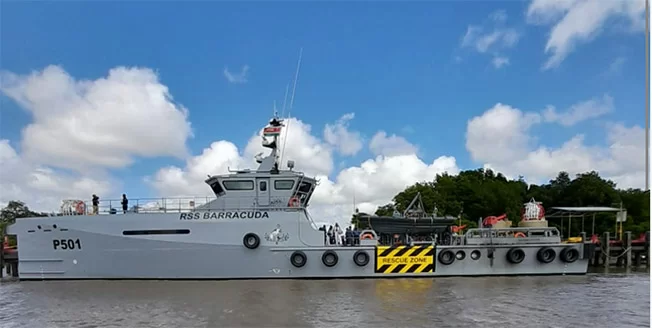
    During a budget debate held in Suriname’s National Assembly on June 20, Defence Minister Uraiqit Ramsaran has made a striking public remark regarding the country’s marine vessel the Barracuda, acknowledging that the €17 million-plus investment in the ship would not have been his top priority if the decision had been left to him. This comment came in response to questions from multiple assembly members focused on the acquisition, total costs, and operational deployment of the vessel, which remains active in maritime operations to this day.

    Minister Ramsaran detailed the financial structure of the deal, explaining that the Barracuda was acquired through a five-year lease-to-own agreement with a total cumulative value of approximately €17.3 million. Under the terms of the contract, the country is obligated to pay roughly €2.3 million in annual lease installments over the contract period. He further confirmed that the acquisition did not follow the standard open tender process, instead proceeding through an alternative, non-competitive procurement route.

    While the minister confirmed that the Barracuda is currently used for surveillance and patrol missions across Suriname’s territorial waters and exclusive economic zone, he made clear that he would have directed the same budget toward different national defence priorities. “Based on my own observations and insights, given the limited resources available to us, I would almost certainly have set different priorities,” Ramsaran told the assembly.

    Among the alternative investments Ramsaran highlighted are expanded air transport capabilities, specifically the purchase of a dedicated transport or cargo plane. Such an asset, he argued, would allow the military to move personnel, equipment, and supplies far more quickly to remote outposts located in Suriname’s inland regions. The country’s vast geographical distances and reliance on variable water levels for overland and river travel make expanded aerial logistics capacity a critical need for national defence, Ramsaran added.

    The minister emphasized that Suriname’s national defence sector continues to face massive unmet investment needs, requiring that every available budget allocation be used as efficiently as possible to boost the overall operational capacity of the country’s armed forces. Despite his critical remarks about the original investment decision, Ramsaran stressed that the Barracuda remains a fully functional and active asset. As recently as the past week, the vessel took part in a joint counter-illegal fishing operation that also resulted in the seizure of a large quantity of illegal narcotics, which has since been transferred to competent law enforcement authorities for further processing.

  • Derde helft WK 2026: Duitsland verstevigt koppositie na thriller tegen Ivoorkust

    Derde helft WK 2026: Duitsland verstevigt koppositie na thriller tegen Ivoorkust

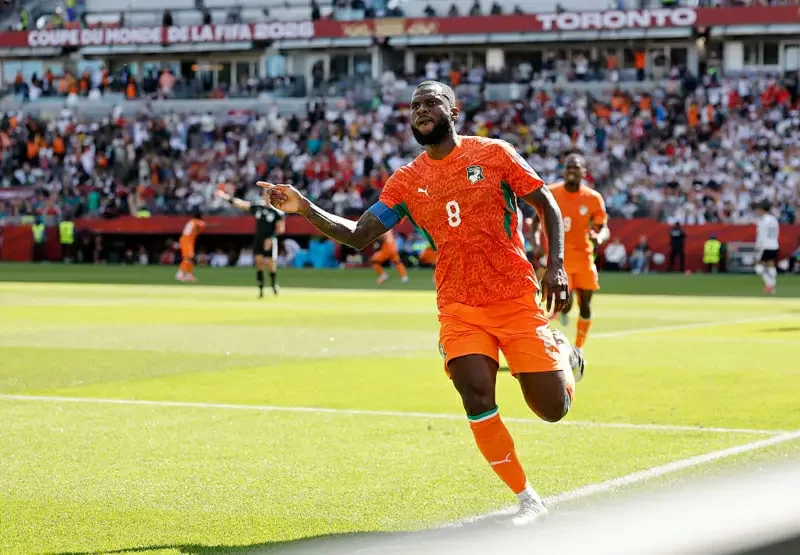
    The 2026 FIFA World Cup Group E stage delivered another instant classic on Wednesday, as four-time world champions Germany pulled off a heart-stopping 2-1 comeback victory over Ivory Coast at Toronto Stadium, booking their spot in the knockout round with a stoppage-time winner from substitute Deniz Undav.

    Germany entered the match as heavy favorites, and made their attacking intent clear within the opening 30 seconds, when Arsenal forward Kai Havertz carved out a dangerous chance inside the Ivory Coast penalty area. For most of the first half, the German side dominated possession and built consistent pressure, but a solid Ivory Coast defense held firm, and the underdogs struck against the run of play to stun the crowd. The breakthrough came in the 30th minute, courtesy of 19-year-old debutant winger Yan Diomande, who turned in a breakout performance on the world stage. Diomande produced a blistering run down the left flank, beating his marker with a sharp skill to deliver a low cross into the box. After Amad Diallo’s original shot was blocked by a German defender, the ball fell kindly to Franck Kessie, who fired a precise, powerful finish into the bottom left corner to put Ivory Coast ahead. The four-time world champions went into halftime trailing 1-0, after seven minutes of first-half stoppage time failed to yield an equalizer. Havertz thought he had leveled the score right before the break, but his goal was correctly ruled out for a foul on Ivory Coast defender Emmanuel Agbadou. A long-range effort from Bayer Leverkusen star Florian Wirtz, set up by a silky run from Jamal Musiala, was also turned around the post by Ivory Coast goalkeeper Yahia Fofana. Despite Germany’s relentless pressure, Ivory Coast held their lead, looking dangerous on the counter through the pace of Diallo and Diomande, who repeatedly stretched the German backline.

    The second half opened with an early change for Germany, as Antonio Rüdiger came on to replace injured center-back Nico Schlotterbeck. Germany continued to push feverishly for an equalizer, but struggled to break through Ivory Coast’s organized defense, while the African side squandered multiple chances to extend their lead on the break.

    Just after the hour mark, Germany head coach Julian Nagelsmann turned to his bench, making a triple substitution to inject fresh energy into his side, bringing on Jamie Leweling, Deniz Undav and Nadiem Amiri. The change paid off almost immediately: in the 68th minute, Amiri delivered a pinpoint cross into the box, where Undav timed his run perfectly to beat the offside trap and slot home a composed finish to draw Germany level.

    The equalizer shifted the momentum firmly in Germany’s favor, as the packed Toronto crowd roared the side on. Both sides made additional substitutions after the cooling break, but Ivory Coast suffered a major blow when key defender Wilfried Singo was forced off with a hamstring injury.

    The closing stages produced end-to-end, nail-biting action. Ivory Coast had a golden chance to retake the lead through winger Simon Adingra, but he could not control the ball on the break and wasted the opportunity. Germany pushed hard for a winner, forcing a series of brilliant saves from Fofana, but could not find the breakthrough until late stoppage time. In the 94th minute of the match, Undav latched onto a pass from Felix Nmecha, turned smartly away from his marker inside the box, and fired an unstoppable shot past Fofana into the back of the net.

    The stadium erupted in celebration, while Ivory Coast’s players collapsed to their knees in dejection. The dramatic late winner secured all three points for Germany, who now top Group E with six points from two matches and have secured their place in the knockout stage. Ivory Coast drop to second place on three points, with both Ecuador and Curaçao yet to pick up a point in the group. The Group E qualification race remains wide open, as Ivory Coast will still have a chance to qualify for the next round in their final group match, but leave Toronto heartbroken after giving up a lead in the final seconds of stoppage time.

  • Abiamofo: Wanbetaling overheid aan SWM belemmert uitbreiding drinkwatervoorziening

    Abiamofo: Wanbetaling overheid aan SWM belemmert uitbreiding drinkwatervoorziening

    Planned expansions to Suriname’s national drinking water network are facing significant delays, driven by a combination of crippling unpaid utility bills from state agencies and chronic underfunding, Natural Resources Minister David Abiamofo has confirmed. Speaking Friday during budget debates in the country’s National Assembly, Minister Abiamofo outlined the multiple overlapping challenges that have derailed the timeline for improving access to clean piped water across the nation.

    At the top of the list of issues is the severe financial strain weighing on the Suriname Water Supply Company (SWM), the public utility responsible for managing and expanding the country’s drinking water infrastructure. Minister Abiamofo revealed that government agencies collectively owe SWM approximately 100 million Surinamese dollars in unpaid water bills, a sum large enough to move several stalled expansion projects to completion if it were collected. Beyond this accumulated debt, the minister added that the annual budget allocated to national drinking water projects has long been structurally insufficient to meet the country’s needs.

    As a result of the funding gap, only a small number of communities will be connected to the national drinking water network this year, even as expansion projects launched between 2023 and 2025 remain incomplete. “With the amount allocated in the current budget, we can only connect a handful of communities,” Abiamofo told lawmakers.

    The minister also noted that the national government is continuing ongoing efforts to secure additional financing from multilateral development organizations, bilateral international partners and private sector investors to close the funding gap. Beyond core budget shortfalls and unpaid public sector debt, Abiamofo highlighted two additional barriers putting extra pressure on SWM’s limited resources.

    First, many new residential subdivision developers fail to complete the required water connection infrastructure before selling lots and moving in residents. When homeowners are left without access to piped water, they turn to SWM to complete the work, forcing the already cash-strapped utility to cover unplanned costs. Second, low water pressure across many regions of Suriname remains a persistent, well-documented problem. While the government has already developed a formal Water Supply Masterplan to address this and other longstanding infrastructure issues, full implementation of the plan is entirely dependent on securing enough outside funding to move forward.

  • Derde helft WK 2026: Nederland verplettert Zweden met 5-1 in Groep F

    Derde helft WK 2026: Nederland verplettert Zweden met 5-1 in Groep F

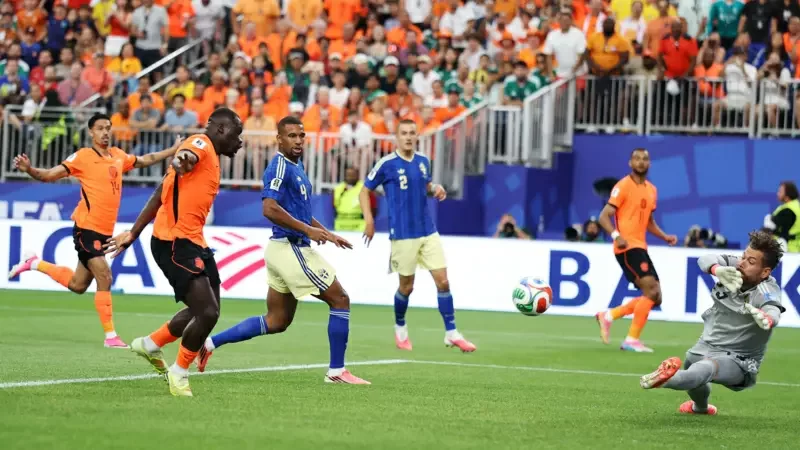
    June 20, 2026 — Group F action at the 2026 FIFA World Cup delivered a dominant display from the Netherlands on Saturday, as Louis van Gaal’s side ran out convincing 5-1 winners over Sweden at Houston’s packed stadium. The commanding result strengthens the Netherlands’ grip on first place in the group, putting them well on track for a knockout stage berth, while Sweden faces a significant uphill battle to qualify for the next round.

    The Oranje seized control of the match from the opening whistle. Forward Brian Brobbey stole the early spotlight, netting two clinical goals within the first 17 minutes, both finished off perfectly after low, pinpoint crosses from winger Cody Gakpo and right-back Denzel Dumfries. The rapid 2-0 advantage set the tone for the entire half, forcing Sweden into a defensive shell for most of the opening 45 minutes.

    Sweden pushed hard to fight their way back into the contest, and earned their first clear chance in the 41st minute, when Yasin Ayari unleashed a powerful long-range effort from just outside the penalty area that sailed just over the crossbar. Two minutes later, Ayari accidentally handled a Dumfries cross as he attempted to intercept, clearing the path for the Netherlands to easily clear the danger. Just before halftime, Gustaf Lagerbielke powered a header on target from a sharp cross, but the linesman’s flag ruled the effort out for offside. In first-half stoppage time, Netherlands goalkeeper Bart Verbruggen produced a series of impressive stops to keep Sweden off the scoresheet, headlined by a brilliant save on a free kick from Viktor Gyokeres. The Netherlands went into halftime holding a 2-0 lead, thanks to a solid first half defined by incisive attacking and a reliable defensive performance.

    After the break, Netherlands manager Ronald Koeman injected fresh energy into the side by bringing on Crysencio Summerville to replace Donyell Malen. It took less than two minutes for the substitute to make an impact: he pulled off a blistering attacking run, combined neatly with Dumfries, and played a perfect pass into the path of Gakpo, who tapped in the simplest of goals to extend the lead to 3-0. With this strike, Gakpo surpassed Dutch legend Johan Cruyff for the most World Cup goals in Dutch history.

    Sweden refused to drop their intensity, continuing to push forward, but Verbruggen remained in inspired form, turning away multiple dangerous efforts to keep the Swedish goal tally at zero. In the 54th minute, a giveaway from Alexander Isak sparked a blistering Netherlands counterattack: Summerville found Gakpo in space, and the winger drilled a low, hard shot past Sweden goalkeeper Robin Olsen to make the score 4-0. This strike also marked the 100th goal of the entire 2026 World Cup, coming in just the tournament’s 33rd match.

    Even with a substantial three-goal deficit, Sweden remained a constant threat on the break. In the 59th minute, Manchester United winger Anthony Elanga gave the Scandinavian side a glimmer of hope, producing a sublime first touch to lift the ball over a defender before finishing clinically to pull one back, making the score 4-1. Despite the concession, the Netherlands retained full control of the match.

    Following a mandatory water break for players amid Houston’s warm conditions, the Netherlands brought on Memphis Depay to replace goalscorer Brobbey, marking a successful return from injury for the experienced forward. Sweden cranked up the attacking pressure, but the Netherlands defense held firm, with Ayari picking up a yellow card for a rough tackle. The match grew scrappy in the final third as Sweden pressed for a second goal, but Summerville continued to create danger for the Oranje on the counter. Sweden added extra attacking impetus by bringing on Taha Ali, but Verbruggen stayed alert to turn away long-range efforts and dangerous corner kicks.

    In the 89th minute, Summerville capped off his phenomenal substitute performance with a goal of his own. A clever feint created just enough space for the Leeds United winger, who placed a calm low shot into the far corner to extend the Dutch lead to 5-1.

    After five minutes of stoppage time — which included a late cameo for Noa Lang and an early exit for Gakpo, who left the field with an ice pack wrapped around his arm — the final whistle blew to confirm a resounding Dutch victory. The only minor sour note for the Netherlands was a late injury to Summerville, who picked up an accidental knee to the body in the closing moments, though the setback did not dampen the team’s post-match celebrations.

    With this dominant performance, the Netherlands sent a clear message to the rest of the 2026 World Cup field: the Oranje are legitimate title contenders, playing a brand of fast, sharp, clinical attacking football that gave Sweden no path back into the contest.

  • Derde helft WK 2026: Op dag 10 – Nederland favoriet tegen Zweden

    Derde helft WK 2026: Op dag 10 – Nederland favoriet tegen Zweden

    As the 2026 FIFA World Cup enters its tenth matchday, four high-stakes group stage encounters are set to take center stage across North America, while off-pitch developments and early knockout qualification have already begun to shape the narrative of the expanded 48-team tournament.

    The headline fixture of the day will see European heavyweights Netherlands and Sweden face off in Houston, Texas, kicking off at 14:00 local time. The two sides have met 20 times previously, most recently in 2017 World Cup qualifying, where the Dutch secured a 2-0 win. Sweden has only claimed one victory in its last seven matches against the Netherlands, and despite an opening-round win over Tunisia, the Oranje enter the clash as clear favorites.

    Following the Houston clash, Germany will take on Ivory Coast in Toronto, Canada, at 17:00 local time. The two nations have only met once before, a 2-2 friendly draw back in 2009. Germany boasts a strong historical record against African sides at World Cup finals, having lost just once in eight previous meetings. While the four-time champions are favorites to claim three points, Ivory Coast is chasing history, aiming to secure its second ever World Cup victory at a single tournament.

    The evening fixture will see Ecuador face CONCACAF side Curaçao in Kansas City at 21:00 local time, in what will be the first ever meeting between the two nations. Ecuador heads into the match unbeaten in its last 13 encounters against CONCACAF opponents, with seven wins and six draws, making them the heavy favorites. Even so, the tournament has already delivered a string of unexpected results, leaving the underdog Curaçao side with reason to believe they can pull off an upset. The final match of matchday 10 will kick off at 01:00 on June 21 in Monterrey, as Tunisia takes on Asian side Japan.

    Japan has dominated the head-to-head record against Tunisia, claiming five wins in six previous encounters, with Tunisia’s only win coming in a 2022 friendly match. Based on Japan’s strong performances through the opening round of group matches, the Blue Samurai are widely expected to claim all three points. Ahead of the crucial clash, Tunisia manager Hervé Renard, appointed after a 5-1 opening-round defeat to Sweden, has urged his side to draw inspiration from Cape Verde’s surprise draw against Spain, noting that underdogs can compete if they stay organized and disciplined. Tunisia must avoid defeat to keep their knockout qualification hopes alive.

    Off the pitch, a number of major developments have already emerged from the tournament in recent days. On Wednesday, the United States men’s national team secured a 2-0 victory over Australia, booking their place in the knockout stage even without star captain Christian Pulisic, who missed the match with a calf injury. Paraguay’s later win over Turkey also confirmed the United States finished top of Group D. The result highlighted the growing depth of the US squad, who comfortably qualified despite being without their leading attacking threat. That result also saw Turkey and Haiti become the first teams eliminated from the expanded 48-team tournament.

    In other Group E action, Brazil moved one step closer to knockout qualification with a dominant 3-0 win over Haiti. Matheus Cunha scored a brace, while Vinicius Junior contributed a goal and an assist to seal the win. Haiti’s defeat ended their qualification hopes, and Brazil manager Carlo Ancelotti confirmed that star forward Neymar is on track to recover from injury in time for the side’s final group stage match against Scotland.

    Controversy has emerged following Algeria’s 3-0 defeat to Argentina, with Algerian officials confirming they have filed an official complaint to FIFA over multiple controversial refereeing decisions in the match. The complaint centers on an early incident where Lionel Messi appeared to catch Algerian captain Aissa Mandi on the calf from behind, but received no card or punishment, before Messi went on to score a hattrick. Algeria also raised concerns over an unpunished foul on one of their players by Argentina midfielder Alexis Mac Allister in the second half.

    A separate political controversy emerged when the U.S. Department of Homeland Security linked the USMNT’s knockout qualification to an immigration policy message. Ahead of the Australia match, DHS shared a social media graphic featuring three American players with the slogan “Defend the homeland. One nation. One team.” After the win, the department shared a second image of the team in front of a border fence captioned “Build the wall.” The posts drew widespread attention, as nearly half of the 26 players in the US 2026 World Cup squad are first-generation Americans or have close family ties abroad, and six players were born outside of the United States.

    Other offbeat news from the tournament includes the viral rise of Osito, an eight-year-old Mexican rescue dog who has captured fans’ hearts across social media. Dressed in a Mexico national team shirt and sunglasses, Osito went viral after he was spotted arriving at the tournament’s opening match in the basket of his owner’s cargo bike. Norwegian fans have also drawn attention for their traditional Viking chants, which have been echoing through New York’s Times Square as the country celebrates its first World Cup appearance in 28 years. And in a historic moment for tournament rules, Paraguay midfielder Miguel Almirón became the first player to receive a red card under the tournament’s new new mouth-covering rule, after covering his mouth during an altercation with Turkey’s Mert Muldur in first-half stoppage time. The VAR team confirmed the referee’s decision to issue the straight red card.

    With ten days of play completed, the race for knockout spots continues to intensify, with matchday 10 set to deliver more decisive results in the expanded 2026 World Cup.

  • Wijnerman erkent inconsistenties in begrotings- en schuldcijfers

    Wijnerman erkent inconsistenties in begrotings- en schuldcijfers

    Suriname’s Minister of Finance and Planning Adelien Wijnerman has publicly acknowledged conflicting numerical discrepancies across three key government fiscal documents: the 2026 national budget, annual financial plan, and national debt schedule. The admission came during Friday’s parliamentary budget debate, after multiple members of the National Assembly raised questions about mismatched spending and revenue figures across the policy papers.

    Wijnerman explained that the inconsistencies stemmed from the documents being drafted at separate time points, rather than intentional misreporting. She has committed to updating all conflicting figures and submitting revised versions of the documents to the National Assembly before the second round of budget deliberations gets underway. Government ministers will continue responding to parliamentary questions on Monday, with seven cabinet members having already spoken to lawmakers as of Friday’s session.

    The minister laid out the core 2026 fiscal projections to the assembly, confirming that total state revenues are forecast at roughly 65 billion Surinamese dollars (SRD), while total annual expenditures are projected at approximately SRD 77 billion. This produces a projected budget deficit of SRD 12.8 billion, equal to 5.1% of the country’s gross domestic product.

    Wijnerman also noted that Suriname’s current debt-to-GDP ratio remains above the legal cap of 60% set by national law. Under recent legislative changes, the country has until the end of 2029 to bring the national debt back down to the 60% threshold. The government plans to meet this target through a combination of scheduled debt repayments, constrained fiscal deficits, sustained economic growth, and prioritizing financing from multilateral and bilateral institutional sources.

    For the second half of 2026, the minister projected total debt service obligations will reach roughly SRD 9.8 billion. Around SRD 6 billion of that total will go toward foreign interest payments and principal repayments, while SRD 4 billion will cover domestic debt obligations. Wijnerman added that approximately 19% of the government’s total projected 2026 revenue will be allocated to debt interest and repayment costs.

    She clarified that all funds reflected in the current debt plan are tied to previously finalized loan agreements, not new borrowing. The funds are earmarked for program-related spending in the 2026 fiscal year. The updated national debt plan will be submitted to parliament alongside the revised budget documents ahead of the next debate round.

  • COVAB en Streekziekenhuis Marowijne starten samenwerking voor zorgopleidingen

    COVAB en Streekziekenhuis Marowijne starten samenwerking voor zorgopleidingen

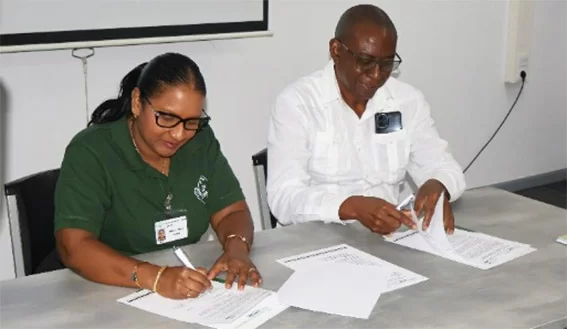
    A groundbreaking public health partnership was signed on Friday in Suriname, designed to expand access to local healthcare training and address longstanding staffing gaps in rural regional care. The agreement was formalized by Angèle A. Wallerlei-Kumbangsila, director of EFS College COVAB, and Henk Aviankoi, director of Streekziekenhuis Marowijne (Regional Hospital Marowijne), with Suriname’s Minister of Public Health, Welfare and Labor André Misiekaba in attendance.

    For years, Suriname’s healthcare education and clinical capacity have been heavily concentrated in the capital city of Paramaribo, creating a critical shortage of qualified medical personnel in outlying districts like Marowijne. This new collaboration forms a core part of the national government’s policy to decentralize healthcare training, with the explicit goal of improving the resiliency and quality of regional care across the country.

    Under the terms of the partnership, students from Marowijne and neighboring districts will now be able to complete their full healthcare training close to home, eliminating the need to relocate to Paramaribo for their education. EFS College COVAB will lead the academic instruction component of the program, while the Marowijne Regional Hospital will serve as an on-site practical training and clinical learning hub for participating students.

    Project organizers emphasize that training local students in their home regions significantly increases the likelihood that graduates will remain and work in the area after completing their program. This pattern is consistently supported by global healthcare workforce data, which repeatedly shows that learners trained in their native rural or regional communities are far more likely to build long-term careers in those same underserved areas.

    The initiative is expected to deliver a wide range of tangible benefits beyond expanded access. It will boost enrollment of local Marowijne students by removing the financial barriers of long-distance travel and off-site housing costs that have historically prevented many qualified candidates from pursuing healthcare careers. Higher graduation rates are also projected, as students no longer face the added stress of relocation and unexpected living expenses. Over time, the partnership aims to grow the pool of qualified local care workers and create a more balanced distribution of healthcare professionals across the entire nation.

    A key infrastructure component of the project is the development of fully equipped distance learning classrooms, which leverage modern educational technology to deliver high-quality instruction without mandatory travel to the capital. By combining local clinical training with connected remote learning tools, partnering institutions aim to make healthcare education more accessible while building long-term, sustainable strength for regional healthcare systems.

    Suriname’s Ministry of Public Health has framed the partnership as a critical milestone in building a future-ready national healthcare system, one that integrates academic training, clinical practice, and regional development into a cohesive, community-centered model.