标签: Suriname

苏里南

  • VHP protesteert tegen opening DNA-vergadering vanwege procedurefout

    VHP protesteert tegen opening DNA-vergadering vanwege procedurefout

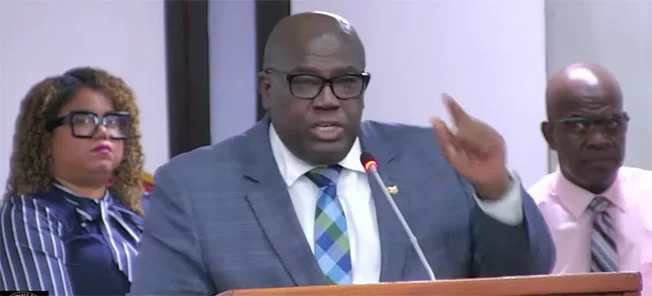
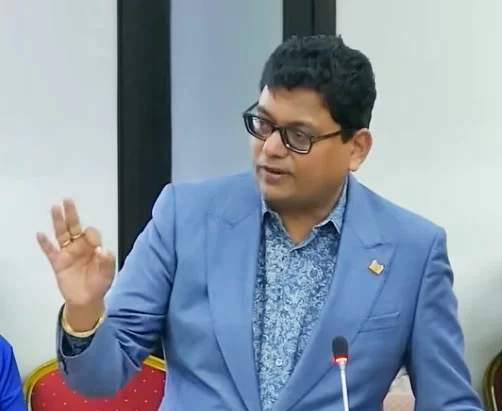
    On June 22, the main opposition faction VHP in Suriname tabled a formal objection during a public plenary session of the country’s National Assembly (DNA), calling out a critical procedural violation committed by Assembly Speaker Ashwin Adhin that puts the entire meeting’s legal validity into question.

    According to VHP faction leader Asis Gajadien, the error occurred before the session officially got underway. Adhin opened the meeting ahead of the formal handover of the chairmanship, and failed to sign the mandatory attendance register upon entering the chamber – a step explicitly required under Article 31 of the DNA’s Rules of Procedure, which mandates every member sign the attendance list when arriving for a session.

    After the oversight was uncovered, Gajadien says faction leaders held emergency consultations to resolve the issue. The VHP proposed a straightforward fix: formally acknowledge the omission, restart the opening process following correct procedure, and then proceed with the meeting with full legal standing. To the opposition’s frustration, this compromise solution was never implemented. Assembly leadership instead pushed ahead with the session as if no procedural irregularity had occurred, prompting immediate protest from VHP representatives.

    The VHP has emphasized that strict adherence to parliamentary procedures is a non-negotiable foundation for legitimate lawmaking in any democratic system. The party argues that as the nation’s highest representative body, the National Assembly must set a clear example of transparency, due process, and rule-of-law governance – these standards cannot be set aside for political convenience or practical shortcuts.

    Despite the formal objection and public protest, the VHP chose to remain in the session to continue participating in deliberations, a decision driven by the critical item on the day’s agenda: the review of the national state budget. The faction noted that the broad social and economic interests tied to the budget process far outweigh the need to walk out over the procedural dispute.

    VHP representatives stressed that their continued participation does not mean they are withdrawing their objection to the breach. The faction has formally called on Speaker Adhin to take immediate steps to ensure all parliamentary procedures are strictly followed in all future Assembly sessions, to protect the institution’s democratic legitimacy.

  • Derde helft WK 2026: Messi schiet Argentinië langs Oostenrijk naar volgende ronde

    Derde helft WK 2026: Messi schiet Argentinië langs Oostenrijk naar volgende ronde

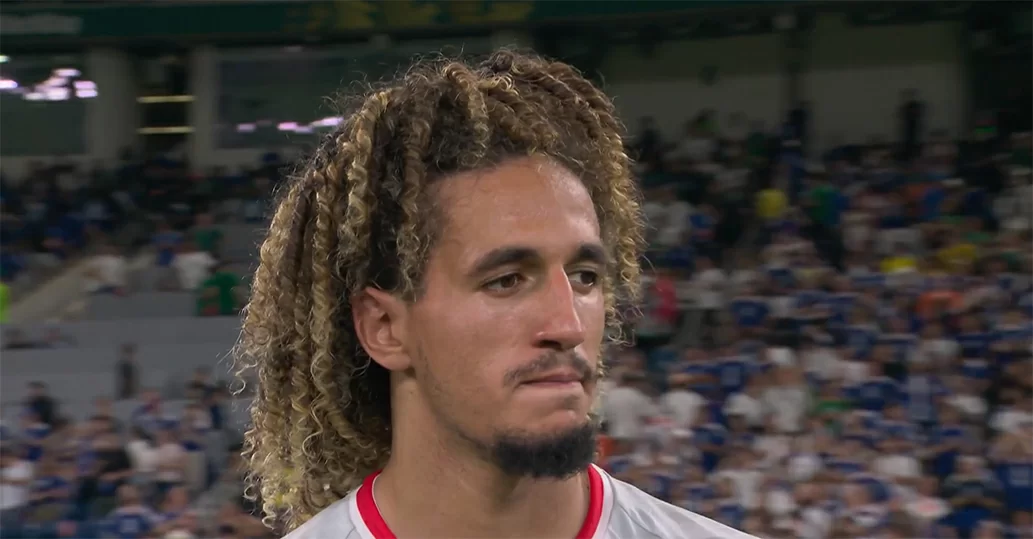
    Group J World Cup action unfolded at Dallas’ host stadium on June 22, bringing defending champions Argentina up against a confident Austria side in a matchup that promised high stakes and competitive football. Argentina had kicked off their tournament with a win against Algeria, while Austria entered the match off a dominant opening outing against Jordan, setting the stage for a tightly contested battle that lived up to its pre-match hype. When the final whistle blew, it was Argentina that walked away with a 2-0 victory, secured by two late goals from captain Lionel Messi.

    The defending champions came out of the gate flying, pushing hard for an early opening goal to take control of the match. That early opportunity arrived in just the 4th minute, when Inter striker Lautaro Martinez was brought down by two Austrian defenders inside the penalty area. Though the on-field referee initially allowed play to continue, a review from the video assistant referee (VAR) overturned the call and awarded Argentina a penalty. Messi stepped up to take the spot kick, but in an uncharacteristic miss, he sent the ball wide of the goal, leaving the scoreline deadlocked.

    Argentina continued to press through the opening half, with another clear chance coming in the 19th minute, when Messi broke into Austria’s 18-yard box only for defender Kevin Danso to make a well-timed intervention to snuff out the danger. Austria, for their part, pushed forward on the counter and put consistent pressure on Argentina’s backline, but failed to convert that pressure into clear-cut chances, with final passes consistently missing their target or shots failing to materialize.

    Another dangerous Argentina attacking buildup in the 36th minute ended with a cross that floated into empty space between the defense and goalkeeper, but three minutes later, the deadlock was finally broken. At the end of a sustained Argentina attacking sequence, Messi found himself on the end of a pass inside the box and made no mistake this time, firing home a clean finish to put his side up 1-0, a score that held through halftime.

    After the break, Austria shifted into a more attacking gear in search of an equalizer, putting together some promising build-up play but still failing to test Argentina’s goalkeeper or create a clear scoring opportunity. Argentina controlled the pace of the second half, managing the game without taking unnecessary risks as they hunted for a decisive second goal to seal the win. In the 73rd minute, substitute Nicolás Gonzalez had a golden chance to double the lead, meeting a Messi corner kick with a header that went just inches wide of the post.

    For the rest of regulation, both sides mustered only half-chances, and it looked as though the match would end with Argentina holding on to a narrow 1-0 win. But in the final minute of stoppage time, Messi delivered one final moment of magic, slotting home a falling finish to double Argentina’s lead and put the match out of reach. The 2-0 win gives Argentina six points from their first two group stage matches, officially securing their spot in the knockout round of the tournament with one group game still to play.

  • Derde helft WK 2026: Mexico, VS en Duitsland boeken knock-outplaatsen, strijd barst los

    Derde helft WK 2026: Mexico, VS en Duitsland boeken knock-outplaatsen, strijd barst los

    The 2026 FIFA World Cup continues to unfold with dramatic results on its 11th matchday, Sunday June 21, reshaping the tournament’s path and closing out group stage campaigns for a handful of national sides. After a full slate of competitive matches, three nations have already secured their place in the tournament’s knockout round of 32, while three others have seen their World Cup dreams come to an early end.

    Host nation Mexico became the first side to punch their ticket to the knockout stage, clinching the top spot in Group A after a 1-0 victory over South Korea on Thursday, June 18. Mexico kicked off their tournament in the chaotic opening match, where they earned a solid 2-0 win over South Korea to set the tone for their group stage run. The United States followed as the second qualified nation, impressing in Group D with a 2-0 defeat of Australia on Friday, June 19. That result marked the US’s second consecutive win, after opening their campaign with a commanding 4-1 victory over Paraguay.

    Germany became the third confirmed qualifier for the round of 32, securing their spot with a narrow 2-1 win over Ivory Coast on Saturday, June 20. The result marks a promising comeback for the German national side, which failed to advance past the group stage at both the 2018 Russia World Cup and the 2022 Qatar World Cup. Germany signaled their renewed strength early, opening their Group E run with a dominant 7-1 rout of Curaçao.

    On the opposite end of the table, three teams have already been eliminated from tournament contention. Haiti, making their first World Cup appearance since 1974, was the first side to exit, falling 3-0 to Brazil on Friday, June 19 after a narrow 1-0 opening-match loss to Scotland. Turkey, competing in their first World Cup in 24 years, was next to go out after a disappointing 1-0 loss to 10-man Paraguay on Friday. The defeat followed a surprising 2-0 opening loss to Australia that left Turkey at the bottom of Group D with zero points.

    Tunisia was the third eliminated side, ousted after a lopsided 4-0 defeat to Japan on Saturday, June 20. The North African side, which made history as the first African nation to win a World Cup match with a victory over Mexico in 1978, has never advanced past the group stage of the competition, and their 2026 run ended early following a 5-1 opening loss to Sweden. Elsewhere in the day’s results, Haiti could not mount a challenge against Brazil, falling to a clear defeat that confirmed their early exit.

    As the group stage progresses, three more matches are scheduled to be played on June 22: Group J’s clash between Argentina and Austria at Dallas Stadium in Texas kicking off at 14:00, followed by Group I’s match between France and Iraq at Philadelphia Stadium in Pennsylvania at 18:00, and a final Group I showdown between Norway and Senegal at MetLife Stadium in New York at 21:00. With more group stage results on the horizon, the race for the remaining knockout round spots is gearing up for an exciting conclusion.

  • Openbaar vervoer krijgt digitale koerswijziging: gps verplicht voor bussen en boten

    Openbaar vervoer krijgt digitale koerswijziging: gps verplicht voor bussen en boten

    Public transportation in Suriname is on the cusp of a transformative modernization push, Transport, Communication and Tourism (TCT) Minister Raymond Landveld has announced during ongoing national budget deliberations.

    Under the proposed reforms, all licensed bus and ferry operators will be mandated to install GPS tracking devices on their vessels and vehicles. A nationwide centralized digital database will also be developed, compiling up-to-date information on all public transport routes, departure schedules, fare structures, and stop locations across the country.

    Minister Landveld confirmed that the public tender process for the public transport digitalization project will launch as early as this month, carried out in partnership with the national e-Government program. A draft state decree outlining the regulatory framework for the reform has already been submitted to the Council of Ministers for review.

    Beyond improving transparency into service delivery, the digital overhaul is designed to streamline subsidy disbursements to bus and ferry operators. With real-time GPS data, the TCT Ministry will be able to accurately verify which transport services are actually being operated, eliminating inaccuracies in current subsidy calculation processes.

    The new integrated system will also equip policymakers with robust data to analyze passenger movement patterns, helping identify demand for new routes, additional bus stops, upgraded stations, and improved transfer hubs. This data-driven approach will allow the ministry to align public transport services more closely with the actual travel needs of residents.

    In a separate key development, Landveld confirmed that a formal proposal has been submitted to revive the cross-river ferry service connecting Paramaribo and Meerzorg. Authorities are currently assessing the operational and financial feasibility of the project, alongside plans to construct improved docking infrastructure to support the service.

    Safety upgrades are also a core priority of the broader reform package. Recently implemented executive regulations for coastal and inland waterway transport include stricter requirements for operating licenses, enhanced regulatory oversight, and a mandatory rule requiring all passengers to wear life jackets during voyages.

    Minister Landveld acknowledged that Suriname’s public transport sector has grappled with long-standing systemic challenges for decades, including deferred infrastructure maintenance, insufficient passenger amenities, and outdated regulatory frameworks. The sweeping digital transformation, he noted, marks a critical foundational step toward building a more efficient, safer, and more reliable public transport network that serves the needs of all travelers.

  • Verenigd Koninkrijk krijgt zevende premier in tien jaar na aftreden Starmer

    Verenigd Koninkrijk krijgt zevende premier in tien jaar na aftreden Starmer

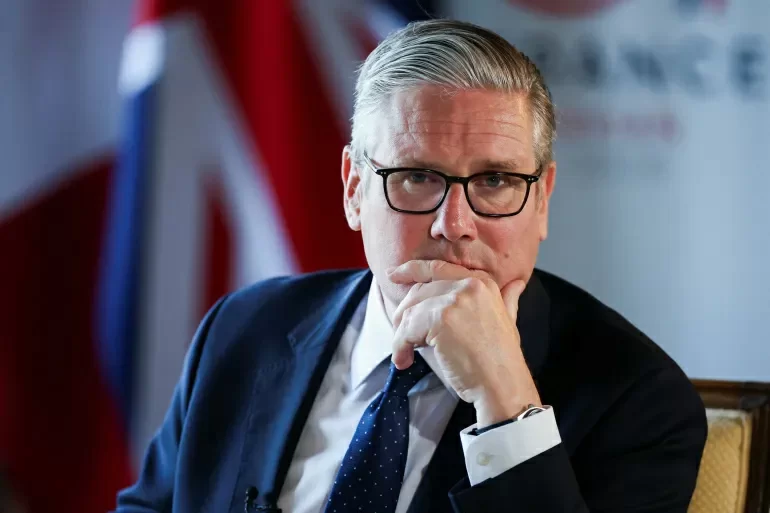
    In a move that deepens a decade-long streak of political turbulence in the United Kingdom, Keir Starmer, leader of the Labour Party and current British prime minister, announced his resignation on Monday amid mounting internal pressure from within his own party, just 20 months after taking office. His departure triggers a contest to name the UK’s seventh prime minister in 10 years, a milestone that has amplified global questions about the nation’s long-term political stability.

    In an emotional public address, Starmer confirmed he will remain in office as prime minister and party leader until a new Labour leader is selected, who will automatically assume the role of prime minister. The formal leadership contest will launch on July 9, with a deadline to finalize the result before the UK Parliament enters its summer recess.

    Starmer’s position began to unravel in recent weeks following deeply underwhelming performance by Labour in local elections across the country. The final blow came last week, when Labour suffered a decisive by-election defeat in the Makerfield constituency, where challenger Andy Burnham – the popular incumbent mayor of Greater Manchester – secured a victory that stripped the party of what had long been considered a safe seat.

    This latest resignation caps a period of unprecedented turnover in Downing Street that dates back to the 2016 Brexit referendum. Since that pivotal vote, the UK has seen six prime ministers hold office, for an average tenure of just 18 to 24 months. This marks a stark departure from the second half of the 20th century and early 2000s, when long-serving leaders such as Margaret Thatcher and Tony Blair held power for more than a decade each.

    The string of departures started with David Cameron, who resigned in 2016 after campaigning to remain in the EU and losing the Brexit referendum. Theresa May stepped down in 2019 after three years of failed attempts to pass her negotiated Brexit withdrawal agreement through Parliament. Boris Johnson resigned in 2022, forced out after a cascade of ministerial resignations tied to multiple ethics scandals. Later that same year, Liz Truss resigned after just 49 days in office – the shortest premiership in UK history – after her radical economic proposal triggered market chaos. Rishi Sunak departed in 2024 after the Conservative Party suffered a landslide general election defeat that brought Starmer’s Labour to power. Now, just two years later, Starmer follows his predecessors out of Downing Street.

    The repeated turnover at the top of UK government has sparked growing international concern, given the country’s status as a major global power and a core member of key international alliances including NATO. The rapid succession of prime ministers has raised urgent questions about the consistency and effectiveness of UK leadership on the global stage.

    Policy analysts warn that constant leadership changes could erode investor confidence in the UK economy, while also weakening the country’s negotiating position in critical international trade and diplomatic talks. Domestically, ongoing political turbulence risks delaying progress on key policy priorities, from post-Brexit economic growth and infrastructure investment to international relations and national security planning.

    Still, some political experts emphasize that the UK’s long-standing parliamentary institutions and established democratic framework are robust enough to weather this period of unrest. Whether the country can move past this cycle of turnover and restore long-term stability, they note, will depend entirely on how quickly and effectively the Labour Party can select a new leader capable of rebuilding public and parliamentary trust.

    As the contest gets underway, Andy Burnham – who has just returned to the House of Commons via the Makerfield by-election victory – is widely seen as the early frontrunner to replace Starmer. Other high-profile Labour figures, including former health secretary Wes Streeting, are also reportedly considering launching bids for the party leadership.

    To qualify for the leadership ballot, any candidate must first secure the backing of at least 81 sitting Labour members of Parliament. Depending on how many candidates meet this threshold and whether any behind-the-scenes deals are struck before the contest formally launches, the process could either stretch into a full summer-long campaigning period or conclude quickly with an uncontested transition.

  • Minister Huur: SRD 1 miljoen per district is volstrekt onvoldoende

    Minister Huur: SRD 1 miljoen per district is volstrekt onvoldoende

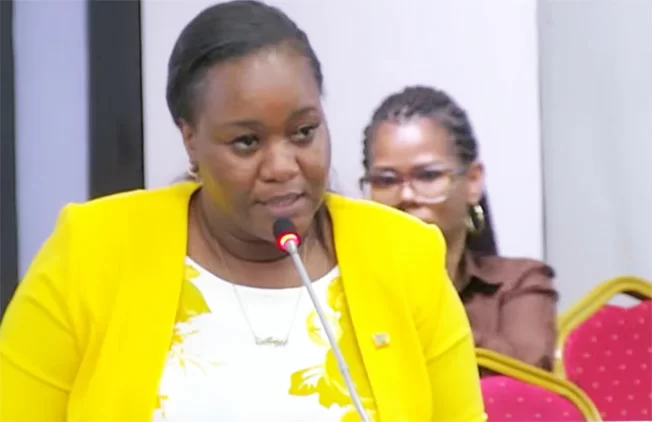
    During recent budget deliberations in Suriname’s National Assembly, Miquella Huur, Minister of Regional Development, publicly acknowledged that the current funding allocated to district commissioners is insufficient to allow these local officials to fulfill their legally mandated responsibilities. The minister has publicly backed calls for strengthening district-level financial autonomy and advancing deeper decentralization of governance and public service delivery across the country.

    Huur emphasized that the current maximum annual allocation of approximately 1 million Surinamese dollars (SRD) per district falls far short of what is needed to cover core local operations. These essential functions include routine waste collection, maintenance of secondary and tertiary waterways, and upkeep of other critical basic public infrastructure that local communities rely on daily.

    “I stand behind your call to increase funding for district commissioner offices,” Huur stated in response to questions and comments raised by National Assembly members. She confirmed that her ministry is currently advancing adjustments to the so-called Article 4 funds outlined in the Interim Law on Financial Decentralization, a policy change designed to boost district-level resourcing.

    In addition to increased central government allocations, the ministry is also pushing for revisions to two key pieces of legislation: the General Law on District Taxes and the Law on Financial Relations Between the State and Districts. These amendments are intended to expand districts’ authority to generate their own independent revenue, enabling local governments to operate with greater financial autonomy from the central state.

    Huurr reiterated a core principle guiding the government’s decentralization push: devolution of power can only succeed if new administrative responsibilities are paired with adequate funding and skilled local workforces. To address the skills gap, the ministry will roll out targeted training programs in 2026 for members of district and regional councils. These programs will build capacity in governance, administrative processes, and financial management to strengthen local-level operational capacity.

    Beyond funding for local districts, the minister also addressed longstanding administrative challenges facing her own ministry. Currently, the Ministry of Regional Development is spread across three separate locations across the capital. Huur explained that this fragmented setup slows internal collaboration, delays decision-making, and undermines the quality of public services the ministry delivers to citizens.

    Complicating plans to consolidate offices into a single new purpose-built building is the ministry’s tight budget: roughly 85% of its current annual allocation goes to employee wages and salaries, leaving almost no room for large capital investments like new construction. To move the consolidation project forward, the ministry plans to present its proposal for a new headquarters building to international development organizations, bilateral donor partners, and private donors to secure external funding.

    The minister also responded to questions from assembly members about the status of a government-owned plot at Van Rooseveltkade. Huur confirmed that based on current available records, the parcel has not been allocated or transferred to any private entity and remains formally classified as state property. To formalize this status, the Ministry of Regional Development is working alongside the Ministry of Land Policy and Forest Management to conduct a full verification of the land’s ownership. Parliament will receive a full briefing once all relevant documentation is compiled and reviewed, Huur added.

  • OAS moet zich vernieuwen om geloofwaardig te blijven

    OAS moet zich vernieuwen om geloofwaardig te blijven

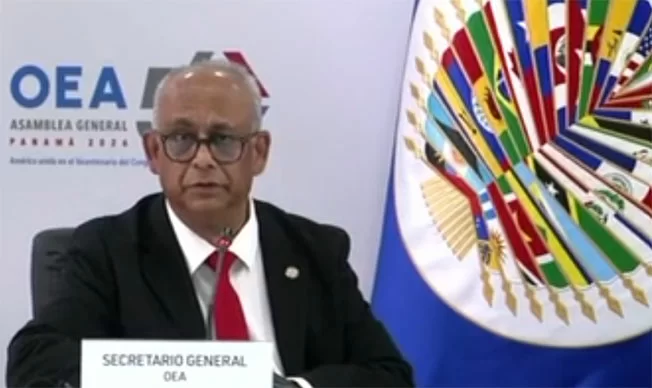
    Against a backdrop of growing global skepticism toward intergovernmental cooperation, Organization of American States (OAS) Secretary-General Albert Ramdin has outlined a bold vision for deep-rooted transformation of the regional multilateral cooperation model, arguing that systemic evolution rather than full dismantling is the path forward for the bloc. Ramdin delivered his remarks during the 68th Lecture Series of the Americas, an event held alongside the OAS’s 56th General Assembly in Panama, which centered its discussions on the future of multilateral cooperation across the Americas. Ramdin acknowledged that international institutions including the OAS have faced mounting criticism in recent years, and he says he shares part of that public and political skepticism. In his view, the existing multilateral system has too often failed to clearly demonstrate how it advances the concrete interests of member states and their populations, eroding trust over time. Even so, Ramdin emphasized that cross-border collaboration is more critical today than at any point in modern history. No single nation can tackle the complex transnational challenges that define the 21st century alone, he argued, pointing to cross-cutting issues ranging from public health threats and climate change to organized crime, mass migration, and rapid disruptive technological change. All of these challenges demand coordinated, collective action from regional governments. “Our task is not to tear down the existing system and build something entirely new from scratch,” Ramdin stated. “It is to reshape it, make it more efficient, and preserve its credibility for the people it exists to serve.” Ramdin stressed that the OAS must continue evolving to meet new demands without abandoning the core founding mission that has guided the organization since its establishment. While global and regional contexts have shifted dramatically since the OAS was created, the fundamental need for coordinated regional cooperation across the Western Hemisphere remains as strong as ever, he said. The Secretary-General also highlighted the OAS’s long track record of impactful progress across decades of collaboration. He pointed to landmark agreements including the Inter-American Democratic Charter, the Inter-American Convention Against Corruption, and the Belém do Pará Convention to end violence against women as examples of enduring, transformative cooperation that has improved outcomes both within the region and beyond it. Moving forward, Ramdin said the OAS must take its next evolutionary step by aligning its working methods more closely with the current needs of member states. The reform agenda will center on boosting institutional efficiency, increasing transparency, and delivering more measurable, tangible results for communities across the region. Following Ramdin’s address, former OAS Secretaries-General José Miguel Insulza and Luis Almagro held a joint discussion exploring the future of multilateral cooperation in the Americas and the ongoing role the OAS must play in advancing regional stability and shared progress.

  • Local content moet Suriname voorbereiden op een economie ná de olie

    Local content moet Suriname voorbereiden op een economie ná de olie

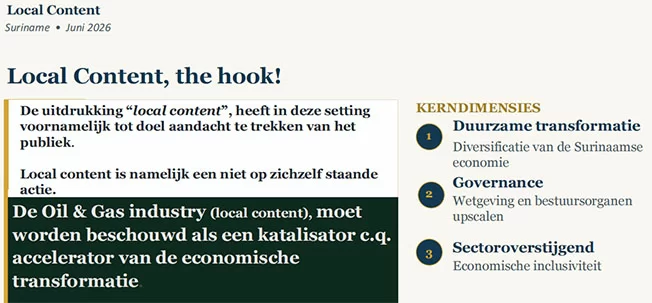
    At a recent policy discussion hosted by the newly launched Surinamese foundation Stichting Passie voor Land en Volk, leading policy analysts and sector experts have called for a paradigm shift in how the nation approaches its emerging oil and gas industry, arguing that debates over local content requirements must extend far beyond simply creating jobs for Surinamese workers or awarding contracts to domestic firms.

    Three presenters — Antoon Karg, Sieglien Burleson and Wilgo Bilkerdijk — delivered insights from legal-governance, economic and strategic perspectives respectively. While their approaches differed, all three reached the same core conclusion: local content policies should not be treated as an end goal in themselves, but rather a targeted tool to build long-term, structural strength for Suriname’s entire economy.

    Central to the group’s argument is the framing that oil and gas are not the end point of Suriname’s economic development, but a temporary accelerant that should open doors for broader growth. Revenue generated from fossil fuel extraction, they argue, must be strategically deployed to boost competitiveness across other key sectors, including agriculture, manufacturing, technology, services and export-oriented industries. Without this intentional reallocation of resources, experts warn that Suriname risks locking itself into an oil-dependent economic model that will leave non-resource sectors stagnant and vulnerable once oil reserves are depleted.

    The presenters drew heavily on lessons from resource-rich nations around the world, highlighting that the discovery of large natural resource reserves rarely delivers broad, sustained prosperity automatically. In many cases, it has instead led to crippling economic dependence, rising import reliance, growing social inequality and the erosion of other productive domestic industries. The group specifically warned Suriname against the risk of “Dutch disease”, a well-documented economic phenomenon where a booming resource sector pushes up exchange rates and production costs, crowding out growth in other tradable sectors of the economy.

    To avoid these common pitfalls, speakers emphasized that Suriname must make early, targeted investments in public education, technological innovation, entrepreneurship, vocational skills training and institutional capacity building. They also noted that while a formal Local Content law is a necessary starting point, it is not sufficient on its own to deliver broad-based transformation. Instead, the experts called for a holistic national development strategy that aligns multiple government ministries, implementing agencies and civil society partners around shared long-term goals.

    Concrete policy proposals put forward during the discussion include the establishment of a National Development and Implementation Coordination Council, which would be tasked with strategic planning, cross-agency policy coordination, performance monitoring and delivery of national development targets. The group also recommended strengthening existing core institutions including the Chamber of Commerce and Industry, the Suriname Standards Bureau, the Suriname National Training Authority and the Economic Control Service.

    On the topic of managing future oil revenue, the presenters laid out a three-fund framework. In addition to the standard stabilization and savings funds that most resource-rich nations maintain, they proposed the creation of a dedicated National Development and Transformation Fund. This fund would allocate capital to high-priority long-term investments: public education, core infrastructure, national digitalization, clean energy transition, innovation capacity, agro-industrial development, and support for small and medium-sized enterprises. This structure, they argue, would convert temporary oil revenue into permanent, self-sustaining economic growth that outlasts the age of fossil fuel extraction.

    Opening the event, Jennifer van Dijk-Silos, chair of Stichting Passie voor Land en Volk, emphasized that Suriname currently faces a historic, once-in-a-generation policy choice. She called on all national stakeholders to leverage the new opportunities created by the emerging oil and gas sector to advance sustainable development, strengthen good governance, and build an economy that delivers inclusive prosperity for all Surinamese over the long term.

  • Ramdin: Suriname en Guyana kunnen uitgroeien tot op één na grootste oliegebied ter wereld

    Ramdin: Suriname en Guyana kunnen uitgroeien tot op één na grootste oliegebied ter wereld

    Against the backdrop of the 2026 Organization of American States (OAS) General Assembly, Secretary-General Albert Ramdin has laid out a transformative economic vision for the Americas, highlighting that the combined oil and gas sectors of Suriname and Guyana could position the region as the world’s second-largest oil production hub, if paired with strategic investment and inclusive regional collaboration.

    Speaking at the High-Level Private Sector Dialogue held on the sidelines of the General Assembly in Panama, which brought together ministers, diplomats, and business leaders from nearly 40 countries across the hemisphere, Ramdin emphasized that the Western Hemisphere holds extraordinary untapped economic potential, driven by its abundant natural resources, strategic geographic positioning, unparalleled biodiversity, and dynamic entrepreneurial culture.

    Current production data underscores this potential: Guyana already pumps roughly 900,000 barrels of oil per day, with projections pointing to output climbing to 1.8 million barrels daily by 2030. When combined with Suriname’s projected upcoming oil production increases, Ramdin noted that the combined Guiana Shield region is on track to become one of the most consequential oil-producing centers globally. However, he cautioned that natural resource wealth alone is not enough to deliver long-term, shared prosperity.

    “Economic progress only emerges when governments and the private sector invest jointly in stability, good governance, and sustainable development,” Ramdin told attendees. He argued that durable growth requires strong public institutions, consistent rule of law, full transparency, and a predictable policy environment to retain and attract global investor confidence. Rather than focusing solely on exporting raw crude and gas, Ramdin urged regional leaders to leverage the energy boom to build local value chains, grow domestic industries, create high-quality local jobs, and fund long-term sustainable development projects across the region.

    To advance this collaborative economic agenda, Ramdin used the dialogue to formally launch the OAS Private Sector Initiative of the Americas, a new cross-sector platform designed to bridge gaps between national governments, global financial institutions, and private enterprises to unlock investment, drive inclusive economic growth, and strengthen regional integration. Argentine business leader Bettina Bulgheroni has been appointed to chair the new initiative, where she will lead the development of concrete projects across key high-growth sectors including energy, critical minerals, artificial intelligence, digital transformation, trade, and investment.

    Ramdin closed his remarks with a call for deeper collective action across North, Central, South America and the Caribbean. He noted that too much regional capital and economic activity currently flows outside the hemisphere, despite the Americas holding all the necessary assets – abundant natural resources, robust logistics connections, and skilled human talent – to play a far larger role in the global economy. He identified the global energy transition, digitalization, artificial intelligence innovation, and modernization of trade and logistics networks as the defining economic opportunities for the region over the coming decade.

    “The future of the Americas depends on how we connect economic growth to democratic governance, security, and sustainable development,” Ramdin emphasized, framing the new initiative and the region’s energy boom as once-in-a-generation opportunities to deliver shared prosperity across the hemisphere.

  • Column: Wapenstilstand? Terwijl het echte leed doorgaat

    Column: Wapenstilstand? Terwijl het echte leed doorgaat

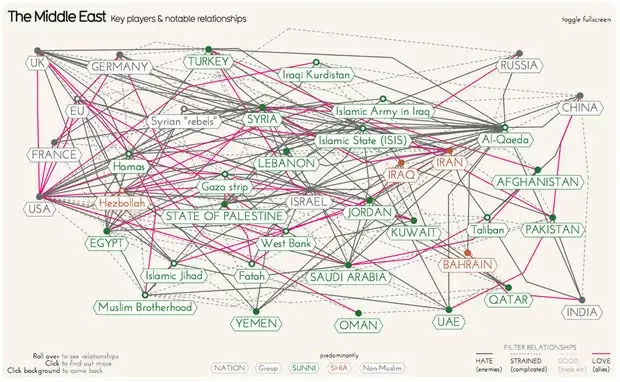
    As the United States and Iran work to hold together a tenuous, newly reached ceasefire, active bombardment has not ceased across the Middle East – and this time, the violence is unfolding not in Iran or the U.S., but in Lebanon. Despite international calls for de-escalation and emerging diplomatic frameworks, Israel has continued its air strikes across Lebanese territory, with the global community remaining largely passive in the face of continued violation of emerging peace commitments. Parallel to this, Iran has oscillated between opening and closing the Strait of Hormuz, the world’s most critical chokepoint for global oil trade, in a move that underscores the tense balancing act between diplomatic outreach and strategic escalation in the region. While much of the global discourse focuses on geopolitical red lines drawn in military manoeuvres and diplomatic agreements, the actual defining line of this crisis is the daily suffering of ordinary civilians trapped in the crossfire.