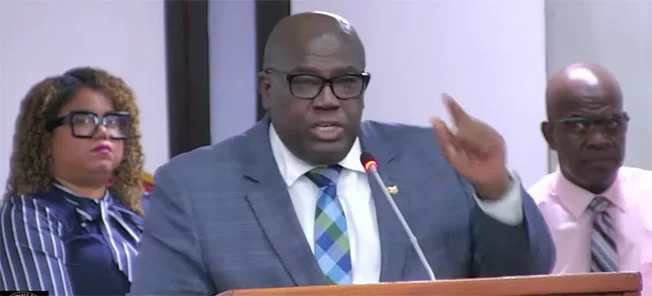
Public transportation in Suriname is on the cusp of a transformative modernization push, Transport, Communication and Tourism (TCT) Minister Raymond Landveld has announced during ongoing national budget deliberations.
Under the proposed reforms, all licensed bus and ferry operators will be mandated to install GPS tracking devices on their vessels and vehicles. A nationwide centralized digital database will also be developed, compiling up-to-date information on all public transport routes, departure schedules, fare structures, and stop locations across the country.
Minister Landveld confirmed that the public tender process for the public transport digitalization project will launch as early as this month, carried out in partnership with the national e-Government program. A draft state decree outlining the regulatory framework for the reform has already been submitted to the Council of Ministers for review.
Beyond improving transparency into service delivery, the digital overhaul is designed to streamline subsidy disbursements to bus and ferry operators. With real-time GPS data, the TCT Ministry will be able to accurately verify which transport services are actually being operated, eliminating inaccuracies in current subsidy calculation processes.
The new integrated system will also equip policymakers with robust data to analyze passenger movement patterns, helping identify demand for new routes, additional bus stops, upgraded stations, and improved transfer hubs. This data-driven approach will allow the ministry to align public transport services more closely with the actual travel needs of residents.
In a separate key development, Landveld confirmed that a formal proposal has been submitted to revive the cross-river ferry service connecting Paramaribo and Meerzorg. Authorities are currently assessing the operational and financial feasibility of the project, alongside plans to construct improved docking infrastructure to support the service.
Safety upgrades are also a core priority of the broader reform package. Recently implemented executive regulations for coastal and inland waterway transport include stricter requirements for operating licenses, enhanced regulatory oversight, and a mandatory rule requiring all passengers to wear life jackets during voyages.
Minister Landveld acknowledged that Suriname’s public transport sector has grappled with long-standing systemic challenges for decades, including deferred infrastructure maintenance, insufficient passenger amenities, and outdated regulatory frameworks. The sweeping digital transformation, he noted, marks a critical foundational step toward building a more efficient, safer, and more reliable public transport network that serves the needs of all travelers.