标签: Saint Kitts and Nevis

圣基茨和尼维斯

  • Invest in technology-driven learning to protect education amid insecurity

    Invest in technology-driven learning to protect education amid insecurity

    As Nigeria continues to battle widespread insecurity and a rising trend of school-linked abductions, a prominent Nigerian education leader is calling on federal and state authorities to ramp up investment in technology-powered learning infrastructure to guarantee that children’s education remains uninterrupted regardless of safety risks.

    Toyin Joseph Larayintan, Director of the Abuja-based Zion Study Centre, issued this appeal during the organization’s monthly youth engagement event, Echoes of Zion. The gathering, hosted at the centre’s facilities, brings together young people from across the region for mentorship and open discussion on pressing national issues, with educational resilience topping the agenda during the most recent session.

    Larayintan emphasized that repeated attacks on educational institutions and the kidnapping of students across multiple regions of Nigeria have exposed a critical gap in the country’s education system: a lack of flexible, emergency-ready learning alternatives. When physical classroom attendance becomes too dangerous for students and staff, he argues, digital platforms can bridge the gap and keep learners on track with their studies.

    While he acknowledged that Nigerian security forces are actively working to dismantle criminal networks and curb violent attacks, Larayintan noted that proactive system-level changes are just as critical to protecting students’ learning trajectories. “The future of education cannot depend solely on physical classrooms,” he stated. “Technology offers a reliable pathway for continuous learning, especially at a time when so many Nigerian parents live in fear for their children’s safety on the way to school.”

    To build this resilient system, Larayintan outlined four core investment priorities: expanding national digital infrastructure, scaling access to fully functional virtual classroom platforms, extending high-speed broadband connectivity to underserved communities across the country, and providing comprehensive training for teachers to effectively integrate digital tools into their instruction. “These investments will ensure that learning never stops, no matter what security challenges we face,” he added.

    Drawing on global case studies to support his argument, Larayintan highlighted how developed nations have integrated technology into their core education frameworks. South Korea boasts a 97% national internet penetration rate, with nearly every school connected to nationwide digital learning networks. Finland has embedded digital literacy as a core requirement in its national K-12 curriculum, while more than 95% of U.S. public schools already have high-speed internet access and standardized online learning platforms.

    He also pointed to the COVID-19 pandemic as a real-world test of educational resilience: countries with pre-existing robust digital education ecosystems were able to maintain learning for hundreds of millions of students through months of mandatory school closures, while nations with underdeveloped digital infrastructure saw massive learning loss that continues to impact students years later. Nigeria, he argued, can draw direct lessons from this global experience to prepare for ongoing and future emergency threats, including security instability.

    Beyond emergency preparedness, Larayintan stressed that investment in educational technology delivers long-term economic benefits for Nigeria’s large youth population. In an increasingly digital global economy, innovation and technological proficiency have become key determinants of professional success. Building out tech-driven learning systems will not just protect education during crises, he said, but will also equip young Nigerians with the in-demand skills they need to compete in regional and global job markets.

    To move this agenda forward, Larayintan called for coordinated action across multiple sectors: he urged government policymakers to prioritize edtech investment in national education budgets, encouraged international development partners to direct funding and technical support to digital learning initiatives, and called on private sector stakeholders to contribute infrastructure and expertise to expand access across low-income and rural communities. He framed the investment as a core step toward securing a prosperous, stable future for Nigeria’s growing young population.

    The monthly Echoes of Zion programme, which hosted the announcement, has operated for years as a nonpartisan platform to engage Nigerian youth on topics spanning national development, ethical leadership, educational access, and social responsibility, connecting emerging young leaders with mentors and policy advocates to address the country’s most pressing challenges.

  • Belize Senator Urges Regional Unity Amid Growing Geopolitical Challenges

    Belize Senator Urges Regional Unity Amid Growing Geopolitical Challenges

    NASSAU, BAHAMAS – As global geopolitical friction and widespread international uncertainty continue to rise, a senior Belizean official has issued a urgent call for Caribbean nations to reinforce collective regional cooperation and solidarity to address shared challenges. Speaking at the closing ceremony of the Caribbean Development Bank (CDB)’s 56th Annual Meeting held in Nassau, Dr. Osmond Martinez, Belize’s Minister of State for Foreign Trade, framed regional unity as the Caribbean’s most powerful tool for navigating an increasingly unstable global landscape.

    Martinez stressed to attending delegates that the region’s collective strength does not depend on the size or economic power of individual nations, but on their willingness to stand together. “We must deepen, not dilute, our regional solidarity,” he told attendees. “Our strength has never rested on the size of our individual states.” He went on to emphasize that the Caribbean’s greatest competitive and strategic advantage is its proven ability to align around common goals, arguing that effective solutions to the region’s challenges must be rooted in local realities rather than imported from outside powers.

    The address comes as Belize prepares to take on the chairmanship of the CDB Board of Governors in 2027, when it will also host the institution’s annual meeting. Martinez outlined that Belize is approaching this new leadership role with clear purpose and a forward-looking vision, rooted in the country’s unique regional position.

    Unlike most other CDB member states, Belize sits at the intersection of two regions: geographically located in Central America, while sharing deep historical and cultural ties with the Caribbean. This positioning, Martinez explained, has shaped Belize’s approach to development, reinforcing the core principle that regional resilience cannot be built by individual nations acting in isolation. “It is built through connection and integration. We have created tangible networks for collaboration, trade, innovation, climate action, and economic growth,” he said.

    During its chairmanship, Belize plans to leverage this unique position to act as a bridging gateway between the Caribbean community and Central American neighbors, deepening cross-regional ties that turn geographic proximity into shared, mutual prosperity. Martinez confirmed that Belize’s leadership agenda will align fully with the CDB’s newly adopted 2026-2035 Strategic Plan, which centers on boosting social, economic, and environmental resilience across all member states.

    A core priority of Belize’s chairmanship will be advancing growth in the blue, green, and orange economic sectors – areas where Martinez says the wider Caribbean holds enormous untapped potential. He highlighted existing work Belize has already done in these spaces, including the country’s groundbreaking Blue Bond, expanded support networks for micro, small, and medium-sized enterprises (MSMEs), youth entrepreneurship training programs, sustainable tourism development, cultural creative industries, large-scale conservation projects, and climate resilience infrastructure initiatives.

    Far from just emerging market opportunities, Martinez framed these sectors as transformative pathways to empower Caribbean people, especially young people, to take an active role in building a more prosperous and resilient regional future. Looking ahead to the 2027 gathering, Martinez said Belize’s leadership will focus on forging renewed cross-sector partnerships, attracting targeted regional investment, supporting youth-led innovation, and advancing homegrown solutions that highlight the Caribbean’s unique strengths and capabilities. He closed by noting that Belize hopes the 2027 Annual Meeting will carry forward the same spirit of collaborative resilience that defined the 2026 Nassau gathering.

  • Technology, Advocacy and Partnerships among CHTA’s major gains under Destang

    Technology, Advocacy and Partnerships among CHTA’s major gains under Destang

    ST. JOHN’S, Antigua – As Caribbean tourism continues to navigate persistent global headwinds, outgoing Caribbean Hotel and Tourism Association (CHTA) President Sanovnik Destang is reflecting on a tenure marked by targeted progress across three core pillars: digital innovation, industry advocacy, and cross-sector collaboration, as the regional body prepares for a leadership transition later this year.

    In an interview with SKNVibes conducted on the sidelines of the recent Caribbean Travel Marketplace hosted in Antigua and Barbuda, Destang emphasized that all advances achieved during his two-year term were the product of collective team work, rather than individual achievement. “I don’t think that there’s any one accomplishment that I had. It’s a team effort,” he noted, pointing to digital transformation as one of his proudest achievements.

    Long before he assumed the presidency, Destang chaired CHTA’s founding Technology Task Force, a working group that has already published two widely circulated artificial intelligence guidebooks for regional tourism stakeholders. The team is currently finalizing its third edition, which centers on a timely and often debated topic: AI’s impact on tourism sector employment. Unlike many narratives that frame AI as a direct replacement for human workers, Destang explained the upcoming guide will outline actionable frameworks and strategies to leverage AI as a tool that enhances, rather than replaces, existing tourism workforces.

    Digital upgrading efforts under Destang’s leadership have also focused on helping local and regional hotels gain greater operational autonomy and financial stability. The association has prioritized initiatives to support hoteliers in integrating technology into day-to-day operations, growing their share of direct customer bookings, and reducing overreliance on high-commission third-party booking platforms. Strong turnout and stakeholder engagement at CHTA’s recent Direct Booking Summit served as a clear signal of widespread industry demand for these support services, Destang added.

    Beyond technology, the outgoing president highlighted major progress in policy and industry advocacy, particularly around the fast-growing short-term rental sector – a segment that now accounts for 30 to 40 percent of all visitor accommodation across the Caribbean, according to Destang. CHTA has launched the first phase of a centralized advocacy repository, with an initial focus on short-term rentals that takes a balanced, growth-oriented approach to regulation. Rather than pushing for strict rules that would force small operators out of business, Destang explained the association’s framework promotes responsible, sustainable growth for the sector, alongside efforts to raise professional standards and address tax-related policy challenges.

    A third key initiative that defined Destang’s tenure is the expansion of work by CHTA’s Linkages Committee, which partners with the Caribbean Tourism Organization (CTO) to spread the economic benefits of tourism across the entire regional economy, beyond just large hotel properties. The committee works to build stronger, mutually beneficial connections between the tourism sector and local industries including agriculture and manufacturing, ensuring more community-wide gains from regional travel growth.

    Destang credited CHTA’s board for its willingness to embrace innovative approaches and new ways of operating throughout his tenure, and expressed confidence that the initiatives launched during his term will be continued by his successor. Later this year, Dominican hotelier Gregor Nassief will take over the presidency of CHTA, stepping into a role that comes with a range of ongoing industry challenges as Caribbean tourism continues its post-pandemic recovery and adapts to shifting global travel trends.

  • Nevis Mango Fest 2026 set to showcase island’s rich culinary heritage from July 2-5 – WIC News

    Nevis Mango Fest 2026 set to showcase island’s rich culinary heritage from July 2-5 – WIC News

    Set against the backdrop of Nevis’ sun-drenched Caribbean shores, the 12th edition of the world’s most celebrated single-fruit festival – the Nevis Mango Festival – will welcome visitors from across the globe for four days of culinary celebration, community connection, and agricultural tribute from July 2 to 5, 2026.

    Widely recognized as one of the Caribbean’s most unique and beloved culinary events, this year’s festival marks a major milestone, expanding from its traditional three-day schedule to a full four-day lineup packed with immersive experiences for food lovers, families, and international travelers. The event centers on Nevis’ world-famous “sweet Nevis mango,” a local treasure that has earned the island the official title of “Mango Capital of the Caribbean.” Home to more than 44 distinct mango varieties, many of which are unique to the island’s terroir and cannot be exported for global consumption, Nevis offers festival-goers an exclusive chance to taste flavors found nowhere else on Earth.

    Far more than a gathering for food enthusiasts, the Nevis Mango Festival functions as a vital economic engine for the island, linking local smallholder mango farmers, culinary artisans, small business owners, residents, and international visitors to generate shared, community-wide economic benefits. By weaving together agricultural tradition, culinary innovation, and cultural storytelling, the festival has steadily strengthened Nevis’ two core economic sectors: tourism and local agriculture.

    This year’s expanded schedule kicks off on Thursday, July 2, with an official opening ceremony hosted at the Malcolm Guishard Recreational Park. Immediately following the launch, the festival’s brand-new signature initiative, “Nevis Goes Mango,” will run from noon through the end of the day. The island-wide event invites attendees to travel across Nevis, stopping at participating local businesses to sample hundreds of handcrafted mango-inspired dishes and drinks. The concept is intentionally designed to spread the festival’s economic impact evenly across all island communities, ensuring small businesses off the main tourist corridors also benefit from the influx of visitors. The opening day will conclude with the always popular Celebrity Chef Supper Club at the Four Seasons Resort’s Mango Restaurant, where top culinary talents will serve a carefully curated, multi-course mango-centric tasting menu.

    Day two, Friday, July 3, offers a mix of hands-on learning and family-friendly fun. The morning kicks off with an intimate culinary masterclass hosted at Chaska Restaurant, where visiting celebrity chefs will guide small groups of attendees through step-by-step preparation of signature mango-infused dishes, giving home cooks and food lovers a chance to bring a taste of Nevis back home with them. In the afternoon, the family-focused Mango Mania event opens its gates, featuring a full slate of activities including guided mango tastings, the iconic mango tug-of-war, and the centuries-old traditional mango-stoning contest. Before the day wraps up, local and international bartenders will compete in a lively mango mixology competition, showcasing creative new takes on mango-infused cocktails. Evening brings the festival’s popular Pinney’s Beach Bar Crawl, where attendees can join an organized group tour or explore independent bar stops at their own pace with friends and family, sampling unique mango drinks from coastal venues across the island.

    Saturday, July 4, is dedicated to discovering the authentic, off-the-beaten-path flavors of Nevis through the festival’s fan-favorite Passport Food Tour. Running from 11 a.m. to 6 p.m., the tour transports attendees across the island via open-air party bus or safari vehicle, with stops at family-owned, independent restaurants and street food stalls that few regular tourists get to experience. The tour not only introduces visitors to Nevis’ hidden culinary gems but also directs critical tourism spending directly to small, locally owned food businesses.

    The festival will draw to a close on Sunday, July 5, with its iconic grand finale event, “For the Love of Mangos,” returning to Malcolm Guishard Recreational Park. The closing day features the festival’s world-famous open cooking competition, public culinary showcases from top chefs, and the highly anticipated under-the-stars Mango Festival Concert. Organizers expect attendees to travel from across the Caribbean – including neighboring St. Kitts, Anguilla, and St. Martin – as well as large numbers of international visitors from the United States and Canada, underscoring the event’s growing global reputation as a must-visit culinary destination.

  • SPBS all white Annual Boat Ride

    SPBS all white Annual Boat Ride

    Every summer, communities of Caribbean and St. Kitts and Nevis expats across New York and the broader United States mark their calendars for one of the most anticipated social gatherings of the season: the Sandy Point Benevolent Society (SPBS) Inc.’s iconic Annual All-White Boat Ride. For 2026, the beloved community event will return to Flushing, Queens, opening its doors to attendees from all backgrounds to celebrate connection, culture, and shared heritage.

    Hosted by members and friends of the New York-based SPBS, the gathering is more than just a social outing—it is a key fundraising event organized by a network of alumni with deep roots in St. Kitts and Nevis. SPBS is an official 501(c) non-profit organization founded by former students of Sandy Point High School, which has since been renamed the Charles E. Mills Secondary School. The group’s membership draws alumni from communities across St. Kitts and Nevis, including Halfway Tree, Sandy Point, Fig Tree, Newton Ground, St Paul’s, and Dieppe Bay, united by their shared school history and commitment to supporting their community.

    This year’s all-white themed boat ride will set sail from World’s Fair Marina, located at 1 Marina Road, Flushing, Queens, NY 11368, on Saturday, June 27, 2026. General admission is priced at $65 per person, with all proceeds going toward the non-profit’s community programming and initiatives.

    Attendees can expect a full evening of entertainment: pre-boarding tailgate activities will kick off at 5:00 PM, followed by boarding beginning at 6:30 PM. The boat will cruise from 7:00 PM to 11:00 PM, with plenty of space for dancing to a curated soundtrack from popular DJs Trauma and Renee. A wide selection of food will be available throughout the evening, alongside a fully stocked cash bar for beverage purchases.

    Tickets are available for purchase through the Eventbrite platform, or directly from any SPBS member. For direct inquiries and ticket arrangements, attendees can contact any of the following representatives: Mervyn Richardson at 914-374-3381, Desmond Warner at 917-903-6185, Trevor Duggins at 917-560-1262, Collette Joseph at 917-497-5272, Tony Warner at 917-328-6875, Paulette Smithen at 347-755-2218, Junie Benjamin at 646-671-9451, and Trevor Hanley at 917-923-7185.

    This announcement is a press release shared in full with SKNVibes.com, which notes that it does not edit for spelling or grammatical errors in contributed press materials, and the views shared do not necessarily reflect those of SKNVibes.com, its sponsors, or its advertising partners.

  • Nevis’ Leadership in Renewable Energy Transition Highlighted at National Roadmap Workshop

    Nevis’ Leadership in Renewable Energy Transition Highlighted at National Roadmap Workshop

    Between June 3 and 4, 2026, the Caribbean federation of St. Kitts and Nevis launched a landmark collaborative workshop to develop its national 100% renewable energy transition roadmap, with the island of Nevis emerging as a key leader in shaping the federation’s clean energy future. Hosted at the Nevis Marriott Resort, the kickoff meeting was organized jointly by the United Nations Development Programme (UNDP) and the Greening The Islands Foundation (GTI), drawing cross-sector participation from government officials, national utility providers, climate technical specialists, and international energy development partners. The core goal of the gathering was to co-design a structured, actionable strategic framework to guide the federation’s full shift away from fossil fuels to renewable power sources.

    Leading the Nevis Electricity Company Limited (NEVLEC) delegation at the event, General Manager Nelson Stapleton delivered the opening remarks on day one, where he outlined the dual economic and national security benefits of a rapid clean energy transition for the small island federation. Stapleton reaffirmed NEVLEC’s full institutional commitment to supporting the development of the national roadmap, drawing particular attention to the utility’s ongoing geothermal energy exploration and development project. He framed the geothermal initiative as a transformative effort that could put the federation well on track to meet its bold 100% renewable energy target far ahead of schedule.

    Throughout the two-day workshop, Stapleton emphasized that energy system resilience must be the central priority of the entire transition process. He noted that the roadmap process represents a once-in-a-generation opportunity to build a reliable, low-carbon energy infrastructure that will serve current and future residents of Nevis and St. Kitts. On the first day of technical sessions, NEVLEC Project Coordinator Naftalie Errar presented a comprehensive update on the utility’s geothermal development program and other related clean energy projects, offering clear evidence of Nevis’s years of ongoing work to unlock its abundant underground geothermal resources and cementing the island’s role as the driving force behind the federation’s clean energy goals.

    Day two of the workshop shifted focus to the practical technical challenges of integrating high levels of renewable energy into the existing national grid. Stapleton joined counterparts from the St. Kitts Electricity Company Limited (SKELEC) to deliver a joint overview of the federation’s current electricity infrastructure, planned modernization upgrades, and the core challenges of grid integration that come with scaling up variable renewable energy generation. NEVLEC’s contributions were particularly critical to discussions around how base-load geothermal power can complement intermittent solar and wind projects, maintaining overall grid stability while ensuring a consistent, reliable supply of electricity for homes and businesses across both islands.

    By the close of the workshop, all participating stakeholders reached formal agreement on clear next steps for advancing the roadmap development process, including formalizing governance structures, outlining individual stakeholder responsibilities, and mapping out the full timeline for implementation. NEVLEC’s high-profile, substantive contributions to the kickoff workshop underscore Nevis’s longstanding commitment to advancing geothermal energy development and supporting the entire federation’s shared vision of a resilient, energy-secure, and fully sustainable clean energy future.

  • Property Tax Payment Deadline Extended to September 30 in Nevis

    Property Tax Payment Deadline Extended to September 30 in Nevis

    CHARLESTOWN, Nevis – In an official announcement issued June 8, 2026, the Nevis Inland Revenue Department (IRD) has confirmed a three-month extension for 2026 annual property tax payments, pushing the original June 30 deadline to September 30 for all property holders across the island.

    The regulatory adjustment comes directly in response to the ongoing island-wide General Property Valuation Exercise, a comprehensive upgrade project the IRD is currently carrying out to modernize Nevis’ outdated property tax framework. Department officials explain that the overhaul is designed to bring greater accuracy, transparency, and fairness to property assessments by aligning all evaluated values with current real estate market conditions across Nevis.

    To address public concerns over potential valuation increases that could lead to higher tax burdens, the Nevis Island Administration (NIA) has confirmed it will roll out targeted relief measures to soften impacts, with a specific focus on protecting lower- and middle-income property owners.

    Once the valuation project is finalized, every property owner will receive an official Certificate of Valuation detailing their updated assessment. Under local tax regulations, taxpayers will be granted a 30-day statutory window to file formal objections or request additional clarification if they dispute the assigned valuation.

    The IRD notes that 2026 property tax demand notices will be distributed to all owners well ahead of the new September 30 payment deadline. Notices will be sent via traditional postal mail, and digital copies will also be accessible through the department’s official online platform. Property owners are strongly encouraged to pre-register for an account on the IRD’s E-Government Portal at www.sknird.com to enable quick, convenient digital access to their tax bills as soon as they are released.

    Multiple payment channels remain available for taxpayers to complete their 2026 property tax obligations:
    – Direct deposit to the designated Eastern Caribbean dollar account at The Bank of Nevis, account number 226316
    – Wire transfer to the same Eastern Caribbean dollar account at The Bank of Nevis
    – In-person payments including cheques made out to the Nevis Island Administration, credit card, debit card, and cash transactions at the IRD’s Payment Division

    The IRD extended gratitude to the Nevis public for their patience and ongoing cooperation throughout the multi-stage revaluation process, which is expected to create a more equitable tax system for the island long-term.

    Residents with additional questions about the valuation process, new deadline, or payment procedures are invited to contact the IRD’s Property Valuation Division via phone at (869) 469-5521 (extensions 5015 or 5017), mobile at (869) 667-3125, or WhatsApp at the same mobile number.

  • St. Kitts And Nevis Youth Summit officially launched, signaling a new era of youth engagement and national dialogue

    St. Kitts And Nevis Youth Summit officially launched, signaling a new era of youth engagement and national dialogue

    BASSETERRE, St. Kitts and Nevis – On June 3, 2026, the long-awaited 2026 St. Kitts and Nevis Youth Summit officially kicked off during a live broadcast on Freedom FM’s popular Issues Programme, opening a new chapter of structured youth engagement in the Caribbean federation.

    During the on-air launch, members of the Summit Planning Team laid out their ambitious vision, core objectives, and detailed programming for what organizers describe as far more than a one-time gathering: a national movement to center young voices in conversations shaping the country’s future. The initiative is built around five critical policy and social domains that touch the daily lives of young citizens across the islands: Education, Governance, Economy, Health and Well-being, and Culture and Identity.

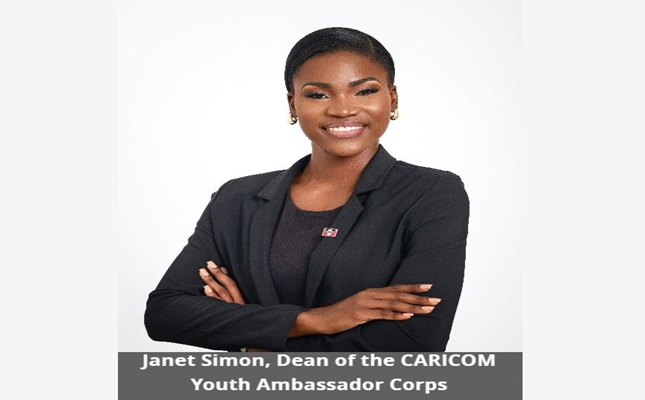
    “This summit is an investment in our nation’s most valuable resource: our young people,” shared planning team members during the broadcast. “It is a structured space where ideas can flow freely, existing perspectives can be constructively challenged, leadership skills can be nurtured, and actionable solutions can be co-created. When young people are empowered to participate in national discourse, they do not just inherit the future—they become the architects who build it.”

    Open to young people aged 7 to 21 from across both islands of the federation, the summit will deliver a multi-week series of interactive activities, facilitated discussions, skills-building workshops, and collaborative learning projects all rooted in the five core focus areas. Beyond topical conversations, the program is designed to equip participants with the confidence, ethical framework, and sense of purpose needed to lead their communities long after the summit concludes. Attendees will also have the opportunity to dive into pressing national and regional challenges, bringing on-the-ground youth perspectives to issues that impact their daily lives.

    A centerpiece of the pre-summit outreach is a nationwide school tour, which will introduce the initiative to students across the country, collect their input to shape summit programming, and build grassroots excitement ahead of the official Summit Week. The tour is intentionally designed to keep youth leadership at the heart of both planning and implementation, ensuring the summit responds to the actual needs and priorities of young people rather than top-down assumptions.

    Unlike many fragmented youth engagement efforts, the summit centers intentional dialogue across differing perspectives, framing diversity of thought not as a barrier to progress but as an opportunity for mutual learning and stronger collective outcomes. Through shared experiences and structured conversation, participants are encouraged to move beyond division and cultivate the values of unity, mutual respect, and shared responsibility for national development.

    As St. Kitts and Nevis navigates an increasingly complex, interconnected global landscape, this initiative reflects a deliberate investment in preparing the next generation to serve as informed citizens, visionary leaders, and active contributors to sustainable national growth. The Planning Committee extended public thanks to Freedom FM for partnering to host the official launch and extend the conversation to audiences across the federation.

    Further updates, including details on the school tour schedule, summit activity agendas, registration information, and upcoming announcements will be released through official national communication channels in the coming weeks. Organizers say the 2026 St. Kitts and Nevis Youth Summit is set to become a landmark event that celebrates the unique brilliance, creativity, and resilience of the nation’s youth while laying the groundwork for a stronger, more inclusive future for all residents of the federation.

  • CDB recommits to tackling regional challenges through strategic realignment

    CDB recommits to tackling regional challenges through strategic realignment

    NASSAU, Bahamas — In a landmark closing address at the Caribbean Development Bank’s (CDB) 56th Annual Meeting held in Nassau on 7 June 2026, CDB President Daniel Best announced a sweeping strategic realignment, reaffirming the institution’s commitment to confronting the Caribbean region’s most urgent development challenges and raising living standards for local communities.

    The policy shift comes after sustained pressure from a broad coalition of regional stakeholders, including youth leaders, national policymakers and industry advocates, who have called on the regional development lender to prioritize high-impact areas: youth capacity-building, professional skills training, climate resilience, and inclusive, sustainable economic expansion. For years, the bank has faced growing expectations to expand its support for the Caribbean’s development agenda, amid overlapping crises ranging from crumbling core infrastructure and unmet workforce readiness needs to rising global geopolitical uncertainty and accelerating climate-related disasters.

    Addressing delegates and regional leaders at the ceremony, President Best acknowledged the widespread concerns raised by stakeholders, confirming that the bank has heeded calls from its governing board and Caribbean youth for a more coordinated development approach and faster execution of ongoing institutional reforms and core strategic priorities. Against this backdrop, Best committed the CDB to accelerating action across all its operations, outlining the new direction: “by aligning our efforts across countries and partners, accelerating decision-making, and deploying practical solutions that translate policy into progress.”

    “Our focus is to move to implementation to impact, from plans to performance, and to ensure that every action we take delivers meaningful and lasting change for the Caribbean,” Best emphasized.

    Turning to the broader global context shaping the Caribbean’s outlook, Best noted the region continues to grapple with a cascade of interconnected challenges: escalating climate shocks, rising geopolitical tensions across major economies, persistent fiscal constraints for small island developing states, slowing global demand and growth, and the onset of the 2026 Atlantic hurricane season, which brings annual risk of catastrophic damage to Caribbean coastal communities and infrastructure.

    “Friends, we arrived this week carrying the weight of a world in flux,” Best said. “These realities have not changed, but we continue to approach these challenges with collective purpose. Throughout this meeting, we listened to one another. We exchanged ideas and together we confronted some of the defining questions of our time.”

    President Best highlighted that the week’s deliberations centered on three core priorities: boosting regional competitiveness, strengthening systemic resilience to shocks, and expanding economic and social opportunities for current and future generations. Despite the stacked challenges facing the region, Best said a unifying, forward-looking consensus emerged from the talks.

    “The future of the Caribbean will not be determined by the challenges we face; it will be determined by the choices we make in response to them,” he stated.

    He also referenced opening remarks by Bahamian Prime Minister Philip Davis, who urged regional leaders to reject a mindset of merely enduring hardship. “Our goal cannot simply be to survive. Our mission is to thrive,” Best quoted Davis as saying.

    According to Best, this proactive, growth-focused philosophy is embedded in the CDB’s newly adopted 2026-2035 Strategic Plan, which guided all discussions during the annual meeting. “At its heart lies a simple proposition: resilience is not an end in itself. Resilience is the foundation upon which prosperity is built,” he explained.

    Under the restructured strategic agenda, the CDB will maintain its longstanding commitment to advancing economic, social, and environmental resilience, while elevating three priorities to the core of all operations: youth development, ambitious climate action, and institutional capacity-building for strong regional governance.

    Discussions held during the meeting’s Impact Room sessions reinforced a key insight for the bank: sustainable long-term development across the Caribbean cannot be funded through public sector resources alone. To fill financing gaps, Best noted that the region must ramp up efforts to mobilize cross-border private investment, strengthen local and regional entrepreneurship, and build a policy and regulatory environment that enables broad, investment-led economic growth.

    During breakout sessions focused on the CDB’s EDGEx initiative, participants also emphasized the growing critical role of robust data, evidence-based research, and shared knowledge in designing effective development policy and delivering measurable outcomes. Best stressed that Caribbean nations need to invest in modern, scalable national data systems, expand cross-border knowledge sharing, and leverage locally generated evidence to guide public decision-making and speed up the delivery of tangible development results.

    Finally, Best noted that discussions on climate finance reiterated a harsh reality long understood by Caribbean nations: the region, which contributes less than 1% of global greenhouse gas emissions, bears a disproportionate share of climate change’s damaging impacts, and requires targeted, accessible climate finance to build resilience and reduce risk.

  • National Bank Partners with the Ministry of Environment as Official Sustainability Partner (June 5)

    National Bank Partners with the Ministry of Environment as Official Sustainability Partner (June 5)

    On June 5, 2026 — World Environment Day — a landmark public-private partnership launched at Basseterre’s Independence Square in St. Kitts, cementing a shared commitment to advancing national climate action and sustainable development across the Federation of St. Kitts and Nevis. St. Kitts-Nevis-Anguilla National Bank Ltd. (SKNANB), the nation’s leading locally owned financial institution, has been formally named the Official Sustainability Partner for the Ministry of Environment, Climate Action and Constituency Empowerment’s 2026 Environment Month.

    This collaboration marks a major milestone in SKNANB’s long-term alignment with the Federation’s Sustainable Island State Agenda (SISA), a national strategic framework that outlines seven core pillars to guide St. Kitts and Nevis toward becoming a fully resilient, self-sufficient nation by 2040. Unlike traditional one-off sponsorship arrangements, the bank frames this collaboration as an active, ongoing commitment rooted in the shared understanding that environmental stewardship is not a responsibility reserved exclusively for government bodies — it requires collective action from every sector of society, including the financial industry.

    Throughout Environment Month 2026, SKNANB will participate in a full slate of cross-national programming, including public awareness campaigns, community-led activation events, and educational outreach initiatives designed to embed sustainable practices across local households and neighborhoods. For the bank, this work goes far beyond symbolic support: officials emphasize that SKNANB is a partner in action, invested in building a livable future that the nation can truly depend on.

    At the core of the partnership is a set of new, accessible green financing products tailored to make sustainable lifestyle upgrades financially attainable for every family and household across the Federation. The first offering, Eco-Friendly Home Upgrade Financing, provides tailored funding for homeowners looking to invest in energy-efficient home improvements — ranging from residential solar panel installation to rainwater harvesting systems and other low-impact home enhancements. The second initiative, Green Vehicle Financing, lowers barriers for consumers transitioning to cleaner transportation by supporting the purchase of electric and hybrid vehicles, directly advancing the Federation’s national decarbonization targets.

    Both products are built around the core principle that sustainable choices should not be out of financial reach for ordinary residents. SKNANB has structured the offerings to be affordable and widely accessible, aligning with both the long-term economic health of the Federation and the protection of its unique natural environment. Officials note that the bank’s commitment does not end when Environment Month concludes: the institution plans to sustain its partnership with the ministry and continue advancing green finance initiatives through every step of the nation’s progress toward its 2040 SISA goals.

    As the leading premier financial institution in the Federation, SKNANB provides a full portfolio of personal, business, and community-focused financial products and services. The organization has long prioritized community development, robust corporate social responsibility, and cross-sector partnerships that deliver lasting positive impact to the people of St. Kitts and Nevis.