
CHARLESTOWN, Nevis — As one local band enters its second consecutive year of boycotting Nevis’ iconic annual cultural festival Culturama over payment scheduling conflicts, Premier Mark Brantley has publicly clarified the Nevis Island Administration’s (NIA) position on performer compensation, pushing back against growing concerns from entertainers over delayed payouts.
标签: Saint Kitts and Nevis
圣基茨和尼维斯
-
US Mounting Economic Pressure in Hopes of Forcing Iran to Fold
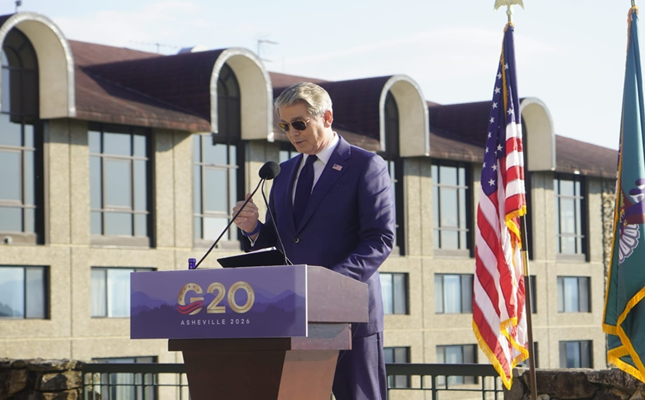
Six months into open conflict between the United States and Iran, Washington has doubled down on a two-pronged strategy of military strikes and financial isolation, aiming to push Tehran’s leadership to the negotiating table by crippling Iran’s access to the global economy. This latest escalation of tensions comes alongside expanded U.S. military operations targeting key Iranian assets, including missile launch sites and critical strategic infrastructure. In a press briefing at the White House Wednesday, U.S. President Donald Trump told reporters that American forces hold operational superiority over Iran, claiming recent U.S. airstrikes have successfully disabled Iranian radar systems and destroyed a wide range of key military infrastructure. “We hit them last night because they took a shot at us in Jordan, and we knocked all of them down,” Trump stated. In parallel to military action, the Trump administration is ramping up targeted pressure on Iran’s Islamic Revolutionary Guard Corps (IRGC), which U.S. officials identify as a core pillar of Iran’s military and national security apparatus. The broader economic pressure campaign includes sweeping new sanctions on Iranian entities and formal appeals to U.S. allies, global commercial banks, and other international financial bodies to sever all existing business ties with Tehran. The push for coordinated international action took center stage this week at the G20 finance ministers and central bank governors’ meeting held in Asheville, North Carolina. During the gathering, U.S. Treasury Secretary Scott Bessent lobbied for global collective action to cut Iran off from international capital markets and secure unimpeded navigation through the Strait of Hormuz, the strategically vital chokepoint through which nearly a fifth of global oil supplies pass daily. Bessent told attendees that even China, Iran’s largest long-standing economic partner, has publicly agreed that freedom of maritime trade through the Strait must be preserved. China has maintained robust economic ties with Iran for decades, particularly in the energy sector, and remains the top buyer of Iranian crude oil. Bessent argued that Beijing holds unique leverage to help de-escalate the conflict, noting that China can contribute through intelligence sharing, economic monitoring, and diplomatic engagement with entities that back the Iranian government. “What I can tell you is that many of our allies came forward and said we will do whatever is necessary because they understand that Iran is in an economic death throes,” Bessent said. He framed the U.S.-led economic campaign as analogous to severing a snake’s head, asserting that once Iran’s remaining productive economic capacity is sufficiently weakened, the country’s ruling leadership will have no choice but to enter negotiations. The Treasury chief also pushed back against claims that China’s continued crude purchases undermine U.S. pressure efforts. He explained that Iran currently holds some 30 million barrels of crude stored on tankers at sea, and that most Chinese purchases of Iranian oil are settled in Chinese yuan rather than globally traded hard currencies such as the U.S. dollar. In response, Washington is specifically targeting the cross-border financial channels that allow yuan earned from oil sales to be converted into other currencies and moved through regional financial systems, he said. Recent U.S. sanctions targeting global financial institutions, including a Dubai-based bank, are part of this strategy to block Iran from accessing U.S. dollars and other reserve currencies. “When that money cannot be converted to dollars, then the regime will starve,” Bessent said. While the pressure campaign is targeted at Iran, its economic ripple effects are being felt across the globe. Resumed hostilities between the two powers have already pushed international crude prices sharply higher, stoking widespread concerns over rising fuel costs and spillover impacts on consumers, businesses, and small import-dependent economies. For small island nations including St. Kitts and Nevis and other Caribbean states, spiking global energy prices translate almost immediately to higher transportation costs, more expensive electricity, and increased operating expenses across all sectors of the economy. Both the federal government in Basseterre and the Nevis Island Administration have been struggling to manage the economic fallout of these rising energy costs. Nevis Premier Mark Brantley recently acknowledged growing public discontent over surging electricity bills as the conflict enters its sixth month. Starting in June 2026, local authorities reintroduced a fuel surcharge to residential electricity customers, though the administration capped the charge 10 cents below the standard residential rate of 79 cents per kilowatt hour. Brantley noted that public reaction to the policy has been split, but admitted that the vast majority of households are already feeling the financial strain of higher electricity costs. As Washington continues to ramp up economic pressure on Tehran, the consequences of the six-month conflict extend far beyond the Middle East battlefield, leaving energy-importing nations and ordinary consumers across the globe to absorb a growing share of the economic cost.
-

SPBS Dr. Stewart O. Williams Annual Awards Gala Set for September 5, 2026
BRONX, N.Y. – Just days from now, the St. Kitts and Nevis diaspora community will gather for one of its most anticipated annual events, as the Society of People from Sandy Point (SPBS) hosts its 2026 Dr. Stewart O. Williams Annual Awards Gala on Saturday, September 5. Taking place at the iconic Maestro’s Catering Hall in the Bronx, this year’s gala centers on the powerful theme “Rooted in Service, Grounded in Giving Back” – a mission that aligns perfectly with the legacy of the event’s namesake, SPBS’s late founder and president Dr. Stewart Williams.
The event will operate under the distinguished patronage of two respected community leaders: Dr. Irvin Sweeney and Mrs. Vernice “Debbie” Williams, widow of Dr. Stewart Williams. Renowned family physician and healthcare executive Dr. Maurice Duggins will deliver the evening’s keynote address, drawing from his own decades-long journey of service to share insights with attendees.
For Dr. Sweeney, the role of gala patron is a fitting recognition of a lifetime spent lifting up communities across St. Kitts and Nevis and the United States. Born and raised in the De Village community of St. Kitts, Sweeney overcame profound hardship early in life – losing his mother at age 12 and facing significant financial barriers – to build a legacy of impact across education, public service, sports, and culture. A trailblazer in youth development, he has held senior roles including National Youth Skills Director, Special Assistant to St. Kitts and Nevis’ Minister of Education and Youth Affairs, and a diplomatic posting at St. Kitts and Nevis’ Embassy in Washington, D.C., where he served as Minister Counselor and Chargé d’Affaires between 1994 and 1995, with accreditation to the U.S., World Bank, United Nations, and Organization of American States. Today, he serves as Associate Dean of Campus Operations and Retention at Camden County College in New Jersey.
His contributions extend far beyond public service and education. A talented athlete, Sweeney represented St. Kitts in national football, claimed five consecutive national table tennis championships, captained the Santos Football Club, and held executive roles on both the St. Kitts Cricket Association and St. Kitts Table Tennis Association. In the cultural sphere, he made indelible marks on calypso: he won the St. Kitts Calypso Monarch title at just 18 years old in 1970, reclaimed the crown in 1975, placed in the top three of 12 out of 14 consecutive national finals, and worked to expand opportunities for young artists by founding the Basseterre Junior High School Calypso Competition and the country’s first National Youth Calypso Competition.
Headlining the evening’s program as keynote speaker is Dr. Maurice L. Duggins, another St. Kitts-born leader who has built a distinguished career in healthcare and medical education. Raised in Sandy Point, Duggins relocated with his family to the U.S. Virgin Islands in 1978, before completing his undergraduate education at Sterling College in Kansas and earning his medical degree from the University of Kansas School of Medicine in 1993. After finishing his family medicine residency in Wichita, he dedicated his career to serving underserved populations, taking on a role as Medical Director of a community safety-net clinic before joining the Ascension Via Christi Health Family Medicine Residency Program as faculty in 2002.
For more than 20 years, Duggins has trained the next generation of physicians as a Clinical Associate Professor at the University of Kansas School of Medicine, with research focusing on pressing public health challenges including childhood obesity, chronic disease management, and systemic health disparities. He has held a series of senior leadership roles across the region’s healthcare sector, including President of the Via Christi Medical Staff in 2009 and 2010, President of the Medical Society of Sedgwick County starting in 2023, and currently serves as Chief Medical Officer of Ascension Via Christi St. Joseph, where he leads initiatives to improve patient care, physician engagement, and clinical quality. In his keynote, he will trace his journey from his childhood in Sandy Point to his current role as a top healthcare leader, highlighting the values of perseverance, service, and community that have shaped his career.
Founded to honor the legacy of the Sandy Point community, SPBS’s core mission centers on strengthening connections across the global St. Kitts and Nevis diaspora, nurturing service-driven leadership, expanding access to education, celebrating cultural heritage, and advancing community development. Through the annual Dr. Stewart O. Williams Awards Gala, the organization recognizes outstanding contributions from community members, elevates emerging talent, and celebrates the enduring spirit of giving back that Dr. Williams championed throughout his lifetime. This year’s event continues that tradition, bringing together community members to celebrate decades of collective impact and inspire the next generation of leaders.
-
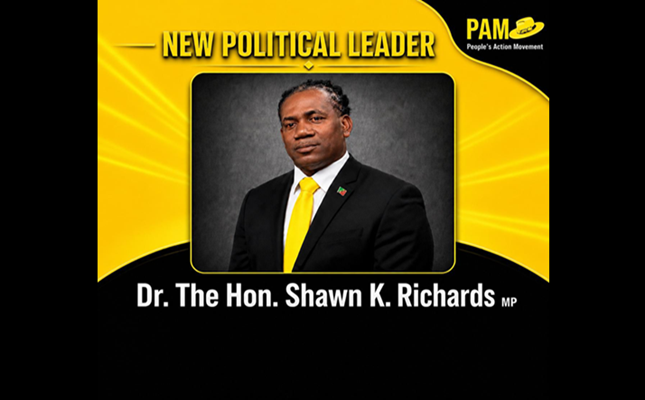
Dr. The Hon. Shawn Richards Elected New Political Leader of PAM
BASSETERRE, St. Kitts – In a decisive vote at a special party caucus held on September 1, 2026, longtime sitting Member of Parliament Dr. the Hon. Shawn Richards has secured the position of Political Leader of the People’s Action Movement (PAM), one of the major political parties in the Federation of St. Kitts and Nevis.
The special leadership caucus, convened at PAM’s headquarters to fill a vacancy created by a recent resignation, delivered a landslide result for Dr. Richards. Of the 83 total ballots cast, he earned 72 votes, while his opponent Lincoln David-Pelle won just 9 votes. Two ballots were deemed invalid and not counted toward the final tally. Dr. Richards’ nomination, put forward by Deputy Political Leader Azard Gumbs, received formal seconding from Acting Chairperson Carlene Henry-Morton, clearing the way for his candidacy ahead of the vote.
With this victory, Dr. Richards becomes the sixth person to hold the role of Political Leader in PAM’s decades-long history. He takes over the post following the resignation of Natasha Grey-Brookes, the immediate former leader, whom he publicly thanked for her years of dedicated service to the organization across multiple roles, including her tenure as leader and as an election candidate.
In his first address to party delegates after the results were announced, Dr. Richards issued a unifying call to all PAM members, urging collective action and a recommitment to the party’s core mission. He acknowledged that the organization stands at a pivotal, critical turning point in its history, but framed this moment as a unique opening for organizational renewal rather than a period of challenge alone.
“The People’s Action Movement is ready for renewed energy, bold and innovative ideas, and a relentless commitment to delivering something extraordinary for St. Kitts and Nevis,” Dr. Richards told delegates. “We must build on our proud legacy while embracing new possibilities, inspiring a new generation and positioning the Movement to lead with purpose, vision and conviction.”
In addition to the leadership election, the special caucus addressed two remaining vacant executive positions left open after the party’s regular July caucus. Shermel Drew won the race for Assistant General Secretary, earning 66 votes to defeat challenger Joevarny Flemming, who garnered 17 votes. Laverne Caines was reappointed to the role of Public Relations Officer without opposition, as no other candidates stood for the position.
Tuesday’s voting completes PAM’s full slate of executive leadership. All newly appointed officers will undergo formal ratification at the party’s 60th National Convention, scheduled for September 27, 2026. In an official statement following the caucus, PAM extended formal congratulations to Dr. Richards and all newly elected officials, noting that the organization looks ahead to continued growth and progress for the movement. This report is based on an official press release from PAM originally published by SKNVibes.com.
-
Government confirms portfolio changes as PM Drew seeks overseas treatment
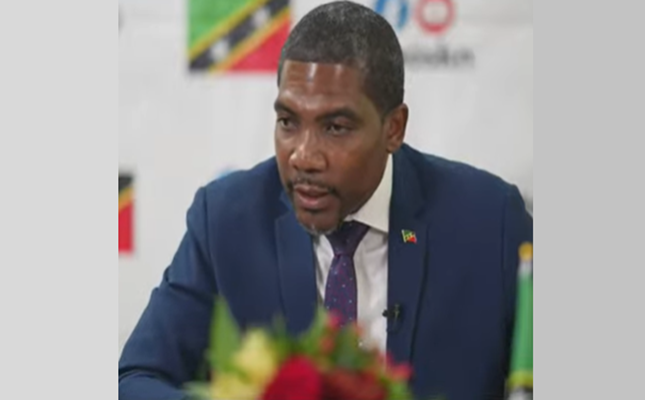
BASSETERRE, St Kitts — In a formal announcement released Tuesday 1 September 2026, the Cabinet Secretariat of Saint Kitts and Nevis confirmed a series of temporary adjustments to ministerial portfolios after Prime Minister Dr. Terrance Drew departed the country to seek specialized medical care overseas for an undisclosed health condition.
The reshuffle comes after local medical teams recommended the prime minister pursue advanced treatment outside the country. According to official accounts, Dr. Drew first became unwell and received 18 hours of initial treatment and observation at home before his care team advised international specialist care. The decision to travel was framed as a precautionary step, made fully in line with the explicit guidance of his attending physicians.
To date, the government has not released any details on the specific nature of Dr. Drew’s ailment, but officials confirmed that the prime minister remains in stable condition. “He remains in stable condition, and the Government is heartened by the continued messages of support and prayer from citizens, residents, and regional and international partners,” the Secretariat’s statement read.
Acting on Dr. Drew’s own request, the temporary portfolio reassignments have been implemented to guarantee unbroken governance, uphold constitutional succession protocols, and prevent any interruption to the day-to-day administration of national affairs. Deputy Prime Minister Geoffrey Hanley will step into the role of Acting Prime Minister for the duration of Dr. Drew’s absence. In addition to his existing ministerial duties, Hanley will also take over oversight of the Ministries of Finance, Health, and Human Resource Management and Social Security.
Attorney-General Garth Wilkin will assume temporary responsibility for the portfolios of National Security, Citizenship and Immigration, filling the gaps left by the prime minister’s departure.
The Cabinet Secretariat emphasized that these temporary changes were specifically structured to eliminate any risk of disruption to government operations. “These measures are designed to ensure that every arm of Government continues to function without disruption, and that the essential services on which the people of Saint Kitts and Nevis rely remain fully operational,” the statement explained.
As news of the prime minister’s medical leave spread, messages of concern and well-wishes have poured in from across Saint Kitts and Nevis’ political spectrum, as well as from governments and public figures across the wider Caribbean region. The Federal Cabinet has reaffirmed its unified support for Dr. Drew and his family throughout this period, issuing a formal statement of hope for a full and rapid recovery.
-
St Kitts Prime Minister Drew hospitalised, to seek medical attention overseas
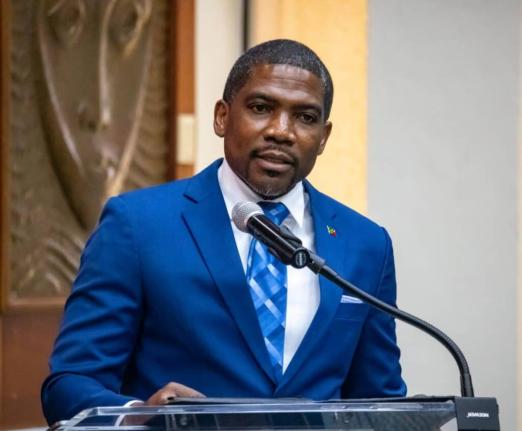
BASSETERRE, St Kitts – In an official announcement released by the government of St Kitts and Nevis, the Caribbean nation’s 49-year-old Prime Minister Dr. Terrance Drew has been admitted to the local Joseph N France General Hospital since Sunday night, and will be transferred to an overseas medical facility for specialized observation and precautionary monitoring per the recommendation of his care team.
Drew was admitted after reporting mild physical discomfort, accompanied by nausea and persistent headache. According to the government statement, after 18 hours of in-hospital observation and comprehensive clinical assessment, the Prime Minister remains awake, fully alert, and his overall condition is classified as stable. However, citing a commitment to prioritizing Drew’s health and acting out of an abundance of caution, his medical team concluded that transferring him abroad for more advanced specialized care is the best course of action.
Government administrative bodies confirmed on Monday that logistical arrangements for the overseas medical transfer are currently underway. The Cabinet of St Kitts and Nevis and the national administration have issued a public appeal, asking residents of the federation to hold the Prime Minister in their prayers and wish him a rapid, full recovery.
In a reassuring note to the public, the government emphasized that all routine state functions and governmental operations will continue to run seamlessly and without any disruption during Drew’s medical leave. The administration also confirmed that a public update on the Prime Minister’s condition will be released at 7:00 p.m. local time on Monday, to keep the nation informed of any new developments. This report was sourced from regional Caribbean media, with contributions from CMC.
-
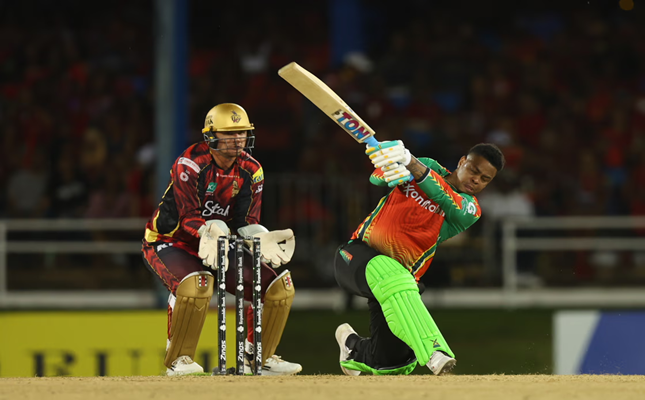
Hetmyer hundred bests Knight Riders
The 2026 Republic Bank Caribbean Premier League (CPL) delivered another thrilling twist on August 31, as Shimron Hetmyer’s historic innings carried the Guyana Amazon Warriors to a nine-run DLS victory over hosts Trinbago Knight Riders at Queen’s Park Oval, extending the Warriors’ perfect unbeaten run to start the tournament and ruining Trinbago’s Independence Day celebration.
The match was hit by weather disruption from the outset. After Trinbago’s PowerPlay bowling unit got off to a dream start, reducing the Warriors to 22 for 2 off less than six overs with early dismissals of top-order stars Glenn Phillips and Shai Hope from Akeal Hosein and debutant seamer Lahiru Kumara, a heavy rain shower forced a lengthy delay. When play resumed, the match was trimmed to 16 overs per side — a change that would completely shift the momentum of the game, especially for Hetmyer, who was playing his 100th career CPL match.
After a brief settling-in period following the break, Hetmyer found his rhythm immediately, racing to a half-century and putting Trinbago’s bowling attack under relentless pressure. The hosts’ season-long bowling weakness was on full display: their experienced spinners have carried the unit through the 2026 tournament, but their seamers have consistently lacked penetration, a gap Hetmyer exploited ruthlessly. In the 13th over, he hammered debutant Kumara for 30 runs, exploding into the closing stages of the innings alongside all-rounder Romario Shepherd. The pair combined for a blistering 85 runs off the final four overs, turning a modest start into a mammoth total. It was during this late rally that Hetmyer equaled the CPL record for the fastest century, reaching the milestone in just 40 deliveries before finishing unbeaten on 111 off 43 balls. The Warriors closed their innings at 185 for 5, leaving Trinbago Knight Riders with an adjusted target of 182 runs under the DLS method.
In chase, the hosts got off to a solid start before a stunning turning point: Glenn Phillips pulled off a spectacular one-handed boundary catch to remove star opener Sunil Narine, catching even Phillips off guard. Colin Munro, Narine’s formidable opening partner, fell shortly after to off-spinner Mohammad Nabi, leaving the Knight Riders two key wickets down early.
Nicholas Pooran injected much-needed momentum into the Trinbago chase, smashing seven boundaries including four sixes to shift pressure back onto the Warriors. But Nabi struck again, removing Pooran for 43 caught out, triggering a collapse of wickets. With the required run rate climbing rapidly, Trinbago batsmen were forced to attack recklessly, leading to cheap dismissals for Jyd Goolie, Justin Greaves, and Akeal Hosein.
Alex Hales remained the Knight Riders’ last hope, producing a brilliant counter-attacking innings of 55 that included seven maximums and kept the hosts in the hunt until the final overs. His innings ended when Shamar Joseph clean-bowled him, leaving Romario Shepherd to defend 24 runs off the final over for the Warriors. Shepherd closed out the win comfortably, securing the result that keeps the Warriors’ 100% win record intact through the early stages of the 2026 CPL tournament.
-

Nevis delegation inspects rig prior to mobilization for geothermal drilling
In a key milestone for the Caribbean nation’s transition to renewable energy, a technical delegation from Nevis has completed a final technical inspection of the Tyr drilling rig, operated by Iceland Drilling, ahead of the equipment’s shipment to Nevis for a major geothermal energy development project. Dated 31 August 2026, the inspection mission marks a critical step forward for the 30-megawatt geothermal initiative that aims to transform the energy landscape of St. Kitts and Nevis.
Led by the Nevis Island Administration and executed by Nevis Electricity Company Limited (NEVLEC), the project secured international backing months ago when Iceland Drilling was awarded the turnkey contract for geothermal drilling services at the Hamilton site on Nevis. The contract covers the development of six geothermal wells, which will be drilled using the 272-tonne Drillmec HH-300 Tyr rig, the same unit inspected by the Nevis delegation in Iceland. Preparation for the drilling operation is already underway: Icelandic engineering firm COWI will lead civil works to ready the drilling pad, with on-site oversite provided by Iceland Drilling. Drilling operations are on schedule to launch in the second half of 2026.
The inspection delegation was headed by newly appointed NEVLEC General Manager Nelson Stapleton, and included Project Coordinator Naftalie Erra plus a team of technical specialists from Scotia Drilling Consultants, a UK-based industry leader. During the visit, the NEVLEC team held in-depth working sessions with Icelandic drilling, engineering, and geothermal experts to familiarize themselves with the rig’s specifications, operational requirements, and logistics needs for deployment on the island.
In comments following the inspection, Stapleton emphasized the dual goals of the pre-mobilization mission. “As we move closer to drilling, it is important that NEVLEC has direct oversight of the rig’s readiness and a clear understanding of what will be required once the equipment is mobilized to Nevis,” he said. He added that capacity building was a core priority: “Equally important is building the capacity of our team so that the knowledge and experience gained during this stage remains within NEVLEC and can support the project throughout drilling and the subsequent development of the geothermal resource.”
Backed by the Federal Government of St. Kitts and Nevis and key financial partners including the Caribbean Development Bank, Inter-American Development Bank, and Green Climate Fund, the 30-MW project is designed to deliver clean baseload power to both St. Kitts and Nevis. The initiative follows the successful recent launch of commercial operations at a 10-MW geothermal plant in neighboring Dominica, a model that St. Kitts and Nevis aims to replicate to reduce its reliance on expensive, polluting imported fossil fuels. Beyond meeting domestic energy needs, government officials have confirmed that ongoing discussions are underway with neighboring Antigua and Barbuda to explore a potential cross-border power supply agreement that would extend the benefits of Nevis’ geothermal resource across the Eastern Caribbean.
-

CPL 2026: Antigua and Barbuda Falcons move top after rain washes out clash with St Kitts and Nevis Patriots – WIC News
The 2026 edition of the Caribbean Premier League (CPL) has seen a dramatic shift in the league standings after persistent rain forced the abandonment of the highly anticipated 21st match between Antigua and Barbuda Falcons and St Kitts and Nevis Patriots on Sunday, August 30. The game, hosted at Warner Park in Basseterre, St Kitts and Nevis, never got underway beyond the pre-match toss, resulting in an official “no result” and one point awarded to each side.
For the Antigua and Barbuda Falcons, that single point has proven enough to propel them to the summit of the CPL 2026 points table. After eight matches played, the side holds a total of nine points, with a recent run of form that includes three wins, three losses, and now one no result, giving them a narrow one-point lead over second-placed Saint Lucia Kings, who have accumulated eight points from seven outings.
In contrast, the result leaves St Kitts and Nevis Patriots mired in the lower half of the rankings. With just three points from six matches, the side remains in seventh position in the eight-team table, still searching for consistent form through the early and mid-stages of the tournament.
Full updated league standings as of August 30, 2026, confirm a tight race for the top playoff positions: St Kitts and Nevis Patriots sit seventh on three points, just one point behind Barbados Tridents and Trinbago Knight Riders who are joint fifth on four points. Guyana Amazon Warriors hold fourth place on six points, remaining undefeated after three opening wins, while Jamaica Tallawahs are third on eight points, level with Saint Lucia Kings.
Prior to the weather intervention, Antigua and Barbuda Falcons won the toss and named a strong starting lineup featuring Evin Lewis, Amir Jangoo, Hasan Nawaz, Moeen Ali, Shadab Khan, Fabian Allen, Shamar Springer, Joshua James, Alzarri Joseph, Sufyan Moqim, and Jayden Seales. St Kitts and Nevis Patriots fielded an equally competitive XI, with Kyle Mayers, Johnson Charles, Andre Fletcher, Alick Athanaze, Dasun Shanaka, Jason Holder, Wanindu Hasaranga, Navin Bidaisee, Naseem Shah, Jeremiah Louis, and Waqar Salamkheil set to take the field. The match officiating team was led on-field by umpires Carl Tuckett and Zahid Bassarath, with Gregory Brathwaite serving as TV umpire, Chris Wright as reserve umpire, and Reon King as match referee.
The CPL 2026 schedule continues immediately, with the 22nd match of the tournament set to take place on August 31 between Trinbago Knight Riders and Guyana Amazon Warriors, as the race for playoff positions intensifies across the Caribbean.
-
St. Martin Delegation Visits Nevis to Explore Geothermal Energy Development
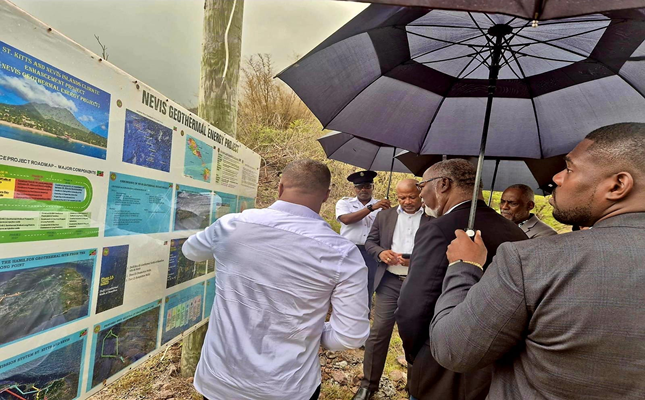
In a landmark step toward cross-border renewable energy collaboration in the Caribbean, a delegation from St. Martin led by Territorial Council President Louis Mussington visited the Federation of St. Kitts and Nevis on August 30, 2026 to examine Nevis’ fast-advancing geothermal energy development initiative. The visiting group was formally welcomed by Nevis Premier and Energy Minister Mark Brantley, who was joined by Nevis Minister of Works Spencer Brand for the day of site visits and bilateral discussions.
The delegation’s itinerary centered on a guided tour of the Hamilton Geothermal Site, the primary hub of Nevis’ effort to unlock its massive underground geothermal reserves. Brantley walked the group through the project’s development journey to date, sharing details on completed exploration work and upcoming milestones for the initiative. He explained that initial exploration drilling has already confirmed that Nevis hosts one of the world’s most promising geothermal resources, ranked the seventh most viable globally. The island’s natural advantages—consistent high underground heat, easily accessible project sites, and completed geological mapping of all potential resource areas—position the project for efficient, steady development. Brantley noted that development will launch first at the N1 site, with other mapped areas reserved for future expansion as demand grows.
Key progress is already accelerating on the ground: Brantley confirmed that a specialized drilling contractor has been secured, and the main drill rig has completed mandatory inspection in Iceland, with logistics already underway to transport the equipment to Nevis. According to the current project timeline, on-site construction activity is expected to commence within the next 60 to 90 days, a milestone that will mark the transition from pre-development planning to full production drilling. Brantley emphasized that this start of active drilling will be a major turning point for the years-long effort to bring geothermal energy online for the island.
Following the site tour, the delegation reviewed a detailed informational exhibit about the project, where Mussington asked targeted questions about regulatory frameworks, production projections, and infrastructure plans. The St. Martin leader praised the Nevis Island Administration (NIA) for the steady, tangible progress it has made in advancing the clean energy project, and formally stated St. Martin’s interest in importing carbon-free geothermal energy from Nevis to meet its own clean energy targets.
Beyond the core geothermal site visit, the delegation also toured the Nevis Electricity Company Ltd. (NEVLEC) Power Plant in Prospect, where Acting General Manager Hazel Chiverton and Generation Manager Jevon Eaton led a walkthrough of the facility, explaining the island’s current electricity generation operations and how geothermal energy will integrate into the existing grid. After the official business visits, the delegation was hosted for lunch at Drift Restaurant and enjoyed a tour of Nevis’ historic Bath Springs before traveling onward to St. Kitts.
In a post-visit reflection, Brantley highlighted that the high-level visit from St. Martin reflects a growing wave of regional interest in Nevis’ untapped geothermal potential, opening new doors for integrated Caribbean energy cooperation. “It is heartening to see that our neighbouring islands are looking to us ultimately to provide them with clean power, and we are resolute in our commitment to harnessing this geothermal energy for the benefit of the people of Nevis, the people of St. Kitts, and the wider region,” Brantley said. The visit lays the groundwork for future collaborative agreements that could see Nevis become a regional clean energy hub, supporting surrounding islands in their transitions away from fossil fuels.