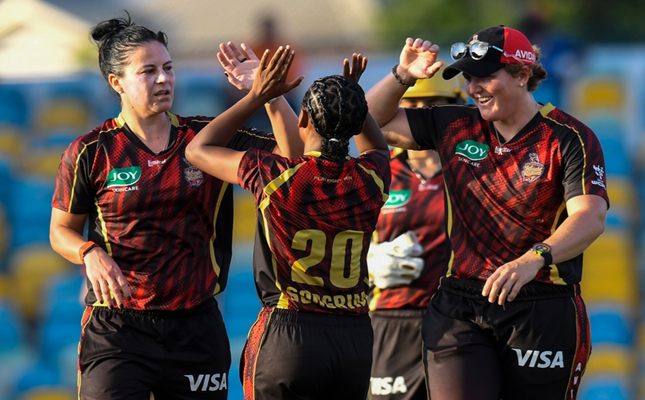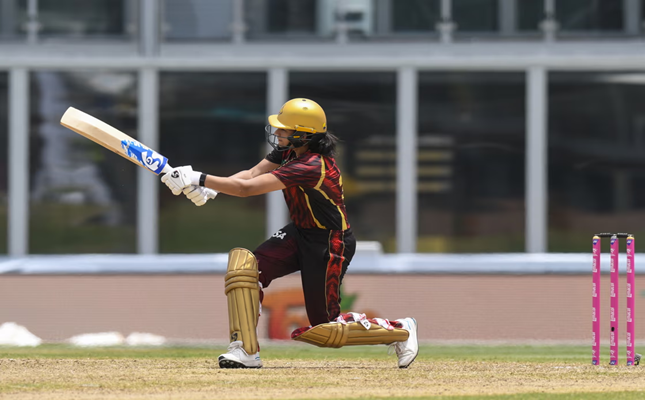
The 2026 Limacol Women’s Caribbean Premier League continued its early-season action at Bridgetown’s Kensington Oval on Thursday, September 10, with expansion franchise Jamaica Empress falling to a dominant nine-wicket defeat at the hands of two-time defending champions Trinbago Knight Riders. The result keeps TKR’s unbeaten start to the tournament intact, with the side cruising to victory with more than eight overs left in their 101-run chase.
The game’s foundation for victory was laid long before TKR stepped into bat, after the Knight Riders won the toss and elected to insert the debutante franchise into bat. From the first ball, TKR’s bowling unit set a relentless tone, breaking open the Empress batting lineup early: the side lost two wickets on consecutive deliveries in just the second over, with one of those scalps being star former Australian captain Meg Lanning, one of the most high-profile signings of the new franchise.
While middle-order batter Rashada Williams offered steady resistance, compiling a patient 40 runs off 47 deliveries, she received little consistent support from her batting partners as the Empress struggled to build any meaningful momentum throughout their 20 overs. The side finished their allotted innings at 100 for 9, with Chinelle Henry – who had starred in the Empress’s opening match victory – finishing on an unbeaten 22 to close out the innings.
Leading TKR’s bowling attack was Player of the Match Karishma Ramharack, who delivered a masterclass in controlled spin bowling. Ramharack finished with figures of 3 wickets for just 11 runs across her four full overs, leading a disciplined collective bowling effort that kept the Empress’s run total far below par.
In response, TKR’s run chase was calmly and expertly led by opening batter Yastika Bhatia, who produced a dynamic innings that kept the required run rate well under control from the first over. The side lost only one wicket throughout the chase: Laura Harris was stumped after being beaten by a sharply turning delivery from spinner Nonkululeko Mlaba, with the score at 35 for 1 at the end of the fifth over.
By the time Harris departed, TKR was already well positioned to secure a second consecutive win. Captain Deandra Dottin joined Bhatia at the crease, and the pair put together an unbeaten 69-run second-wicket partnership to seal the win. Dottin contributed a quickfire 22 runs off 15 deliveries, while Bhatia remained unbeaten at the crease on an impressive 57 runs off 34 balls, steering the side across the finish line with 53 balls still left to spare.
Looking ahead to the next round of fixtures, TKR will next take on the Guyana Amazon Warriors, while the Jamaica Empress – who hold a game in hand over most of the competition – will look to bounce back from their first defeat of the season with a match against the Barbados Tridents.