标签: Haiti

海地

  • Haiti : Details on the new PNH administrative building in Les Cayes

    Haiti : Details on the new PNH administrative building in Les Cayes

    Against the backdrop of ongoing efforts to strengthen Haiti’s national security infrastructure, the United Nations Development Programme (UNDP) has formally transferred a purpose-built two-story administrative headquarters to the Southern Departmental Directorate (DDS) of the Haitian National Police (PNH) in Les Cayes. This project forms a core component of the national PNH Support Program, with full financial backing from the Government of Canada.

    Spanning 230 square meters across two levels, the new facility is designed to meet the diverse operational needs of local police units, with more than 10 dedicated office spaces and two purpose-built access ramps to ensure full accessibility for officers and community members with reduced mobility. The building houses fully renovated workspaces for several critical law enforcement and support divisions, including the Departmental Judicial Police Service (SDPJ), the Juvenile Protection Brigade (BPM), and the specialized unit tasked with combating Gender-Based Violence (GBV), alongside associated support services.

    To address persistent infrastructure challenges common across Haiti, the facility includes resilient, off-grid-ready utilities that guarantee uninterrupted operations. A cutting-edge hybrid energy system is installed, featuring eight 620-watt solar panels that deliver a total 6 kilowatts of photovoltaic capacity, paired with two lithium-ion batteries that provide 10 kilowatt-hours of energy storage. For extended periods of low sunlight, an 11-kilowatt backup diesel generator connected to a 1,500-gallon fuel tank ensures continuous power. The building also features an independent water supply system anchored by a 6,400-gallon storage tank, which provides five days of operational water autonomy for all on-site activities. All workspaces are outfitted with appropriate, ergonomic furniture and necessary operational equipment to support daily police work.

    The completion of this infrastructure project is expected to deliver wide-ranging benefits for both police personnel and the Haitian communities served by the DDS. For criminal investigations, the improved, secure facility will allow officers to conduct case work in far safer and more efficient conditions than the previous inadequate headquarters. For vulnerable populations, the upgraded BPM workspace will enable the unit to deliver higher-quality support and care for children, whether they are victims of crime or young people interacting with the justice system. Most importantly, the new building provides frontline police officers with a functional, secure, and appropriate working environment that addresses longstanding gaps in local infrastructure.

    Beyond the physical infrastructure itself, this investment represents a key step forward in sustained efforts to boost the operational capacity of the Haitian National Police as a whole. By equipping local police teams with the essential, reliable resources they need to carry out their work effectively and continuously, the project supports broader national goals to expand and strengthen the consistent, effective presence of law enforcement across all regions of Haiti. This development aligns with ongoing international commitments to support Haitian institutional stability and public safety through targeted infrastructure and capacity-building investments.
  • The environment at the heart of Haiti’s national recovery

    The environment at the heart of Haiti’s national recovery

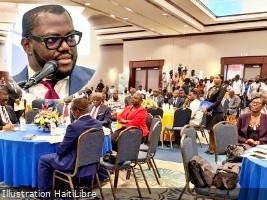
    Against a backdrop of ongoing national efforts to rebuild security, infrastructure and economic momentum, Haiti has taken a landmark step to position environmental stewardship as a foundational pillar of long-term recovery. On April 16, 2026, Haiti’s Ministry of Environment (MdE) convened a high-profile sectoral gathering at Port-au-Prince’s Karibe Convention Center, bringing together a broad coalition of domestic government leaders, multilateral agencies, international donors and diplomatic partners to align collective action on environmental progress. The summit’s core goal is to streamline coordination across environmental initiatives, unify divergent stakeholder efforts, and turn sound ecological governance into a driving force for national stability and inclusive development. The meeting operated under the official patronage of Haitian Prime Minister Alix Didier Fils-Aimé. In his remarks delivered on the Prime Minister’s behalf, Chief of Staff Axène Joseph underscored that environmental action can no longer be sidelined as a secondary concern. It is now inextricably linked to the Haitian government’s three overarching national priorities: restoring widespread security across the country, holding inclusive and credible general elections, and kickstarting sustained economic recovery that lifts vulnerable communities out of poverty. Nicole Boni Kouassi, the top United Nations representative in Haiti, echoed this framing during her address, highlighting the deep, mutually reinforcing connection between responsible natural resource management and long-term security and stability. To operationalize this link, she officially announced the launch of a new five-year pilot initiative that centers crime prevention through equitable, sustainable resource management across vulnerable regions. Valéry Fils-Aimé, Haiti’s Minister of Environment, laid out a clear, ambitious four-pillar national roadmap to guide the country’s environmental transformation over the coming years. The first pillar focuses on systemic waste management, kickstarted by the new Konbit Haiti Zero Waste program designed to tackle the country’s growing waste management challenges at the community and national levels. The second pillar prioritizes large-scale ecological rehabilitation, including community-led reforestation projects and improved watershed management to protect critical freshwater resources and reduce erosion and flood risk. Third, the roadmap commits to strengthening environmental governance by updating and reinforcing institutional frameworks to enforce regulations and coordinate cross-agency action. The fourth and final pillar centers on unlocking climate finance, through deepened external cooperation with global partners and targeted support to grow green entrepreneurship that creates jobs while advancing ecological goals. “The environment is no longer an afterthought or an optional add-on to our national recovery plans,” Minister Fils-Aimé emphasized in his keynote address. “It is a strategic lever that will make or break our efforts to build stable, prosperous, resilient communities across Haiti.” A core component of the two-day gathering was a structured, interactive dialogue between the Haitian government and attending technical and financial partners. Representatives from a wide range of leading organizations participated, including UNESCO, UNICEF, the Global Environment Facility (GEF), the United Nations Development Programme (UNDP), the United Nations Environment Programme (UNEP), the Food and Agriculture Organization of the United Nations (FAO), the International Fund for Agricultural Development (IFAD), the World Bank, and the Partnership Initiative Sustainable Land Management (PISLM). Diplomatic representatives from Taiwan and Japan, two key bilateral partners for Haiti, also outlined their respective strategic priorities, identified areas of shared alignment with the national roadmap, and explored opportunities for synergistic collaboration to advance shared goals. The high-level sectoral roundtable is scheduled to conclude on April 17, 2026 with a full day of technical workshop sessions. During these working sessions, environmental experts and implementing partners will focus on translating the broad strategic guidelines agreed upon during the plenary into concrete, immediate operational actions. Priority discussions will center on advancing early action in two high-impact areas: rolling out national waste management infrastructure and improving soil protection across agricultural and ecologically critical regions.

  • Morocco signs an agreement with Haiti in the field of air transport

    Morocco signs an agreement with Haiti in the field of air transport

    In a diplomatic move set to reshape regional and international air connectivity, Morocco sealed three bilateral air transport agreements with the Cooperative Republic of Guyana, the Republic of Haiti, and the Republic of Mauritius on April 16, 2026. The signing ceremony took place in Marrakech, on the sidelines of the ongoing Global Symposium on Implementation Support (GISS 2026), with Morocco’s Minister of Transport and Logistics Abdessamad Kayouh leading the kingdom’s delegation for the negotiations and formal signing.

    Each of the three new agreements is centered on expanding bilateral air service operations between Morocco and its respective partner nation. The core goal of the pacts is to put in place a modern, fair regulatory framework that aligns fully with global civil aviation standards set by international aviation bodies. Key provisions laid out in the agreements cover multiple critical areas of air transport operations: rules for the designation of multiple airlines to operate routes between the signatory countries, guidelines for setting weekly flight frequencies, and stringent protocols to uphold civil aviation safety and security across all operations.

    Beyond regulatory alignment, the agreements open new doors for deepened collaboration between the national and private airlines of all participating countries. In particular, they create clear pathways for the development of joint commercial partnerships and technical knowledge-sharing initiatives. Industry analysts expect these new linkages will drive tangible improvements in cross-regional air connectivity, streamlining the movement of both passenger traffic and cargo shipments between Morocco, the Caribbean nations of Guyana and Haiti, and the Indian Ocean island nation of Mauritius.

    This round of agreement signings is not an isolated diplomatic step, but rather a direct implementation of the broader connectivity strategy laid out under the policy of His Majesty King Mohammed VI. The strategy prioritizes strengthening Morocco’s air transport links with partners across the globe, with a long-term vision of cementing the kingdom’s position as a leading regional aviation hub that connects the African continent to Europe, the Americas, Asia, and Oceania.

  • Quiz : Did You Know ? #16

    Quiz : Did You Know ? #16

    In the 16th edition of its popular “Did You Know?” quiz series, published April 16, 2026, Haiti-based digital platform HaitiLibre has shared the inspiring legacy of Mary Jackson, the groundbreaking aerospace pioneer whose career redefined barriers for Black women in American science. The feature, pulled from the answer key of the platform’s “Famous Women 2.1” expert quiz, details Jackson’s decades-long fight against systemic racial segregation and gender bias to make her mark on the early U.S. space program.

    Jackson began her career at NASA’s predecessor, the National Advisory Committee for Aeronautics, working as a human computer in the racially segregated West Unit of Langley Research Center in Virginia. Eager to advance from mathematical computing to full engineering work, Jackson faced a major roadblock: the required advanced math and physics courses were only offered at a local all-white high school. Refusing to abandon her goal, she successfully petitioned the local court for special permission to enroll in the segregated evening classes, clearing the path for her promotion.

    In 1958, the same year NASA was founded, Jackson made history as the agency’s first Black female aeronautical engineer. As a leading specialist in fluid dynamics and wind tunnel testing, she spent decades analyzing flight test data to refine the aerodynamic design of early American space capsules, contributing directly to the success of the nation’s first human spaceflight programs. Far beyond her technical achievements, Jackson dedicated the latter half of her career to expanding opportunity within NASA, working to remove institutional barriers that blocked the hiring and promotion of other women and people of color at the agency.

    Jackson’s remarkable dual fight against racial and gender prejudice to reach the highest echelons of scientific achievement gained widespread mainstream recognition through the best-selling book and major feature film *Hidden Figures*, which brought her story to global audiences.

    In addition to sharing Jackson’s story, the HaitiLibre team used the quiz feature to invite readers from around the world to explore its expanding collection of free general knowledge content. The QuizHaitiLibre platform, which launched officially in 2025, hosts dozens of general knowledge quizzes covering topics ranging from Haitian history and culture to global news and science, with new content added to the platform every month. As of the latest April 2026 update, 28 new quizzes have been added to the site, which is completely free to access and requires no user registration. Quizzes are offered in both French and English, with three difficulty levels — normal, intermediate, and advanced — designed to suit casual learners and experienced trivia fans alike. Readers can access the full platform at https://quiz.haitilibre.com/en to test their knowledge and explore new topics.

  • «unsustainable food inflation» says the Governor of the BRH

    «unsustainable food inflation» says the Governor of the BRH

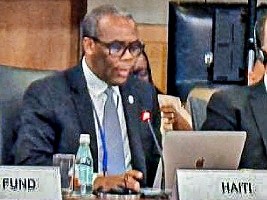
    Against the backdrop of the 2026 IMF and World Bank Spring Meetings held in Washington D.C., Ronald Gabriel, Governor of the Bank of the Republic of Haiti (BRH), has delivered a stark wake-up call to the global community on the cascading crises facing the world’s most vulnerable economies. Joining delegations from Haiti’s central bank and Ministry of Economy and Finance for a slate of high-level talks, including the G24 Ministerial Meeting, Gabriel used his address to highlight the escalating structural challenges pushing marginalized nations like Haiti to the brink.

    Gabriel opened his remarks by commending the G24 Secretariat for its ongoing work, before emphasizing that the overlapping crises facing low-income and fragile states are no longer temporary shocks – they have become a permanent structural reality shaping daily life for millions. The ripple effects of new global conflicts on energy and food markets, he argued, have exacerbated deep pre-existing vulnerabilities that many vulnerable nations have never been able to address. For these countries, global shocks are not abstract economic data points: they translate directly to skyrocketing food costs that households cannot afford, shrinking room for governments to fund critical public services, and rapidly declining quality of life for the populations most exposed to instability.

    Compounding these pressures, Gabriel added, are shifting global trade dynamics, increasingly restrictive migration policies, and a dramatic drop in international development assistance – resources that many fragile nations depend on to keep basic services running, even as their need grows more urgent. Haiti, he noted, stands as a devastating case in point. Already grappling with severe internal structural weaknesses, the Caribbean nation is now bearing the full brunt of these overlapping external shocks, putting at risk the limited economic and social progress the country has managed to make through years of extraordinary hardship.

    Gabriel went on to outline two core institutional reforms that he says are essential to addressing the growing crisis. First, he called for the immediate completion of the 16th General Review of Quotas at the IMF, arguing that adequate, fairly distributed resources are a non-negotiable prerequisite for the institution to effectively meet the actual needs of all its member states. Second, he pushed for truly inclusive multilateral governance, urging accelerated negotiations to expand representation for fragile states in global decision-making bodies. Amplifying the voice of vulnerable nations, he argued, would allow for the creation of targeted, innovative policy tools that are tailored to their unique structural vulnerabilities – a change that conflict-burdened nations cannot afford to delay.

    Closing his address, Gabriel emphasized that the global community must move beyond symbolic declarations of support for vulnerable states and deliver concrete, operational commitments to multilateral action. For nations like Haiti facing cascading crises, the time for talk has passed: the world must act now.

  • Over $10 million USD invested in Haiti, a new factory is being built at CODEVI

    Over $10 million USD invested in Haiti, a new factory is being built at CODEVI

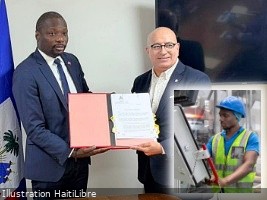
    In a landmark move for Haiti’s ongoing economic revitalization efforts, government officials formalized a deal on April 15, 2026, to host a new manufacturing facility from global packaging leader ALPLA Group at the CODEVI Industrial Development Company free trade zone in Ouanaminthe, a city in Haiti’s northeastern region.

    The project brings more than $10.2 million in foreign direct investment to the Caribbean nation, marking a major vote of confidence in Haiti’s recent policy overhauls designed to improve its domestic business environment. For policymakers, the investment is not just a capital injection—it is tangible proof that economic reform efforts are starting to pay off with international stakeholders.

    The new local entity, ALPLA HAITI S.A., operates as a subsidiary of Austria-based ALPLA Group, a 30-year industry giant that maintains production and distribution operations across more than 45 countries worldwide. ALPLA specializes in producing high-quality bottles, caps, injection-molded components and cutting-edge sustainable packaging solutions for a wide range of consumer and industrial sectors. This new Haitian facility aligns with the group’s broader global expansion strategy, which prioritizes eco-friendly operations, sustainable supply chain management and increased use of recycled raw materials in production processes.

    Beyond manufacturing output, the project is expected to deliver long-term social and economic benefits to local communities. Industrial facilities of this scale typically create hundreds of direct jobs across production, logistics, facility maintenance and administrative roles, and will facilitate the transfer of advanced technical skills to local workers. This talent development is projected to strengthen Haiti’s overall human capital and boost the nation’s competitiveness in regional industrial and export markets.

    Haiti’s Minister of Commerce and Industry, James Monazard, emphasized the Haitian government’s strategic focus on unlocking growth in the country’s northern corridor, particularly the Northeast region. He reaffirmed the executive branch’s continued commitment to removing barriers for international and domestic investors, outlining ongoing policy efforts including administrative process simplification, updates to strengthen the national investment legal framework, targeted financial incentives and on-the-ground support for incoming businesses operating in the country’s free trade zones.

  • The UN releases $140 million in emergency aid to help more than 1 million people in Haiti

    The UN releases $140 million in emergency aid to help more than 1 million people in Haiti

    As Haiti’s catastrophic humanitarian collapse accelerates to unprecedented levels, the United Nations has approved the release of $140.5 million in urgent emergency funding to deliver life-saving support to more than 1 million vulnerable Haitians. The intervention comes as official data confirms that more than half of the Caribbean nation’s total population now requires critical assistance, with widespread gang violence, crippling food insecurity, and mass forced displacement pushing millions of families to the edge of survival.

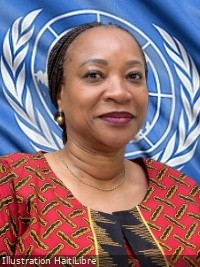
    Nicole Boni Kouassi, the UN Humanitarian Coordinator for Haiti, emphasized that the newly allocated funding will address the most immediate needs across the country, covering core services from food assistance and clean drinking water to emergency healthcare and temporary shelter. A key focus of the intervention will be targeted support for at-risk and marginalized groups: this includes protection services for women and children vulnerable to gender-based violence, medical and mental health care for survivors of sexual assault, nutritional treatment for acutely malnourished children, and tailored assistance for people living with disabilities. Funding from the UN Central Emergency Response Fund (CERF) will also keep educational programming running, allowing children to continue learning amid ongoing instability.

    Aid distribution will be prioritized for the hardest-hit regions, identified through a rigorous, data-driven needs assessment. To overcome access barriers that have blocked aid from reaching cut-off communities, a portion of the funding will be allocated to support the UN Humanitarian Air Service and critical logistical operations that allow frontline humanitarian workers to reach isolated populations.

    Current humanitarian data paints a devastating picture of Haiti’s crisis: an estimated 6.4 million Haitians—more than half the country’s total population—require life-saving humanitarian assistance, and nearly 6 million are facing acute food insecurity that puts them on the brink of famine. Escalating gang-related violence has forced nearly 1.5 million people to flee their homes, with half of those displacements recorded in just the last 18 months. This new funding injection not only delivers immediate relief to vulnerable communities but also bolsters the UN’s 2026 Haiti Humanitarian Response Plan, a coordinated initiative that requires a total of $880 million to address the full scale of the unfolding crisis.

    The $140.5 million package is made up of three complementary allocations, all managed by the UN Office for the Coordination of Humanitarian Affairs (OCHA): $121.5 million from the Haiti Humanitarian Fund, $10 million from CERF earmarked for chronically underfunded emergencies, and $9 million from CERF to sustain humanitarian air operations.

    The three funding streams are tightly aligned with broader ongoing humanitarian efforts and other donor initiatives across the country. The Haiti Humanitarian Fund allocation targets 26 hard-hit communes across six priority intervention sectors, while the CERF underfunded emergencies allocation supports specific gap areas including education, support for women and girls who have survived gender-based violence, and civil documentation services that enable Haitians to access basic government and aid services.

    All funding decisions were developed through a context-specific analysis that accounts for ongoing security risks, and aid programming is tailored at the individual commune level to ensure safe, accountable delivery. Enhanced safeguards are in place where security conditions are most volatile to uphold core humanitarian principles and maintain the longstanding commitment to do no harm to affected communities.

    On behalf of the entire humanitarian community operating in Haiti, Kouassi extended gratitude to all donors that have contributed to OCHA’s pooled funding mechanisms. Key 2026 supporters include the United States and Canada, which have backed both the Haiti Humanitarian Fund and CERF, alongside other leading CERF donors the Netherlands, the United Kingdom, Norway, and Denmark.

  • Quiz : Did You Know ? #15

    Quiz : Did You Know ? #15

    In the 15th installment of HaitiLibre’s popular “Did You Know?” general knowledge quiz series, published April 15, 2026, readers are invited to explore a little-known linguistic and economic fact that underpins the entire global financial system: the origins of modern currency terminology.

    The quiz’s featured fun fact breaks down the linguistic roots of two key financial terms. First, the word “fiduciary” traces its lineage back to the Latin noun fiducia, which directly translates to “trust” — a core concept that still anchors modern monetary systems today. This stands in stark contrast to the gold standard that dominated global finance until the 20th century. Under that historic system, every paper banknote issued carried a tangible guarantee: holders could theoretically exchange their note for a fixed, specific weight of gold or another precious metal, tying the currency’s value directly to a physical commodity.

    Today, the global economy relies on what is known as fiat money, a term that also draws from Latin, originating from the phrase “fiat,” meaning “let it be done.” Unlike gold-backed currency, the value of fiat money does not come from the material it is made of (paper or digital code, for that matter) — instead, its worth is derived from two sources: an official state decree that designates it as legal tender, and the ongoing trust that the public holds in its ability to be exchanged for goods and services. When that public confidence collapses, the result is hyperinflation, a catastrophic economic event where currency loses value so rapidly that banknotes become more useful as fuel for heating than as a medium of exchange, a stark example of what happens when trust evaporates.

    Despite this risk, proponents of the system note that fiat money carries significant benefits for modern economic management: it grants central banks the flexibility to adjust monetary policy in response to shifting economic conditions, altering the total money supply in circulation to counter recessions, curb inflation, or support growth. This system, built on an implicit but critical social contract between governments, central banks, and the public, forms the very foundation of modern global finance and international trade.

    This educational fun fact is pulled directly from the answer explanation sheets for HaitiLibre’s QuizHaitiLibre platform, an interactive general knowledge hub that launched to the public earlier this year. The platform invites users to test their own knowledge or challenge friends, covering a wide range of topics spanning Haitian current affairs, culture, history, and global issues. For users seeking a more rigorous challenge, the platform’s expert-level menu offers a curated selection of advanced themed quizzes across dozens of subjects.

    As of its most recent monthly update on April 8, 2026, the platform has added 28 brand new quiz games to its library, with new content rolling out every month. All of the platform’s exclusive games are free to access, require no user registration, and are designed to accommodate all age groups and knowledge levels. Every quiz offers three distinct difficulty tiers — normal, intermediate, and advanced — and is fully available in both French and English to serve a broad audience.

    Readers and knowledge enthusiasts can access the full platform, explore the 15th “Did You Know?” quiz, and browse past installments of the series at the official QuizHaitiLibre website.

  • USA : Minister Paulemon presents Haiti’s vision for its healthcare system

    USA : Minister Paulemon presents Haiti’s vision for its healthcare system

    In a keynote address delivered at George Washington University on April 14, 2026, Sandra Paulemon, Haiti’s Minister of Planning and External Cooperation, laid out the Caribbean nation’s ambitious blueprint for transforming its healthcare system during an academic exchange hosted by the university’s Institute for African Studies. The event centered on critical intersections between public health outcomes and sustainable public financing strategies for vulnerable nations grappling with widespread instability.

    Paulemon opened her presentation by painting an unflinching picture of Haiti’s current health landscape, detailing long-standing structural barriers that have left millions without reliable access to care. She outlined the Haitian government’s incremental but ongoing work to expand, strengthen, and sustain healthcare access, with a deliberate focus on reaching marginalized and low-income communities that have historically been excluded from comprehensive services. At the core of the government’s agenda, she emphasized, is a deep-seated commitment to building a healthcare system that is resilient to ongoing shocks, equitable across all population groups, and fully sovereign, while upholding fundamental human dignity and advancing social justice for all Haitians.

    A major focus of the minister’s remarks centered on the disproportionate crisis facing women and girls in Haiti, who face widespread threats of sexual violence, exploitation, and coercion at the hands of active armed gangs operating across the country. Paulemon drew international attention to the acute vulnerability of displaced women who have fled their homes amid ongoing violence: many have survived severe abuse, carry deep psychological trauma, and face almost insurmountable barriers to accessing routine medical care, specialized psychosocial support, and formal protection services. She also noted the parallel crisis facing young boys in affected communities, who are regularly targeted for forced recruitment by gangs, robbing them of their childhood and eliminating any clear path to a stable, hopeful future.

    Against this backdrop of ongoing crisis, Paulemon argued that the domestic mobilization of resources for public health takes on urgent new meaning. She explained that sustained domestic investment would allow the Haitian state to expand its core capacity to protect, treat, and support the nation’s most vulnerable groups, including survivors of violence, at-risk children, and entire communities displaced by ongoing insecurity. Far from being a narrow social policy concern, she framed health financing as a foundational tool for advancing national stability, expanding social protection, and strengthening the nation’s overall resilience to overlapping crises.

    Paulemon also outlined the central coordinating role of her Ministry of Planning in aligning disparate resources from national, bilateral, multilateral, and humanitarian partners into a single cohesive strategy aligned with the Haitian government’s stated strategic priorities. She stressed that a core mandate of her department is to improve alignment between external donor funding, national public health priorities, and sector-specific strategies led by relevant Haitian state institutions, most notably the Ministry of Public Health and Population. This coordination, she argued, is critical to reducing fragmentation and ensuring that all invested resources advance national, rather than external, goals.

    Throughout her address, the minister reaffirmed the Haitian government’s commitment to collaborative partnership with both domestic stakeholders and international allies to build a healthcare system that can meet the population’s evolving needs, particularly for the most marginalized groups. She emphasized that this work must be rooted in the principles of national sovereignty, coordinated action, and effective public service delivery. A key long-term goal, she added, is to gradually reduce Haiti’s overreliance on external aid, building a self-sustaining health system that can address ongoing gaps with a targeted focus on survivors of gender-based violence and vulnerable youth.

    In closing, Paulemon underscored the urgent need to expand access to integrated physical and mental health care, scale up psychosocial support for violence survivors, and strengthen protection and economic reintegration programs for affected communities. Ensuring that no Haitian is left behind, ignored, or forgotten amid ongoing crisis is not only a core responsibility of the Haitian state, she argued, but a shared global commitment. “Together, through alignment, coordination, and unwavering commitment, it is possible to guarantee genuine protection, effective access to care, and tangible dignity for the Haitian people,” she concluded.

  • Haiti : Spring 2026 agricultural campaign, the Ministry strengthens support for producers

    Haiti : Spring 2026 agricultural campaign, the Ministry strengthens support for producers

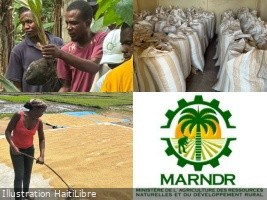
    In Haiti, the 2026 spring agricultural campaign is kicking off with a major government-backed support initiative designed to lift small-scale producers and strengthen the country’s long-term food sovereignty. Led by the Ministry of Agriculture, Natural Resources and Rural Development (MARNDR) and delivered through the Resilient Agriculture for Food Security Project (PARSA), the campaign is rolling out a sweeping distribution of critical agricultural inputs across five key departments: South, Nippes, West, Grand’Anse, and Central.

    A defining priority of this intervention is closing the gender gap in agricultural access: planners have set a target that 55% of all beneficiaries will be women producers, who make up a large share of Haiti’s agricultural workforce but have historically faced disproportionate barriers to resources. To drive production growth and diversify the country’s agricultural output, the initiative will distribute more than 500 metric tons of seeds covering both staple food crops and non-food commercial crops. Core staple seeds include rice, beans, peanuts, maize, and pigeon peas, which form the backbone of Haitian household food consumption.

    Beyond basic seeds, the campaign is delivering millions of units of specialized planting material to boost perennial and root crop production. In total, farmers will receive over 2.5 million yam seedlings, 1.3 million banana suckers, 3.5 million cassava cuttings, 78,000 dwarf coconut seedlings, and 890,000 combined fruit and forest tree seedlings. Complementing these inputs, the MARNDR is expanding support for small-scale livestock production, which provides critical supplementary income and nutrition for rural households. The program will establish 400 new rabbit production units and 1,815 dedicated meat production units, complete with all necessary feed and veterinary supplies to help operations get off to a successful start.

    To address longstanding soil fertility challenges and boost per-acre productivity, the campaign is also rolling out a large supply of soil amendments: 4,700 bags of chemical fertilizer and 57,848 bags of locally produced compost will be distributed to participating producers across target regions.

    Overall, the program is designed to reach tens of thousands of small-scale and family farmers, with a core focus on building long-term productive capacity rather than just short-term relief. By investing across multiple agricultural subsectors, MARNDR aims to lift national agricultural output, make sustainable improvements to Haiti’s food and nutritional security, and help producers better withstand the growing frequency of climate shocks and volatile economic conditions that have disrupted rural livelihoods in recent years.