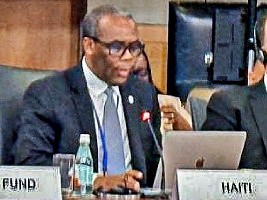
Against the backdrop of the 2026 IMF and World Bank Spring Meetings held in Washington D.C., Ronald Gabriel, Governor of the Bank of the Republic of Haiti (BRH), has delivered a stark wake-up call to the global community on the cascading crises facing the world’s most vulnerable economies. Joining delegations from Haiti’s central bank and Ministry of Economy and Finance for a slate of high-level talks, including the G24 Ministerial Meeting, Gabriel used his address to highlight the escalating structural challenges pushing marginalized nations like Haiti to the brink.
Gabriel opened his remarks by commending the G24 Secretariat for its ongoing work, before emphasizing that the overlapping crises facing low-income and fragile states are no longer temporary shocks – they have become a permanent structural reality shaping daily life for millions. The ripple effects of new global conflicts on energy and food markets, he argued, have exacerbated deep pre-existing vulnerabilities that many vulnerable nations have never been able to address. For these countries, global shocks are not abstract economic data points: they translate directly to skyrocketing food costs that households cannot afford, shrinking room for governments to fund critical public services, and rapidly declining quality of life for the populations most exposed to instability.
Compounding these pressures, Gabriel added, are shifting global trade dynamics, increasingly restrictive migration policies, and a dramatic drop in international development assistance – resources that many fragile nations depend on to keep basic services running, even as their need grows more urgent. Haiti, he noted, stands as a devastating case in point. Already grappling with severe internal structural weaknesses, the Caribbean nation is now bearing the full brunt of these overlapping external shocks, putting at risk the limited economic and social progress the country has managed to make through years of extraordinary hardship.
Gabriel went on to outline two core institutional reforms that he says are essential to addressing the growing crisis. First, he called for the immediate completion of the 16th General Review of Quotas at the IMF, arguing that adequate, fairly distributed resources are a non-negotiable prerequisite for the institution to effectively meet the actual needs of all its member states. Second, he pushed for truly inclusive multilateral governance, urging accelerated negotiations to expand representation for fragile states in global decision-making bodies. Amplifying the voice of vulnerable nations, he argued, would allow for the creation of targeted, innovative policy tools that are tailored to their unique structural vulnerabilities – a change that conflict-burdened nations cannot afford to delay.
Closing his address, Gabriel emphasized that the global community must move beyond symbolic declarations of support for vulnerable states and deliver concrete, operational commitments to multilateral action. For nations like Haiti facing cascading crises, the time for talk has passed: the world must act now.