A pivotal legal battle over the fate of approximately 353,000 Haitian immigrants in the United States reaches a critical juncture on January 6, 2026, as the Washington federal court prepares to rule on the Trump administration’s controversial decision to terminate Temporary Protected Status (TPS) for Haiti. The November 2025 termination order, now under judicial scrutiny, faces challenges from migrant advocacy groups questioning its legal foundation and humanitarian implications. Presiding Judge Ana C. Reyes will evaluate whether the administration complied with statutory requirements when determining that Haiti’s conditions no longer warranted protected status. The ruling carries profound consequences for Haitian families who have established lives in the U.S., many for over a decade, while simultaneously supporting relatives back home through remittances. Simultaneously, the Department of Homeland Security has initiated notifications advising beneficiaries to prepare for potential departure by the February 3, 2026 deadline, unless the court intervenes. Advocates argue that Haiti remains incapable of safely reintegrating returnees due to ongoing political instability, security concerns, and economic challenges that persist in the Caribbean nation.
标签: Haiti
海地
-
FLASH : After Venezuela, Trump’s next target would be Cuba
In a stunning development with profound geopolitical implications, Venezuelan President Nicolás Maduro and First Lady Cilia Flores entered a plea of not guilty to all charges during their initial appearance at the Southern District of New York court on Monday, January 5, 2026. The hearing before 92-year-old Judge Alvin Hellerstein marked the first judicial proceeding since their controversial capture by U.S. military forces in Caracas just two days prior.
Maduro, addressing the court in Spanish, identified himself as the legitimate president of Venezuela and characterized his transfer to the United States as an act of kidnapping from his home territory. His statement was promptly interrupted by Judge Hellerstein, who indicated that procedural formalities would take precedence over political declarations at this initial stage.
The Venezuelan leader is being represented by prominent attorney Barry Pollack, known for his high-profile defense of WikiLeaks founder Julian Assange. Pollack has announced intentions to challenge the legality of Maduro’s military apprehension and subsequent transfer to U.S. jurisdiction, setting the stage for a complex legal battle with significant international law implications.
Meanwhile, President Donald Trump, speaking aboard Air Force One on Sunday, indicated that Cuba would be the next focus of his administration’s foreign policy initiatives. Trump declared that ‘Cuba is ready to fall’ and suggested that without revenue from Venezuelan oil partnerships, the Cuban government would face severe economic challenges. The American president explicitly endorsed the Venezuela operation as a model for potential future actions against Cuba.
In a remarkable expansion of stated geopolitical ambitions, Trump also reiterated his administration’s interest in acquiring Greenland, citing national security concerns and questioning Denmark’s capacity to administer the territory effectively. The president suggested concrete action on Greenland could materialize within approximately two months.
The administration’s declared sphere of interest appears to extend beyond these specific targets, with additional statements suggesting potential future concerns regarding Panama, Colombia, Mexico, and Canada, signaling a potentially transformative period in Western Hemisphere relations.
-

FLASH: Guide to getting your tickets to the 2026 FIFA World Cup
As Haiti’s national football team prepares for its historic participation in the 2026 FIFA World Cup, the Haitian Football Federation has released comprehensive guidelines for supporters seeking to secure match tickets through official channels. The ticket acquisition process operates exclusively through FIFA’s digital platform at FIFA.com/tickets, with authorities strongly cautioning against unauthorized resale websites that cannot guarantee stadium access.
The registration protocol requires prospective attendees to establish an account on FIFA’s official portal by selecting ‘Tickets’ followed by ‘Create an account,’ meticulously completing personal information fields, and executing email validation to activate the account. Without successful verification, application submission remains impossible.
Rather than conventional immediate purchasing, FIFA employs a Random Selection Draw mechanism designed to ensure equitable distribution. The current application phase concludes precisely on Tuesday, January 13, 2026 at 11:00 AM Eastern Time, with banking verification implemented to deter speculative practices. Successful applicants will receive notification commencing February 5, 2026, accompanied by confirmation emails and portal updates.
Payment protocols vary according to preselected options: automatic debit arrangements process immediately upon selection, while manual payment requires swift completion within a constrained timeframe. When configuring ticket requests, supporters must designate Haiti as their preferred team and select specific matches, accompanied by seating category preferences ranging from Category 1 (premium lower stands) to Category 4 (economy upper stands). Financial transactions exclusively accept Visa and Mastercard payments.
Group seating arrangements necessitate identical match selections, equivalent ticket categories, and mutual application number linkages among all party members. Critical administrative note: submitted applications become immutable, requiring complete cancellation and reapplication for any modifications. Ticket limits fluctuate according to match significance and are explicitly displayed during the selection process.
The Haitian Football Federation offers supplemental assistance through partnership@fhf.ht and secretariat.general@fhf.ht for citizens experiencing technical challenges or requiring clarification beyond FIFA’s comprehensive FAQ section.
-

USA : Maduro and his wife will appear this Monday before a federal judge
In an extraordinary development in international relations, Venezuelan President Nicolás Maduro and First Lady Cilia Flores are scheduled to appear before Federal Judge Alvin K. Hellerstein in Manhattan on Monday at 12:00 p.m. local time (17:00 GMT). This follows their dramatic capture by American military forces during an unprecedented operation in Caracas on January 3rd, 2026.
The high-profile defendants currently remain detained at the Metropolitan Detention Center in Brooklyn, a high-security federal facility, while facing serious allegations from U.S. prosecutors. Maduro confronts four federal charges including criminal conspiracy, narcoterrorism, conspiracy to import cocaine, and weapons violations involving automatic firearms and explosive devices.
According to court documents referenced by American media outlets, Flores faces accusations of providing both logistical and financial support to criminal organizations designated as terrorist entities by Washington.
The recently unsealed indictment presents a comprehensive case alleging that Maduro personally led the ‘Cartel of the Suns’—a drug trafficking network whose name reportedly references Venezuela’s military leadership. Prosecutors assert this organization pursued dual objectives of personal enrichment and political consolidation while deliberately flooding American territories with cocaine, effectively weaponizing narcotics against the United States.
Evidence detailed in the indictment outlines sophisticated alliances with multiple transnational criminal organizations including the FARC, ELN, Sinaloa Cartel, Los Zetas, and the Tren de Aragua Cartel. The documentation further describes exploitation of diplomatic privileges, government-controlled airports, and state-protected maritime routes for narcotics transportation.
Official estimates from the State Department, cited within the legal filing, indicate that approximately 200-250 tons of cocaine transited through Venezuelan territory annually en route to the United States around 2020.
This current indictment expands upon previous charges filed against Maduro in Manhattan during March 2020, which emerged from an extensive Drug Enforcement Administration (DEA) investigation encompassing similar allegations of narcoterrorism and cocaine importation conspiracies.
-
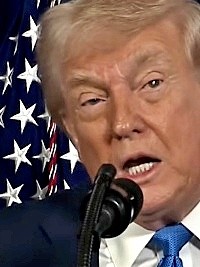
FLASH : Trump justifies the operation against Venezuela with a doctrine more than 200 years old
In a dramatic geopolitical development, former President Donald Trump has invoked a centuries-old foreign policy doctrine to rationalize recent U.S. military operations in Venezuela that resulted in the capture of Nicolás Maduro. During a January 3rd press briefing at his Mar-a-Lago estate in Florida, Trump resurrected the Monroe Doctrine—originally articulated in 1823—to validate American interventionism in the Western Hemisphere.
The Monroe Doctrine, established by President James Monroe during a period of global transformation following Latin American independence movements, fundamentally distinguished between the ‘Old World’ (Europe) and the ‘New World’ (the Americas). It committed the United States to non-interference in European affairs while declaring the Americas closed to further colonization, positioning any European meddling as a direct provocation against U.S. interests.
The doctrine was significantly expanded by President Theodore Roosevelt in 1904 through his ‘Roosevelt Corollary,’ which cast the United States as the ‘Policeman of the Americas.’ This amendment granted Washington purported authority to militarily intervene in Latin American nations during instances of perceived ‘governmental failure,’ setting precedents for actions ranging from the annexation of Puerto Rico to Cold War anti-communist operations.
Trump’s contemporary application of this doctrine aligns with his administration’s newly articulated National Security Strategy, which emphasizes three core objectives: securing priority access to strategic resources (particularly Venezuelan oil reserves), stabilizing governments to reduce northward migration, and countering influence from global competitors like China and Russia in the region.
The updated strategy explicitly states that the U.S. will prevent ‘non-hemispheric competitors’ from establishing military presence or controlling strategic assets in the Americas—a clear reference to China’s role as Venezuela’s primary oil purchaser. Trump’s vision appears to extend beyond Venezuela, with aspirations ranging from Greenland acquisition to Panama Canal reclamation, suggesting an expansionist reinterpretation of American sovereignty that challenges conventional geographical boundaries.
-
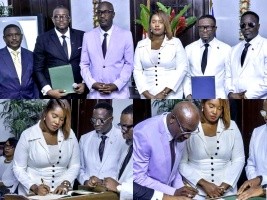
Justice : Cap-Haïtien signs a MoU with the Bar Association
In a landmark move to enhance municipal governance, the City of Cap-Haïtien formalized a strategic partnership with its legal community through a Memorandum of Understanding signed on January 1st, 2026. The agreement between the Municipal Commission and the local Bar Association establishes a structured framework for institutional collaboration aimed at reinforcing the rule of law at the municipal level.
This diplomatic accord builds upon foundational discussions initiated during an institutional roundtable convened at City Hall on December 12, 2025. The memorandum establishes formal mechanisms for ongoing consultation and cooperation, including biannual strategic meetings, comprehensive annual evaluations, and the designation of specialized focal points responsible for monitoring implementation progress.
Though intentionally crafted without legally binding obligations, the two-year renewable agreement represents a profound commitment to good faith collaboration in the public interest. The timing of this signing carries deep symbolic significance, coinciding with a day of national remembrance that honors Haiti’s independence heroes and their enduring legacy of justice, liberty, and collective responsibility.
Municipal authorities emphasize that this initiative positions Cap-Haïtien for a strengthened institutional future while maintaining focus on service to its citizens. The partnership reflects a shared vision between civic leadership and legal professionals to create more transparent, accountable, and effective local governance structures through sustained professional dialogue and cooperation.
-
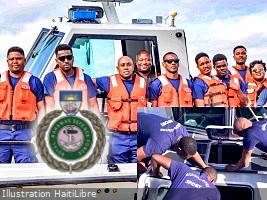
Training : The Royal Bahamas Defence Force trains Haitian coast guards
In a significant regional security cooperation initiative, the Royal Bahamas Defence Force (RBDF) has concluded an extensive two-week training program for 20 members of the Haitian National Police Coast Guard. The capacity-building exercise, which concluded recently, represents a strategic partnership between the Caribbean nations aimed at enhancing maritime security capabilities.
The comprehensive curriculum, developed and delivered by the RBDF’s Port Patrol Unit Engineering Section, encompassed both theoretical knowledge and practical skills essential for modern coast guard operations. Participants received intensive instruction in fundamental maritime disciplines including advanced navigation techniques, precision vessel handling, and complex docking maneuvers under various conditions.
Beyond basic seamanship, the program incorporated critical safety and emergency response training covering navigational aids deployment, distress flare utilization protocols, and sophisticated search and rescue methodologies. A substantial portion of the curriculum focused on advanced mechanical systems, with Haitian personnel receiving hands-on training in diagnostic procedures for fuel systems, electrical circuits, and outboard motor ignition mechanisms.
The technological component included instruction on digital diagnostic tools and innovative remote assistance practices, enabling future collaboration between Bahamian and Haitian mechanics through real-time communication platforms. RBDF engineers additionally provided targeted guidance on resolving persistent technical issues affecting the Haitian Coast Guard’s operational fleet.
This training initiative occurs against the backdrop of Haiti’s ongoing security challenges and represents international efforts to strengthen the nation’s maritime law enforcement capabilities. The Haitian Coast Guard, as an integral division of the Haitian National Police, maintains responsibility for maritime security, law enforcement, and search and rescue operations across Haiti’s territorial waters.
-

2026 World Cup : Over 150 million ticket requests in 15 days
The 2026 FIFA World Cup, set to be co-hosted across the United States, Canada, and Mexico from June 11 to July 19, is generating unprecedented global interest alongside significant controversy over ticket accessibility. Recent data reveals overwhelming public demand that has far exceeded all previous sporting events.
FIFA President Gianni Infantino announced at the World Sports Summit in Dubai that tournament organizers have received a staggering 150 million ticket requests within just 15 days of sales opening. This remarkable figure, averaging 10 million daily requests, represents a volume 30 times greater than the actual ticket availability and surpasses the cumulative attendance of all 22 previous World Cup tournaments since 1930.
The massive demand has highlighted serious concerns about pricing structure and accessibility. Despite initial promises from FIFA leadership that the 2026 event would be the ‘most inclusive’ World Cup ever organized, published ticket prices have drawn widespread criticism from supporter associations worldwide.
The pricing structure divides tickets into four categories based on seating location, with Category 1 representing the most premium lower-tier seats and Category 4 comprising the most affordable upper-tier options. In response to international backlash over what critics have termed ‘astronomical’ pricing, FIFA introduced a new Supporter Entry category priced at $60 per match.
However, this accessibility measure appears largely symbolic. The discounted tickets represent only 1.6% of the 8% allocation reserved for participating national federations, translating to approximately 1,000 $60 tickets per match to be divided equally between competing teams’ supporters. Distribution of these limited affordable tickets will be managed by individual national associations without standardized oversight procedures.
The discrepancy between massive public demand and limited affordable access has created tension surrounding what promises to be the largest World Cup in history, featuring 48 teams competing across 104 matches in state-of-the-art venues across North America.
-
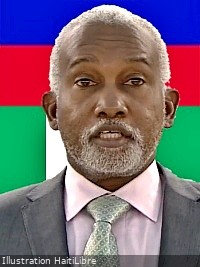
222nd Independence Day : Message from the Federal Republic of Nigeria
In a significant diplomatic gesture, the Federal Republic of Nigeria has delivered a powerful message of solidarity to Haiti commemorating its 222nd year of independence. Nigerian Foreign Minister Ambassador Yusuf Maitama Tuggar, representing President Bola Ahmed Tinubu and the Nigerian people, extended warm congratulations to Haiti’s Transitional Presidential Council, government, and citizens.
The communication highlighted the profound historical significance of January 1, 1804, when Haiti emerged as the world’s first independent Black republic following a successful revolution against slavery and colonial rule. Nigeria emphasized how Haiti’s triumph served as a beacon of liberation that subsequently inspired independence movements across Africa decades later.
Recognizing contemporary challenges facing the Caribbean nation, Nigeria praised the “extraordinary resilience” and courage of the Haitian people amid adversity. The message explicitly expressed Nigeria’s firm solidarity with Haiti’s ongoing efforts to restore security, stabilize democratic governance, and pursue prosperity for all citizens.
The year 2026 was identified as particularly pivotal for strengthening bilateral relations, with Nigeria reaffirming commitment to enhancing diplomatic, cultural, and fraternal connections between the two nations. Both countries share a common history of resistance against oppression and a mutual vision prioritizing absolute human dignity.
Concluding with spiritual blessings, Nigeria offered prayers for Haiti’s peace and progress, invoking the guiding spirit of the 1804 revolutionaries to lead the nation toward unity and renewal. The message culminated with celebratory declarations: “Long live the Republic of Haiti! Long live the cooperation between Nigeria and Haiti!”
-
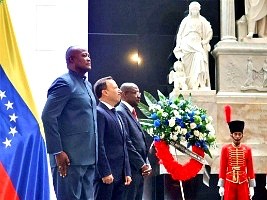
Caracas : Venezuela and Haiti commemorate the 222nd anniversary of the Battle of Vertières
Caracas witnessed a significant diplomatic ceremony on January 1st, 2026, as Venezuelan and Haitian officials jointly commemorated the 222nd anniversary of the Battle of Vertières—a pivotal historical event that secured Haiti’s independence from French colonial rule. The solemn floral tribute to Liberator Simón Bolívar at Venezuela’s National Pantheon symbolized the enduring solidarity between the two nations.
The ceremony was presided over by Vice Minister of Foreign Affairs for the Caribbean Raúl Li Causi and Haitian Ambassador to Venezuela Jean Mary Vaval, with attendance from numerous diplomatic representatives accredited to the country. This event honored the legendary armed confrontation initiated on November 18, 1803, under the leadership of independence hero Jean-Jacques Dessalines, with crucial support from Generals Christoph Pétion, Clervaeus, Romain, and the courageous Capois La Mort.
Historical records indicate this uprising represented the first major revolutionary movement in colonial America, occurring in a territory characterized by extreme inequality where approximately 88% of the 570,000 population were enslaved individuals. The battle’s outcome permanently dismantled French colonial dominance and established Haiti as the first independent republic led by people of African descent.
The bilateral relationship between Caracas and Port-au-Prince spans centuries of cooperation and mutual support, beginning with Alexandre Pétion’s historic assistance to Bolívar and continuing through contemporary initiatives including Petrocaribe energy agreements and Venezuela’s humanitarian response to Haiti’s 2010 earthquake. Venezuelan support has extended to critical projects in health, education, infrastructure, and energy development.
Venezuelan Minister of Foreign Affairs Yván Gil marked Haiti’s 222nd Independence Day with a solidarity message reaffirming Venezuela’s support for Haiti’s ongoing struggle against foreign interference. The diplomatic communication celebrated Haiti as the ‘Mother Nation of Liberties’ in Latin America and the Caribbean, honoring revolutionary leader Toussaint Louverture and his enduring legacy in anti-colonial movements. Venezuela emphasized that Haiti’s fundamental strength resides in the unwavering dignity of its people.