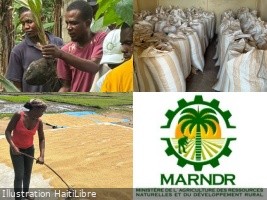
In Haiti, the 2026 spring agricultural campaign is kicking off with a major government-backed support initiative designed to lift small-scale producers and strengthen the country’s long-term food sovereignty. Led by the Ministry of Agriculture, Natural Resources and Rural Development (MARNDR) and delivered through the Resilient Agriculture for Food Security Project (PARSA), the campaign is rolling out a sweeping distribution of critical agricultural inputs across five key departments: South, Nippes, West, Grand’Anse, and Central.
A defining priority of this intervention is closing the gender gap in agricultural access: planners have set a target that 55% of all beneficiaries will be women producers, who make up a large share of Haiti’s agricultural workforce but have historically faced disproportionate barriers to resources. To drive production growth and diversify the country’s agricultural output, the initiative will distribute more than 500 metric tons of seeds covering both staple food crops and non-food commercial crops. Core staple seeds include rice, beans, peanuts, maize, and pigeon peas, which form the backbone of Haitian household food consumption.
Beyond basic seeds, the campaign is delivering millions of units of specialized planting material to boost perennial and root crop production. In total, farmers will receive over 2.5 million yam seedlings, 1.3 million banana suckers, 3.5 million cassava cuttings, 78,000 dwarf coconut seedlings, and 890,000 combined fruit and forest tree seedlings. Complementing these inputs, the MARNDR is expanding support for small-scale livestock production, which provides critical supplementary income and nutrition for rural households. The program will establish 400 new rabbit production units and 1,815 dedicated meat production units, complete with all necessary feed and veterinary supplies to help operations get off to a successful start.
To address longstanding soil fertility challenges and boost per-acre productivity, the campaign is also rolling out a large supply of soil amendments: 4,700 bags of chemical fertilizer and 57,848 bags of locally produced compost will be distributed to participating producers across target regions.
Overall, the program is designed to reach tens of thousands of small-scale and family farmers, with a core focus on building long-term productive capacity rather than just short-term relief. By investing across multiple agricultural subsectors, MARNDR aims to lift national agricultural output, make sustainable improvements to Haiti’s food and nutritional security, and help producers better withstand the growing frequency of climate shocks and volatile economic conditions that have disrupted rural livelihoods in recent years.