标签: Haiti

海地

  • Inauguration : 58 million Euros for the Hinche/Saint-Raphaël section of the RN3

    Inauguration : 58 million Euros for the Hinche/Saint-Raphaël section of the RN3

    Haiti achieved a significant infrastructure milestone on January 13, 2026, with the formal inauguration of the newly rehabilitated Hinche/Saint-Raphaël segment of National Route 3 (RN3). The ceremony was presided over by Laurent Saint Cyr, President pro tempore and Coordinator of the Transition Council, alongside Prime Minister Alix Didier Fils-Aimé, marking a pivotal moment in the nation’s transportation development.

    The €58.14 million infrastructure project represents a substantial international investment in Haiti’s transportation network, financed through collaborative funding from the European Union and the French Development Agency (AFD). The comprehensive rehabilitation encompasses 43.27 kilometers of critical roadway with a standardized width of 7 meters, including the strategic Hinche bypass in the Northern Department.

    The inauguration ceremony gathered distinguished attendees including multiple international ambassadors—Hélène Roos (European Union), Antoine Michon (France), and Marco Antonio Peñín Toledano (Spain)—alongside Minister of Public Works Raphaël Hosty, National Authorizing Officer of the European Development Fund Charles Jean Jacques, and local municipal leaders. Representatives from Vorbe & Fils Construction S.A., the executing contractor, were also present to mark the project’s completion.

    This enhanced transportation corridor establishes vital connectivity between Haiti’s Central Plateau and Northern regions, fundamentally transforming logistics capabilities for both passenger travel and commercial freight movement. Government officials emphasized that the project demonstrates their committed political strategy positioning road infrastructure as a cornerstone for economic revitalization, enhanced territorial integration, and strengthened national cohesion.

    The Haitian government extended profound appreciation to the European Union, AFD, and partner nations, acknowledging their sustained support as strategic allies in Haiti’s development journey. This project stands as a tangible manifestation of international cooperation aimed at fostering sustainable growth and improved mobility across the Caribbean nation.

  • Economy : Customs strengthens its mission of protection and mobilization of tax revenues (video)

    Economy : Customs strengthens its mission of protection and mobilization of tax revenues (video)

    Haiti’s General Customs Administration (AGD) has demonstrated significant operational success through intensified fiscal controls and security enforcement, Director General Gérald Remplais announced during the 32nd edition of Tuesdays of the Nation on January 13, 2026.

    Remplais detailed the agency’s dual mission of revenue mobilization and societal protection, highlighting enhanced measures against trafficking networks dealing in narcotics, firearms, counterfeit medications, and other illicit goods. These efforts align with the World Customs Organization’s 2026 thematic focus on customs agencies serving as protective forces through vigilance and commitment.

    The implementation of strengthened protocols has yielded substantial financial returns, with the AGD reporting unprecedented revenue collection during the first quarter of the 2025-2026 fiscal year. October 2025 generated 11.24 billion gourdes, followed by 10.58 billion in November, and a remarkable 13.26 billion gourdes in December 2025.

    Looking forward, the AGD is advancing its modernization initiative with several technological enhancements. An automated messaging system integrated within the customs platform will enable users to pre-calculate import duties, increasing transparency and efficiency. The administration also plans to implement online payment facilitation and optimize workspace infrastructure across Haiti, with particular attention to the Cap-Haïtien customs facility.

  • FLASH : Royal Caribbean will not call at Haiti in 2026

    FLASH : Royal Caribbean will not call at Haiti in 2026

    In a significant operational shift, Royal Caribbean International has announced the extension of its suspension of port calls at Labadee, Haiti, through December 2026. The decision marks a substantial extension from the previously announced April 2026 timeline, effectively keeping the cruise line’s vessels away from its private Haitian destination for nearly two full years.

    The corporate parent, Royal Caribbean Group, characterized the move as ‘an abundance of caution’ in response to persistent security challenges in Haiti. The Caribbean nation currently carries a U.S. State Department Level 4 travel advisory—the most severe warning—due to widespread kidnappings, criminal activity, civil unrest, and inadequate healthcare infrastructure.

    Labadee, Royal Caribbean’s exclusive enclave on Haiti’s northern coast, has remained absent from scheduled itineraries since April 2025. The premium resort facility features five private beaches, an 800-meter zipline, water slides, jet ski rentals, and private cabanas, all protected by a dedicated security team. Despite these contained amenities, the company has prioritized passenger and crew safety amid Haiti’s deteriorating security situation.

    To mitigate the operational impact, Royal Caribbean has provided travel partners with alternative port options including Nassau in the Bahamas, Grand Turk in the Turks and Caicos Islands, and Cozumel, Mexico. The extended suspension represents one of the most significant operational adjustments in contemporary cruise tourism, reflecting the industry’s responsiveness to global security advisories and regional instability.

  • Education: Ministerial decision on the generalization of new 3rd cycle programs

    Education: Ministerial decision on the generalization of new 3rd cycle programs

    In a landmark decision that will reshape Haiti’s educational landscape, the Ministry of National Education and Vocational Training (MENFP) has mandated the nationwide implementation of a completely revamped curriculum for the third cycle of fundamental education. Minister Augustin Antoine formally enacted Ministerial Decision No. D-2(1)384 on January 9, 2026, setting in motion a comprehensive educational transformation scheduled for full implementation by the 2027-2028 academic year.

    The reform introduces four entirely new subjects that will become immediately effective across all educational institutions starting from the 2024-2025 school year: Citizenship Education (EC), Aesthetic and Artistic Education (EEA), Physical and Sports Education (EPS), and Education for Technology and Productive Activities (ETAP).

    A carefully structured three-year phased implementation will follow, beginning with 7th-grade classes (7th AF) in 2027-2028 adopting new programs for seven additional disciplines. These student cohorts will then progress through 8th grade (8th AF) in 2028-2029 and 9th grade (9th AF) in 2029-2030 with corresponding updated curricula, ensuring complete nationwide coverage of the reformed educational framework.

    The constitutional foundation for this educational overhaul rests upon Haiti’s guarantee of education rights through multiple constitutional articles. The reform aligns with the September 27, 1994 law that reorganized Haiti’s education system and established basic education standards.

    Implementation responsibilities have been clearly delineated across the educational bureaucracy. The Directorate of Fundamental Education (DEF) will coordinate pedagogical monitoring and provide technical support, while the Directorate of Training and Development (DFP) will organize comprehensive continuing education programs for teachers, administrators, and educational supervisors. Departmental Education Directorates (DDE) will ensure local compliance and dissemination of the new standards.

    Notably, the ministry has also mandated that textbook publishers and educational material designers undertake a complete revision of their works under MENFP’s technical supervision to ensure alignment with the new competency-based approach (APC) and curricular innovations. This decision expressly repeals all previous provisions that conflict with the new educational framework.

  • Social : 2010 Earthquake : Rain of Messages

    Social : 2010 Earthquake : Rain of Messages

    Sixteen years after the catastrophic earthquake that devastated Haiti on January 12, 2010, the nation united in solemn remembrance of one of the most tragic events in its history. Senior government officials, international partners, and institutions across the country paid heartfelt tribute to the thousands of lives lost while emphasizing resilience and continued reconstruction efforts.

    Prime Minister Alix Didier Fils-Aimé led the national commemoration, stating: “The nation bows before the memory of the lives lost and shares the grief of the bereaved families. Mourning remains, but so does hope. Together, let’s commit to building a strong Haiti, founded on peace, stability, and solidarity.”

    Members of the Presidential Transitional Council echoed this sentiment. Councillor Leslie Voltaire highlighted the “exemplary strength and dignity of the Haitian people” during the disaster, while Council President Fritz Alphonse Jean called for reflection on “building a new Haiti.”

    The Haitian National Police honored dozens of officers who perished during rescue operations. Acting Commander-in-Chief André Jonas Vladimir Paraison commended those who “perished while providing assistance to those in need” and called for continued efforts toward “a better Haiti, in peace and security.”

    Port-au-Prince City Hall described how the earthquake “remains etched in the heart of Port-au-Prince and in the memory of all the Haitian people,” noting that “in our grief, we learned to stand tall.”

    The international community demonstrated sustained solidarity with Haiti. The French Embassy expressed “sincere thoughts of solidarity to the families of the victims,” while the Canadian Embassy commended “the remarkable resilience of the Haitian people.” The European Union reaffirmed its “profound and unwavering solidarity,” and the United Nations Integrated Office in Haiti paid tribute to both Haitian victims and UN colleagues lost in the disaster.

    The State University of Haiti (UEH) called the anniversary “an opportunity to meditate and reflect together on the best paths to take to build a nation,” emphasizing the need to work “with the forces of nature and the specific circumstances of our society.”

    From distant diplomatic posts, including the Haitian Embassy in Vietnam, officials joined in commemorating the tragedy that “forever marked national history” while recognizing the “resilience, national and international solidarity, and ongoing commitment to reconstruction.”

  • Politic : 2010 Earthquake : Official Ceremony

    Politic : 2010 Earthquake : Official Ceremony

    Haiti’s highest governmental authorities gathered at the National Palace on Champ de Mars for a poignant memorial ceremony marking the 16th anniversary of the catastrophic January 12, 2010 earthquake. The devastating 7.3 magnitude tremor, which lasted merely 35 seconds, resulted in 222,570 fatalities, 300,572 injuries, and left 1.6 million citizens homeless according to official statistics.

    Laurent Saint Cyr, President pro tempore and Coordinator of the Presidential Transitional Council (CPT), led the commemorative events alongside Prime Minister Alix Didier Fils-Aimé. The ceremony assembled key national figures including government ministers, Vladimir Paraison (Acting Director General of the Haitian National Police), Lieutenant General Derby Guerrier (Commander-in-Chief of the Armed Forces), military high command officials, and senior public administration leaders.

    The solemn gathering symbolized the nation’s renewed dedication to strengthening unity, advancing sustainable reconstruction efforts, and enhancing Haiti’s resilience against future challenges. In a gesture of national respect and remembrance, President Saint Cyr laid a ceremonial wreath honoring the earthquake victims.

    Addressing the nation, Saint Cyr emphasized the transformative power of collective memory: “On this Day of Remembrance, let’s commit ourselves together never to forget, to better prepare ourselves, to unite around the common good, and to build a safer, more united, and more resilient country. May the memory of the victims illuminate our choices and inspire our collective action.” The transitional leader powerfully declared Haiti’s capacity for renewal, stating the nation “can, must, and will rise again” through responsible collective action.

    Prime Minister Fils-Aimé echoed these sentiments, acknowledging the enduring grief while emphasizing hopeful reconstruction: “The Nation bows before the memory of the lives lost and shares the grief of the bereaved families. Mourning remains, but so does hope. Together, let us commit to building a strong Haiti founded on peace, stability, and solidarity.”

    The ceremony represented a significant demonstration of governmental solidarity with victims’ families and the broader Haitian population, reinforcing institutional commitments to national recovery and future preparedness.

  • FLASH : The House of Representatives extends the HOPE/HELP laws for Haiti

    FLASH : The House of Representatives extends the HOPE/HELP laws for Haiti

    In a significant bipartisan move, the U.S. House of Representatives has passed legislation extending critical trade preferences for Haiti through December 31, 2028. The passage of Bill H.R. 6504 ensures the continuation of the Haitian Hemispheric Opportunity Through Partnership for Encouragement (HOPE) and the Haiti Economic Lift Program (HELP) Act, marking a crucial development in U.S.-Caribbean relations.

    Democratic Congresswoman Stacey E. Plaskett, a primary advocate for the legislation, hailed the decision as a strategic victory for both Haiti and United States regional engagement. “The bipartisan support for reauthorizing HOPE/HELP demonstrates that when it comes to supporting our neighbors and advancing our shared interests, Democrats and Republicans can work together,” Plaskett stated in an official release.

    The trade preference program enjoys substantial congressional backing due to its dual benefits: strengthening Haiti’s economic foundation while advancing U.S. strategic interests. The program supports Haitian apparel manufacturing that utilizes American cotton and contributes to shifting supply chains from China to the Western Hemisphere.

    Plaskett acknowledged key figures instrumental in the legislation’s passage, including Ranking Member Neal, Chairman Smith, Dr. Murphy, and Haiti’s Ambassador to the United States, Lionel Delatour. She also recognized the efforts of civil society organizations and American manufacturers who advocated for the program’s renewal.

    The extension promises greater economic stability for Haiti by fostering bilateral trade relations, providing investor certainty, and creating employment opportunities. The legislation now moves to the U.S. Senate for consideration before potentially reaching the President’s desk for final approval.

  • Justice : Damning report on detention conditions at Fort-Liberté

    Justice : Damning report on detention conditions at Fort-Liberté

    A shocking humanitarian crisis is unfolding within Haiti’s prison system, according to a devastating report released by the Haitian NGO Association of Volunteers for the Reintegration of Inmates (AVRED). The organization’s December 2025 investigation revealed that 312 inmates incarcerated at Fort-Liberté’s two detention facilities are enduring conditions that systematically strip them of basic human dignity and essential healthcare services.

    The comprehensive assessment documents a multi-faceted institutional failure affecting both convicted individuals (279) and those awaiting trial (33). Beyond mere deprivation of liberty, detainees face critical shortages in medical staffing with only one physician serving the entire population, supported by just three nurses and two psychology interns operating without necessary resources. The near-total absence of essential medications creates a dangerous environment where communicable diseases including tuberculosis, malaria, HIV/AIDS, and scabies spread unchecked due to inadequate isolation protocols.

    Infrastructure deficiencies compound the health emergency, with investigators reporting cracked walls, complete electrical system failure, overcrowded cells, non-functional water systems, and overflowing septic tanks. These hazardous conditions are exacerbated by severe understaffing among prison personnel, increasing risks of violence and tension within the facilities.

    Nutritional provisions fail to meet basic standards, with merely two cooks attempting to serve 300 individuals. The resulting meals lack essential nutrients, particularly damaging for inmates suffering from chronic illnesses and further compromising already weakened immune systems.

    The crisis extends to judicial rights, as the absence of functional transportation prevents both emergency hospital transfers and court appearances. This institutional failure results in unjustified extensions of pretrial detention, effectively punishing individuals before conviction.

    AVRED concludes that the Fort-Liberté situation represents a collective societal failure rather than merely a prison administration problem. The organization urgently calls for immediate intervention from national and international partners, substantial reinforcement of health and logistics systems, and comprehensive infrastructure rehabilitation to ensure basic safety and human rights protections.

  • iciHaïti – 2010 Earthquake : Speech by the Secretary of State for the Integration of Persons with Disabilities

    iciHaïti – 2010 Earthquake : Speech by the Secretary of State for the Integration of Persons with Disabilities

    Sixteen years after Haiti’s catastrophic 7.3-magnitude earthquake, the nation continues to honor the memory of the tragedy while reaffirming its commitment to disability inclusion. On the anniversary of the January 12, 2010 disaster that claimed approximately 300,000 lives and left hundreds of thousands injured, Secretary of State for the Integration of Persons with Disabilities Génard Joseph delivered a poignant address recognizing the enduring impact on Haitian society.

    The seismic event, lasting merely 35 seconds but resulting in over 280,000 fatalities and 1.6 million displaced persons, fundamentally transformed Haiti’s social landscape. Secretary Joseph emphasized how the tragedy exposed the profound vulnerabilities faced by individuals with disabilities while simultaneously revealing their remarkable resilience and determination.

    In his commemorative speech, Joseph declared the government’s unwavering dedication to improving living conditions for disabled citizens through collaborative efforts with disability organizations, civil society groups, and international partners. The administration’s focus includes enhancing access to essential services, promoting socioeconomic and educational integration, and protecting the rights of persons with disabilities.

    The Secretary framed disability inclusion as both a moral imperative and political responsibility for the Haitian state, noting that the earthquake’s legacy necessitates continuous action toward building a more equitable society. His address called for national solidarity in creating a Haiti where human dignity remains paramount and no citizen faces exclusion.

    Joseph’s remarks highlighted how the collective memory of the disaster serves as both a tribute to those lost and an inspiration for constructing a more inclusive future. The anniversary observance underscores Haiti’s ongoing journey from tragedy toward transformation, with disability rights at the forefront of national recovery efforts.

  • Politic : Me Jean Henry Céant opposes the mediation of Mgr Dumas (letter)

    Politic : Me Jean Henry Céant opposes the mediation of Mgr Dumas (letter)

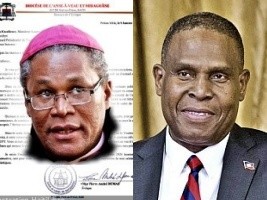
    In a significant development within Haiti’s ongoing political turmoil, former Prime Minister Jean Henry Céant has formally opposed the mediation efforts proposed by Bishop Pierre André Dumas. The controversy emerged after Bishop Dumas, Vice-President of the Haitian Episcopal Conference and Bishop of Anse-à-Veau-Miragoâne, agreed to lead mediation efforts to prevent potential chaos following the Transitional Council’s mandate expiration on February 7, 2026.

    Céant, who served as Haiti’s acting Prime Minister and currently faces Canadian sanctions, expressed his position through a strongly worded letter dated January 11, 2026. The document, addressed directly to Bishop Dumas and copied to multiple Haitian institutions, outlines Céant’s profound concerns regarding the bishop’s suitability as a neutral mediator.

    The former Prime Minister, identifying himself as a practicing Catholic and former Economic Advisor to the Catholic Church, expressed astonishment and dismay at the bishop’s involvement. Céant referenced a previous incident on March 9, 2024, when Bishop Dumas co-signed a document condemning sanctioned citizens without prior trial, creating what Céant described as a ‘painful rupture’ within the Church community.

    While acknowledging the necessity of mediation in crisis situations, Céant questioned Bishop Dumas’ ability to maintain the neutrality, moral integrity, and detachment essential for credible mediation. The former leader suggested that the bishop’s past political positions effectively place him among stakeholders rather than as an impartial mediator.

    Céant’s letter appeals to members of the Transitional Council to reject the mediation proposal, characterizing it as exclusionary and potentially damaging to institutional credibility. He urged Bishop Dumas to focus instead on his spiritual role as a pastor and man of prayer rather than engaging in political mediation.

    The correspondence concludes with a call for divine guidance during Haiti’s troubled times, maintaining a tone of respect while expressing firm opposition to the bishop’s proposed involvement in the country’s political resolution process.