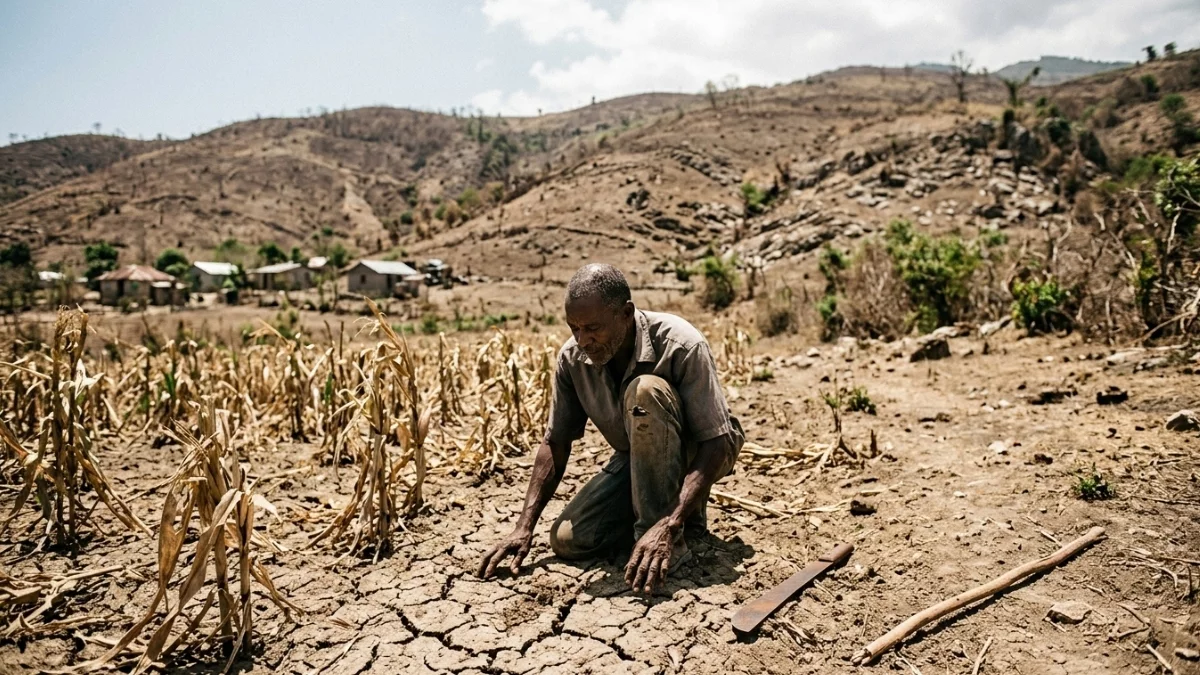
The Caribbean nation of Haiti, despite holding abundant natural resources and a resilient local workforce, is currently grappling with one of the most severe agricultural crises in its modern history, a collapse that has pushed the country into deepening food insecurity and dependence on international markets.
Multiple interconnected crises have fueled this downward spiral, ranging from systemic governance failures and incoherent national policy frameworks to widespread environmental degradation and a chronic lack of targeted technical support for small-scale producers. Today, more than 60 percent of all food consumed by Haitian communities is imported from overseas – a statistic that has completely eroded the country’s long-held goal of national food sovereignty and left the population extremely vulnerable to volatile swings in global commodity prices and supply chain disruptions.
Domestic agricultural output has continued to plummet, driven by a toxic mix of widespread gang-related insecurity, accelerating climate change impacts, chronically low public investment, crumbling agricultural infrastructure, and persistent mismanagement. The country can no longer produce enough staple food to meet the needs of its growing population, locking it into a crippling cycle of import dependence that shows no signs of reversal.
Beyond the collapse of crop production, Haiti’s critical livestock sector is also facing an unprecedented meltdown. Beef, goat, sheep, pig, and poultry production have all seen sharp, worrying declines, fueled by insecurity, rampant livestock theft, underfunded and weak veterinary services, widespread shortages of animal feed, degradation of grazing lands, and the complete absence of a coordinated national strategy for livestock development.
This collapse hits particularly hard because livestock represents one of the most important economic assets for Haitian rural households. For many families, farm animals act as a form of living savings that can be drawn on to pay for children’s school fees, cover unexpected medical costs, fund agricultural investments, and weather sudden emergencies. As the national livestock population gradually disappears, household livelihoods are further eroded, and access to affordable, locally produced animal protein has dropped dramatically across rural communities. The decline of the domestic livestock sector has also pushed up imports of meat, dairy products, and eggs, worsening Haiti’s already strained trade deficit and deepening its overall food dependence.
Water scarcity represents another crippling barrier to agricultural recovery. Water, the most essential input for productive farming, is chronically scarce especially in rural Haiti, and decades of inadequate water management have undermined production capacity and limited farmers’ ability to irrigate crops effectively even during periods of adequate rainfall.
A chronic lack of technical assistance compounds these challenges. Most smallholder Haitian farmers have no access to ongoing technical support or agricultural training, leaving them unable to update outdated farming practices or adopt more productive, climate-resilient sustainable methods that could boost output.
Widespread insecurity, fueled by the proliferation of armed criminal gangs across large swathes of the country, has had particularly devastating consequences for the agricultural sector. Farmers regularly face threats and violent attacks, leaving them unwilling to invest time, money, or labor into planting and maintaining crops out of fear for their personal safety. Beyond suppressing production, insecurity also blocks farmers from reaching local markets to sell their harvest, restricts travel needed to purchase seeds, fertilizers, and other critical farming inputs, and has discouraged collaborative cooperative initiatives that could strengthen smallholder resilience. As a result, large areas of arable land remain underutilized, and Haiti’s significant untapped agricultural potential remains severely constrained.
Compounding these systemic challenges is a catastrophic environmental crisis that continues to undermine agricultural productivity. Decades of unchecked deforestation, accelerating soil erosion, and widespread water pollution have degraded soil fertility and lowered quality of life for rural communities. The absence of sustainable natural resource management has further amplified the negative impacts of climate change, leaving Haiti’s agricultural sector even more vulnerable to extreme weather events and slow-onset environmental shifts.
In response to the deepening crisis, Haitian agricultural development organizations ALLO AGRO and PROMODEV have put forward a sweeping set of seven targeted recommendations to reverse the collapse and rebuild a more resilient national food system:
First, the groups call for urgent strengthening of agricultural and environmental governance, including efforts to rebuild public trust in the Ministries of Agriculture and Environment. Key reforms include increasing institutional transparency, improving clear communication with the public, and expanding meaningful participation for key stakeholders, including smallholder farmers and civil society organizations, in policy design.
Second, they propose the establishment of a National Sentinel Commission, made up of representatives from farmer associations and environmental organizations, to ensure all stakeholders are included in the country’s socio-economic development process. The commission would play a formal advisory role to shape national agricultural and environmental policy.
Third, the groups highlight the urgent need to invest in modern, sustainable irrigation infrastructure. This will require coordinated collaboration between the Haitian government, international development organizations, and local communities to guarantee equitable access to water for all smallholder producers.
Fourth, they call for targeted support for rural women, widely known as *Madan Sara*, who play a central role in Haitian food production. The organizations say specific programs are needed to provide rural women with expanded access to technical training, credit, and the productive resources they need to boost output and strengthen their own economic security.
Fifth, they recommend transferring regulatory management of the country’s eel fishery to the Ministries of Commerce, Interior, and Environment, a shift that requires formal approval from the Prime Minister, to reduce regulatory burdens on the agricultural sector. Publishing formal harvesting and export permits in Haiti’s official gazette, Le Moniteur, would also improve transparency and regulation of this valuable natural resource.
Sixth, the organizations urge greater investment in promoting sustainable agricultural practices that protect the natural environment and preserve biodiversity. This includes expanded training for farmers in modern, eco-friendly production techniques that boost output while reducing environmental harm.
Finally, they call for broad public awareness and education campaigns to inform the Haitian population about the critical importance of national food security and environmental protection. Educating young people about agricultural and environmental issues, they argue, will build long-term collective awareness and encourage civic action to support sustainable agricultural development.