标签: Haiti

海地

  • Politic : The FNE undertakes structural reform

    Politic : The FNE undertakes structural reform

    In a significant address during the 33rd annual ‘Mardis de la Nation’ event on January 20, 2026, Élysée Collagène, Director General of Haiti’s National Education Fund (FNE), outlined an ambitious transformation agenda for the institution. The comprehensive reform plan aims to establish the FNE as an efficient, transparent, and financially sustainable organization capable of effectively supporting Haiti’s education system.

    Collagène’s administration began with a thorough institutional assessment that identified substantial administrative and organizational deficiencies. In response, the development of detailed financial and accounting procedures manuals has been designated as a strategic priority to address these systemic weaknesses.

    The reform initiative commenced with the temporary suspension of check distributions, creating necessary operational space for a complete overhaul of allocation mechanisms. This pause enabled the implementation of enhanced procedures designed to ensure both efficiency and integrity in fund distribution.

    A critical policy change now mandates that educational fee checks be issued exclusively to schools rather than individual recipients. This structural modification guarantees proper utilization of public funds while establishing comprehensive financial traceability. An oversight committee has been established to monitor strict adherence to this system, working directly with educational institutions and prioritizing support for children from the most vulnerable socioeconomic backgrounds.

    Confronted with application volumes dramatically exceeding budgetary capacity, the FNE has instituted a technical validation committee responsible for evaluating and selecting projects based on stringent eligibility criteria. These measures proved particularly crucial given the institution’s previous financial challenges, including a 2.3 billion gourdes debt burden in 2023.

    Through disciplined fiscal management, the FNE has achieved a remarkable financial turnaround, growing its treasury to 5.9 billion gourdes. This recovery establishes a solid foundation for sustainable operations and credible long-term support of Haiti’s national education objectives.
  • Politic : The problem of financing local authorities and local development

    Politic : The problem of financing local authorities and local development

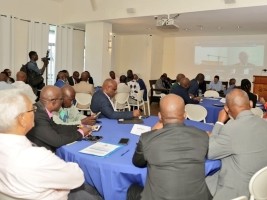
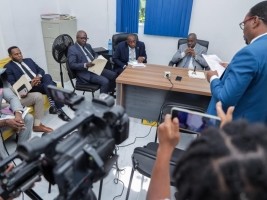
    PORT-AU-PRINCE, HAITI — A pivotal two-day workshop addressing Haiti’s systemic challenges in financing local authorities commenced this week at the Montana Hotel, spearheaded by Interior Minister Paul Antoine Bien-Aimé. The collaborative initiative between the Ministry of the Interior and Territorial Communities (MICT) and the National Federation of Haitian Mayors (FENAMH) convened national and international stakeholders to tackle one of Haiti’s most pressing governance issues.

    The high-level gathering witnessed participation from Minister of National Education, UNDP Resident Representative Xavier Michon, directors of multiple governmental agencies, and representatives from municipal associations across Haiti. This diverse attendance underscored the national significance of resolving funding disparities that hinder local development.

    Central to the discussions was the critical financial paralysis facing municipal governments, which lack both administrative autonomy and sufficient resources to provide essential public services. The workshop served as both diagnostic assessment and advocacy platform, aiming to establish effective mechanisms for equitable fund distribution that would enable meaningful decentralization.

    Minister Bien-Aimé delivered a forceful address demanding the repatriation of the Local Government Management Fund (FONDCT) to municipal control. Revealing that 90% of municipalities and all communal sections depend on these allocations, the Minister condemned the current concentration of public resources as fundamentally unjust and unsustainable. His declaration that ‘It’s time for the Ministry of the Interior and local authorities to manage the funds of local authorities again!’ signaled a potential paradigm shift in Haiti’s governance structure.

    FENAMH President Mayor Anténor Denoil echoed these sentiments, framing effective decentralization as essential for local development and constitutional compliance. The Minister of National Education further contextualized the crisis, explaining how chronic underfunding perpetuates regional disparities and deepens social inequalities.

    UNDP Representative Xavier Michon endorsed the initiative as a crucial step toward establishing practical financing mechanisms. The MICT reinforced that local financing represents the cornerstone for proportionate decentralization and sustainable community development throughout Haiti.

  • Justice : Launch of a pilot project to reduce prolonged pretrial detention

    Justice : Launch of a pilot project to reduce prolonged pretrial detention

    In a significant move to address systemic justice issues, the Haitian government has initiated a pioneering program aimed at reducing prolonged pretrial detention and alleviating severe prison overcrowding. On January 18, 2026, the Ministry of Justice and Public Security launched the “Mobile Initiative for Reducing Prison Overcrowding and Prolonged Pretrial Detention” pilot project.

    The inaugural session took place at the Port-au-Prince Court of First Instance under the supervision of Dean Attorney Bernard Saint-Vil. The court reviewed the cases of twenty individuals who had been incarcerated for several years without trial for minor offenses, invoking the Habeas Corpus Act to secure their release.

    All twenty detainees—including Wisnel Saint Fleur, Roosevelt D’Haïti, Dienix Georges, and seventeen others—were granted habeas corpus petitions and are scheduled for immediate release. The proceedings were attended by Chief Commissioner Patterson Dorval and Deputy Government Commissioner Choubert Baptiste, representing the Public Prosecutor’s Office.

    Prime Minister Alix Didier Fils-Aimé emphasized the government’s stance, stating: “Prolonged pretrial detention constitutes a serious violation of human dignity and the normal functioning of the justice system. The State can no longer tolerate this abuse. This initiative reflects our commitment to upholding the law in an orderly, just, and human rights-based manner.”

    The initiative comes in response to alarming statistics showing approximately 80% of Haiti’s prison population currently awaits trial without conviction. Developed by the Ministry of Justice, the project is implemented through a collaboration between the Center for Analysis and Research in Human Rights and the Mobile Institute for Democratic Education, with financial backing from the United Nations Development Programme in Haiti.

    The five-month pilot program will expand beyond Port-au-Prince to include the jurisdictions of Jacmel and Les Cayes, representing a comprehensive approach to addressing one of Haiti’s most pressing judicial challenges.

  • Politic : Demolition on Boulevard du Cap

    Politic : Demolition on Boulevard du Cap

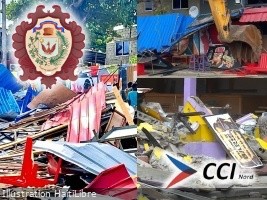
    A controversial urban redevelopment initiative in northern Haiti has triggered significant economic and social concerns among business leaders. On January 9, 2026, municipal authorities launched “Operation Sidewalk Reclamation” along Cap-Haïtien’s strategic boulevard, a prime tourist and commercial corridor. Under the direction of Marc Merzius Présumé, Departmental Delegate of the North, and with Mayor Angie Bell present, the operation resulted in the complete demolition of at least 17 buildings and commercial structures deemed to be encroaching on public land.

    The North Chamber of Commerce and Industry (CCI Nord) has issued a formal statement expressing profound concern regarding the execution methodology of the demolition campaign. While explicitly refraining from challenging the legal basis of the operation, the Chamber’s President, Steve A. Mathieu, criticized the absence of reasonable notice, transparent planning, and proper consultation with affected businesses.

    According to the Chamber’s declaration, previous discussions with authorities had addressed general urban concerns in Cap-Haïtien but never specifically outlined demolition plans of this scale. The business organization condemned what it characterized as a “hasty, haphazard, and unilateral approach” that failed to consider the substantial economic, social, and human consequences for local enterprises and families.

    The statement further denounced reported incidents of power abuse and violence against individuals, including women attempting to exercise their right to peaceful protest. The Chamber expressed solidarity with victims while reiterating its commitment to participatory urban development processes that balance public interest, heritage preservation, and economic protection through dialogue and transparent governance.

  • 2026 World Cup : FIFA ranking of Haiti and its opponents (+ schedule)

    2026 World Cup : FIFA ranking of Haiti and its opponents (+ schedule)

    As the 2026 FIFA World Cup approaches, Haiti’s national football team, known as Les Grenadiers, has demonstrated incremental progress in the global standings. The latest FIFA rankings released on January 19th show Haiti climbing one position to 83rd place worldwide with 1294.49 points, while maintaining their 8th-place standing within the CONCACAF region behind Jamaica’s 1362.46 points.

    The upcoming tournament presents a formidable challenge for the Caribbean nation, who face particularly demanding opponents in Group C. Haiti will commence their campaign against Scotland on June 13th, 2026, at Boston’s Gillette Stadium. The Scottish team currently occupies 38th position globally with 1506.77 points, representing European football’s characteristically competitive style.

    Their second match on June 19th at Philadelphia’s Lincoln Financial Field pits them against five-time world champions Brazil, ranked 5th worldwide with 1760.46 points. The historical record between these teams reveals Brazil’s dominance, with four comprehensive victories in senior competitive matches dating from 1974 to 2016.

    The group stage concludes on June 24th at Atlanta’s Mercedes-Benz Stadium against Morocco, Africa’s football powerhouse and 2022 World Cup semi-finalists. Currently ranked 8th globally with 1736.57 points, Morocco presents another significant challenge. Notably, Haiti has no prior competitive history against either Morocco or Scotland at senior level.

    The only bright spot in Haiti’s historical record against these opponents came in 1999, when their under-20 squad secured a 4-3 victory against Brazil’s youth team—a reminder that football occasionally produces unexpected outcomes despite overwhelming odds.

  • FLASH : 30 weapons and a large quantity of ammunition seized in the stronghold of «Barbecue»

    FLASH : 30 weapons and a large quantity of ammunition seized in the stronghold of «Barbecue»

    In a decisive blow against organized crime, Haitian National Police (PNH) special forces units conducted a major tactical operation on January 19, 2026, targeting the Delmas 2 district stronghold of notorious gang leader Jimmy Chérisier, known as “Barbecue.” The operation, which targeted the leader of the “Viv Ansanm” terrorist coalition, resulted in significant tactical gains for law enforcement.

    The raid culminated in the complete destruction of a property belonging to the gang leader, along with heavy equipment utilized by the criminal organization. Police spokesperson Frantz Lerebours confirmed that at least six gang members were killed during intense firefights, though several wounded militants managed to escape the scene. Multiple vehicles associated with the gang were also destroyed in the operation.

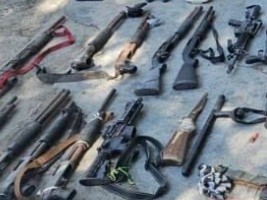
    Law enforcement officials secured a substantial arsenal of weaponry including five surveillance drones, eight pistols, eighteen 12-gauge shotguns, three AR-15 rifles, and one .22 caliber rifle. The seizure included massive ammunition stocks in 5.56mm, 12-gauge, 7.62mm, .38 caliber, and 9mm calibers.

    Investigators also uncovered disturbing evidence of impersonation tactics with the recovery of official-looking UDMO uniforms in cream and blue colors, complete with Police Inspector rank insignia. The operation additionally yielded multiple bulletproof vests, tear gas grenades, and a plastic bag containing small denomination Haitian gourdes (2, 10, and 25 gourdes), suggesting extensive criminal financial operations.

  • FLASH : The Government Commissioner of Port-de-Paix, at the head of an armed militia

    FLASH : The Government Commissioner of Port-de-Paix, at the head of an armed militia

    In a dramatic response to escalating violence in Haiti’s Northwest region, Port-de-Paix Government Commissioner Jéir Pierre has established and personally commands an armed security militia, marking an unconventional approach to combating rampant lawlessness. This development emerges amid deteriorating security conditions that have plagued the region since late December, characterized by surging armed robberies, violent assaults, and sexual attacks.

    Commissioner Pierre, expanding beyond his traditional judicial responsibilities, now directs nightly patrol operations through a specially formed brigade composed of local residents. While officials claim coordination with Haitian National Police (PNH) units, this militia operates under the prosecutor’s direct authority rather than police command structure—raising questions about legal oversight and accountability.

    The security model relies on community members selected for their intimate knowledge of local terrain and potential suspects. Financing originates from resident donations and diaspora contributions, creating an informal funding mechanism similar to that implemented by Commissioner Jean Ernest Muscadin in Miragoâne. Pierre defended the arrangement, stating, ‘The people who believe in this project did not want to leave me alone. They help cover basic costs so agents can carry out their functions.’

    Initial results suggest some effectiveness, with nighttime commerce gradually resuming in certain urban centers and residents reporting improved security conditions. However, this approach represents a significant departure from conventional law enforcement methodologies, highlighting the Haitian government’s limited capacity to address security challenges through established institutions.

  • FLASH : Trump forces 7 Caribbean countries to welcome expelled asylum seekers

    FLASH : Trump forces 7 Caribbean countries to welcome expelled asylum seekers

    The United States has finalized contentious migration agreements with seven Caribbean Community (CARICOM) member states, compelling them to accept asylum seekers facing deportation from American territory. The negotiated arrangements with Guyana, Dominica, Saint Lucia, Antigua and Barbuda, Belize, Saint Kitts and Nevis, and Barbados have sparked diplomatic tensions and revealed internal divisions within the regional bloc.

    According to Terrence Drew, Prime Minister of Saint Kitts and Nevis, nations resisting cooperation faced implicit threats of retaliatory measures from Washington, including visa restrictions and complications in international banking transactions. The negotiations exposed the challenging balance smaller island economies must strike between economic pragmatism and political sovereignty when engaging with global superpowers.

    The settlement includes specific provisions requiring candidates to possess clean criminal records, full financial coverage from the United States for transportation, accommodation, and sustenance, and prioritization of CARICOM nationals caught in migratory deadlock.

    Barbados’ Foreign Minister Kerrie Symmonds openly characterized the agreement as ‘unwilling,’ acknowledging the disproportionate pressure applied by Washington that small economies could not reasonably disregard. Antigua and Barbuda negotiated stringent conditions including an annual cap of ten asylum seekers, English fluency requirements, professional training mandates, and limited 24-month residency rights with a 90-day termination clause.

    Notably, Saint Kitts and Nevis—despite its leadership role in CARICOM—declared it would not accept Haitian refugees, citing security apprehensions that highlight internal regional tensions regarding Haitian immigration patterns.

    Guyana adopted an alternative approach, viewing the situation as an opportunity to address its substantial workforce deficit amid rapid economic expansion. The South American nation aims to attract approximately 80,000 skilled workers through this initiative, though opposition groups criticize the policy as accepting ‘unwanted populations’ from other nations.

    The Organization of Eastern Caribbean States has established a technical committee to monitor implementation, while the United States has set an annual ceiling of 7,500 refugees for the 2026 relocation program.

  • Education : 2nd Day of the National Conference on the Refounding of the Haitian Education System

    Education : 2nd Day of the National Conference on the Refounding of the Haitian Education System

    The Northeast Department of Haiti hosted the conclusive session of the National Conference on Educational Refounding on January 16, 2026, marking a significant milestone in the nation’s efforts to transform its education landscape. Convened under the leadership of the Departmental Directorate of Education, the gathering united diverse stakeholders in a collaborative endeavor to address systemic challenges.

    Presided over by Luckner Mompremier, the Departmental Director of Education, the conference featured robust participation from civil society representatives, educators, school administrators, and students. Technical expertise was provided by Ministry of Education assistants Jean-Rouzier Claircidor and Amos Simon, who contributed substantially to the policy dialogue.

    Conference deliberations centered on two critical pillars: enhancing educational effectiveness and improving quality standards. Participants engaged in comprehensive analysis of existing institutional shortcomings while proposing pragmatic solutions. The consensus emphasized that quality education serves as the fundamental catalyst for youth development and national progress.

    Stakeholders articulated concrete recommendations for curriculum modernization, teacher training enhancement, and infrastructure development. The dialogue consistently highlighted the interconnection between educational excellence and Haiti’s broader socioeconomic advancement.

    In his closing remarks, Director Mompremier acknowledged the constructive contributions of all participants and emphasized the imperative of translating discussions into actionable policies. The conference concluded with a shared commitment to establishing an education system that effectively meets student needs and national development requirements.

  • Politic : Everything you need to know about the Ministry of Commerce and Industry

    Politic : Everything you need to know about the Ministry of Commerce and Industry

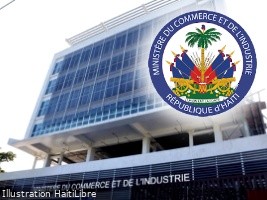
    The Ministry of Commerce and Industry (MCI) serves as Haiti’s central institution for shaping the nation’s economic trajectory through comprehensive trade and industrial policy frameworks. Established to safeguard industrial and commercial property rights derived from international conventions, the ministry also oversees competition policy and consumer protection mechanisms.

    Operating through five strategic pillars, the MCI’s mission encompasses policy formulation, investment facilitation, and export promotion. The ministry actively works to align Haiti’s economic development plans with global and regional trade dynamics while maintaining compliance with national legislation and international commitments.

    A critical function involves defining strategic directions for public trade and industrial policy at both national and sectoral levels. This requires synchronizing socio-economic priorities with implementation mechanisms and resources. The MCI additionally bears responsibility for applying existing commercial laws while proposing new legislative frameworks that support trade and industrial objectives.

    The ministry’s diplomatic role includes conducting negotiations for international, regional, and sub-regional trade agreements, conventions, and treaties. It ensures effective monitoring and implementation of these agreements once ratified.

    Collaboration forms another essential component of the MCI’s operations. The ministry maintains partnerships with public, semi-public, and private institutions involved in production, distribution, marketing, and service communication. These alliances aim to enhance productivity and strengthen national and international competitiveness while protecting consumer rights.

    Notably, the MCI contributes significantly to poverty reduction strategies through regulatory oversight of public and private activities within its jurisdiction. The ministry drives modernization of business legal frameworks to create environments conducive to investment and sustainable development of industrial and commercial enterprises.