标签: Haiti

海地

  • Mission to Strengthen Social Protection in Artibonite and Northern Haiti

    Mission to Strengthen Social Protection in Artibonite and Northern Haiti

    In a targeted push to expand and strengthen social safety net services for vulnerable communities, Haiti’s Ministry of Social Affairs and Labor (MAST) launched an official working mission across Artibonite Department and northern Haiti starting April 24, 2026. Led by MAST Minister Marc-Elie Nelson, the delegation included top leadership from two of Haiti’s key social assistance bodies: Jhonny Raphaël, Director General of the Social Assistance Fund (CAS), and Kesner Romilus, Director General of the Economic and Social Assistance Fund (FAES). The mission’s first stop was the commune of Saint-Michel de l’Attalay, located in Haiti’s central Artibonite region.

    The visit to Saint-Michel de l’Attalay delivered multiple tangible improvements to local social services, kicking off the mission with measurable progress. To address longstanding gaps in public service access, Minister Nelson formally inaugurated a new, purpose-built headquarters for the local CAS directorate. The upgraded facility is designed to cut wait times and improve service delivery for residents seeking social support across the commune. In a move to boost on-the-ground operational capacity, more than 10 newly hired local social services technicians received their official assignment letters during the event, bringing much-needed additional staffing to the under-resourced region. Additionally, local authorities confirmed they would begin outreach to identify nearly 1,000 eligible new beneficiaries, who will receive official CAS membership cards granting them formal, sustained access to the fund’s support programs.

    A core priority of the mission’s first stop was addressing the urgent humanitarian needs of people displaced by ongoing insecurity in nearby Marchand-Dessalines. Hundreds of residents have fled escalating violence in Marchand-Dessalines and its surrounding areas, seeking shelter in Saint-Michel de l’Attalay. To meet their immediate food needs, the delegation announced that an off-site community soup kitchen has already been established, which will serve up to 300 hot meals daily to displaced people and other vulnerable local residents. Recognizing that the majority of the 800 displaced people currently residing in on-site accommodation lack regular access to cooked meals, Minister Nelson also confirmed plans to open a second community restaurant directly on the displacement camp site in the near future. To ensure future support is tailored to actual needs, the government has launched a comprehensive, on-the-ground assessment of living conditions among displaced populations, which will inform both emergency relief efforts and longer-term structural support programs.

    On the sidelines of the social protection and humanitarian activities, Minister Nelson held a working meeting with leadership from the Saint-Michel de l’Attalay local police department. During the discussion, he publicly recognized and commended the local police force for their consistent commitment to maintaining public safety and protecting vulnerable residents amid widespread regional insecurity.

    Following the completion of the first phase of the mission in Saint-Michel de l’Attalay, the delegation will travel to Gonaïves, Haiti’s historic birthplace of independence, for the next leg of their outreach. After wrapping up activities in Gonaïves, the mission will continue north to Cap-Haïtien, where officials will roll out additional social protection expansions and assess community needs across the northern department.

  • MonCash from Digicel Haiti, announces a strategic partnership with Capital Bank

    MonCash from Digicel Haiti, announces a strategic partnership with Capital Bank

    Haiti’s leading mobile money provider MonCash, a service of Digicel Haiti, has announced a new strategic collaboration with local Capital Bank that aims to bridge the gap between traditional banking infrastructure and modern mobile financial solutions. Announced on April 28, 2026, this partnership marks a key milestone in the ongoing evolution of Haiti’s financial ecosystem, with the shared goal of delivering more accessible, efficient, and user-centric financial tools tailored to the daily needs of Haitian residents across the country.

    Under the terms of the new agreement, customers will gain seamless, direct connectivity between their personal Capital Bank checking or savings accounts and their MonCash mobile wallets. This integration eliminates the long-standing frictions that have historically separated traditional banking and mobile money services, allowing users to move funds and manage their finances across both platforms without unnecessary delays or complicated processes. Whether users are based in densely populated urban centers or remote rural communities with limited physical bank access, the collaboration removes travel requirements for fund transfers, enabling immediate transactions from any location at any time.

    Joint statements from leadership teams at both Digicel Haiti/MonCash and Capital Bank emphasized that the partnership is rooted in a shared commitment to innovating for the benefit of the Haitian public. “By aligning our strengths and bringing financial services closer to the everyday routines of Haitian people, we are delivering practical, secure, customized solutions that work for all segments of the population,” the representatives said.

    Four core improvements will be delivered through the collaboration: first, direct, real-time interaction between Capital Bank accounts and MonCash mobile wallets; second, simplified, instant money transfers that remove the need for in-person visits to bank branches; third, an optimized, intuitive user interface that delivers a smooth, hassle-free experience for users of all digital literacy levels; and finally, meaningful progress toward building a more inclusive, modern financial sector in Haiti.

    By combining MonCash’s extensive reach in mobile financial services and Capital Bank’s established banking infrastructure, the two institutions are driving meaningful transformation across Haiti’s financial landscape. The partnership demonstrates how cross-sector collaboration between fintech and traditional banking can create targeted, accessible solutions that align cutting-edge digital technology with the actual on-the-ground needs of Haitian communities.

  • Police officers demonstrate and sow panic in Delmas

    Police officers demonstrate and sow panic in Delmas

    On Monday, April 27, a mass protest organized by the Haitian National Police Union (SPNH-17) brought major disruption to the Delmas district of Haiti, led by off-duty Haitian National Police (PNH) officers demanding the release of four detained colleagues.

    The demonstration began in the early afternoon, with protesters blocking key transport routes across the area. In Delmas 33, officers parked vehicles across major roads to form barricades, while in Delmas 31, piles of burning tires were used to shut down multiple major arteries. Motorists were forced to divert from their routes, and the widespread unrest prompted most local businesses to shut their doors for the day amid safety fears.

    The core demand of the protesting officers is the immediate release of Serge Édouard Muscardin, Oberde Joseph, Ricardo Anglade and Nexbertso Déjean, who were taken into custody on April 14 by the Departmental Directorate of West-1. Protesters have denounced the arrests as “illegal and arbitrary”, and are calling for full public clarification of the charges brought against the four officers.

    In an official statement confirming the detentions, PNH leadership said the four officers have been placed in solitary confinement pending an investigation by the General Inspectorate. The investigation centers on allegations that the officers committed multiple violations of Haitian law and internal PNH regulations.

    Police authorities emphasized that the detention process follows all formal internal institutional procedures, designed to uphold transparency, enforce discipline, and ensure the PNH operates effectively. Senior PNH command framed the measures as a necessary step to rebuild public trust in the national police force and improve the institution’s public image.

    The statement also reiterated that the PNH is a strictly hierarchical and disciplined organization, bound by binding rules and principles that apply to every member without exception. All officers are required to adhere to these standards, including an explicit ban on using institutional equipment and resources to commit criminal acts in public that disrupt public order.

    As the protest unfolded, the PNH General Directorate issued an appeal for calm among the general public, and called on all officers not participating in the unrest to remain at their assigned posts to continue providing normal security services to communities.

    The PNH further clarified that it only formally recognizes uniformed, properly registered and identified officers as acting on behalf of the institution. Any person wearing a balaclava, carrying a weapon, and creating public disorder will be treated as a violator and subject to full legal penalties, the statement added.

    Protesters have issued an ultimatum to PNH leadership, threatening to extend the shutdown across the entire Haitian capital on Tuesday, April 28 if their demand for the release of the four detained officers is not met.

  • Project for 1,000 housing units in northern Haiti

    Project for 1,000 housing units in northern Haiti

    In a landmark step to address Haiti’s growing affordable housing crisis and expand social protection coverage, Haiti’s Minister of Social Affairs and Labor (MAST) Marc-Elie Nelson officially laid the foundation stone for the new regional office of the Public Enterprise for the Promotion of Social Housing (EPPLS) in the northern border city of Ouanaminthe on Saturday, April 26, 2026.

    During the well-attended groundbreaking ceremony, Minister Nelson used the occasion to directly address local families, workers, and laborers, reaffirming the Haitian government’s unwavering commitment to supporting vulnerable populations across the Far North region through targeted, people-centered subsidy programs. He confirmed that a total allocation of 7.405 billion gourdes has already been disbursed to boost social protection frameworks and support the country’s most economically disadvantaged groups. As part of this broader effort, Nelson highlighted that the Fund for Economic and Social Support (FAES) has rolled out direct cash assistance, providing 5,000 gourdes in one-time support to every employed worker in Haiti’s key textile export sector.

    EPPLS Director General Rony Charles praised the government’s strategic investments in social welfare and called for proactive collaboration from local communities to ensure sustainable, responsible management of the new social housing developments and planned residential villages. To institutionalize this local oversight, a nine-member Supervisory Commission made up of early-career young professional trainees has been established. The commission’s core mandate includes ongoing monitoring of infrastructure upkeep and enforcing public cleanliness standards across all social housing sites, with formal letters of appointment officially presented to the new commission members during Saturday’s ceremony.

    In a major policy announcement made at the event, Nelson confirmed plans to construct 1,000 new housing units across the broader northern region of Haiti, a project designed to alleviate the severe housing shortage that has disproportionately impacted low-income households in the area. The entire development will be funded through partnerships with international development organizations, with all units reserved exclusively for low-income families struggling to access safe, affordable housing.

    The Ouanaminthe groundbreaking is part of Minister Nelson’s official cross-country outreach tour, which launched in northern Haiti on April 24, 2026. Following the conclusion of his northern visit, Nelson is scheduled to travel to Haiti’s Great South region starting next week, where he will oversee the rollout of direct government assistance to vulnerable households in that part of the country.

  • Situation report on the crisis in Haiti (January-March 2026)

    Situation report on the crisis in Haiti (January-March 2026)

    Three months into 2026, Haiti’s humanitarian catastrophe continues to deepen, as brutal gang violence leaves large swathes of the country uninhabitable and pushes millions of vulnerable people into displacement. Hard-hit regions including the Artibonite and Central departments, as well as the densely populated Port-au-Prince metropolitan area, have seen widespread destruction of residential property, alongside sharp spikes in kidnapping and sexual violence. Current data confirms that roughly 1.4 million Haitians have been forced to abandon their homes to seek safety, while thousands more have been killed since the crisis escalated. Amidst the collapsing security environment, the United Nations Population Fund (UNFPA) and its local implementing partners have remained on the ground to deliver life-saving sexual and reproductive health (SRH) services, while stepping up efforts to prevent and respond to gender-based violence (GBV) that disproportionately impacts women and adolescent girls. Between January and March 2026, the agency delivered critical SRH care to 7,470 vulnerable people, and ran GBV intervention and support programs that reached 5,580 survivors and at-risk community members. To meet the immediate hygiene and health needs of displaced women and girls, UNFPA also distributed 2,792 dignity kits, and supplied 100 inter-agency reproductive health kits to local health facilities and non-governmental organizations, enough to cover the care needs of 5,489 people across crisis-hit regions. To scale up these life-saving operations and meet the rapidly growing demand for services across the country in 2026, UNFPA has launched a $32.8 million emergency funding appeal. However, as of the end of March 2026, the agency has only received $1.8 million in donations since the start of the year – less than 5.5% of the total funding required. With humanitarian needs worsening by the day and violence continuing to displace more Haitian families, the UN body has warned that additional urgent funding is critical to ensure women and girls retain access to essential health care and protection services that are already on the brink of collapse.

  • Haiti : Access work underway at the Mont Fleury solar power plant site

    Haiti : Access work underway at the Mont Fleury solar power plant site

    Haiti’s landmark renewable energy transition is moving one step closer to reality, as access improvement works get underway at the Mont Fleury site earmarked for the new Jacmel photovoltaic solar power plant. This progress comes on the heels of the recent construction contract signing for the project, which stands as one of the Caribbean nation’s most ambitious renewable energy investments in recent years.

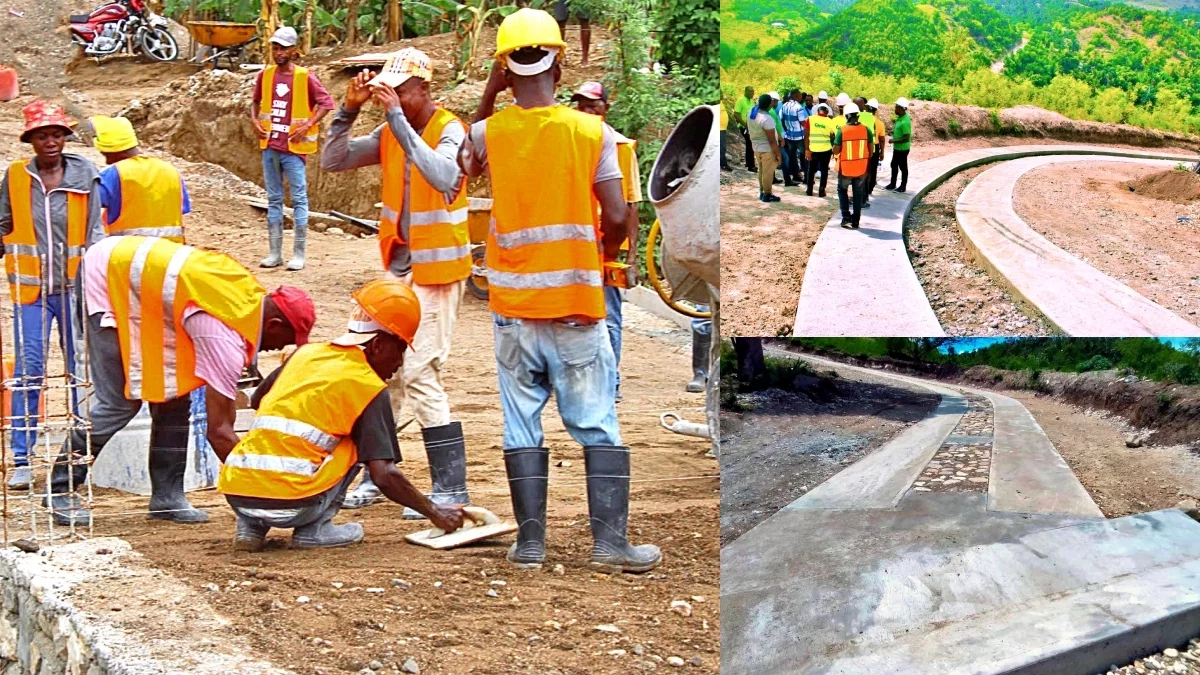
    Joseph Almathe Pierre Louis, Haiti’s Minister of Public Works, Transport and Communications (MTPTC), has formally directed engineering teams to accelerate upgrades to key road sections leading to the project site. The Southeast Departmental Directorate (DDSE-Jacmel) is providing technical oversight and support for the infrastructure works, which serve a dual purpose: clearing the way for smooth construction of the solar facility and delivering long-awaited connectivity improvements for local residents in Mont Fleury, the sixth communal section of Jacmel.

    As the official project owner, MTPTC is overseeing strict quality controls and regular progress monitoring for the entire initiative. The project is backed by more than $17 million in financing from the World Bank, disbursed through Haiti’s flagship *Renewable Energy for All* (SREP) program, an initiative designed to expand affordable, reliable access to electricity across the country.

    The construction contract was awarded to ESD Engineering Service S.R.L., a Dominican-based international engineering firm with extensive experience in large-scale energy infrastructure. The company is tasked with delivering a fully completed, turnkey facility equipped with cutting-edge clean energy technology. Key components of the finished plant will include a 4 megawatt solar generation capacity (with a guaranteed minimum output of 3.35 megawatts), a 6 megawatt-hour lithium-ion battery energy storage system (BESS) to store excess power for low-sun periods, and comprehensive grid expansion works. These upgrades include the installation of roughly 4 kilometers of new low-voltage power lines and 7 kilometers of 23 kV medium-voltage lines to connect the facility to the national grid.

    A standout feature of the project is its advanced grid-forming technology, a system engineered to maintain consistent voltage and frequency stability across Haiti’s electrical grid. This capability means the plant will continue to deliver reliable power even if the nation’s existing thermal power facilities shut down unexpectedly, or during extended periods of low sunlight. The technology addresses one of the biggest longstanding challenges facing Haiti’s fragile energy sector: persistent grid instability and widespread outages.

    Construction of the solar power plant is scheduled to take 13 months, with work kicking off in February 2026 and commercial operations on track to launch by March 2027. Beyond boosting generation capacity, the project is expected to set a precedent for future renewable energy investment in Haiti, helping the nation reduce its dependence on expensive imported fossil fuels and expand access to electricity for underserved communities across the southeast region.

  • 37th Session of the Sectoral and Thematic Table on Social Protection in Haiti

    37th Session of the Sectoral and Thematic Table on Social Protection in Haiti

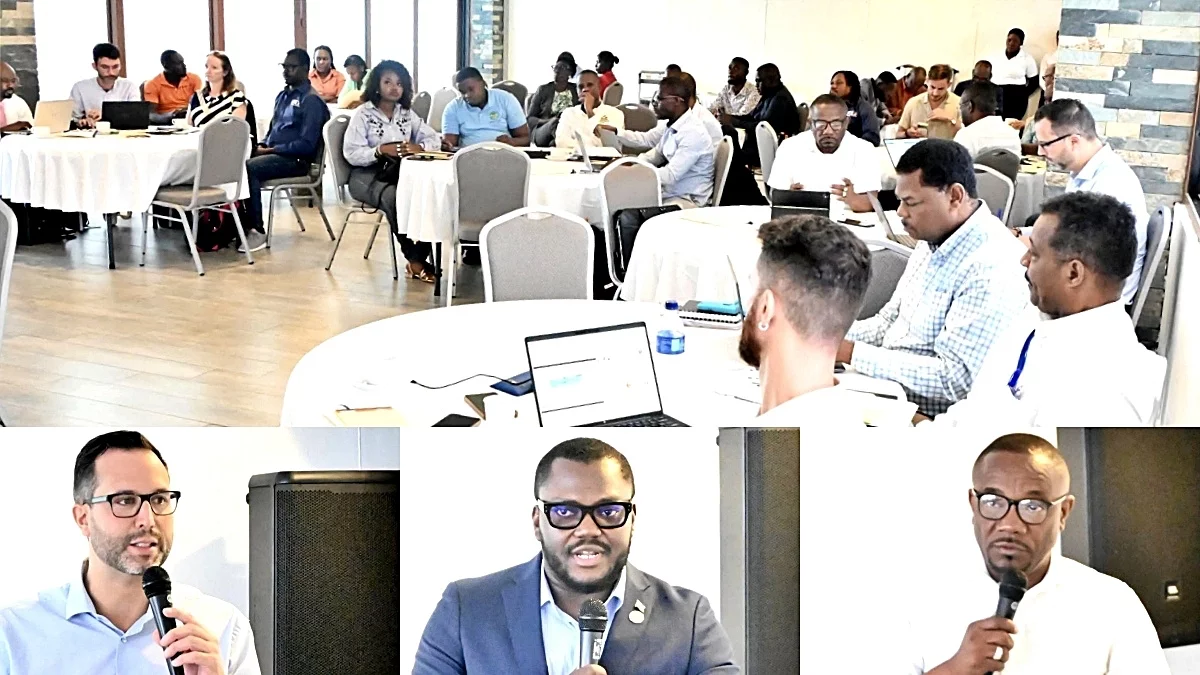
    Amid ongoing efforts to build a more inclusive and coordinated support system for vulnerable populations across Haiti, the country’s Ministry of Social Affairs and Labor (MAST) has brought together key sector stakeholders for the 37th gathering of its high-level Sectoral and Thematic Table on Social Protection (TSPS). Organized by MAST’s internal Studies and Programming Unit (UEP), the hybrid event, held both in-person at Port-au-Prince’s Montana Hotel and accessible to global participants via live videoconference, opened this week with a clear core mandate: strengthen institutional and multi-partnership coordination to address longstanding gaps in Haiti’s social protection ecosystem.

    In his formal opening address to attendees, Social Affairs Minister Marc-Elie Nelson centered his remarks on the critical role of Haiti’s National Policy on Social Protection and Promotion, framing the framework as a foundational strategic asset for MAST’s work. He explained that the recurring TSPS sessions serve a unique purpose in the sector: creating a structured space for cross-stakeholder dialogue, breaking down silos that have historically fragmented social protection interventions, and unifying diverse actors around aligned, collective action.

    “It is non-negotiable that every intervention, whether led directly by the Haitian state or implemented by our technical and financial partners, aligns fully with this national framework and contributes to its coherent rollout,” Nelson stated. He went on to reaffirm MAST’s unwavering commitment to sustaining collaborative partnerships, upholding alignment with national development priorities, ensuring intervention coherence, and leveraging complementary strengths across all participating organizations.

    Marie Hérolle Michel, Director General of MAST, followed the minister’s remarks by praising the consistent engagement and proactive energy of all stakeholders working to advance social protection across Haiti. She called for deeper cohesion and targeted collaboration to deliver tangible, practical results that directly improve the lives of Haitian citizens. “A cohesive national social protection system starts with cohesion right here within the Ministry of Social Affairs and Labor,” Michel emphasized, underscoring the importance of internal alignment to set an example for external partners.

    The 37th TSPS session featured a structured agenda focused on progress tracking and future planning. Attendees heard a joint presentation on the Social Protection and Employment Accelerator Joint Project from leads Sergot Jacob and Thomas Debrouwer. Barbara Canton and Jonès Pyram delivered a comprehensive overview of key progress and achievements delivered through the TSPS framework over the preceding term. Claudy Louis, the TSPS Focal Point, walked attendees through the newly revised Terms of Reference for the roundtable, updating operational guidelines to reflect evolving sector needs. Finally, Lucny Cadet, Coordinator of MAST’s UEP, presented a formal action plan designed to revitalize the TSPS mechanism and expand its impact moving forward.

  • The MTPTC is tackling the obstacles in the construction sector in Haiti

    The MTPTC is tackling the obstacles in the construction sector in Haiti

    Against a backdrop of widespread infrastructure stagnation and limited economic growth across Haiti, the country’s Ministry of Public Works, Transport and Communications (MTPTC) has launched a targeted effort to diagnose and resolve the systemic barriers holding back the nation’s critical construction industry. On April 26, 2026, MTPTC head Joseph Almathe Pierre Louis, a professional engineer, convened a high-stakes working meeting with leadership from the Haitian Association of Construction Companies (AHEC) to align public and private priorities for the beleaguered sector.

    The core mandate of the gathering was straightforward: map the most pressing challenges that have stalled industry progress, then build a collaborative regulatory roadmap to unlock the sector’s potential as a driver of national development. From the opening of discussions, participants agreed that sweeping restructuring of Haiti’s fragmented construction market is a non-negotiable first step. Minister Pierre Louis stressed that more rigorous, organized governance of the sector is required to deliver long-term, sustainable improvements that benefit both industry operators and Haitian communities at large.

    Two particularly pressing pain points emerged as top priorities for reform. First, attendees addressed longstanding frustrations around access to public procurement opportunities. Existing eligibility criteria for public tenders are widely viewed as overly restrictive and poorly aligned with the capacity of Haiti’s local construction firms, locking many domestic providers out of both national and international contracted projects. Second, the group flagged chronic payment delays for completed work as a major drain on the national economy. The consistent failure to disburse funds to construction companies on schedule has eroded the financial health of local operators, severely limiting their ability to invest in new equipment, expand workforces, and take on additional projects.

    By the close of the meeting, attendees had agreed on a concrete next step: develop a formal project summary that outlines shared strategic objectives and ranks the most urgent constraints to address. The overarching goal of the collaboration is to reshape Haiti’s construction sector into a well-structured, fiercely competitive, and fully transparent engine of national economic growth. This coordinated public-private initiative aligns directly with the Haitian government’s broader commitment to roll out large-scale national modernization projects across the country, while simultaneously creating space for local entrepreneurship to thrive.

  • Training project in Haiti targeting 5,000 young people from high-risk neighborhoods

    Training project in Haiti targeting 5,000 young people from high-risk neighborhoods

    In a landmark bilateral cooperation gathering held on April 23, 2026, Haitian and Brazilian institutional stakeholders came together to advance two transformative initiatives focused on youth empowerment and community stabilization amid Haiti’s ongoing security challenges. The meeting brought together technical representatives from Haiti’s Ministry of Youth, Sports, and Civic Action (MJSAC), Brazil’s leading community security organization Viva Rio, and the Brazil-Haiti Cultural Center, all aligned around a shared goal of expanding opportunity for vulnerable young Haitians.

    At the core of the talks was the unveiling of an ambitious large-scale training project that aims to reach 5,000 young people residing in some of Haiti’s most high-risk urban neighborhoods. Designed to disrupt the cycle of violence that has drawn many disconnected youth into armed groups, the initiative frames skills training and mentorship as a concrete, life-changing alternative to recruitment by violent factions. Organizers have structured the project around a holistic model of prevention, one-on-one mentorship, and socio-community integration, seeking to reconnect marginalized youth to local support systems and economic opportunity.

    During discussions, stakeholders prioritized two neighborhoods for early intervention: Solino and Fort-Jacques. Both areas have been flagged as facing acute gaps in youth development resources, making them critical starting points for the initiative’s outreach and programming.

    Beyond the youth training project, MJSAC also presented a long-term strategic vision to its Brazilian partners: the “Sport Vision 2030” initiative. This multi-year plan centers on expanding access to quality sports infrastructure across Haiti and nurturing emerging athletic talent through inter-school championship programs. Backers say the project will create structured pathways to identify, mentor, and elevate a new generation of Haitian competitive athletes, while also using sports as a tool to build community cohesion and keep young people engaged in positive activities.

    The joint planning meeting marks a key step forward in bilateral cooperation between Haiti and Brazil, with both sides framing youth investment as a foundational strategy for long-term peace and development in the Caribbean nation.

  • The cleanup of Cap

    The cleanup of Cap

    Long plagued by chronic sanitation gaps that threaten public health and economic vitality, Haiti’s northern coastal hub of Cap-Haïtien is moving forward with sweeping cleanup efforts under the collective community initiative *Konbit Netwayaj*, paired with the monthly *Samedi Sitwayen* (Citizen Saturday) campaign that brings together residents and institutions for coordinated action on the last Saturday of every month. The ongoing effort, which first launched in September 2025, marked its latest major milestone on April 25, 2026, when Cap-Haïtien City Hall coordinated a cross-sector turnout of key national and local partners to clean up one of the city’s most high-profile public spaces.

    Joining the municipal team for the April cleanup were representatives from Haiti’s Ministry of the Environment, Ministry of Public Works, and the National Solid Waste Management Service (SNGRS), alongside dozens of civil society groups, all of whom turned out in force to advance the initiative’s goals. What makes this local effort particularly notable is that it forms an integral part of *Konbit Haiti Zero Waste*, a nationwide movement spearheaded by the Ministry of the Environment to overhaul the country’s fragmented waste management systems.

    The April cleanup operation focused specifically on the scenic coastline stretching along the key arterial road linking Cap-Haïtien’s international airport to its bustling city center. This corridor is widely recognized as the city’s primary gateway for visitors and commerce, making its upkeep a critical priority for boosting local tourism and economic activity.

    In opening remarks to participants, Cap-Haïtien Mayor Angie Bell welcomed the national program’s support, framing it as a long-awaited boost to the municipality’s ongoing work to build more sustainable waste management practices. Bell emphasized that poor sanitation has stood as one of the most pressing, long-running challenges facing the city, and that the collaborative initiative has injected new momentum into local efforts to turn the tide. The Cap-Haïtien Municipal Administration further reaffirmed its pledge to continue uniting community stakeholders around the shared goal of building a cleaner, more organized urban environment for all residents.

    Environment Minister Valery Fils Aimé used the event to highlight the collaborative model that underpins the national movement, noting that the effort draws together public sector agencies, private sector actors, and civil society organizations in a shared mission. He stressed that solving Haiti’s complex environmental and sanitation challenges requires collective responsibility, urging every resident and institution to commit to ongoing action. “The fight against environmental challenges cannot be won without everyone’s involvement. Every little bit counts,” Fils Aimé told attendees.

    Daril Baltaza, Director General of the SNGRS, echoed that sentiment, praising both Cap-Haïtien residents for their relentless determination and local leaders for their proactive commitment to rolling out the program successfully. Baltaza also called on residents to embed long-term change by adopting consistent, responsible waste disposal and recycling habits in their daily lives, beyond scheduled group cleanup events.

    The Cap-Haïtien event marks a key stepping stone in the national program’s gradual expansion across Haiti. On April 26, just one day after the Cap-Haïtien cleanup, Minister Fils Aimé traveled to the northeastern border city of Ouanaminthe to formally launch the *Konbit Haiti Zero Waste* program locally. The initiative will then roll out to the coastal city of Gonaïves starting April 27, with additional rollouts planned for other municipalities across the country in the coming weeks and months.