标签: Haiti

海地

  • Leisure : Did you know ? #18

    Leisure : Did you know ? #18

    One of the most extraordinary artifacts ever uncovered by archaeology, the Antikythera Mechanism, continues to upend long-held assumptions about the technical capabilities of ancient civilizations, as shared in the 18th installment of the popular ‘Did You Know’ trivia series from Haiti-based media outlet HaitiLibre.

    Dated to the 2nd century BC, this intricate bronze artifact houses a sophisticated network of over 30 interlocking toothed gears. High-resolution X-ray analysis conducted in modern decades has unlocked the device’s true purpose: it served as a remarkably precise analog astronomical computer, capable of predicting the orbital positions of the Sun and Moon, forecasting solar and lunar eclipses, and even tracking the four-year competition cycle of the ancient Olympic Games. What makes this creation even more remarkable is that mechanical technology of comparable complexity did not reemerge across Europe until the 14th century — more than 1,500 years after the Mechanism was crafted.

    Before the discovery and analysis of this artifact, scholars widely believed that ancient Greek engineers had never developed such advanced mechanical expertise. The Mechanism’s existence has forced a complete reevaluation of ancient scientific knowledge, but it has also left researchers with enduring questions: where did the Greeks acquire the foundational knowledge to build this device, and how did this groundbreaking technology disappear from recorded use for more than a millennium? To this day, the Antikythera Mechanism remains one of the most puzzling and captivating objects in global archaeology.

    This fascinating fact appears as a featured answer on Quiz-HaïtiLibre, HaitiLibre’s free, no-registration general knowledge quiz platform. Designed for audiences of all ages and skill levels, the platform offers dozens of quiz games across three difficulty tiers — easy, intermediate, and difficult — with full support for both French and English languages. New content is added to the platform every month, with a recent April 8 update introducing 28 brand-new quiz games to challenge visitors.

    Quiz-HaïtiLibre invites users to test their knowledge across a wide range of topics, from Haitian current affairs and culture to global history, science, and specialized expert-level trivia. Curious readers can explore the full collection of quizzes and the entire ‘Did You Know’ trivia series at the platform’s official website: https://quiz.haitilibre.com/en.

  • Taiwan’s President’s visit to Eswatini blocked by mainland China

    Taiwan’s President’s visit to Eswatini blocked by mainland China

    A planned official visit by Lai Ching-te, leader of the Taiwan region, to the Kingdom of Eswatini has been forced into postponement after multiple countries along the proposed travel route withdrew overflight clearances under pressure from mainland China, Taiwan’s representative office in Haiti announced this week. The trip, originally scheduled to run from April 22 to 27, was meant to mark national celebrations in Eswatini, one of the few countries that still formally recognizes Taiwan.

    In an official statement released Wednesday, the representative office said the abrupt cancellation of overflight authorizations eliminated the necessary security conditions for Lai, his accompanying delegation and the presidential aircraft to complete the journey safely. In response to the change of plans, Lai has appointed a special envoy to attend Eswatini’s national events in his place.

    The statement pinned the blame for the canceled permits directly on Beijing, claiming the affected countries made their decisions after facing economic coercion and political pressure from Chinese authorities. It argued that these actions violate the sovereignty of the countries that withdrew the permits, threaten the safety of global civil aviation travel, and run counter to long-standing international norms and standard practices for cross-border air travel.

    The Taiwan region’s government issued a formal condemnation of the move, reaffirming its claim that Taiwan is a sovereign entity and that its 23 million residents are entitled to unimpeded, un-intimidated participation in international affairs.

  • Haiti health : A first batch of about one hundred nomination letters already available

    Haiti health : A first batch of about one hundred nomination letters already available

    A critical milestone has been achieved in the ongoing effort to reinforce Haiti’s under-resourced healthcare infrastructure in the Nippes department, with the first group of roughly 100 staff appointment letters now available for distribution. This early progress serves as a clear demonstration of the Haitian national government’s commitment to delivering long-term, sustainable improvements in local healthcare access and quality for residents of the region.

    The appointment initiative is being spearheaded at the national level by Prime Minister Alix Didier Fils-Aimé and Public Health Minister Dr. Sinal Bertrand, who have framed the push to fill vacant healthcare roles as a core component of a broader national strategy to equip public health institutions across Haiti—particularly in underserved departments like Nippes—with skilled, qualified personnel.

    At the local level, the milestone is the product of consistent, targeted work led by Dr. Esther Ceus Dumont, Director of the Nippes Health Directorate (DSNI). Under her leadership, the DSNI team oversaw end-to-end management of candidate applications, from initial preparation and submission to the central government to rigorous ongoing follow-up to move the process forward.

    The 100 appointment letters released in this first round cover a full spectrum of roles critical to the daily operation of local healthcare facilities, including practicing physicians, registered nurses, nursing assistants, and administrative and support staff. Importantly, officials emphasize that this initial batch is only the first phase of a much larger hiring effort. All remaining applications from Nippes-based candidates are currently in late-stage processing at the national central level, with finalization expected in the near term.

    A top priority group of 40 nurses who successfully passed the national competitive hiring examination is receiving special attention in the process. Both the National Directorate of Nursing and Information and the Ministry of Public Health have flagged the integration of these qualified nurses as an urgent priority, and their appointment letters are expected to be issued imminently. Once hired, these new nursing staff will directly address critical staffing shortages that have hampered care delivery at multiple healthcare facilities across the department.

    In acknowledgement of the widespread public and candidate anticipation surrounding the hiring process, the DSNI has called on all applicants to maintain patience and confidence in the system. Departmental officials have implemented comprehensive safeguards to ensure all applications are reviewed thoroughly and fairly, with results set to be released in incremental phases as processing is completed.

    This first round of appointments has kicked off what many local health leaders describe as a promising new trajectory for healthcare in Nippes. The milestone confirms the department is moving steadily toward a stronger, more structured, and better-resourced public healthcare system designed to meet the full spectrum of health needs of its local population.

  • The Haitian Maritime and Navigation Service raises its voice

    The Haitian Maritime and Navigation Service raises its voice

    Haiti’s top maritime regulator has launched a urgent compliance push targeting unsafe coastal shipping operations in the Caribbean nation’s territorial waters, announcing strict penalties for vessel owners that fail to resolve outstanding maintenance violations. In an official circular published April 21, 2026, Éric Prévost Jr., Director General of the Haitian Maritime and Navigation Service (SEMANAH), exercised his statutory authority over navigational safety and maritime law enforcement to order immediate adherence to existing maritime rules for all coastal vessels operating in Haitian jurisdiction.

    The regulator confirmed that it has documented widespread non-compliance across the sector, with a significant number of vessels failing to meet mandatory requirements for periodic dry-dock maintenance. These violations directly contradict core provisions of the 1974 International Convention for the Safety of Life at Sea (SOLAS), including all subsequent amendments, as well as established clauses in Haiti’s own domestic Maritime and Navigation Code.

    Under the new directive, any vessel found operating outside regulatory guidelines has been given a strict 15-day window, counting from the date the circular is formally served, to submit either a valid, up-to-date dry-docking certificate or a fully completed technical report of a recent hull inspection to SEMANAH for review. Failure to correct the violation and submit the required documentation within this mandated timeframe will trigger immediate administrative action: the vessel’s operating permit will be automatically suspended with no additional administrative procedures required, and all commercial and private maritime activity for that craft will be banned until compliance is achieved.

    SEMANAH made clear that competent local enforcement authorities will be called in to ensure these measures are implemented, and that enforcement via official force remains an option if non-compliant operators refuse to cooperate. In a statement accompanying the circular, the agency emphasized that it will not accept any operational practice that puts seafarers, coastal communities, or Haiti’s sensitive marine ecosystem at unnecessary risk. The move comes amid growing international and domestic pressure to improve maritime safety standards across Haiti’s coastline, a critical transport artery for the island nation’s domestic trade and supply networks.

  • URGENT : Flood threat on 5 departments of Haiti

    URGENT : Flood threat on 5 departments of Haiti

    On Wednesday, April 22, 2026, Haiti’s civil defense authorities issued an urgent warning, alerting residents across multiple regions of the country to an imminent threat of flash flooding driven by lingering adverse weather conditions. The announcement from the Directorate of Civil Protection (DPC) confirms that a stationary cold front positioned over northern Haiti, paired with broader unstable atmospheric conditions, will sustain steady rainfall and severe thunderstorms across eight national departments through the late afternoon and overnight hours. The affected departments include North, Northwest, Artibonite, South, Southeast, Nippes, Grand’Anse, and West.

    Haiti’s national Hydrometeorological Unit has tracked worsening soil conditions across most of these monitored regions, noting that saturated ground has lost its ability to absorb additional precipitation. This environmental state elevates the risk of sudden, dangerous flash flooding specifically across five departments: North, Northwest, South, Nippes, and Grand’Anse, where low-lying and river-adjacent communities face the highest danger.

    In response to the escalating threat, the National System for Risk and Disaster Management (SNGRD) has partnered with the DPC to roll out public safety guidance, urging all residents in high-risk flood zones to prioritize preparedness and follow official instructions closely. The joint advisory outlines three core safety measures for at-risk communities: first, secure all personal belongings and critical official documents in elevated, water-safe locations to avoid irreparable damage. Second, avoid unnecessary long-distance travel to remote mountainous areas or riverbanks far from residential zones, particularly for trips that require an extended half-day or longer return journey during active storm conditions. Third, never attempt to cross overflowing or swollen waterways by any means of transport, including on foot, motorcycle, horseback, or passenger vehicle, as fast-moving floodwaters pose severe drowning and injury risks.

    The urgent warning comes as Haiti continues to grapple with recurring climate-driven disasters, with vulnerable communities disproportionately exposed to extreme weather events that strain the country’s limited disaster response infrastructure. Authorities are continuing to update weather conditions and safety guidance as the storm system progresses.

  • Leisure : Did you know ? #17

    Leisure : Did you know ? #17

    Nestled in the hedgerows and wild gardens of Haiti, a climbing vine known locally as Asosi (scientific name Momordique) has long held a central place in the Caribbean nation’s traditional healing practices. Now, this little-documented native plant is drawing new attention for its potential to support modern medical research, while highlighting the urgent value of preserving indigenous ethnobotanical knowledge for marginalized communities.

    For generations, Haitian communities have relied on Asosi’s distinctive serrated leaves and intensely bitter fruits to treat a range of common ailments. Preparations of the plant, most often steeped into infusions or added to therapeutic baths, are traditionally used as a depurative to “purify the blood,” as well as to address topical skin infections and reduce fever. In rural regions of Haiti where access to modern clinical healthcare remains severely limited, this widespread climbing vine has served as a trusted, accessible primary care resource for locals.

    Modern science is beginning to validate the traditional uses of Asosi: researchers have confirmed that the plant contains a range of biologically active compounds that are currently the subject of ongoing studies focused on developing new treatments for type 2 diabetes, a chronic condition that affects growing numbers of people across Haiti and the globe. Even with its notoriously bitter taste, the plant remains a staple of local traditional pharmacopoeia in underserved rural areas.

    Beyond its medicinal value, protecting the natural habitats where Asosi grows wild delivers dual benefits: it preserves a free, accessible “green pharmacy” for low-income communities that lack reliable access to conventional medications, and it protects a native species that acts as a natural ecological regulator in local hedgerows and untended green spaces. This makes conservation of Asosi’s growing areas both a public health priority and an ecological win for Haiti.

    This profile of Asosi originates from the fact sheets published alongside quiz answers on HaitiLibre’s QuizHaitiLibre platform, an online educational resource that lets users test their general knowledge across a wide range of topics focused on Haiti and global affairs. The free, no-registration quiz platform offers content for all experience levels, with three difficulty tiers—normal, intermediate, and advanced—available in both French and English. New quiz content is added to the platform on a monthly rolling update, with 28 new games added to the site in the most recent update on April 8. Visitors can explore the full collection of existing quizzes, including previous installments of the platform’s “Did You Know” educational series covering Haitian culture, botany, and history, at https://quiz.haitilibre.com/en.

  • Economic recovery and security challenges : discussions between the PM of Haiti and IMF

    Economic recovery and security challenges : discussions between the PM of Haiti and IMF

    In a high-stakes diplomatic meeting focused on Haiti’s path forward, Prime Minister Alix Didier Fils-Aimé and his official delegation sat down with International Monetary Fund (IMF) representatives to deliberate on three of the Caribbean nation’s most pressing priorities: advancing the ongoing national economic program, addressing rampant insecurity, and locking in key structural reforms.

    The gathering, which took place ahead of planned national elections at the end of 2026, opened with positive recognition of Haiti’s recent policy efforts from the IMF side. IMF officials highlighted tangible progress in public financial governance, noting that the country has managed to maintain a satisfactory level of foreign reserves even amid a volatile global economic landscape that has put unprecedented pressure on small, developing nations across the world.

    For their part, Prime Minister Fils-Aimé and his delegation reaffirmed that restoring full security and reestablishing sovereign state authority across the entire country remains the government’s top immediate priority. Armed gang violence has displaced hundreds of thousands of Haitians and disrupted basic governance in large swathes of the nation, particularly in urban centers, and the government is prioritizing the stabilization of these gang-controlled areas. The reestablishment of security, officials stressed, is a non-negotiable precondition to creating the stable, trusted environment required to hold what the government has pledged will be credible, free, inclusive, and democratic elections by the close of 2026.

    Beyond security, the two sides also centered conversations on inclusive economic growth that delivers tangible benefits to Haitian communities. A core topic of these talks was expanding job opportunities, especially for young Haitians, who make up a large share of the country’s population and have faced disproportionately high unemployment in recent years. Delegates also delved into plans to advance ongoing tax reform efforts, with a focus on boosting transparent, equitable revenue collection and tightening border control measures to cut down on illicit trade and protect domestic revenue streams.

    In the final segment of discussions, both parties aligned on the critical need to strengthen Haiti’s judicial institutions and root out systemic impunity. These steps, both sides agreed, are foundational to consolidating the rule of law across the country and rebuilding public trust in state institutions, which has been eroded by years of political instability and violence.

    At the conclusion of the meeting, the IMF reiterated its long-standing commitment to standing with Haiti as it works to address its interconnected challenges. The organization confirmed it will continue to provide targeted technical assistance and policy support aligned with the Haitian government’s stated national priorities to help advance reform and stabilization efforts.

  • The Prime Minister of Haiti is holding numerous political meetings in the United States.

    The Prime Minister of Haiti is holding numerous political meetings in the United States.

    In a packed week of diplomatic engagement aimed at advancing Haiti’s stability and democratic transition, Haitian Prime Minister Alix Didier Fils-Aimé has held a series of back-to-back high-level meetings with top U.S. political leaders across the executive and legislative branches since launching his official U.S. visit on April 20, 2026.

    The first and most critical of these talks was a strategic meeting with U.S. Secretary of State Marco Rubio, centered on deepening bilateral cooperation across three core pillars: Haitian national security, domestic political stabilization, and the upcoming electoral process. The two leaders aligned on shared priorities that included expanding capabilities for the newly formed Gang Repression Force (FRG), rebuilding core state institutions, laying the groundwork for free, inclusive and internationally credible general elections, and moving forward with the renewal of the long-standing HOPE/HELP trade agreements. Both parties confirmed that tangible progress has already been made in standing up the FRG, and jointly called for the full, rapid deployment of the force to execute its security mandate across Haiti.

    Following the meeting with Secretary Rubio, Fils-Aimé sat down with Republican Congressman Mario Díaz-Balart, Vice Chairman of the U.S. House Appropriations Committee. Their discussion centered on Haiti’s ongoing security crisis, national efforts to reassert state authority across gang-controlled territories, and the preconditions required to hold a legitimate democratic election. The Haitian Prime Minister underscored that lasting security is an non-negotiable foundation for any successful democratic transition and the holding of peaceful general elections. In response, Díaz-Balart reaffirmed that the U.S. Congress remains deeply invested in long-term Haitian stability, and encouraged continued progress on restoring public safety and strengthening democratic governing institutions.

    The Prime Minister’s tour also included a meeting with Senate Majority Leader Chuck Schumer, a long-standing congressional supporter of Temporary Protected Status (TPS) for Haitian migrants living in the U.S. Fils-Aimé used the meeting to stress that TPS protections remain a lifeline for thousands of Haitian nationals residing in the United States, amid Haiti’s ongoing humanitarian and security collapse. He called on U.S. authorities to maintain their focus on the ongoing crisis in Haiti, framing the meeting as part of a broader diplomatic push to extend and preserve protections for the Haitian diaspora at a time when the country’s domestic situation remains extremely fragile.

    Fils-Aimé also held bilateral talks with Democratic Senator Raphael Warnock, who serves as senior pastor of Atlanta’s Ebenezer Baptist Church. The pair covered a wide range of bilateral priorities, from Haiti’s ongoing security challenges to the country’s long-term economic and institutional development. Discussion also turned to inclusive economic growth, specifically targeted policies to create new job opportunities for Haitian youth and expand social programs that underpin domestic stability.

    A working session with Republican Congressman Gregory Murphy expanded on these core themes, with talks covering security, the ongoing humanitarian crisis, and economic priorities. The two leaders agreed that closer international cooperation is critical to expanding security gains and creating the stable conditions needed for a credible electoral process. On economic policy, they highlighted the importance of maintaining consistent, predictable terms for trade programs like HOPE/HELP, which support existing Haitian jobs and sustain the country’s struggling productive sector. The discussion also addressed the urgent humanitarian situation, with both sides agreeing that emergency response efforts must be paired with long-term sustainable solutions rooted in economic recovery and job creation.

    The final key meeting on Fils-Aimé’s schedule was with Kristi Noem, the U.S. Special Envoy for the Shield of the Americas initiative and former U.S. Secretary of Homeland Security, who left that post on March 31, 2026. The pair aligned on core priorities for Haiti: strengthening national security, consolidating institutional stability, and delivering a transparent, inclusive and credible electoral process. They also emphasized the need for closer cooperation with regional partners to counter drug trafficking, disrupt transnational criminal networks operating in and through Haiti, and address the growing challenges of irregular migration across the Americas.

  • FAd’H, recruitment of 1,200 new soldiers in Haiti in the coming days

    FAd’H, recruitment of 1,200 new soldiers in Haiti in the coming days

    Against a backdrop of escalating security instability across Haiti, the Caribbean nation’s Armed Forces (FAd’H) have taken a major step toward expanding their operational capacity, with a new cohort of graduates entering service and plans for mass recruitment in the coming weeks. On April 21, 2026, a solemn patriotic ceremony was held at Vertières Military Base to mark the graduation of 339 new soldiers from the 36th intake, a class that honors legendary Haitian figure François Capois.

    In a charged atmosphere brimming with national pride, the newly minted service members took a formal oath of allegiance to Haiti. The new recruits pledged to uphold the country’s constitution and committed their service to protecting and defending the Haitian nation. Over four months of rigorous foundational training led by seasoned military instructors and mentors, the cohort not only mastered core combat and operational skills but also completed specialized coursework focused on human rights standards, gender equality, and civilian protection protocols. Of the 339 graduates, 200 will progress to advanced specialized training to reinforce the military’s existing operational task forces.

    Addressing attendees and graduates at the ceremony, Colonel Neoxles P. Arné, the FAd’H’s head of training, extended a formal welcome to the new soldiers. He urged the cohort to uphold strict discipline, demonstrate mature judgment, and cultivate a relentless sense of duty as they step into their new roles defending the country. Colonel Arné also expressed gratitude to all stakeholders who contributed to the successful training of the 36th class, and highlighted a growing trend of strong interest in military careers among Haiti’s youth, a development he called encouraging for the future of the armed forces.

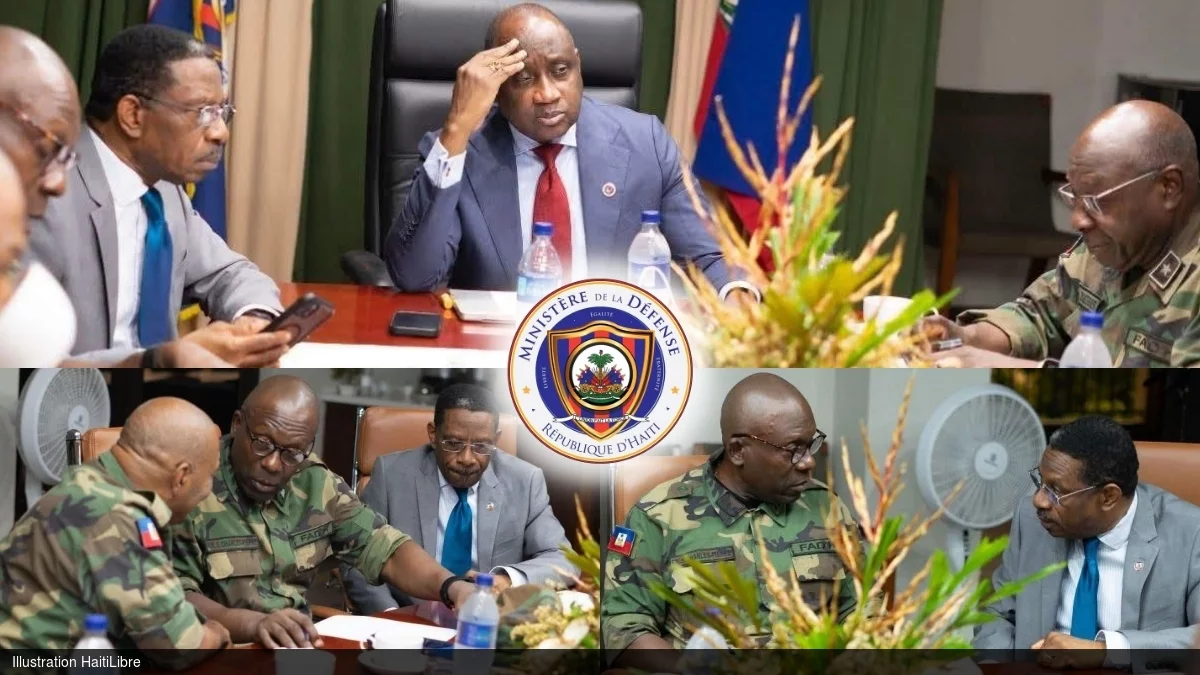
    The graduation and upcoming recruitment push form part of a broader strategy by Haiti’s Ministry of Defense to shore up the military’s operational capabilities amid a rapidly deteriorating domestic security landscape. The ministry’s end-of-year target is to bring roughly 3,000 new trained soldiers into the FAd’H ranks. Already, 570 qualified applicants are scheduled to begin their four-month basic training at Vertières Base in the third week of May. Looking ahead, the ministry will launch a recruitment drive for an additional 1,200 new soldiers in the immediate coming days. To facilitate this effort, three new recruitment offices will open shortly at the Anacaona Military Base, Petit-Goâve, and Les Cayes.

    Infrastructure upgrades are also underway to support the expanded training pipeline. Once planned renovations to FAd’H training facilities are complete, the military will be able to train up to 900 new soldiers every four months: 500 candidates at the Vertières site and a further 400 at the Anacaona base, putting the force on track to meet its year-end expansion goals.

  • FLASH : Sunrise Airways resumes flights to and from Port-au-Prince

    FLASH : Sunrise Airways resumes flights to and from Port-au-Prince

    In a formal public announcement dated April 21, 2026, Haiti-based regional carrier Sunrise Airways confirmed that it has resumed all scheduled commercial flights to and from Port-au-Prince, ending a temporary service suspension that had been in place amid local unrest near the capital’s main international airport. The resumption of service comes directly after documented improvements to security and operational conditions in the area surrounding Toussaint Louverture International Airport, the primary aviation hub serving Port-au-Prince and northern Haiti.

    Sunrise Airways emphasized in its statement that the safety and security of its passenger base, flight crew personnel, and ground operations staff will remain the company’s non-negotiable top priority moving forward. The airline had previously suspended operations to and from the Port-au-Prince hub when security conditions around the airport deteriorated to levels that met the carrier’s risk thresholds for ceasing service.

    Passengers holding existing reservations for travel to or from Port-au-Prince, as well as those planning future trips, are strongly advised to maintain direct contact with Sunrise Airways customer support teams for up-to-date schedule adjustments, travel assistance, or the latest information about operational changes. The airline has provided multiple contact channels for customers in Haiti and international locations: for callers within Haiti, the main support line is +509 28 11 22 22, with a dedicated short code *606 for Digicel mobile users; customers in the United States and other international destinations can reach the toll-free support line at +1 877 652 0202; general reservation inquiries can also be sent via email to reservations@sunriseairways.net.