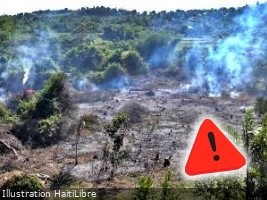
On April 25, 2026, just one day after global communities marked World Earth Day to celebrate and protect planetary biodiversity, a deliberate act of arson has left one of Haiti’s most important ecological and scientific sites in ruins: the Les Cayes Botanical Garden, a conservation hub decades in the making.
Founded in 2003, the botanical garden grew far beyond a public green space over its 23 years of operation. Teams of botanists, conservationists and local researchers spent more than two decades traversing Haiti to collect and cultivate a one-of-a-kind collection of the country’s native and endemic plant species, many of which cannot be found anywhere else on Earth. The site also doubled as a critical wildlife refuge, supporting fragile local ecosystems and serving as a living laboratory for ecological research focused on Haiti’s unique natural heritage. Today, that decades-long work is gone: large swathes of the garden have been reduced to ash, with entire stretches left completely charred and unrecognizable.
In an official statement released shortly after the fire was discovered, Haiti’s Ministry of the Environment issued a harsh condemnation of the intentional vandalism, announcing an immediate temporary closure of the site to the public. The closure will allow law enforcement and conservation authorities to secure the area and conduct a full, detailed assessment of the full scope of damage. The garden has been placed under formal police protection, with additional operational support provided by Haiti’s National Agency for Protected Areas (ANAP).
The Ministry expressed profound dismay over the attack, noting that the blaze did not only damage the natural environment—it destroyed a national collective asset of incalculable scientific, cultural and ecological value to the Haitian people. Authorities have called for calm and public responsibility as the investigation proceeds, confirming that all necessary steps have been taken to secure the site and suspend all public and research activities pending the outcome of ongoing legal proceedings into the arson.
Initial assessments of the damage underscore the unprecedented scale of the loss. Investigations remain open to confirm the full details of the attack and identify those responsible, but early observations confirm the permanent disappearance of multiple rare plant species, the irreversible destruction of intact native ecosystems, and the total loss of more than 20 years of accumulated scientific research data tied to the garden’s work.
Ecovert Haiti, a leading Haitian environmental conservation organization, has framed the tragedy as more than a singular ecological and scientific loss—it is a urgent wake-up call for the entire nation. The organization has issued a public appeal to Haitian citizens, domestic institutional stakeholders and international conservation partners to unite in defense of Haiti’s irreplaceable natural heritage. Ecovert Haiti emphasized that this devastating destruction must serve as a catalyst to launch a broad national movement committed to biodiversity protection and building a more sustainable future for all Haitians.