标签: Guyana

圭亚那

  • FITUG pledges loyalty to Irfaan Ali

    FITUG pledges loyalty to Irfaan Ali

    On May 1, 2026 — International Labour Day — Guyana’s long-running, politically charged split in the national labour movement moved into the open once again, as the country’s two largest trade union federations publicly declared opposing allegiances less than a full election cycle away from a general vote.

    The Federation of Independent Trades Unions of Guyana (FITUG), which organizes the largest bloc of unionized workers in the country, used its Labour Day gathering hosted on the lawns of State House to reaffirm its unwavering support for incumbent President Irfaan Ali and the ruling People’s Progressive Party (PPP).

    Addressing attendees at the event, FITUG President Carville Duncan lauded Ali for his consistent pro-labor agenda and open working relationship with the country’s independent trade unions. Duncan emphasized that the collective size of the organized labour movement in Guyana exceeds the membership base of any single political party in the nation’s history, framing FITUG’s endorsement as a critical marker of political credibility.

    “If we, like the doctor, say you dead; you dead and once we say you good, you good,” Duncan told the crowd, stressing the federation’s outsize influence on national electoral outcomes. He went on to note that Ali has worked directly with FITUG to help rank-and-file union members transition from traditional labor roles to small business entrepreneurship, a policy priority Duncan praised as forward-thinking. “Comrade Ali you’ve done well, Sir, and may you live longer to do better than you’re doing now because you have the workers who are with you,” Duncan said, adding that the federation would back Ali for another term should he choose to run for re-election.

    FITUG’s member unions include several historically pro-PPP organizations: the Guyana Agricultural and General Workers Union (GAWU), the National Association of Agricultural, Commercial and Industrial Employees, the Guyana Labour Union, and the Clerical and Commercial Workers Union.

    In his remarks to the gathering, President Ali did not directly address the ongoing divisions within Guyana’s labour movement, instead focusing his speech on calls for broad national unity, echoing the pre-1955 cohesion that once defined the PPP before the party’s historic internal split. He urged attendees to reject divisive political tactics, including petty infighting on social media, and focus on the country’s ambitious long-term development.

    “This not the moment where we play divisive games. This is not the moment when we run around to find spectacles of humour. This is not the moment when we are childish on social media and social media posts,” Ali said. “This is the moment when we embrace a much larger picture. This is a moment where we confront a future that is grand.” The President added that the PPP remains open to engagement with all Guyanese, and that the government is expanding individual empowerment through expanding home ownership, inclusive social programs, and broadened economic opportunity for all segments of society.

    While FITUG has a well-documented history of open support for the PPP, the country’s other major union federation, the Guyana Trades Union Congress (GTUC), used its own separate Labour Day rally to call openly for the removal of the PPP from national office. GTUC President Norris Witter and Jinnah Rahman, an associate of the opposition-aligned We Invest in Nationhood movement, explicitly urged voters and union members to oust the incumbent government.

    Opposition Leader Azruddin Mohamed, who also leads We Invest in Nationhood, and the parliamentary leader of the A Partnership for National Unity coalition, joined the GTUC event to urge the federation’s member unions to build organizational strength to oust the PPP-Civic coalition from power. Major GTUC affiliates include the Guyana Public Service Union, Guyana Teachers Union, Guyana Workers Union, the Union of Agricultural and Allied Workers, and a competing branch of the Clerical and Commercial Workers Union.

  • Opposition recommends fuel subsidies, price controls to ease cost of living

    Opposition recommends fuel subsidies, price controls to ease cost of living

    As of Friday, May 1, 2026, Guyana’s main opposition bloc has laid out a series of policy demands targeting the country’s rapidly escalating cost of living, calling on the ruling government to leverage unexpected revenue windfalls from global commodity price shocks triggered by the Israel-U.S. conflict with Iran to deliver immediate relief to households.

    Dr. Terrence Campbell, parliamentary leader of the opposition A Partnership for National Unity (APNU), laid out his core proposal in a press briefing Friday: temporarily amend the country’s Natural Resources Fund (NRF) Act to unlock surplus oil revenues for immediate retail fuel subsidies. The geopolitical conflict has sent global crude prices soaring far beyond the projections that underpinned Guyana’s 2026 national budget, generating unanticipated extra income for the oil-producing South American nation.

    Currently, the NRF Act mandates that all current-year resource revenues are transferred to the country’s consolidated fund only the following fiscal year, a rule that blocks immediate access to the new windfall. Campbell argues that cutting fuel costs at the pump is the most effective root-level intervention to slow broader inflation, since higher transport and energy costs filter through to raise prices for nearly all goods and services across the economy.

    “Easing pressure at the source, right at the pump, is the simplest and most direct way to deliver relief to all Guyanese,” Campbell told reporters.

    Data underscores the scale of recent price increases: just two months before the outbreak of the Israel-U.S.-Iran conflict, state-owned Guyana Oil Company sold gasoline for 170 Guyanese dollars (GY$) per litre. As of Friday, that price has jumped to GY$208 per litre. Diesel prices have seen even steeper growth, surging from GY$168 per litre pre-conflict to a range of GY$210 to GY$268 currently. Global benchmark Brent crude traded at US$108.35 per barrel on Friday, nearly $50 above the US$59 per barrel projection included in the 2026 national budget. Campbell added that Guyana is also collecting elevated tax and royalty revenues from gold, which was trading at US$4,611.35 per ounce on Friday, far above typical forecast levels.

    Campbell also criticized the government’s existing GY$3 billion cash support package for rice farmers, who have raised alarms over spiking costs for fertilizer, fuel, transportation and irrigation water. Dismissing the targeted payout as insufficient relief, he noted “man shall not live by rice alone,” arguing that broad-based fuel relief would benefit all sectors of the economy, not just agriculture. “A one-off payout for rice farmers won’t deliver the broad relief we need when prices are rising across every category. Most inflation starts at the pump, so that’s where relief needs to start,” he explained.

    In addition to fuel subsidies, Campbell called on the administration to roll out an additional GY$200,000 cash grant for households, labeling the current government “uncaring” for its failure to address widespread financial strain.

    APNU Opposition Leader Azruddin Mohamed echoed the calls for broader intervention, drawing a parallel to a recent regulatory move by the country’s central bank. After Central Bank Governor Dr. Gobind Ganga mandated that commercial banks cap the spread between U.S. dollar buying and selling rates at three percentage points, Mohamed argued the government could use similar regulatory power to impose price caps on essential consumer goods to rein in cost of living increases.

    “We need to establish price controls, and even government-managed retail outlets to cap prices for staple food items. Without intervention, prices will only climb higher,” Mohamed told reporters ahead of the annual May Day parade, which was set to kick off from Georgetown’s Middle and Carmichael Streets. He also called on national trade unions to take a more aggressive stance in advocating for living wages for public sector employees.

    Separately, Dawchand Nagasar, General Secretary of the National Association of Agricultural, Commercial and Industrial Employees, confirmed he held talks with the Minister of Labour last week to discuss updating minimum wage levels in both the public and private sectors to reflect current inflation.

  • APNU, WIN appeal to trade unions for support to dislodge PPPC from office

    APNU, WIN appeal to trade unions for support to dislodge PPPC from office

    On May 1, 2026 — International Labour Day — Guyana’s main opposition figures gathered with members of the Guyana Trades Union Congress (GTUC) following a low-turnout parade to mount a coordinated call for cross-group unity aimed at unseating the incumbent People’s Progressive Party Civic (PPP-C) administration ahead of the 2030 general and regional elections.

    The march, which stretched from Georgetown’s Parade Ground to Woolford Avenue, drew only 300 attendees representing affiliated GTUC unions, a far smaller crowd than organizers had anticipated. Even with the muted turnout, speakers at the subsequent post-rally meeting held at the Guyana Local Government Officers Union used harsh language to criticize the ruling government’s record on worker rights and economic policy.

    GTUC President Norris Witter opened the sharp critiques, framing the PPP as a public hazard that required collective action to eliminate. “For me the PPP is a dangerous disease and, therefore, we must work together to determine what kind of dangerous medicine is required to get rid of this disease,” Witter stated, arguing that broad-based unity — rather than divisive sectarian politics — was the only path to removing the government from power.

    Dr. Terrence Campbell, parliamentary leader of the main opposition bloc A Partnership for National Unity (APNU), expanded on this call, extending the demand for unity beyond opposition political parties to include trade unions and civil society groups. Campbell labeled the current administration a “wicked, evil, inhumane, despicable regime” and urged union members to back opposition-led protests on any issue — from cash grant increases to electoral reform — ahead of the 2030 vote. “When we call a protest whether it be for cash grants or a protest for a new voters list or biometrics; whether invited or uninvited, I would expect to see my union brothers standing there with us,” Campbell said.

    Azruddin Mohamed, Guyana’s Opposition Leader, echoed Campbell’s calls, pressing unions to mobilize around core worker grievances that include stagnant low wages and retaliatory administrative measures, such as punitive transfers for public sector workers who oppose the ruling government. Mohamed confirmed that he had provided financial support to the Guyana Teachers Union (GTU) during its recent strike for higher salaries, and committed that all opposition parties would collaborate with organized labor to secure better compensation and working conditions for public servants.

    Mohamed also took aim at the government’s recent policy priorities, questioning how the country’s nearly GY$6 trillion 2026 national budget has failed to deliver tangible improvements to working people. He pointed specifically to a May Day brunch hosted by President Irfaan Ali for nurses at State House, noting that the healthcare workers face a three-year wait to receive just GY$16,000 in promised compensation, while First Lady Arya Ali conducted an official visit to Singapore. Closing his remarks, Mohamed urged union leadership to reorganize and mobilize to deliver a much larger turnout for the 2027 May Day parade, emphasizing that collective organizing is the only way to oust what he called a “dictatorship, deceitful, treacherous government.”

    The event also exposed ongoing rifts within Guyana’s broader opposition coalition. Dorwain Bess, leader of the Vigilant Political Action Committee (VPAC), publicly called on Mohamed to honor his pledge to build genuine, inclusive collaboration across all opposition factions. Bess and his former coalition partner Amanza Walton-Desir of the Forward Guyana Movement have been locked in a public dispute over parliamentary representation following last September’s general and regional elections. Veteran politician Hamilton Green, who entered Guyanese politics shortly after completing his education, noted that the opposition’s biggest immediate challenge remains convincing ordinary Guyanese to join their political struggle.

  • Jags Aviation expands to Suriname, eyes Brazil

    Jags Aviation expands to Suriname, eyes Brazil

    On May 1, 2026, Guyana-based domestic carrier Jags Aviation marked a major milestone in its regional expansion strategy, launching scheduled charter services between Guyana and Suriname while advancing plans to connect to northern Brazil through high-level diplomatic discussions.

    Operated under Jags Aviation’s MidasSur Aviation Charter Service brand, the new cross-border route will run three weekly flights between Eugene F. Correia International Airport (OGL) outside Georgetown, Guyana’s capital, and Eduard Alexander Gummels Airport (EAX) in Paramaribo, Suriname’s capital. Flights are scheduled for every Monday, Wednesday, and Friday. A key advantage highlighted by MidasSur is that EAX’s central location puts travelers within closer reach of Paramaribo’s city center compared to alternative airports, cutting post-arrival travel time for both business and leisure passengers.

    The expansion push does not stop at Suriname. Just three days before the Suriname route launched, a senior delegation from BK Group — the parent conglomerate of Jags Aviation, led by Executive Chairman Brian Tiwarie — held a strategic meeting with Brazil’s Ambassador to Guyana Maria Cristina de Castro Martins, along with the embassy’s Minister Counsellor and Commercial Attache. The meeting was coordinated by the World Trade Centre Georgetown (WTCG), with WTCG Executive Director Wesley Kirton also in attendance. The delegation included senior BK Group representatives Miguel Benjamin, Andre Budhan, Reagan Richards, and Roberto Pele.

    During the courtesy and strategy call, the two sides outlined a series of planned collaborative business projects between Brazil’s private sector and BK Group. At the top of the agenda was Jags Aviation’s proposal to launch the first direct air connection between the two countries, with an initial route linking Guyana to Boa Vista, the capital of Brazil’s northern Roraima state. Brazilian embassy officials expressed a welcoming stance toward the initiative and committed to coordinating with relevant Brazilian government agencies to move the approval and launch process forward.

    Following the talks, Tiwarie extended an open invitation to the Brazilian embassy delegation to tour Jags Aviation’s operational hub at Eugene F. Correia International Airport in Ogle. In a reciprocal gesture, Ambassador Martins offered to facilitate an industry visit for BK Group representatives to Embraer, Brazil’s world-renowned commercial and military aircraft manufacturing giant, opening the door to potential future equipment partnerships for the growing airline.

    The dual moves mark a significant step forward for regional air connectivity in the Guiana Shield, a fast-growing economic zone that has seen a surge in cross-border trade and investment in recent years, particularly following Guyana’s massive oil discoveries that have drawn increased regional and global business activity.

  • Guyana slips further on global press freedom ranking; situation remains “problematic”

    Guyana slips further on global press freedom ranking; situation remains “problematic”

    On 30 April 2026, global press freedom advocacy group Reporters Without Borders (RSF) released its annual World Press Freedom Index, marking a historic low for open journalism worldwide and recording a slight but concerning decline for Guyana’s press freedom standing.

    In this year’s evaluation of 180 countries and territories, Guyana fell three spots to 76th place, down from 73rd in the 2025 ranking. Its overall press freedom score also dipped from 60.12 out of 100 last year to 59.58 this year, placing the South American nation firmly in RSF’s “problematic” press freedom category.

    While RSF acknowledged that Guyana’s legal framework formally protects free speech and the public’s right to information, the organization outlined a series of growing barriers to independent journalism in the country. The report noted that media outlets critical of the ruling administration face routine targeted intimidation, and the financial sustainability of independent outlets is undermined by the deliberate withdrawal of state advertising for political reasons. Presidential press conferences are extremely rare and heavily curated, and early this year, Guyana’s National Assembly implemented controversial new access restrictions that ban news cameras from the chamber, limiting press coverage of legislative proceedings.

    Notably, the RSF report omitted several key concerns repeatedly raised by the Guyana Press Association (GPA), the country’s leading representative body for journalists. These gaps include a near-total shutdown of routine public information access: only one ministerial press conference has been held in 2026 to date, convened solely by the Home Affairs Minister to address a gas station bombing. Requests for information from the Office of the Commissioner of Information are almost universally denied, and the Guyana Police Force consistently fails to respond to basic media queries, a issue that top government officials including the president, home affairs minister and attorney general have been aware of for months. In place of open press engagements, the president and a small circle of senior ministers now rely exclusively on one-way information dissemination via social media, eliminating the longstanding practice of answering journalist questions on behalf of the public. The RSF report also made no mention of the fact that parliamentary committees, which are meant to provide transparent oversight of government action, have yet to convene public sessions accessible to media and citizens.

    RSF’s assessment included the contradictory observation that Guyanese journalists are generally permitted to work freely and independently, despite widespread documentation of harm. Local journalists have repeatedly documented verbal harassment and aggressive intimidation from sitting politicians — including the president and vice president — and their political supporters. The organization also confirmed structural threats to media independence: all members of Guyana’s media regulatory body are directly appointed by the president, giving the executive branch unilateral power to revoke operating licenses for critical outlets, creating a chilling effect on independent reporting.

    On the safety front, RSF found that physical violence against journalists remains rare in Guyana, but media professionals face growing non-physical threats: routine online harassment from political actors and anonymous accounts, legal intimidation, and arbitrary temporary suspensions of press access. To date, no perpetrators have been prosecuted for these online and off-line attacks on journalists, creating a culture of impunity.

    Beyond Guyana’s specific situation, the 2026 World Press Freedom Index delivered a grim global assessment: for the first time in the 25-year history of the ranking, more than half of all assessed countries fall into RSF’s “difficult” or “very serious” categories for press freedom. The global average press freedom score across 180 nations hit its lowest point since the index launched in 2001.

    RSF attributed the steady global decline to the expansion of restrictive legal frameworks, particularly measures tied to national security policies that have steadily eroded the public’s right to information — even in longstanding democratic nations. The index’s legal freedom indicator recorded the largest single-year drop in the past year, a clear signal that journalism is increasingly being criminalized across the globe. In the Americas region specifically, the report noted significant deterioration: the United States fell seven places in the 2026 ranking, and multiple Latin American countries have continued to slide deeper into cycles of violence and political repression against independent media.

  • GPL threatens legal action against Chinese construction company for GY$30 million blackout losses

    GPL threatens legal action against Chinese construction company for GY$30 million blackout losses

    On Wednesday, April 29, 2026, state-owned Guyana Power and Light Inc. (GPL) announced it would pursue legal recourse against local subsidiary China Railway First Group (Guyana) Incorporated if the contractor fails to compensate GY$30.645 million for losses tied to a widespread four-hour power outage that disrupted tens of thousands of customers across Greater Georgetown earlier that week.

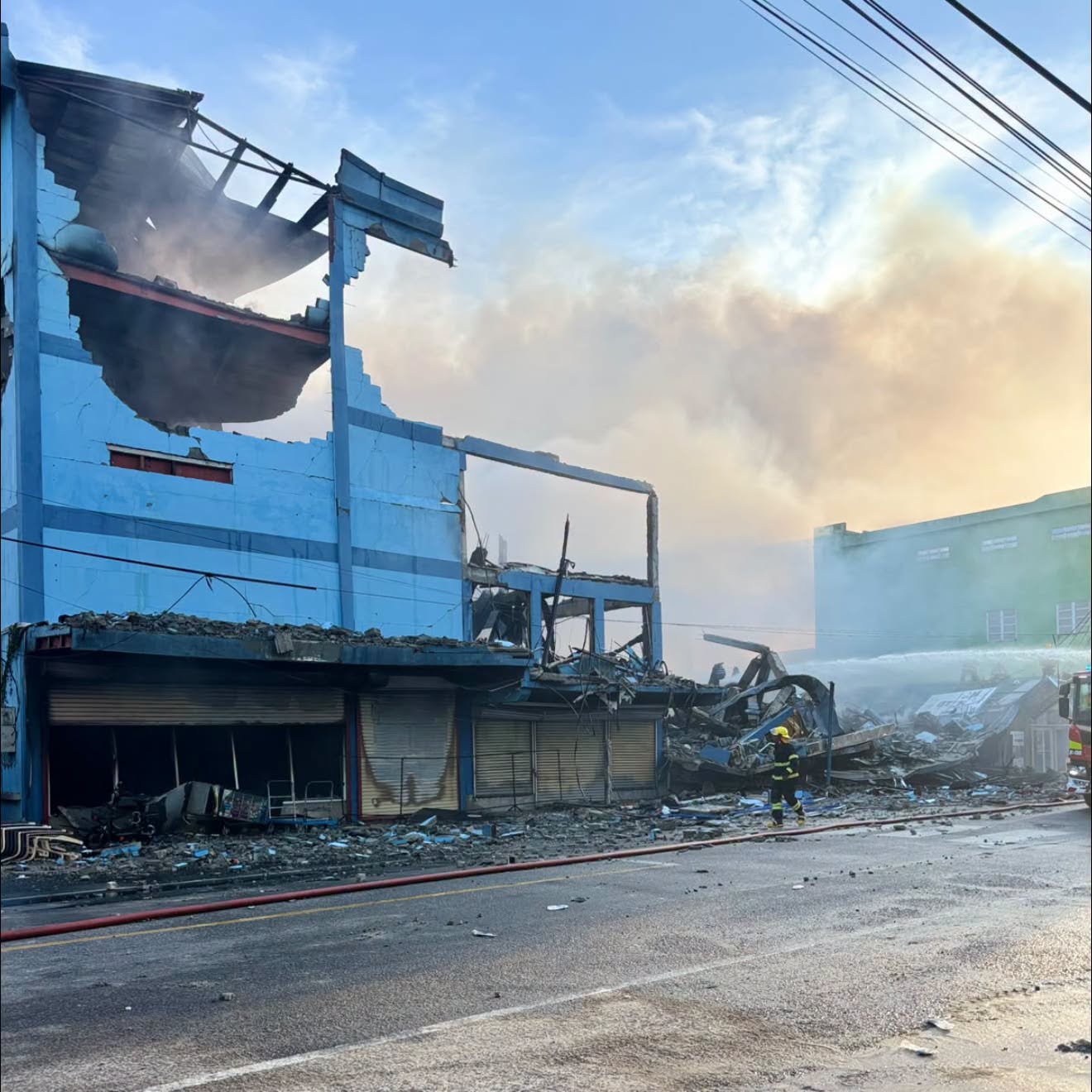
    The outage, which began at 8:50 a.m. on Sunday, April 26, was traced directly to unsafe construction work carried out by the firm on Dennis Street in the Sophia neighborhood of Greater Georgetown. According to GPL’s official investigation, heavy excavating machinery operated by the contractor came into unapproved contact with the L10 high-voltage transmission line that connects the new Georgetown and Sophia electrical substations. The accidental contact triggered a cascading failure that cut power to multiple communities for more than four hours.

    GPL confirmed that it has already delivered a formal demand letter to Ma Qiang, project manager of China Railway First Group (Guyana), giving the firm a 14-day window to remit the full claimed amount for damages and lost revenue. If the payment is not finalized within the deadline, GPL said it will initiate formal civil legal proceedings to recover the funds.

    In addition to the financial demand, the Guyana Police Force has already taken one person into custody in connection with the unsafe work that caused the outage. The incident also resulted in widespread disruption to daily life: local households, commercial operations, and critical public services all lost access to power for hours, leaving widespread inconvenience for residents and business owners across the affected area.

    GPL framed the incident as a serious violation of mandatory electrical infrastructure safety protocols. The utility emphasized that all construction work conducted near high-voltage lines and other critical electrical assets must follow strict clearance distance requirements, adhere to published national safety standards, and include pre-work coordination with GPL’s technical team.

    The company also warned that working too close to active electrical infrastructure poses an immediate lethal risk to workers and bystanders, capable of causing severe injury or death in addition to the widespread service disruption and critical infrastructure damage seen in this case. In a closing statement, GPL reiterated that all contractors and equipment operators operating in Guyana are required to follow all safety protocols when working near power lines, and any future violations will result in immediate, decisive action including financial recovery and legal action.

  • Five charged with dangerous driving, two convicted so far- police

    Five charged with dangerous driving, two convicted so far- police

    On Wednesday, April 29, 2026, the Guyana Police Force (GPF) announced that two of five motorists charged with dangerous driving following detection by the newly implemented Safe Road Intelligent System (SRIS) have been convicted and ordered to pay a combined total of GY$80,000 in fines.

    The two convicted offenders are Vivian Paul and Jamal Grant. Grant, who was operating a hired vehicle marked HD 4455, faced a single count of dangerous driving and received a GY$30,000 fine, with a default sentence of six weeks in prison if the penalty is not paid. Paul, the driver of private motor vehicle PVV 9064, was also charged with one count of dangerous driving, and was fined GY$50,000 for the offense.

    Three other accused motorists are still going through the legal process. Leslie Wood, driver of hired car HD 3551, is facing two counts of dangerous driving, and his court hearing has been adjourned until June 10, 2026. Mohamed Adouhedia, the registered owner of vehicle PAK 2919, faces one dangerous driving charge, while Allison James, the driver of the same vehicle, has been charged with three counts of the offense. James’ case has also been adjourned to the same June court date.

    Developed as a collaborative project between the GPF and Guyana’s National Data Management Authority (NDMA), the SRIS is designed to transform how traffic law enforcement is carried out across the country. Unlike traditional enforcement methods that rely on officer observations, the system uses AI-enabled cameras to capture high-definition video footage of dangerous driving violations. All captured footage is reviewed by specially trained law enforcement personnel before being submitted as evidence in magistrate court proceedings. Per Guyanese traffic law, dangerous driving is classified as a non-ticketable offense that requires formal prosecution rather than an on-the-spot fine.

    In an official statement released alongside the announcement, the GPF highlighted that the deployment of SRIS has already delivered measurable improvements to the force’s ability to crack down on reckless road behavior. “Since its introduction, the system has significantly strengthened the GPF’s ability to detect, document, and prosecute dangerous driving, with additional matters currently at various stages of review and preparation for court,” the statement read.

    Dangerous driving is defined as any operation of a motor vehicle that puts other road users, including pedestrians, cyclists and other drivers, as well as public and private property at unreasonable risk of harm. It is widely recognized as one of the leading contributors to road fatalities and serious injuries in Guyana.

    The police force reiterated that it will maintain strict, consistent enforcement action against anyone found violating dangerous driving laws, supported by the new technology. As part of a public safety outreach accompanying the announcement, motorists across the country are being reminded to exercise caution behind the wheel, follow all posted traffic regulations, and prioritize the safety of everyone sharing the road network.

  • Guyana crafting youth-focussed aviation career action plan

    Guyana crafting youth-focussed aviation career action plan

    On Wednesday, 29 April 2026, the Guyana Civil Aviation Authority (GCAA) convened a pivotal stakeholder meeting to refine the organizational structure and set the long-term strategic course for the Next Generation of Aviation Professionals Plus (NGAP+) programme, an initiative first launched by the authority in December 2025 to cultivate new youth talent for Guyana’s growing aviation sector.

    According to an official statement released by the GCAA following the gathering, the cross-institutional meeting represented a major milestone for the programme. Attendees worked in collaboration to finalize the programme’s operational framework and delineate clear roles and responsibilities for every participating partner. As a core outcome of the discussions, attendees agreed to establish a formal governing board that will supervise all programme execution, ensuring the initiative stays aligned with its core mandate of delivering industry-leading aviation training and mentorship opportunities for young Guyanese.

    Designed to target young people between the ages of 12 and 24, the NGAP+ programme seeks to inspire the next generation of aviation workers while equipping participants with the theoretical knowledge, hands-on technical skills, and real-world practical experience needed to build successful, long-term careers in the dynamic global aviation industry. The initiative grew out of Resolution A39-29 from the International Civil Aviation Organization (ICAO), created specifically to address growing global and local workforce shortages across the aviation sector.

    Speaking at the stakeholder meeting was Malcolm Evans, Programme Development Consultant for the United Kingdom-based International Air Cadet Training (i.ACT), which is partnering with Guyana to build out the programme’s full comprehensive curriculum, including specialized technical training modules. Evans emphasized that the programme’s overarching objective is to prepare young Guyanese to fill a wide range of entry-level and professional roles across the domestic aviation industry, building a consistent, sustainable talent pipeline that will support the sector’s growth for decades to come.

    Retired Lt. Col. Egbert Field, Director General of the GCAA, echoed this focus, noting that the programme is a targeted solution to the aviation industry’s well-documented personnel gap that many nations, including Guyana, currently face.

    The meeting drew representatives from a diverse range of Guyanese educational, governmental, and industry institutions, including the Art Williams and Harry Wendt Aeronautical Engineering School, Civil Aviation Training School, University of Guyana, Guyana Digital School, Guyana Defence Force, Guy Drones, Ministry of Education, Guyana Online Academy of Learning (GOAL), and the Aircraft Owners Association of Guyana. The broad cross-sector turnout highlights the widespread buy-in and shared commitment to making the programme a success, with collective expertise from across Guyana’s aviation and education ecosystems strengthening the collaborative foundation of the NGAP+ initiative.

    Further details, including formal application procedures and official programme timelines for prospective participants, are scheduled to be released to the public in the coming months as final preparations for launch continue.

  • Businesswoman challenges constitutionality of Cybercrime Act

    Businesswoman challenges constitutionality of Cybercrime Act

    As of Wednesday, 29 April 2026, a prominent Guyanese city businesswoman has initiated a landmark constitutional challenge against a key provision of the country’s 2018 Cybercrime Act, arguing that the clause violates fundamental free speech protections enshrined in Guyana’s constitution and runs counter to the nation’s international human rights commitments.

    Ann Narine, represented by experienced legal counsel Nigel Hughes and Dr. Vivian Williams, filed her fixed-date application with the High Court on 14 April 2026, asking the court to formally strike down Section 19(2) of the 2018 Cybercrime Act on multiple grounds. Narine’s legal team argues the provision is unconstitutional, null and void due to three critical flaws: inherent vagueness, overbroad scope, and disproportionate impact on protected civil liberties. The challenge specifically targets the clause’s violation of Article 146 of the Guyanese Constitution, which explicitly guarantees the right to freedom of expression.

    At the core of the challenge is Narine’s argument that Section 19(2) fails to meet basic legal standards for clarity when criminalizing speech-related conduct. The provision does not provide a defined, consistent meaning for key terms including “humiliation,” fails to clarify the scope of “electronic data” as applied to this section, and sets no clear threshold to separate criminal activity from expression that is legally protected under the constitution. Without these clear definitions, Narine contends the clause cannot be applied consistently or predictably, creating a risk that legitimate speech will be incorrectly criminalized. This inherent ambiguity alone, the application argues, renders the provision unconstitutional under Article 146.

    Narine further argues that the clause lacks the narrowly tailored limits required for restrictions on free speech in democratic societies. International legal standards hold that any limitation on freedom of expression must meet three cumulative requirements: it must be clearly defined by law, pursue a legitimate public aim, and be reasonably justifiable and proportionate to the goal it seeks to achieve. Section 19(2), Narine’s application maintains, fails to meet all three of these requirements.

    The challenge also invokes Guyana’s binding international human rights obligations under the International Covenant on Civil and Political Rights (ICCPR), whose own Article 19 protects the fundamental right to freedom of expression. A broad, uncurbed interpretation of Section 19(2) that criminalizes protected expressive activity would put Guyana in direct breach of this international treaty, the application notes, adding that Guyana’s constitution must be interpreted in alignment with the country’s international human rights commitments.

    Beyond the facial challenge to the provision itself, Narine is also attacking the specific application of the law to her case as unconstitutional. She argues that the criminal charge brought against her suffers from multiple fatal procedural defects that violate her constitutional right to a fair trial. The charge, she notes, fails to identify the specific published content at the center of the allegation, the digital platform where the content was allegedly shared, any recipients of the alleged publication, and the specific actions that took place within the cited time period. By failing to outline these basic details, the prosecution effectively criminalizes unspecified speech and denies Narine the ability to know what case she must answer, violating both Articles 144 and 146 of the constitution, according to the application.

    Further procedural flaws are cited in the challenge: the summons filed against Narine did not specify which exact section of law she is alleged to have broken. Additionally, the sworn information included in the court file was dated after Narine’s initial court appearance, was never served on her legal team, and was not presented to the court when she was first required to respond to the charge and raise objections. Narine argues these omissions deprived her of adequate notice of the allegations against her and the opportunity to prepare a full defense, denying her the fair hearing protections guaranteed under Article 144 of the constitution.

    Narine is also seeking a High Court declaration that her entire prosecution is unconstitutional, unlawful, and constitutes an abuse of court process. Citing Article 187 of the Guyanese Constitution, which enshrines the principle of prosecutorial independence, Narine argues that allowing a prosecution led by an attorney retained, paid, and taking direct instructions from the private complainant in the matter directly violates the constitutional requirement for independent prosecution. As part of this claim, she is asking the court to rule that the fiat granted by the Director of Public Prosecutions (DPP) to prosecuting attorney Mikel Puran is unlawful, unconstitutional, null, void, and has no legal effect.

    The application requests multiple court orders: a formal order quashing the DPP’s fiat to prosecute, an order barring any continuation of the criminal charge against Narine, a stay of all proceedings related to the charge until the constitutional challenge is heard and determined. In the alternative, Narine asks the court to issue a permanent stay of the criminal charge on the grounds that it amounts to an abuse of the court’s process.

  • BROACH GATE: CARICOM Secretariat cautions member states against attempts to legitimise claims

    BROACH GATE: CARICOM Secretariat cautions member states against attempts to legitimise claims

    On Tuesday, April 28, 2026, the Caribbean Community (CARICOM) headquarters issued a formal statement cautioning its member states against allowing regional platforms to be leveraged to advance territorial claims currently under adjudication by the International Court of Justice (ICJ). The rebuke comes in response to widespread outcry from Guyanese President Irfaan Ali over a controversial incident during recent visits by Venezuelan President Delcy Rodriguez to two CARICOM member nations: Grenada and Barbados.

    During separate official meetings with Grenada Prime Minister Dickon Mitchell and Barbados Prime Minister Mia Mottley, Rodriguez wore a map-shaped brooch that explicitly included Guyana’s 159,000-square-kilometer Essequibo Region as part of Venezuelan territory. The long-running territorial dispute over the resource-rich Essequibo has been pending before the ICJ for years, with the court scheduled to open oral arguments on the merits of Guyana’s case next month. Guyana brought the original suit to challenge the validity of the 1899 Arbitral Tribunal Award that first established the land boundary between the two South American nations.

    In its official statement, the CARICOM Secretariat stressed that all regional community forums and diplomatic engagements must not be used, either directly or indirectly, to promote or seemingly legitimize claims that are already the subject of active international judicial proceedings. The bloc anchored its position in the Revised Treaty of Chaguaramas, the binding legal framework that governs CARICOM, outlines its core mission, and sets standards of conduct for all member states. The agreement requires all members to protect the bloc’s institutional integrity and cohesion in their external relations.

    “In the exercise of their sovereign rights, Member States remain mindful of their collective responsibilities to the Treaty and to uphold the principles of international law, respect for judicial processes and good neighbourly relations,” the statement read.

    The regional body confirmed it had received an official letter dated April 28, 2026, from Ali conveying Guyana’s deep concern over the brooch incident. Following Ali’s formal objection, Venezuela’s Foreign Minister Yvan Gil hit back at the Guyanese leader, dismissing the complaint as overreach. “It is really unusual that President Irfaan Ali now intends to establish himself as the arbiter and couturier of even the way other heads of state dress,” Gil said. “Is he also going to ban maps, history books or any symbol that bothers him?”

    Notably, CARICOM’s position balances respect for national sovereignty with adherence to collective obligations: the bloc reaffirmed that every member state retains full sovereign authority to conduct independent bilateral relations with external partners, a longstanding principle that remains fully respected across the community. At the same time, the bloc emphasized that all such engagements must align with member states’ shared commitments under the CARICOM agreement.

    The secretariat also reiterated its unwavering longstanding stance: it continues to fully support the sovereignty and territorial integrity of Guyana, and remains firm in its backing for a peaceful resolution of the dispute through the ICJ’s judicial process. CARICOM closed its statement by reaffirming its commitment to regional unity, the rule of international law, and the peaceful settlement of all cross-border disputes in line with established global legal norms. It is worth noting that the ICJ is also currently adjudicating a separate boundary dispute between Guatemala and Belize, another CARICOM member state.