标签: Guyana

圭亚那

  • Guyana formally protests CARICOM leaders’ tolerance of Venezuelan President’s Essequibo brooch

    Guyana formally protests CARICOM leaders’ tolerance of Venezuelan President’s Essequibo brooch

    On Tuesday, April 28, 2026, Guyanese President Irfaan Ali submitted a formal diplomatic protest to the Caribbean Community (CARICOM) over a provocative symbolic gesture made by Venezuelan President Delcy Rodriguez during recent official visits to two CARICOM member states. During Rodriguez’s official engagements in Grenada and Barbados earlier this April, she wore a brooch shaped like a map of Venezuela that incorrectly includes Guyana’s 160,000-square-kilometer Essequibo Region, territory that Venezuela has long claimed as its own despite ongoing international legal proceedings over the dispute.

    In a strongly worded correspondence addressed to current CARICOM Chairman and Prime Minister of St Kitts and Nevis Dr. Terrance Drew, President Ali emphasized that the regional bloc’s long-stated solidarity with Guyana on the territorial issue can no longer remain just rhetorical, and must be matched by concrete action. Ali argued that allowing symbols of territorial aggression against a CARICOM member state to be displayed on official regional platforms risks being misread as the community’s tacit acceptance or tolerance of Venezuela’s unlawful claim. “No action, whether deliberate or inadvertent, should create the impression that the Community’s platforms may be used to advance claims now before the International Court of Justice. CARICOM’s principled support for Guyana must be reflected not only in declarations, but also in the context and conduct of official engagements,” the letter stated.

    The incident first came to light during Rodriguez’s visit to Grenada, and was later amplified when official government photos from her meeting with Barbados Prime Minister Mia Mottley clearly showed the disputed map brooch. Within hours of the photos circulating, Guyana’s Private Sector Commission and one of its affiliated bodies released sharp public statements condemning the gesture and the failure to address it during the official meetings.

    While the Guyanese government acknowledged that it respects the sovereign right of all CARICOM member states to maintain independent bilateral relations with any global partner, including Venezuela, President Ali noted that the prominent display of a symbol asserting a territorial claim against Guyana during these high-level official engagements is deeply regrettable. He stressed that the brooch incident is far more than a trivial symbolic choice: it represents a deliberate, calculated provocation that advances a territorial claim Guyana has lawfully rejected for decades, and which is currently pending final adjudication at the International Court of Justice (ICJ).

    Next week, the ICJ is scheduled to hold public hearings on the merits of the core legal question in the dispute: the validity of the 1899 Arbitral Tribunal Award that Guyana recognizes as the complete, final and binding settlement of its land boundary with Venezuela. President Ali emphasized that while the judicial process is ongoing, Venezuela cannot use symbolic gestures, official maps, domestic legislation, or public displays to legitimize a claim it has not been able to validate under international law.

    “Such conduct does not strengthen Venezuela’s case; it undermines confidence in its stated commitment to peaceful settlement, international law, and good neighbourly relations,” Ali wrote. He added that the recent brooch incident fits into a broader pattern of provocative actions by Venezuela in recent years, including a unilateral domestic push to annex the Essequibo Region and appoint government officials to the claimed territory. These actions, he noted, directly contradict the ICJ’s December 2023 court order, which required Venezuela to refrain from any action that would alter the status quo of the disputed territory—currently administered and controlled entirely by Guyana—and mandated that both parties avoid any actions that could aggravate or expand the dispute, or complicate its final resolution.

    President Ali reaffirmed Guyana’s unwavering commitment to a peaceful resolution of the dispute in full accordance with international law, stating that Guyana retains full confidence in the ICJ’s process and will respect the court’s final binding judgment. At the same time, he made clear that Guyana expects all nations, including Venezuela, to align their actions with the core principles of the United Nations Charter, avoid deliberate provocations, and respect the ongoing judicial process that both parties have agreed to participate in. He urged CARICOM to maintain consistent vigilance to uphold the bloc’s long-held principled position in support of Guyana’s sovereignty and territorial integrity.

  • Guyana minister raps CARICOM nations for accommodating Venezuela’s President with Essequibo brooch

    Guyana minister raps CARICOM nations for accommodating Venezuela’s President with Essequibo brooch

    A simmering territorial dispute between Guyana and Venezuela has erupted into a full-blown diplomatic controversy across the Caribbean Community (CARICOM), after Venezuelan President Delcy Rodriguez appeared in official meetings with multiple Caribbean leaders wearing a brooch that displays Venezuela’s map claiming Guyana’s resource-rich Essequibo Region as Venezuelan territory. The incident has sparked sharp criticism from a senior Guyanese official, internal political pushback within Guyana, and calls for regional accountability just weeks before the International Court of Justice (ICJ) hears formal arguments on the decades-long dispute.

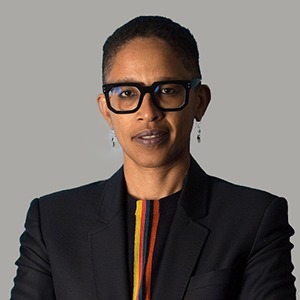
    In a blunt, public statement shared via Facebook late Monday, Guyana’s Minister of Local Government Priya Manickchand slammed CARICOM leaders who hosted Rodriguez and allowed the provocative display to go unchallenged during official engagements. Just hours before Manickchand’s post, Rodriguez had appeared alongside Barbados Prime Minister Mia Mottley at official events in Bridgetown while wearing the map brooch, which explicitly lays claim to the 159,000-square-kilometer Essequibo Region that makes up roughly two-thirds of Guyana’s total territory. This was not an isolated incident: earlier in April 2026, Rodriguez wore an identical brooch during meetings with Grenada Prime Minister Dickon Mitchell.

    Manickchand questioned the integrity of alliances between Guyana and other CARICOM members, noting that the territorial dispute is currently under active adjudication at the ICJ. “CARICOM leaders claiming to be our friends and benefitting from that friendship even as they entertain their other friends who are completely disrespecting Guyana by openly claiming two-thirds of my country and sporting that claim on a visible piece of jewellery has me questioning our friendships and the principles of these CARICOM leaders,” she wrote. The long-serving cabinet minister emphasized that commitments to sovereignty and territorial integrity should not be set aside for political convenience, adding “Principle is principle. It shouldn’t be cowardly. And it shouldn’t be convenient.”

    The criticism quickly sparked a domestic political backlash within Guyana. Beverly Alert, an executive member of the opposition Alliance For Change (AFC) and a former parliamentarian, hit back at Manickchand, accusing the Guyanese government of applying a double standard to questions of principle. Alert argued that the government itself abandoned principle when it terminated the country’s Cuban Medical Brigade programme, a move that came after the United States threatened to revoke visas for Guyanese officials and their immediate families over unsubstantiated claims that Cuban medical workers were exploited by the Cuban government. “Principle is principle and should have applied when the decision was made to send home Cuban doctors. Cuba has been a long time and staunch friend to Guyana,” Alert noted. Guyana was one of several CARICOM nations that ended the popular medical programme under U.S. pressure.

    To date, the Guyanese government has not released an official public statement on the controversy, which has been labeled “brooch gate” by regional political commentators. However, key private sector groups with close ties to the Guyanese administration have publicly condemned Rodriguez’s action and called for regional pushback. The Private Sector Commission (PSC), Guyana’s leading private sector umbrella organization, did not name Grenada in its statement but explicitly called on Barbados, CARICOM, and the broader international community to denounce the provocative move.

    “We call on the Government of Barbados, a valued CARICOM partner and long-standing friend of Guyana to stand firmly in defence of Guyana’s sovereignty and territorial integrity. Further, we call on CARICOM and all regional and international partners to remain vigilant and unequivocal in their support for the rule of law. Silence or inaction in the face of such deliberate provocation risks emboldening further escalation,” the PSC said.

    The controversy comes at a critical juncture for the territorial dispute. Next month, the ICJ will hold multiple days of public hearings where both Guyana and Venezuela will present the full merits of their arguments over the validity of the 1899 Arbitral Tribunal Award, which originally granted Essequibo to Guyana. The ICJ is expected to issue a final ruling on the case, which was brought to the court by Guyana, in the first quarter of 2027.

    While CARICOM as a bloc has repeatedly formally affirmed Guyana’s sovereignty over the Essequibo Region, many small CARICOM island states have maintained close bilateral ties with successive Venezuelan governments led by Hugo Chávez and Nicolás Maduro. These relations have been supported by decades of concessionary oil pricing and other forms of economic assistance from Caracas, creating a split in regional commitments that has been laid bare by the brooch controversy.

  • Guyana’s aviation sector protests Venezuelan President’s ‘Essequibo’ brooch in meetings with CARICOM leaders

    Guyana’s aviation sector protests Venezuelan President’s ‘Essequibo’ brooch in meetings with CARICOM leaders

    A diplomatic dispute over the contested Essequibo Region has flared up again after Venezuelan President Delcy Rodriguez wore a controversial map brooch during back-to-back official visits to Caribbean Community (CARICOM) member states, drawing sharp condemnation from a leading Guyanese industry group.

    The incident unfolded on April 27, 2026, during Rodriguez’s second visit to a CARICOM nation in less than three months. Meeting with Barbadian Prime Minister Mia Mottley in Bridgetown, the Venezuelan leader was spotted wearing a lapel brooch that re-draws Venezuela’s map to incorporate the 159,000-square-kilometer Essequibo Region – a territory long recognized by international law as part of Guyana. This was not an isolated choice: Rodriguez wore the exact same brooch during an April visit to Grenada for talks with Prime Minister Dickon Mitchell, photographs of the encounter confirm.

    Within hours of the Barbados meeting, the Aviation Operators Association of Guyana (AOAG), a trade body representing the country’s privately-owned domestic aviation carriers, issued a strongly worded statement condemning the gesture as deliberate, provocative aggression. The group labeled the brooch an “offensive emblem” and framed Rodriguez’s repeated use of the symbol during high-level diplomatic engagements as “continued provocative conduct” that undermines regional norms of peaceful dispute resolution.

    “This calculated act is not diplomacy. It is theatrical aggression, wrapped in symbolism and intended to offend, intimidate, and destabilize,” the AOAG statement read. “It is especially insulting when displayed before the leaders and peoples of CARICOM, a community founded on mutual respect, sovereignty, and the peaceful settlement of disputes.”

    The association called on all CARICOM member states to stand in solidarity with Guyana, urging regional governments to remain vigilant and reject any attempt – whether symbolic or practical – to legitimize what it calls Venezuela’s unlawful territorial claim. “The Caribbean must never provide a stage for territorial adventurism,” the statement added.

    The long-running territorial dispute over Essequibo is currently working its way through the International Court of Justice (ICJ), the United Nations’ highest court for state-to-state disputes. Next month, the court will open multiple days of public hearings to hear arguments from both sides on the merits of the case, which centers on the legal validity of the 1899 Arbitral Tribunal Award that established the current border between Venezuela and what was then British Guiana. The ICJ is expected to issue a binding ruling on the dispute in the first quarter of 2027.

    The AOAG emphasized that for more than 125 years, Guyana has maintained uninterrupted, peaceful, and internationally recognized sovereign administration over the entire Essequibo Region. The group argued that Rodriguez’s reliance on symbolic cartographic claims does not alter established international law, nor does it weaken Guyana’s commitment to defending its territorial integrity.

    “Indeed, such conduct diminishes Venezuela far more than it threatens Guyana,” the statement continued. “It reflects a government more interested in manufacturing external disputes than addressing internal crises. A badge does not confer sovereignty. A lapel pin cannot erase treaties, arbitral awards, or the will of a free people.”

    The AOAG reaffirmed the group’s unwavering position that the Essequibo Region has always been, and will forever remain, an inseparable part of Guyana’s sovereign territory.

    Regional dynamics add a layer of complexity to the dispute: while all CARICOM member states have formally backed Guyana’s territorial claim, many small Caribbean island nations have maintained close fraternal ties with successive Venezuelan governments, dating back to the Hugo Chavez administration. In exchange for these warm relations, Venezuela has long provided the bloc with concessionary oil prices and other forms of development assistance, creating divisions in regional responses to Caracas’ ongoing claims.

  • Guyana to get new anti-money laundering law

    Guyana to get new anti-money laundering law

    GEORGETOWN, Guyana – April 27, 2026 – Guyana has launched a full overhaul of its 17-year-old Anti-Money Laundering and Countering Financing of Terrorism (AML/CFT) regulatory framework, with plans to introduce a modern, consolidated bill ahead of a 2027 international compliance assessment, Attorney General Anil Nandlall announced Monday.

    Nandlall made the announcement during the opening ceremony of a four-day justice sector training workshop hosted under the Partnership of the Caribbean and European Union on Justice (PACE) initiative, a program co-funded by the European Union (EU) and the United Nations Development Programme (UNDP). The event brought together senior judicial officers, including judges, magistrates, registrars and appellate justices, to build capacity for handling complex criminal cases.

    The current AML/CFT law, first enacted in 2009 and patched with repeated amendments over more than a decade, has developed disjointed, inconsistent language that creates risks of misinterpretation in court, Nandlall explained. Beyond fixing structural issues, the new legislation will incorporate updated global standards that have emerged since the original bill passed. “Not that the one that we have is bad, but we have cut and paste over the years so many things that it reads in a disjuncted way, and it can cause problems in terms of interpretation. In addition to that, there have been changes that have been made in the world, and we have to incorporate that,” he told attendees.

    A third-party consultant is already drafting the replacement bill, which will introduce a key procedural shift: a major transfer of the burden of proof to defendants accused of financial crimes. Nandlall acknowledged that the new law will include unusual, far-reaching provisions that may require judicial caution during implementation. He also noted the inherently broad and invasive nature of AML/CFT regulation, which includes powers of pre-conviction detention and asset forfeiture that can complicate traditional fairness frameworks. These requirements are not arbitrary, he added; they reflect mandatory international standards set by global regulatory bodies that monitor anti-financial crime frameworks worldwide.

    Guyana is a member of three key global and regional anti-financial crime bodies: the Caribbean Financial Action Task Force (CFATF), the Paris-headquartered Financial Action Task Force (FATF) – the global standard-setting watchdog for money laundering and terrorist financing – and the Canada-based Egmont Group of Financial Intelligence Units, which facilitates cross-border intelligence sharing to combat illicit financial activity.

    The new legislation must be passed quickly, Nandlall emphasized, because Guyana will undergo a mandatory mutual evaluation by the CFATF next year, for which preparations are already underway. He noted that Guyana earned the highest compliance score among independent Caribbean nations in the CFATF’s last assessment, putting the country on strong footing, but a full regulatory update is still required to maintain that standing. “We are on good footing there, but we have to revamp the legislation and get a new one,” he said.

    Monday’s event launched the PACE project training, which will cover a wide range of topics to modernize Guyana’s criminal justice system, including jury selection and orientation, pre-arraignment procedures, handling of complex criminal trials, no-case submissions, support protocols for vulnerable witnesses and defendants, pre-trial publicity management, and summation best practices. UNDP Resident Representative Katy Thompson noted that the training prioritizes both effective trial outcomes and protection of the fundamental rights of all parties involved in criminal proceedings.

    Chancellor of the Judiciary Roxane George-Wiltshire added that the curriculum will also address emerging legal issues including pre-trial voir dire processes, the handling of DNA and digital evidence, the integration of artificial intelligence in judicial work, streamlined concurrent case tracks for appellate and high court judges, and an introduction to judge-alone trials – a procedural reform that Guyana is preparing to adopt. “Which is really timely, as it is my understanding that Guyana will be moving in this direction,” she said.

    The training is designed to help the judiciary meet its constitutional mandate: delivering fair hearings within a reasonable timeframe before an independent, impartial tribunal, as outlined in Article 144 of Guyana’s Constitution. “The training will therefore further enhance our capacity and capability to better address the criminal cases that will come before us so as to ensure that which Article 144 of the Constitution of Guyana mandates,” George-Wiltshire added.

    EU Ambassador to Guyana Luca Pierantoni highlighted the tangible progress the justice sector has already made through the PACE initiative, including expanded human resource capacity via new judicial appointments and the distribution of updated official law reports. “Certainly, we can see a justice system which is more responding to certain challenges,” he said.

  • Massive probe launched into threat against CANU chief

    Massive probe launched into threat against CANU chief

    Nearly a quarter-century after one of Guyana’s top anti-drug officials was assassinated in cold blood, the current head of the country’s lead narcotics enforcement agency is facing a public death threat that has triggered an urgent, large-scale probe by national security authorities.

    James Singh, who leads the Customs Anti-Narcotics Unit (CANU), was targeted in a threatening video circulated on social media, Guyana’s Home Affairs Ministry confirmed in an official statement released Monday. The video depicts a hooded individual holding what appears to be a loaded handgun pointed directly at a printed image of Singh.

    All threats targeting public servants executing their official duties are classified as severe criminal offenses under Guyanese law, the ministry emphasized. In response, multiple law enforcement agencies have launched an active investigation to trace the source of the video, verify its authenticity, and uncover the intentions of those behind it. Security measures have also been ramped up to protect Singh and other at-risk personnel, the statement added.

    Officials noted the threat comes amid a major intensification of national anti-narcotics operations across Guyana. In recent months, CANU-led intelligence-driven operations have pulled 371 kilograms of illegal narcotics off the streets and dismantled multiple cross-border drug trafficking networks. Just two years ago, CANU agents working alongside Guyanese military personnel uncovered a massive 4.4-tonne cache of cocaine hidden in underground bunkers near an unapproved airstrip in Matthews Ridge, located in the country’s North West District. The ministry stressed that this operational context does not predetermine the outcome of the ongoing investigation into the threat.

    The incident evokes dark memories of a 2002 assassination that still looms over Guyana’s anti-drug efforts. In August of that year, Vibert Inniss, then deputy head of CANU, was shot multiple times and killed in his car while stopped on the Buxton Public Road to buy newspapers. His murder came just six months after a violent prison break that gave rise to heavily armed criminal gangs with ties to drug trafficking. Senior U.S. law enforcement representatives were among the attendees at Inniss’s funeral, a testament to the global significance of his anti-narcotics work.

    The Guyanese government has issued a firm rebuke of the intimidation attempt, making clear that threats against law enforcement will not weaken the country’s commitment to rooting out organized crime. “Intimidation will not succeed,” the government stated, adding that anyone who threatens officials upholding public safety will face the full weight of the law.

    The Home Affairs Ministry reaffirmed that the national campaign to dismantle both domestic and transnational organized criminal networks will continue unimpeded, pursued with steady resolve, inter-agency coordination, and unwavering focus. “No individual or group will be allowed to undermine the rule of law or threaten those tasked with upholding it,” the ministry said.

  • GTUC president calls for cost of living subsidies

    GTUC president calls for cost of living subsidies

    As Guyana kicked off its annual Labour Week celebrations on Sunday, April 26, 2026, the country’s leading trade union chief has amplified pressure on the ruling administration to roll out broad new consumer subsidies, blaming cascading global conflicts for driving up everyday costs for working Guyanese.

    Norris Witter, president of the Guyana Trades Union Congress (GTUC), made the appeal immediately after he joined fellow union representatives in laying a ceremonial wreath at the Hubert Nathaniel Critchlow monument, located on the grounds of Georgetown’s Parliament Building. The annual tribute opens the country’s Labour Week, which honors the legacy of Critchlow, widely recognized as the founding father of Guyana’s trade union movement.

    Speaking to reporters after the ceremony, Witter traced the current cost-of-living crisis in Guyana back to two overlapping global conflicts: the ongoing war between Russia and Ukraine, and the escalating tensions in the Persian Gulf. According to Witter, these dual crises have severely disrupted global supply chains, exacerbated fossil fuel shortages, and driven up prices for a wide range of essential goods nationwide.

    To counteract these inflationary pressures, Witter argued that targeted government subsidies — what he called the “invisible hand of the State” — are the most effective immediate tool to stabilize prices for basic commodities. The call comes as transportation providers across the country have already implemented fare hikes: public buses, private taxis, and domestic airlines have all raised ticket prices in response to sharp spikes in global fuel costs.

    Witter criticized the incumbent People’s Progressive Party Civic (PPPC) administration, arguing that the broad subsidy package the GTUC demands would require political will that the current government has so far failed to demonstrate. He accused the PPPC of overly aligning with Western geopolitical interests instead of prioritizing the economic needs of Guyanese workers, and called on the government to adopt a more inclusive approach that accommodates diverse perspectives from across Guyanese society.

    Currently, the government already implements limited energy-related subsidies: it covers extra fuel costs for the state-owned Guyana Power and Light utility and Guyana Water Incorporated to prevent them from passing higher fuel expenses on to residential and commercial customers. The administration has also eliminated all taxes on gasoline and diesel, and state-owned petroleum firm Guyana Oil Company (GUYOIL) sells fuel at below-market rates to act as a price anchor for private fuel importers and distributors.

    Witter acknowledged that many union members expect private and public sector employers to raise wages and salaries to help workers keep up with rising costs. However, he emphasized that the ultimate responsibility for taming inflation falls on national policymakers. “Even though the unions will have a right to engage the employers for meaningful increases, we must not lose sight of the fact that it is political managers who manage the national economy, who have that foremost responsibility to ensure that the kinds of policies and programmes are put in place to arrest the increase in the cost of living,” Witter said.

    Witter’s comments echo recent criticism from former Guyanese Finance Minister Winston Jordan, who has also called on the PPPC government to take stronger action to address the cost of living. Jordan recently recommended that the government distribute an interim salary increase to public workers using funds already allocated in the 2026 national budget, then revise the entire budget to cut non-essential spending on low-priority infrastructure projects. He has also faulted the administration for failing to roll out a public fuel conservation education campaign and implement formal policies to crack down on predatory price gouging by retailers and suppliers.

  • Man dies from gunshot wound opposite Baroombar

    Man dies from gunshot wound opposite Baroombar

    A violent public altercation in Georgetown has ended in a fatal shooting, leaving one man dead and local law enforcement searching for the suspect, Guyana’s police confirmed in an update on Sunday, 26 April 2026. The confrontation unfolded shortly before 8 a.m. along North Road, directly across from the popular Baroombar Club, when an unprovoked attack turned deadly. According to initial police accounts, the victim, a dreadlocked man whose personal details have not been released to the public as of Sunday morning, initiated the conflict. The still-unidentified suspect had been urinating on the northern curb of North Road when the victim walked over from his nearby position and struck the suspect a hard blow to the head. What followed was a rapid escalation of violence that ultimately claimed the victim’s life. After being struck, the suspect retrieved a small handgun from a side bag he was carrying. He aimed the weapon at the victim and pulled the trigger twice, but the gun failed to fire on both attempts. Rather than de-escalate, the suspect then began beating the victim about the head with the handgun itself, striking him twice and knocking the man to the pavement. As the victim lay on the ground, the suspect hit him a third time with the weapon — and that is when a shot discharged. The bullet struck the victim in the head, killing him almost instantly. Following the fatal shot, the suspect calmly returned the gun to his side bag, then fled the scene on foot, heading west along North Road, leaving the victim motionless in the roadway. Members of the public contacted police to report the incident shortly after the shooting. Responding officers summoned emergency medical personnel, who arrived and pronounced the victim dead at the scene. A close examination of the scene confirmed a single entry gunshot wound on the right side of the victim’s head. As of the latest update Sunday afternoon, investigators have not released any additional details about the suspect’s identity, nor have they announced any arrests in connection with the killing. The case remains open and active as law enforcement works to identify both the victim and track down the fleeing suspect.

  • China Railway First Group’s engineer arrested for massive power outage; electricity being restored

    China Railway First Group’s engineer arrested for massive power outage; electricity being restored

    A major nearly four-hour power outage that disrupted services across multiple communities in Guyana’s Demerara region has ended with an arrest, as power authorities work to gradually restore full electricity service to affected areas.

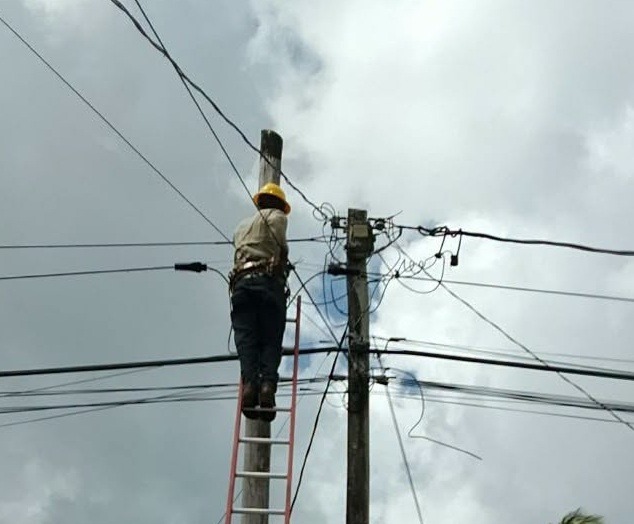
    According to a statement released by Guyana Power and Light (GPL), the outage was triggered by an avoidable industrial incident on April 26, 2026. A piece of heavy machinery operated by contractors from China Railway First Group accidentally made contact with a critical 69,000-volt transmission line. This transmission line, labeled Line 10, serves as a key connection between the New Georgetown and Sophia substations, and the collision forced the line to trip offline, cutting power across the network.

    In the aftermath of the incident, the Guyana Police Force has taken the site engineer overseeing the China Railway First Group project into custody, as law enforcement and utility officials investigate the circumstances that led to the blackout.

    GPL officials confirmed that incremental power restoration efforts launched immediately after the incident have already succeeded in returning electricity to multiple neighborhoods across Georgetown. “This restoration exercise will continue systematically until all affected areas have been fully repowered,” the company said in its official update.

    Beyond the immediate response to the outage, GPL has issued a renewed public warning to all individuals and organizations working near its energy infrastructure, emphasizing that accidental contact with high-voltage lines does not only cause widespread disruption for thousands of customers, but also poses a severe deadly risk to on-site workers and nearby community members. The utility is urging all construction and engineering teams operating near transmission networks to double-check safety protocols before starting any work to prevent similar incidents from occurring in the future.

  • Heavy duty equipment knocks out power supply, causing widespread blackout

    Heavy duty equipment knocks out power supply, causing widespread blackout

    A major early-morning power blackout disrupted service across multiple populated areas in Guyana’s Demerara region, including the capital city of Georgetown, on Sunday, after construction heavy machinery accidentally struck a critical high-voltage transmission line, state power utility Guyana Power and Light (GPL) has confirmed.

    The outage was first reported at approximately 8:50 a.m. local time, when customers across Demerara began reporting sudden losses of electrical service. GPL emergency response teams were dispatched within minutes to inspect the L10 Transmission Line, a key connector between the New Georgetown and Sophia power substations, to trace the root cause of the disruption.

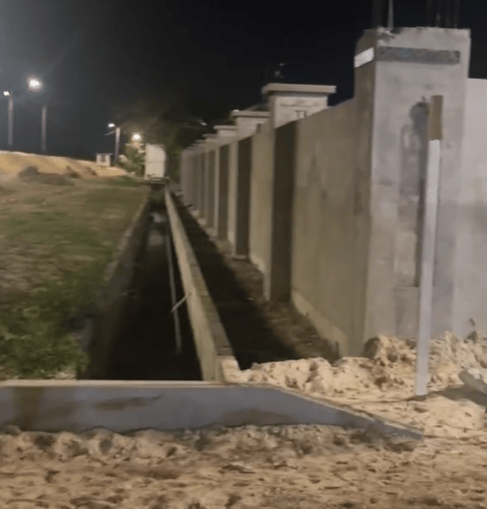
    On-site investigations at the construction zone along Dennis Street confirmed that heavy construction equipment operated by China Railway First Group, which was carrying out road expansion projects in the area, had made physical contact with the energized transmission line, triggering the widespread outage.

    In the hours following the incident, GPL crews have been working to secure the work site, move the damaged excavator, and complete repairs to the transmission infrastructure, with the priority of restoring full power service to affected communities as quickly as possible while adhering to strict workplace safety protocols.

    Beyond the immediate inconvenience of the service disruption, GPL has highlighted the severe life-threatening risks that come with accidental contact with electrical infrastructure. The utility noted that incidents of this type not only cause widespread power losses and costly damage to the national power grid, but also put construction workers and bystanders at extreme risk of catastrophic injury or death.

    In the wake of the blackout, GPL issued a urgent public warning to all private contractors, construction firms, and members of the public working or operating near overhead power lines. The agency urged all parties to maintain required clearance distances, strictly follow all national electrical safety protocols, and exercise extreme caution when working in proximity to transmission infrastructure. GPL also emphasized that any party found responsible for damaging critical national electrical infrastructure will be held fully legally accountable under Guyanese law.

  • Suspected bandit arrested after leaving motorbike, bag with cash behind

    Suspected bandit arrested after leaving motorbike, bag with cash behind

    A major breakthrough has been made in a violent armed robbery case that unfolded on Guyana’s East Coast Demerara, with law enforcement taking one suspect into custody and seizing an unlicensed firearm just hours after the attack, the Guyana Police Force confirmed in an official statement released Saturday.

    The incident, which targeted a local commercial establishment in Vryheid’s Lust, left seven people victimized, including two named individuals: a 27-year-old cashier from Mon Repos and a 28-year-old spray painter who resides in Vryheid’s Lust. The remaining five victims were customers present at the business during the robbery, and investigators have not yet been able to collect their personal details as they left the premises before authorities arrived to document the case.

    According to witness accounts compiled by investigators, the two attackers approached the commercial location from the north riding a black XR motorcycle. Once they reached the site, they dismounted and entered the building, with one suspect brandishing what is believed to be a loaded firearm and the second carrying a sharp knife. The pair threatened the gathered customers with the gun, before robbing the spray painter of his mobile phone and an undisclosed amount of personal cash, then stealing a sum of business funds from the on-duty cashier.

    After completing the robbery, the suspects fled the premises on their motorcycle. Local residents who witnessed the crime attempted to pursue and intercept the pair, prompting the armed suspect to fire multiple warning shots. The stray rounds struck two parked motor vehicles, causing visible damage to the property, though no additional injuries were reported in the aftermath of the shooting.

    Minutes into their escape, the robbers’ getaway went awry: the pair crashed their motorcycle, sending both tumbling into a nearby roadside drainage ditch. Rather than retrieve their vehicle, the suspects abandoned the motorcycle and a haversack holding the stolen cash, fleeing the crash site on foot. Local residents secured the abandoned items and turned them over to responding officers once they arrived.

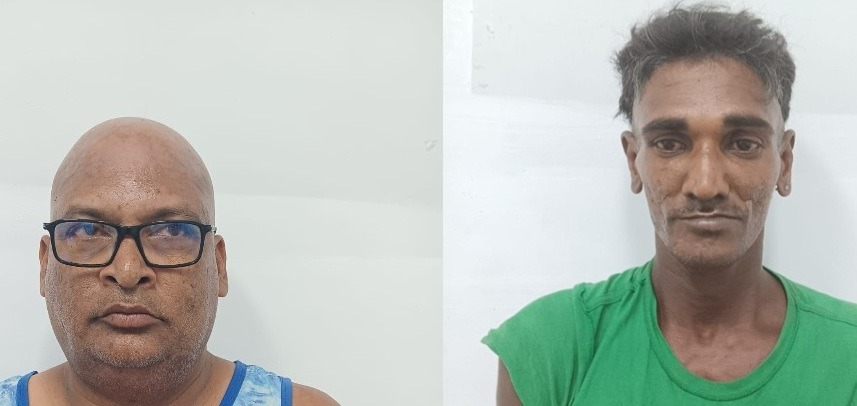
    Investigators quickly launched a manhunt for the two attackers, and within two hours of the initial robbery, tracked one suspect to his residence in Plaisance, another community on the East Coast Demerara. Between 10:00 pm and 10:19 pm Friday, a search warrant was executed at the 27-year-old suspect’s home. In a search conducted with the suspect present, officers found a suspected unlicensed firearm wrapped in cloth and hidden inside a bedroom clothes basket. When questioned, the suspect confirmed he held no valid license for the weapon, and he was taken into police custody immediately.

    Authorities have confirmed that the seized weapon has been logged as evidence, along with the abandoned getaway motorcycle. Two spent bullet casings recovered from the area after the shots were fired have also been secured for forensic testing, and investigators have obtained and reviewed closed-circuit camera footage from the targeted business premises to build out their full account of the robbery. The arrested suspect remains in police custody as investigators continue their probe to locate the second, still at large, accomplice.