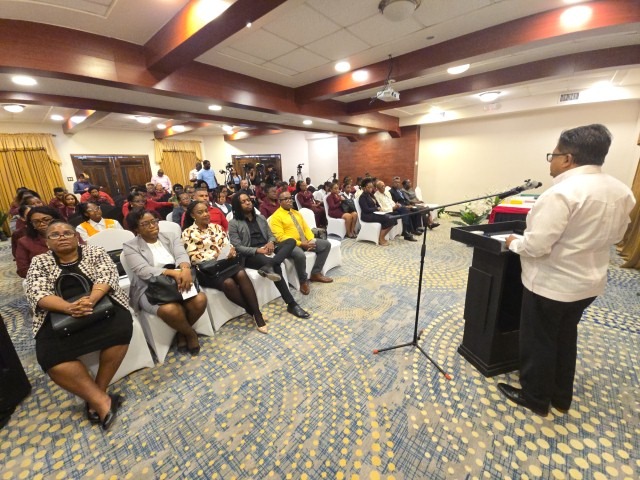
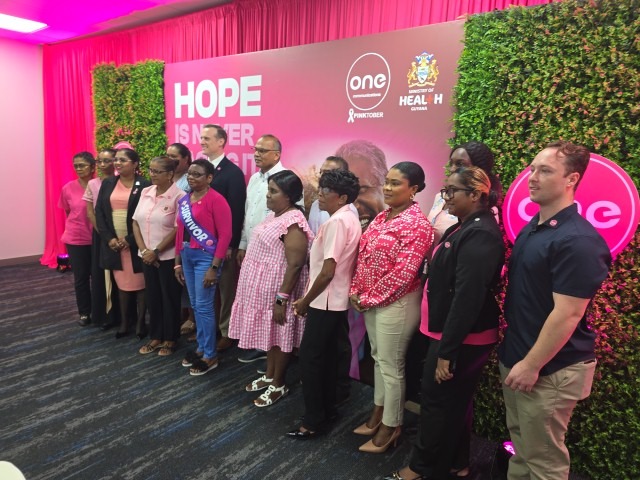
On Wednesday, September 16, 2026, One Communications – the rebranded telecom firm formerly known as GTT – formally launched its expanded PinkTober 2026 campaign, partnering with Guyana’s Ministry of Health to shift the country’s cancer advocacy conversation beyond awareness to tangible, life-saving action. The initiative, themed “One Hope,” marks a deliberate break from the telecom company’s decade-long history of focusing exclusively on breast cancer outreach, now expanding support to all Guyanese affected by any form of cancer, with a new targeted push for prostate cancer screening alongside breast cancer services.
Speaking at the launch event, One Communications CEO Abraham Smith emphasized that the campaign’s core goal is to drive meaningful behavior change across the country. For ten years, the company has successfully drawn thousands of participants to its annual October breast cancer walk, but Smith argued that incremental awareness is no longer enough. “We know we can get thousands of Guyanese to show up and walk. We’ve done that for a decade. But now we have to ask ourselves, can we get thousands to screen?” Smith said. This year, the campaign will go far beyond the traditional October 25 walk, working to remove barriers that prevent at-risk Guyanese from accessing life-saving early detection testing.
Under the new partnership with the Ministry of Health, One Communications will amplify public outreach to share clear, accessible information about where local screening services are available, address common fears and uncertainties that lead many people to delay care, and provide direct practical support to reduce access barriers. The company will distribute free mammogram vouchers to support breast cancer screening for women, and launch targeted outreach to encourage men to discuss Prostate-Specific Antigen (PSA) testing with their healthcare providers to detect prostate cancer early. To extend its reach across all regions of Guyana, One Communications is also collaborating with eight leading local cancer-focused non-governmental organizations: Champions of Hope, the Cancer Institute of Guyana, Periwinkle Club, Giving Hope Foundation, the Cancer Foundation, Beacon Foundation, Recover Guyana, and the Guyana Cancer Society. These partnerships will strengthen existing efforts to educate communities, advocate for expanded cancer care, and deliver direct support to patients and families across the country.
Health Minister Dr. Frank Anthony, who also spoke at the launch, outlined the urgent public health context that makes this expanded campaign critical. Despite the Guyanese government’s recent investment in expanding access to mammography services – adding new machines to public sector hospitals in Georgetown, Berbice, Essequibo Coast and Lethem, as well as expanding access through private sector providers – uptake remains far too low. Between January and September 2026, only 1,667 mammograms were conducted across the country. “Before, when we didn’t have the machines, the problem was, okay, we didn’t have enough machines, people didn’t have access. Now we are opening up access, but people are not coming,” Dr. Anthony explained.
With 6.4 percent of all screened patients so far this year testing positive for breast cancer, Dr. Anthony noted that current screening numbers are skewed toward already health-conscious Guyanese, meaning many at-risk people are still not accessing care. Widespread national and regional outreach campaigns like PinkTober 2026 are essential to reach the right population segments and drive up screening numbers significantly, he added.
Dr. Anthony also highlighted progress in HPV vaccination, a key public health tool to prevent cervical and penile cancers, which are linked to HPV infection. Vaccination coverage for children aged 9 to 15 has jumped from just 16 percent to nearly 70 percent in recent years, but Guyana still needs to reach and sustain a 90 percent coverage rate to meet World Health Organization (WHO) guidelines for eliminating these preventable cancers. The vaccine is also currently available for women aged 16 to 45 as part of the national cervical cancer prevention strategy. “In about 10 years, if we maintain this rate of vaccination, we would be on that journey of eliminating one of the most prevalent cancers among women. We can change that outcome. We can see that in our lifetime,” Dr. Anthony said. To date, the government’s HPV testing voucher program has identified 4,000 positive cases among 24,000 tested people over the past two years, all of whom have been connected to ongoing treatment.
On the topic of prostate cancer, Dr. Anthony reported that 137 new cases have been detected in the first nine months of 2026, a relatively high number that he attributes to the government’s new proactive testing program, which offers free PSA testing vouchers in collaboration with private laboratories. Previously, most prostate cancer cases were only diagnosed at late, untreatable stages, but the expanded screening program is shifting this trend by enabling earlier detection that dramatically improves patient outcomes. Dr. Anthony closed by calling on local non-governmental organizations to leverage their community networks to encourage more people to take advantage of free and subsidized screening opportunities, noting that five years ago, little action was being taken on cancer in Guyana, but ongoing public-private partnerships are working to change that trajectory.
Cancer is now one of the leading causes of death in Guyana, and both public and private sector leaders emphasized that collaborative, action-focused campaigns like PinkTober 2026 are critical to reducing preventable cancer deaths and improving health outcomes for all Guyanese.