标签: Guyana

圭亚那

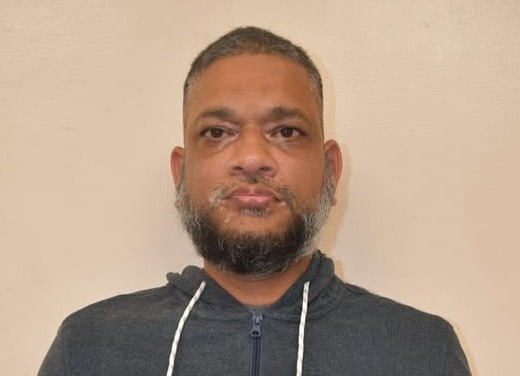
  • Surinamese, Guyanese arrested with Europe-bound cocaine in Corentyne- CANU

    Surinamese, Guyanese arrested with Europe-bound cocaine in Corentyne- CANU

    In a major breakthrough targeting transnational drug trafficking, Guyana’s Customs Anti-Narcotics Unit (CANU) announced Saturday that two men — one Surinamese national and one local Guyanese — have been taken into custody following the seizure of more than 45 kilograms of high-grade cocaine bound for European markets. The operation, carried out Friday in the border town of Springlands, Corentyne, also recovered a loaded Uzi submachine gun from the premises where 40 brick-shaped packages of cocaine were uncovered.

    CANU has publicly identified the detainees as 35-year-old Amrishkoemar Mathoera, the Surinamese suspect, and 32-year-old Ravindra Sanakumar, a Guyanese national. Law enforcement officials have calculated the street value of the seized contraband at approximately €1.575 million (equivalent to US$1.856 million) on the streets of Europe, while its estimated local value in Guyanese currency sits around GY$50 million.

    In an official statement following the operation, CANU emphasized that the successful bust underscores the agency’s unwavering dedication to dismantling cross-border drug smuggling networks. The agency noted that intercepting illicit drug shipments before they reach global consumer markets and removing unregistered illegal firearms from communities are core priorities for its work. CANU also reaffirmed that intelligence-driven operational strategies and coordinated regional cooperation between neighboring law enforcement agencies remain indispensable tools for securing Guyana’s land and maritime borders and upholding the country’s national security. No further details on upcoming legal proceedings or additional co-conspirators have been released as of Saturday’s update.

  • Miners’ equipment seized to end water pollution in Port Kaituma

    Miners’ equipment seized to end water pollution in Port Kaituma

    On a late Friday evening in May 2026, Guyana’s Ministry of Natural Resources announced a decisive enforcement crackdown on unregulated mining activity that had poisoned a critical local water source and cut off clean water access for hundreds of residents of the Port Kaituma community.

    The operation, which unfolded on May 4, brought together enforcement personnel from the Guyana Geology and Mines Commission (GGMC) with operational support from the Guyana Police Force, who deployed to the remote Walabaka area in the country’s North West District to address repeated violations by rogue miners. According to an official statement from the ministry, the team has now seized more than 15 pieces of heavy mining equipment, including excavators, engines, and water pumps, as part of corrective action to reverse the environmental damage caused by the miners’ activities.

    The enforcement action did not come without warning. Government officials had already taken proactive steps to push the non-compliant operators in the Walabaka Four Miles area of Mining District #5 to change their behavior. Back on April 15, Housing Minister Collin Croal and Natural Resources Minister Vickram Bharrat issued a formal two-week ultimatum, giving the miners a clear window to come into compliance with environmental regulations before facing official consequences.

    Despite multiple formal cautions and months of collaborative outreach, the ministry confirmed that the reckless dumping of mining waste continued unabated. The unchecked discharge of tailings and sediment-heavy water directly into Pump Creek – the source from which Guyana Water Incorporated (GWI) draws raw water for treatment and distribution to Port Kaituma – pushed turbidity levels so high that water utility teams were unable to process clean water for hundreds of local households starting weeks before the enforcement action.

    This long-running environmental crisis stretches back to 2024, when the ministry first recorded persistently high turbidity in the Walabaka Basin linked to unregulated mining operations. Over the past several months, GGMC’s technical mining and environmental departments have worked directly with local mining operators to implement better tailings containment protocols and block the release of sediment-contaminated water into adjacent creeks and waterways. Those collaborative efforts failed to bring the errant operators into line, prompting the government’s seizure operation.

    The crackdown came three days after the Port Kaituma branch of Guyana’s main opposition party, We Invest in Nationhood (WIN), publicly raised alarms over the complete lack of clean water for local residents. The opposition group noted that multiple formal complaints had been submitted to cabinet ministers and regional officials, but no action had been taken to resolve the crisis up to that point. WIN emphasized that the creek is the primary daily water source for most of the community, used for everything from bathing and laundry to cooking and drinking.

    Moving forward, the Ministry of Natural Resources says it will maintain continuous monitoring of the Walabaka drainage basin and all other active mining regions across Guyana to ensure full adherence to national mining and environmental rules. The agency stressed that any operators that continue to flout regulations will be held fully accountable for their actions. Officials also moved to reassure Port Kaituma and surrounding community members that their concerns over clean water access are being treated as an urgent priority.

    In its statement, the Guyanese government reaffirmed its long-standing commitment to balancing natural resource development with environmental protection and public welfare. While mining remains one of the core pillars of Guyana’s national economy, the ministry emphasized that industrial activity can never come at the cost of public health, guaranteed access to clean water, or the protection of critical local ecosystems. All mining operators are legally required to implement every feasible precaution to prevent environmental harm, protect shared water resources, and safeguard the health and quality of life for nearby communities.

  • Robber shot after grabbing cash from America Street money changer

    Robber shot after grabbing cash from America Street money changer

    On the evening of Friday, 8 May 2026, a violent armed robbery unfolded on America Street in Guyana, leaving one suspect wounded and sparking a widespread manhunt for a second fugitive involved in the crime, according to official statements from the Guyana Police Force.

    Preliminary investigations outline that two attackers targeted a local money changer, making off with 200,000 Guyanese dollars in stolen cash during the holdup. What the assailants did not anticipate, however, was that their target was a licensed firearm holder. In an act of self-defense during the robbery, the money changer opened fire, striking one of the suspects.

    The injured suspect was quickly taken into custody by responding law enforcement officers, and has since been transported to a local medical facility to receive treatment for non-life-threatening injuries, authorities confirmed. No reports of harm to the money changer or any bystanders have been released as of the latest update.

    As of late Friday evening, a senior police investigator noted that a widespread manhunt is already underway to locate and apprehend the suspect’s at-large accomplice, who fled the scene before officers arrived.

    To build a comprehensive case against the perpetrators, crime scene investigators have cordoned off the area at the intersection of America and Longden Streets, where forensic teams are currently conducting a meticulous search for shell casings, DNA evidence, and other clues that could help identify the second suspect and confirm the sequence of events during the robbery. The money changer was also escorted back to the crime site to assist investigators with reconstructing the attack and confirming key details of the incident.

    Local law enforcement has not released any further information about the identities of the suspects or updates on the manhunt as of the latest update, and the investigation remains active.

  • Guyana rapped by Hemispheric Human Rights Commission’s Special Rapporteur on Freedom of Expression

    Guyana rapped by Hemispheric Human Rights Commission’s Special Rapporteur on Freedom of Expression

    In a newly released 2026 report, the Organization of American States’ Special Rapporteur on Freedom of Expression, operating under the Inter-American Commission on Human Rights, has documented a systemic deterioration of press freedom and open discourse in Guyana throughout 2025, painting a picture of an increasingly adverse environment for journalistic work.

    At the core of the rapporteurship’s criticism is hostile rhetoric targeting independent media from top Guyanese public officials, specifically naming President Irfaan Ali and the government’s Department of Public Information. The report emphasizes that as formal guarantors of human rights, public authorities hold a unique duty to avoid speech that endangers journalists or interferes with their work. This obligation stems from the high profile of public office, the broad reach of official statements, and their outsized ability to shape public perception of media workers. Any official statement that undermines the right to free expression, or creates direct or indirect pressure on reporters contributing to public deliberation, violates this core duty, the report finds.

    Beyond verbal hostility, the rapporteurship recorded multiple documented instances of active obstruction of press coverage. One high-profile case dates to September 17, 2025, when several independent media outlets were excluded from President Ali’s first post-inauguration press conference, held after his September 6 swearing-in. Six outlets received no advance notification of the event, while other favored outlets were personally invited by the press secretary and director of press and publicity. Local press outlets framed the exclusion as part of a broader pattern of controlling the official government narrative, silencing public scrutiny, and eroding the public’s right to transparent governance. In response, Guyana’s Director of Public Information dismissed critical coverage of the exclusion as “malicious, misleading, and blatantly inaccurate.”

    Addressing the incident, the rapporteurship referenced binding precedent from the Inter-American Court of Human Rights, which holds that any restriction on journalist access to official public events must meet strict standards: it must be legal, pursue a legitimate public goal, and be necessary and proportional to that goal in a democratic society. Any accreditation requirements for media must be specific, objective, reasonable, and applied transparently, the court has ruled.

    The report also tackles the long-running issue of multi-million-dollar government debts owed to multiple major Guyanese media outlets, including the shuttered Stabroek News, as well as the Guyana Chronicle, Guyana Times, and Kaieteur News, a debt the government has publicly acknowledged. Citing Principle 13 of the IACHR’s Declaration of Principles on Freedom of Expression, the rapporteurship notes that using state resources, including public funds, official advertising allocations, broadcast frequency grants, and other state powers to pressure, punish, reward, or privilege media based on their editorial coverage constitutes a direct attack on press freedom and must be legally prohibited.

    Turning to political discourse, the report documents allegations of obstruction targeting opposition figure Azruddin Mohamed, leader of the We Invest in Nationhood movement, by the ruling People’s Progressive Party (PPP) and the Guyanese government. Obstruction included efforts to block Mohamed from holding public rallies with supporters and a months-long delay to his swearing-in as Opposition Leader. President Ali has denied any role in blocking Mohamed’s election to the opposition post. Mohamed currently faces extradition to the United States on allegations of financial crimes. The delay was only resolved after mounting pressure from the Western diplomatic community, when National Assembly Speaker Manzoor Nadir convened a session of opposition parliamentarians to hold the vote.

    The report stresses that free expression, in both its individual and collective forms, is a non-negotiable foundation of democratic electoral processes. As the Inter-American Court has previously established, open discourse acts as an essential tool for shaping voter opinion, strengthening competition between political factions, allowing voters to evaluate candidate platforms, and enabling transparency and oversight of elected officials. It also nurtures the formation of the collective will expressed through popular vote. Beyond elections, free expression plays a critical democratic role: it prevents the rise of authoritarianism and facilitates personal and collective self-determination. As such, the report confirms, the state carries a binding obligation to create the conditions for open, pluralistic public debate on issues that matter to citizens. Aligning with the OAS Hemispheric Agenda for the Defense of Freedom of Expression, the report notes that an engaged citizenry requires institutions that encourage rather than suppress discussion of public issues. Any use of coercive or subtle mechanisms to impose a single official narrative or discourage open debate is fundamentally incompatible with democratic governance.

    The rapporteurship also documented widespread failures in Guyana’s access to information regime. It received dozens of complaints from journalists and civil society groups about unresponsiveness to information requests from public entities and elected officials. The most prominent example of these failures was a March 28, 2025, protest held outside the Office of the Information Commissioner, attended by journalists and civil society organizers. Protesters accused the Information Commissioner of failing to uphold his statutory duties under Guyana’s 2011 Access to Information Act, including deliberately obstructing legitimate requests for government records. Protesters also highlighted that the Commissioner is legally required to submit an annual public report to Parliament, but has not done so for more than a decade. The protest called for sweeping legislative reform to decentralize the access to information process, arguing that individual ministries should take responsibility for processing requests rather than concentrating power in a single commissioner role. The protests continued for weeks, with participation from leading civil society groups including the Guyana Press Association, General Workers’ Union, Guyana Human Rights Association, and Guyana Transparency Institute.

    Additional failures of transparency highlighted in the report include the ruling PPP’s refusal to disclose full details of its 2025 election campaign financing, the government’s ongoing refusal to release the full official report into a 2025 Guyana Defence Force helicopter crash that killed five servicemen, and an incomplete public audit of Guyana’s oil sector costs.

    The OAS report’s findings are echoed by new data from global press freedom watchdog Reporters Without Borders (RSF), which announced late last month that Guyana has dropped three places in its annual 2026 World Press Freedom Index. RSF now ranks Guyana 76th out of 180 assessed countries, down from 73rd place in 2025.

  • Guyana appeals to ICJ for “clear”, final, binding judgement to avoid Venezuela from continuing Essequibo claim

    Guyana appeals to ICJ for “clear”, final, binding judgement to avoid Venezuela from continuing Essequibo claim

    On Friday, 8 May 2026, Guyana presented its penultimate and closing oral arguments before the United Nations’ highest judicial body, the International Court of Justice (ICJ) based in The Hague, Netherlands, pushing for a definitive resolution to its decades-long territorial dispute with neighboring Venezuela.

    Guyanese officials expressed cautious optimism that the ICJ will formally uphold the legal validity of the 1899 Arbitral Award, the document that originally established the full land boundary between the two South American nations. Attorney General Anil Nandlall emphasized that any vague or qualified ruling from the court would create an opening for Venezuela to perpetuate its territorial claims against large portions of Guyana’s sovereign land.

    “It is essential that the court’s judgment directly, explicitly and unambiguously affirms the validity of the 1899 award in its integrity and the boundary which it established, and elucidates the ineluctable legal consequences which flow therefrom,” Nandlall told the court. “Any ambiguity or qualification in the court’s judgment will inevitably be seized upon by Venezuela as a basis for continuing to lay vast swaths of Guyana’s sovereign territory.”

    Carl Greenidge, Guyana’s designated agent to the ICJ, wrapped up the country’s oral arguments by laying out a series of specific demands for the court’s final ruling. Most notably, Greenidge called on the ICJ to order Venezuela to withdraw its military forces from Ankoko Island, a territory legally recognized as part of Guyana under the 1899 award that has been occupied by Venezuelan troops since 1966.

    Greenidge asked the court to issue a valid, binding judgment confirming that the boundary set out in the 1899 award and a 1905 supplementary agreement stands as the official international border between the two countries. Under this framework, he added, the court should explicitly confirm Guyana’s full sovereignty over all territory falling on its side of the border, and formally obligate Venezuela to respect that sovereignty and territorial integrity.

    Citing Venezuela’s repeated failure to comply with two previous ICJ provisional orders issued on 1 December 2023 and 1 May 2025, Greenidge pressed the court to include mandatory enforcement measures in its final ruling. Beyond the withdrawal from Ankoko Island, he asked the ICJ to require Venezuela to abandon all claims of sovereignty over any Guyanese territory as defined by the 1899 award, and to refrain from any actions that violate Guyana’s sovereign rights.

    Greenidge reiterated Guyana’s legal demand that Venezuela revoke all domestic measures that assert control over claimed Guyanese territory, including national laws, executive decrees, and administrative actions that purport to annex or administer land under Guyanese sovereignty. Specifically, he called for the repeal of Venezuelan legislation that purports to absorb Guyana’s Essequibo Region into Venezuelan territory and extend Venezuelan legislative, executive, and judicial jurisdiction over the area.

    Greenidge also demanded that Venezuela dissolve all state entities created to exercise control over claimed Guyanese territory, most prominently the Venezuelan High Commission for the Defense of Guayana-Esequiba, along with all related executive, legislative, and administrative agencies. He added that Venezuela should be ordered to end social welfare programs and ongoing population censuses targeting the Essequibo region, as well as halt all military activities carried out to advance Venezuela’s territorial claims.

    In a final demand, Greenidge stated the court should require Venezuela to stop public claims and state educational curricula that frame the 1899 Arbitral Award as invalid or fraudulent, and that portray Venezuela as having been wrongfully deprived of the Essequibo Region. Venezuela would also be required to revise all official national maps that incorrectly depict any part of Guyana’s territory as Venezuelan territory, and remove all incorrect materials from public institutions, Greenidge said.

    Venezuela is scheduled to present its final oral arguments in the case next Monday, bringing the public phase of the historic proceeding to a close before the ICJ begins deliberations to issue its final binding ruling.

  • Guyana-Venezuela boundary awarded unanimously

    Guyana-Venezuela boundary awarded unanimously

    On Friday, May 8, 2026, legal representatives for Guyana presented the country’s formal defense of the 1899 Arbitral Tribunal border award before the International Court of Justice (ICJ), the United Nations’ highest judicial body based in The Hague, pushing back against Venezuela’s claims that the historic ruling was illegitimate.

    The decades-long territorial dispute between Guyana and Venezuela centers on the 1899 award, which established the land boundary between the two nations and granted what is now Guyana control over the disputed Essequibo region. Venezuela has long challenged the ruling, arguing that tribunal president Friedrich Martens colluded with British representatives to secure an outcome that favored the United Kingdom, then the colonial ruler of British Guiana. In the current round of proceedings, Caracas has released new documentary excerpts that it claims back up these allegations of foul play.

    Presenting Guyana’s second round of oral arguments, international law scholar Alain Pelet addressed Venezuela’s core criticism that the 1899 tribunal failed to include formal reasoning for its final decision. Pelet explained that while including explanatory reasoning for arbitral rulings is standard today, such a requirement was not mandatory in 1899. He confirmed that, with only one minor exception, all arbitrators unanimously signed the final award text after Martens led closed-door negotiations to build consensus. Pelet also referenced the tribunal’s original mandate, which tasked the panel with determining which territories lawfully belonged to the Netherlands and Spain respectively at the time Great Britain acquired the colony of British Guiana.

    Fellow legal representative Philippe Sands further refuted Venezuela’s claims of coercion and improper influence by Martens. Sands emphasized that there is no credible evidence to back up assertions that Martens used threats or overstepped his authority to force an outcome favorable to Britain. Even when taking at face value the controversial Mallet Prevost memorandum – the primary document Venezuela relies on to back its collusion claims – Sands noted the text only describes Martens’ efforts to encourage arbitrators to reach a unified ruling, warning that a split majority decision might be less favorable to all parties. He added that Venezuela publicly accepted the 1899 award for more than 60 years, and that Martens’ push for consensus was an act of pragmatic wisdom: had arbitrators failed to reach a unified agreement, Sands argued, Great Britain would have likely laid claim to even more territory, an outcome Martens sought to avoid.

    Sands accused Venezuela of leveraging the decades-old memorandum to stoke anti-colonial sentiment for modern political gain. He issued a stark warning about the global ramifications if the ICJ rules in Venezuela’s favor and invalidates the 1899 award and the 1905 follow-up treaty. Such a ruling, he argued, would not only put Guyana at risk of domination by its far larger neighbor, but would also set a dangerous precedent that could open the door to challenges for every colonial-era border settlement and arbitral award around the world. This outcome, Sands warned, would rekindle widespread territorial instability and erase the long-standing international norm that decades-old boundary settlements are final and binding.

    Completing Guyana’s arguments, professor Nilüfer Oral added that historical evidence confirms Great Britain strictly abided by the 1899 boundary for the entire colonial period, never attempting to cross the line or seize additional territory. In fact, Oral noted, the award achieved one of Venezuela’s core original goals: it permanently halted the westward expansion of British settlement into territory claimed by Caracas.

    The case was originally brought to the ICJ by Guyana eight years ago. Guyana’s Ministry of Foreign Affairs confirmed last Thursday that the court is expected to issue its final ruling by the end of 2026, though anonymous diplomatic sources suggest the decision could be delayed until early 2027.

  • WORLD COURT: Guyana says Venezuela failed to prove historical occupation of Essequibo

    WORLD COURT: Guyana says Venezuela failed to prove historical occupation of Essequibo

    On Friday, 8 May 2026, Guyana delivered new documentary evidence to the United Nations’ highest judicial body, the International Court of Justice (ICJ), to strengthen its position in the long-running border dispute over the Essequibo Region with Venezuela. The submission centers on historical cartographic and archival records that Guyana argues disprove Venezuela’s core territorial claims.

    Paul Reichler, lead legal counsel for Guyana, presented a collection of historical maps to the court, including one that clearly marks the boundary demarcated by the 1899 Arbitral Tribunal Award — the original ruling that established the territorial division at the center of the modern dispute. One key document, a map published by the joint United States-Venezuela Boundary Commission in February 1897, the exact same month that the 1897 bilateral treaty to resolve the dispute was signed, confirms that Spanish forces never established occupation in the territory east of the agreed preliminary boundary line, Reichler explained.

    Reichler emphasized that this finding aligns with Guyana’s long-held position that the Essequibo Region was historically occupied by Dutch colonizers, not Spanish, a fact echoed by the more than 30 Dutch place names still in use across the area today. He added that neither the 1899 arbitration proceedings nor the current ICJ case have ever produced credible evidence from Venezuela proving that it or Spain ever held actual occupation of any portion of the territory ultimately awarded to Great Britain. He urged ICJ justices to review the full official transcripts of both the US-Venezuela Boundary Commission and the 1899 Arbitral Tribunal to verify this finding.

    Clarifying the core question before the court, Reichler noted that the current proceedings are focused on the legal validity of the 1899 Arbitral Award, not on whether the tribunal drew the geographically correct boundary. Per the ICJ’s 2020 preliminary ruling, the court will only assess the accuracy of the boundary line if it first determines the 1899 award is legally invalid.

    Venezuela has previously argued before the court that 19th-century Britain repeatedly engaged in territorial aggression against Spanish holdings in the region, and claims that the 1966 Geneva Agreement replaced the 1899 award as the valid framework for settling the controversy. But Reichler pushed back against this interpretation, reading key excerpts of the 1966 agreement into the court record that contradict Venezuela’s position.

    The text of the Geneva Agreement explicitly states that no provision of the document can be read as a renunciation or reduction of any territorial sovereignty claim by either party, and that no activities taking place during the agreement’s term create new legal basis for any territorial claim outside of a mutually agreed settlement by the mixed commission established by the pact. Reichler stressed that Venezuela’s argument that the 1966 agreement completely set aside and replaced the 1899 award cannot be reconciled with the actual written text of the agreement, calling Venezuela’s reading a novel reinterpretation that does not align with the agreement’s original wording.

    Professor Pierre d’Argent, another member of Guyana’s legal team, added that the Geneva Agreement explicitly grants the United Nations Secretary General the authority to refer the unresolved dispute to the ICJ for a final settlement after decades of failed negotiations. After more than 60 years of discussions without a resolution, the referral to the ICJ was fully consistent with the terms of the 1966 agreement, he confirmed.

  • Sergeant arrested for assaulting policewoman

    Sergeant arrested for assaulting policewoman

    A senior non-commissioned officer with the Guyana Police Force has been taken into custody following allegations of a violent assault against a female officer at the Anna Regina Police Station, law enforcement authorities confirmed. The reported incident unfolded in the early hours of Friday, May 8, 2026, at approximately 1:00 a.m. local time.

    In an official public statement released following the arrest, the Guyana Police Force outlined that preliminary investigations have confirmed the female officer was the target of the alleged assault inside the station compound. Alongside the assault, a second female member of the force was reportedly subjected to threats by the suspect, the statement added. As of Friday afternoon, authorities have not released any details regarding the underlying trigger for the alleged violence and intimidation.

    Once regional senior police command was notified of the incident, immediate action was taken to arrest the suspect sergeant, who remains in police custody as investigators continue to build their case. The alleged assault victim was promptly transported to a local medical facility for a full clinical evaluation by a licensed physician, and law enforcement officials confirmed that medical care has been provided as needed. Investigators have already begun collecting formal witness statements as part of the ongoing inquiry, with no further updates expected until initial probes are completed.

  • Court of Appeal overturns High Court’s ruling on ExxonMobil, EPA’s financial guarantees

    Court of Appeal overturns High Court’s ruling on ExxonMobil, EPA’s financial guarantees

    On Thursday, 7 May 2026, Guyana’s Court of Appeal delivered a unanimous landmark ruling reversing a 2023 High Court judgment that found ExxonMobil Guyana Limited and the country’s Environmental Protection Agency (EPA) in breach of statutory and environmental permit obligations. The decision, handed down by Court President Dawn Gregory Barnes alongside Justices of Appeal Nareshwar Harnanan and Priya Sewnarine-Beharry, marks a major resolution to a high-stakes legal dispute over environmental liability rules for the country’s offshore petroleum operations.

    The case originated in 2023, when activists Frederick Collins and Godfrey Whyte brought a legal challenge against Exxon and the EPA. Then-High Court Justice Sandil Kissoon ruled in the claimants’ favor, accepting the argument that Exxon’s liability for environmental damage from its offshore work must be unlimited, and thus the financial guarantee required under the company’s environmental permit also needed to be uncapped. Justice Kissoon found that Exxon had knowingly violated its obligations by only submitting a US$2 billion capped guarantee, and the EPA had breached its own statutory duties by approving this limited financial assurance. He ordered the EPA to issue an enforcement notice forcing Exxon to secure an unlimited guarantee within 30 days, and threatened to suspend the company’s operating permit if it failed to comply.

    Both Exxon and the EPA appealed the ruling to the Court of Appeal, which immediately granted a stay on Justice Kissoon’s orders pending the appeal outcome. The appellate court heard full legal arguments from all involved parties in February 2026. Andrew Pollard, lead defense counsel for Exxon, outlined the court’s core findings after the ruling was released.

    Pollard explained that the appellate court drew a critical legal distinction between unlimited liability for environmental damage and the separate requirement of financial assurance. The court found that Justice Kissoon had made a legal error by conflating these two distinct concepts. Under the correct interpretation of the permit’s financial provisions, Exxon was only required to submit a guarantee for a fixed, defined amount. The court further held that the EPA retains discretionary authority under Guyana’s Environmental Protection Act and the terms of the permit to approve a capped guarantee, and Justice Kissoon had overstepped his jurisdiction by substituting his own judgment for the agency’s statutorily granted discretion.

    The ruling also confirmed that the EPA and Exxon acted appropriately in negotiating the US$2 billion guarantee, noting that Parliament had designated the EPA as the sole authorized body to make such regulatory determinations. Additionally, the court threw out Justice Kissoon’s finding that the insurance policy submitted by Exxon and approved by the EPA did not meet international petroleum industry standards, as there was no admissible evidence presented to support that conclusion. All orders issued by the High Court in 2023 were formally set aside.

    The path to the appellate ruling included a prior detour at the regional Caribbean Court of Justice (CCJ). The Guyana Court of Appeal initially blocked the country’s Attorney General from joining the case as a party, but the CCJ overturned that decision, emphasizing that the Attorney General is tasked with representing public interest, and this dispute carried significant public interest implications. That ruling cleared the way for the Attorney General to participate in the appellate proceedings and submit legal arguments.

    Multiple legal teams represented the diverse parties in the case: Exxon was represented by Andrew Pollard SC, Edward Luckhoo SC, and Eleanor Luckhoo; the EPA was represented by Sanjeev Datadin and Mohanie Anganoo; claimants Collins and Whyte were represented by Seenath Jairam SC, Saevion David-Longe, Melinda Janki, and Abiola Wong-Inniss; and the state was represented by Attorney General Anil Nandlall, Arud Gossai, and Shoshanna Lall.

  • Demerara Bank loses bid for High Court to throw out WIN members’ account closure cases

    Demerara Bank loses bid for High Court to throw out WIN members’ account closure cases

    On Thursday, 7 May 2026, Guyana’s Full Court delivered a landmark ruling against Demerara Bank, dismissing the financial institution’s appeal that sought to block six senior members of the country’s main opposition party We Invest in Nationhood (WIN) from legally challenging the bank’s unexplained closure of their personal accounts.

    The three-judge panel — led by Chief Justice Navindra Singh, alongside Justices Deborah Kumar-Chetty and Nigel Niles — upheld the lower court’s original decision, ordering Demerara Bank to submit a formal defensive affidavit to the court by 21 May 2026. The ruling also mandated that the bank pay 100,000 Guyanese dollars in legal costs to each of the six claimants by 1 June 2026. The six affected WIN members are Gobin Harbajhan, Denodra Park, Dexter George, Joel Ramesh, Lester Benjamin, and Denitta Parkes, who are represented by private attorney Darren Wade. Demerara Bank’s legal team was led by Devindra Kissoon, Natasha Vieria, and A. Dev.

    In its written judgment, the Full Court panel clarified that Demerara Bank’s procedural choice to pursue a strike-out application against the claimants’ Fixed Date Application (FDA), rather than filing a substantive defense directly, caused unnecessary delays in the legal process. “The appellant’s decision to challenge the FDA by way of a strike-out application has protracted the resolution of this matter,” the judgment read. “When weighing the core arguments presented to the lower court, we find that a defensive affidavit should have been filed from the outset, allowing the trial judge to assess the substantive claim on its legal merits.”

    The court further noted that Demerara Bank failed to provide sufficient evidence to support its claim that the opposition members’ FDA was scandalous, frivolous, vexatious, or an improper abuse of court process. The panel confirmed that the claimants had raised an arguable legal case with reasonable grounds to bring their challenge, rejecting the bank’s assertion that the suit had no legitimate path to success.

    Demerara Bank’s appeal originated from a dispute over the unexplained account closures. Instead of responding to the claimants’ FDA with a formal substantive defense, the bank opted to file a motion to have the entire claim struck from the court docket. The bank’s core arguments included that the FDA did not disclose a valid legal cause of action, that the claim was legally misconceived, and that the requested relief could not be granted under Guyanese law. Demerara Bank also argued that there was no connection between the account closures and Guyana’s Anti-Money Laundering and Countering of Financing Terrorism (AML/CFT) Act, that no private legal claim could arise from alleged breaches of that legislation, that the claimants lacked legal standing to bring the suit because the bank is not subject to public law remedies, that no implicit duty of good faith exists in customer banking contracts, and that the bank owes no fiduciary duty of trust or confidence when making the decision to close a customer’s account.

    Counsel for the six opposition members pushed back against all of the bank’s claims, arguing that a clear legal cause of action does exist. The claimants contend that an implicit duty of good faith is a standard component of all banking contractual relationships in Guyana, and that Demerara Bank breached that fundamental overriding duty when it shut down their accounts without any warning or explanation.