标签: Guyana

圭亚那

  • Guns, ganja seized

    Guns, ganja seized

    On Wednesday, July 1, 2026, Guyana’s Customs Anti-Narcotics Unit (CANU) announced a major law enforcement operation that yielded one of the recent larger illicit drug and weapons hauls in the capital region. Acting on intelligence, CANU agents targeted a residential property on Princes Street, located in the Lodge neighborhood of Georgetown, the country’s capital.

    During the search of the premises, law enforcement officers recovered a substantial stockpile of contraband: 86 separate parcels of imported marijuana with a total weight of 98.32 pounds, valued at approximately 80 million Guyanese dollars. Alongside the narcotics, investigators also seized an arsenal of illegal firearms, including four semi-automatic pistols and one rifle.

    In a statement following the raid, CANU confirmed that two Guyanese men were taken into custody at the scene, and are currently being held for interrogation in connection with the suspected trafficking operation. The agency has not yet released further details about the identities of the arrestees, or whether investigators believe the network is connected to larger cross-border drug trafficking operations operating in the region.

    The seizure underscores ongoing efforts by Guyana’s anti-narcotics agencies to crack down on the illicit flow of controlled substances and illegal weapons into the country, particularly as transnational criminal networks continue to target Caribbean nations as transit hubs for drug trafficking bound for North American and European markets.

  • Guyana, Karpowership agree to new two-year contract for Berbice vessel

    Guyana, Karpowership agree to new two-year contract for Berbice vessel

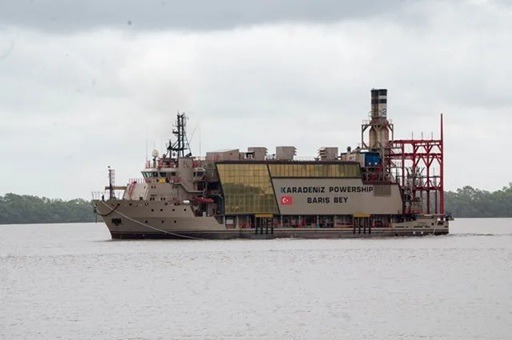
    On Wednesday, government officials from Guyana announced a finalized two-year contractual agreement with Turkey-based floating power provider Karpowership, updating the terms for the company’s electricity-generating vessel permanently stationed at the Everton East Bank Berbice terminal. The vessel first arrived at this site in May 2024 under an initial interim arrangement.

    Under the new terms, the 36-megawatt floating facility will supply power to the Guyana Power and Light (GPL) national grid at a rate of 9.5 US cents per kilowatt-hour. This marks an upward adjustment from the 7.2 US cents per kilowatt-hour rate set when the initial interim agreement was signed in 2024. The updated tariff brings the Berbice vessel in line with pricing for Karpowership’s second floating power plant located at Meadowbank, Greater Georgetown, which has operated at the 9.5 US cent rate since it was first connected to Guyana’s national grid.

    Public Utilities Minister Deodat Indar clarified that the published tariff does not include fuel costs, as the Guyanese government exempts power generation fuel from all taxation to keep overall energy costs stable. Indar emphasized that retaining the 36 MW of generation capacity from the Berbice vessel is a critical buffer for the national grid, as it offsets unavoidable transmission line losses that would otherwise strain power supply for residential and commercial users across the region.

    The new long-term arrangement comes as Guyana prepares to bring its large-scale 300 MW natural gas-fired Wales power station online, a project designed to meet rapidly growing energy demand driven by the country’s expanding oil and gas sector. The facility is on track to deliver an initial 222 MW of power to the national grid from four operational gas turbines by the end of 2026, with the remaining 72 MW of capacity coming online in early 2027.

    Speaking to reporters earlier the same day, Guyana President Irfaan Ali confirmed that negotiation teams reached a deal that aligned the Berbice vessel’s pricing with the existing terms for the second Karpowership facility. “The negotiations were completed at the same rate,” Ali said. “The rate of the second ship that is being used, nothing above that rate.”

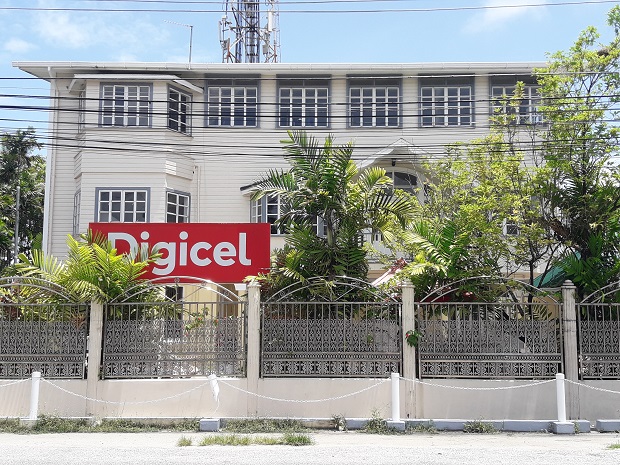
  • Digicel Guyana offers free unlimited calls to Venezuela following earthquakes

    Digicel Guyana offers free unlimited calls to Venezuela following earthquakes

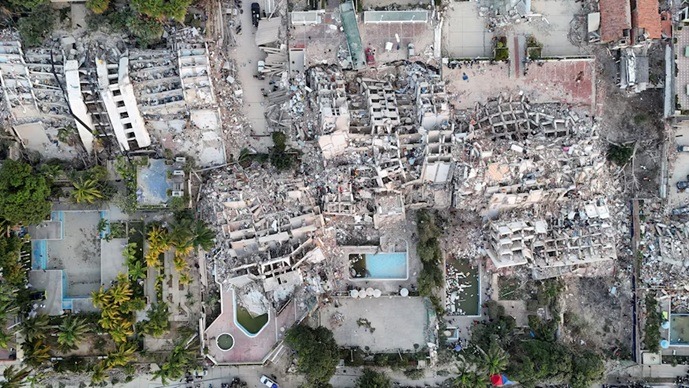
    In the wake of catastrophic twin earthquakes that hit northern Venezuela in late June 2026, a major regional telecommunications provider has stepped forward to support cross-border connection for families and communities grappling with the disaster. Digicel Guyana announced Tuesday that it is immediately rolling out a complimentary unlimited calling offer for its customers to reach contacts in Venezuela, as rescue efforts continue amid rising casualty numbers.

    The disaster, which struck on June 24, began with a 7.2-magnitude foreshock that was followed within seconds by a stronger 7.5-magnitude mainshock. The powerful back-to-back quakes have left a trail of widespread destruction across northern regions of the country, with the capital Caracas and the coastal city of La Guaira reporting the most severe damage. As search and rescue teams work around the clock to locate survivors trapped in collapsed structures, official death toll has climbed into the thousands, with thousands more injured and hundreds of people still reported missing.

    For Guyana, a neighboring Caribbean nation with extensive cross-border personal, social and economic ties to Venezuela, the disaster has left many residents anxious to check on the safety of loved ones and business partners. In a statement announcing the new initiative, Digicel Guyana emphasized that as a neighbor, the company and the country stand in full solidarity with Venezuela through this ongoing crisis. Company leadership noted that access to affordable, reliable communication has become the most urgent need for many Guyanese with connections to earthquake-impacted areas.

    “In moments like these, connection is everything,” said Deonarine Gopaul, Chief Executive Officer of Digicel Guyana and Suriname, in a press statement. “We want our customers to be able to check on their loved ones, offer support, and stay close to the people who matter most without worrying about the cost of a phone call.”

    The free unlimited calling service went into effect immediately following the announcement, and Digicel has urged its customers to take advantage of the offer to reach out to affected contacts, share updates, and provide much-needed emotional comfort to those navigating the aftermath of the disaster. As rescue operations extend into their second week, the initiative is expected to remove a major financial barrier for families desperate for information about their loved ones across the border.

  • SOCU Chief denies being detained in US

    SOCU Chief denies being detained in US

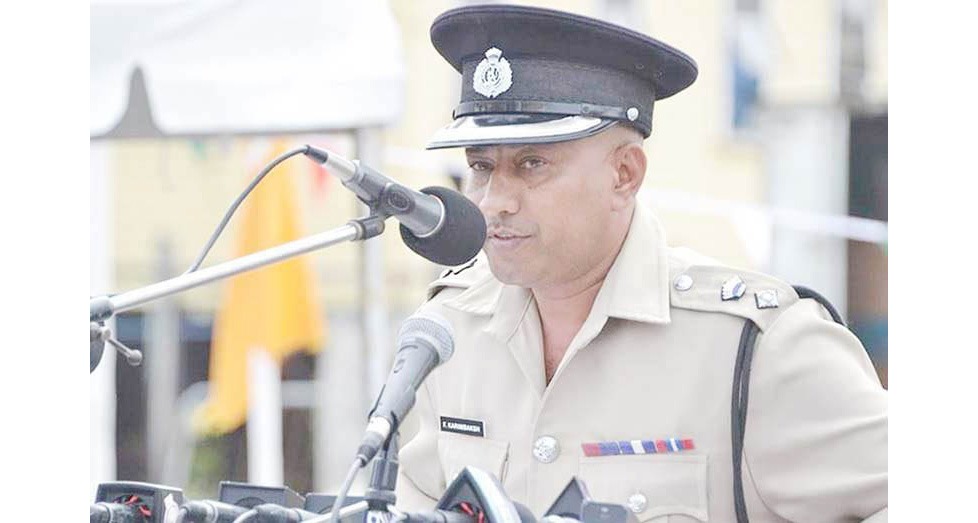
    In a public statement issued Wednesday from his current location in the United States, the senior head of Guyana’s top organized crime enforcement unit has strongly refuted unsubstantiated social media claims that he was taken into custody and interrogated by U.S. law enforcement officials during a recent entry into the country.

    Deputy Police Commissioner Fazil Karimbaksh, who leads the Guyana Police Force’s Special Organized Crime Unit (SOCU), is moving forward with plans to pursue legal action against the individuals responsible for spreading the false allegations across social platforms. Currently on the ground in the U.S., Karimbaksh explained that his lawsuit will aim to compel a court order forcing the originators of the rumors to release any evidence they claim to have supporting the assertion that he was detained upon arrival last week.

    Karimbaksh’s role at SOCU centers on leading high-stakes financial crime investigations, work that regularly involves close cross-border coordination with law enforcement partners across the Caribbean, North America and other international jurisdictions. This is not the first time rumors of U.S. law enforcement questioning of senior Guyanese police officials have circulated: the Guyanese government has previously pushed back on and downplayed similar reports naming multiple high-ranking police figures as subjects of U.S. interrogations.

    The unconfirmed allegations spread widely across social media earlier this month, prompting Karimbaksh’s first public on-the-record denial of the claims amid growing public attention to the rumor.

  • Constitutional reform process about to kick off

    Constitutional reform process about to kick off

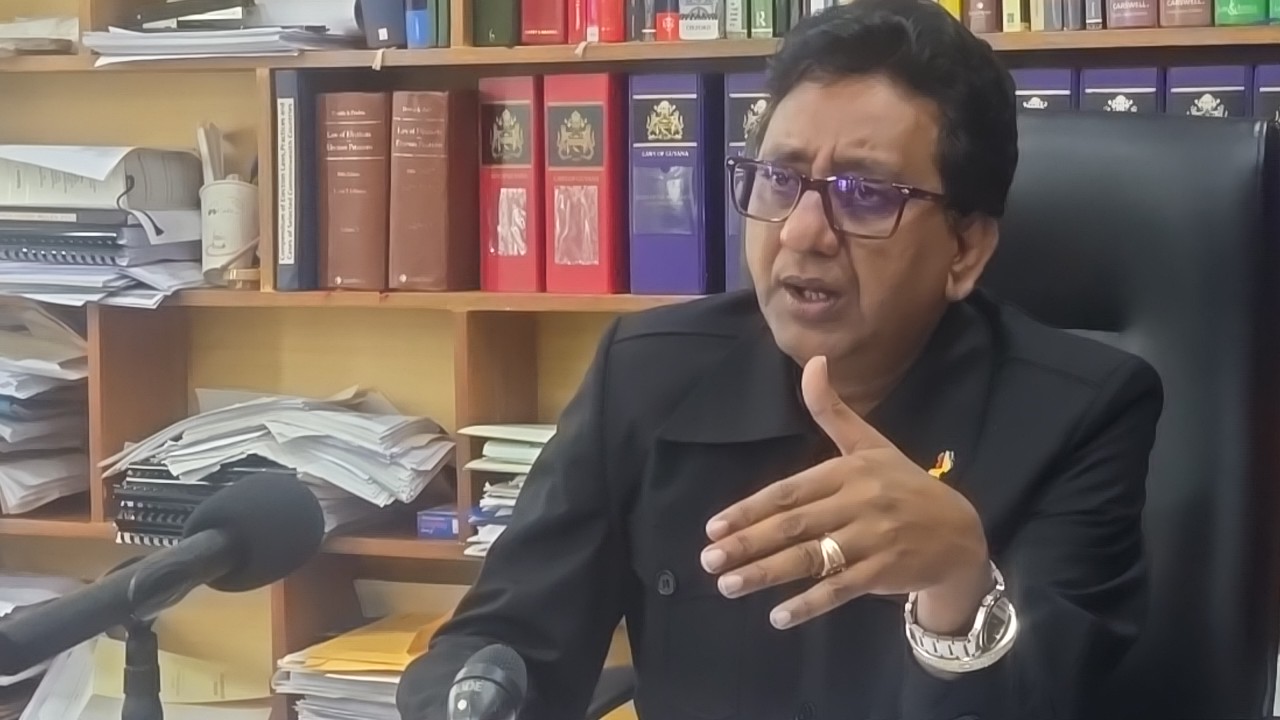
    Guyana’s ambitious national constitutional review process is poised to open public input this weekend, Attorney General and Minister of Legal Affairs Anil Nandlall confirmed in an announcement on his weekly social media program “Issues In The News” Tuesday evening. The process, led by the Constitutional Reform Commission (CRC), will kick off with a six-month window for written public submissions, to be followed by in-person public consultations held across every region of the South American nation.

    Under the framework outlined by Nandlall, the public can contribute recommendations via multiple channels: hand-delivered submissions to the CRC Secretariat office located on the Fifth Floor of the CRC building at 211 Camp and Lamaha Street in Georgetown, or emailed submissions sent to the official commission address gycrc2024@gmail.com. All submissions must include valid government-issued identification, Nandlall emphasized, ruling out anonymous input entirely. “This is serious business. If you want to make a contribution to such a nationally important process, then you must be able to say who you are and give us some form of ID, so that we can authenticate and verify who you are,” he explained in remarks Tuesday.

    The public engagement initiative comes amid mounting national and international debate around key governance and electoral issues that have divided Guyana’s political landscape in recent years. Top among the contentious topics are calls to clarify citizenship rules for non-Commonwealth migrants and migrant workers, and debate over whether foreign residents including Commonwealth citizens should be granted voting rights in national elections. The country’s opposition has repeatedly pushed for constitutional amendments to mandate periodic fresh voter registration, a change intended to remove names of deceased people and emigrated citizens from electoral rolls, addressing long-running claims of inflated voter lists and electoral fraud.

    Nandlall confirmed that electoral reform will be a core thematic priority for the review process, including potential changes to the composition of the Guyana Elections Commission (GECOM), the process for selecting GECOM’s chairman, and the commission’s jurisdiction over national registration and electoral administration. For decades, international election observation bodies have repeatedly called for an overhaul of Guyana’s voter registration system and a restructuring of GECOM to expand its representative base and resolve persistent political deadlock that has delayed past electoral processes.

    Beyond electoral changes, the CRC will consider a broad slate of additional reform priorities. These include strengthening legal protections for all fundamental rights and freedoms for Guyanese, upholding the specific rights of Indigenous peoples and children, eliminating all forms of systemic discrimination, guaranteeing minority representation in national decision-making, and expanding safeguards for economic, social and cultural rights for all citizens. Other key focus areas include measures to preserve and reinforce the independence of the judiciary, enhance accountability for public funds, and strengthen integrity standards for public office. The commission will also review the functioning of the National Assembly, exploring reforms to boost its capacity and effectiveness as a deliberative lawmaking body, and assess the local government system to identify improvements to its delivery and governance capacity.

    Notably, Nandlall stressed that the listed thematic areas are not exhaustive. Members of the public are welcome to submit recommendations on any constitutional matter that is not explicitly outlined in the public call, including proposals to add new provisions not currently included in the national charter. The attorney general issued a broad appeal for full participation from all segments of Guyanese society, including individuals, community groups, civil society organizations and public and private institutions.

    “This is a process of tremendous public importance. It will impact the type of amendments that we will see in the Constitution when the process concludes. Any responsible person, I think, would want to become part of this process,” Nandlall said, framing the reform process as a historic opportunity for Guyanese to shape the future of their national governance framework.

  • Russian-made handgun seized, two arrested

    Russian-made handgun seized, two arrested

    In a targeted operational sweep conducted on Tuesday, Guyana’s Customs Anti-Narcotics Unit (CANU) made a significant illicit weapons seizure that led to the arrest of two men, the agency confirmed in an official public statement released earlier this week. The operation, executed at the Castello Housing Scheme location, uncovered two unregistered handguns hidden on the suspects’ property during a court-authorized search. One of the recovered weapons is a Russian-manufactured 9mm Baikal Makarov pistol, while the second is a Smith and Wesson .38 special revolver. Along with the two firearms, agents also found one live bullet matching the caliber of the revolver. Following the completion of the CANU operation, both detained suspects, all seized firearms, and the recovered ammunition have been transferred to the Guyana Police Force for further processing and ongoing investigation. Law enforcement sources note that illegal unregistered firearms remain a persistent public safety challenge in Guyana, and interagency cooperation between CANU and local police is designed to disrupt illegal weapons trafficking and prevent potential violent crime linked to unlicensed firearms. As of the latest update, investigators have not yet released additional details on whether the weapons are linked to other open criminal cases, or what bail status the two suspects hold following their transfer to police custody.

  • Lands and Surveys Commission helping to clear backlogs – Monize

    Lands and Surveys Commission helping to clear backlogs – Monize

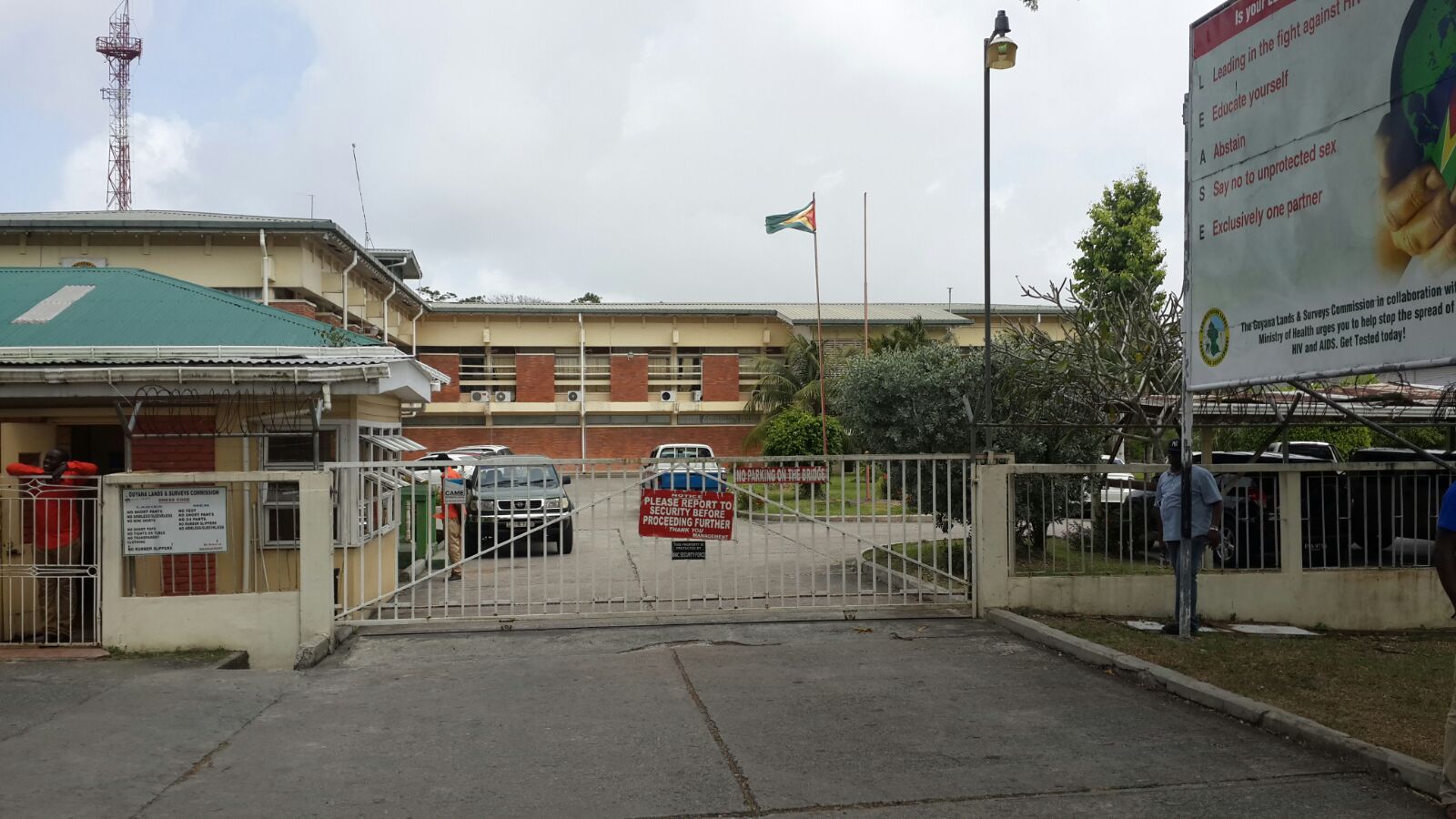
    On Tuesday, June 30, 2026, Enrique Monize, Commissioner of the Guyana Lands and Surveys Commission (GLSC), announced a multi-pronged initiative to clear long-standing backlogs in land applications while rolling out modern geospatial and digital land management technologies across the South American nation. The announcement, delivered at the GLSC’s 25th anniversary awards ceremony, marks a key milestone in the government’s push to build a more accessible, transparent land administration system aligned with national development goals.

    As part of the backlog clearance effort, the GLSC is currently conducting boundary surveys on thousands of acres of underutilized public land across nine of Guyana’s 10 administrative regions, excluding the densely populated Demerara-Mahaica (Region Four). Once surveyed, these parcels are transferred directly to the Central Housing and Planning Authority (CH&PA), the government body responsible for housing development and land allocation. Monize told attendees that the agency targets to prepare an additional 8,000 acres of land for CH&PA this year alone, a move designed to eliminate the agency’s housing application backlog in all regions outside Region Four.

    The GLSC’s work complements ongoing progress at CH&PA, which launched a digital single window system for land and construction applications in June 2024. Just days before Monize’s announcement, CH&PA officials reported that the new platform has already cut the backlog of residential land applications by 21%, while seeing a 1% rise in submitted non-residential applications. Speaking at the recently concluded 2026 Building Expo, CH&PA Research Officer Kimberly Cosbert shared detailed data on the system’s uptake: between its launch and June 2026, the platform has received 8,513 total applications, 64.3% for residential projects and 35.7% for non-residential developments. Of those submissions, 3,535 have been fully processed and closed, leaving 4,055 still in the review pipeline. “This shows actually that the system is being used and applications are being moved from one stage to the other,” Cosbert noted, highlighting that the digital overhaul is already streamlining administrative workflows.

    To address backlogs within its own operations, the GLSC has deployed a mobile task force that conducts file audits across all of its regional offices, purging dormant records and processing long-unresolved applications. Monize reported that this targeted cleanup has already led to a “significant decline” in public complaints about delayed land services during community outreach events.

    Alongside backlog reduction, the commission is cracking down on illegal encroachment on public state land. Monize cited a recent incident just one day prior, where an individual attempted to seize publicly owned land at the former Hog Stye toll station. In response, GLSC surveyors immediately demarcated the parcel to reserve it for a planned Public Works Ministry project to install vehicle weighing scales. “Government land has to be left to do government business. We cannot just give everything away,” Monize emphasized, reaffirming the agency’s commitment to protecting state land assets for public use.

    Founded under Act No. 15 of 1999, with official operations launching on June 1, 2001, the GLSC is the successor to the 19th-century Crown Lands Department, later reorganized as the Department of Lands and Surveys under the Ministry of Agriculture. Today, the agency is advancing a series of long-term modernization projects beyond backlog clearance. It is currently updating national maps, with the revised map of the capital city of Georgetown already 90% complete, and new map sets for coastal and developed inland areas currently in production. The GLSC has also begun work on the first-ever updated regional land use plans for West Demerara-Essequibo Islands (Region Three) and Demerara-Mahaica (Region Four), two of the country’s most economically active regions, and will conduct a full review and update of the draft national land use plan.

    Guyanese President Irfaan Ali laid out the government’s broader vision for land sector reform during the event, stating that the administration aims to build a modern, efficient, transparent, and citizen-centric land administration system. Ali articulated priorities including fully digitized, publicly accessible land records, data-driven decision-making based on accurate geospatial information, and expanded geographic information systems (GIS) infrastructure to support evidence-based planning and development nationwide. A core goal of the reform, he noted, is to strengthen tenure security for all land users, including individual citizens, smallholder farmers, private businesses, and local communities. “We want institutions that work seamlessly together in support of national development, and we want a system that balances economic growth with responsible stewardship of our land resources for future generations,” the president said.

  • Venezuela earthquakes displace several Guyanese

    Venezuela earthquakes displace several Guyanese

    A week after two powerful back-to-back earthquakes struck central Venezuela, the disaster has left a devastating trail of destruction, killed more than 1,700 people, and spilled over into cross-border impacts that have displaced Guyanese residents living in the affected region, Guyana’s Minister of Foreign Affairs Hugh Todd confirmed in a statement Monday.

    Three Guyanese households lost their homes when their residences collapsed in the seismic event, with Todd estimating a total of 10 to 12 Guyanese citizens have been directly impacted by the quakes that hit last Wednesday. No fatalities have been reported among the Guyanese population, who reside in a tight-knit Caribbean community in the quake zone. To assess the full scope of damage and check for potential unreported injuries, Guyana’s ambassador to Venezuela, Dr. Richard Van West-Charles, is scheduled to travel to the affected community on the outskirts of Caracas in the coming days, Todd added.

    The scale of the disaster across Venezuela remains severe, updated UN figures revealed Monday. The United Nations’ Resident and Humanitarian Coordinator in Venezuela, Gianluca Rampolla, announced in a press briefing that roughly 12,000 Venezuelans have been displaced from their homes, and more than 5,000 others have sustained injuries. With search and rescue operations still ongoing in collapsed structures, the Venezuelan government has approved the purchase of 10,000 additional body bags, as authorities prepare for further increases to the death toll.

    Seven Venezuelan states have reported damage from the quakes, though the vast majority of casualties and destruction are concentrated in La Guaira state and Caracas’ Distrito Capital. Roughly 2,500 buildings have sustained damage, and many of these structures have completely collapsed, leaving dangerous rubble-strewn landscapes across affected regions.

    Hazardous conditions continue to hamper recovery efforts nearly a week after the initial quakes. Seismologists have recorded almost 500 aftershocks, including a magnitude 5.2 tremor that struck early Monday morning. Compounding these risks, an approaching tropical wave is forecast to bring heavy rainfall to the disaster zone, raising threats of flash floods and additional structural collapses.

    “We continue to operate in a high-risk environment,” Rampolla told reporters.

    In response to the unfolding humanitarian crisis, both the Guyanese government and the country’s private sector have joined forces to assemble emergency aid shipments. The combined relief effort is gathering at least 8,000 tonnes of essential supplies, including rice, other non-perishable food products, pharmaceutical goods, and other basic necessities. The supplies are scheduled to be loaded onto a Guyanese cargo vessel, which will depart for Venezuela this Friday.

  • Car driver in fatal Essequibo Coast accident was intoxicated- police

    Car driver in fatal Essequibo Coast accident was intoxicated- police

    Guyana law enforcement have confirmed that the driver involved in a fatal weekend collision that claimed the life of a local motorcyclist was operating his vehicle under the influence of alcohol, exceeding the country’s legal blood alcohol breath limit at the time of the crash. The fatal incident unfolded on the afternoon of June 27, 2026, along Reliance Public Road on the Essequibo Coast, leaving a 45-year-old construction worker dead just minutes after the collision.

    According to official statements released by the Guyana Police Force this Monday, June 29, the driver of the sedan involved in the crash, registered under plate number PAM 8929 and a resident of Coffee Grove, Essequibo Coast, registered a breath alcohol content of 48 micrograms during a mandatory breathalyzer test administered following the collision. Guyana’s legal limit for breath alcohol content is set at 35 micrograms, meaning the driver was more than a third over the permitted threshold. He has since been taken into police custody as investigations continue, and authorities have not yet released his identity to the public.

    The victim has been formally identified as Satesh Persaud, a 45-year-old construction worker based in the local Reliance Housing Scheme. Persaud was operating his motorcycle, registered under plate CM 2631, when the collision occurred. Police accounts of the incident outline that Persaud was traveling east, exiting an access road on the western side of the main public road, when he pulled onto the highway to cross to a connecting access road on the eastern side. As he entered the main roadway, he moved directly into the path of the oncoming sedan, which was traveling south along the road at the time of the incident.

    The high-impact collision threw Persaud from his motorcycle onto the pavement, where he sustained severe traumatic head injuries. Good Samaritans who witnessed the crash immediately pulled the unconscious motorcyclist from the roadway and rushed him to the nearby Lima Regional Hospital. Unfortunately, medical staff at the facility pronounced Persaud dead on arrival, shortly after he was admitted.

    Following the crash, Persaud’s remains were transferred to the mortuary at Suddie Public Hospital, where a post-mortem examination is scheduled to be carried out to confirm the official cause of death. Police investigations into the full circumstances of the collision remain ongoing as of Monday afternoon.

  • Rig explosion in Venezuela kills 8, sources

    Rig explosion in Venezuela kills 8, sources

    On Sunday evening, a sudden explosion rocked an oil drilling rig operated by Venezuela’s state-owned petroleum giant Petróleos de Venezuela (PDVSA) in the country’s southwestern Apure state, leaving a minimum of eight workers with injuries, multiple anonymous sources confirmed on Monday. \n\nAccording to the sources, corroborated by user-shared videos circulating across multiple social media platforms, all injured personnel have been moved across the border into neighboring Colombia to receive urgent specialized medical care. As of Monday afternoon, PDVSA has not responded to repeated requests for media comment to confirm the incident details, clarify the cause of the blast, or share additional context on the workers’ current conditions. \n\nThe incident marks another disruption to PDVSA’s operational activities in Venezuela’s key oil-producing regions, coming as the state firm continues to grapple with long-standing infrastructure challenges and maintenance backlogs across its assets.