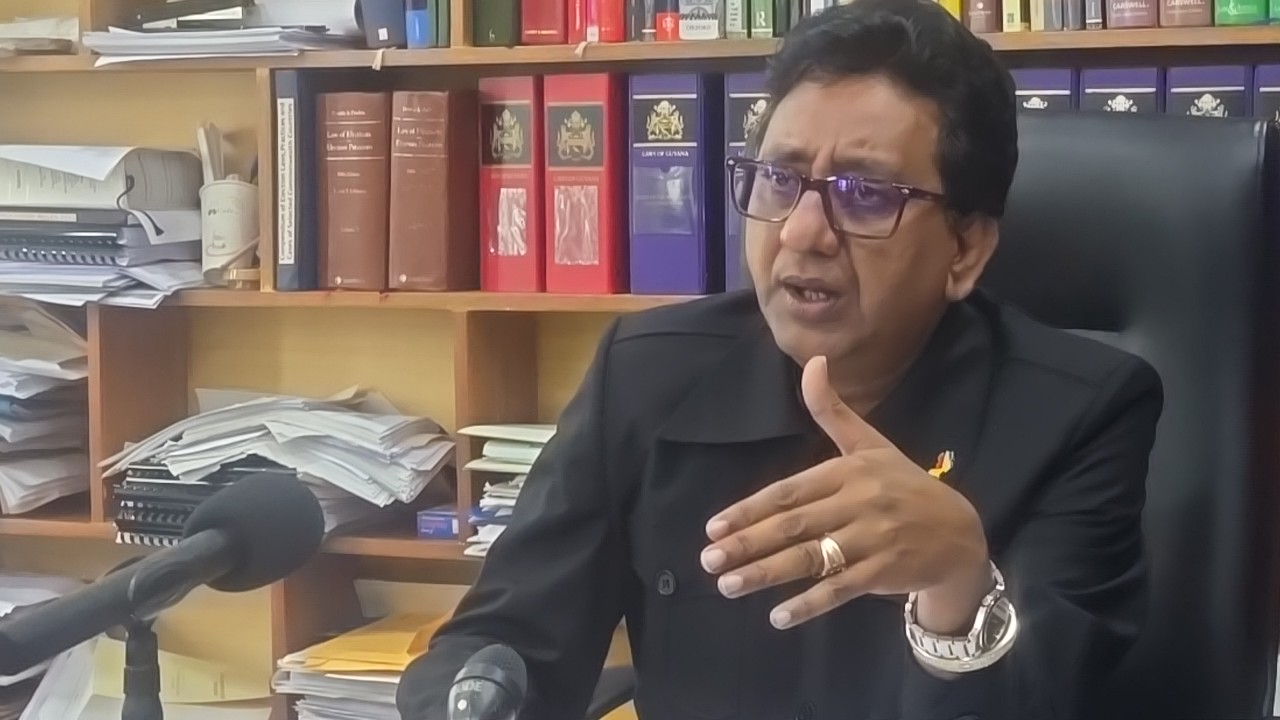
Guyana’s ambitious national constitutional review process is poised to open public input this weekend, Attorney General and Minister of Legal Affairs Anil Nandlall confirmed in an announcement on his weekly social media program “Issues In The News” Tuesday evening. The process, led by the Constitutional Reform Commission (CRC), will kick off with a six-month window for written public submissions, to be followed by in-person public consultations held across every region of the South American nation.
Under the framework outlined by Nandlall, the public can contribute recommendations via multiple channels: hand-delivered submissions to the CRC Secretariat office located on the Fifth Floor of the CRC building at 211 Camp and Lamaha Street in Georgetown, or emailed submissions sent to the official commission address gycrc2024@gmail.com. All submissions must include valid government-issued identification, Nandlall emphasized, ruling out anonymous input entirely. “This is serious business. If you want to make a contribution to such a nationally important process, then you must be able to say who you are and give us some form of ID, so that we can authenticate and verify who you are,” he explained in remarks Tuesday.
The public engagement initiative comes amid mounting national and international debate around key governance and electoral issues that have divided Guyana’s political landscape in recent years. Top among the contentious topics are calls to clarify citizenship rules for non-Commonwealth migrants and migrant workers, and debate over whether foreign residents including Commonwealth citizens should be granted voting rights in national elections. The country’s opposition has repeatedly pushed for constitutional amendments to mandate periodic fresh voter registration, a change intended to remove names of deceased people and emigrated citizens from electoral rolls, addressing long-running claims of inflated voter lists and electoral fraud.
Nandlall confirmed that electoral reform will be a core thematic priority for the review process, including potential changes to the composition of the Guyana Elections Commission (GECOM), the process for selecting GECOM’s chairman, and the commission’s jurisdiction over national registration and electoral administration. For decades, international election observation bodies have repeatedly called for an overhaul of Guyana’s voter registration system and a restructuring of GECOM to expand its representative base and resolve persistent political deadlock that has delayed past electoral processes.
Beyond electoral changes, the CRC will consider a broad slate of additional reform priorities. These include strengthening legal protections for all fundamental rights and freedoms for Guyanese, upholding the specific rights of Indigenous peoples and children, eliminating all forms of systemic discrimination, guaranteeing minority representation in national decision-making, and expanding safeguards for economic, social and cultural rights for all citizens. Other key focus areas include measures to preserve and reinforce the independence of the judiciary, enhance accountability for public funds, and strengthen integrity standards for public office. The commission will also review the functioning of the National Assembly, exploring reforms to boost its capacity and effectiveness as a deliberative lawmaking body, and assess the local government system to identify improvements to its delivery and governance capacity.
Notably, Nandlall stressed that the listed thematic areas are not exhaustive. Members of the public are welcome to submit recommendations on any constitutional matter that is not explicitly outlined in the public call, including proposals to add new provisions not currently included in the national charter. The attorney general issued a broad appeal for full participation from all segments of Guyanese society, including individuals, community groups, civil society organizations and public and private institutions.
“This is a process of tremendous public importance. It will impact the type of amendments that we will see in the Constitution when the process concludes. Any responsible person, I think, would want to become part of this process,” Nandlall said, framing the reform process as a historic opportunity for Guyanese to shape the future of their national governance framework.