标签: Dominica

多米尼克

  • BVI and ECLAC leaders urge faster action on Sustainable Development Goals at regional forum

    BVI and ECLAC leaders urge faster action on Sustainable Development Goals at regional forum

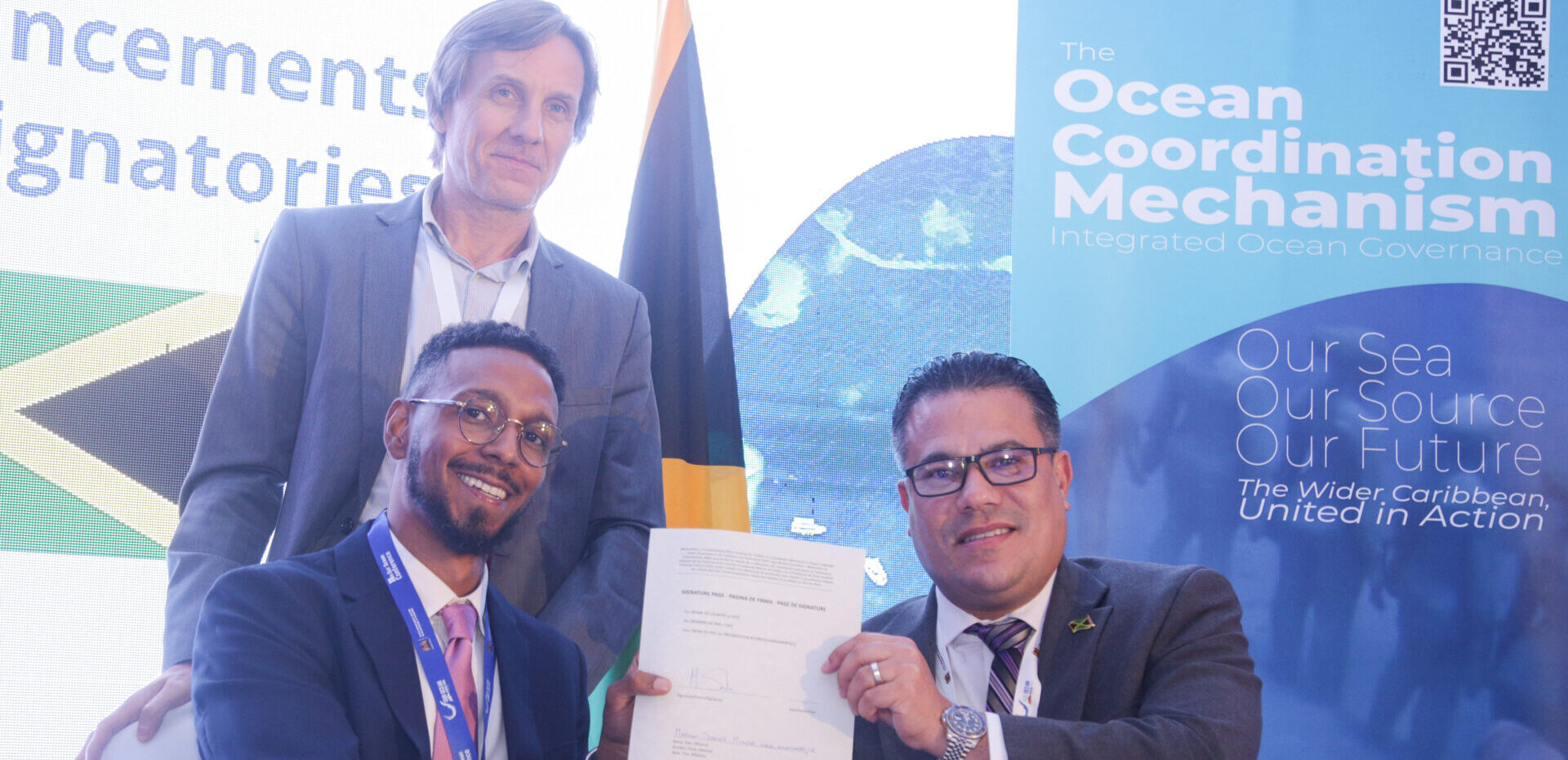
    Against the backdrop of the recently concluded 9th Meeting of the Forum of the Countries of Latin America and the Caribbean on Sustainable Development in Santiago, Chile, senior representatives from the United Nations Economic Commission for Latin America and the Caribbean (ECLAC) and the British Virgin Islands (BVI) held a critical bilateral discussion focused on accelerating sustainable development across the region. The meeting brought together Benito Wheatley, BVI Special Envoy and Vice Chair of ECLAC’s 40th Session, and ECLAC Executive Secretary José Manuel Salazar-Xirinachs, as part of ECLAC’s ongoing cross-regional engagement work.

    According to an official press statement released by the BVI government, both leaders converged on a shared urgent message: global progress toward the UN Sustainable Development Goals (SDGs) in the region is severely off track, with just 19% of targets currently implemented. With only four years remaining until the 2030 deadline for full SDG adoption, the pair emphasized that immediate, coordinated action is required to close the existing gap.

    Wheatley opened the discussion by commending ECLAC and Salazar-Xirinachs for the body’s consistent, targeted focus on addressing persistent regional development gaps and rolling out inclusive productive development strategies. He noted that when these frameworks are adopted and adapted by national governments across Latin America and the Caribbean, they can unlock transformative, tangible economic and social progress that benefits marginalized and vulnerable communities across the region.

    The BVI envoy also went on to stress the growing importance of expanding technical cooperation across the Latin America and Caribbean region, particularly in three high-priority areas: climate and disaster resilience, cross-border investment, and accessible technology transfer. He highlighted that most regional economies are operating with extremely constrained fiscal space, driven primarily by heavy national debt loads and repeated emergency spending required to respond to unforeseen external shocks. In this context, targeted investment has become one of the most critical tools for sustaining long-term, inclusive growth across the subregion, he added.

    Responding to Wheatley’s remarks, Salazar-Xirinachs reaffirmed ECLAC’s longstanding commitment to supporting sustainable development efforts in the BVI and all Caribbean Small Island Developing States (SIDS). He pushed back against the narrative that middle-income classification – a category that includes most Caribbean nations – eliminates the need for continued international support. For SIDS, which face outsized vulnerability to climate disasters and global economic volatility, sustained international assistance remains non-negotiable for advancing the SDGs, he noted.

    Salazar-Xirinachs also recognized the BVI’s active leadership role during the recent Forum meeting. In his capacity as Vice Chair of the Caribbean Development and Cooperation Committee, Wheatley led a dedicated Caribbean-focused panel exploring the implementation of the Antigua and Barbuda Agenda for SIDS through expanded South-South cooperation.

    Closing the discussion, Wheatley reaffirmed the BVI’s unwavering commitment to both regional collaboration and the global sustainable development agenda. “Through our various leadership roles within UN ECLAC, the British Virgin Islands will continue to advocate for the Caribbean to ensure the subregion’s priorities, including climate resilience, are taken into account in the inter-governmental deliberations of the wider region on the 2030 Agenda, and that there is closer collaboration between the Caribbean and Latin America on the implementation of the SDGs in the remaining period,” he stated.

    The 9th Forum of the Countries of Latin America and the Caribbean on Sustainable Development was hosted in the Chilean capital from April 13 to 16, 2026, bringing together hundreds of government officials, UN representatives, and civil society stakeholders to align on sustainable development action.

  • CRICKET WEST INDIES: Kevin Wickham- Honouring his father through his performances on the field

    CRICKET WEST INDIES: Kevin Wickham- Honouring his father through his performances on the field

    For 23-year-old Barbados Pride batsman Kevin Wickham, every stride across the cricket pitch is more than just a routine movement—it is a living tribute to the man who shaped his love for the game, his late father Herbert. Two years after Herbert’s passing, every perfectly timed stroke through the offside and every desperate dive at the boundary is stitched with quiet memory, as Wickham has channeled his grief into purpose, stepping onto the field not just as an athlete, but as a son carrying forward his father’s legacy.

    Just over a week ago, Wickham cemented his place in West Indies regional cricket history by becoming only the third Barbadian to score centuries in both innings of a first-class regional match since 2000, joining elite company with current West Indies captain Kraigg Brathwaite (who achieved the feat against Guyana in 2015) and former all-rounder Ryan Hinds (who did so against the Leeward Islands in 2006). Facing Jamaica Scorpions’ bowling attack, the stylish right-hander delivered a dominant first-innings knock of 153, decorated with six fours and 12 towering sixes, before following up with an unbroken sparkling 108 in the second innings—marking a career-defining performance that followed a prolonged period of personal and professional struggle.

    In a post-match reflection, Wickham opened up about the hardest stretch of his young career, which came immediately after his father’s death. He was in Jamaica when he received news of Herbert’s declining health, and rushed home to be with his family. After returning to the pitch following the funeral, he struggled enormously with his form, as the loss hit him far harder mentally than it ever could physically. “The guys showed me a lot of support because it was more mental than physical, and having their support kept me above ground and helped me maintain high standards and be where I am supposed to be,” he explained.

    Herbert, Wickham recalled, was his earliest and most loyal supporter, following a quiet, old-school routine: he never attended matches in person, but never missed one, tuning in to radio broadcasts to track every run his son scored. “Every time I came home, he could tell me how much I scored, what I should and shouldn’t have done,” Wickham said. “To this day I miss him because I miss having those conversations, and when I’m not doing too well, I try to think back to his advice.” That steady guidance is what carried him through his recent record-breaking knock.

    Both centuries came when his team was in a precarious position, and Wickham stuck to the same mindset his father taught him: protect the wicket, build the innings, and put the team in a strong position. “The first innings century was very special to me because that is now my highest first class score, so that is a very good achievement because I came at the stage where the team was in a bit of trouble, so my aim was to stay at the crease for as long as possible and get a good total for the team,” he said. “The second one I found myself in a similar position where the team was in a bit of trouble, but the mindset was the same: get the team in a good position.”

    Wickham first emerged as one of the Caribbean’s most promising young talents after a standout century against Zimbabwe at the 2022 Under-19 World Cup, but the transition from youth cricket to senior first-class cricket has not been without its challenges. “This phase has been different, a lot tougher in terms of expectations after coming out of Under-19 cricket because I had a few low scores, but coach always told me just to stick to my plans and when the runs are coming stay in decent touch as long as possible because in cricket a player will have more failures than success,” he noted.

    Looking ahead, Wickham has set a clear personal target of scoring three centuries in the ongoing bilateral series, with two already under his belt. To date, he has notched five first-class centuries in just 22 matches, holding a batting average above 40—impressive numbers that mark him as one of the region’s most exciting emerging prospects. For Wickham, though, every run is more than just a statistic: it is a chance to honor the man who started it all, who he knows is still walking alongside him, cheering every knock from beyond the boundary.

  • Singer Patrice Roberts ordered to pay up in dispute with former Canadian management

    Singer Patrice Roberts ordered to pay up in dispute with former Canadian management

    After more than 10 years of legal back-and-forth, Trinidad’s High Court has delivered a final ruling to end a public dispute between internationally recognized soca artist Patrice Roberts and her one-time management firm, Canadian-based Soca Bookings Incorporated. The landmark April 7 decision has pulled back the curtain on the significant legal and financial risks that informal, unwritten business arrangements pose for professionals working across the global entertainment industry.

    The conflict traces its origins to a verbal partnership struck back in February 2015. Under the terms of that loose agreement, Soca Bookings took on core responsibilities for Roberts’ burgeoning career: handling international performance bookings, building her public brand, coordinating studio recording sessions, and leading global promotional outreach. While both parties never disputed that a working arrangement existed, court documents reveal that critical contractual details were never formalized or put in writing. Most notably, there was no clear consensus on when management fees would become due or what percentage of revenue the firm was entitled to collect.

    Presiding over the case, Justice Robin Mohammed ultimately ruled that Soca Bookings was entitled to $35,472 U.S. dollars in compensation for the work the company carried out on Roberts’ behalf between 2015 and 2017, as well as for cash advances the firm extended to support the artist’s career growth. Though the court acknowledged gaps in the company’s formal contractual claim, Justice Mohammed determined that the requested sum was a fair reflection of the tangible services the firm delivered to advance Roberts’ career. The judge sided with Roberts on the debate over management fee structure, noting in his ruling that the parties had agreed fees would only be payable once the partnership turned a profit—a threshold the claimant never proved had been met. Still, he emphasized that Roberts could not legally retain all the benefits of the firm’s work without compensating the company fairly, noting she had been the sole financial beneficiary of the arrangement and owed payment on equitable grounds.

    In a reciprocal ruling, the court ordered Soca Bookings to return $10,367.88 U.S. dollars to Roberts, representing unremitted earnings collected from digital streaming and sales of the artist’s music during the management period. The court permitted both outstanding amounts to be offset against one another, and dismissed an additional $11,600 U.S. claim from the firm related to music video production, after the company failed to produce concrete evidence that the expense had actually been incurred.

    After netting out the offsetting amounts, the court finalized that Roberts is required to pay Soca Bookings a reduced net sum of $25,104.12 U.S. dollars, in addition to covering $26,983.7 Trinidadian dollars in legal costs incurred during the case.

    In closing remarks on the ruling, Justice Mohammed highlighted the broader industry lesson of the decade-long dispute, stressing that unwritten verbal agreements carry inherent avoidable risks, and that formal, clearly defined contracts would have prevented this protracted, costly legal battle entirely. Roberts, a fixture of Caribbean music, has performed at some of the region’s most high-profile festivals, including multiple appearances at Dominica’s World Creole Music Festival, with her most recent set taking place in 2023.

  • COMMENTARY: World Heritage Day

    COMMENTARY: World Heritage Day

    When the term \”heritage\” is mentioned, many people picture isolated ancient monuments or postcard-perfect tourist destinations. But the United Nations Educational, Scientific and Cultural Organization (UNESCO) offers a far broader, more meaningful framing: heritage encompasses all cultural, historical, and social legacies passed between generations, from grand historic landmarks and museum collections to intangible living traditions and modern cultural expressions. More than just a connection to the past, heritage enriches daily life and lays the foundation for inclusive, innovative, and resilient communities around the world. Preservation, however, is just as critical as inheritance: safeguarding these irreplaceable legacies for coming generations remains an urgent shared responsibility.

  • COMMENTARY: Nation-builder – The life & times of Dominica’s former Chief Cultural Officer Raymond Lawrence

    COMMENTARY: Nation-builder – The life & times of Dominica’s former Chief Cultural Officer Raymond Lawrence

    A new biographical profile of former Dominican Chief Cultural Officer Raymond Lawrence, produced from an in-depth interview held in late March 2026, is being released as part of a critical cultural preservation initiative led by Gabriel J. Christian, a Dominican attorney, author and publisher. This project forms the core mission of Pont Casse Press, the independent publishing house founded in 1992 by Christian and his late collaborator Dr. Irving W. André, a former Canadian Superior Court Judge. Through oral histories, video biographies, and written documentation, the initiative works to capture and preserve the legacies of prominent Dominican figures whose contributions laid the foundation for the modern nation, ensuring these stories remain accessible for future generations as part of the island’s living historical record.

    Born in Roseau, Dominica, in January 1954, Lawrence grew up in a household that prioritized education, entrepreneurial spirit, and artistic achievement. His parents Hugh Lawrence and Doris Durand Lawrence ran a successful local soft drink factory and retail shop at a time when small-scale Dominican entrepreneurship was a core expression of national economic self-determination. The Lawrence home was also steeped in musical tradition: his older sister Jean Lawrence emerged as one of Dominica’s most influential cultural leaders, shaping the island’s choral music scene through her direction of the Siffleur Montagne Chorale, which raised national standards for musical performance and built widespread cultural pride across the country.

    Lawrence’s early academic journey took him through Convent Preparatory School for primary education, followed by the elite Dominica Grammar School, where he honed his academic focus and early sense of civic duty. He completed his sixth-form studies at St. Mary’s Academy between 1970 and 1972, and complemented his classroom learning with service in the Cadet Corps, an experience that instilled lifelong habits of leadership, discipline, and national responsibility. His musical training began early under the tutelage of Lemuel McPherson Christian OBE, the legendary composer who wrote Dominica’s national anthem, grounding Lawrence in the artistic traditions that would define his lifelong career.

    He later expanded his academic training in the United States, earning a bachelor’s degree from the University of Steubenville in Ohio and a master’s degree from the University of North Texas. These international experiences deepened his expertise in communications, performing arts, and cultural administration, equipping him with the skills to lead national cultural policy and development work back home.

    Lawrence’s professional career began in broadcasting, where he worked from 1972 to 1982 at both Radio Dominica and Radio Antilles. The role gave him a national platform to connect with Dominican communities and helped him recognize media’s unique power to strengthen collective national identity. Parallel to his media work, he launched his cultural organizing career in 1971 by co-founding the Waitu Kubuli Dance Troupe alongside fellow cultural practitioners Gwyneth Joseph and Arlington James. Under his early leadership, the group transformed traditional Dominican folk dance into a rigorous, respected national performance art, and brought Dominican culture to regional audiences through tours across Antigua and other Caribbean neighbors.

    Lawrence’s work grew from the foundation laid by an earlier generation of Dominican cultural nation-builders. He joined the ranks of icons like Dr. Alwin Bully, the late playwright, artist, educator and former Chief Cultural Officer who institutionalized theater arts and strengthened Dominica’s national festival traditions; Pearle Christian, the beloved grassroots cultural leader who worked to keep national culture rooted in community life; and Mable Cissy Cauderion, a pioneer who preserved Creole musical traditions that form the backbone of Dominican cultural identity.

    Over his decades of public service, Lawrence would go on to serve with distinction as Dominica’s Chief Cultural Officer, holding the post for 24 years across two tenures: from 1990 to 2014, and again from 2017 to 2021. In this role, he rejected the framing of culture as a narrow category of isolated performance, instead defining it as the complete way of life of the Dominican people. Working alongside fellow cultural administrators Rosalind Paul and Matthew Olivace, he centered his leadership on a clear mission: preserve Dominica’s unique ancestral traditions while nurturing new artistic excellence and innovation.

    One of Lawrence’s most historically significant contributions was his leadership of the revitalization of the Dominica Cultural Centre at the Old Mill, a site with deep, layered historical meaning. The center is built within the surviving stone walls of a 19th-century sugar mill plantation, a relic of the slavery era where enslaved Africans were forced to labor to generate wealth for European colonial powers. Lawrence recognized the critical importance of reclaiming this fraught space as a site of cultural affirmation, rather than leaving it shrouded in historical silence.

    Under his direction, major restoration and preservation work transformed the site. Lawrence organized the transfer and conservation of a historic steam locomotive from the former Bath Estate plantation, implemented specialized conservation techniques to protect the site’s aging historic structures, led the conversion of unused buildings into functional cultural spaces including dance studios, and secured partnership funding for improvements from organizations including UNESCO and the U.S. Embassy. Through this years-long effort, he turned a site born of colonial exploitation into a thriving hub for artistic expression and public historical education.

    Throughout his career, Lawrence consistently argued that culture must serve to strengthen national character. He voiced public concern about eroding social values, and pushed for cultural policy that reinforces dignity, discipline, and mutual respect among younger generations. For Lawrence, culture was never separate from nation-building: it shapes how a people understand their own identity and their collective responsibility to one another.

    Lawrence’s life and career represent far more than a tenure in public administration. It is the story of a cultural patriot who recognized that a nation’s strength depends not only on physical infrastructure and economic growth, but on shared identity, collective memory, and national pride. As a broadcaster, educator, organizer, preservationist, and administrator, he spent decades working to ensure that Dominica’s rich cultural inheritance would remain a living, active force in national life, rather than a forgotten relic of the past.

    In documenting Lawrence’s story, Pont Casse Press advances its core mission to honor the figures who built modern Dominican civilization. Lawrence’s life stands as a testament to the truth that the most enduring nation-builders are those who preserve the spirit of their people. After more than 50 years of relentless service, he has secured his place among the most respected cultural guardians in Dominica’s history. A full biographical video of Lawrence’s story is available for public viewing.

  • CRICKET WEST INDIES: West Indies Championship round 2 preview

    CRICKET WEST INDIES: West Indies Championship round 2 preview

    As the West Indies Championship heads into its second round of matches, Trinidad & Tobago Red Force holds a razor-thin 0.6-point advantage over second-placed Jamaica Scorpions after a thrilling opening round of the regional cricket competition. Chasing their first title in two decades, Red Force delivered a dominant statement in their opening fixture, crushing Leeward Islands Hurricanes by an innings and 271 runs at Coolidge Cricket Ground to pocket 22.6 total points, six of which came from bonus points. Just behind Red Force on the leaderboard, Jamaica Scorpions sit at 22 points after a dramatic final-day run chase against Barbados Pride, while defending champions Guyana Harpy Eagles round out the top three with 21.4 points.

    Red Force has opted to keep its full squad unchanged for its upcoming second-round clash, but captain Joshua Da Silva is pushing his side to lift their intensity and sharpen their edge heading into the match at Sir Vivian Richards Stadium. Da Silva noted areas for improvement following the opening win, pointing out dropped catches that need to be addressed in the field. While he expressed satisfaction with the early performance of the team’s opening batters, who have bounced back from inconsistent opening partnership struggles last year, Da Silva called on the pair to extend their good form into the next fixture.

    For the Leeward Islands Hurricanes, who suffered the lopsided opening round defeat, the squad has made two adjustments: Kofi James and Carlon Bowen-Tuckett will step in to replace Nathan Edward and Daniel Doram respectively. Head coach Steve Liburd says his side’s sole focus right now is bouncing back to secure a win and keep their playoff hopes alive. “It is a three-match series, and we are looking to bounce back and win the game. On reflection we had very good conversations with the players in our different groups about finding different ways we can come back into the series,” Liburd explained.

    In Kingston, Jamaica Scorpions are riding high after securing their first victory over Barbados Pride in 10 years, and the side is keen to carry that winning momentum into their home fixture at Sabina Park. Barbados Pride, meanwhile, has shored up its batting order ahead of the rematch, with West Indies Test captain Roston Chase — who has notched 11 centuries at this level of competition — returning to the squad to replace Shian Brathwaite. Barbados head coach Vasbert Drakes acknowledged Jamaica’s standout performance in the last round, where the Scorpions read pitch conditions perfectly to pull off a successful fourth-innings chase, but he says his side has learned from the defeat and is hungry for redemption. “It is a totally different wicket at Sabina Park and totally different environment, and I think everyone will be on a level playing field,” Drakes noted.

    The third second-round fixture sees defending champions Guyana Harpy Eagles face Windward Islands Volcanoes at the historic Antigua Recreation Ground, a venue hosting its first regional cricket match since 2009. The Harpy Eagles, who are chasing a fourth consecutive championship title, have welcomed fast bowler Shamar Joseph back into their squad as they target back-to-back wins to open the tournament. Captain Tevin Imlach says the side’s strong late performance in their opening fixture has given them momentum heading into the match, even though the Antigua Recreation Ground pitch is expected to be flatter than their previous venue. Imlach emphasized the need for batters to step up and for the fielding unit to cut down on missed chances after several dropped catches in the opening game.

    Windward Islands Volcanoes have made one squad change for the clash, with Johann Jeremiah replacing Teddy Bishop. Head coach Kenroy Peters acknowledged that Guyana enters the fixture as the favored side, having dominated the regional competition in recent years, but he pointed out that his side had strong patches in their opening defeat that they can build on. “We all know Guyana might be the better the team in this format but despite losing, we still had periods where we did well, but we failed to capitalize and maintain pressure for longer periods,” Peters said. “This time around we are looking to correct areas where we are dominating to stay on top, and if things are not going our way, we need to be patient and have better execution while sticking to our plans.”

    All three second-round matches are scheduled to get underway at 10 a.m. local time at their respective venues.

  • Commonwealth Sport to kick off regional engagement with board meeting in Barbados,

    Commonwealth Sport to kick off regional engagement with board meeting in Barbados,

    In a move that redefines how a global sports organization engages with its member communities, the Commonwealth Sport Executive Board is set to travel to Barbados next week as the latest stop on its itinerant meeting program. This initiative, designed to move away from the tradition of hosting all key governance gatherings at a single fixed headquarters, aims to deepen connections between the organization’s leadership and stakeholders across the diverse 56-nation Commonwealth bloc.

    According to an official press release from Commonwealth Sport, the upcoming Barbados visit is a core component of the organization’s ‘Board on the Road’ strategy. The agenda balances formal strategic governance sessions with targeted outreach: board members will hold working discussions with Barbadian government officials, participate in immersive cultural experiences, and cap the visit with a public showcase of Road Tennis, the Caribbean island’s homegrown grassroots sport that has grown in popularity across the region.

    Once the formal sessions in Barbados conclude, Commonwealth Sport President Dr. Donald Rukare will lead a smaller delegation on a follow-up visit to Antigua and Barbuda. During that leg of the trip, the delegation will meet with senior national government leaders and representatives from local Commonwealth Games Associations. The visit is specifically tailored to lay preliminary groundwork for the 2026 Commonwealth Heads of Government Meeting (CHOGM), scheduled to take place in the region this coming November.

    Dr. Rukare emphasized that the traveling meeting model is central to Commonwealth Sport’s identity as a truly global, member-centric organization. ‘Taking our Board meetings on the road is an essential part of who we are as a truly global sports organization,’ he explained. ‘It allows us to connect directly with our members, understand local contexts and challenges, and build the relationships that are vital to delivering meaningful impact through sport.’

    He added that the Caribbean stop carries particular strategic and cultural weight. ‘By meeting in Barbados, we are not only advancing our strategic work, but also strengthening our partnership with the Caribbean region. Celebrating cultural and indigenous sports, such as Road Tennis, is a vital part of the Commonwealth Sport Movement, recognizing the unique sporting traditions that bring communities together and define our shared identity.’

    Sandra Osborne, Vice-President of Commonwealth Sport and a representative of the host nation, echoed that enthusiasm, noting that Barbados views hosting the executive board as a significant privilege. ‘It is a great honour for Barbados to host the Commonwealth Sport Executive Board and to welcome colleagues from across the Commonwealth to our island,’ Osborne said. ‘This visit is an opportunity to showcase not only our strong sporting culture, but also the richness of our heritage, which reflects the creativity, resilience and community spirit that defines our nation. We’re looking forward to welcoming everyone, sharing a bit of what makes Barbados special, and giving them a real sense of how important sport is to everyday life here.’

  • OP-ED: UK – Caribbean Partnership on Clean Energy – From Untapped Potential to Regional Powerhouse

    OP-ED: UK – Caribbean Partnership on Clean Energy – From Untapped Potential to Regional Powerhouse

    For most people around the globe, the Caribbean evokes visions of idyllic postcard-perfect scenery: golden, sun-drenched beaches, crystal-clear turquoise waters, rolling lush mountain ranges, and gentle trade winds that cut through tropical heat. What few recognize is that these very natural features – sun, wind, water, and underground geothermal heat – add up to one of the world’s most underutilized clean energy powerhouses, sitting in plain sight.

    The United Kingdom has emerged as a key strategic partner determined to help Caribbean nations unlock this potential, forging deep collaborative partnerships to convert these abundant natural assets into low-cost, reliable energy that drives inclusive, clean, and climate-resilient sustainable growth across the region. Experts estimate the Caribbean holds enough renewable capacity to power not only its own communities but also deliver surplus clean energy to neighboring countries, with many small island nations capable of shifting to 100% renewable power generation. Several regional economies could even go a step further, converting excess renewable electricity into exportable zero-carbon fuels including green hydrogen, ammonia, and methanol to generate new streams of national revenue.

    Despite this enormous natural potential, the region remains heavily reliant on polluting fossil fuels. Current data shows roughly 87% of the energy mix used by CARICOM (the Caribbean Community) member states still comes from fossil fuels, a dependence that has sent household energy prices skyrocketing. Many Caribbean families pay between two and three times more for electricity than households in other parts of the world, while the constant exposure to volatile global fossil fuel markets has locked nations into cycles of economic vulnerability, growing national debt, and persistent energy insecurity.

    Since 2015, the UK has committed $39 million in targeted funding to advance the Caribbean’s clean energy transition. Support from the UK has already covered a wide range of critical initiatives: geothermal resource exploration and development, large-scale solar photovoltaic installation, energy efficiency retrofits for public sector buildings, technical training programs to build local renewable energy capacity across the Eastern Caribbean, and foundational planning to develop a regional offshore wind energy market.

    One of the most prominent success stories of this partnership is the UK-supported geothermal development project in Dominica. UK funding helped de-risk the high upfront costs of exploratory drilling, giving private sector investors the confidence to commit to the project. As a result, Dominica is on track to commission the first utility-scale geothermal power plant in the English-speaking Caribbean in April 2026 – a project that experts say will deliver transformative economic and energy benefits for the island nation. The milestone, which required years of sustained government leadership, coordinated collaboration between multiple development partners, and flexible long-term planning, is now serving as a blueprint for ongoing geothermal projects in Grenada and St. Lucia, where the UK is aiming to replicate this success.

    In St. Vincent and the Grenadines, UK support has delivered already tangible results: funding for energy-efficient street lighting upgrades and a 500kW solar PV plant at Argyle International Airport has helped the nation save millions of dollars in energy costs and cut hundreds of tonnes of carbon dioxide emissions annually. Even the early-stage work to map offshore wind potential across the region, while still in its infancy, is projected to unlock enormous long-term development opportunities.

    While the potential for a full renewable transition is clear, progress toward CARICOM’s ambitious clean energy goals has lagged. In 2013, CARICOM set a target of reaching 47% renewable electricity generation by 2027, but as of 2023, the region had only hit roughly 13% renewable generation. To hit the 2027 target, the pace of development will need to accelerate dramatically. Progress has also been deeply uneven across the region: a small number of nations have made major gains scaling solar, wind, and geothermal power, while many others have yet to meaningfully advance their transition.

    Like most Small Island Developing States (SIDS), the Caribbean faces unique structural barriers to scaling renewable energy. Small regional grid sizes, prohibitive upfront capital costs, limited local technical capacity, and fragmented national markets that prevent economies of scale have all slowed development. Many nations also lack modernized grid infrastructure and updated energy regulatory frameworks, two critical components needed to integrate variable renewable resources like solar and wind into the energy mix.

    Despite these challenges, actionable solutions already exist to overcome these barriers. Regional pooled procurement for renewable energy equipment and aggregated project development can drive down costs and attract large-scale global institutional investors. Modernizing aging grid infrastructure and updating outdated energy regulations can open the market to greater private sector participation, while blended finance and concessional lending can help governments cover the prohibitive upfront costs that have stalled many projects. Finally, investing in training for local engineering and technical workforces will ensure projects deliver long-term sustainable benefits for local communities.

    Regional leaders and international partners stress that all the tools needed to deliver a full clean energy transition are already within the region’s reach – and there is no time to delay action. With bold coordinated leadership across CARICOM and strategic partnerships with global actors, the Caribbean can turn its abundant natural clean energy resources into sustained energy security, lower household energy bills, and a more climate-resilient future for all regional residents.

    The UK has reaffirmed its long-term commitment to partnering with the Caribbean on this transition. Through the Global Clean Power Alliance, the UK and regional partners have agreed to a concrete three-year action plan for 2026–2028, which will deliver on-demand access to UK private sector expertise and technical support to address key market barriers and attract the billions in investment needed to scale the region’s clean energy transition. The resources are already in place, and leaders say the moment for decisive action is now.

    This commentary was written by Ingrid Lavine, Climate and Renewable Energy Adviser for the Caribbean Development Team at the UK Foreign, Commonwealth & Development Office.

  • Jamaica vs T&T in UWI’s 2026 International Reparation Debate Final

    Jamaica vs T&T in UWI’s 2026 International Reparation Debate Final

    The Caribbean’s most prominent student debate competition is set to reach its dramatic climax this week, as two elite teams from Trinidad & Tobago and Jamaica prepare to battle for the top title at the 2026 International Reparation Debate Competition. Organized by The University of the West Indies’ (UWI) Centre for Reparation Research, the grand final is scheduled to kick off at 10:00 AM local time on Wednesday, April 22, hosted at UWI’s Regional Headquarters based in Jamaica.

    After weeks of grueling preliminary rounds that have whittled down a field of talented debaters from across the region, the final showdown will pit Our Lady of Fatima College, representing Trinidad & Tobago, against Jamaica’s own Clarendon College. This matchup carries extra narrative weight beyond the competition itself: the Trinidadian side is seeking to defend its championship title and secure back-to-back victories, while Clarendon College enters the final with a point to prove, hungry to upgrade its 2025 second-place finish with a win on home soil.

    Since the competition launched its 2026 iteration on February 9, the event has steadily grown in visibility and traction across Caribbean educational circles. Designed specifically to give secondary school students a structured platform to dive into the complex, urgent conversations surrounding reparatory justice for historical harms, the competition does more than just crown a winning debating team.

    For every participant, the competition has served as a hands-on development opportunity: students have sharpened their evidence-based research skills, refined their ability to think critically under pressure, and polished their public speaking techniques, all while engaging with layered historical and contemporary social issues that shape modern Caribbean life. It is this educational mission that organizers say sets the competition apart from standard inter-school debate tournaments.

    Adding further prestige to this year’s final, veteran award-winning Jamaican journalist Dionne Jackson Miller will take on hosting duties for the deciding round. Her decades of experience covering regional social and political issues are expected to add both depth and dynamic energy to the event, guiding audiences through the teams’ arguments and contextualizing the stakes of the debate topic.

    Organizers emphasize that the final is far more than just a competition to claim a trophy. For the young people involved, it is a rare chance to lead one of the Caribbean’s most pressing and ongoing public discussions, bringing fresh perspectives to a topic that carries profound social and historical significance for the entire region.

    For audiences unable to attend the event in person, UWI will broadcast the entire grand final live via UWItv, accessible through both the network’s official website and its Facebook page. This open streaming access means debate fans, students, and anyone interested in reparatory justice can follow the contest in real time from anywhere across the Caribbean and across the globe.

  • United Progressive Party extend condolence statement on the passing of Ian Pinard

    United Progressive Party extend condolence statement on the passing of Ian Pinard

    The small Caribbean nation of Dominica is in mourning this week following the sudden, unexpected death of Ian Pinard, a former government minister who had most recently taken up the post of Chief Executive Officer at the Dominica Air and Seaport Authority (DASPA). Leading the tributes to Pinard is the country’s United Progressive Party (UPP), headed by opposition leader Joshua Francis, which has released an official statement extending profound sympathies to the late public servant’s family, friends and close loved ones.

    Over decades of public life, Pinard occupied a range of senior roles across the Dominican public sector, consistently demonstrating unwavering dedication and high standards of service to the nation’s citizens. Even after holding senior cabinet office, he remained committed to advancing Dominica’s growth, answering the call once again to lead DASPA in his latest role – a decision that underscored his lifelong devotion to national progress.

    UPP officials emphasized that Pinard’s loss is felt far beyond his immediate family circle, rippling through every corner of the Dominican community. The passing of the long-serving public figure also offers a moment of national reflection: it serves as a reminder that public service to a country rises above partisan political divides, and that all contributions to national well-being deserve equal recognition and respect.

    On behalf of the entire party, Francis reiterated the UPP’s deepest condolences to Pinard’s family as they navigate their grief, noting that the widespread outpouring of support from across Dominica and the enduring impact of Pinard’s decades of work should bring some measure of comfort in this difficult time. The statement closed with a prayer for peaceful rest for Pinard’s soul.