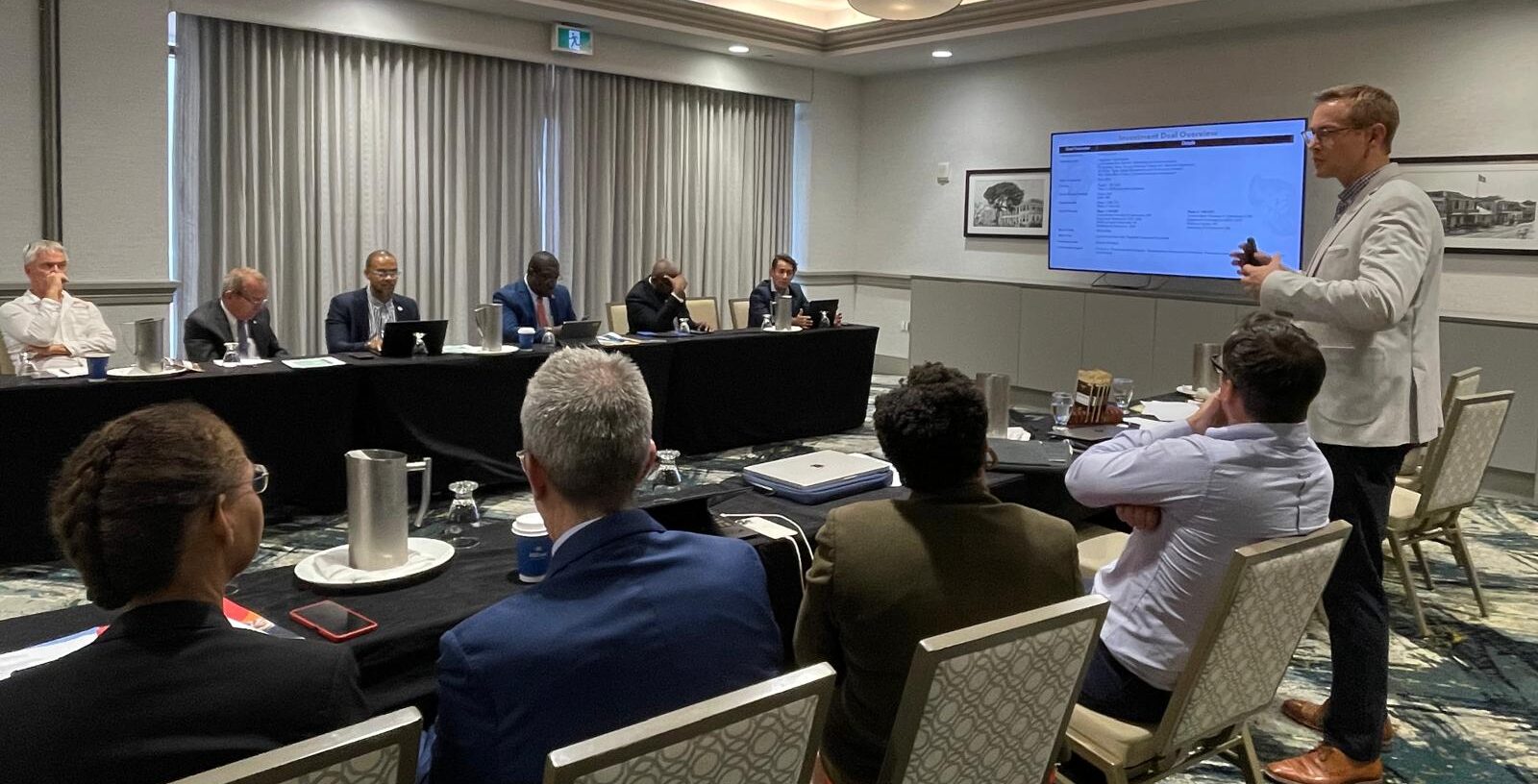
This week, Bridgetown, Barbados, played host to a landmark high-level gathering that brings together regional policymakers, global institutional investors, and international development stakeholders to chart a new path for financing the Caribbean’s food systems, with a sharp focus on unlocking long-term equity investment and positioning the agri-food sector as a core driver of inclusive growth and regional climate and food resilience.
Organized under the umbrella of United Nations development frameworks, the Food Systems Investment Forum carried the official theme “Mobilizing Equity Capital for Resilient Food Systems in the Caribbean.” Attendees included cabinet-level agriculture ministers and senior government officials from every corner of the Caribbean region, alongside senior representatives from multilateral financial institutions, global private investment funds, and leading international development agencies. The gathering was crafted to advance a collective vision of systemic transformation for Caribbean food systems through targeted, investment-led strategies, moving beyond traditional policy-focused dialogue to directly connect capital providers with bankable projects.
The opening plenary session, titled “From Policy to Capital Deployment,” centered on the urgent need to address the persistent financing gap that has held back the region’s food sector, and to clear pathways for much greater private sector participation in building competitive, resilient food systems.
In his opening address to delegates, Simon Springett, United Nations Resident Coordinator for Barbados and the Eastern Caribbean, outlined the deep structural challenges that continue to hamper food system development across the Caribbean. He explained that existing investment flows are badly misaligned with the sector’s needs: most current financing relies heavily on conditional grants and high-interest debt, while long-term patient equity capital remains exceptionally scarce. Springett added that most private capital flowing into the Caribbean is disproportionately directed to low-productivity sectors such as real estate, rather than the high-impact productive segments of the food economy that drive long-term shared growth.
He called on regional governments to streamline regulatory frameworks and build stronger enabling environments for private food system investment, while urging global and regional financiers to recognize the untapped potential spanning the full food value chain, from primary agriculture and sustainable fisheries to value-added food processing and integrated cold chain logistics.
Springett told delegates, “The opportunity is here. Capital exists. But they are not connected in a structured and meaningful way. This forum is designed to change that …through a different kind of conversation – one that starts with capital: how investors assess risk, what makes a project bankable, and what actually unlocks deals.”
John Morris, Chairman of International Asset Management and Managing Partner of the regional CaribGROW Fund, echoed that framing, noting that well-established Caribbean food sector enterprises with consistent revenue streams, proven leadership teams, and solid regional market share are fully capable of delivering competitive, risk-adjusted returns for global and local investors.
“The challenge is not the opportunity—the challenge is capital,” Morris emphasized.
Drawing an analogy to the U.S. professional basketball’s New York Knicks to illustrate his point, Morris compared Caribbean capital markets to a team sport, one that depends on intentional collaboration across a diverse ecosystem of stakeholders. While he credited multilateral organizations, development finance institutions, regional development banks, and national governments for laying the foundational policy and infrastructure to support growth, he argued that patient equity investment remains the critical missing piece of the regional food system financing puzzle.
“Equity is where ownership, wealth creation, and wealth retention live,” Morris explained, warning that without access to this form of capital, local food businesses struggle to scale up operations and remain chronically vulnerable to acquisition by foreign entities that extract wealth from the region. He added, “We take minority stakes, so families retain control and wealth stays in the region.”
Closing the opening plenary segment, Dr. The Honourable Shantal Munro-Knight, Barbados’ Minister of Agriculture, Food and Nutritional Security, highlighted the widespread enthusiasm and shared commitment among all delegates gathered for the forum.
“This is an acknowledgement that we have come here to do something big—and that is important. I also see in the room, people of like minds who I do not have to convince of the importance of the conversation, and the importance that dialogue around food systems has moved beyond just production,” Munro-Knight said.
The minister framed the regional food system as one of the Caribbean’s most promising untapped avenues for both broad-based economic development and deep social transformation. She called on both policymakers and investors to recognize the far-reaching, cross-cutting potential of investing in robust local and regional food systems.
“If you want an equation that answers one of the most fundamental challenges facing this region—our food security—while also enabling social and structural economic transformation, then you’re in the right place at the right time,” she declared.
Drawing on the core principles of the global Bridgetown Initiative, which advocates for reform of the international development finance system to better support climate-vulnerable small island developing states, Munro-Knight stressed that addressing current food system challenges requires innovative cross-sector partnerships, equitable participation in decision-making, and new approaches to structuring investment capital that align with regional needs.
“Food systems are about big things—logistics, agro-processing, cold chains, digital transformation, technology in agriculture. These are investable opportunities, big investable opportunities,” she emphasized, extending an open invitation to private sector partners to collaborate with regional governments. “We’ve come to the table—meet us with your capital,” she implored.
Unlike traditional industry conferences that prioritize discussion over action, the one-day forum was intentionally structured to facilitate direct, deal-focused engagement between government leaders and investment providers. The agenda included interactive investor roundtables, deep-dive thematic working groups, one-on-one bilateral deal meetings, and formal presentations of pre-vetted investment-ready projects, all designed to speed up transaction closing and build durable new cross-sector partnerships.
Core priorities for the gathering included expanding equitable access to long-term equity capital, developing blended finance structures that de-risk private investment, and advancing market-centered approaches to strengthening food systems while advancing progress on the United Nations Sustainable Development Goals. Organizers noted that these coordinated efforts aim to unlock the full economic potential of the Caribbean food sector, while simultaneously building greater regional resilience to climate shocks and global food price volatility.
In a closing announcement that capped off the day’s deliberations, the United Nations launched an official Deal Book: a curated portfolio of pre-vetted projects that collectively represent $320 million in ready-to-invest opportunities across the full spectrum of Caribbean food systems. The publication is intended to preserve the momentum generated by the forum, facilitate ongoing deal-making activity after the event concludes, and encourage new long-term partnerships between global investors and local food enterprises across the Caribbean region.