标签: Dominica

多米尼克

  • Community hygiene at Silver Lake receives boost with rehabilitation of washroom facility

    Community hygiene at Silver Lake receives boost with rehabilitation of washroom facility

    The small, close-knit community of Silver Lake in Roseau, Dominica, is celebrating a long-awaited upgrade to its core public infrastructure: a fully rehabilitated public washroom facility, delivered at a total project cost of over EC$33,000. The transformative project was spearheaded by a collaborative partnership between the Rotary Club of Dominica and the Community Policing Team of the Commonwealth of Dominica Police Force, turning a crumbling, decades-old facility into a modern, hygienic public space built to serve local families for generations, according to an official statement released by the Rotary Club.

    First constructed in 1982, the original washroom had suffered from decades of wear and tear, leaving it badly in need of comprehensive renovations long before the project broke ground. The successful restoration is more than just an infrastructure upgrade—it reflects a shared commitment among partnering organizations to lifting quality of life, upholding public dignity, and advancing community health in one of Roseau’s most active neighborhoods. Last Thursday, community members, senior government officials, and police representatives gathered for an official handover ceremony to mark the completion of the milestone project.

    During the ceremony, Honourable Rayburn Blackmoore, Dominica’s Minister for National Security and Legal Affairs, commended the cross-sector collaboration as a blueprint for effective civic action. “This is exactly how partnerships between civil society and public institutions should work—delivering real, tangible improvements that directly benefit everyday citizens,” Blackmoore remarked. Honourable Chekira Lockhart-Hypolite, Parliamentary Representative for Roseau South, echoed that praise, emphasizing that strategic investments in local community infrastructure lay the foundation for stronger, more resilient neighborhoods. Police Commissioner Lincoln Corbette also reaffirmed the Dominica Police Force’s ongoing commitment to rolling out community-centered public safety and development initiatives across the island.

    Rotary Club of Dominica’s President expanded on the deeper meaning of the project beyond construction work. “This is not just a project of bricks and mortar. This rehabilitation is about restoring dignity, protecting public health, and nurturing shared community pride for every resident of Silver Lake,” the President said.

    The handover event saw high turnout from local residents, many of whom shared open gratitude for the much-needed upgrade to a public amenity they use daily. Attendees also noted that the project aligns perfectly with the decades-long public service mission of the Rotary Club of Dominica, which has operated continuously since it received its official charter in 1974. The club forms part of Rotary International District 7030, a regional network that stretches across the Caribbean from St. Kitts to Suriname, uniting more than 3,200 Rotarians across 75 local member clubs all committed to community development work.

    With the revamped washroom now open and operational, Silver Lake residents are set to enjoy cleaner, safer, and more dignified living conditions. The successful outcome of the project stands as a powerful reminder of what can be accomplished when civil society organizations and public institutions work together toward a shared community goal. Those seeking additional information on the Rotary Club of Dominica and its ongoing projects can visit the organization’s official website at www.rotary-dominica.org.

  • Roseau Enhancement Project advances with supervision contract award

    Roseau Enhancement Project advances with supervision contract award

    The Commonwealth of Dominica has marked a key milestone in the ongoing transformation of its capital city, officially announcing the award of a multi-million-dollar consultancy contract for the second phase of the landmark Roseau Enhancement Project.

    The contract, totaling $2,246,264 USD, has been granted to the Saudi Arabia Consulting Engineering Office (PACE), which will carry out the work in partnership with locally based Corisav Inc. According to an official statement released by the Office of the Prime Minister, the procurement process for this engagement was carried out in full compliance with the funding regulations set by the Saudi Fund for Development (SFD), the primary backer of the infrastructure initiative.

    Under the SFD’s rules, bidding was limited to Saudi engineering firms or joint ventures pairing Saudi entities with local Dominican businesses. The competitive process used a Quality and Cost-Based Selection evaluation framework, and after review of the two submitted proposals, the PACE-Corisav partnership was selected as the winning bidder.

    The consultancy work will extend over a 42-month timeline, structured into three distinct phases. The first six-month phase will focus on completing detailed design reviews for the planned street rehabilitation works and providing dedicated support for the upcoming procurement of main civil construction contracts. The second, 24-month phase will involve full-time on-site supervision of all construction and road upgrade activities. The final 12-month phase will see the consultancy provide ongoing oversight throughout the statutory defects liability period, ensuring all completed works meet required performance and quality standards.

    Seven of Roseau’s most high-traffic major streets are targeted for comprehensive rehabilitation under this phase of the project: Independence Street, Bath Road, Cork Street, Great George Street, Virgin Lane, River Street, and King George V Street. The work will focus on upgrading the aging road infrastructure that forms the backbone of the capital’s transportation and commercial networks.

    In its official statement, the Office of the Prime Minister emphasized that the independent technical oversight provided by the consultancy team will guarantee that all rehabilitation works adhere to the highest international engineering and construction standards. This aligns with the Dominican government’s broader long-term vision to redevelop Roseau into a modern, climate-resilient capital city that prioritizes pedestrian accessibility and improved quality of life for both residents and visitors.

  • Lucy Belle-Matthew, sworn-in as Roseau mayor, outlines Council priorities

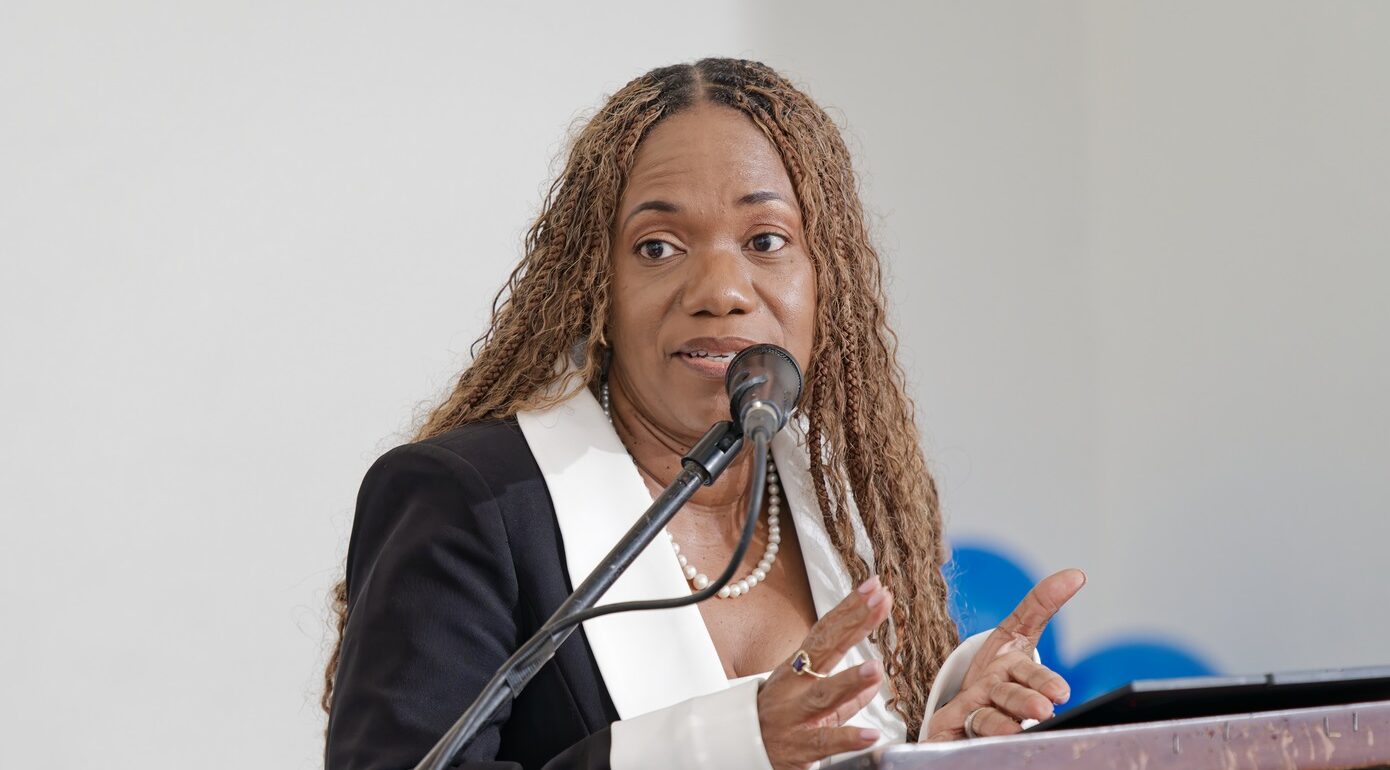
    Lucy Belle-Matthew, sworn-in as Roseau mayor, outlines Council priorities

    On a formal Monday swearing-in ceremony, Lucy Belle-Matthew took office as the new mayor of Dominica’s capital city, Roseau, laying out a clear, action-focused policy agenda centered on three long-standing urban challenges: inadequate sanitation, unregulated private property management, and disorderly street vending.

    Belle-Matthew earned her mandate after a competitive March 2026 city council election, where she ran as the representative for Ward 4. She secured a solid victory, polling 408 votes to defeat her challenger Sherman Boston, who garnered 267 votes.

    In her first official inaugural address to the city and its residents, the new mayor opened with pressing property regulation issues, emphasizing that owners of vacant lots and crumbling, dilapidated buildings must bring their holdings into compliance with existing city council rules. “We are appealing to the owners of such properties to take immediate action to comply with Council’s regulation,” Belle-Matthew stated. To strengthen the city’s ability to enforce these rules, she revealed the council plans to propose revisions to local property tax legislation, adding that the council’s regulatory authority must be acknowledged and upheld across the municipality. “There cannot be full and effective representation without your commitment to pay your taxes and fulfilling your obligation to Council,” she added.

    Belle-Matthew also took a moment to praise the national Government of Dominica for its ongoing investments in upgrading municipal housing stock, noting that the national initiative has already delivered tangible improvements to living standards for hundreds of local families. She called on private property owners and all community members to partner with the city council to advance local sanitation improvement projects, framing public cleanliness as a shared responsibility rather than solely a government task.

    Shifting focus to urban public space management, the mayor called out unregulated street vending as a growing public safety concern, particularly in Roseau’s densely populated city center, where vendors have occupied sidewalks and public roadways. “Vending in some areas of the city has become a major hazard due to the congestion and disorderly vending practices,” she explained. Rejecting heavy-handed crackdowns that would threaten vendors’ livelihoods, Belle-Matthew outlined a balanced approach: the city will restructure vending locations to restore public access to sidewalks and streets, but will offer existing vendors the option to relocate to available, properly zoned space at the Roseau Market, where they can continue operating their businesses without disruption. “This situation cannot be allowed to continue. We will seek to address this issue in an orderly manner,” she said. “If you are relocated to the Roseau market, we want you to make a good living by applying your trade. But we have a statutory duty which we must execute.”

  • Florida student arrested for group chat ‘joke’ about Netanyahu containing alleged bomb threats

    Florida student arrested for group chat ‘joke’ about Netanyahu containing alleged bomb threats

    A 23-year-old Florida International University student has landed in legal custody after what she claims was a poorly judged joke sparked widespread panic and triggered a swift law enforcement response. Gabriela Saldana was taken into police custody on April 16 following reports from multiple members of a 215-person WhatsApp group, where she had shared messages referencing potential explosive threats at a campus venue, according to MSN reporting.

    The troubling messages were shared during a group discussion about an upcoming event scheduled to take place on April 10 at the Ocean Bank Convocation Center, the university’s major indoor event facility. Beyond the venue reference, Saldana’s messages included a mention of Israeli Prime Minister Benjamin Netanyahu, as well as controversial political imagery tied to the university’s Capstone program. Law enforcement officials interpreted the term “bonbons,” used in one of Saldana’s messages, as coded language referring to bombs, alongside other suggestive phrasing included in her posts.

    Alarmed by the threatening content, multiple group members rushed to contact local law enforcement to report the messages, leading directly to Saldana’s arrest later that month. During her initial bond court hearing held the same day of her arrest, Saldana defended her actions, telling the court the entire incident was nothing more than a “dumb joke,” local Miami outlet WSVN-TV confirmed.

    Presiding bond court judge Mindy S. Glazer acknowledged Saldana’s statement that the exchange was intended as humor, but pushed back on the claim in court remarks. “To an objective person it is not a joke,” Glazer stated, noting that threatening language tied to potential violent harm creates legitimate public fear regardless of the sender’s intent. As of the latest reporting, no further updates on Saldana’s upcoming court proceedings or potential charges have been publicly released.

  • Dominica revokes citizenship of second son of Iranian political adviser

    Dominica revokes citizenship of second son of Iranian political adviser

    The Caribbean island nation of Dominica has taken the unusual step of revoking citizenship from Abolfazl Shamkhani, the younger son of the late Iranian political adviser Ali Shamkhani. This move marks the second time in eight months that a member of the high-profile Shamkhani family has lost their citizenship obtained through Dominica’s controversial Citizenship by Investment (CBI) program.

    According to an official document obtained by the Organized Crime and Corruption Reporting Project (OCCRP), the revocation order was formally signed on March 27, 2026 by Daren Pinard, Dominica’s State Minister. Dominican authorities have formally accused Abolfazl of failing to disclose critical material information when he secured citizenship through the CBI pathway back in 200, applying under the false alias “Sami Hayek”. Under local regulations, Abolfazl retains the right to file a formal request for an official inquiry into the revocation order within a 25-day window from the notification date.

    This action follows a nearly identical decision taken against Abolfazl’s older brother, Hossein Shamkhani, who was stripped of his Dominican citizenship back in August 2025. As first reported by Dominica News Online at the time, Hossein had also obtained his citizenship through the same investment program operating under an assumed name, “Hugo Hayek”. Just weeks before Hossein’s citizenship was revoked, Western governments had imposed sweeping sanctions on him, alleging that he oversaw a multibillion-dollar transnational oil smuggling network that generates illicit revenue for both the Iranian and Russian governments.

    The U.S. Treasury’s Office of Foreign Assets Control (OFAC) has publicly outlined that members of the Shamkhani family systematically use investment-based citizenship programs to obtain second passports, allowing them to hide their direct connections to Iran while carrying out large-scale international commercial activities that violate global sanctions regimes.

    An independent OCCRP investigation published in March 2026 uncovered that the two brothers collectively own at least four high-end luxury villas in Dubai, with a combined estimated value of nearly 29 million U.S. dollars. All of these properties are registered under the false Dominican aliases the brothers used to obtain their citizenship. Cross-referenced corporate records also link the alias “Sami Hayek” to a Cyprus-based investment fund, while both brothers share ties to a Turkish chemical manufacturing company that was later added to OFAC’s sanctions list.

    On March 6, 2026, the U.S. Department of Justice filed civil forfeiture complaints seeking to seize more than 15.3 million U.S. dollars in assets that prosecutors have linked directly to the Shamkhani network. Court documents name Abolfazl as the manager of multiple corporate entities tied to his older brother’s sanctioned operations, though Abolfazl himself has not yet been personally sanctioned or criminally charged by U.S. authorities.

    In a policy shift implemented just days before Abolfazl’s revocation order was signed, Dominica moved to suspend all new citizenship applications from Iranian nationals through its CBI program, with the new rule taking effect on March 24. Under the updated policy, Iranian nationals are only eligible to apply for CBI citizenship if they have maintained residency outside Iran for a minimum of 10 consecutive years, hold no tangible assets within Iranian borders, and have not conducted any commercial activity with Iranian entities over that period.

    Since June 2024, Dominican authorities have revoked a total of 68 CBI passports on the grounds of fraud or intentional misrepresentation on applications. Data shows that Iranian applicants account for six percent of these revocation cases.

    Dominica’s CBI program, which grants citizenship in exchange for qualifying investment into the country, has recently faced growing international pressure and heightened scrutiny from both the United States and the European Union. In response to concerns over misuse of the program for illicit activity, Washington has implemented new visa restrictions on Dominican citizens traveling to the United States, while Brussels has issued formal warnings that the operation of the program as currently structured could lead to Dominica being removed from the EU’s visa-free travel scheme.

  • United Workers Party mourns passing of former minister Ian Pinard

    United Workers Party mourns passing of former minister Ian Pinard

    The Caribbean nation of Dominica is in national mourning this week following the unexpected death of former senior government official Ian Pinard on Friday, April 17, 2026. The United Workers Party (UWP), the political group with which Pinard was affiliated, has released an official statement extending deep sympathy to the late statesman’s family, friends and loved ones after his sudden passing.

    In the party’s public message, representatives confirmed that the entire UWP organization stands with the Dominican people in grieving Pinard’s loss. “The party joins the nation in mourning his passing and offers thoughts and prayers to all those grieving during this difficult time,” the statement reads.

    Details released by the government of Dominica outline Pinard’s decades-long commitment to public service, most notably his two terms as Parliamentary Representative for the Soufriere constituency. His elected office covered four coastal communities across the southern part of the island: Soufriere, Scotts Head, Gallion and Pointe Michel.

    Pinard launched his political career in national government after winning his first parliamentary election in 2005. Almost a decade later, he secured a second term in the 2014 general election. Throughout his tenure as a people’s representative, he consistently advocated for the needs and interests of his constituency at the national level, pushing for infrastructure investment and community development projects that benefited local residents.

    Beyond his role as an elected representative, Pinard held two key appointed positions in Dominican government. He began his executive service as a Parliamentary Secretary within the Ministry of Education, where he supported policy implementation for the island’s public education system. He was later promoted to the cabinet post of Minister for Public Works and Ports.

    In this senior cabinet role, Pinard oversaw all island-wide road infrastructure projects and national port operations. His leadership was critical to the ongoing management and maintenance of Dominica’s core transportation networks, a responsibility he carried steadily even during periods of national recovery and post-disaster reconstruction following extreme weather events common to the Caribbean region.

  • Community policing efforts make real impact in Silver Lake

    Community policing efforts make real impact in Silver Lake

    In a compelling demonstration of how collaborative, community-centered policing can drive meaningful long-term change, the Community Policing Unit of the Commonwealth of Dominica Police Force (CDPF) has announced consistent, measurable gains in its ongoing work to strengthen the Silver Lake neighborhood.

    The transformative effort launched in August 2025, when the Deputy Chief of Police led a cross-departmental delegation of CDPF officers, joined by Community Policing Unit members, to hold direct, open-door conversations with Silver Lake residents. The core goal of that first visit was to break down barriers between law enforcement and local residents, build mutual trust, and map out the most pressing challenges facing the community.

    By the end of 2025, the initiative had evolved beyond formal discussions to foster genuine personal connection across the neighborhood. To mark the holiday season, organizers hosted a Christmas Social for local young people, an event made possible by contributions from Gloria Walsh, Fire Officer Relda Andre, local residents, and a cohort of generous community sponsors. Fifty children between the ages of 6 months and 12 years old attended the gathering, where each received a holiday gift and joined in a day officially described as full of unbridled joy and wide smiles.

    That early momentum seamlessly carried into 2026, with new projects and institutional improvements coming to fruition just months into the new year. In February, the Community Policing Unit announced a partnership with the local Rotary Club, which agreed to fully cover the cost of rehabilitating Silver Lake’s aging, underfunded public convenience facility. Concurrent to that infrastructure project, stakeholders also formally established a permanent Silver Lake Community Policing Committee, a local body tasked with improving inter-group coordination, deepening positive ties between residents and law enforcement, and boosting overall public safety across the neighborhood.

    Additional work to revitalize the neighborhood’s public spaces is already in motion. Through a new collaboration with Harris Paints, local partners are moving forward with plans to repaint a local apartment building and remove unsightly, unauthorized graffiti from public structures. Organizers note that these cosmetic improvements will do more than upgrade the area’s visual appeal—they are intended to nurture a greater sense of collective pride among long-time and new residents alike.

    The most recent milestone came on April 16, 2026, when the fully refurbished public washroom facility was officially handed over to the Silver Lake community during a public ceremony. CDPF officials emphasized that the entire project grew from a routine foot patrol conducted by Community Policing Unit officers alongside other CDPF ranks. During that regular walk through the neighborhood, officers identified the critical unmet need for updated public facilities, and subsequent outreach to the Rotary Club developed into a full funding and implementation partnership, with the civic organization covering all costs for the rehabilitation work.

    Looking ahead, the CDPF and its community partners are already turning their attention to supporting Silver Lake’s next generation. Planning is well underway for a structured youth mentorship program in the area, which will provide targeted guidance to young residents, help build strong personal character, and steer local young people toward positive, productive long-term life paths.

    Reflecting on the cumulative progress across all initiatives, the CDPF summed up the core philosophy driving the work: “Together, we are not just policing communities—we are building them.”

  • IICA pledges support for agricultural transformation in Honduras following high-level talks

    IICA pledges support for agricultural transformation in Honduras following high-level talks

    On an official visit to Honduras’ capital Tegucigalpa, Inter-American Institute for Cooperation on Agriculture (IICA) Director General Muhammad Ibrahim has reconfirmed the intergovernmental organization’s unwavering commitment to advancing the Central American nation’s agricultural development, following high-level discussions with top Honduran government leaders.

    Invited to the country by Honduran President Nasry “Tito” Asfura, Ibrahim’s visit comes at a pivotal moment for Honduras, which has identified its agricultural sector as a core engine for broad-based economic growth and improved social prosperity, especially for rural populations. The talks centered on two core priorities: strengthening the country’s farming industry and building more robust, inclusive national food systems.

    During their meeting at the Presidential Palace, Ibrahim laid out IICA’s full readiness to deliver targeted technical assistance to drive the modernization of Honduras’ agricultural sector. The two sides explored multiple pathways for IICA support, including technical knowledge sharing, skills training programs for local producers, policy advisory services, and cross-border resource mobilization to reshape the country’s food systems for greater sustainability and equity.

    IICA Director General also updated President Asfura on the institute’s ongoing global and regional work to integrate cutting-edge science, innovative practices, and digital technology into agricultural production, with the goal of building more climate-resilient food systems. He emphasized that these initiatives align directly with the Honduran government’s national strategic goals: eradicating food insecurity, improving public nutrition outcomes, and strengthening the country’s overall food sovereignty.

    Cross-border agricultural threats emerged as another key topic on the meeting’s agenda. The leaders highlighted the urgent need for coordinated action to combat transboundary pests and diseases that threaten key Honduran export and staple crops, including New World Screwworm in cattle herds, Fusarium Tropical Race 4 (TR4) that impacts banana plantations, avian influenza, and African Swine Fever. Both sides agreed that deepened collaboration in biosecurity monitoring and response is critical to protecting Honduras’ agricultural output and rural livelihoods.

    Climate-related environmental challenges, particularly the prolonged dry conditions driven by the El Niño weather pattern and their severe impact on domestic food production, also took up significant space in the discussions. Ibrahim noted that IICA already maintains an active partnership with the Honduran government to address these impacts, including the rollout of targeted incentive programs known locally as “bonos”, which support smallholder and commercial producers to adopt climate-smart technologies, expand sustainable coffee production, and improve livestock farming practices. According to the IICA statement, President Asfura expressed strong enthusiasm for the institute to continue expanding this successful program.

    The talks also covered concrete, actionable steps to mitigate drought impacts, such as upgrading national irrigation infrastructure, expanding smallholder access to high-quality adapted seeds and affordable fertilizers, and improving seasonal planting cycle planning to align with shifting rainfall patterns. President Asfura also shared his strong support for a proposal to construct a national seed processing facility, which would guarantee a stable, reliable supply of high-quality seeds for Honduran producers, and backed Ibrahim’s ongoing work to strengthen the country’s entire agrifood value chain. President Asfura’s Chief of Staff, Juan Carlos García, was in attendance for the high-level discussions.

    Following his meeting with President Asfura, Ibrahim held separate working talks with Moisés Abraham Molina, Honduras’ Secretary of Agriculture and Livestock (SAG). Their discussion focused on expanding existing technical cooperation frameworks and scaling up resource mobilization efforts to directly benefit local smallholder and family farmers. The two leaders also reviewed potential new agricultural development initiatives that integrate sustainable management of Honduras’ abundant forest resources, and finalized coordinated preparedness plans for the drought expected to impact the country in the coming months.

  • OP-ED: International Day of Women in Industry – Celebrating how Caribbean women are shaping the future of industry

    OP-ED: International Day of Women in Industry – Celebrating how Caribbean women are shaping the future of industry

    On April 21, 2026, the global community will mark a historic milestone: the first-ever official observance of the International Day of Women in Industry (IDWI). This new international commemoration was established to honor the profound, often overlooked contributions women make to industrial progress around the world, while spotlighting how their unique leadership, creative innovation, and unwavering resilience are reshaping modern economies, advancing technological breakthroughs, and accelerating the urgent global transition to green and digital systems.

    The path to IDWI began at the 2025 Global Industry Summit in Riyadh, Saudi Arabia, where the 21st Session of the General Conference of the United Nations Industrial Development Organization (UNIDO) adopted a landmark resolution proclaiming the new international day. For the Caribbean region in particular, the inaugural observance carries outsized significance. Across every Caribbean nation, women are already leading transformative change across a wide spectrum of industrial sectors: from traditional manufacturing and agro-processing to fast-growing renewable energy, digital services, creative industries, and cutting-edge emerging technologies. Despite these far-reaching impacts, women’s contributions to regional industrial growth have long remained underrepresented and undercelebrated. This first IDWI serves as both a tribute to their existing achievements and a platform to amplify the diverse, solution-driven work that women already lead across the region.

    To kick off the first global observance, UNIDO’s Vienna headquarters will center women’s role at the heart of modern industrial transformation, with a focus on three defining global shifts: artificial intelligence integration, the green and digital transition, and the evolving future of work. High-profile gathering will bring together senior policymakers, private sector CEOs, and global development partners to showcase actionable policies, cross-sector partnerships, and innovative approaches that speed up progress toward gender-inclusive industrial development. The event will also shine a light on a critical, underaddressed barrier: gaps in gender-disaggregated data that hide the full scope of women’s industrial contributions. Attendees will explore how targeted data collection and AI-powered analytical insights can create more effective, equitable industrial policy.

    These conversations hold particular weight for Small Island Developing States (SIDS) such as those that make up the Caribbean community. Caribbean economies face a unique set of structural vulnerabilities, from the growing impacts of climate change to limited domestic economies of scale, all of which demand new innovation, enhanced competitiveness, and greater resilience to survive and thrive. Already, women across the region are pioneering context-specific solutions to these challenges, confirming a broader global truth: when women are empowered to lead, industries become more inclusive, more dynamic, and better prepared for future disruptions. That said, persistent systemic barriers continue to hold women back. Women in the region still face unequal access to business financing, lower participation rates in STEM education and careers, stark underrepresentation in senior industrial leadership roles, and deep-rooted social norms that devalue women’s participation in industrial work.

    IDWI was designed to bring these interconnected challenges to the forefront of global, regional, and national agendas. It encourages governments and civil society organizations across the world to host public events, policy dialogues, industry exhibitions, and public awareness campaigns that highlight these gaps and advance actionable solutions. The UNIDO-Barbados Global SIDS Hub for Sustainable Development is at the forefront of supporting these efforts across the Caribbean Community (CARICOM). Through years of work with national governments, local institutions, and private sector stakeholders, UNIDO has proven that when women and girls gain equal access to skills training, critical resources, and economic opportunity, they do not only succeed as individuals – they lift entire industries to new heights. This is why boosting visibility for women’s industrial work is such a critical priority.

    Through global advocacy campaigns, UNIDO will amplify the stories of women transforming industries in every corner of the world. For the Caribbean region, the organization will specifically highlight women working in manufacturing, digital innovation, climate resilience engineering, and industrial entrepreneurship whose work is building a more robust, sustainable regional industrial future.

    Celebration of women’s existing contributions is a critical first step, but the co-authors of this commentary – Stein R. Hansen, Director of the UNIDO-Barbados Global SIDS Hub for Sustainable Development and UNIDO Representative to Barbados and CARICOM, and Simon Springett, United Nations Resident Coordinator for Barbados and the Eastern Caribbean – emphasize that celebration alone is not enough. The inaugural IDWI must serve as a catalyst for concrete, binding commitments from global and national stakeholders: increased targeted investment in women-owned industrial enterprises; expanded, accessible career pathways for girls and women in STEM fields; improved gender-disaggregated data to guide more equitable industrial policy; and supportive workplace and financing ecosystems that enable women to advance to senior leadership roles across every segment of industrial value chains.

    These steps are not just gender equity issues – they are critical to building competitive, sustainable, and inclusive economies across the Caribbean. April 21, 2026, is both a time to honor the women already shaping modern industry and a reminder that the future of industry, both regionally and globally, depends on delivering full and equal participation for women. The Caribbean already has the talent, vision, and drive to build a more equitable industrial future. What is needed now is targeted, sustained commitment from global and national leaders to turn vision into action. IDWI is a clear call to action for all stakeholders – and the time to answer that call is now.

  • CARICOM marks 10th Girls in ICT Day with focus on empowering young women in tech

    CARICOM marks 10th Girls in ICT Day with focus on empowering young women in tech

    As the 10th annual International Girls in ICT Day approaches on April 23, 2026, the CARICOM Girls in ICT Partnership is finalizing preparations for a full slate of cross-regional activities designed to expand opportunity for young women in the digital space.

    Founded to address persistent gender imbalances in the tech sector, International Girls in ICT Day is observed globally every year, with a core mission of encouraging more girls and young women to pursue academic pathways and professional careers in information and communication technology – an industry that has become the backbone of modern work, global communication, and international commerce.

    This year’s regional celebration, coordinated by the CARICOM Secretariat, centers on the unifying theme: “Empower, Educate, Elevate: Building a Future-Ready CARICOM with Girls in ICT.” The official opening ceremony is scheduled to kick off at 10 a.m. Atlantic Standard Time, with featured addresses from key stakeholders including CARICOM Secretary-General Carla Barnett, youth representative Shakiah Lewis, and International Telecommunication Union representative Cosmas Luckyson Zavazava.

    Event organizers project robust participation from across the 15-nation bloc, bringing together a diverse cross-section of attendees: secondary and post-secondary students, K-12 and college educators, leading tech industry professionals, regional and international development partners, and community organizers. The gathering is intentionally structured to create open forums for authentic dialogue, exchange of lived experiences, and co-creation of actionable strategies to narrow and ultimately close the gender gap in technology and digital-focused careers.

    All day on April 23, a full schedule of virtual programming will be streamed live to global audiences via CARICOM’s official digital channels and the Restore A Sense of I Can (RSC) platform, making the event accessible to participants who cannot attend in person. The lineup of sessions includes a “Youth Spotlight: Next Gen Leaders Speak” panel featuring young women already working in Caribbean tech, a moderated discussion on “Achieving Gender Parity in the Age of AI,” hands-on interactive coding workshops for beginners, and open roundtables that unpack the ongoing systemic and cultural barriers girls and women face when entering and advancing in the ICT sector.

    As the Caribbean Community advances its ambitious regional digital transformation agenda, event organizers emphasized that inclusive initiatives like Girls in ICT Day are critical to ensuring that marginalized groups are not excluded from the benefits of the digital transition. By equipping young women with the confidence and technical skills to thrive in tech roles, the region as a whole strengthens its competitive position in an increasingly digital global economy.

    The CARICOM Girls in ICT Partnership is a multi-stakeholder coalition that brings together representatives from national government ministries, CARICOM’s core institutional bodies and their affiliated partners, international development agencies, youth-led organizations, women’s advocacy groups, and established ICT-focused nonprofits and programs.

    Any individual interested in joining this year’s celebration can register for the event by scanning the QR code included on the official event promotional flyer.