标签: Dominica

多米尼克

  • Ministry of Tourism and DDA to host inaugural Wellness Fair on July 4

    Ministry of Tourism and DDA to host inaugural Wellness Fair on July 4

    The Caribbean island of Dominica is preparing to launch its first ever public Wellness Fair, a landmark event jointly organized by the country’s Ministry of Tourism and the Discover Dominica Authority (DDA) to celebrate the island’s growing reputation as a global nature-centric wellness destination.

    Scheduled for Saturday, July 4, 2026, the full-day event will run from 9:00 AM to 4:00 PM at the UWI Global Campus, and carries the fitting theme “Be Well in Nature”. As the flagship activity of the 2026 Tourism Awareness Program — which itself operates under the broader banner “Wellness by Nature” — the fair will unite a diverse cross-section of stakeholders, from independent wellness practitioners and local wellness businesses to certified service providers and community wellness organizations.

    At its core, the initiative is designed to integrate holistic wellness practices into daily life for attendees, highlighting the interconnected roles of preventive healthcare, regular physical movement, balanced nutrition, intentional stress management, and deep connection to the natural world in supporting long-term well-being. Beyond positioning Dominica as a leading wellness travel hub, the fair also carries a domestic mission: to empower local residents to adopt and sustain healthier daily habits, while showcasing the full breadth of homegrown wellness talent and offerings available across the island.

    Attendees can expect a packed schedule of complimentary activities and experiences tailored to all levels of wellness interest. The lineup includes free basic health screenings, one-on-one wellness consultations with local experts, live fitness demonstrations, high-energy cardio jam sessions, open-level yoga classes, and interactive educational exhibits highlighting the local wellness sector. Unlike many industry events, the fair creates dedicated space for direct conversation between attendees and practitioners, giving visitors the chance to ask questions, explore local products and services, and connect with ongoing wellness resources available year-round in Dominica.

    A key highlight of the event is a series of educational informational sessions led by local specialist speakers. Topics cover the full spectrum of holistic health, including evidence-based nutrition guidance, practical stress reduction techniques, mindfulness practice, chronic disease prevention, physical fitness planning, personal development, and emotional wellness. Organizers designed these sessions to deliver actionable, practical knowledge that attendees can immediately implement in their own daily routines, rather than focusing solely on abstract discussion.

    To add an extra layer of excitement for attendees, the event will also host multiple prize giveaways through public draws. Grand prizes include round-trip airfare donated by two regional carriers, FRS Express des Îles and Sunrise Airways. Additional high-value giveaways include tickets to the 2026 World Creole Music Festival, one of Dominica’s most anticipated annual cultural celebrations, giving winners the chance to experience the island’s iconic cultural scene alongside their wellness-focused visit.

    Marva Williams, CEO and Director of Tourism at the Discover Dominica Authority, emphasized that the fair reflects the shared commitment of the DDA and Ministry of Tourism to embed wellness into both the island’s tourism identity and local community life. “Wellness is one of the defining experiences that sets Dominica apart. Through Wellness Fair 2026, we are creating an opportunity for residents and visitors to connect with local wellness professionals, learn practical ways to improve their well-being and experience the many ways wellness is naturally woven into life on the Nature Island,” Williams said. “We encourage everyone to join us on July 4 at the UWI Global Campus and take advantage of the free services, information sessions and activities available throughout the day.”

    Admission to the 2026 Wellness Fair is completely free and open to all members of the public, with both local residents and traveling visitors welcome to attend all activities. Organizers have noted that spaces in the specialized informational sessions are limited, so interested guests are encouraged to reserve their spots in advance via the official registration link: https://forms.gle/RcWAuJ1aJB6T5HvV8.

  • Some Flow customers continue reporting service issues despite restoration announcement

    Some Flow customers continue reporting service issues despite restoration announcement

    A cross-island telecommunications outage that cut off internet and connectivity service for thousands of customers in Dominica beginning late Sunday has been formally declared resolved by regional provider Flow, though scattered reports of persistent disruptions continued to surface from affected users through Monday afternoon. In an official public update posted to the company’s Facebook page, Flow confirmed that all core telecommunications and broadband services across Dominica had been fully restored, bringing an official close to the widespread connectivity interruptions that stretched into a second day for many local users. This outage was not isolated to Dominica alone: early in the disruption, Flow confirmed the root cause was a suspected critical infrastructure fault that simultaneously impacted service in neighboring Saint Lucia as well. When the fault was first detected, the company rapidly deployed specialized technical teams to locate and repair the issue, a task leadership described as an unusually complex troubleshooting challenge. While the company’s official announcement framed the incident as fully resolved, dozens of customers took to the same social media thread to report their services still remained non-functional hours after the restoration statement went live. One frustrated customer, who noted their service had been unstable since February and had already suffered an unconnected outage starting the prior Thursday, called out Flow’s long track record in the region to criticize the prolonged disruption. “Still no internet. Latest outage since Thursday. And service has been poor since February. You cannot be serious. In 2026 you have people without a basic utility for DAYS? Your company has been in the Caribbean since the 1870s – you don’t think you can do better?” the user wrote. Other users shared similar complaints: one reported being completely unable to complete outgoing or incoming calls, while another said their service had never been restored at any point after Sunday’s initial outage, expressing deep disappointment with the company’s response. Flow’s community management team directly addressed individual customer complaints in the comments section, issuing formal apologies for the ongoing inconvenience and committing to work one-on-one with every affected user to investigate unaddressed issues and resolve lingering outages. As of early Monday afternoon, the mixed picture of formal full restoration from the provider and ongoing connectivity problems for subsets of customers across parts of Dominica highlighted gaps in the repair process following the cross-border infrastructure fault.

  • UWI to host regional forum examining Cuba’s ongoing crisis

    UWI to host regional forum examining Cuba’s ongoing crisis

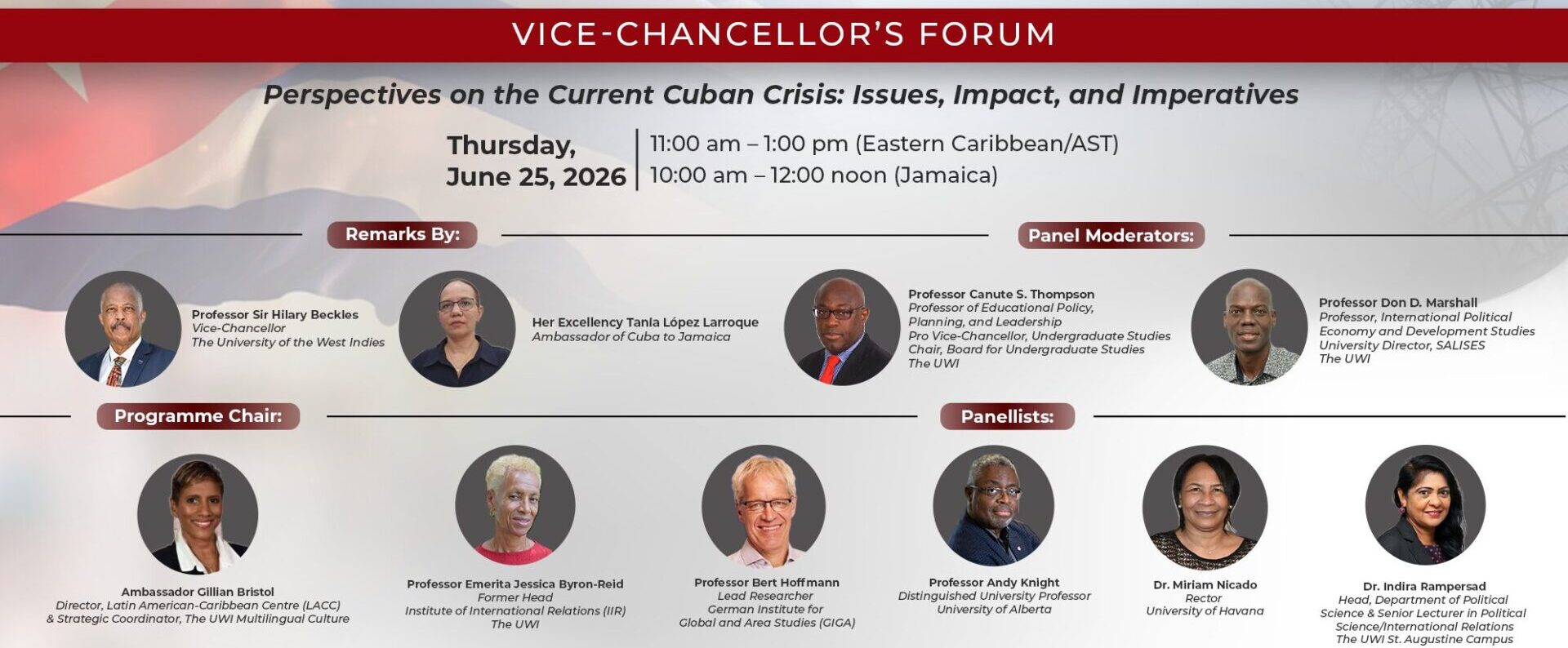
    As regional and global concerns mount over Cuba’s deepening socio-economic struggles, the University of the West Indies (UWI) is stepping into a leading role to unpack the crisis and mobilize collective support for the Caribbean nation. The institution has announced two key initiatives: a high-profile Vice-Chancellor’s Forum dedicated to analyzing Cuba’s current challenges, and a university-wide humanitarian campaign to gather essential supplies for Cuban communities.

    Scheduled for Thursday, June 25, 2026, the hybrid forum titled “Perspectives on the Current Cuban Crisis: Issues, Impact, and Imperatives” will kick off at 11:00 AM Eastern Caribbean/Atlantic Standard Time (10:00 AM Jamaica local time). The in-person portion of the event will be held at the Eon Nigel Harris Council Room within UWI’s Regional Headquarters in Kingston, Jamaica, with a free global live stream hosted on UWItv to enable participation from audiences across the Caribbean and beyond.

    Cuba currently faces a cascade of interconnected socio-economic headwinds: widespread shortages of basic necessities, chronic energy infrastructure disruptions, and sustained macroeconomic pressures that have rippled across the entire Caribbean region. These challenges unfold against a complex backdrop of strained international relations, ongoing domestic policy reforms, long-standing global trade restrictions, shifting tourism trends, and growing migration pressures that make Cuba’s trajectory a critical concern for the entire Caribbean community.

    As the Caribbean’s preeminent regional research and public engagement institution, UWI has positioned itself to foster evidence-based understanding of the crisis, rather than letting it go undiscussed. In addition to the upcoming policy forum, the university has launched the “One-UWI Humanitarian Effort,” a four-week initiative running throughout June that mobilizes staff, students, alumni, and institutional partners across all UWI campuses to raise funds for purchasing urgently needed essential supplies for Cuba.

    The forum is a collaborative effort organized by the Vice-Chancellor’s Office, in partnership with the Office of the Board for Undergraduate Studies, the Latin American-Caribbean Centre, and the Sir Arthur Lewis Institute of Social and Economic Studies. It will assemble a cross-functional panel of leading regional and international experts, spanning academia, diplomacy, and public policy, to examine every dimension of the crisis: its root causes, the scale of its impact, the Cuban government’s existing response frameworks, potential new policy pathways, implications for CARICOM and global diplomatic relations, and actionable opportunities for regional cooperation and targeted support.

    The event will open with formal remarks from Professor Sir Hilary Beckles and Her Excellency Tania López Larroque, with the expert panel featuring Jessica Byron-Reid, Bert Hoffmann, Andy Knight, Miriam Nicado, and Indira Rampersad. Co-moderation duties will be split between Canute S. Thompson and Don D. Marshall, while Gillian Bristol, Strategic Coordinator of the UWI Multilingual Culture Programme, will serve as chair of the live gathering.

    UWI’s Vice-Chancellor’s Forum series has built a 10+ year track record as a trusted platform for rigorous public debate on the most pressing regional and international issues. Under the leadership of Sir Hilary Beckles, the series has consistently connected leading scholars, policymakers, and practicing experts to confront the social, economic, political, and developmental challenges shaping the Caribbean and the wider world.

    UWI has urged all interested members of the public to access the live discussion via the UWItv official website or regional Flow television channels. The event is designed to deliver timely, data-driven analysis, encourage constructive cross-stakeholder engagement, and advance collaborative solutions to one of the most urgent issues facing the Caribbean region today.

  • UWI Five Islands Campus launches Blue Finance and Ocean Innovation event ahead of CHOGM

    UWI Five Islands Campus launches Blue Finance and Ocean Innovation event ahead of CHOGM

    During the 11th Our Ocean Conference held on June 16, a major new initiative to advance sustainable ocean development took center stage. The Centre of Excellence for Oceanography and the Blue Economy (COBE) based at The University of the West Indies (UWI) Five Islands Campus formally announced the launch of its Blue Finance and Ocean Innovation Side Event, which will run parallel to the upcoming Commonwealth Heads of Government Meeting (CHOGM) scheduled for November 2026.

    The launch announcement was delivered as part of a partner progress update during the Commonwealth Ocean Ministers Roundtable, a joint initiative hosted by the government of Kenya and the Commonwealth Secretariat. Dr. Branson Belle, COBE’s Executive Director, opened his address by introducing attendees to the core research and outreach missions of both the UWI Five Islands Campus and the specialized center, before walking stakeholders through the full planned agenda for the November side event.

    Per official event plans, the gathering will kick off with a multi-stakeholder exhibition highlighting cutting-edge ocean conservation projects led by organizations across local, regional and international levels. After the exhibition, participants will gather for an informal, solutions-focused “beachside chat” moderated by Charles Goddard of Economist Impact, which will bring together C-suite executives and senior leaders from the blue finance and ocean innovation sectors to share insights and opportunities. The full program also includes keynote presentations from participating heads of government, before the event concludes with a networking reception.

    Ocean restoration and sustainable ocean governance have long been top policy priorities for the Commonwealth, a bloc that brings together nations with extraordinary stakes in global ocean health. Collectively, Commonwealth member states manage roughly one-third of the world’s total ocean area under national jurisdiction, host 45 percent of the planet’s coral reef systems, and count 25 Small Island Developing States among their ranks — nations that are disproportionately reliant on healthy ocean ecosystems for economic and social stability.

    In 2024, the bloc reinforced this commitment when member nations unanimously adopted the Apia Commonwealth Ocean Declaration, a landmark agreement that binds signatories to take urgent, coordinated action to protect and restore global marine environments. The upcoming side event builds directly on this commitment, organizers said, by creating a dedicated space to connect policymakers, researchers, and financial leaders.

    Against this backdrop, the Blue Finance and Ocean Innovation Side Event aims to reframe global conversations about the ocean, emphasizing its irreplaceable role in supporting inclusive economic growth and livelihoods across all Commonwealth nations. Beyond discussion, the gathering is designed to catalyze new, increased investment in ocean conservation projects and scale up innovative, sustainable blue economy initiatives that balance human use with long-term marine protection. COBE is organizing the event in formal collaboration with two key institutional partners: the Commonwealth Secretariat and the Association of Commonwealth Universities.

  • OPEN LETTER: A message to Dominicans, before it is too late

    OPEN LETTER: A message to Dominicans, before it is too late

    Against the backdrop of a heated by-election for the Marigot constituency seat, an unsigned open letter has sparked national reflection on the declining state of democratic norms and growing social fracture across Dominica. As the island nation navigates a critical crossroads in its political evolution, the author draws urgent attention to a rising tide of intolerance, bitter partisan rivalry and internal strife that has seeped into every layer of Dominican life — from politics and civil society to religious institutions, leaving communities deeply divided along party lines.

    The letter frames this moment as more than a fight for electoral victory or political leadership: it is a generational test of the values that underpin a healthy, functional democracy. “Every nation, every community, and every generation faces moments when its core values are put to the test,” the author writes. “Sometimes these tests arrive through crisis or conflict, sometimes through the quiet accumulation of small, unremarkable choices that slowly reshape a people’s national character.”

    Beyond the mechanics of regular voting, the author argues that democracy is a sustained practice and shared discipline that requires all members of society to uphold the principle that no individual, party or political movement stands above the law, above truth, or above the inherent dignity of every citizen. For this system to thrive, it depends on robust, independent institutions that can withstand partisan pressure and hold themselves accountable: independent judiciaries that rule without political interference, journalists empowered to ask tough questions of power, public servants who prioritize national duty over partisan loyalty, and citizens who recognize that freedom means more than cheering for one’s own side when it wins.

    A core measure of a society’s health, the text notes, is how it treats people who hold different views. It is simple to claim unity when everyone already agrees; the real test comes when we face rivals, critics and opponents who challenge our most deeply held beliefs. The author emphasizes that political opposition does not make someone an enemy: opponents remain fellow citizens who share the same communities, same public spaces, same hopes and same collective future. When we lose sight of that basic truth, politics devolves into a zero-sum war where victory overshadows the common good.

    This framework does not demand moral equivalence between all ideas, nor does it call for silence in the face of corruption, discrimination, abuse of power or violence. Instead, it requires citizens and leaders alike to respond in ways that strengthen democratic institutions rather than tear them down. Long-held political norms, traditions of peaceful power transition, respect for independent bodies, and the willingness to negotiate with people we disagree with are not empty ceremonial gestures — they are the structural framework that holds public trust together. When these norms erode, damage builds gradually: one insult, one distortion of truth, one abuse of power, one refusal to accept a fair electoral result at a time, until one day the public wakes to find that trust in the system has vanished entirely.

    The letter redefines the meaning of public leadership: holding office is not a form of ownership, but a temporary stewardship. Leaders are caretakers of institutions that existed long before they took power, and will continue long after they leave. The conduct, language and restraint of public officials therefore matter deeply: how leaders talk about opponents, judges, journalists, marginalized groups and ordinary citizens sets the standard for acceptable public behavior. When leaders mock, divide, threaten and demean others, they do not only harm individual people — they erode the shared moral standards that keep public life functional, a standard that all citizens ought to uphold.

    Serious policymaking is also a core pillar of responsible governance, the author argues. Decisions that shape national security, public health, education, economic development, climate action and justice cannot be reduced to catchy slogans or tools for personal rivalries. Every policy debate has real, tangible consequences for real families, workers and communities across the country. Responsible governance demands more than winning political arguments: it requires evidence-based decision-making, patience, honesty, and accountability for both successes and failures. Public service is not a performance for social media or rallies — it is a solemn duty.

    On the question of national unity, the author rejects the common idea that unity requires eliminating all disagreement. Instead, unity is a deliberate choice to remain committed to shared rules, mutual dignity and collective responsibility even when disagreements run deep. It rests on the unifying truth that all Dominicans share a common future, whether they like it or not. The author acknowledges that there will always be actors who profit from political division, who gain attention by humiliating opponents, spreading fear and stoking resentment on every issue, but a healthy society cannot survive on perpetual outrage or governance through contempt.

    The harder, more honorable path forward is the one the letter endorses: listening to others without abandoning core convictions, debating differences without throwing away mutual respect, compromising on policy without betraying core principles, and opposing wrongdoing without surrendering one’s own commitment to decency. This collective responsibility does not fall only on elected leaders and public officials, the author stresses — it belongs to every Dominican. Every citizen shapes the tone of national public life: every conversation, every vote, every choice to refuse to spread hate, every act of speaking truth matters.

    The letter closes with a call to reject both cynicism and despair. Cynicism — the belief that all leaders are the same, that nothing can change, that truth does not matter, that institutional reform is impossible and that participation is pointless — may feel comfortable, but it is ultimately an act of surrender. Despair, meanwhile, forgets that every major advance in rights, reform, justice and freedom was won by people who kept working even when progress seemed impossible.

    The author urges all Dominicans to show up for democracy: engage when possible, vote where it matters, speak out against injustice, organize for change, defend vulnerable communities, hold power to account, protect truth, and demand better from both the people you support and the people you oppose. “A society is not held together by perfect agreement,” the author writes. “It is held together by people who understand that disagreement must have boundaries, that power must have limits, that freedom must come with responsibility, and that human dignity must never depend on which side wins.”

    This work of rebuilding democratic trust and unity is not easy, the author acknowledges. It is often slow, frustrating and imperfect. But it is the work that keeps communities free, institutions honest, and hope alive. If Dominicans can do this work together — across their differences, across their disappointments, across their fears — they can build a public life that is worthy of all the people it is meant to serve.

  • OP-ED: Healthy eating, active living – We need action now

    OP-ED: Healthy eating, active living – We need action now

    The Caribbean paradox has long confounded public health experts across the globe: how can a region blessed with an extraordinary abundance of nutrient-dense native foods also bear one of the world’s heaviest burdens of preventable non-communicable diseases (NCDs)? Local markets throughout the archipelago overflow with fresh, vibrant produce, yet rates of diabetes, hypertension, obesity and other life-altering chronic conditions continue to cut lives short across the region. As communities mark Caribbean Nutrition Day 2026, public health advocates are sounding the alarm, framing this year’s theme — “Healthy Eating, Active Living: Promoting Caribbean Foods as Medicine” — as a urgent call to action for regional governments to implement targeted policy changes that expand access to nutritious food, boost public health education and build the infrastructure communities need to thrive.

    A core barrier to improved public health across the Caribbean is the region’s extreme dependence on imported food. Currently, 90% of food consumed across most Caribbean nations comes from overseas suppliers, primarily the United States, China and European markets, leaving the region acutely vulnerable to global supply chain disruptions and food price volatility. Only one country in the region has cracked the code on full food self-sufficiency: Guyana, widely known as the Caribbean’s breadbasket, is the only nation globally that produces enough food across all seven essential food groups to feed its entire population. Leading the CARICOM “25 by 2025” initiative, which sets a target of cutting the regional food import bill by 25% before the end of the year, Guyanese President Irfaan Ali has already overseen a 24% expansion in regional food production, marking significant progress toward the shared goal.

    Other Caribbean nations are stepping up their own efforts to reduce import dependence. The Cayman Islands, for example, imports more than 90% of its total food supply, with 80% of those goods passing through U.S. ports. Rising instability in global supply chains in recent years has spurred a widespread movement to scale up domestic agricultural production across the islands. The Caymanian government’s National Egg Self Sufficiency Target (NEST) programme, which works to build a fully domestic egg production industry, has already reached a 53% self-sufficiency rate as of 2025, on track to meet its 2025 target. Complementing this industrial effort is the popular Backyard Garden initiative, which distributes pre-built grow boxes, seeds and expert planting guidance to participating residents, encouraging household-level food production that builds long-term resilience. Both initiatives fall under the islands’ comprehensive Food & Nutrition Security Policy, which aims to strengthen regional food security and sustainability by 2036. Beyond boosting production, advocates emphasize that making healthy local food affordable is critical to shifting consumption patterns, as low-income communities are often forced to opt for cheaper, ultra-processed imported alternatives that drive chronic disease.

    A common harmful misconception that public health leaders are working to dismantle is the myth that traditional Caribbean cuisine is inherently unhealthy. In reality, native Caribbean staples — from callaloo, breadfruit and cassava to plantains, okra, saltfish and legumes — are packed with essential vitamins, minerals and fiber. The real drivers of poor health, experts note, are oversized portion sizes and the widespread infiltration of ultra-processed foods and high-sodium products into regional diets over the past decades. To shift these harmful habits, advocates are pushing for early, culturally relevant education campaigns in schools and local communities. Two recent initiatives leading this effort are the Caribbean Public Health Agency (CARPHA)’s *Kids Can Cook Too* recipe book, targeted at children, and Guyana’s *Colourful Cooking for Healthy Living*, designed for adult audiences. Both resources aim to empower Caribbean people to prioritize nutritious eating while honoring and preserving centuries-old culinary cultural traditions.

    Alongside dietary change, public health leaders are highlighting the critical role of increased physical activity in reversing rising NCD rates. In an era of widespread digital screen dependency and sedentary work and leisure habits, populations across the region are moving less than ever before. In response, multiple Caribbean governments have launched targeted initiatives to encourage regular movement. This year, the Cayman Islands introduced the 12-week National Movement Challenge, which supports residents to gradually incorporate more physical activity into their daily routines. To build lifelong healthy habits, the focus must start in childhood: in 2023, Barbados launched the Creative Play Initiative, which brings life-sized versions of traditional children’s outdoor games to schoolyards to encourage active play among students.

    This Caribbean Nutrition Month, public health advocate Nayo Swan — a Guyanese public health expert based in the Cayman Islands and member of Healthy Caribbean Youth — is urging regional governments to continue investing in multifactorial, community-centered approaches to preventing preventable NCDs. Caribbean cuisine is far more than a cultural tradition: it is a powerful, underutilized tool for improving public health and wellness. Strengthening local food systems, making nutritious food accessible for all current residents, and building sustainable production models for future generations is the key to unlocking the region’s full health potential.

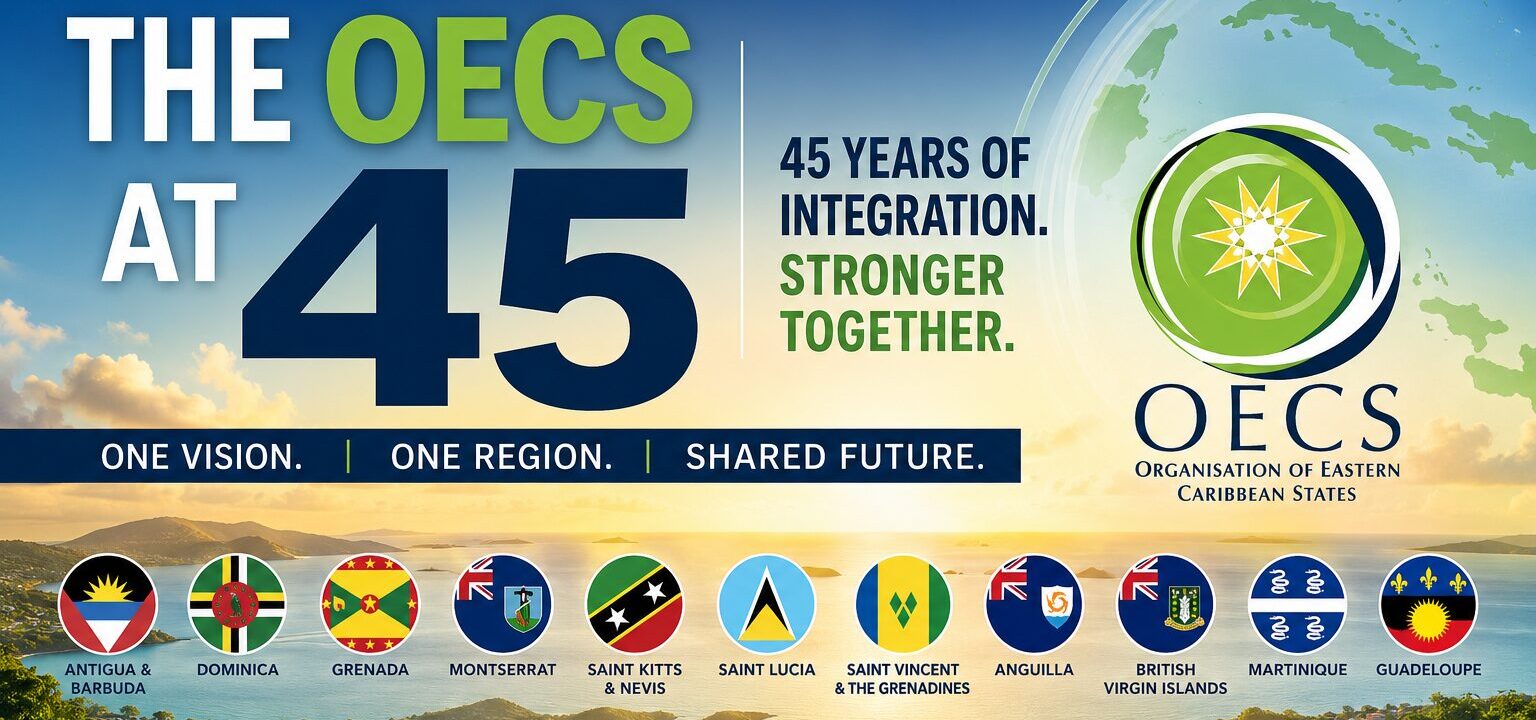
  • COMMENTARY: OECS at 45 – A Caribbean success worth celebrating

    COMMENTARY: OECS at 45 – A Caribbean success worth celebrating

    As the Organisation of Eastern Caribbean States (OECS) marks its 45th founding anniversary this year, it offers a timely opportunity to reflect on the real-world progress delivered by one of the Caribbean’s most ambitious regional integration projects. What started as a compact agreement between a handful of tiny Caribbean territories has grown into a powerful example of what small nations can achieve when they prioritize collective action over individual effort.

    Founded officially on June 18, 1981, under the Treaty of Basseterre, the OECS was built on a deceptively simple core principle: that shared resources, coordinated policy, and unified action would produce far greater outcomes for residents than each territory could secure working alone. Four and a half decades later, that founding premise has been thoroughly proven correct.

    Today, the OECS has expanded beyond its original membership to include 11 territories: Antigua and Barbuda, Dominica, Grenada, Montserrat, Saint Kitts and Nevis, Saint Lucia, Saint Vincent and the Grenadines, Anguilla, the British Virgin Islands, Martinique, and Guadeloupe. Together, this diverse grouping has built one of the most successful and functional models of regional integration in the entire developing world, outpacing many far larger regional blocs in delivering practical, on-the-ground results for ordinary citizens.

    Among the OECS’s most transformative landmark achievements is the 2011 launch of the OECS Economic Union. This framework has unlocked unprecedented freedom for residents of member states: people can now move, live, work, and launch businesses across participating territories with far fewer barriers than existed before. In many key measures of functional integration, the OECS has made more progress than much larger regional bodies with far bigger budgets and broader mandates.

    Another long-standing success story is the Eastern Caribbean Currency Union, overseen by the Eastern Caribbean Central Bank. Through decades of cascading crises — including devastating Atlantic hurricanes, the 2008 global financial collapse, and the widespread economic and social disruptions of the COVID-19 pandemic — the Eastern Caribbean dollar has maintained exceptional stability, protecting the purchasing power and economic security of millions of residents across the bloc.

    Beyond economic and monetary integration, the OECS has also emerged as a leader in coordinated action on a range of cross-border priorities, from public health collaboration and bulk pharmaceutical procurement to systemic education reform and building collective climate resilience. Its coordinated response to shared global challenges has served as a powerful demonstration of the impact small states can deliver when they pool limited resources and specialized expertise.

    The more recent addition of Martinique and Guadeloupe to the grouping has brought a valuable new dimension to regional cooperation, helping bridge long-standing linguistic and cultural divides that have split the Caribbean for centuries. This expanded, more inclusive vision of shared Caribbean identity may ultimately stand as one of the most significant long-term developments in the organization’s 45-year history.

    That said, the OECS is not without unmet challenges and areas for improvement. Public awareness of the organization and its work remains stubbornly low across the bloc: millions of residents benefit from OECS programs and initiatives every day, but few recognize the organization as the driving force behind those gains. Progress on integrating the private sector across member territories has also lagged far behind the advances made in intergovernmental cooperation, and the organization has yet to build robust, sustained engagement with younger generations to secure the future of the regional integration project.

    These challenges will only grow in urgency as the OECS confronts a new wave of pressing 21st-century priorities, from regulating artificial intelligence and advancing digital transformation to shoring up fragile food systems, scaling up renewable energy infrastructure, and accelerating climate adaptation across vulnerable small island territories.

    Even with these unaddressed hurdles, the overall 45-year track record of the OECS remains overwhelmingly positive. The organization has proven that regional integration delivers the greatest value when it prioritizes practical, tangible results over empty, lofty declarations. It has built durable, functional institutions, delivered critical cross-border public services, and expanded economic and personal opportunities for millions of citizens across its member territories.

    At 45 years old, the OECS stands as one of the Caribbean’s most successful examples of cooperation in action. Its decades of experience offer a vital lesson for regional integration efforts across the globe: integration only succeeds when it moves beyond rhetorical rhetoric and delivers concrete, visible benefits to ordinary people. That lesson may ultimately prove to be the OECS’s most enduring contribution to the Caribbean’s ongoing story.

  • OPEN LETTER: Gregor Nassief to the prime minister on why you cannot tell Dominicans to “move on” from the Electoral Commission

    OPEN LETTER: Gregor Nassief to the prime minister on why you cannot tell Dominicans to “move on” from the Electoral Commission

    A long-simmering dispute over the integrity and independence of Dominica’s electoral system has escalated, with prominent local figure Gregor Nassief formally announcing plans to refer longstanding public confidence concerns to regional and international election monitoring bodies after Prime Minister Roosevelt Skerrit repeatedly dismissed calls for reform.

    For decades, Dominican voters and political observers have flagged a consistent set of vulnerabilities that erode trust in the country’s election outcomes. These longstanding issues include bloated voter rolls, questionable voting practices involving long-term overseas residents and transient flown-in voters, insufficient identity verification protocols, widespread reports of vote-buying and campaign finance violations, and uneven enforcement of electoral rules, all compounded by persistent public doubt that the Electoral Commission can act as an impartial referee free from political influence.

    Nassief emphasizes that the independence of the commission is non-negotiable for legitimate elections. Without a publicly trusted body committed to enforcing rules fairly and addressing systemic abuses, disputes will continue to plague every election cycle, and any close result will inevitably face widespread suspicion of manipulation. The 2019 general election, the last fully contested national vote, underscored just how high the stakes of these weaknesses are: official results showed five constituencies – Castle Bruce, La Plaine, Mahaut, Morne Jaune, and Wesley – were decided by margins of less than 8%, where even minor lapses in enforcing residency rules, voter list integrity or anti-bribery laws could swing the final outcome.

    On June 8, Nassief and other stakeholders issued a formal public appeal to Skerrit to support a reset of the Electoral Commission, after public confidence in its impartiality and independence collapsed. The appeal focused on concrete, documented problems rather than unsubstantiated rumors: a more than one-year suspension of voter registration that threatened to disenfranchise new voters ahead of upcoming local elections, the ongoing failure to issue legally required voter identification cards, overt political interference in the commission’s operational space, and premature public framing of an October 14, 2026 deadline for voter confirmation that incorrectly implied the commission had no legal discretion to adjust the timeline.

    Two days later, at a June 10 press conference, Skerrit did not address any of the specific concerns raised. Instead, he dismissed allegations of political interference and eroded public trust as political distractions and “smoke screens”, told voters to proceed with the voter confirmation process as planned, and claimed the issue was “out of my hands”. He also asserted that he represents more Dominicans than any other individual and challenged critics to prove their claims of institutional failure.

    Nassief pushes back against these remarks, arguing that no single political leader – no matter their electoral success – has the right to dismiss valid public concerns out of hand. Confidence in elections cannot be measured by the comfort of the incumbent government, he says; it must be measured by whether voters across all political factions believe the rules are applied fairly, transparently, and without favoritism.

    The facts behind the concerns are unambiguous, Nassief argues: voter registration was indeed suspended for more than 12 months, a period that overlapped with local government elections that locked out newly eligible voters from participating. The voter confirmation process launched with well-documented administrative failures and slow processing speeds. The Registration of Electors Act legally requires the Chief Registering Officer to issue voter ID cards to all approved registered electors, yet thousands of approved voters still wait for their cards to this day.

    Critically, the appeal is not a call for voter boycotts – it is the opposite. Nassief stresses that every eligible Dominican should complete registration and confirmation, but maximum voter participation can only be achieved when the public trusts the process. Voters should not be expected to participate blindly, with questions about fairness, administrative competence and institutional independence brushed aside as irrelevant.

    Claims of political interference are also not baseless, Nassief notes. The Electoral Commission Act enshrines the body as fully independent, not subject to direction or control from any individual or government authority. But public records show repeated instances where Skerrit has spoken on the commission’s behalf, intervened in its operational decisions, defended its legal violations, secured unrequested external support for it, and shaped public expectations of its deadlines and procedures. This consistent blurring of lines between the executive branch and the supposedly independent electoral body is the natural root of public doubt, not unfounded mischief.

    Skerrit’s claim that the electoral process is “out of my hands” is particularly inconsistent with recent history, Nassief argues. On a prior occasion when the government deemed intervention necessary, the commission’s supposed untouchable independence was set aside immediately. Public records confirm that Skerrit stepped in to direct the commission to reinstate birth certificates as a valid form of voter identification in specific cases – a move that had broad public support, but clearly demonstrated that the commission has not asserted its constitutionally mandated independent space. Nassief says it is therefore not credible for the executive to shape electoral procedures informally when it suits political goals, then disclaim any responsibility for restoring public confidence when systemic failures emerge.

    Dominica’s existing legal framework already grants the Electoral Commission broad discretionary authority over voter registration, confirmation, roll revisions, special registration windows and timeline adjustments. The law also specifies that if an election writ is issued mid-confirmation process, a transitional voter roll will be used, and the roll is frozen to changes until after polling day. The House of Assembly Elections Act designates voter ID cards as the primary voting document, with a secondary pathway for voters without cards to prove identity via other official documents and a sworn oath. In short, the law already gives the commission enormous power to shape election outcomes – if the commission is weak, error-prone or distrusted, that power does not reassure voters; it amplifies the risk of unfair results.

    In his June 8 letter, Nassief closed with an appeal directly to Skerrit, writing “As the arbitrator of all things in Dominica, the reset is entirely in your hands. I appeal to you to act.” Skerrit’s June 10 response did not dispute the core facts, acknowledge any institutional failures, or outline a plan to rebuild public trust. Instead, it effectively told the Dominican public to accept the status quo and move forward. Nassief argues that a government cannot demand public acceptance when it has not earned public confidence, and a prime minister cannot claim to speak for all the people while dismissing the concerns that the people are raising.

    Now, after Skerrit’s clear refusal to address the concerns raised across seven consecutive open letters, Nassief is escalating the issue by formally referring the full set of concerns to regional and international election observation bodies, including the Organization of American States, CARICOM, and the Commonwealth Secretariat. This step is not intended to discourage voter participation, he stresses – it is intended to protect it. Every eligible Dominican deserves the chance to participate in an electoral process that commands public trust, with an independent commission that addresses the historic flaws that have undermined Dominican elections for decades.

    “Since we can no longer rely on you to address these concerns, we will appeal to others to give them the closest possible attention,” Nassief writes. He adds that the issue will not be dropped, because the commission’s full independence remains unfulfilled, its unconstitutional errors are documented and unaddressed, close election margins amplify every systemic weakness, and the Dominican people deserve an electoral process that is not just technically legal, but genuinely credible, impartial, and worthy of public trust.

  • Regional outage disrupts services in Dominica and St Lucia

    Regional outage disrupts services in Dominica and St Lucia

    On the evening of Sunday, June 21, 2026, two of the Caribbean’s leading telecommunications providers, Flow and Digicel, faced an unprecedented large-scale service outage that cut off connectivity for thousands of residential and commercial customers across Dominica and St. Lucia. The widespread disruption triggered immediate activation of emergency response protocols across both companies’ regional network operations centers.

    Flow confirmed in an official press statement that the outage began at approximately 5:30 PM local time, and was quickly categorized as a crisis-level event. In response to the disruption, the provider activated its pre-established Regional Network Disaster Response & Recovery Center, alongside on-the-ground local Crisis Management Teams in both affected island nations. The company mobilized technical personnel from across the Caribbean region to support recovery efforts, with initial investigative work targeting a suspected core network fault that caused total service loss across most of St. Lucia and intermittent connectivity failures in Dominica. According to Flow, the outage has impacted a wide range of services, including residential broadband and business IP communications. Since many network-dependent customer update channels were also taken offline by the incident, the company has distributed status updates via SMS, partnered local media outlets, and its official social media accounts.

    In a public post to its official Facebook page, Digicel also acknowledged the issue, referring to the event as a widespread “degradation” of service that affected its customer base. The company confirmed that its technical teams were already engaged in active investigation, and were prioritizing rapid full restoration of all services for affected users.

    Sharon Jemmott, Country Manager for Flow Dominica, issued a formal apology to customers on Monday, noting that the company understands how critical consistent, reliable connectivity is for daily life across the islands. “Families rely on our networks to stay connected to loved ones, businesses depend on them to operate, and essential services count on our infrastructure to serve communities,” Jemmott said in the statement. “We sincerely apologize for the disruption and thank our customers for their patience and understanding as our teams continue to work diligently to resolve this issue.”

    Flow has emphasized that full service restoration remains the company’s top operational priority, with technical teams working around the clock to identify the root cause of the fault and bring all affected networks back online safely and as quickly as possible. Customers in both nations are being advised to monitor the companies’ official social media channels and local media outlets for the latest real-time updates on restoration progress.

  • DHTA closes successful Hike Fest 2026, sets sights on expanded experiences next year

    DHTA closes successful Hike Fest 2026, sets sights on expanded experiences next year

    After six packed weeks of guided outdoor exploration that drew the largest crowd in its event history, Hike Fest 2026 has officially drawn to a close, organized by the Dominica Hotel and Tourism Association (DHTA). The annual event, designed to encourage both local residents and international visitors to uncover the hidden, underpromoted corners of Dominica—widely known as the Nature Island—blended rugged natural adventure with immersive cultural and historical education this year, delivering a standout experience that left participants raving.

    The festival’s closing chapter, a special themed hike titled “Echoes of the Maroons” held at Jaco Flats, took place on June 13, 2026, after organizers rescheduled it from its original May 23 date. This final route guided attendees through one of Dominica’s most culturally significant landscapes, a site deeply tied to the island’s historic Maroon communities of formerly enslaved people who fought for and won their freedom. Beyond the scenic tropical vistas that line the trail, the hike invited participants to reflect on the legacy of resistance, resilience, and self-determination that defines the area. Following the walk, attendees wrapped up the day with a refreshing river dip and a shared traditional one-pot meal, creating space for casual connection, story-swapping, and celebration of the festival’s success.

    Over the six-week run, the festival offered a diverse lineup of hikes across the island, catering to a range of skill levels and interests. Featured routes included iconic treks like the world-famous Boiling Lake trail, as well as less traveled paths to Boeri Lake, Trinity Lakes, Segment 11, the Charles Warner trail, and the popular Sylvania-to-Middleham Night Hike. Each excursion was curated to highlight a different facet of Dominica’s extraordinary natural biodiversity, while also advancing core DHTA goals: encouraging active, healthy lifestyles, boosting public environmental awareness, advancing sustainable tourism practices, and fostering deep, meaningful connections between visitors and the natural world.

    Hubert Winston, a member of both the DHTA Board and the Hike Fest organizing committee, called the 2026 edition a resounding success, noting that this year marked a historic turnout for the event. “This year’s Hike Fest saw our largest turnout ever. Several hikes, including Jaco Flats, offered participants a unique opportunity to connect with Dominica’s rich history through newly discovered sites, ruins, and relics. It was a meaningful experience to walk in the footsteps of our ancestors. We’re excited for next year and look forward to delivering even bigger, better-promoted events with enhanced experiences for participants to enjoy,” Winston shared in DHTA’s post-festival press release.

    DHTA President Kitwani Ferreira echoed this enthusiasm, emphasizing that Hike Fest’s impact extends far beyond recreational hiking. “What makes Hike Fest special is that it goes beyond hiking. It creates opportunities for people to discover hidden corners of Dominica, learn about our history and culture, and develop a deeper appreciation for the island’s unique assets. The response from participants this year confirms that experiential tourism continues to resonate strongly with both locals and visitors,” Ferreira said.

    Participant feedback has been overwhelmingly positive, with many attendees highlighting the event’s strong organization and unique blend of nature and culture. Mervin Wallace, a Dominican expatriate taking part in the festival for the first time, described checking the iconic Boiling Lake hike off his personal bucket list as an unforgettable milestone. “I did the Boiling Lake Hike and it was overall a great experience. I convinced my son to do it with me as it was something off my bucket list. The hike itself was challenging, but the event was well organized. I will be back next year with some of my colleagues who wish to take part in Hike Fest,” Wallace said.

    Ibrahim Brohim, a representative of the Dwivayez Hiking Club, echoed praise for the festival’s planning, adding that the event reinforced why Dominica has earned its nickname as the Nature Island. “The organization was excellent from start to finish. Hike Fest reminded me why Dominica is known as the Nature Island. The final hike felt like a celebration of everything the festival represents—adventure, history, community, and appreciation for our natural environment,” Brohim noted.

    DHTA closed its announcement by extending gratitude to all partners and contributors who made the 2026 festival possible, including certified trail guides, volunteer groups such as Next Level Hikers, event sponsors, community partners, emergency response teams, and every participant who joined the six-week series. The association reaffirmed its long-term commitment to developing sustainable tourism offerings that showcase Dominica’s unique natural beauty, while also protecting the island’s irreplaceable cultural and environmental heritage.

    Looking ahead, DHTA has already announced plans for a new series of guided hikes to be held during Dominica’s Independence season in November 2026, and early preparations for Hike Fest 2027 are already underway. Organizers are aiming to expand the event further next year, welcoming more attendees while continuing to introduce new trails, hidden historical and natural gems, and elevated immersive experiences across the island.