标签: Dominica

多米尼克

  • Police Investigate Road Fatality in Springfield

    Police Investigate Road Fatality in Springfield

    A fatal road traffic accident that claimed the life of a local man has prompted an ongoing investigation by law enforcement authorities in the Commonwealth of Dominica. The incident unfolded shortly after 3:00 p.m. on Friday, May 22, 2026, in the community of Springfield, according to official statements from the island nation’s police force.

    Acting Assistant Superintendent Fixton Henderson, the police public relations officer, confirmed on Sunday that the victim has been formally identified as 44-year-old Kenworth Gordon, a resident of Springfield. Gordon was the only person inside his vehicle, a silver Suzuki Swift bearing the registration plate TS516, at the time of the crash.

    Preliminary findings from early investigative work show that Gordon was driving southbound along Imperial Road when for unknown reasons, his vehicle veered off the paved roadway and fell down a steep cliff adjacent to the route. The sudden plunge left Gordon with catastrophic, life-threatening injuries that proved fatal despite emergency response efforts.

    First responders from Dominica’s Fire and Ambulance Services were dispatched to the accident scene immediately after the crash was reported. Rescue crews worked to extract Gordon from the wreckage of his vehicle, after which he was rushed by ambulance to a nearby medical center for urgent care. Sadly, attending physicians pronounced Gordon dead at the facility the same evening the crash occurred.

    As of the latest update, officers from the Commonwealth of Dominica Police Force’s traffic division are continuing their probe into the exact circumstances that led to the fatal crash. Authorities have not yet released additional details on potential contributing factors, such as weather conditions, vehicle mechanical issues, or speed, and the investigation remains active and ongoing.

  • COMMENTARY: International Day of Obstetric Fistula

    COMMENTARY: International Day of Obstetric Fistula

    Every year on May 23, the global community comes together to observe the International Day to End Obstetric Fistula, shining a long-overdue spotlight on a devastating, entirely preventable childbirth injury that destroys the lives of hundreds of thousands of the world’s most vulnerable women and girls. For 2026, the observation carries the guiding theme *“Her Health Is a Right: Invest to End Fistula and Childbirth Injuries”*, which emphasizes that ending this crisis demands bold political commitment and targeted financial investment to expand prevention, advance comprehensive care, and defend the fundamental reproductive rights of women across low- and middle-income regions.

    Obstetric fistula develops most often when a person experiences prolonged, obstructed labor without access to timely, high-quality emergency obstetric care. The condition leaves survivors with continuous, uncontrollable leakage of urine, feces, or both, triggering a cascade of lifelong physical, social and psychological harm. Common complications include chronic infections, painful ulcerations, kidney disease, infertility, and in severe cases, death. Beyond physical harm, the constant odor associated with leakage fuels deep social stigma: many survivors are shamed by their communities, abandoned by family and friends, cut off from education and work opportunities, and pushed deeper into cycles of poverty. Isolation often leads to depression, suicidal ideation, and other chronic mental health struggles. “Obstetric fistula is not only a health problem, it is a condition that can isolate women and girls from their families, education, and other opportunities,” explains Nélida Rodrigues, UNFPA Representative in Mozambique, summarizing the far-reaching damage of the condition.

    While the most common cause is unmanaged obstructed labor, two less-discussed forms of the injury also contribute to the global caseload. Iatrogenic fistulas can develop during gynecological procedures such as hysterectomies or Caesarean sections, when care is substandard and surgical providers lack adequate specialized training. In conflict zones, traumatic fistulas are a direct consequence of sexual violence, with damage to vaginal tissue classified as a permanent war injury.

    Global data from the United Nations estimates that more than 500,000 women and girls currently live with obstetric fistula across sub-Saharan Africa, Asia, the Arab States, and Latin America and the Caribbean, with thousands of new cases diagnosed each year. The stark reality is that obstetric fistula has been virtually eliminated in high-income countries, where universal access to quality maternal health care, skilled emergency obstetric providers, and timely Caesarean sections ensure the condition is almost never allowed to develop. This gap exposes the deep inequities that define global health outcomes: as global income inequality continues to widen, the world’s poorest and most marginalized populations bear the brunt of systemic failures in health and social protection, with women and girls disproportionately impacted.

    Multiple social and physiological factors amplify the risk of obstetric fistula. Poverty, a core driver of the crisis, is linked to early child marriage, restricted access to education and family planning, and widespread malnutrition. When girls become pregnant before their pelvises are fully developed, their risk of obstructed labor rises dramatically, and malnutrition, small stature, and overall poor pre-pregnancy health further compound this risk. While adolescent first-time mothers face the highest risk, older women who have previously given birth are also vulnerable to the condition.

    Public health experts emphasize that ending obstetric fistula requires a multi-layered approach centered on accessible, high-quality care. Midwives play a uniquely critical role in prevention and care at every level: the International Confederation of Midwives notes that ending the crisis demands full integration of midwifery expertise across community, national, regional and global health systems. Core prevention strategies include expanding access to contraception and family planning to reduce unplanned and early pregnancies, and guaranteeing universal access to emergency obstetric care, including timely Caesarean sections when complications arise.

    For women already living with the condition, the outlook is hopeful: obstetric fistula is highly treatable, and reconstructive surgery can repair damaged tissue, restore physical health, and help survivors reclaim their dignity. Beyond clinical care, long-term support for social reintegration is critical to helping survivors overcome stigma, rebuild their social connections, and access economic opportunities.

    Dr. Natalia Kanem, Executive Director of the United Nations Population Fund (UNFPA), frames obstetric fistula as a clear symptom of global failure: it is a tragic outcome of systemic neglect of the reproductive rights of the most vulnerable and excluded women and girls. Moving forward, advancing progress requires governments to align their national health strategies with the United Nations Sustainable Development Goals, particularly SDG 1 (no poverty), SDG 3 (good health and well-being), and SDG 5 (gender equality) – three foundational goals that underpin all global development efforts.

    On this year’s International Day to End Obstetric Fistula, global health leaders and advocates are calling on policymakers, donors, and civil society to amplify awareness of this dehumanizing crisis, mobilize widespread public support, and redouble collective global efforts to eliminate the condition. Ending obstetric fistula requires more than incremental change: it demands a renewed sense of global political urgency and sustained commitment to increase investment in prevention and treatment, strengthen under-resourced health systems, and ensure all women can access the care they need to thrive – and live with dignity – after childbirth.

  • Caribbean Airlines to cut service to Dominica and other Caribbean destinations

    Caribbean Airlines to cut service to Dominica and other Caribbean destinations

    Trinidad’s Civil Aviation Minister Eli Zakour announced Wednesday during a parliamentary address that state-owned Caribbean Airlines will implement sweeping service adjustments starting June 1, cutting a series of money-losing regional routes that have drained more than $18 million from the carrier’s balance sheet amid broader efforts to restore long-term financial stability.

    The route withdrawals will fully exit three unprofitable markets: Dominica, where operations have accumulated $730,000 in losses through April 2026; St. Kitts, which has posted $1.65 million in losses; and the non-stop route connecting Guyana and Suriname, which has lost $1.24 million to date. Two additional regional routes to Martinique and Guadeloupe will see their flight frequencies slashed from four weekly rotations to just two, as the Martinique route has lost $1.23 million and Guadeloupe has recorded $1.86 million in losses, Zakour confirmed.

    These planned cuts are not the first round of restructuring for the airline, joining two previously discontinued high-loss routes: the Jamaica-Fort Lauderdale route, which ended service in November 2025 after amassing $7.2 million in losses, and the Trinidad-Puerto Rico route, which was shut down earlier this year after accumulating $4.92 million in losses through April 2026. Combined, the discontinued and adjusted routes have racked up a total of $18.84 million in cumulative losses for the carrier, prompting the urgent restructuring push.

    In a joint statement from the minister and a subsequent official press release from Caribbean Airlines, the airline emphasized that it is prioritizing support for passengers affected by the service changes. Affected customers will be offered re-accommodation on other available Caribbean Airlines services where possible, and the carrier will coordinate with partner regional carriers to find alternate travel arrangements when no in-network options exist. Passengers holding unused tickets will also be eligible for full refunds for the unused portion of their fares, or full travel credit for future bookings, subject to original fare conditions.

    Looking ahead, Caribbean Airlines is currently working to finalize a new codeshare partnership with another regional carrier. Once approved and implemented, the agreement will expand travel options for customers by granting access to a broader regional network, with coordinated scheduling, seamless connecting itineraries, and integrated ticketing that simplifies the travel experience. The carrier reaffirmed its commitment to maintaining reliable regional connectivity, noting that the restructuring is designed to build a “sustainable and commercially responsible network” that prioritizes operational consistency, improved customer experience, and long-term financial health.

  • Dominican broadcasting pioneer, Jeff Charles, has died

    Dominican broadcasting pioneer, Jeff Charles, has died

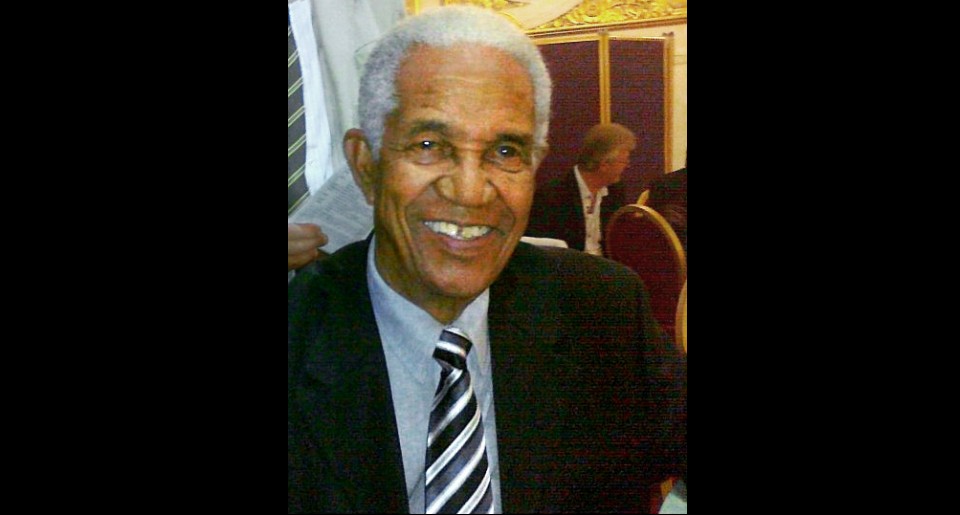
    The Caribbean island nation of Dominica is mourning the loss of one of its most influential media trailblazers, Jefferson “Jeff” Charles, whose passing was confirmed by Dominica News Online.

    Charles’ career stands as a foundational chapter in Dominica’s modern media history. As a veteran local broadcaster, he earned the distinction of becoming the first manager of Radio Dominica — the country’s first ever national broadcasting outlet, which was reorganized into the Dominica Broadcasting Corporation in 1976. During an era when radio served as the primary channel for public information and community connection across the island, Charles guided the development of the station’s first local content schedules and built the institutional framework that would support national broadcasting for decades. His early work not only gave Dominicans a dedicated local voice on airwaves but also permanently shaped the small island’s emerging media ecosystem.

    Later in life, Charles relocated to the United States to expand his expertise in the rapidly evolving communications field. He pursued advanced academic study in communications technology, ultimately completing a doctorate in satellite communication — a cutting-edge discipline that was undergoing explosive growth in the late 20th century. His academic research and technical contributions advanced global satellite communication systems, creating a unique throughline between his hands-on experience building local media in the Caribbean and the global push to connect the world through advanced communications technology.

    Today, Charles is remembered by communities in Dominica and across international communications circles for his far-reaching dual contributions. His passing represents the loss of a rare figure who left indelible marks on both the development of national media in his home country and the advancement of global communication technology. His decades-long career remains a notable example of how local media innovation can intersect with and contribute to global scientific progress.

  • CARICOM, United Nations and UNDP unite Behind Landmark Framework to Treat Crime and Violence as a Public Health Emergency

    CARICOM, United Nations and UNDP unite Behind Landmark Framework to Treat Crime and Violence as a Public Health Emergency

    In a pivotal step toward reshaping how the Caribbean confronts persistent crime and violence, the Caribbean Community (CARICOM), the United Nations (UN), and the United Nations Development Programme (UNDP) have officially launched two groundbreaking regional policy documents during a high-profile gathering in Basseterre, St Kitts and Nevis, held May 21–22, 2026. The documents—the CARICOM–UNDP Diagnostic Document and the Proposed CARICOM–UN Framework for Action—introduce a coordinated, collective approach that reframes violence reduction as a public health and development issue, moving beyond traditional reliance on policing and punishment alone.

    The two-day launch event brought together a diverse coalition of stakeholders, including national government representatives, regional governing bodies, UN system agencies, civil society organizations, academic researchers, and global development partners. Over months of collaborative regional consultation, the two instruments were crafted to reflect a broad, cross-sector commitment to building prevention-centered security governance across all CARICOM member states.

    The first of the two documents, the Diagnostic Document, compiles comprehensive regional data, trend analysis, and empirical indicators that make the evidence-based case for adopting a public health framework to address crime and violence. Complementing this, the Framework for Action translates the political commitments already formally endorsed by CARICOM Heads of Government into actionable practice. It lays out a coordinated, multi-sector implementation roadmap that spans health, education, justice, social protection, and community systems, designed to be adapted to the unique national contexts of individual CARICOM member states.

    At the core of both documents is a shared recognition that meaningful, long-term violence reduction depends on three critical pillars: consistent cross-sector coordination, sustained protected financing, and unwavering political commitment. These elements are deemed essential to scale up prevention measures where they are most needed and ensure initiatives endure beyond short individual political cycles.

    Addressing attendees, Honourable Dr Terrance Drew, Prime Minister of St Kitts and Nevis and current Chair of CARICOM, noted that the biggest barrier to advancing a prevention-focused approach is not proving the underlying science, but shifting entrenched mindsets among leadership and the general public away from the exclusive focus on law enforcement and punishment. “Nothing can really be done unless there is political will. Political will is what allows us to implement policies and to put whatever is necessary behind them,” Drew said. “To see CARICOM and the United Nations now throwing their weight behind the preventative approach for the Caribbean, I am hopeful because I know this will work. And if this framework is implemented, the next decade, when it comes to crime and violence in the Caribbean, will be much better than the previous decade.”

    Alison Drayton, Assistant Secretary-General for Human and Social Development at the CARICOM Secretariat, emphasized that transnational, interconnected security threats cannot be addressed through fragmented national actions alone. “Interconnected threats demand more than isolated national responses. They require coordinated regional action grounded in evidence, solidarity, resilience, and sustainable development,” Drayton explained. “This launch represents a pivotal transition from shared concern to collective, strategic action. By formalizing the CARICOM-UNDP Diagnostic Document and the CARICOM-UN Action Framework, we are translating the political consensus of our Heads of Government into a sophisticated, region-wide mechanism for change. Our partnership with the UNDP is instrumental in this evolution. It allows us to address the fundamental drivers of insecurity—poverty, social exclusion, and lack of opportunity—with a comprehensive development agenda.”

    Stephanie Ziebell, Deputy UNDP Resident Representative for Barbados and the Eastern Caribbean, highlighted the complementary roles of the two new documents. “The CARICOM-UNDP Diagnostic Document we are launching… plays an important role in helping us move beyond treating symptoms. It provides a shared regional evidence base that allows us to better understand how violence is shaped by interconnected social, economic, institutional, and even transnational dynamics,” Ziebell said. “At the same time, the accompanying CARICOM-UN Framework for Action takes us a step further. It moves us from understanding the problem to thinking about how we build solutions. It is not a one-size-fits-all blueprint, but rather a flexible framework that countries can adapt to their own realities and their own priorities.”

    Johanna Kazanna, UN Resident Coordinator for Trinidad and Tobago, Suriname, Aruba, Curaçao and Sint Maarten, echoed the growing regional consensus on the need for a new approach. “Across the Caribbean, governments are increasingly recognising that violence cannot be addressed through enforcement measures alone. Sustainable reductions in violence require prevention systems that are rooted in communities, supported by institutions, informed by data, and coordinated across sectors,” Kazanna noted. “These documents reflect an important regional shift toward treating violence as a development and governance challenge, not simply a security issue. The United Nations system working as one, is proud to support CARICOM and Member States in building the long-term enabling conditions for prevention, resilience, and social cohesion across the Region.”

    The Basseterre launch serves a dual purpose: it acts as a critical bridge between regional policy planning and national on-the-ground implementation, while also acting as a catalyst for the upcoming 3rd CARICOM Regional Symposium on Crime and Violence, where it will inform deliberations and shape potential policy outcomes for heads of government. On the second day of the launch event, a dedicated Strategic Alignment Session drew on insights from the full two-day dialogue to identify priority implementation pathways for the 2026–2030 Regional Framework.

  • MMC Development says reported legal dispute with Dominica gov’t false, determined to see airport complete

    MMC Development says reported legal dispute with Dominica gov’t false, determined to see airport complete

    A recent public clarification from Montreal Management Consultants Development Ltd. (MMCD) has pushed back against earlier media reports claiming the Canadian development firm had launched formal arbitration proceedings against the Government of Dominica. In an official statement released after the Caribbean media outlet Caribbean News Global (CNG) published its March 30, 2026 report, MMCD made a clear, unambiguous denial that any court or arbitration cases are currently active between the company and the island nation’s government.

    The original CNG article, citing the firm’s project director Cal Murad, claimed that the company had turned to arbitration as a last resort to address long-unresolved disagreements over unmet contractual commitments tied to their development agreements. Per the CNG report, Murad framed the dispute as a response to unfulfilled obligations that had already cost MMCD significant capital, personnel resources, and forgone alternative opportunities from its investments in Dominica. The article also noted MMCD’s track record of delivering key public infrastructure projects across the country, ranging from the Marigot Hospital, Dominica Grammar School and Mahaut School to multiple community sports facilities, with the under-construction Dominica International Airport standing as the firm’s highest-profile project on the island. As of mid-March 2026, construction work on the airport terminal area is already underway, marking a major milestone for the long-awaited infrastructure initiative.

    In its formal response to the CNG reporting, MMCD not only rejected the claim of ongoing legal action but also moved to reinforce its partnership with the Dominican government. The firm emphasized that its working relationship with the state remains rooted in three core principles: mutual respect, full transparency, and aligned goals for national progress. MMCD went so far as to publicly praise the Dominican government for its ongoing cooperative approach to the project.

    Central to the company’s statement is a firm reaffirmation of its commitment to delivering the Dominica International Airport, a project the firm describes as a cornerstone of the country’s long-term national development strategy. “The realization of this long-sought national aspiration remains a shared priority, and MMCD is fully committed to seeing it through to completion,” the statement read. The clarification has resolved recent speculation surrounding the future of the $X infrastructure project, which has been framed as a transformative initiative for Dominica’s tourism and trade sectors once completed.

  • Powerful earthquake hits Hawai’s biggest island, volcanic eruption expected in next few days

    Powerful earthquake hits Hawai’s biggest island, volcanic eruption expected in next few days

    On a recent evening on Hawaii’s Big Island, a 6.0-magnitude earthquake shook the coastal region near the small village of Honaunau-Napoopoo, triggering widespread public attention over potential renewed volcanic activity at the nearby active Kīlauea volcano. The tremor was powerful enough to be felt hundreds of kilometers across the Pacific, even reaching the island of Oahu more than 150 miles from the epicenter. Despite the significant seismic event, local emergency officials have confirmed that there are no reports of injuries, widespread structural damage to buildings or infrastructure, and no elevated tsunami risk for coastal communities across the Hawaiian archipelago.

    Scientists with the U.S. Geological Survey’s Hawaiian Volcano Observatory (HVO) have drawn a potential connection between the strong earthquake and shifting activity within Kīlauea, one of the most consistently active volcanoes on the planet. Kīlauea has already experienced intermittent eruptive activity since December 23, 2024, with a notable lava fountain eruption recorded earlier this year in February 2026. Following the quake, HVO experts have updated their activity forecasts, predicting that a new eruption at the volcano could develop between May 24 and May 27 of this year.

    On the Thursday evening after the earthquake, on-site observers added weight to these concerns when they documented two distinct signs of escalating volcanic activity: a visible plume of smoke rising from the volcano’s crater, and a distinct bright lava glow that was visible against the night sky. These observations have deepened ongoing monitoring efforts, as authorities prepare for potential eruptive activity in the coming days.

  • Juliette Shillingford to vie for Roseau Central Constituency on UWP ticket

    Juliette Shillingford to vie for Roseau Central Constituency on UWP ticket

    In a formal press briefing held Thursday, United Workers Party (UWP) leader Dr. Thomson Fontaine announced a key candidate addition for the upcoming electoral contest: Juliette Shillingford, the former Chief Physical Planner for the Government of Dominica, will stand as the party’s nominee for the Roseau Central Constituency.

    The vacancy on the UWP ticket for Roseau Central opened after Glenroy Cuffy, who represented the party in the 2019 general election, confirmed he would not seek re-election this cycle. Dr. Fontaine confirmed that Cuffy is no longer available to run, but expressed enthusiasm that the party has filled the spot with a highly qualified contender who has already begun engaging with constituents in the constituency.

    Shillingford brings deep local roots to her campaign, a point Dr. Fontaine emphasized in his announcement. Born and raised in Roseau, she comes from a prominent, well-established local family. Her father is one of Dominica’s leading physicians, and her late brother Dorian Shillingford is widely recognized across the country for his tenure as general manager of the Dominica Water and Sewerage Company (DOWASCO). Beyond her family connections, her decades of professional work in public planning have given her intimate, first-hand knowledge of the community’s needs and infrastructure challenges, Dr. Fontaine noted.

    As a trained planning professional with decades of public sector experience, Shillingford also brings a rare combination of expertise and institutional maturity to the UWP’s candidate slate, according to the party leader. Dr. Fontaine described her as a consummate professional, adding that party leadership is confident she will not only compete strongly for the Roseau Central seat but also lift the entire ticket by supporting fellow candidates and contributing meaningful, data-driven policy perspective to the party’s platform ahead of the election.

  • Five Islands Campus opens The UWI Games campaign with a win and a loss

    Five Islands Campus opens The UWI Games campaign with a win and a loss

    The 2026 edition of the annual UWI Games marked a historic milestone for the University of the West Indies Five Islands Campus, based in Antigua and Barbuda, as the institution made its first ever appearance at the multi-campus intercollegiate sporting competition. Opening day of the event delivered a mixed bag of results for the campus’ competitive teams, with a standout victory in men’s basketball offset by an early defeat in men’s cricket.

    In the day’s cricket matchup, Five Islands’ Frigates squad faced off against the defending-competitive UWI Mona Campus. Winning the coin toss to bat first, the Frigates put together a steady innings that closed at 143 runs for the loss of 3 wickets after their allotted 20 overs. Asher Cornelius, the team’s star batsman, delivered a career-best performance, scoring an impressive 81 runs not out to anchor the innings and set a challenging target for the Mona side.

    Despite the solid total on the scoreboard, Mona’s batting unit responded with an unprecedented dominant display. The Mona Campus chased down the required 144 runs in just 12.3 overs, losing only two wickets in the process to secure an emphatic eight-wicket victory over the debutant Five Islands side.

    Far from letting the early defeat derail their opening day momentum, the Five Islands campus bounced back in stunning fashion in men’s basketball. Taking on UWI Global Campus, the Frigates male basketball team put on a commanding defensive and offensive display from the opening tip-off, holding their opponents to just 34 points while putting up 67 of their own. The 33-point victory capped off an encouraging opening day for the first-time participants, giving the campus squad valuable momentum heading into the second day of competition.

    Looking ahead to Day 2 of the UWI Games 2026, Five Islands will field competitors across four additional disciplines: lawn tennis, table tennis, men’s football, and men’s volleyball. The team will look to build on their opening day basketball win and pick up more positive results as the tournament progresses.

    For the Five Islands Campus, this year’s UWI Games is more than just a competition: it is a landmark moment that cements the institution’s growing role within the UWI regional network. The annual UWI Games was created to bring together student-athletes from all 1 of the University of the West Indies’ scattered campuses across the Caribbean, celebrating athletic excellence, campus community spirit, and regional unity among Caribbean nations and peoples.

    For supporters unable to attend the competition in person, the full event is being broadcast live via UWItv, which is streaming the action across its official website, Facebook page, and YouTube channel. Full schedules, real-time score updates, direct links to livestreams, and additional event information can be found on the official UWI Games website at www.sta.uwi.edu/uwigames.

  • IICA: Bioeconomy in Latin America and the Caribbean – a generation seeking to transform science into rural profitability

    IICA: Bioeconomy in Latin America and the Caribbean – a generation seeking to transform science into rural profitability

    Across Latin America and the Caribbean, a paradigm shift is underway in rural agriculture: a new cohort of young entrepreneurs is moving beyond the traditional focus of maximizing food output to build a thriving, innovation-led agro-bioeconomy centered on sustainability, circularity and value addition. This transformation is not a hypothetical future—it is already taking root in business models across the region, as highlighted by the results of the 2025 LATAM Impact Agro-bioentrepreneurship Competition, co-hosted by the Inter-American Institute for Cooperation on Agriculture (IICA) and FONTAGRO.

    When organizers opened the competition to submissions, they received more than 1,100 projects from 20 countries across the region, far exceeding initial expectations. The entries spanned the full breadth of the modern bioeconomy: from climate-focused carbon capture systems and crop-boosting bioinputs to biomaterials, bioenergy, and novel bioproducts for food, health, and cosmetic applications. This diverse response offered a clear snapshot of a fast-growing ecosystem that has outpaced all early projections.

    The global bioeconomy is already valued at close to $4 trillion, according to World Economic Forum estimates, with more than 50 nations rolling out dedicated national development strategies. This growth has been fueled by breakthroughs in synthetic biology, advanced engineering, and decentralized production models—and Latin America is emerging as a key hub for this global transition.

    The new face of 21st-century rural entrepreneurship
    Young producers across the Americas are embedding this new thinking into daily operations, as profiled in IICA’s *Leaders of Rurality* interview series. Canadian young farmer Mackenzie Fingerhut framed a key gap driving innovation: a persistent “enormous disconnect” between urban consumers and rural production, where most city dwellers have never witnessed how their food is grown, shaping consumer choices in unproductive ways. To bridge this gap, Fingerhut has prioritized full transparency and traceability, rolling out QR code systems that let consumers scan product packaging to access the full journey of their food: from where ingredients were planted, how they were processed, and who grew them. This tool, he explained, is more than a marketing add-on—it builds critical trust between producers and consumers.

    For another young entrepreneurial couple based in Saint Kitts and Nevis, Akiesha Fergus and Ryan Khadou, limited infrastructure and growing climate threats have not slowed their adoption of innovative practices. Their core motto is “work smart, not hard,” Fergus explained: modern agriculture no longer relies on the brute-force methods of past decades. Instead, it leverages science and technology to understand local environments and land, delivering better crop yields while reducing unnecessary strain.

    A shift from incipient trend to mature ecosystem
    Just six years ago, a 2019 IDB Lab report mapping AgTech innovation in Latin America and the Caribbean identified the agro-bioeconomy as an incipient, highly concentrated emerging sector. Today, that gap between 2019 projections and on-the-ground reality is striking: what was once a niche trend has exploded into a mature, widespread movement. The core difference, leaders note, is that sustainability is no longer framed as a separate “green agenda” or symbolic declaration—it is a core financial and competitive asset. Agricultural biomass that was once treated as valueless waste is now a high-value raw material for circular business models that add value directly at the production source.

    At the competition’s results presentation in April, IICA Director General Muhammad Ibrahim validated this paradigm shift. Promoting agro-bioentrepreneurship, he said, is key to “building a world of innovation in rural areas that increasingly integrates young people and women into the sustainable use of biodiversity.” The competition’s core goal, he added, was to help scale initiatives that connect agriculture, energy, health, and environmental stewardship, proving that the bioeconomy is far more than a theoretical concept: it delivers tangible, beneficial products for communities across the region.

    Standout innovations turning challenges into opportunities
    Several winning projects from the competition exemplify how this new model works in practice. Dominican Republic-based startup SOS Biotech, for example, turned a major regional environmental crisis into an opportunity for inclusive economic growth. The Caribbean has struggled with massive invasive blooms of sargassum macroalgae that disrupt coastlines and local ecosystems. SOS Biotech co-founder and CTO Elena Martínez explained that the company developed a low-cost collection system mounted on artisanal fishing boats, training more than 130 local fishers to harvest the algae. To date, the firm has recovered more than 16,000 tons of sargassum, which it processes through a zero-waste closed system to extract bioactive compounds and produce biostimulants and growing substrates for local Dominican farmers. The startup has already earned certifications to enter the U.S. and Spanish markets, proving that sargassum can replace synthetic, petroleum-derived compounds while mitigating environmental damage. “What generated a crisis became a great opportunity for industrial diversification in the region,” Martínez noted.

    Another winning project, Carbonlytics, was developed by a team of Colombian engineers to unlock new income streams for smallholder farmers through carbon credit markets. The system uses drone technology and advanced data analytics to measure crop biomass with more than 95% accuracy, generating the precise data required for carbon capture credit certification. This lets farmers earn additional revenue from sustainable land management practices, delivering what creators call a “double impact” that benefits both local communities and the global climate.

    From Argentina, award-winning startup Prix Biotech recently notched a major scientific milestone: using genetic editing to enhance commercial biofertilizers that boost productivity of major crops including soybeans and alfalfa. Lead researcher Nicolás Ayub explained that the team edits already existing functional characteristics of natural microorganisms to develop more efficient biological fertilization solutions. The resulting products have a far lower environmental footprint, deliver more consistent results in the field, and cut the time and cost of fertilization processes for producers.

    Leading the global transition to regenerative agriculture
    What was once a niche, little-noticed trend on global financial radars is now a fully formed business network where applied science sets the new rules for agricultural competitiveness. The volume and sophistication of competition entries and winning projects confirms that Latin America is no longer just a raw material exporter—it has become a large-scale living laboratory for global climate and agricultural innovation. For this new generation of entrepreneurs, success is no longer measured only in tons of output per hectare, but in the ability to manage the full biological complexity of rural landscapes to deliver both profit and regeneration. With a thriving ecosystem already delivering measurable, scalable results, the Latin American agro-bioeconomy has proven it is mature enough to lead the global transition toward a new productive model where efficiency and environmental regeneration are two sides of the same coin.