标签: Dominica

多米尼克

  • DASPA pays tribute to Otis Francis following fatal Woodbridge Bay Port accident

    DASPA pays tribute to Otis Francis following fatal Woodbridge Bay Port accident

    A devastating workplace accident at Dominica’s Woodbridge Bay Port has claimed the life of a long-serving port employee, leaving the local maritime community in mourning. Forty-seven-year-old Otis Francis, a resident of Tarish Pit, suffered fatal injuries in the incident shortly after midnight on Friday, July 17, while he was part of a crew unloading cargo from a berthed vessel at the facility.

    Preliminary law enforcement accounts confirm a shipping container fell onto Francis during the unloading operation. First responders pronounced him dead at the accident scene immediately after the incident, and the Dominica Police Force has launched a full formal investigation to document the exact circumstances that led to the fatal event and identify any contributing safety gaps.

    Francis had built an eight-year career as a stevedore with the Dominica Air and Sea Ports Authority (DASPA), the government body that manages the island’s key sea and air port infrastructure. In an official public statement released after the accident, DASPA’s Board of Directors, senior management, and all staff joined to pay tribute to Francis’s legacy at the port.

    The statement highlighted that Francis consistently demonstrated exceptional dedication, unwavering commitment, and a rigorous work ethic throughout his tenure. These traits, the authority noted, earned him widespread respect and sincere appreciation from colleagues, industry partners, and every stakeholder he interacted with during his years of service. His contributions to smooth port operations and the growth of Dominica’s maritime community will not be forgotten, the statement added.

    “While no words can truly ease the pain of such a sudden and great loss, we hope the Francis family will find strength in the love and support of those around them and comfort in the cherished memories of his life and legacy,” the statement read. DASPA extended its deepest heartfelt condolences to Francis’s immediate family, extended relatives, close friends, and fellow port employees, joining the entire community in mourning and praying for peace and comfort for all those affected by the tragedy. May Otis Francis rest in eternal peace.

  • DOMLEC: Geothermal energy helps cut July fuel surcharge to 33 cents

    DOMLEC: Geothermal energy helps cut July fuel surcharge to 33 cents

    Dominica’s primary electricity provider, Dominica Electricity Services Ltd (DOMLEC), has announced that its July 2026 fuel surcharge will be set at 33 cents per kilowatt-hour, a reduction made possible by the rapid scaling of geothermal energy integration into the island’s national power grid, according to the company’s Public Relations Officer Ayeola George.

    In an official statement released to the public, George outlined the sharp, steady growth of geothermal energy’s share in Dominica’s renewable generation mix over the first half of 2026. Back in March, geothermal contributed just 6 percent of the country’s total renewable power output. By April, that share had jumped nearly four and a half times to 26 percent. When combined with the existing hydroelectric power capacity, total renewable energy penetration across the national grid reached 51 percent that month.

    This upward trajectory continued through the spring, George confirmed, with total renewable penetration climbing to 58 percent in May. By the end of June, the milestone figure of 68 percent was reached, marking renewables as the dominant source of electricity generation for the island nation.

    This shift away from fossil fuel-dependent generation has delivered immediate tangible benefits for both DOMLEC and its customers, George explained. As renewable energy output grows month over month, the country’s reliance on diesel for power generation has fallen dramatically. From January’s consumption level of 373,000 gallons of diesel, the monthly usage dropped by almost half to just 194,000 gallons by June 2026.

    While DOMLEC has no ability to influence global or regional diesel pricing, the reduced reliance on the fossil fuel has drastically cut its impact on overall electricity generation costs. “The cost-benefit of expanding geothermal energy is significant — not just for DOMLEC as a company, but for every single one of our customers,” George emphasized.

    Without the integration of geothermal capacity into the grid, George noted, the July 2026 fuel surcharge would be nearly double the current rate, coming in at 63 cents per kilowatt-hour instead of the 33 cents that customers will see on their upcoming bills. “This is the true, tangible impact of investing in geothermal,” she said.

    George also acknowledged that customers experienced a number of power outages across June, but highlighted that even with those operational challenges, DOMLEC still achieved the landmark 68 percent renewable penetration rate. She thanked the Dominican public for their patience and understanding as the company and its partner organizations continue the ongoing work of integrating more renewable energy resources into the national grid.

    The achievement of 68 percent renewable penetration through geothermal and hydro power is being hailed as a major milestone for Dominica’s energy transition, positioning the island as a growing leader in Caribbean renewable energy adoption.

  • COMMENTARY: Review of ‘Fragments of the Dawn’ by Edward Oliver LeBlanc

    COMMENTARY: Review of ‘Fragments of the Dawn’ by Edward Oliver LeBlanc

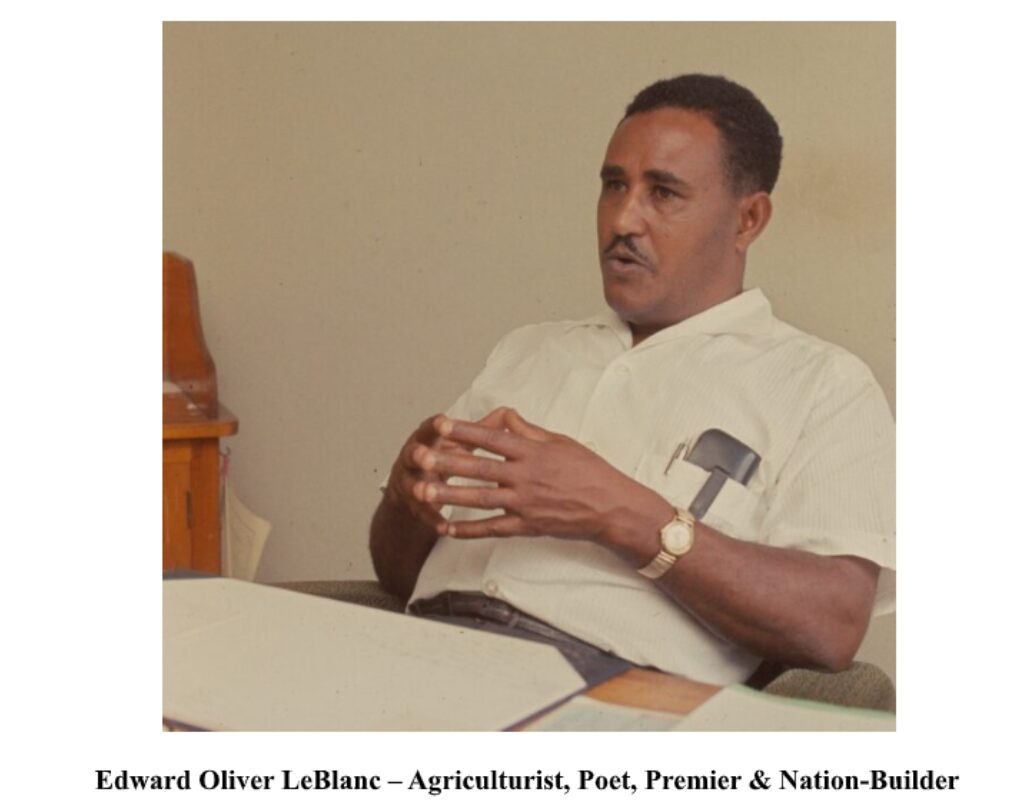
    Literature has long held the power to divide works into two distinct camps: those crafted merely for casual diversion, and those that lift the human spirit, force collective conscience to confront uncomfortable truths, and shed light on the shared moral character of a community. Edward Oliver LeBlanc’s *Fragments of the Dawn*, a recently published posthumous poetry collection, falls unreservedly into the second transformative category. Shared with the author of this analysis by Ewart LeBlanc — the late statesman’s eldest son and a respected public figure — the collection is far more than a mere compilation of verse. It is a deep, contemplative exploration of core themes: life, national identity, systemic suffering, collective justice, intergenerational memory, the dignity of labor, and inherent human worth. As a cultural and intellectual gift, it holds profound meaning for both Dominica and the broader Caribbean region.

    Reading *Fragments of the Dawn* is an intimate invitation into the mind and soul of a veteran statesman, who carried the quiet humility of a Dominican peasant alongside the sharp, trained intellect of a scholar, agricultural scientist, and apiarist. LeBlanc’s verse is irrevocably rooted in the lush, natural beauty of Dominica — its rushing rivers, ancient forests, brutal tropical storms, towering peaks, fertile valleys, and tight-knit village communities. Yet his work expands far beyond the bounds of geography to offer universal reflections on the core of humanity. The rhythm of his lines mirrors the journey of a people stepping out of the shadows of colonial rule into newfound self-awareness and collective dignity.

    LeBlanc’s rise to become one of the most transformative political leaders in Dominican history mirrored the social change he spent his career championing. Born in the rural village of Vieille Case on October 3, 1923, he emerged from working-class origins to become the enduring voice of Dominica’s working people and peasant communities. Trained in agricultural science at the Imperial College of Tropical Agriculture in Trinidad, he returned to his home island with a deep, abiding respect for rural life, manual labor, and national self-sufficiency. His early work with the Dominica Trade Union and the Dominica Labour Party placed him at the forefront of anti-colonial and working-class organizing during an era when all political and economic power was hoarded by a small, colonial-aligned elite. By 1961, LeBlanc had risen to the role of Chief Minister of Dominica, and in 1967, when the island gained Associated Statehood, he became the nation’s first Premier.

    Alongside Dominica Labour Party co-founder Phyllis Shand Allfrey, LeBlanc served in the West Indian Federal Parliament based in Port of Spain, Trinidad, under West Indian Federation Prime Minister Sir Grantley Adams. When the federation dissolved in 1962, after Jamaica and Trinidad chose to leave the union and pursue full independence separately, LeBlanc emerged as a key leader in organizing the “Little Eight” — a coalition of smaller Caribbean nations working to rebuild a unified regional federation. He worked tirelessly to persuade leaders of Antigua, Barbados, Grenada, St. Kitts, St. Lucia, and St. Vincent to join Dominica in forging a new regional union. Though the effort ultimately failed to unite the Little Eight, two of LeBlanc’s poems — *The Little Eight* and *Towards a West Indian National Song* — reveal his lifelong commitment to Caribbean integration and his unwavering support for African independence movements.

    LeBlanc’s political impact on Dominica cannot be overstated. He reshaped the nation’s social and political landscape by centering the needs of “the little man”: laborers, smallholder farmers, fishers, domestic workers, and rural villagers who had been systematically sidelined under colonial rule. Under his administration, Dominica expanded public access to education, healthcare, road infrastructure, affordable housing, pension benefits, and local village development. At the same time, he nurtured a new wave of cultural nationalism rooted in the dignity of Dominican identity, the Kwéyòl language, and African-Caribbean cultural traditions.

    His government democratized political participation in a way that had never been done before in Dominican history, making ordinary people feel seen and represented within the structures of state power. Though critics at times took issue with his populist approach and confrontational political style, LeBlanc remains widely revered as the “Father of the Dominican Nation” for the fundamental shift he created in both the material and psychological conditions of Dominican society. He replaced the culture of deference demanded by colonial rule with a new national ethos of self-confidence and collective social uplift.

    Across the collection, LeBlanc reveals himself not just as a political leader, but as a philosopher-poet of liberation. His verses return again and again to the cycles of life, the moral obligations of individuals and societies, the suffering created by systemic exploitation, and the eternal conflict between material greed and spiritual integrity. In works such as *Life’s Philosophy* and *The Cycle of Life*, he grapples with questions of mortality, intergenerational legacy, and the ethical weight of human existence.

    What stands out most in this body of work is its striking fusion of accessible simplicity and profound depth. LeBlanc’s language is approachable for everyday readers, while its philosophical implications are broad, resonant, and enduring.

    Particularly moving are the verses that grapple with colonial oppression and the dehumanization of African-descended people under systems of racial and economic domination. In haunting lines that describe enslaved and exploited workers’ “naked” backs under the unforgiving midday sun, LeBlanc documents the violation of women, the denial of dignity to working people, and the theft of peasant labor. In doing so, he turns poetry into a living historical testimony. Yet the collection never descends into mere bitterness. Instead, it points toward renewal, reclamation, and the enduring triumph of human resilience. Readers can clearly recognize the same moral force that drove LeBlanc’s political leadership during Dominica’s most transformative decades.

    LeBlanc’s professional background as an agricultural scientist and apiarist adds unique depth and texture to his poetry. His sensitivity to the rhythms of nature — changing seasons, living soil, life-giving rain, growing seeds, maturing trees, the labor of cultivation — permeates every page. In his writing, nature is not decorative; it is a teacher. His agricultural imagery becomes a powerful metaphor for nation-building: requiring patience, sacrifice, steady growth, and periodic renewal. Just as a beekeeper understands that collective effort sustains the entire hive, LeBlanc understood that national development depends on social cooperation, shared discipline, and a common purpose. His scientific understanding of cultivation deepened his philosophical understanding of humanity.

    Beyond his public life, LeBlanc was a devoted family man, and the love of his home created the nurturing environment that allowed his creativity to flourish. In 1949, he married Ethel Patrick, and the couple raised five children: Ewart, Erin, Einstar, Earlsworth, and Eustace. Their loving home became a spiritual cocoon that fostered a shared commitment to community, justice, and the power of the written word. Earlsworth LeBlanc often recalls that Rudyard Kipling’s poem “IF” was posted on the family home door, a small detail that reflects LeBlanc’s lifelong immersion in literature and moral philosophy.

    The collection carries a distinct, deeply rooted Caribbean sensibility: reflective, communal, spiritually awake, and historically conscious. It echoes the region’s oral traditions, village wisdom, and ancestral memory. It challenges readers to resist colonial conditioning and racial prejudice not through hatred, but through self-knowledge, dignity, creativity, curiosity, and moral independence. This is literature serving its highest purpose: the liberation of the mind.

    It is no coincidence that LeBlanc’s distinguished relative, Dr. Irving W. André, has built a prominent place for himself within Dominica’s literary and intellectual landscape. Over decades of rigorous scholarship, historical preservation, and literary advocacy, Dr. André has written extensively on Dominican history, politics, identity, and culture, ensuring that the Dominican experience is documented with depth, dignity, and intellectual rigor. His work reflects the same commitment to national consciousness, social justice, and historical memory that defined LeBlanc’s public life and philosophical outlook.

    This shared commitment to literary and historical preservation found institutional form in Pont Casse Press, founded in 1992 by Dr. André and Gabriel J. Christian, Esquire. The press was created with an explicit mission to advance Dominican history, literature, political thought, and cultural identity. Over the decades, it has grown into a critical intellectual repository for Dominican scholarship and creative expression, preserving stories that would otherwise have been lost to historical neglect or colonial indifference. In every sense, *Fragments of the Dawn* fits squarely within this noble mission: it is a work committed not just to artistic expression, but to the moral and intellectual liberation of a people.

    The tradition of literary stewardship within the extended LeBlanc family underscores a deeper truth: the struggle for national progress is not limited to politics alone. It must also be waged in the realms of literature, education, philosophy, and historical preservation. Edward Oliver LeBlanc helped liberate the Dominican people politically and materially; today, scholars and writers like Dr. André, and institutions like Pont Casse Press, continue that liberating work in the realm of ideas, collective memory, and cultural identity.

    For this reason, *Fragments of the Dawn* deserves a place on every bookshelf in every Dominican home and every Dominican school. Young people, in particular, should engage with these poems, because they offer not just literary beauty, but moral and ethical formation. In an era defined by rampant materialism, constant distraction, and widespread historical amnesia, LeBlanc’s work reminds readers of the values of decency, discipline, compassion, introspection, and national consciousness. It teaches that every ordinary laborer, farmer, mother, fisherman, or child carries inherent dignity and philosophical worth.

    It was a distinct honor to participate in a recent public discussion hosted by Sheridan Gregoire on Q95 FM, alongside Ewart LeBlanc and Earlsworth LeBlanc, to explore this landmark contribution to Dominican literature. The discussion reaffirmed a core truth: Edward Oliver LeBlanc’s literary legacy is inextricably tied to the political and moral awakening of the Dominican people.

    Ultimately, *Fragments of the Dawn* is far more than a collection of poetry. It is the reflective voice of a nation-builder, who understood that true independence is not just political — it is psychological and spiritual. It is the testimony of a man who believed that literature, philosophy, labor, and public service must all work together to lift up humanity. In these poems, Edward Oliver LeBlanc continues to guide Dominica — not from a political platform, but from the enduring realm of ideas, collective memory, and moral imagination. This work deserves careful study, broad circulation, and permanent recognition as a landmark contribution to Caribbean intellectual and literary history.


  • By-election candidate Danny Lugay proposes major tourism hub to tackle unemployment in Roseau North

    By-election candidate Danny Lugay proposes major tourism hub to tackle unemployment in Roseau North

    As the campaign for the upcoming Roseau North by-election in Dominica gains momentum, United Workers Party (UWP) candidate Danny Lugay has put forward a bold economic development proposal focused on tackling one of the island nation’s most urgent socioeconomic problems: widespread unemployment.

    Speaking at a public rally hosted by the opposition UWP on Friday evening, Lugay emphasized that the persistent lack of local employment opportunities has pushed a growing number of young Dominican citizens to emigrate in search of work, exposing them to serious risks abroad. “One of the major issues for us now is unemployment. That is why most of our young men are running away to countries where they get killed, when we should be having serious employment in our country,” he told attendees.

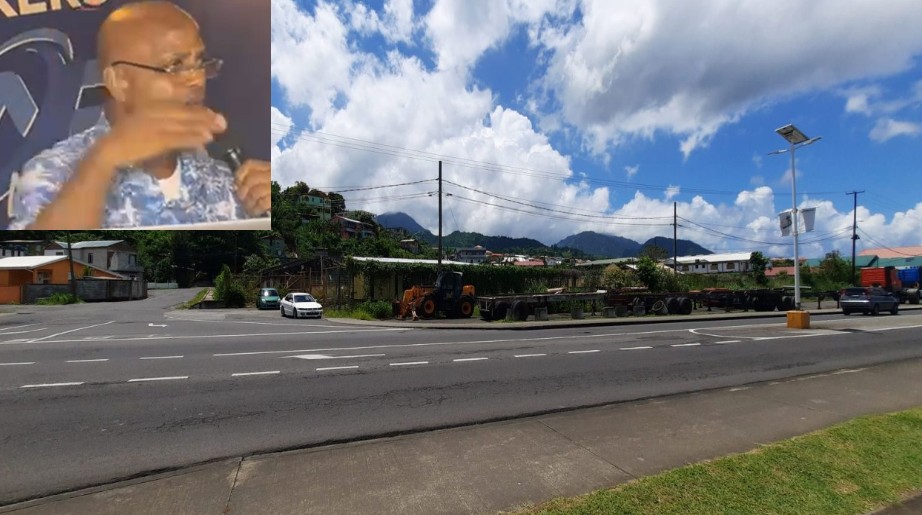
    Lugay’s flagship proposal centers on repurposing the disused former Public Works site in the heart of Roseau into a mixed-use tourism and commercial hub, a plan he says aligns with the broader economic vision of UWP political leader Dr. Thompson Fontaine. Unlike the previous government plan to hand the prime two-acre waterfront plot over to a private investor for a five-star hotel, Lugay’s scheme keeps the state-owned land in public hands and prioritizes broad-based benefits for local residents and small entrepreneurs.

    The planned development includes a range of community-focused amenities: a modern central tourist reception center, a covered vendors’ arcade, a collection of local food restaurants, beauty and wellness service spaces, artist studios, and dedicated work areas for local craft artisans. Lugay also proposed adding a centralized bus terminal that would serve as the starting and ending point for organized island tours, giving visitors easy access to the hub’s shopping, dining, and entertainment offerings before and after their excursions.

    To position the site as a unique cultural attraction, Lugay wants to replicate the lively open-air entertainment atmosphere of Gros Islet in neighboring St. Lucia. He plans to host scheduled live music performances from local Dominican artists and weekly festival nights every Wednesday and Friday, bringing both residents and international visitors together to celebrate local food and culture. He added that the project will be designed by local architects to create an inviting, environmentally friendly public space that highlights authentic Dominican experiences, rather than a generic private development.

    A core economic benefit of the plan, Lugay argues, is that it will keep more tourism revenue circulating within Dominica’s local economy, rather than sending profits overseas to international hotel operators. “What we want for Roseau North is to ensure that every tourism dollar that enters Dominica, we get 50 per cent of that dollar,” he explained. The hub is projected to create dozens of new jobs for young people across Roseau North and surrounding communities, while opening up new entrepreneurial opportunities for local small business owners.

    This proposal is consistent with Lugay’s long-standing position on the future of the former Public Works site. During his previous term as the constituency’s parliamentary representative, he openly opposed the government’s push to approve the private five-star hotel development. In 2022, he formalized his objections in an official letter to then Chief Physical Planner Naomi Dorival, noting that the site is zoned for light industrial and warehousing use under the existing Potterville Housing Scheme Local Area Plan, making a large hotel development incompatible with local planning rules. He also argued that the plot’s strategic location adjacent to Dominica’s main commercial seaport makes it far more valuable for public use and long-term national development than a private hospitality project.

    At that time, Lugay first proposed redeveloping the site as a public multi-purpose facility that would combine youth skills training spaces, commercial areas for local vendors, retail outlets, and community amenities. He also called for full transparency around any potential sale of the state-owned land, requiring that any disposal of the property go through an open public tender process. Lugay has confirmed his objections received a favorable response from the Chief Physical Planner, who confirmed no planning approval had been granted for the hotel project and acknowledged the public concerns he raised.

    The Roseau North parliamentary seat became vacant following the recent resignation of former representative Miriam Blanchard, and a by-election is constitutionally required to be held by September. While the Dominica Electoral Office has not yet released an official polling date, the two confirmed candidates – Lugay of the UWP and Ashma McDougall of the ruling Dominica Labour Party (DLP) – have already begun active campaigning to win over constituency voters.

  • STATEMENT: OECS Director General ‘In tribute to Sir Garfield St Aubrun Sobers (1936–2026)’

    STATEMENT: OECS Director General ‘In tribute to Sir Garfield St Aubrun Sobers (1936–2026)’

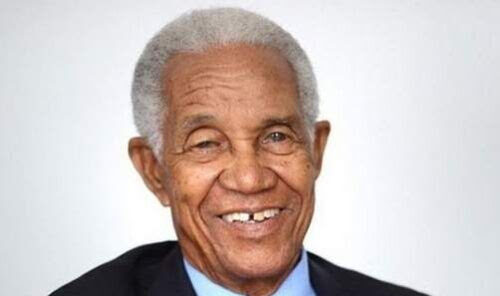
    The global cricket community and nations across the Caribbean are in mourning this week following the passing of Sir Garfield Sobers, widely hailed as the greatest all-round cricketer in the history of the sport. In an official statement released by the Organisation of Eastern Caribbean States, Director General Dr. Didacus Jules confirmed the loss of the Barbadian icon, extending heartfelt condolences to Sir Garfield Sobers’ surviving family, the people of his home nation Barbados, and cricket lovers across every Caribbean territory that claimed the legend as their own.

    More than a star athlete, Sobers embodied the full potential of cricket as both a craft and a unifying force. As a batsman, he moved with a breathtaking, almost poetic grace that left crowds and opponents mesmerized; as a bowler, he mastered three distinct bowling styles, making him an unpredictable and unstoppable force on the pitch; and his fielding was defined by raw, innate instinct that turned routine plays into spectacular moments. His record-breaking 365 not out in an international Test match stood as the highest individual Test score for 36 years, a benchmark that defined excellence for generations of batters. Even decades later, his feat of hitting six sixes from six consecutive balls in a single over remains one of the most iconic acts of bold brilliance in all of professional cricket. Over a 20-plus-year international career, he played 93 Test matches, amassed more than 8,000 runs, and captained the West Indies cricket team with imaginative strategy and unwavering national pride.

    Yet Sir Garfield Sobers’ legacy stretches far beyond the statistics that line his career record. Born and raised in the working-class Bay Land neighborhood of Bridgetown, Barbados, he climbed to the pinnacle of a sport that, during the era of British colonial rule, had long been reserved for white elites, with Black Caribbean residents barred from competing at the highest levels. In a period marked by the gradual dissolution of empire and the fight for post-colonial identity, Sobers emerged as living proof that Caribbean talent and excellence answered to no outside power. For the first time, a Black West Indian man was universally recognized as the greatest to ever play the global game, and for the small, scattered island nations of the Caribbean, he became a mirror that reflected a new shared identity: unified, confident, and truly independent.

    He played an unheralded role in helping the newly independent Caribbean nations forge a collective sense of shared purpose. The hard-won West Indian cultural identity, rooted in mutual dignity and shared athletic triumph, owes an incalculable debt to the Barbadian batsman who forced the entire world to stop and admire the region’s talent. A designated National Hero of Barbados and the first person to be knighted on Barbadian soil after the nation gained independence, Sir Garfield Sobers never turned his back on his working-class roots, and his home nation has already pledged he will never be forgotten.

    “In this moment of grief, we stand with Lady Sobers and the entire Sobers family, we stand with the people of Barbados, and we celebrate the extraordinary legacy Sir Garfield leaves behind,” Dr. Jules added in the statement. “Thank you for the runs, for the wickets, for the collective pride you gave us, and for the sense of freedom you helped an entire region feel. Rest well, Master.”

  • OP-ED: We’ve called the meeting, now here’s what we bring

    OP-ED: We’ve called the meeting, now here’s what we bring

    When the European Union issued an ultimatum to five Eastern Caribbean nations to shutter their Citizenship by Investment (CBI) programs by 2028, regional leaders gathered in Roseau, Dominica last Friday and made a critical, forward-thinking choice: they will head to Brussels as a unified bloc to negotiate, rather than comply passively. This op-ed from the soon-to-launch Caribbean Outlet, *The Caribbean Ledger*, framed the gathering not as the final step in the process, but the starting line for high-stakes preparation, outlining a clear strategic framework for the Caribbean delegation to reframe the conversation from defense to proactive negotiation.

    To enter the talks effectively, regional leaders must first understand the shifting landscape they face. In a June 25 letter from EU Commissioner Magnus Brunner, Brussels made clear that the existence of CBI programs itself, “regardless of how well it is managed,” is now grounds for reviewing Schengen visa-free access for Caribbean nationals. This means compliance reforms – which the Eastern Caribbean Collective Investment Regulatory Authority (ECCIRA), launched this year and headquartered in Grenada, was specifically designed to address – are no longer the core of the discussion. The EU has already moved past administrative concerns to a matter of principle. Any attempt to debate compliance in Brussels will hit an immovable wall, the analysis argues, so the region must shift its approach entirely.

    The Caribbean’s strongest negotiating leverage is not a defense of CBI, but a clear exposure of the current asymmetric power dynamic. If the Caribbean shuts down its programs as the EU demands, Brussels and Washington achieve their stated goal of safeguarding global integrity systems – but the entire fiscal cost falls entirely on small island economies. For Dominica, CBI revenue makes up roughly 37% of total GDP. St Kitts and Nevis already saw its 2024 fiscal deficit widen to 11% of GDP after a drop in CBI earnings, and would face an unfillable structural budget gap if the programs are eliminated entirely. Across the region, CBI funding has paid for critical public infrastructure: hospitals, modern airports, climate-resilient housing, and national fiscal buffers that shield economies from external shocks. The current outcome the EU is pushing would leave the EU with all the gains and the Caribbean absorbing all the losses – that is not how an equal partnership works, and the region must state this plainly and calmly from the start of talks.

    Instead of begging for compensation, which casts the region as a supplicant, the analysis argues Caribbean leaders should come to the table with a concrete proposal to trade the CBI revenue stream for a permanent, binding EU-Caribbean trade and development compact. Existing frameworks already exist to support this: the CARIFORUM-EU Economic Partnership Agreement, the Samoa Agreement, and the EU’s own Global Gateway development initiative. The Caribbean only needs to turn these loose frameworks into a tangible, enforceable deal that works for both sides: guaranteed long-term market access for Caribbean agricultural and value-added goods, paired with EU investment in the infrastructure needed to scale that trade. This is a negotiation between equal partners, not a surrender to EU demands.

    The analysis lays out four core elements that the Caribbean’s formal proposal must include to be taken seriously. First, a phased, negotiated transition instead of an abrupt 2028 hard stop. An immediate end to CBI without alternative revenue would trigger an immediate fiscal crisis across the region. Instead, the Caribbean should propose a 3-5 year structured wind-down, shifting toward residency-focused investment models that meet EU security safeguards while maintaining orderly investment inflows during the transition, with clear public milestones to track progress. Second, a binding commitment for expanded agricultural trade access to EU markets. The region still remembers the collapse of the Windward Islands banana industry after EU trade preferences were withdrawn, when an entire regional economic sector hollowed out almost overnight. This time, the Caribbean should leverage that history to demand a specific, enforceable agreement with set volumes and timelines for expanded access for Caribbean agricultural and agro-processed goods. Third, a dedicated Caribbean Development Partnership facility under the EU’s Global Gateway framework. This facility would be seeded by EU funding, matched with existing capital from the Caribbean Development Bank (CDB) and the Eastern Caribbean Central Bank (ECCB), and targeted at the specific infrastructure needed to expand trade: cold storage networks, packing facilities, port upgrades, and phytosanitary certification systems. Fourth, quantified, binding co-financing commitments for climate resilience. As small island developing states, the Caribbean bears a disproportionate share of climate change costs that it did almost nothing to cause, making this a non-negotiable component of any fair compact.

    Beyond substance, the posture of the Caribbean delegation will shape the outcome of the talks. First and most critically, the region must speak with one voice. Divided, separate negotiations will only let Brussels split the bloc and weaken individual nations’ bargaining power. A unified position supported by the Organization of Eastern Caribbean States (OECS) and CARICOM, led jointly by OECS Chairman Prime Minister Gaston Browne and incoming CARICOM Chairman Prime Minister Philip J. Pierre, will signal that this is a region-wide priority, not a narrow sub-regional grievance. Second, the delegation must bring concrete, publicly available numbers for every part of its proposal. Specificity demonstrates seriousness, while vagueness lets the EU agree in principle without delivering any tangible outcomes – a mistake the region has made repeatedly in past negotiations. Every element should be quantified: the fiscal impact of an abrupt phase-out, how much replacement revenue is needed, how much investment the Caribbean will contribute, and what exact volume of market access is being requested. Third, the delegation should reference past patterns of unequal negotiation calmly, not as a list of grievances. Past experiences – the banana trade collapse, 1990s financial services pressure, the more recent correspondent banking crisis – are not random misfortunes, they are patterns that explain why the region is demanding binding commitments rather than vague statements of intent this time around. That request is entirely reasonable for a partner that has seen European interests override regional solidarity in the past.

    The window for negotiation is narrow, and preparation is now non-negotiable. Regional development frameworks already lay out clear long-term goals: the CDB estimates the region needs $65 billion in financing by 2033 just to avoid economic stagnation, while the ECCB’s Big Push strategy aims to double the Eastern Caribbean’s total GDP within a decade. An abrupt CBI phase-out would derail both of these critical goals, but a well-negotiated compact would make them achievable. What the region needs right now is not just a joint communiqué or a statement of intent, but a specific, costed, legally grounded transition plan that maps out exactly what revenue needs to be replaced, what new industries will be built, what trade volumes will be negotiated, what infrastructure will be financed, and what timeline all of this will follow. The Caribbean has been forced into economic transitions before, but rarely has it had the chance to prepare a detailed plan in advance, before the crisis hits.

    St. Jean & Company, a regional advisory firm that has worked on economic transition strategy since 2020, has already built a transition and diversification roadmap aligned with both the CDB and ECCB frameworks, designed explicitly to support this moment. The firm offers this analysis and existing work to the Caribbean delegation, and stands ready to expand it into a full advisory engagement to support the Brussels mission. The Roseau meeting was the right first step, the analysis concludes, demonstrating that the Caribbean can adapt quickly when global conditions shift. Unlike past transitions, the ground has not yet fallen out from under the region – there is still time to shape a safe, prosperous landing. The window will not stay open forever, so the region must use every moment of preparation wisely.

  • COMMENTARY: Dominicans excelling overseas -The remarkable journey of Kertiste A. Augustus

    COMMENTARY: Dominicans excelling overseas -The remarkable journey of Kertiste A. Augustus

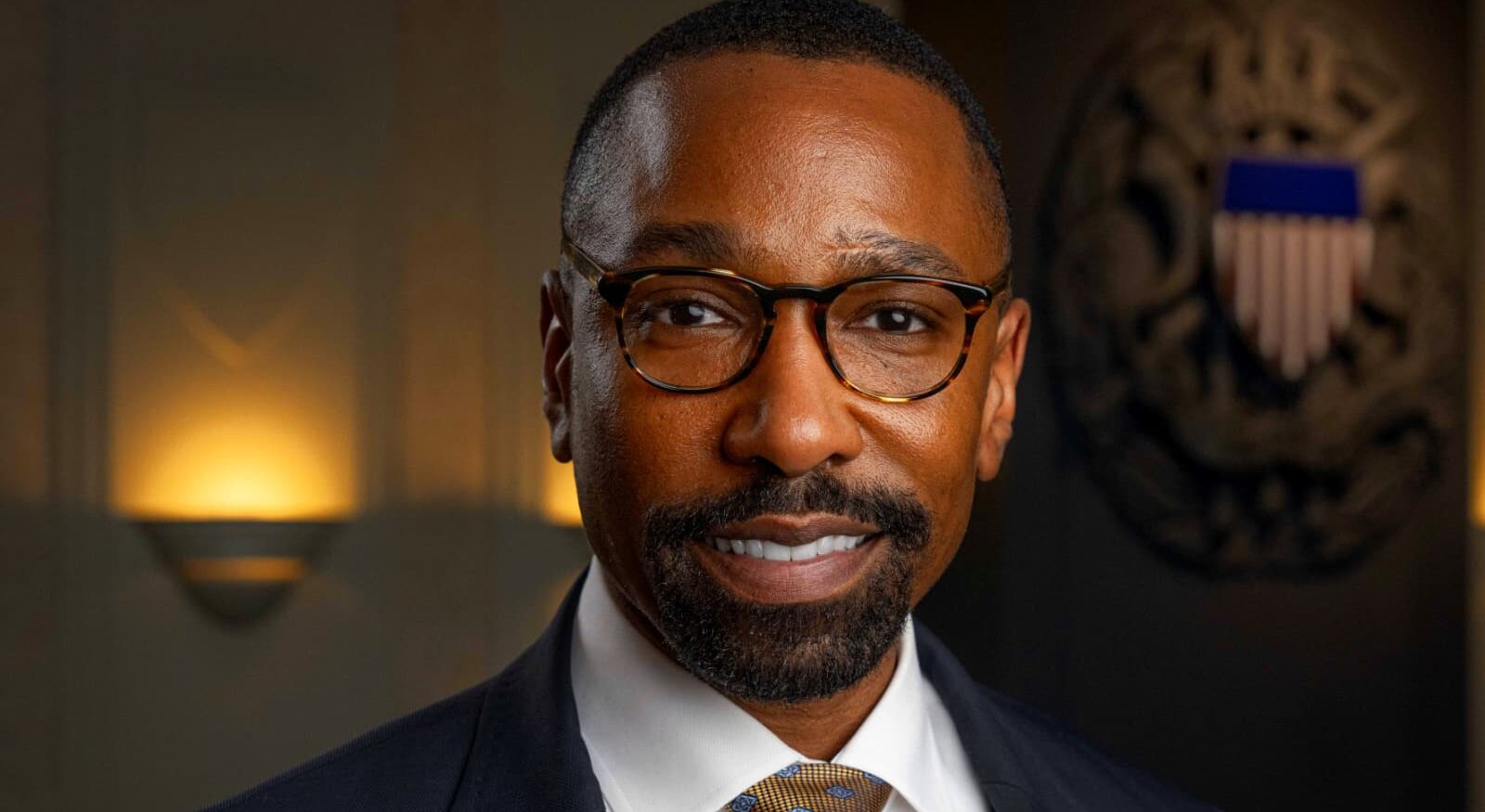
    Against all odds, a child growing up in the vibrant coastal capital of Roseau, Dominica, has climbed to a pivotal leadership position at the heart of the United States’ national defense apparatus, proving that grit, relentless dedication, and commitment to service can transcend geographic and socioeconomic boundaries. Kertiste A. Augustus, who now serves as Director of Sustainment Data under the Deputy Assistant Secretary of War for Materiel Readiness at the Pentagon, occupies a critical role that directly shapes the operational readiness of the U.S. Joint Force. His core work centers on delivering verified, actionable sustainment data, harnessing cutting-edge analytical tools, and integrating next-generation digital capabilities to keep military forces prepared, resilient, and strategically informed — outcomes that directly accelerate improvements to weapons system readiness and drive the adoption of innovative sustainment technologies across the U.S. Department of Defense.

    Augustus’ path to the Pentagon was built over decades of intentional service and incremental achievement. He launched his military career in February 1998, when he enlisted in the U.S. Army as a young immigrant. Through consistent excellence and unwavering determination, he earned a commission as a Warrant Officer in 2006, kicking off a 23-year distinguished military career that spanned tactical, operational, and strategic assignments. His early service included a posting as a Property Accounting Technician with the 12th Combat Aviation Brigade in Germany, followed by a role as Lead Functional Analyst for the Global Combat Support System in Virginia. Augustus also completed multiple combat and peacekeeping deployments to Bosnia, Kuwait, and Iraq, before receiving one of the military’s most prestigious assignments: a five-year posting to the White House Communications Agency, where he provided direct support to the U.S. President, Vice President, and First Lady from 2016 to 2021.

    After retiring from active service in October 2021 as a promotable Chief Warrant Officer Four, Augustus continued to advance the mission of U.S. defense logistics. Prior to taking up his current role at the Pentagon, he held two key positions on the Joint Staff J4: Deputy Director for Logistics Data, Visualization, and Cyber, and Deputy Director for Strategic Logistics. In these roles, he led transformative innovation within the Joint Logistics Enterprise (JLEnt), rolling out new strategies that significantly strengthened the readiness, resilience, and global operational reach of the Joint Force. His work integrating cross-cutting strategic logistics planning and developing robust defense cyber policies has had a lasting impact on the evolution of modern military logistics.

    Beyond his professional and military achievements, Augustus has long prioritized academic growth, currently pursuing a PhD in Organizational Leadership and Learning at Vanderbilt University. His academic credentials include a Master of Science in Psychology from the University of Oklahoma, where he graduated Summa Cum Laude, a Bachelor of Science in Multi-Disciplinary Studies and Criminal Justice from Grantham University (Magna Cum Laude), and an Associate of Arts in General Studies from the University of Maryland University College. He also completed the competitive Strategic Studies Program at the University of California, Berkeley. In recognition of his decades of exceptional service, Augustus has been honored with some of the U.S. military and government’s highest awards, including the Defense Meritorious Civilian Service Medal, the Army Legion of Merit, and the coveted Presidential Service Badge.

    Far from forgetting his roots, Augustus has channelled his success into opening doors for the next generation of young Dominicans, carrying forward the legacy of his late father, Kertist Alphoncous Augustus, a beloved labor leader in Dominica. Born in Roseau in 1947, the elder Augustus dedicated his life to advocating for working people. He took on the role of General Secretary of the Waterfront and Allied Worker’s Union (WAWU) in 1970, leading successful campaigns that secured higher wages, safer working conditions, and improved benefits for more than 500 waterfront workers, fundamentally transforming labor standards across Dominica. In 1998, he was elected President of WAWU, where he continued to defend workers’ rights, stabilize union operations, and advance the principle of free collective bargaining. His lifelong advocacy for working communities remains a cornerstone of his legacy in Dominica.

    Inspired by his father’s lifelong commitment to service and community empowerment, Augustus partnered with WAWU to launch the Kertist A. Augustus Foundation, named in his father’s honor. The foundation centers on the belief that higher education is the most powerful catalyst for individual and national advancement, working to build a local culture that celebrates educational achievement and expands access to opportunity for young people from all economic backgrounds. Through need-based scholarships and one-on-one mentorship programming, the foundation empowers Dominican youth to pursue their educational goals, upholding the elder Augustus’ legacy of lifting up marginalized communities.

    Today, the foundation supports five high school students and one recent graduate of Dominica State College, Nadjae-Ann Shillingford, who earned First Class Honors in Paralegal Studies with the foundation’s support. As it expands its reach, the foundation continues to advance its core mission of expanding opportunity for future generations, giving back to the community and country that shaped Augustus’ early years. More information about the foundation’s work and application processes can be found on its official website, www.kertistaugustusfoundation.org.

    Augustus’ story stands as a powerful testament to the exceptional potential of Dominican talent on the global stage, and a reminder that consistent dedication to excellence and service can create lasting impact, both in global security and in local communities. For Dominica, his journey from the streets of Roseau to the senior leadership of the Pentagon is a source of immense national pride, and an inspiring blueprint for young people seeking to turn ambition into meaningful contribution.

  • STATEMENT: CPL’S CEO on passing of Sir Garfield Sobers

    STATEMENT: CPL’S CEO on passing of Sir Garfield Sobers

    The cricketing world across the Caribbean is engulfed in sadness this week, as the Caribbean Premier League (CPL) joins global sports communities in mourning the passing of one of cricket’s most iconic figures, Sir Garfield Sobers.

    Widely celebrated as one of the greatest all-rounders to ever step onto a cricket pitch, Sir Garfield — affectionately known to fans and peers as Sir Gary — left an indelible mark on West Indies cricket that extends far beyond the boundary rope. His exceptional proficiency across every discipline of the game made him a generational talent, and his contributions in the mid-20th century were foundational to building the West Indies cricket team into the dominant global powerhouse it became for decades.

    But for the people of the Caribbean, Sir Gary’s legacy stretches far beyond his on-field statistics. A figure of relentless grace, approachability and quiet humility, he stood as a unifying beacon for the region throughout his life. Even after cementing his status as a global sporting legend, he remained connected to grassroots cricket, never turning away from fans seeking a conversation or young aspiring cricketers hoping for guidance. He was a regular, beloved presence at Barbados’ Kensington Oval, where he often attended matches alongside his wife Jackie, maintaining an unwavering passion for the sport he helped elevate.

    This year, the CPL was scheduled to host its season final at Kensington Oval — a moment the CPL organization confirms Sir Gary was eagerly anticipating. His absence from the landmark event has left the tournament community devastated, but organizers have moved forward with plans to honor his extraordinary life and enduring legacy across the entire 2026 season. The season’s final will be framed as a dedicated tribute to Sir Gary, celebrating his transformative impact on Caribbean cricket and the countless lives he touched throughout his decades in the sport.

  • COMMENTARY: Nelson Mandela International Day

    COMMENTARY: Nelson Mandela International Day

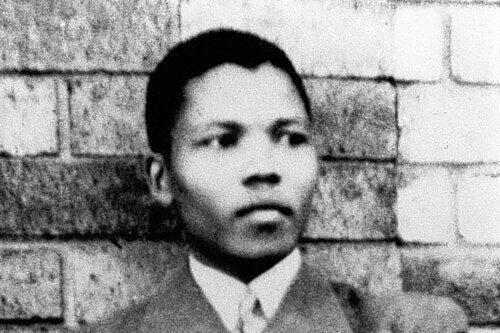
    Every year on July 18, the world pauses to celebrate Nelson Mandela International Day, a global commemoration that honors the extraordinary life, enduring principles, and revolutionary legacy of South Africa’s first democratically elected president. For 2026, the observance carries a urgent, focused theme: “It’s Still in Our Hands to Combat Poverty and Inequity”, directing global attention to the unfinished work of eradicating systemic poverty and closing the widening wealth gap that divides communities across the world.

    Nelson Mandela remains one of the most revered global icons in modern history, a leader whose moral authority transcended borders and generations. Born Rolihlahla Mandela on July 18, 1918, into the Madiba clan of Mvezo village in South Africa’s Eastern Cape, his early life shaped the resilience that would define his decades-long fight for justice. After the death of his father, a senior counsellor to the Thembu royal family, when he was 12, Mandela continued his education, first at the University College of Fort Hare, where he was expelled for leading a student protest against oppressive institutional policies. He would later complete his Bachelor of Arts degree through the University of South Africa, graduating in 1943, before beginning his law studies at the University of the Witwatersrand, eventually earning his law degree in absentia while imprisoned in 1989.

    Mandela’s formal political journey began in 1944, when he joined the African National Congress (ANC) and helped launch the organization’s youth-focused wing, the ANC Youth League. It was through this work that the ANC shifted toward a radical, mass-based policy of resistance to apartheid, adopted in 1949 as the Programme of Action. By 1952, Mandela had risen to a leadership role in the Defiance Campaign, a joint civil disobedience movement with the South African Indian Congress that targeted six unjust apartheid laws. He was convicted under the Suppression of Communism Act for his participation, and later that year, he and colleague Oliver Tambo opened South Africa’s first Black-owned law firm, providing critical legal representation to Black South Africans harmed by apartheid legislation.

    Over the following decades, Mandela’s resistance would cost him decades of freedom. After the 1960 Sharpeville Massacre, in which police killed 69 unarmed anti-apartheid protestors, the apartheid government declared a state of emergency and banned the ANC and the Pan Africanist Congress. Following a 1962 arrest for leaving the country without permission to build international support for the anti-apartheid movement, Mandela was sentenced to five years in prison. A year later, after police uncovered an ANC hideout in Rivonia, he and 10 other activists were put on trial for sabotage in the famous Rivonia Trial. Facing the death penalty, Mandela delivered his iconic “Speech from the Dock”, in which he articulated his lifelong vision: “I have fought against white domination, and I have fought against black domination. I have cherished the ideal of a democratic and free society in which all persons live together in harmony and with equal opportunities. It is an ideal which I hope to live for and to achieve. But if needs be, it is an ideal for which I am prepared to die.”

    Mandela was ultimately sentenced to life in prison, spending 27 years behind bars, most of them on Robben Island. He was barred from attending the funerals of his mother and eldest son, and contracted tuberculosis that required months of hospitalization. He was finally released on February 11, 1990, amid growing international pressure and negotiations to end apartheid. In 1994, South Africa held its first multiracial democratic election, and Mandela was inaugurated as president on May 10. After a single term in office, he made the historic decision to step down in 1999, rejecting the chance to hold onto power that many other leaders would have seized. He continued his humanitarian work through the Nelson Mandela Children’s Fund, which he founded in 1995, until his death at his Johannesburg home on December 5, 2013.

    What sets Mandela apart as a leader, beyond his fight against apartheid, was his unwavering commitment to forgiveness, equality, and selfless service. Unlike many revolutionary leaders who traded one form of oppression for another, Mandela held fast to his vision of a multiracial democracy, working to reconcile South Africa’s divided communities rather than seeking retribution. The core tradition of Nelson Mandela International Day, the “67 Minutes of Service” campaign, honors the 67 years Mandela dedicated to public service and the fight for social justice. Though the original calculation of 67 years contained a minor discrepancy (Mandela had spent 65 years in public service when the campaign launched in 2009), the movement has grown into a global rallying call that unites millions of people each year.

    There are countless accessible ways for people around the world to honor Mandela’s legacy this year. The most central tradition is to set aside 67 minutes of the day to volunteer with local nonprofits, homeless shelters, or youth development programs, mirroring Mandela’s 67 years of public service. Individuals can also contribute resources, skills, or time to support vulnerable groups in their own communities, or act as advocates for human rights, speaking out against systemic injustice wherever it appears. In Mandela’s own words: “There can be no greater gift than that of giving one’s time and energy to helping others without expecting anything in return.” This 2026 Nelson Mandela International Day, the theme reminds us that the work of building a more equal, just world remains in all our hands, following the path Mandela laid out over decades of struggle.

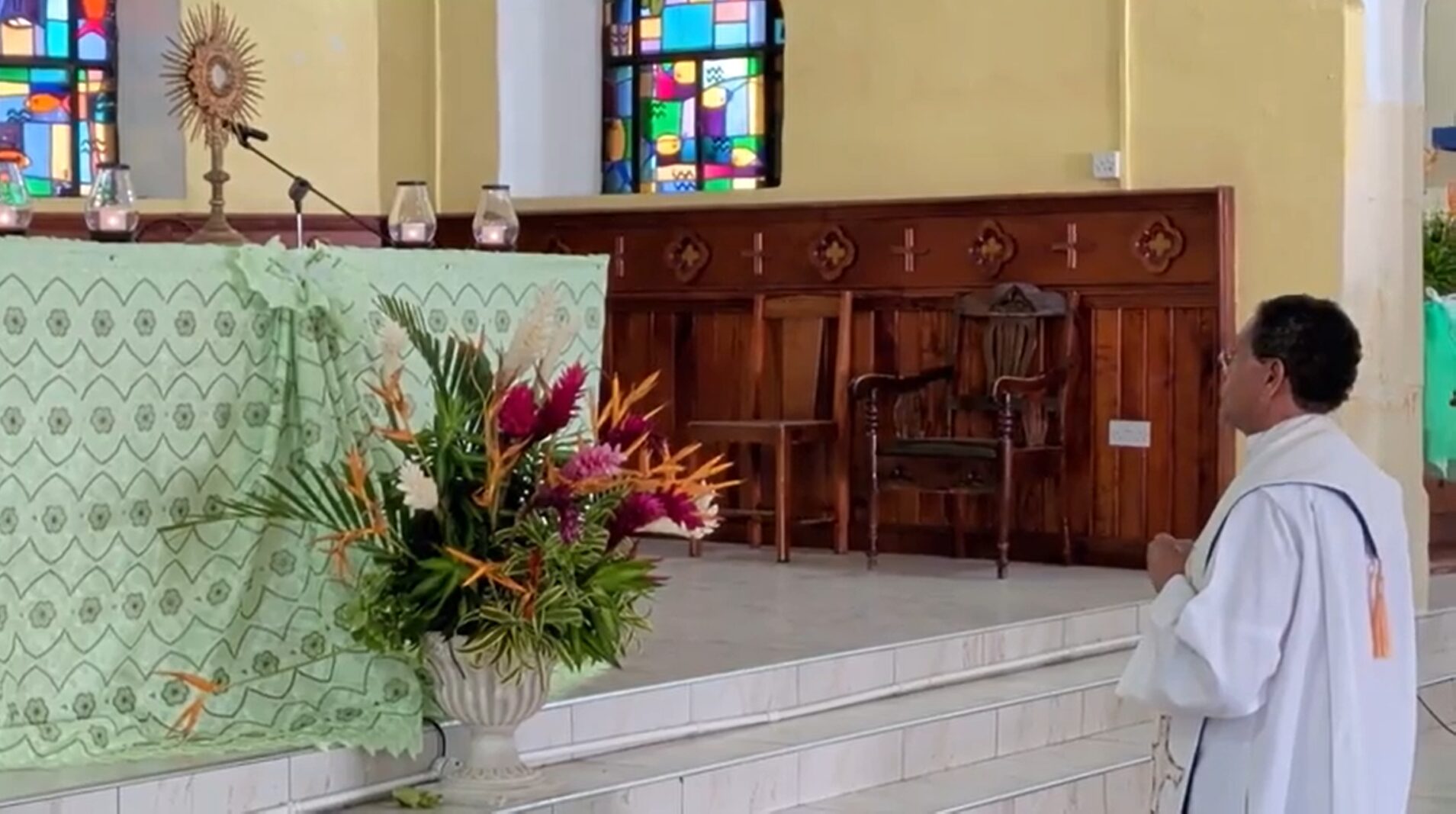
  • LIVE: 38th Ordination Anniversary Mass of Father Elveau Augustine at St. Mark Parish Dominica

    LIVE: 38th Ordination Anniversary Mass of Father Elveau Augustine at St. Mark Parish Dominica

    The small island nation of Dominica, located in the hurricane-prone Eastern Caribbean, is once again at the forefront of global conversations about climate vulnerability, as rising sea temperatures and shifting weather patterns amplify the risk of catastrophic tropical storms for low-lying coastal states. For decades, Dominica has faced repeated devastation from extreme weather events: in 2017, Category 5 Hurricane Maria destroyed more than 90% of the country’s infrastructure, crippled its tourism-dependent economy, and left hundreds of people dead or missing. The disaster served as a wake-up call for both Dominica’s government and global climate advocates, highlighting the disproportionate risk that small developing island states face despite contributing next to nothing to global greenhouse gas emissions.

    In the years following Maria, Dominica has positioned itself as a global leader in climate resilience, launching an ambitious agenda to become the world’s first climate-resilient nation. The government has invested heavily in climate-adaptive infrastructure, including storm-resistant housing, reinforced coastal sea walls, and renewable energy projects designed to replace fossil fuel dependence while strengthening energy security during extreme weather events. International climate financing bodies, including the Green Climate Fund, have backed these efforts with hundreds of millions of dollars in grants and low-interest loans, recognizing Dominica’s role as a test case for global climate adaptation.

    Still, new data from the Intergovernmental Panel on Climate Change (IPCC) shows that ocean temperatures in the Caribbean have risen 1.5 degrees Fahrenheit since the pre-industrial era, creating more favorable conditions for rapid storm intensification and increasing the likelihood of major hurricanes making landfall in the region. This growing risk has put new pressure on both national governments and global climate negotiators to deliver on long-promised funding for loss and damage, a global framework designed to support vulnerable countries hit by irreversible climate impacts. As the 2026 Atlantic hurricane season gets underway, Dominica and its neighboring Caribbean nations are reminding the global community that climate action is not a distant policy goal—it is an urgent priority that affects the survival and livelihoods of millions of people across the world’s most vulnerable regions.