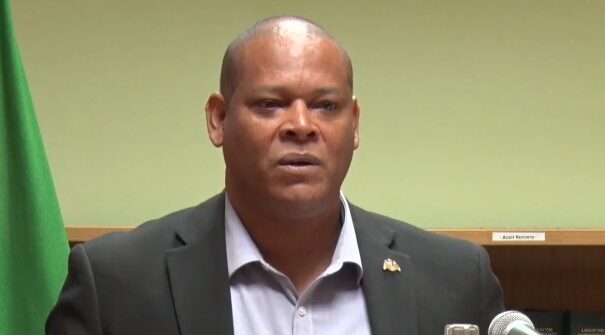
A top government official in Dominica has launched a public call for introspection within the Kalinago Council, raising pointed questions about the indigenous governing body’s leadership stability and institutional effectiveness following news of a second by-election during its current five-year mandate.
Cozier Frederick, the country’s Minister of Environment, Rural Modernisation, Kalinago Upliftment and Constituency Empowerment, made the remarks after the Kalinago Council announced via its official Facebook page that it would shut down public operations for a day to accommodate preparations for the upcoming by-election. The closure means residents relying on the council for routine public services will face disruptions during the electoral setup period.
Frederick argued that two mid-term by-elections over just one five-term should not be dismissed as a routine electoral procedural matter. Instead, he framed it as a critical warning sign that demands a broader, unflinching conversation about the council’s capacity to retain elected members and navigate internal disagreements productively.
In a measured statement, Frederick acknowledged that departing councillors may step down for valid personal or professional reasons, emphasizing that not every sudden vacancy should automatically be blamed on failures in the council’s leadership. That said, he stressed that repeated, unplanned departures create a clear mandate for an honest assessment of the institution’s leadership structure and internal working culture.
Frederick pointed to recurring vacancies as a potential red flag for deeper systemic issues, including gaps in internal communication, ineffective conflict resolution frameworks, insufficient accountability, and a lack of aligned shared vision among sitting members. “The real issue is whether the Council is creating an environment capable of retaining leadership, managing disagreement and keeping elected representatives focused on the five-year mandate given to them by the people,” he explained.
The minister pushed back against the common narrative that defines successful leadership solely through election victories. “Leadership is not measured only by who wins an election. Leadership is measured by who can hold a team together after the election,” he emphasized.
Frederick reaffirmed that the Kalinago Council holds profound importance as the central institution of Indigenous self-governance for the Kalinago people, and as such, it has a responsibility to model core values of maturity, discipline, inclusivity, and consensus-building. He argued that the triggering of a second by-election requires far more than reflection on the individual councillors who have left their posts early. Instead, it demands a full review of the council’s underlying leadership culture and overall institutional resilience.
“The question is not simply, ‘Why are councillors leaving?’ The deeper question is: ‘What kind of leadership are we providing that allows an elected Council to lose members before the mandate given to them by the people has been fulfilled?’” he said. According to Frederick, the Kalinago community is owed a transparent, comprehensive answer to this fundamental “leadership question.”